by in News

Croatia drafts EUR 1.68 billion Social Climate Plan

Croatia has prepared a Social Climate Plan for the period 2026-2032, worth EUR 1.68 billion. It would introduce measures for the buildings and road transport sectors aimed at supporting households and small businesses.

The draft of Croatia’s Social Climate Plan is under public discussion, which will last until December 22.

The process of adopting the most important national instrument for protecting citizens from the adverse effects of climate transition and the introduction of the European Union’s Emissions Trading System 2 (EU ETS 2) has begun, the Ministry of Environmental Protection and Green Transition stressed.

The plan will be financed with EUR 1.26 billion from the EU’s Social Climate Fund, and the remainder from Croatia’s national budget. Essentially, all the funds are coming from the auctions of emission allowances in the EU and Croatia under the EU ETS 2. It is an expansion of the EU ETS to the buildings sector (heating and cooling) and road transport.

The EU established the Social Climate Fund in May 2023 to protect households and small businesses

The expansion could increase the costs of heating, cooling, and transport. In May 2023, the EU established the Social Climate Fund to protect low-income households, micro enterprises, and transport users that could be affected by the cost increase.

The measures and investments also contribute to the implementation of the goals of the National Energy and Climate Plan (NECP).

The Social Climate Plan allocates EUR 658.1 million (39%) for the buildings sector, and EUR 958.4 million (57%) for road transport. Technical assistance is the third component, with EUR 42 million (2.5%).

The measures planned for the buildings sector include support for the establishment of energy communities and subsidies for the energy renovation of family homes. In the road transport sector, the plan envisages investments in cycling, on-demand mobility services, zero-emission vehicles, and railway infrastructure.

Vučković: Restoration planned for 180 kilometers of bike trails
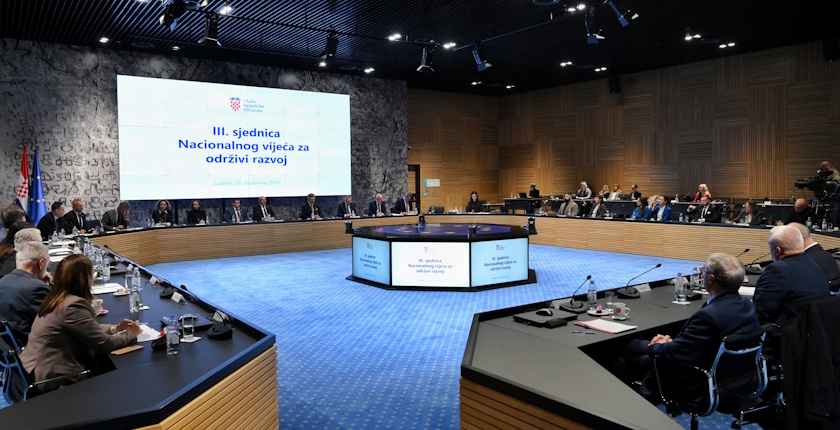
croatia social climate policy plan EU ets 2 marija vuckovic plenkovic
Photo: Government of Croatia

​While presenting the draft plan at a session of the National Council for Sustainable Development, Minister of Environmental Protection and Green Transition Marija Vučković said it identifies two groups: the energy poor or vulnerable, and transport poor or vulnerable.

“The plan provides for 10 measures, four of which relate to so-called stationary or energy poverty, and the remaining six to achieving affordable and favorable mobility and reducing the risk of transport poverty,” she explained.

According to the ministry, the plan provides for the renovation of 180 kilometers of bicycle paths, 80 kilometers of railway lines, as well as the procurement of 30 electric trains, 80 electric buses, and 3,000 electric cars.

Prime Minister Andrej Plenković stressed that the plan isn’t just a technical and administrative document, arguing that it determines what Croatia would become in ten, twenty, and fifty years.

“And we want a Croatia that is economically strong, socially just, and sovereign,” Plenković underlined.
by in News

Serbia rolls out taxes on greenhouse gas emissions, imported carbon-intensive products

The Serbian Law on Greenhouse Gas Emissions Tax and Law on Carbon-Intensive Product Imports Tax, both at EUR 4 per ton of CO2 equivalent, are coming into effect on January 1. It is the country’s answer to and equivalent of, respectively, the European Union’s Carbon Border Adjustment Mechanism (CBAM). Notably, several bylaws are still required for the new legislation to be enforced.

The National Assembly of Serbia passed the Law on Greenhouse Gas Emissions Tax and Law on Carbon-Intensive Product Imports Tax today, without accepting any of the opposition’s proposals for changes in the two bills.

On January 1, importers of electricity, cement, iron and steel, aluminum, hydrogen and fertilizers to the European Union will start paying the CBAM carbon dioxide tax. If the country of origin also has a CO2 pricing system and the EU recognizes it, the sum will be deducted from CBAM.

The domestic greenhouse gas emissions tax is Serbia’s answer to the cross-border levy, while with the new import tax it is establishing a corresponding mechanism. Both are EUR 4 per ton of CO2 equivalent, covering also nitrous oxide (N2O) and perfluorocarbons (PFCs).

They are intended to lower pollution, improve energy efficiency, incentivize the deployment of renewable energy and secure a more equal position for the Serbian industry in the domestic and international markets, according to the sidenotes.

Both laws to enter into force on January 1, when EU also starts charging CBAM

The first of the two taxes is for big industrial emitters in the sectors of cement, fertilizers, iron and steel, aluminum and electricity. Both laws are coming into effect on January 1, just like the CBAM charge. However, several bylaws are still required for Serbia to enforce the new legislation.

The CBAM tax is envisaged to rise every year until in 2034 it becomes equal as the prices of greenhouse gas emission certificates in the EU’s Emissions Trading System (EU ETS). Electricity is different, as the amount will from the start correspond to the carbon intensity of the country of origin’s entire production mix.

According to Special Advisor at Serbia’s Economics Institute Ljubo Maćić, charging CBAM will prevent power market coupling between Serbia, other Energy Community contracting parties and the European Union, and discourage investment in renewables.

Of note, the administration in Brussels plans to expand the mechanism to other segments that EU ETS covers.

No electricity in carbon imports tax

The Law on Carbon-Intensive Product Imports Tax doesn’t cover electricity because of technical limitations and a lack of a precise taxing methodology.

The tax on imported carbon-intensive products covers only the entities that import five or more tons of the designated products per year

Importers are taxed based on emissions embedded in the production of the goods from abroad, but they will be able to use tax credits if an emissions levy has already been paid in the country of origin, similar to the EU system. The obligation is only for companies importing five or more tons of designated products per year.

Serbia imports an estimated 3.5 million tons of carbon-intensive products per year.

CO2 tax scope limited to larger producers

The CO2 tax law will be applied to firms obligated to have a license for emissions from their plants. Mostly they are large and medium-sized companies. Fifty companies have obtained such licenses for 92 facilities. They measure emissions data, in line with the Law on Climate Change, and send them to the Ministry of Environmental Protection.

The production of synthetic fertilizers and nitrogen compounds, cement, pig iron, steel and ferroalloys, aluminum and electricity accounts for over 57% of emissions in Serbia and more than 90% within the national monitoring and reporting system.

Tax deductions for large electricity producers that invest in decarbonization

A payer of the greenhouse emissions tax that predominantly generates electricity, accounting for at least 80% of its income in the previous annual tax period, is eligible for a tax credit amounting to 20% of the sum that it invested in decarbonization measures, the law stipulated.

The deduction can’t exceed 80% of the due tax. The government determines the said measures.

The greenhouse gas emissions tax envisages incentives for the taxpayers to finance green projects, the just transition and protection of vulnerable households

In addition, entities that pay the tax are eligible for incentives, from the state budget, for financing climate and energy transformation through investing in renewables and energy efficiency, innovative low-carbon technologies, decarbonization of industrial production, green construction and support to the just transition and protection of vulnerable households.

Proceeds from the tax “can be invested in green transition projects,” the sidenote reads, while there is still no dedicated decarbonization fund.

by in News

EU waters down its 2040 climate target in runup to COP30 in Brazil

The Council of the European Union upheld the proposed 90% emissions cut target for 2040 ahead of the United Nations Climate Change Conference COP30 in Brazil, but with substantial workaround possibilities. In addition, the environment ministers failed to define the 2035 ambition, leaving the desired reduction in the amount of released greenhouse gases in a range of 66.25% to 72.5%.

Faced with declining competitiveness due to high energy prices and its strict climate and environmental standards, the EU is loosening its decarbonization goal. Following a marathon session in Brussels, the so-called Environment Council kept the desired greenhouse gas emissions reduction by 2040 at 90%, against the 1990 level, to take it to the COP30 event in Belém, Brazil. However, the competent ministers making up the body allowed several important flexibilities to avoid a last-minute stalemate.

Namely, the Council of the EU approved an updated nationally determined contribution (NDC) of the 27-member bloc and individual states to submit it at the Conference of the Parties of the UN Framework Convention on Climate Change (UNFCCC). Political leaders are gathering tomorrow, while COP30 formally lasts from November 10 to 21.

Following the 2020 NDC and its 2023 update, the new one covers the period up to 2035.

Outsourcing climate improvements instead of domestic decarbonization

On the path to eliminating net emissions by 2050, the EU is sticking with its nominal 2040 goal. On the other hand, in the latest version, the environment ministers allow “an adequate contribution of high-quality international credits in a manner that is both ambitious and cost-efficient.”

In particular, five percentage points of the 90% can be met via emission cuts promised outside the EU, and governments would be allowed to outsource a further five points, Greenpeace warned. It means they would buy carbon credits abroad as offsets.

EU is counting on purchases of other countries’ carbon credits for offsets

“The European Scientific Advisory Board on Climate Change [ESABCC] had called for emissions cuts of 90%-95% by 2040, and had stressed that this target must be for domestic reductions to climate pollution, not cuts outsourced to other countries. Environment ministers also agreed that the European Commission should reopen and water down the climate target in the case of high energy prices, a perceived negative economic impact or in light of technological advances. To reach a deal with reluctant countries, ministers also agreed to delay the start of the EU’s carbon market for pollution from cars and heating systems, extend pollution permits for heavy industry and exempt some ‘low-carbon’ fuels under the internal combustion engine phaseout,” the organization added.

The carbon market in question is the planned Emissions Trading System 2 (EU ETS 2). The Environment Council proposed to delay its establishment by a year, until 2028, and work on measures for a smooth launch.

“According to the ESABCC, only 16% of offsets have delivered genuine emissions reductions. But if they were high-quality offsets, they would be costly, and relying on them would divert investment from transforming the EU’s own industries, economy, and workers,” World Wide Fund For Nature (WWF) pointed out.

Indicative range for 2035 goal entirely below required efforts

The protracted discussions between the EU’s national governments also delayed the announcement of the EU’s indicative climate target for 2035, under the Paris Agreement. It is supposed to be submitted at the UN Climate Change Conference COP30.

“Ministers failed to agree a firm 2035 target, instead keeping a previously agreed range of 66.25% to 72.5% emission cuts, even the upper end of which is inconsistent with a credible pathway to the proposed 90% cut for five years later, undermining the EU’s position as a climate leader at COP30,” Greenpeace stressed.

Climate-competitiveness-independence tradeoff

The European Parliament’s Committee on Environment, Public Health and Food Safety (ENVI) is expected to discuss the matter soon. After a plenary vote, the institution would negotiate with the Council of the EU and European Commission.

“We need climate, competitiveness and independence. All three are crucial and going forward we need to ensure that one doesn’t come at the expense of the other. This morning, the environment and climate ministers of all member states reached a pragmatic, ambitious deal which ensures that,” said European Commissioner for Climate, Net-Zero and Clean Growth Wopke Hoekstra.

by in News

Renewable electricity should not be subject to EU’s CO2 import tax

The European Commission is collecting evidence to come up with solutions for unintended effects of the Carbon Border Adjustment Mechanism (CBAM) on renewable electricity in the Western Balkans, Director of the Energy Community Secretariat Artur Lorkowski pointed out in an interview with Balkan Green Energy News, as one of the most important developments in the sector. Boosting renewable energy development and trade with third countries such as the Western Balkans was supposed to be accelerated by the European Union’s CO2 import tax.

To reduce the payment obligations of EU importers under CBAM, the contracting parties in the region are planning carbon pricing systems, but under different models. The ultimate goal is eventually joining the EU Emissions Trading System, implying the need for coordination and cooperation between the governments in the process, Lorkowski stressed.

Looking back twenty years since the Energy Community Treaty was signed, it proved to be a successful format of cooperation, the Energy Community Secretariat Director Artur Lorkowski said. On the occasion of the anniversary, Balkan Green Energy News sat down with the head of the international organization to speak about the achievements and benefits for the contracting parties, and the remaining milestones that the Western Balkans need to reach in order to integrate with the EU’s energy union.

“Economic growth depends on energy security and fair pricing. There is visible progress in transformation, clearly seen from the 2024 figures. And the final element is the accelerated energy market integration with the EU, and this is what we can be really proud of,” Lorkowski asserted.

Among the segments with tangible improvements, he also highlighted the convergence on the wholesale gas and electricity markets. It is facilitating competitiveness in the Energy Community, the secretariat’s chief added.

Renewables capacity doubled in four years

Fossil fuels used to account for 60% of electricity production in the contracting parties five years ago, compared to 50% now, Lorkowski noted. The significant results in renewables except for large hydro are illustrated by the fact that the overall capacity in the segment has more than doubled between 2020 and 2024, he stressed. More importantly, the carbon footprint – the CO2 emissions per unit of the nominal gross domestic product, fell 11% last year alone.

CO2 emissions per unit of the nominal GDP fell 11% last year in the Energy Community

As for EU integration, electricity market coupling is progressing very well, as a good example, in Lorkowski’s view. The legislation is mostly aligned, so most countries are just waiting for the process to be concluded, the director of the Energy Community Secretariat explained.

“There are operating wholesale markets everywhere in the Western Balkans except in Bosnia and Herzegovina, which is about to adopt the required law. Serbia is at the forefront of that process. North Macedonia and Montenegro are very close, with small elements yet to be achieved. It is a non-reversible point, point of no return on a path towards EU integration,” Lorkowski said. He recalled that when capacity calculations regions (CCRs), operationalization and verification are cleared from the to-do list, it would take 18 months to join the EU’s market coupling project.

Electricity can be exempted from CBAM at later stage

Energy Community contracting parties may become eligible for exemption until 2030 from CBAM in electricity, if they meet the CBAM requirements. However, the EU is starting to charge the CO2 import tax already on January 1.

“I wish the contracting parties followed my messages from the Belgrade Energy Forum in 2023, because you might remember me saying that CBAM is coming and we have to prepare for that. But unfortunately, we have observed a lot of delays and hiccups in the preparatory process. Fair enough, this is the reality we have to face now – no country of the Energy Community will be exempted on 1 January 2026. But we can still work to be exempted at a later stage,” Lorkowski underscored.

Artur Lorkowski was a keynote speaker at Belgrade Energy Forum 2025, organized by Balkan Green Energy News

European Commission expected to clarify rules by end of year

The second part of the story is that CBAM, in addition to its intended impacts, especially on coal power, also has unintended impacts, Lorkowski explained. For example, electricity transit between EU member states through the contracting parties, in practice, may also be subject to the tax, even if it was not intended by the European legislators.

CBAM was intended to provide equal treatment for products produced inside and outside the EU when it comes to carbon payments. “Renewable energy, not being subject to the EU ETS, would – logically – not need to be subject to CBAM, but with the current rules, even EU off-takers with cross-border power purchase agreements (PPAs) may still be subject to payment obligations, as the implementing rules remain overly complex, effectively treating them in the same way as fossil fuel importers. These are real problems that stakeholders have been raising with us in our targeted outreach to power companies, traders, and other stakeholders both from the EU and Energy Community,” Lorkowski added.

Legislative efforts to further improve trade in renewables with the EU continue under the Energy Community

The Energy Community Ministerial Council reported it in Athens to the European Commission and asked it to find a solution.

Lorkowski said he expects the EU’s top executive body to soon issue implementing and delegated acts, by the end of 2025, clarifying the CBAM implementation rules, and to follow it up in 2026 with a targeted amendment proposal on electricity.

Legislative efforts to further improve trade in renewables with the EU continue under the Energy Community. “The European Commission has presented to the contracting parties a draft decision on the mutual recognition of guarantees of origin and is now awaiting their feedback. I hope that in 2026 we can have a decision. But it does not mean that the guarantees of origin can be used as the currency for paying the CBAM fee. That would require amending the CBAM legislation,” he stated.

Carbon pricing systems need to evolve toward matching EU ETS

For a potential reduction of CBAM payments in other areas as well – iron and steel, aluminum, fertilizers, cement and hydrogen – third countries need to introduce carbon pricing systems. Serbia recently drafted legislation for a CO2 tax and for a tax on imports of carbon-intensive products. It is a good step forward, according to Lorkowski.

“We expect each and every country to make a decision on the carbon pricing. All of the countries of the Energy Community, with the exception of Kosovo*, have communicated to the secretariat which model they will implement. And the models vary: from Serbia’s carbon tax to a domestic emissions trading system of Montenegro, which is already in place,” he revealed.

There is no uniform carbon pricing model for the Energy Community

Namely, the Energy Community Ministerial Council decided not to implement a uniform regional carbon pricing mechanism but opted for individual models. They should all be built with the perspective of aligning eventually with the EU Emissions Trading System (EU ETS), Lorkowski said.

“The key challenge now for the Energy Community is how to maintain the integrity of the electricity market between the contracting parties and the European Union after CBAM enters its definitive phase from next January. We need to figure out how to coordinate among the systems. It implies not only the existence of the domestic carbon markets, but also the cooperation within the region,” he pointed out.

Ministerial Council to announce way forward on carbon pricing coordination

The Ministerial Council is due to conclude on carbon pricing at its regular annual meeting in December, Lorkowski said.

“The three critical elements are how much the CO2 will cost, who will pay – which businesses and sectors are in scope – and when those carbon pricing systems will be introduced. They need to maintain the integrity of the market, the level playing field of the market, and avoid market distortions,” the top Energy Community official added.

Practical policies more important than coal phaseout dates alone

Turning to the coal phaseout, essential for the decarbonization of the economy, Lorkowski acknowledged the significance of political declarations such as the Sofia Declaration and commitments from the national energy and climate plans (NECPs).

“That said, it is critically important to anchor the actions for the future with practical policies. The decisions on the establishment of carbon pricing mechanisms are even more important. In addition, we should focus on monitoring, reporting and verification – MRV systems. The contracting parties need to identify emitters and measure quantities,” the director of the Energy Community Secretariat underscored.

* This designation is without prejudice to positions onstatus and is in line with UNSCR 1244/99 and the ICJ Opinion on the Kosovo declaration of independence.
by in News

Slovenia allocates EUR 375 million for sustainable mobility

Slovenia has allocated EUR 835 million from the Climate Fund for climate change mitigation and adaptation. The funds should be used over the period 2025-2028.

The Government of Slovenia has adopted a decree on the allocation plan for the Climate Fund for 2025-2028. The plan follows the key measures from the previous plan for the period 2023-2026 and adds funds for 2027 and 2028. The amount is determined based on expected revenues from emission allowance auctions.

Emission allowances are part of the European Union Emissions Trading System (EU ETS).

The funds will be directed to sectors addressing the main climate challenges, both in mitigation and adaptation to climate change. Measures supporting the green transition and increasing the country’s resilience to climate change will also be supported, according to the Government of Slovenia.

EUR 121 million was allocated for decarbonizing the economy

The largest chunk will go to sustainable mobility – EUR 375 million. The funds will be used for investments in public transport – purchase of new trains and buses, renovation of ticketing and information systems, co-financing of zero-emission vehicles and charging infrastructure, promotion of cycling and walking, and shifting freight transport from roads to rail.

EUR 121 million is designated for decarbonizing the economy. The government will co-finance successful European Union projects, support the introduction of a circular economy and sustainable reporting for small and medium-sized enterprises, as well as investments in industrial decarbonization.

Energy renovation of public and residential buildings, measures to reduce energy poverty, and the construction of nearly zero-energy buildings are also part of the allocation plan. There is EUR 111 million for such activities.

EUR 26 million is set for awareness raising and education

EUR 95 million is designated for renewable energy sources. The funds will be used to replace outdated household heating devices with modern ones and heat pumps, as well as for energy storage, geothermal energy, and measures to increase the energy self-sufficiency of buildings.

The Climate Fund will support additional climate change adaptation measures. The activities include reducing flood risks, preserving biodiversity, adaptation in forestry and agriculture, and strengthening the resilience of local communities. The allocated funds amount to EUR 49 million.

Slovenia has envisaged EUR 12 million for international climate change financing and EUR 26 million for awareness raising and education.

by in News

Serbia proposes taxes on greenhouse gas emissions, imported carbon-intensive products

The Ministry of Finance of Serbia launched public consultations on the draft Law on Greenhouse Gas Emissions Tax and Law on Carbon-Intensive Product Imports Tax, both at EUR 4 per ton of CO2 equivalent.

On January 1, importers of electricity, cement, iron and steel, aluminum, hydrogen and fertilizers to the European Union will start paying the CBAM carbon dioxide tax. If the country of origin also has a CO2 pricing system and the EU recognizes it, the sum will be deducted from CBAM.

The greenhouse gas emissions tax won’t be a new fiscal burden, but an incentive for modern and cleaner production, the Ministry of Finance of Serbia stressed in its public consultation call on what it said would be two key laws for the country’s green transition. It intends to charge producers and importers of certain goods EUR 4 per ton of CO2 equivalent.

The draft Law on Greenhouse Gas Emissions Tax and draft Law on Carbon-Intensive Product Imports Tax are intended to lower pollution, improve energy efficiency and secure a more equal position for the Serbian industry in the domestic and international markets, according to the announcement.

The public consultation process lasts until October 21, the deadline for submitting comments and suggestions. Presentations and discussions are scheduled for October 8 and October 15 in Belgrade, and online meetings are to be held on October 10 and October 17.

Both laws to enter into force on January 1, when EU also starts charging CBAM

The first of the two taxes is for big industrial emitters in the sectors of cement, fertilizers, iron and steel, aluminum and electricity. The ministry added that it is targeting January 1 for both laws to come into effect.

On the same date, the EU is set to start charging its Carbon Border Adjustment Mechanism (CBAM) tax on imported electricity, the other said goods as well as hydrogen. If the country of origin also taxes CO2 and the EU recognizes its system, the sum that was paid will be deducted from CBAM.

The CBAM tax is envisaged to rise every year until in 2034 it becomes equal as the prices of grenhouse gas emission certificates in the EU’s Emissions Trading System (EU ETS). Of note, the plan is also to expand the mechanism to other segments that EU ETS covers. The price has held above EUR 75 per ton of CO2 equivalent in the past month.

Institutional infrastructure isn’t sufficiently developed to roll out domestic ETS

The draft Law on Carbon-Intensive Product Imports Tax, envisaged as an equivalent to CBAM on the home market, doesn’t include hydrogen (and neither does the other draft), due to negligible production, while electricity wasn’t included because of technical limitations and a lack of a precise taxing methodology, the ministry explained.

The tax on imported carbon-intensive products would cover only the entities that import more than five tons of the designated products per year

Importers would be taxed based on emissions embedded in the production of the goods from abroad, but they will be able to use tax credits if an emissions levy has already been paid in the country of origin, similar to the EU system. The obligation is only for companies importing more than five tons of designated products per year.

The government opted for a tax instead of an ETS because “an emissions trading system requires a developed institutional infrastructure and market mechanisms that currently aren’t completely established,” an accompanying document reads.

Importantly, an independent verification system is under development.

The taxes would cover CO2, nitrous oxide (N2O) and perfluorocarbons (PFCs).

CO2 tax scope limited to certain larger producers

The ministry pointed out that the draft law wasn’t made to be applied extensively, but only to the firms obligated to have a license for emissions from their plants. Mostly they are large and medium-sized companies. The increase in administrative expenses would be limited, as the entities in the group already measure emissions data, in line with the Law on Climate Change, and send them to the Ministry of Environmental Protection.

The production of synthetic fertilizers and nitrogen compounds, cement, pig iron, steel and ferroalloys, aluminum and electricity accounts for over 57% of emissions in Serbia and more than 90% within the national monitoring and reporting system.

Tax deductions for large electricity producers that invest in decarbonization

A payer of the greenhouse emissions tax that predominantly generates electricity, accounting for at least 80% of its income in the previous annual tax period, is eligible for a tax credit amounting to 20% of the sum that it invested in decarbonization measures, the draft shows.

The deduction wouldn’t exceed 80% of the due tax. The government determines the said measures.

The draft greenhouse gas emissions tax envisages incentives for the taxpayers to finance green projects, the just transition and protection of vulnerable households

In addition, entities that pay the tax would be eligible for incentives, from the state budget, for financing climate and energy transformation through investing in renewables and energy efficiency, innovative low-carbon technologies, decarbonization of industrial production, green construction and support to the just transition and protection of vulnerable households.

In the short term, the new fiscal obligation can cause a moderate increase in production costs for facilities with significantly high emissions, the ministry said. Then there is a possibility, over the long term, for a moderate indirect effect on prices of some products, like construction materials and energy, but it would be limited and gradual, the law’s authors claim.

by in News

Romania preparing to include biomethane in gas grid

Romania has drafted a directive that would regulate the production, transportation and distribution of biomethane and its inclusion into the gas network. The change is aimed at limiting the increase in the prices of gas for household heating, expected from the upcoming introduction of the ETS 2 carbon allowance scheme in the European Union. Delaying the shift would also affect the costs of industrial production and for other non-household consumers of gas.

Biomethane produced from sustainable sources is carbon neutral under the EU Emissions Trading System (EU ETS), making it appropriate for buildings and transportation, the Romanian Ministry of Energy said in a new draft emergency ordinance. With the executive order, it intends to pave the way for utilizing the renewable fuel in the natural gas network, Profit.ro reported.

The document is set to amend several acts and regulate the production, transportation and distribution of biomethane. It would counter, to an extent, the increase in gas prices for households, which is expected from the expansion of the EU’s carbon pricing scheme to buildings and transportation, the ministry explained. Namely, ETS 2 is scheduled to be introduced in 2027.

Biomethane is usually obtained by processing biogas to get methane of the same purity as in fossil gas

Any delay in allowing biomethane in the existing grid draws a risk of increasing the costs of natural gas consumption, both for non-household and household customers, the accompanying note reads.

Biomethane is usually obtained by processing biogas to get methane of the same purity as in fossil gas. The gaseous biofuel can also be produced from clean hydrogen and carbon dioxide. The EU allows incentives for biomethane facilities. Some countries in Southeastern Europe, like Greece, are developing the legal framework for embracing the technology within their energy transition.

Share in gas network planned to reach 10% by 2050

Romania is planning a 5% share of biomethane in its natural gas network in 2030 and to double it by mid-century. The sectors of waste management and agriculture can produce an estimated 501,000 tons of oil equivalent in 2050.

The EU is imposing strict requirements on the removal of biodegradable organic matter from wastewater and the reduction of food waste, the ministry noted. Together with agricultural and organic municipal waste, they are the main raw materials for the production of biogas.

According to the proposal, publicly announced business plans can secure a share of renewable gases in the grid up to 1.5%. However, without an urgent legislative intervention, the investments can’t materialize, the Ministry of Energy warned. The draft directive would update the definitions of guarantees of origin, biogas, biomethane, natural gas, renewable gases and biomethane producers.

BSOG Energy, Engie Romania at forefront of upcoming biomethane investment wave

As for other developments in the segment, BSOG Energy (BSOGE), a subsidiary of Black Sea Oil and Gas, recently hired industrial services provider Bilfinger for a biomethane facility in Alba county in Transylvania.

Earlier, BSOGE said it would invest EUR 30 million in the construction of a biomethane plant. It has signed deals with milk producer DN Agrar Group for up to 15 MW in capacity, with the possibility of exceeding 20 MW in later stages.

In April, the firm partnered with Unigrains Trading in a project for a biomethane and organic fertilizer facility. They estimated the investment at EUR 65 million, for 57 MW of biomethane capacity and over 250,000 tons of organic fertilizers per year. Parent company BSOG is controlled by controlled by investment firm Carlyle.

Engie Romania launched plans a year ago with Heineken to build a biodigester for brewery waste

Last November, French-owned Engie Romania obtained the first license in the country for biogas and biomethane supply. Earlier it established a partnership with Heineken for decarbonization projects in three breweries in Romania, including heat pumps and one biodigestion system.

The firm is the largest supplier and distributor of natural gas in the country, as well as an electricity producer and supplier.

by in News

Airport in Cluj-Napoca secures grant for battery-backed solar park

International Airport Avram Iancu Cluj will cover more than half of the costs for a 5 MW solar power plant, with a battery energy storage system of 12 MW, from European funds. It expects the facility to cover more than 60% of its electricity needs.

Civilian airports throughout Southeastern Europe are building dozens of solar parks and rooftop photovoltaic systems to increase their energy autonomy and achieve cost savings. Some of the capacity is backed up by battery energy storage systems (BESS). International Airport Avram Iancu Cluj in Romania is set to join the group with a project worth EUR 10.7 million including value-added tax.

The Ministry of Transport and Infrastructure declared it eligible for EUR 6 million grant from the European Union’s Modernisation Fund. The operator is controlled by the Cluj County Council.

Cluj International Airport to save EUR 1 million per year

International Airport Avram Iancu Cluj in Transylvania serves Cluj-Napoca, Romania’s second-largest city. With the green light for EU funding, it can proceed with the PV project of 5 MW with an energy storage unit of 12 MW in operating power. The airport expects the facility to cover more than 60% of its electricity consumption.

The airport in northwestern Romania serves Cluj-Napoca, the country’s second-largest city

The system would span eight hectares and include more than 7,500 solar panels. It is intended only for self-consumption. Cost savings amount to an estimated EUR 1 million per year. The initially planned capacity of the solar park was 2 MW.

“In the context of rising energy prices and budgetary constraints, energy independence is one of the major objectives we are focusing on. The investment in a photovoltaic park at Cluj Airport, from non-reimbursable funds, is a notable achievement and creates the premises for financial stability and achieving energy independence,” said Cluj County Council President Alin Tișe.

Gearing up for rising emissions costs

The airport’s General Manager David Ciceo stressed that heat pumps are also part of the plan to decarbonize and increase energy autonomy. President of the Board of Directors Viorel Federiga noted it is an important step toward meeting new international requirements.

For instance, the EU plans to extend the EU Emissions Trading System (EU ETS) to all flights from the European Economic Area (EEA). Currently it only covers the flights within the region and toward the United Kingdom and Switzerland. A scheme called EU ETS 2, to be launched in 2027, will include buildings and road transportation.

Within its efforts to reduce carbon emissions, Cluj International Airport added another electric bus to its vehicle fleet, to take passengers to and from aircraft. It can carry 110 people. The bus, which cost EUR 830,000, features a battery that allows for an autonomy of over 300 kilometers.

The airport projected the number of its passengers this year at 3.4 million.

by in News

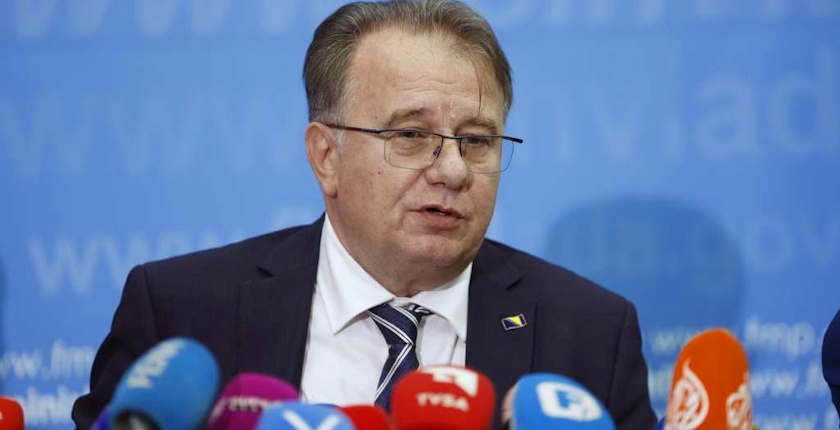
Federation of BiH prime minister says ETS could be introduced by end-2025

State institutions of Bosnia and Herzegovina and one of its two political entities, the Federation of BiH, will take joint steps aimed at introducing an emissions trading system by the end of the year, according to Nermin Nikšić, the entity’s prime minister.

According to Nikšić, the European Union’s carbon border tax, which is set to take effect on January 1, 2026, poses a serious challenge that demands swift and decisive action at the state level to protect thousands of jobs and prevent a dramatic drop in BiH’s industrial exports, the Fena state news agency reported.

Nikšić announced joint activities by entity and state institutions aimed at establishing an emissions trading system (ETS) by the end of 2025.

With the full rollout of the Carbon Border Adjustment Mechanism (CBAM) at the beginning of next year, importers in the EU will pay a tax on cement, iron, steel, aluminum, fertilizers, hydrogen, and electricity from countries without CO2 pricing systems. It applies to Bosnia and Herzegovina as well as other countries of the Western Balkans.

Nikšić: To maintain exports to the EU, Bosnia and Herzegovina must urgently establish a framework recognized by the bloc

To maintain its exports to the EU, BiH must urgently establish a framework that the bloc recognizes, Nikšić explained. He recalled that BiH is the only country in the region without an electricity exchange, and said it is time for all levels of government to act jointly and responsibly.

FBiH Minister of Energy, Mining and Industry Vedran Lakić expressed the belief that the best way for Bosnia and Herzegovina to protect its economy and keep carbon tax revenues for itself is to establish its own emissions trading system. Without such a scheme, he warned, tens of millions of euros will end up in the EU budget

The revenues would be used to modernize production facilities, reduce emissions, and speed up the green transition, said Lakić.

According to him, the ministry is preparing financial support, through the FBiH Development Bank, for businesses that decide to install solar panels. This, he claims, will enable them to produce electricity for their own needs and avoid CBAM.

Hope dies last

Bosnia and Herzegovina and Montenegro have requested delaying the CBAM implementation, as did the European Network of Transmission System Operators for Electricity (ENTSO-E), but the EU confirmed it would proceed as planned. The Energy Community Secretariat pointed out that none of its contracting parties, including Western Balkan countries, would be able to get an exemption for electricity before the tax begins to be charged.

As January 1 is just months away, CBAM’s impact will become clear relatively soon. In Serbia, the National Alliance for Local Economic Development (NALED) recently warned that the carbon border tax would threaten jobs and businesses that employ about 7% of the country’s workforce and account for 11% of its GDP.

In Bosnia and Herzegovina, an official analysis has shown that CBAM could cost the country’s economy between EUR 369 million and EUR 1.62 billion through 2030.

by in News

EU’s Modernisation Fund disburses EUR 3.66 billion for clean energy projects in nine countries

Energy modernization projects in nine member states of the European Union will receive a total of EUR 3.66 billion from the Modernisation Fund, in the largest disbursement to date from the facility financed by carbon pricing revenues, according to a press release from the European Commission. The selected projects focus on renewable energy, grid upgrades, energy storage, and energy efficiency.

The largest beneficiary of the latest disbursement is Poland, which will receive EUR 1.33 billion for its projects, followed by the Czech Republic, with EUR 1.05 billion, and Romania, with EUR 712.3 million. Hungary will get EUR 181.3 million, Croatia EUR 170 million, and Greece EUR 113.6 million. The rest will go to Latvia (EUR 40 million), Lithuania (EUR 37 million), and Slovenia (EUR 19.7 million).

Croatia will finance renewable heat production and zero-emission transportation, and Slovenia will upgrade power grid to integrate renewables

In Croatia, EUR 80 million will be used for the production and use of heat from renewable energy sources and energy efficiency improvement in heating and cooling systems. The rest will go to investments in zero-emission transportation. In Slovenia, the funding will facilitate renewables integration through the modernization and development of the electricity transmission and distribution network.

Greece, which became a Modernisation Fund beneficiary in January 2024, intends to replace urban diesel buses with new electric buses, improve energy efficiency in municipal swimming pools, and switch the heating and cooling systems in its greenhouse infrastructure to renewables.

In Romania, the funding will help improve the energy efficiency of facilities covered by the European Union’s Emissions Trading System (EU ETS), support the contract-for-difference (CfD) scheme for onshore wind and solar, and finance the installation of solar and wind power plants for self-consumption in the agricultural and food sectors and public institutions. It is also intended for investments in new solar, wind, and hydropower capacities and to support the modernization and rehabilitation of the district heating network.

In the Czech Republic and Lihtuania, the funding will support energy storage projects

Other example projects include investments in storage capacity for renewable electricity in the Czech Republic, investments in large-scale energy storage capacities in Lithuania, and a clean air program in Poland that focuses on energy efficiency improvements and heat source replacements in single-family houses, according to the press release.

The investments will reduce greenhouse gas emissions in the energy, industry, and transportation sectors, improve energy efficiency, and help the beneficiary states meet climate and energy targets, the commission said.

The projects will also help improve people’s everyday lives, by reducing bills, improving public services, creating jobs, and making the energy transition real, fair, and beneficial for all, according to Teresa Ribera, the European Commission’s Executive Vice-President for Clean, Just and Competitive Transition.

With this latest round of funding, the total disbursements from the Modernisation Fund since January 2021 have climbed to EUR 19.1 billion. The fund is financed by revenues from the auctioning of emission allowances under the EU ETS.

  • 1
  • 2