by in News

Slovenia Bolsters Energy Transition with €174 Million Grid Investments

Slovenia has taken a decisive step toward a decarbonized future, announcing a €174 million investment package dedicated to the comprehensive modernization of its national power transmission and distribution networks. This strategic initiative aims to bolster grid capacity, enhance supply reliability, and—most critically—facilitate the rapid integration of renewable energy sources into the national mix.

The project is supported by €59 million in co-funding from the European Union’s Modernisation Fund, a financial instrument fueled by the EU Emissions Trading System (ETS) designed to assist member states in meeting climate targets.

A Foundation for the Green Transition

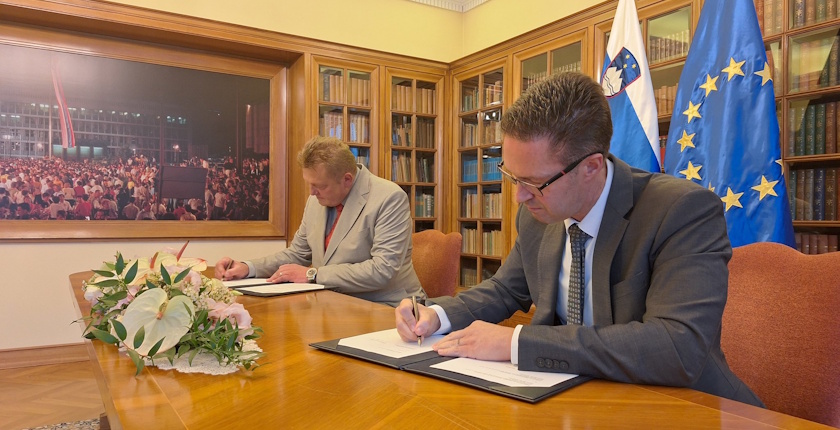
Minister of the Environment, Climate and Energy, Bojan Kumer, formalized the initiative by signing four contracts and two strategic decisions with the CEOs of Slovenia’s six state-owned energy entities. The group includes the transmission system operator (TSO) ELES and five distribution system operators (DSOs).

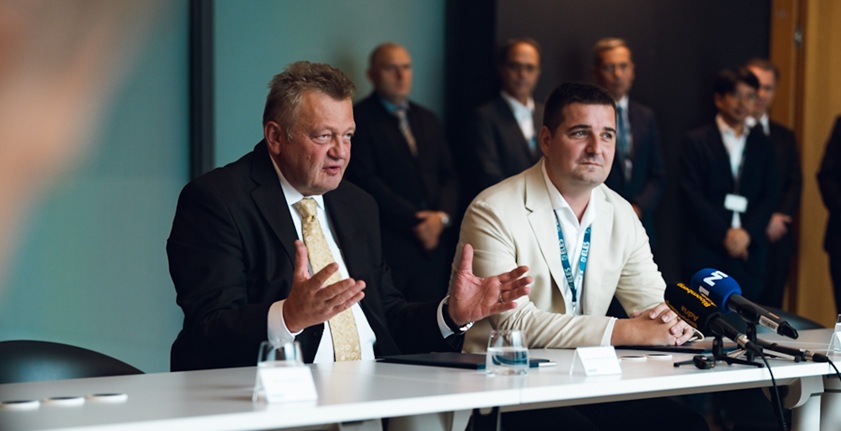
“The energy transition actually begins with the grid,” Minister Kumer noted during the signing ceremony. “A strong, resilient network is the bedrock upon which our future energy autonomy and sustainability are built.”

Key Projects and Financial Breakdown

The modernization efforts are distributed across the country’s regional operators, focusing on infrastructure upgrades, digitalization, and increased transformer capacity.

Operator Project Focus Total Investment EU Support
Elektro Ljubljana Urban network upgrades, cabling, and digitalization €53.2 Million €19.6 Million
Elektro Gorenjska Upgrading Trata and Brnik substations €32.9 Million €14.9 Million
Elektro Maribor New 110 kV line (Murska Sobota – Lendava) €32.3 Million €11.1 Million
ELES (TSO) Upgrading 110 kV line (Dravograd–Velenje) €12.9 Million €5.7 Million
Elektro Celje Switchgear refurbishment & transformer replacement €11.0 Million €5.5 Million
Elektro Primorska Reconstruction of Vrtojba substation switchgear €3.5 Million €1.7 Million

The 2030 Vision: Scaling Smart Infrastructure

This current wave of investment is only the beginning of a broader strategic roadmap. Slovenia has secured over €300 million from the Modernisation Fund to be utilized through 2030, specifically earmarked for grid refurbishment, energy efficiency, and renewable deployments.

The Ministry is already preparing a subsequent public call, expected in April, which will allocate €69 million for smart electricity grid investments between 2026 and 2030. These funds will prioritize three pillars:

  1. Renewables Development: Strengthening the grid to handle intermittent wind and solar inputs.

  2. Electrification of Heating: Supporting the transition away from fossil-fuel boilers to heat pumps.

  3. E-Mobility: Building the infrastructure necessary for the widespread adoption of electric vehicles.

By reinforcing its electrical backbone today, Slovenia is ensuring that its infrastructure can meet the demands of a more electrified and sustainable tomorrow.

by in News

Slovenia’s TSO ELES joins European Network for Cyber Security

Slovenia’s transmission system operator ELES has joined the European Network for Cyber Security, reinforcing collaborative efforts to protect Europe’s electricity grid from evolving cyber threats.

The partnership will give ELES access to the European Network for Cyber Security’s (ENCS) collaborative threat intelligence, specialist training and technical expertise – strengthening its ability to detect, prevent and respond to cyber incidents targeting high-voltage networks across Slovenia and beyond, ENCS said.

The move comes amid rising pressure on Europe’s grid operators. According to the European Union Agency for Cybersecurity’s ENISA Threat Landscape 2025, operational technology – the backbone of electricity networks – faces an increasing range of cyber threats, with incidents growing in frequency and sophistication.

As nation-state activity intensifies and consumer-connected devices expand the attack surface, coordinated action to protect critical infrastructure has never been more essential, the network underlined.

Nijk: Europe’s power systems are only as strong as their weakest link

Of note, Slovenia started the development in March of a robust cybersecurity framework for the electricity sector, based on an AI system.

“Europe’s power systems are only as strong as their weakest link,” ENCS Managing Director Anjos Nijk stressed.

ELES’s new membership strengthens joint defences and brings valuable regional expertise to the table, he explained. As Slovenia’s grid underpins stability across Central Europe, its participation will help drive the shared strategies and capabilities needed to counter evolving cyber threats, Nijk added.

Rolih: Grid cybersecurity is a team effort

Gorazd Rolih, SOC Manager at ELES, recalled that grid cybersecurity is a team effort.

“Joining ENCS allows us to both contribute to and benefit from Europe-wide collaboration, sharing intelligence, best practices and operational insights that make every member stronger,” he said.

The European Network for Cyber Security is a non-profit membership organisation that brings together critical infrastructure stakeholders and security experts to deploy secure European critical energy grids and infrastructure.

Founded in 2012, ENCS provides cybersecurity solutions and counsel dedicated to the needs of national distribution system operators (DSO), transmission system operators (TSOs) and regulators.

by in News

Slovenia and Italy to upgrade electricity interconnectors

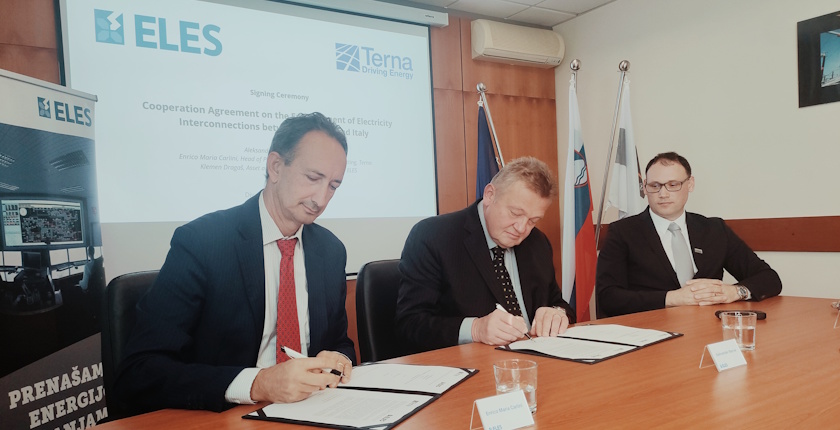
Slovenian transmission and distribution system operator ELES and Italian transmission system operator Terna agreed to upgrade their cross-border electricity network in an investment of EUR 250 million. The project aims to increase the transmission capacity between the two countries by 600 MW, strengthening supply and trade.

After a decade of coordination, ELES and Terna signed an agreement to raise the electricity transmission capacity between Slovenia and Italy by 600 MW or more than 50%. According to ELES, it is an important step in market integration and strengthening the reliability of the interconnected electricity system.

Interconnections between Slovenia and Italy are currently among the most heavily loaded ones in the Slovenian network, the country’s TSO pointed out.

As ELES further explained, with the growth of electricity imports and exports, there is an increasing need to strengthen transmission routes between the two countries. The company expects a rise in electricity imports in the countries gradually phasing out fossil fuel–based production to further increase the demand for cross-border transmission capacity.

The project consists of three upgrades

The project includes three main improvements. On the Slovenian side, the phase-shifting transformer at the Divača substation would be upgraded, alongside adding a third unit, which enables full utilization of the capacity of the 400 kV transmission line between Divača and Redipuglia (Sredipolje). The current transmission capacity, 1,200 megavolt-amperes (MVA), would be lifted to 1,800 MVA.

On the 220 kV transmission line between Divača and Padrice in Italy, low-sag conductors, capable of withstanding higher temperatures will be installed, ELES said. The transmission capacity would be doubled to 700 MVA.

On the Italian side, the existing 220 kV Padriče-Redipuglia connection and the Redipuglia substation are to be upgraded with a new phase-shifting transformer. It is crucial for managing internal power flows, the update reads.

“With an additional 600 MW of cross-border capacity, Slovenia is solidifying its role as a key electricity hub between Central and Southern Europe and as a reliable regional partner. This is a strategic investment in the future, ensuring reliability, resilience, and connectivity of our grid in the decades when electricity will become the main energy currency,” said ELES CEO Aleksander Mervar.

Slovenia’s share of the project is estimated at EUR 90 million

The total value of the project is EUR 250 million, with the Slovenian share estimated at EUR 90 million and the Italian side securing EUR 160 million. Pending all necessary permits and documentation, construction is planned to begin in 2029, and completion is expected by the end of 2031.

ELES announced it would seek European funds to finance the Slovenian side of the investment.

“The agreement not only strengthens the historic partnership between the two transmission system operators but also marks an important step toward developing and implementing innovative solutions that enhance the efficiency of transmission network investments. The agreement encourages system operators to introduce not only capital-intensive projects but also solutions with lower capital requirements that can increase net benefits and investment returns for all electricity system users,” said Enrico Maria Carlini, Head of Power System Planning and Permitting at Terna.

by in News

Slovenia’s TSO ELES joins forces with army to develop hydrogen technologies

Slovenia’s transmission system operator ELES and the Ministry of Defence have signed a cooperation agreement for the Defence Resilience Hub Network in Europe – RESHUB project.

Last year, the Ministry of Defence of Slovenia initiated the Defence Resilience Hub Network in Europe (RESHUB) project, which aims to establish self-sufficient energy hubs in Slovenian military barracks.

As part of the initiative, the military barracks in Kranj will be transformed into a demonstration center for energy self-sufficiency, integrating military infrastructure with innovative solutions in renewable energy and hydrogen technologies.

Aleksander Mervar, CEO of ELES, and Marko Lovše, State Secretary of the Ministry of Defence, now signed the agreement, during the Slovenia-Japan Business Conference.

The deal outlines cooperation in the field of energy self-sufficiency and the development of hydrogen technologies, according to state-owned ELES.

The Kranj military barracks will be converted into a demonstration center for energy self-sufficiency

The project will turn the Kranj military barracks into a demonstration center for energy self-sufficiency by integrating military infrastructure with innovative technology for renewables and hydrogen.

ELES will contribute to the development of the RESHUB (Resilience Hub) pilot project concept, which focuses on the production, storage, and use of hydrogen, the country’s TSO noted.

The company will be involved in all phases of the project — from preparing expert studies and technical groundwork to providing professional support for documentation development.

ELES considers hydrogen a potential key energy carrier for storing surplus energy from low-carbon sources

“At ELES, we recognize hydrogen as a potentially key energy carrier for storing surplus energy from low-carbon sources, which can later be reused in the energy sector, transport, and industry,” according to the company.

ELES recalled that in 2024 it established a consortium to build a hydrogen ecosystem based on low-carbon sources.

Collaboration with Japanese partners, who have been actively developing and, in some cases, successfully deploying hydrogen technologies for decades, is essential for the company. ELES has already established several partnerships with Japanese companies and is now exploring new opportunities for deeper cooperation in the further development and application of hydrogen technologies.

In recognition of Mervar’s outstanding contribution to strengthening bilateral economic and technological ties, Japanese Ambassador to Slovenia Akiko Yoshida awarded him an honorary recognition at the business conference.

Akiko Yoshida and Aleksander Mervar (photo: ELES)
by in News

ELES, Hitachi Energy launch Next Generation Control System project

Slovenia’s transmission system operator ELES and Hitachi Energy have signed a strategic cooperation agreement for the implementation of their Next Generation Control System project.

ELES and Hitachi Energy plan to develop advanced digital solutions for transmission grid control centers, according to Slovenia’s TSO.

The Next Generation Control System project is a continuation of their cooperation within the internationally recognized and awarded NEDO project. The project has laid the foundation for collaboration between ELES and Hitachi, representing a key step in the said activities.

The companies will develop three key functionalities of the new generation

Within the project, the two companies intend to work on three core functionalities of the next generation.

An Enterprise Service Bus (ESB) is a software solution that connects various applications, enabling them to communicate and exchange data — even if they use different languages, protocols, or formats. In practice, it will be implemented for the system that determines operational limits.

Voltage Var Control is an upgrade to the existing voltage management system, introducing complex functions and advanced control methods.

The Common Information Model enhances the efficiency of network data models exchanged between different systems and organisations, particularly in the context of TSOs.

The project will last two years

The firms plan to implement and finance the two-year project by themselves. ELES would invest in improvements, while Hitachi Energy develops the agreed functions, to verify them together with the Slovenian state-owned company. Hitachi Energy intends to incorporate the new functionalities into its standard energy management system offering (Network Manager).

The agreement was signed by Aleksander Mervar, CEO of ELES, and Lars Wiklander, Business Operations Strategy & Planning Executive at Hitachi Energy. However, he was unable to attend the signing ceremony and conference.

The speakers at the event were Lazar Bizumić, Head of Product Management at Hitachi Energy; Jurij Klančnik, Transmission System Operation Director at ELES, and Janko Kosmač, Process Systems Manager at ELES, who is also the head of the technical part of the joint project.

Mervar: An important step in the digital transformation of the Slovenian electricity sector

Janko Kosmač, Aleksander Mervar and Lazar Bizumić (photo: ELES)

Aleksander Mervar highlighted the agreement as a significant step in the digital transformation of Slovenia’s electricity sector. At the same time, in his words, it reinforces the role of ELES and Slovenia as an innovative environment for developing advanced energy solutions.

“New digital solutions will enable better integration of various systems, smarter voltage management in the grid, and more efficient and transparent data exchange. This is a technologically advanced project that will significantly contribute to the safer, more efficient, and sustainable operation of the Slovenian electricity system. It is an important step in Slovenia’s green transition,” Mervar added.

Wiklander: The grid management software and systems ecosystem of the future must be built on a flexible, modular architecture

The grid management software and systems ecosystem of the future must be built on flexible, modular architecture to give TSOs and utilities the scale they need to manage a changing and dynamic grid, the flexibility to integrate proprietary and third-party applications, and the control and visibility necessary to manage and deliver a reliable, resilient power supply, Lars Wiklander asserted.

“This collaboration with ELES is an important proof point in our strategy to deliver the leading grid management ecosystem with Network Manager,” he pointed out.

by in News

Electricity prices for Slovenian firms among highest in EU in 2024

Last year, Slovenian households had cheaper electricity than the European Union average while the tariffs for other categories of consumers, including businesses, were among the highest in the EU, according to an analysis by Slovenia’s transmission system operator ELES.

The analysis, conducted by ELES CEO Aleksander Mervar, also showed network fees are significantly lower than the EU’s average.

Slovenia is in the bottom third of the list of the 27 member countries. As for its neighbors, domestic prices were higher than in Hungary and Croatia, and lower than in Austria and Italy, Naš Stik reported.

Last year, Bulgaria had the lowest prices in the EU, followed by Malta, Luxembourg, Hungary, and Croatia. When measured against purchasing power, prices in Slovenia are in the lower half of the list.

The Government of Slovenia has capped electricity prices for households

The analysis attributes the lower tariffs for households mainly to measures that the Government of Slovenia introduced. The two main interventions were setting a maximum price for 90% of consumption, and freezing the payment of a fee for subsidizing electricity production from renewables and high-efficiency cogeneration.

From January 1 to October 31, the maximum price was 8.2 eurocents per kWh in the lower tariff and 11.8 eurocents per kWh in the higher one. They were the maximum prices for 90% of consumption, while the remainder was set by suppliers in line with the market conditions.

Without government measures, the annual bill of the average Slovenian household, with an annual consumption of 4,000 kWh, would be higher by EUR 345.89 or 45.77%, according to the calculation.

ELES denies network fees impacted competitiveness of firms

The conditions for businesses were different. Prices for commercial and industrial consumers were among the highest in the EU. However, the domestic average was lower than in neighboring countries.

Businesses in Serbia experienced a similar issue last year.

ELES denied the claim by the Chamber of Commerce and Industry of Slovenia that high network fees lowered corporate competitiveness. The company argued they were significantly lower for commercial consumers, by 36.5% to 49%, than the EU average.

In addition, network fees are as much as 53% below the level in the countries surrounding Slovenia, according to the ELES analysis.

Network fees for households in Slovenia are among the lowest in the EU.

by in News

Episodes of negative power prices in Slovenia, Romania spread to workdays

Romania registered the first negative day-ahead electricity price for a workday. The phenomenon, which only used to occur on holidays and weekends, has emerged in Slovenia as well.

In spring and autumn, most of Europe occasionally faces periods of excessive power grid loads. The rapid rise in solar and wind power production and the lack of accompanying energy storage and flexibility capabilities are straining the system at times when demand is low. Advanced electricity markets countered the issue by introducing negative prices.

When prices hit zero or go below zero, the seller delivers electricity without compensation or even has to pay to the buyer, respectively. The phenomenon was normally reserved for holidays and weekends, but more day-ahead markets are now experiencing it for workdays as well.

Downward pressure in Romania from strong inflow of negatively priced electricity via Hungary

Romania saw its first such episode yesterday, on Sunday, in the session for today, Profit.ro reported. Prices in its day-ahead market are negative in five out of 24 periods of one hour, between 11:00 and 16:00.

The country is importing at almost 2 GW via Hungary and exporting at up to 1.5 GW to Bulgaria, the news website added. The article notes that renewable energy producers, especially in Germany, where prices are also negative, are exporting to other markets to ease the impact. They usually benefit from subsidies, so generating electricity isn’t necessarily unprofitable even when they sell at a loss.

In addition, shutting down and restarting power plants can be more costly than paying the other side to take excess output.

The level in Romania went to as low as EUR 6.18 per MWh below zero. But the daily average is EUR 76.54 per MWh. The peak, is EUR 198.16 per MWh, between 20:00 and 21:00, when there is no sunlight and prosumers only consume.

Negative prices turn Slovenia’s HSE into electricity consumer

Prices in Slovenia for today also came in negative between 11:00 and 16:oo, which is very rare for a workday, Naš stik reported. Among other factors, the two-day May 1 holiday shortens the current workweek. The lowest, between 14:00 and 15:00, is EUR 6.18 euros per MWh below zero.

In comparison, the lowest price for Sunday on the BSP Southpool exchange was EUR 104 per MWh under zero.

At one point during the Easter holiday, virtually all HSE’s production capacities were offline and the Avče pumped storage hydropower plant was storing electricity from the grid

“Last year, we had 219 hours in Slovenia when prices were negative. This year, we are already at number 72, and we have only just entered the critical period,” said Deputy Director of System Operations of ELES Aleš Donko. The company is Slovenia’s transmission and distribution system operator.

State-owned power utility Holding Slovenske elektrarne (HSE) found itself in an unusual situation during the Easter holidays because of negative prices.

“For a while, we were actually an energy consumer, not a producer, which is our core mission… Virtually all our power plants were shut down, and the Avče pumped storage hydropower plant was pumping water into the upper reservoir at full capacity,” Head of Operation Planning and Management Jernej Brglez said.

Portugal and Spain, which suffered major outages today together with France, both registered negative prices every day in the third week of April.

Also of note, Greece is preparing to introduce negative prices in the balancing market.