by in News

BiH’s power utility ERS sees EUR 14.8 million loss in 2025

Elektroprivreda Republike Srpske expects a loss of BAM 29 million (EUR 14.8 million) this year, according to the power utility’s CEO Luka Petrović.

The reasons for the poor business results of Elektroprivreda Republike Srpske (ERS) are bad hydrological conditions and an increase in electricity imports, Luka Petrović said, as quoted by news agency Srna.

ERS is one of the three state-owned power utilities in Bosnia and Herzegovina. It is in charge of the electricity production and supply in the Republic of Srpska, one of the country’s two political entities.

Of note, a week ago, the new Prime Minister of the Republic of Srpska Savo Minić called the situation in the electricity sector extremely complex. He has also set a 15-day deadline for setting up plans to overcome the issues.

Petrović: Electricity is imported for EUR 72 per MWh and sold to citizens for EUR 34 per MWh

Following the meeting of ERS’s management in Trebinje, Luka Petrović emphasized that the company’s electricity production would be significantly reduced, to 4,500 GWh. He previously said hydropower output decreased by 50% this year on an annual basis.

He recalled that ERS already purchased about 13% of electricity for domestic supply at high prices. The difference between purchase and sales prices will produce a loss of about BAM 29 million (EUR 14.8 million), Petrović added.

He noted that in 2023, when the hydrological situation was good, ERS achieved a record profit of BAM 146 million (EUR 74.6 million).

Of note, the company recorded a BAM 3.2 million (EUR 1.6 million) profit in 2024.

Petrović stressed that the electricity deficit would have to be purchased on the power exchange, at EUR 72 per MWh, while it is sold to citizens for EUR 34 per MWh, compared to the price for businesses of EUR 75 per MWh.

Imports this year reached BAM 60 million to BAM 70 million (EUR 30.7 million to EUR 35.8 million)

Two consecutive years with drought can disrupt the cash flow because there is no export capacity, Petrović explained.

He asserted that ERS’s electricity exports over the past few years were worth BAM 100 million to BAM 200 million (EUR 51.1 million to EUR 102.2 million) per annum, while imports were between BAM 30 million and BAM 60 million. This year, electricity bought abroad amounted to between BAM 60 million and BAM 70 million (EUR 30.7 million to EUR 35.8 million).

Of note, in previous years, BiH was the largest net exporter of electricity in the region. However, imports were nearly 4.5 times higher in the first half of the year than in the same period of 2024. Another power utility, Elektroprivreda BiH (EPBiH), is increasing losses.

Government to hold a session about ERS

Petrović noted that the company has repaid a loan of BAM 78 million (EUR 39.9 million) and another of BAM 60 million (EUR 30.7 million).

A government session about ERS is planned. He will propose that it be held at the Ugljevik thermal power plant, from which a third of the electricity is delivered to Slovenia.

In addition, the management of ERS has requested further rationalization of all operating costs.
by in News

BiH’s electricity imports up 4.5 times

Bosnia and Herzegovina’s electricity imports were nearly 4.5 times higher in the first half of the year than in the same period of 2024.

The step rise in power imports is another evidence of the difficult situation in the country’s utilities – Elektroprivreda BiH (EPBiH), Elektroprivreda HZHB (EPHZHB), and Elektroprivreda Republike Srpske (ERS).

The main issue is the drop in production in coal power plants and hydropower plants. For many years, BiH was the only net electricity exporter in the Western Balkans; however, it seems a change is underway. The country finished last year with 2.5 TWh in net exports – 36% less than in 2023.

Most imports occurred during the winter

According to data from the Agency for Statistics of BiH, electricity imports in the first half of last year amounted to BAM 78.8 million (EUR 40.3 million), while in the same period this year they reached BAM 344 million (EUR 175.9 million), Nezavisne novine reported. It is a 337% increase.

The data show that the majority of imports took place in the first quarter or during the winter. In the first three months of last year, import costs came in at BAM 33.7 million (EUR 17.2 million), and this year they soared to BAM 235.4 million (EUR 120.3 million) from January through March.

Exports also recorded an increase on an annual scale. In the first half of 2025, they were worth BAM 439.4 million (EUR 224.6 million), against BAM 289.3 million (EUR 147.9 million) in the equivalent period of last year. It is a 52% increase.

Coal and hydrology issues soured the foreign balance in the electricity sector

Just under half of exports were achieved in the first three months of the year.

ERS struggled with power generation in coal power plants due to longer maintenance and a lack of coal. EPBiH has also been facing coal supply problems for years. Both companies are unable to produce sufficient quantities of coal from their own mines.

An additional issue this year is the drought, which has reduced production in hydropower plants. Unfavorable hydrological conditions are affecting all three companies, but the largest pressure is on EPHZHB, which operates only hydropower plants.

Energy expert Almir Bečarević asserted that import figures reflect reality.

He explained that two thermal power plants in the Republic of Srpska were undergoing maintenance, and that EPBiH is facing issues with hydrology and its mines, which cannot supply sufficient quantities of coal.

by in News

BiH’s power utility EPBiH cancels waste co-incineration trial in Tuzla coal plant

Power utility Elektroprivreda Bosne i Hercegovine aborted a waste co-incineration test at its Tuzla coal power plant. It halted the pilot project upon a request from the city authorities.

Elektroprivreda BiH (EPBiH) announced it would comply with the resolutions that the City Council of Tuzla adopted, and halt the development project for trial co-incineration of alternative SRF and RDF fuel with coal at its Tuzla thermal power plant. RDF – refuse-derived fuel, and SRF – solid recovered fuel, are made from waste, and SRF is of higher quality.

The company claimed that, being socially responsible, it bases its operations on consistent compliance with laws, regulations, and local community views, continuous improvement of environmental standards, and a commitment to transparent dialogue and cooperation with all relevant stakeholders.

The plan was to incinerate 100 tons of waste

The trial waste co-incineration was scheduled for yesterday, but the day before, the Tuzla City Council demanded its cancellation at an emergency session.

The first reports about waste incineration at the Tuzla thermal power plant emerged in 2022. EPBiH said at the time that it planned to convert unit 3 of the Tuzla thermal power plant into a cogeneration unit, using wood biomass. However, Bankwatch and the Aarhus Center accused the company of intending to mix waste in, as well.

The idea to incinerate waste in coal power plants has been widely discussed in the region for several years. In 2021, Slovenian state-owned power utility Holding Slovenske Elektrarne (HSE) abandoned a project to burn waste in its Termoelektrarna Šoštanj (TEŠ) facility, citing opposition from local authorities and citizens.

Another BiH power utility, ERS, also plans waste incineration

In May 2023, Elektroprivreda Republike Srpske (ERS), another government-controlled power utility in BiH, revealed a plan for a trial incineration of waste.

Serbia’s Elektroprivreda Srbije (EPS) has such plans, too. The company has initiated several studies and pilot projects to analyze the use of alternative fuels in coal-fired power plants.

Its last move was to ask the Ministry of Environmental Protection to determine the scope and content of the environmental impact assessment study required for the project.

Tuzla City Council: We won’t allow experiments on Tuzla’s citizens

TPP Tuzla (photo: EPBiH)

The day before the planned waste incineration, the Tuzla city parliament adopted several conclusions. Among other things, it demanded urgent action from the Federal Ministry of Environment and Tourism and EPBiH regarding the lack of consultations with local authorities.

The assembly demanded that the management of TPP Tuzla immediately suspend all activities related to the incineration of RDF waste until an urgent public discussion is held with the participation of citizens, experts, and political representatives.

The local council stressed its opposition to all plans for co-incineration and incineration of waste, specifically RDF, until it is assured that the plan complies with legal, environmental, and health requirements.

The City of Tuzla and the City Council clearly and firmly declared that they won’t permit any experiments on Tuzla’s citizens, especially ones with potentially harmful or severe or even fatal consequences for human health, as well as environmental risks, the local parliament said.

Ministry: Everything was done to ensure testing was conducted under controlled and transparent conditions

The Federal Ministry of Environment and Tourism noted that EPBiH has requested permission for a trial co-incineration of a mix of coal and alternative SRF and RDF fuel at TPP Tuzla. However, according to the current Environmental Protection Law, there is no legal obligation to obtain either an environmental permit or an environmental impact assessment for trial co-incineration, it explained.

The ministry said that for the purpose of transparency it has issued an expert opinion to ensure the testing is implemented under controlled and transparent conditions, taking into account the interests of the local community.

EPBiH informed the entity ministry that, following the local assembly’s intervention, a federal environmental protection inspector conducted an inspection at TPP Tuzla on July 7 and confirmed that all the conditions were met for testing.

by in News

Significant step for citizen energy in BiH – Republic of Srpska enables establishment of first renewable energy communities in region

The recent adoption of the rulebook on renewable energy communities in the Republic of Srpska is a big step in enabling citizens, local authorities, and businesspeople in Bosnia and Herzegovina to join forces and produce electricity for their own needs. It was a key step in introducing citizen energy. The concept is a great opportunity for the Balkans, because it can provide many benefits like lowering bills for consumers, and a sustainable energy transition, according to Damir Miljević, a member of the Regional Center for Sustainable Energy Transition (RESET) from BiH.

The new rulebook on renewable energy communities in the Republic of Srpska, one of the two entities making up Bosnia and Herzegovina, defines the activities of renewable energy communities (REC).

Energy transition consultant Damir Miljević explained to Balkan Green Energy News that REC refers to the production of electricity from renewables, while citizen energy communities (CEC) include all types of energy. The rulebook adopted by the Republic of Srpska, in his words, is the first in the region. It is focused on enabling the production of electricity for self-consumption (prosumers) primarily from renewable energy sources such as solar, wind, and hydro energy.

Energy communities are an opportunity for citizens and businesspeople lacking suitable roofs for photovoltaics

He says the rulebook finally created the conditions at the local level – where the energy transition is supposed to be conducted in the first place – for citizens, local authorities, and businesspeople to join forces and produce electricity by installing a facility together. They can use some of the produced electricity for their own needs and inject the rest into the grid.

Citizens and small entrepreneurs who don’t have suitable roofs for solar power plants and municipal authorities with many roofs at their disposal as well as their own land can jointly finance and use such facilities. They will benefit both on the individual and collective level, Miljević pointed out. Without the communities framework, it wouldn’t be possible, in his opinion.

“In addition, conditions are created through RES communities to cede a part of the energy that the community’s facility generates, if the members of the community agree, to vulnerable categories of the population, contributing to the fight against energy poverty that way,” said Miljević, who is among the speakers at the upcoming Belgrade Energy Forum 2025 (BEF 2025).

Miljević: Elektroprivreda Republike Srpske needs to do its part

The rulebook’s entry into force enabled citizens, local firms and local communities to establish renewable energy communities, Miljević said and added that the only serious remaining obstacle is the refusal of government-owned power utility Elektroprivreda Republike Srpske (ERS) to sign new supply contracts.

Prosumers in the entity can’t fully exercise their rights, despite an order from the Regulatory Commission for Energy of the Republic of Srpska, as they haven’t yet received the new supply contracts from ERS, he pointed out.

Citizen energy is a great opportunity for Balkan states

Damir Miljević (photo: Balkan Green Energy News)

Miljević stressed that rulebooks are among the steps in introducing citizen energy. Miljević noted that the other parts of BiH haven’t established regulatory frameworks. The Brčko District has no bylaws, while the Federation of BiH has adopted the rules for renewable energy communities, but hasn’t simplified its rules for connecting prosumers and the communities to the grid.

Production onsite for consumption should become priority in energy policies and for decarbonization efforts in the Western Balkans

In Miljević’s opinion, the resistance is enormous and partly caused by the lack of recognition of the importance and role of citizen energy in countries such as the Balkans.

In contrast to developed countries – for instance, household consumption in the European Union has a 25% share in total final electricity consumption – in BiH and Serbia it is 42%, and in Montenegro it amounts to around 50%, he noted.

It means the concept of producing for consumption onsite should be a priority in energy policy and for decarbonization efforts in the Western Balkans, Miljević stressed. It implies putting solar panels on roofs on a significant scale, which is the essence of citizen energy, he added.

Citizen energy isn’t a priority in domestic and international policies implemented in the region

In addition to reducing electricity bills for customers, the concept contributes to reducing distribution and transmission losses and required investments in new grid capacities and new large power plants, and improves the security of supply and energy independence of a country, according to Miljević.

Citizen energy, in his words, is the only solution for a safe and sustainable energy transition and decarbonization of domestic power consumption, but unfortunately it isn’t a priority in domestic and international policies implemented in the region.

The lobbying effect of investors in the market shouldn’t be underestimated either, nor the fear and resistance within the politics and state-owned power utilities to the decentralization, democratization, and demonopolization of power generation that citizen energy brings, Miljević concluded.

by in News

Republic of Srpska awards concession for Trebinje 3 solar project

The Ministry of Energy and Mining of the Republic of Srpska, one of the two entities constituting Bosnia and Herzegovina, has awarded a concession to power utility Elektroprivreda Republike Srpske for the proposed Trebinje 3 solar power plant.

The Trebinje 3 photovoltaic plant would have an installed capacity of 53.63 MW and an estimated annual production of 85.5 GWh.

According to the ministry, construction is expected to be completed within the next four years. The concession has been granted for 50 years and the total investment value is BAM 84.2 million (EUR 43.1 million), the ministry said.

Before finalizing the concession contract, the concessionaire, state-owned Elektroprivreda Republike Srpske (ERS), delivered a one-off payment to the budget of the Republic of Srpska of BAM 842,049 (EUR 430,992).

Almost the entire amount of the concession fee will be allocated to the budget of the City of Trebinje

After the facility becomes operational, the concessionaire will be obligated to pay a fee of BAM 0.0055 (EUR 0.0028) per kWh of generated electricity to the budget of the Republic of Srpska. A 95% share is allocated for the budget of the city.

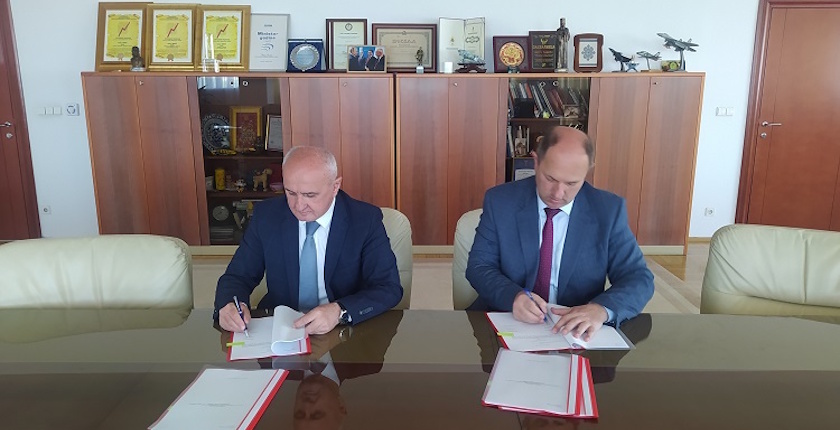
The concession agreement for the construction and operation of the Trebinje 3 solar power plant was signed by the Minister of Energy and Mining of the Republic of Srpska Petar Đokić, who will be among the speakers at Belgrade Energy Forum 2025 (BEF 2025), and ERS CEO Luka Petrović.

ERS already has two concessions for solar power projects

It is the third concession that the company received for solar power plants from the government. The first, for Trebinje 1, with a capacity of 73 MW, was awarded in 2020..It was followed by Trebinje 2, for 53 MW, awarded in 2022. Neither of the two PV plants has been constructed yet.

In March 2022, ERS announced Lugos Renewables was acquiring 70% ownership of the Trebinje 1 project, with ERS retaining control of the remaining 30%.

In February of this year, the Government of the Republic of Srpska approved concessions for two solar power projects. Their total capacity would be 110 MW.

by in News

Three hydropower plants on Bistrica river to be finished by end-2026

Three hydropower plants on the Bistrica river near Foča are expected to be completed by the end of 2026, according to Petar Đokić, the Minister of Energy and Mining of the Republic of Srpska, one of the two entities of Bosnia and Herzegovina.

Chinese company AVIC is in charge of building the three hydropower plants, with a total capacity of 39 MW. State power utility Elektroprivreda Republike Srpske (ERS) will operate the facilities once they are completed, according to public broadcaster RTRS.

The three small hydropower plants on the Bistrica river, a tributary of the Drina, are being intensively built, with all works targeted for completion by the end of 2026, said Minister Petar Đokić, who will be among the speakers at Belgrade Energy Forum 2025 (BEF 2025).

The Hidroelektrane Bistrica hydropower system will consist of three cascading plants installed in the river canyon along the Foča-Sarajevo road. The construction of the facilities officially began in December 2021.

The total project cost is estimated at EUR 103 million

Once completed, the system will have a total installed capacity of 39 MW and an annual electricity output of 152 GWh. Đokić also said that the signed contract values the project at EUR 102.8 million.

Last year, the Government of the Republic of Srpska and the Chinese contractor AVIC signed an agreement on financing the construction of the three hydropower plants on the Bistrica.

Photo: The Ministry of Energy and Mining of the Republic of Srpska

During a visit to the construction site, Đokić revealed that there may be certain changes during implementation, but noted that the project will provide exceptional value for the energy system of the Republic of Srpska.

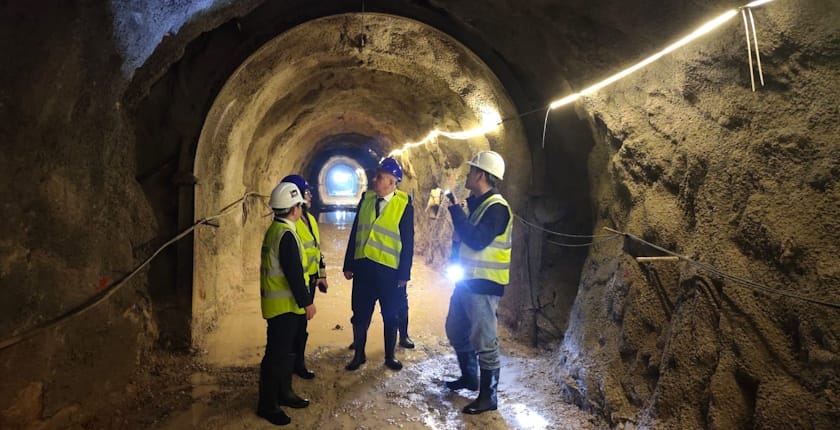
The three hydropower plants include nearly ten kilometers of tunnels

Site manager Feng Xiong from AVIC noted that the project encompasses three hydropower plants with a total of 9,800 meters of tunnels. Only 600 meters of tunnel work remains unfinished, he said, adding that he believes the project will be completed as scheduled.

Dejan Pavlović, CEO of Hidroelektrane Bistrica, stated that 9.2 kilometers of tunnels has been completed. Bistrica’s high water levels have slowed down the construction, he noted.

The companies investing in the three hydropower plants include Hidroelektrane Bistrica and Hidroelektrane na Drini, the majority owner of the project. The financial backing was secured by ERS.