by in News

Bajramović: Investments of BAM 1.4 billion needed for distribution grids in BiH

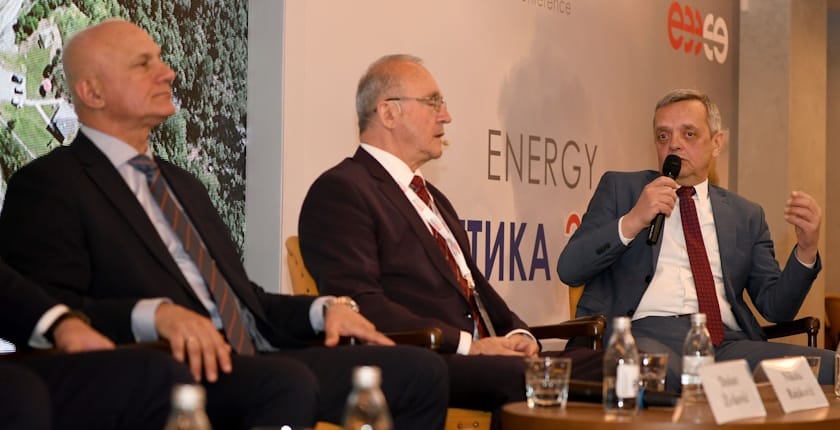
Necessary investments in Bosnia and Herzegovina’s electricity distribution grids by 2030 amount to BAM 1.4 billion (EUR 716 million), according to Zijad Bajramović, chairman of the Bosnia and Herzegovina committee of the International Council on Large Electric Systems (CIGRE).

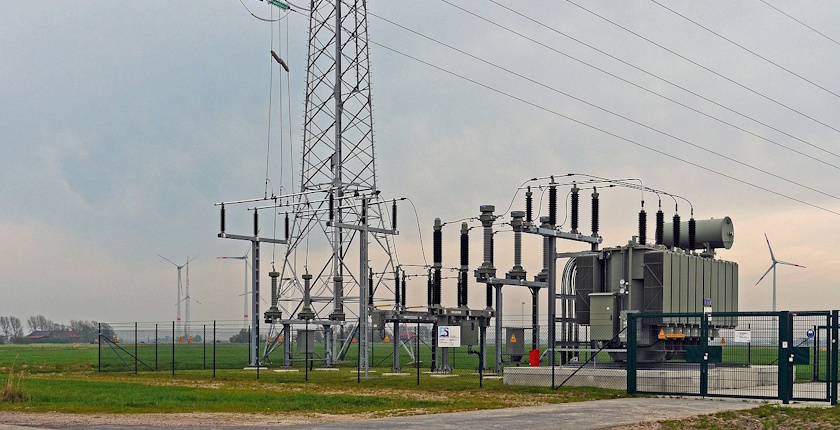
The growing installation of power plants utilizing renewable energy sources is creating congestion in transmission and distribution networks, so the limited available capacity for their connection is an issue across the entire region, Zijad Bajramović told state news agency Fena. Nezavisne Novine republished the report.

An additional burden on the distribution network is expected from the electrification of transportation and increased electricity use for heating and cooling.

Energy storage is a solution for the problems emerging in the grid

Bajramović explained that new 110 kV substations are necessary, as is the completion of the ongoing transition to the 20 kV voltage level. Attention should also be paid to integrating prosumers, especially the households that both produce electricity, with solar panels on their roofs, and consume it.

He highlighted balancing as well as maintaining voltage conditions and supply quality as the main challenges from the rise in renewable electricity capacity on the grid. Energy storage is a solution for the issues.

Batteries can prevent renewables generation curtailments

Bajramović expects battery energy storage systems to play an increasingly significant role in relieving network congestion.

BESS, in his words, are a flexibility tool for absorbing excess generation locally, and temporarily easing the pressure on the transmission grid. They can prevent curtailments of power generation from variable renewable sources, he added.

Bajramović recalled that calculations have showed batteries of 225 MW / 450 MWh in total would be necessary to connect 1,500 MW of solar power capacity and 1,000 MW of wind power to the transmission network.

An increase in distribution network tariffs would provide funds for investment in strengthening and modernizing the distribution network, in his view.

Batteries are being installed at a rapid rate around the world as well as in the region. Not only private companies, but also state-owned utilities such as Romania’s Hidroelectrica and Montenegro’s Elektroprivreda Crne Gore (EPCG) are investing in such projects.
by in News

Montenegro’s power utility seeks contractor for two battery storage systems

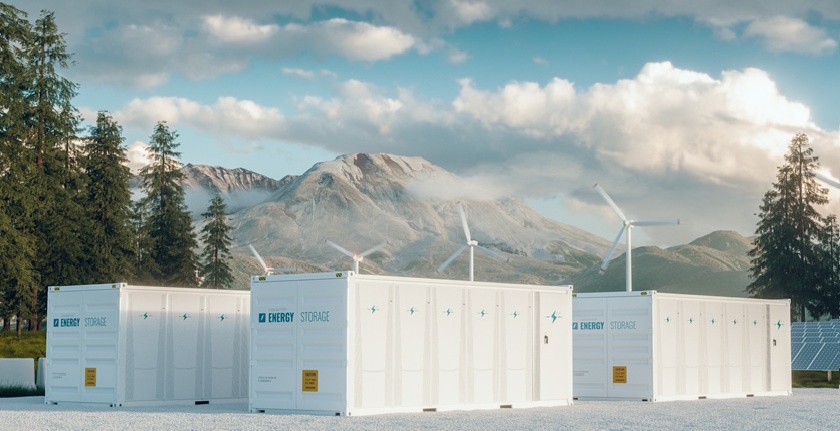
Montenegro’s state-owned power utility, Elektroprivreda Crne Gore, has launched a tender for the procurement and installation of two battery energy storage systems with a total capacity of 60 MW/240 MWh.

Elektroprivreda Crne Gore (EPCG) is seeking a partner for the design, supply, installation, testing, and commissioning of two battery energy storage systems (BESS), each with a capacity of 30 MW and 120 MWh, with an output voltage of 35 kV.

The estimated value of the procurement is EUR 48 million excluding VAT, according to the public call.

The EPC (Engineering, Procurement, and Construction) contract for the batteries is a comprehensive turnkey agreement covering all phases of project development, including design, equipment procurement and delivery, permitting, construction, and commissioning.

The contract also includes training for EPCG personnel

Technical staff training is included to ensure the proper and safe operation of the facilities, as well as to validate their performance in accordance with the contracted terms, which will be mutually confirmed by signing a technical acceptance report.

The EPC covers all technical, engineering, logistical, and construction details, workplace health and safety, environmental protection, and responsibilities for performance guarantees and technical maintenance of the facility, according to the public call.

According to previous announcements, EPCG intends to utilize existing infrastructure for connection to the transmission grid. Potential locations include the 60 MWh hydropower plant Perućica, EPCG’s steel mill Željezara Nikšić with two 60 MWh units, and the 60 MWh Pljevlja thermal power plant.

The first two battery systems will be installed at the Željezara site.

EPCG held talks with several investors

In March, the company announced it had held discussions with several companies and financiers from the region, Europe, and beyond.

EPCG initially announced its intention to install batteries in early September last year. At that time, the EPCG Board of Directors adopted a project task proposal for adding BESS capacities.

According to the project task, EPCG aims to optimize the utilization of all renewable energy sources, alongside numerous new renewable energy projects.

The company plans to secure the flexibility of the power system with energy storage systems based on lithium-ion batteries, according to EPCG.

by in News

Montenegro’s state power utility posts EUR 24.5 million loss in H1 2025

Montenegro’s state-owned power utility, Elektroprivreda Crne Gore, posted a EUR 24.5 million loss in the first half of 2025, a 620% increase compared to the same period last year.

The main reasons for the poor results were a production halt at the Pljevlja coal power plant and a wide gap between the purchase price of imported electricity and the selling price for consumers connected to the distribution network, according to Elektroprivreda Crne Gore (EPCG).

EPCG’s total revenue in the first half of 2025 amounted to EUR 208.1 million, while total expenses reached EUR 234.7 million.

The operating result was a EUR 24.5 million loss, which is EUR 21 million more than in the first half of 2024, when the loss was EUR 3.5 million. This represents a 620% increase compared to the same period in 2024, according to EPCG’s half-year report.

Total electricity production was nearly 25% lower year-on-year

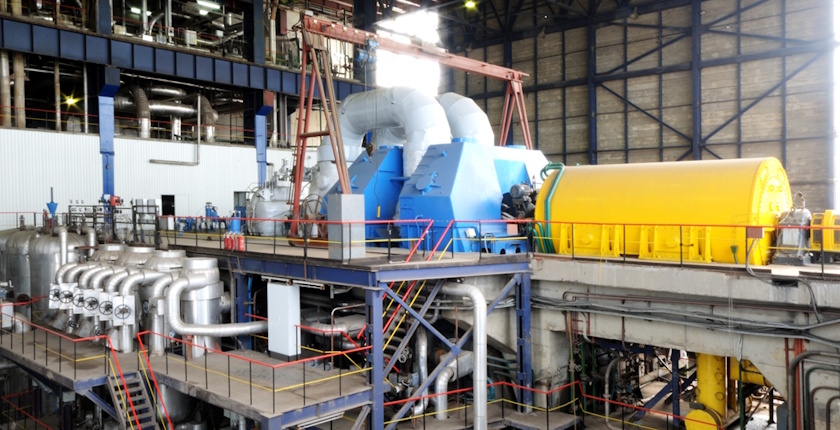
A significant factor affecting the business result was the halt in production at the Pljevlja thermal power plant from March 31 this year due to final works on environmental reconstruction and the regular annual overhaul. As a result, the plant’s utilization rate for the first six months was only 48.8%.

In the first half of 2025, TPP Pljevlja produced nearly 400 GWh of electricity, 7.9 GWh or 2.02% above the plan, but almost 18%, or around 87 GWh, less than in the same period in 2024.

The total output at hydropower plants – Piva, Perućica, and small hydropower plants (SHP) – was 658 GWh, which is 22% or 159 GWh less than in 2024.

The company spent EUR 35.8 million more on electricity imports

The total output of all power plants was 1,058 GWh, or 78.8% of the plan, according to the report. This also represents a decrease of 26%, or 278 GWh.

During the first half of 2025, EPCG imported 656 GWh of electricity for EUR 62.4 million. The average price was EUR 95.09 per MWh. In the same period last year, imports totaled 430.3 GWh, at an estimated cost of EUR 26.6 million, according to the report. This marked a 52% increase in the volume of imports.

The company has received consent to borrow EUR 50 million to finance electricity imports.

The report underlined that the price charged to consumers on the distribution grid is significantly lower than the purchase price of imported electricity. The gap has a major negative impact on EPCG’s results, the company noted.

Electricity is imported at above EUR 100 per MWh and supplied to distribution consumers at an average price of around EUR 45 per MWh, according to the report.

by in News

Montenegro’s power utility gets EUR 25 million loan to expand Gvozd wind farm

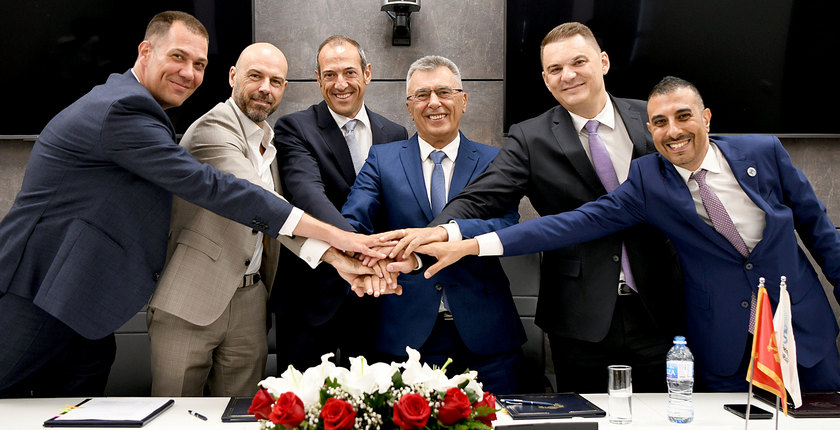
Montenegrin state-owned power utility Elektroprivreda Crne Gore (EPCG) said it signed a EUR 25 million loan contract with the European Bank for Reconstruction and Development (EBRD) for expanding the Gvozd wind farm to 75.6 MW. Once fully operational, it will be the largest wind farm in Montenegro.

The Gvozd 2 project involves the installation of three additional wind turbines, with a combined capacity of 21 MW. It will increase the wind farm’s total projected annual production to over 210 GWh, enough to cover the needs of about 36,000 households and reduce CO2 emissions by almost 137,000 tons a year, EPCG said following the signing of the loan agreement.

The expansion project involves three additional wind turbines with a combined capacity of 21 MW

An EUR 82 million loan for the first, 54.6 MW phase of the wind farm, including the grid connection infrastructure, was signed with the EBRD in June 2023. Gvozd will be EPCG’s first large-scale power generation facility built in more than 40 years.

Construction on the first phase, featuring eight turbines, began in November 2024. EPCG expects the power plant to enter trial operation by the end of this year, with a projected annual electricity output of 150 GWh.

Construction on the first, 54.6 MW phase of wind farm Gvozd was launched in late 2024

Commissioning of the full 75 MW capacity is expected by the end of 2026, according to a press release from the EBRD.

A key step in Montenegro’s energy transition

Milutin Đukanović, President of EPCG’s Board of Directors, described the expansion of Gvozd as a key step in Montenegro’s energy transition. In the press release, EPCG stated that the wind park would significantly contribute to achieving the European goal to produce electricity exclusively from clean sources by 2050 at the latest.

Minister of Energy and Mining Admir Šahmanović noted that the Gvozd project would strengthen Montenegro’s energy security, reduce CO2 emissions, and pave the way for sustainable development.

Francesco Corbo, the EBRD’s Regional Head of Energy for the Western Balkans and Croatia, recalled that the bank, through its Renewable Energy Market Accelerator (REMA) program, helped the Montenegrin authorities organize the country’s first renewable energy auction, for solar projects totaling 250 MW.

by in News

Project underway for 81 MW solar park on coal mine in Montenegro

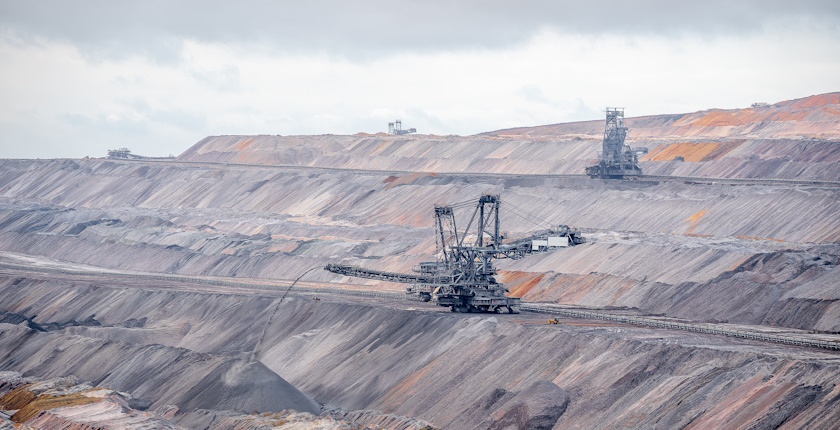
The Government of Montenegro adopted urban planning and technical conditions for a solar power plant of 81.1 MW in peak capacity in Pljevlja. The site for the facility is part of a coal mining complex.

Greece is the most successful by far in the Balkans in transforming coal land into clean energy and advanced technology hubs. The projects in the region are mostly for solar power plants. Neighboring North Macedonia is next when it comes to implementation, while Romania and Bulgaria as well as Serbia and Slovenia have made their first steps. Bosnia and Herzegovina and Kosovo* are still in the planning phase, and now Montenegro is joining them with a photovoltaic project.

The government in Podgorica adopted the urban planning and technical conditions for a solar power plant of 81.1 MW in peak capacity in Pljevlja. The facility in the country’s north called Rudnik uglja would be in the Ilino Brdo I cadastral unit, on the site of the Potrlica open cast coal mine.

According to a study submitted with the application, the connection capacity would be 62.5 MW. The coal mine’s operator and PV project developer, Rudnik uglja Pljevlja, said the location spans 62.6 hectares.

The government plans to close the Pljevlja coal plant in 2041

The firm is a subsidiary of state-owned power utility Elektroprivreda Crne Gore (EPCG), which runs the Pljevlja power plant in the same complex. It is the only coal-fired facility in Montenegro. The government plans to close the thermal power plant, currently under reconstruction, in 2041.

Rudnik uglja Pljevlja presented a just transition plan in March. It aims to establish 12 businesses to transform the region and spin them off. They include construction, transportation and the installation of a small hydropower plant called Durutovići and a photovoltaic facility.

The previous government initiated the development of a plan two years ago for an industrial complex in Pljevlja. There are several separate renewable energy projects in the area as well.

* This designation is without prejudice to positions onstatus and is in line with UNSCR 1244/99 and the ICJ Opinion on the Kosovo declaration of independence.
by in News

Montenegro’s EPCG to take out EUR 50 million loan

Montenegro’s power utility Elektroprivreda Crne Gore will take out a loan of EUR 50 million to purchase electricity to supply consumers in the country.

The Government of Montenegro, upon the proposal of the Ministry of Finance, has issued an approval for Elektroprivreda Crne Gore (EPCG) to borrow EUR 50 million from Erste Bank to finance the purchase of the lacking quantities of electricity.

The loan is necessary to ensure the continuity of electricity supply while the Pljevlja thermal power plant is offline due to the ongoing ecological reconstruction project, the government said.

The investment aims to bring the power plant’s operation in line with EU emission standards

The works at Montenegro’s only coal-fired facility began in April 2022, and it has been offline since the end of March this year. The plant, which accounts for 40% of domestic electricity production, is scheduled to return to operations after seven and a half months. The investment is intended to reduce its emissions to align them with the European Union’s standards.

EPCG previously announced that it had already purchased about 75% of the electricity it required – 600 GWh, for which it paid around EUR 60 million. The remaining quantities needed for the third quarter, approximately 200 GWh, are planned to be purchased during the second quarter, the company said.

The company’s request was supported by the Ministry of Finance

According to the government’s new decision, the Ministry of Finance supported EPCG’s request.

It noted that EPCG achieved a net profit of EUR 10.2 million in 2024, which is 80.51%, or EUR 42.2 million, lower than in 2023, when it amounted to EUR 52.5 million. The projected profit for 2024 was EUR 3.4 million, the ministry recalled.

Of note, the company recently said it planned to take out a EUR 25.6 million loan from the European Bank for Reconstruction and Development (EBRD) to finance the second phase of the Gvozd wind farm project.

by in News

Đukanović: EPCG is implementing three key strategic policies

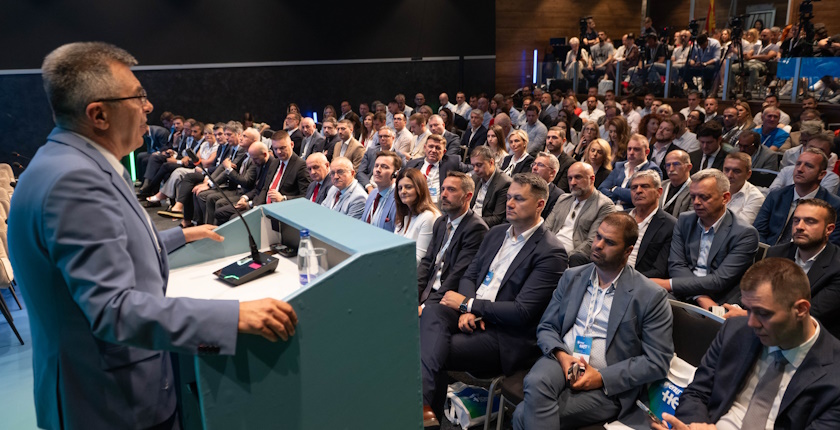
State-owned power company Elektroprivreda Crne Gore is currently implementing three key strategic policies: producing energy at the point of consumption, utilizing existing hydropower infrastructure to connect solar power plants, and developing battery energy storage systems, the President of EPCG’s Board of Directors, Milutin Đukanović, said at the EPCG NET conference.

EPCG NET is organized by Elektroprivreda Crne Gore (EPCG) and its partners. At the event’s opening in Budva, Milutin Đukanović announced the start of trial operations at the Gvozd wind farm and the launch of tendering to install battery energy storage systems (BESS).

“Our ‘produce where you consume’ policy is, in our view, the winner of the energy transition. At the same time, hydropower infrastructure provides technical and meteorological compatibility for connecting solar power plants. However, these activities will have their full impact only with the development of BESS,” Đukanović noted.

The 10,000+ solar project is expected to begin in mid-2026

He also said that numerous investments are underway. By the end of the year, the 55 MW Gvozd wind farm, an EUR 82 million investment backed by KfW, will enter trial operation. Early next year, the company expects to start construction on the second phase of the project – Gvozd 2, with a capacity of 21–22 MW.

A few days ago, tendering was completed for the installation of the eighth unit at the Perućica hydropower plant, with a capacity of 58 MW. The new unit is expected to be online in 2027.

Đukanović recalled that the 3000+ project, featuring 35 MW of solar capacity across 3,500 facilities, has been completed, while the 5000+ project is halfway through, with 40 MW and over 4,000 consumers involved. The 10,000+ project is expected to start in mid-2026, he added.

Preparations are ongoing for the construction of several solar power plants: Krupac (50 MW), Štedim (150 MW), four plants at Kapino Polje (totaling 50 MW), as well as facilities in the Željezara Nikšić industrial complex, where 10 MW of the planned 30 MW has already been installed.

The first tendering for procuring BESS will be launched soon, covering two systems with a capacity of 30 MW each (120 MWh). By the end of 2027, EPCG plans five such systems, with a combined capacity of 600 MWh.

The energy transition is a great opportunity for progress

Đukanović also announced an upcoming call for bids for the construction of a tunnel that will connect the Krupac and Slano reservoirs, valued at EUR 12 million, as part of a broader plan to enhance the utilization of the water resources of Nikšićko polje, Montenegro’s largest karst field. Additionally, plans are underway to develop Lake Liverovići and underground waters in the Nikšićko polje, with total investments potentially exceeding EUR 1 billion and a projected capacity reaching 700 MW, he added.

“The energy transition is a great opportunity for progress, but also a serious threat if risks are overlooked. Time is of the essence – we must act immediately,” Đukanović urged, calling on forum participants to focus their discussions on concrete solutions and offer ideas for improving existing policies.

The two-day forum has brought together numerous experts, investors, and representatives of institutions from the energy sector across the region and Europe.

by in News

Decarbonization of Southeastern European region: both renewables and nuclear are speeding up

Energy transition in Southeastern Europe is accelerating, and the progress depends on individual countries’ strategies and legal frameworks. At the Belgrade Energy Forum (BEF 2025), representatives of state-owned power utilities and private producers discussed the different approaches to decarbonization. The domination of investments in renewable energy is unquestionable, but there are also ambitions to develop nuclear capacities, spearheaded by Slovenia. The country is already operating one nuclear reactor and is developing a project for another one.

The electricity sector in Southeast Europe still depends for a large part on thermal power plants that burn fossil fuels. In 2023, they accounted for 43% of overall output, of which two-thirds were from lignite and the rest from gas. There is a need for accelerated decarbonization, and the speed of the transition will depend on financial possibilities and the political will and decisions, said the panel’s moderator and Director of Zagreb-based Energy Institute Hrvoje Požar Dražen Jakšić.

The acceleration trend in decarbonization is also evident in the electricity market projections for the region until 2030. The plans for the period until the end of the decade include shutting down 6.2 GW of thermal power plant capacity and installing 42.3 GW from renewable sources. Greece, Romania, Serbia and Bulgaria are expected to add the most.

Top executives of state-owned utilities in Serbia, Slovenia and Montenegro and independent power producers that invest in renewables in the region gathered at a panel called Decarbonisation strategies for power generation in Southeast Europe 2040/2050 at Belgrade Energy Forum 2025.

They agreed that decarbonization is well underway and an unstoppable process already speeding up significantly. The participants in the discussion presented the different strategies their companies will act upon in the following years and decades, leading the process to fulfilment.

Among the messages that they shared is that they expect each government to promote investments and make the legal framework clear and certain, while the countries strengthen their ties and exchange experiences. Green energy is the pillar of the energy transition and decarbonization in the region, but several states are also interested in building their first nuclear power plants—conventional ones or small modular reactors (SMRs)—or expanding the existing capacity.

EPS’s Živković: Decarbonization requires energy storage, nuclear plants

Chief Executive Officer of Serbia’s Elektroprivreda Srbije (EPS) Dušan Živković pointed out that the state-controlled electricity producer is committed to its goals regarding green energy and emission reductions as well as to the country’s targets. “We will work on that, of course, believing in these objectives, but without compromising energy security and the energy sovereignty of Serbia. It was proven to be the only sustainable path,” he asserted.

The company particularly counts on the project for solar power plants with a total connection capacity of 1 GW, with batteries of 200 MW in combined capability. The investment is conducted through a strategic partnership with Hyundai Engineering and UGT Renewables (UGTR).

A study is underway in Serbia on the potential for the construction of large nuclear power plants and small modular reactors

The decarbonization process won’t be easily feasible without serious energy storage capacity, Živković warned and added that nuclear energy wouldn’t be unrealistic. A study is underway on the possibilities of building large nuclear plants and small modular reactors in Serbia.

The head of EPS expressed the belief that “the quality of that energy needs to be visualized” for citizens of every country and that they should be explained that it is necessary to provide energy for the economy and its security.

CEOs Dejan Paravan of GEN energija, Dušan Živković of EPS and Eric Scotto of Akuo

No dilemma in Serbia about energy transition

Country Manager of WV-International in Serbia Neda Lazendić highlighted the said strategic partnership for solar power plants with battery energy storage systems (BESS), saying Hyundai Engineering is a world-renowned company.

In her view, the endeavor will be a milestone for the entire region and it is exceptionally important for gaining experience at the domestic level.

The recent second round of auctions for electricity from renewable sources showed that Serbia opted for the energy transition “and there is not any dilemma about it anymore,” Lazendić stressed and said the country is an example for the region. The prices from the bidding that were accepted are appealing and they match European trends, she noted.

Country Manager of WV-International Neda Lazendić

Lignite is highly unprofitable

Slovenia and GEN energija, one of the state-owned power utilities, are relying on both renewable sources and nuclear energy in their decarbonization investments, the company’s CEO Dejan Paravan pointed out.

“We want to get rid of coal as soon as possible. And in the short term, renewables are the only option. Why get rid of coal? The current production of domestic lignite is highly unprofitable, and because of climate goals,” he explained.

Nevertheless, it is exceptionally complicated to get permits for renewables and place them in the environment, Paravan added. On the other hand, nuclear energy is emissions-free and very stable and reliable, he asserted. The technology takes up the least space and enables the production of huge amounts of electricity, the head of GEN energija said.

Nuclear power plant Krško 2 could come online in 2040

Paravan recalled that two years ago nuclear power plant Krško marked four decades since it was commissioned and that its operating life was extended by 20 years. GEN energija is working on the Krško 2 project. The chief executive expects construction to begin in 2022 or 2023 and that the reactor could be connected to the grid in 2040.

In parallel, the company is studying SMRs. Still, the development of the technology will take a long time and, importantly, such facilities won’t have the advantage of scale like large reactors, he said. One who expects electricity from SMRs to be cheaper than from big nuclear plants is wrong, in Paravan’s view.

As for the dilemma between renewable sources and nuclear energy, he expressed the belief that they are not mutually exclusive. “We need renewables and they can provide us a lot of CO2-free electricity in the short run. But let’s make it clear that once we come to 70%, 80%, 90% based on renewables, that we have a problem of seasonal storage, that things will get very difficult,” Paravan stated.

Batteries are ten times cheaper than ten years ago

Conversely, Akuo Energy’s CEO Eric Scotto pointed out that nuclear power is expensive. “It’s over. We won the race. Renewable is the cheapest way to produce energy,” he underscored.

The price of energy storage capacity is ten times lower than ten years ago, the head of the French company noted. Moreover, operating power of a battery system in a standard TEU container, twenty feet or 6.1 meters long, now reaches 6 MW, which is three times more than three years ago, according to Scotto.

To attract investments, stability is necessary, he stressed. Scotto went on to highlight some “simple things” that could help Akuo, which was one of the winners at the last auction round in Serbia, to materialize its projects for two wind parks. He mentioned the speed of permitting for telecommunication systems and road construction, for power plants.

Turning to the slowness of the energy transition in Balkan countries, he emphasized its positive side. “We are late. Then we will benefit from the cheapest resource, the cheapest way to produce energy,” Scotto concluded.

EPCG’s Solari project kicked off energy transition in Montenegro

Technical Director of Elektroprivreda Crne Gore (EPCG) Ljubiša Đurković called the state-owned power utility’s projects Solari 3000+ and Solari 500+ the start of the energy transition in Montenegro. Since the beginning of 2023 and including Solari 5000+, launched later, the company set up photovoltaic systems on 7,380 structures, he revealed.

Total peak capacity reached 76 MW and another 125 MW will be installed by the end of the year, EPCG’s official said.

Among its projects, the company is building the Gvozd wind farm, and the Kapino polje solar park near Nikšić.

Technical Director of EPCG Ljubiša Đurković

There is already 10 MW on roofs in the former Željezara steel plant in Nikšić, and before the end of the year another 15.5 MW will be connected to the grid, Đurković said. A contract has been signed for the construction of the eighth generator in the Perućica hydropower plant, of 58 MW. It is scheduled for completion in 2027.

Đurković: A realistic date for the closure of the Pljevlja thermal power plant is between 2045 and 2050

The energy transition is about a single and connected system, including storage capacities and measures to improve energy efficiency, he underscored. “You have to create the conditions for a swift integration of renewable energy sources into the distribution and transmission networks. We were supposed to do that already. We didn’t do it, particularly in the Western Balkans. We didn’t reconstruct the distribution and transmission networks,” he stated.

As for the current reconstruction of the coal-fired Pljevlja thermal power plant, the only one in Montenegro, Đurković said the project wouldn’t make sense if the facility were to keep operating only for a short while longer.

žAccording to the National Energy and Climate Plan (NECP), which is almost complete, it will remain active at least until 2041, although the realistic date for its closure is only between 2045 and 2050, in the opinion of EPCG’s technical director. The main phase of the reconstruction began at the end of March.

by in News

Montenegro’s power consumption grows 25%

Electricity consumption in Montenegro has risen by 25% over the past four years, driven, among other factors, by solar power expansion. The installed capacity of photovoltaic plants amounts to around 80 MW, and it is expected to exceed 100 MW by the end of the year.

Jovan Kasalica, executive manager of the supply department in power utility Elektroprivreda Crne Gore (EPCG), attributed the surge in electricity consumption both to a low price of electricity and the growing contribution of solar power plants.

“The majority of this increase is linked to the heating sector, especially in central and northern Montenegro. We are making a significant contribution to decarbonization in the region, which we will document with precise data,” Kasalica noted at the international conference Energy 2025, held in the Zlatibor mountain in Serbia.

Rooftop solar is capacity is increasing

He said the development of the solar power segment was successful. Currently, nearly 80 MW of solar capacity is operational in Montenegro.

The Solari 3000+ and 500+ project brought online 30 MW of solar panels, and the second project, Solari 5000+, which aims for another 70 MW, is currently in advanced stages.

The initiatives focus on installing photovoltaics on the roofs of households and businesses, enabling citizens and entrepreneurs to produce electricity for self-consumption and become prosumers.

The Gvozd wind farm is set to be connected to the grid by the of the year

By the end of the year, it is anticipated that the total capacity of PV facilities in Montenegro will surpass the planned 100 MW, according to Kasalica.

He further noted that the company didn’t have any additional costs for the Solari 3000+ project, because the loans for the installation were switched to the funding facilities and consumers. The project has resulted in lower bills and greater energy efficiency, Kasalica said.

Additionally, he announced plans to connect the 54 MW Gvozd wind farm to the grid by the end of the year.

In addition to increasing the number of prosumers in Montenegro, EPCG plans to install ground-mounted solar power plants and to put online a total capacity of 200 MW within the next three years.

The company has also recently kicked off the main phase of the so-called ecological reconstruction of the Pljevlja thermal power plant. The only coal-fired facility in Montenegro won’t produce electricity until November.

by in News

Montenegro’s EPCG to launch public call for 300 MWh of batteries

Montenegro’s state-owned power utility, Elektroprivreda Crne Gore (EPCG), intends to invite bids by the end of the year for the installation of battery energy storage systems.

President of EPCG’s Board of Directors Milutin Đukanović has said that the company’s business philosophy is based on three principles – production at the point of consumption, use of hydropower for the integration of solar energy, and energy storage.

Speaking at a conference on regional power companies and their plans for the future, organized by Energija Balkana, Đukanović highlighted batteries as one of the key enablers of the green transition.

“By the end of year, EPCG will announce a public call for the procurement of battery energy storage systems (BESS) with a capacity of 300 MWh,” he said, according to EPCG.

EPCG plans to finish two more large-scale projects by the end of 2026

EPCG also plans to complete two large-scale projects by the end of 2026 – the construction of the Gvozd wind power plant and the installation of the A8 unit in the Perućica hydropower plant, according to him. About a month ago, the company held a groundbreaking ceremony for Gvozd, and in September it secured a loan for a new unit at HPP Perućica.

Energy Minister Saša Mujović recently said that a feasibility study was underway for electricity storage projects. The planned locations are at HPP Perućica, the former Željezara Nikšić steel plant, and the Pljevlja coal mine. These locations have available capacity for grid connections.

In September, EPCG said that it had started preparations to install batteries.

EPCG intends to install lithium-ion batteries

The Board of Directors has adopted a project task proposal and announced the launch of a public call for a feasibility study and project design.

The company plans to secure the flexibility of the power system by developing storage systems based on lithium-ion batteries, EPCG said.