by in News

Elektroprivreda BiH to invest EUR 885 million over next three years

Government-controlled power company Elektroprivreda BiH plans to invest BAM 1.73 billion (EUR 884.6 million) over the next three years, according to its 2026-2028 business plan.

The investments would be financed through loans, and BAM 538 million (EUR 275 million) from own funds of Elektroprivreda BiH (EPBiH), which operates in the Federation of BiH. Of note, it is one of the two entities making up Bosnia and Herzegovina. The other one is the Republic of Srpska.

In line with available funds and restructuring plans, the company intends to continue investing in coal mines within the EPBiH group over the three-year period.

The goal is a stable and sustainable coal production at the volume needed for the planned operation of the thermal power plants, the utility said.

The previous business plan, for the 2025-2027 period, provided for investments of BAM 2.1 billion (EUR 1.074 billion).

The three-year period should be marked by the construction of a large number of PV plants

EPBiH has highlighted the construction of new renewable energy power plants as a long-term strategic and priority goal. The construction of several solar power plants at already identified locations are particularly significant, the plan reads.

The upcoming three-year period should be marked by the construction of a large number of PV facilities at multiple locations on mining sites, company-owned land, on the roofs of its own facilities and those of its customers, EPBiH explained.

EPBiH also plans to acquire operational renewable energy facilities as well as projects in development. The plan envisages the purchase or lease of land suitable for the construction of solar power plants.

Positive business performance and maintaining the position as the dominant electricity supplier in BiH are also outlined in the business plan, adopted by the company’s assembly.

Desulfurization and denitrification of flue gases projects are planned for two thermal power plants

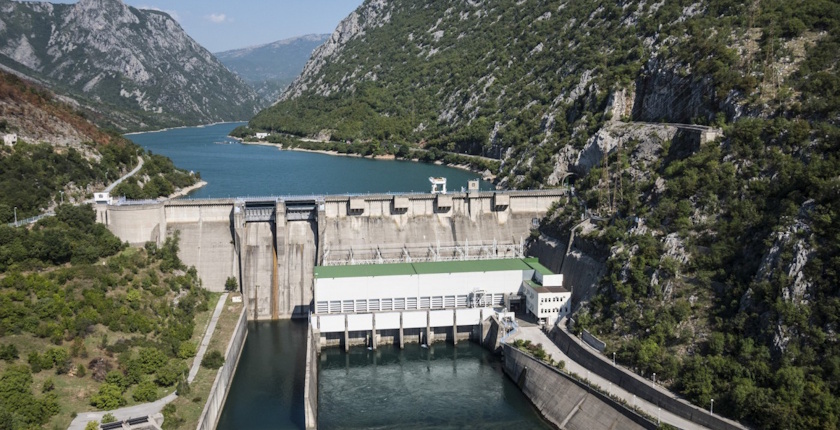
EPBiH has launched flue gas desulfurization and denitrification projects for its Tuzla and Kakanj coal-fired power plants. It would also upgrade unit 7 in Kakanj, unit 4 in Tuzla, and the Salakovac hydropower plant.

The document envisages the establishment of the distribution system operator (DSO), based on the provisions of the Law on Electricity of the Federation of BiH. It came into force in August 2023.

The law stipulates unbundling the distribution activity from EPBiH and establishing the DSO as a separate legal entity, a 100%-owned subsidiary, the company underlined.
by in News

Elektroprivreda BiH to invest EUR 885 million over next three years

Government-controlled power company Elektroprivreda BiH plans to invest BAM 1.73 billion (EUR 884.6 million) over the next three years, according to its 2026-2028 business plan.

The investments would be financed through loans, and BAM 538 million (EUR 275 million) from own funds of Elektroprivreda BiH (EPBiH), which operates in the Federation of BiH. Of note, it is one of the two entities making up Bosnia and Herzegovina. The other one is the Republic of Srpska.

In line with available funds and restructuring plans, the company intends to continue investing in coal mines within the EPBiH group over the three-year period.

The goal is a stable and sustainable coal production at the volume needed for the planned operation of the thermal power plants, the utility said.

The previous business plan, for the 2025-2027 period, provided for investments of BAM 2.1 billion (EUR 1.074 billion).

The three-year period should be marked by the construction of a large number of PV plants

EPBiH has highlighted the construction of new renewable energy power plants as a long-term strategic and priority goal. The construction of several solar power plants at already identified locations are particularly significant, the plan reads.

The upcoming three-year period should be marked by the construction of a large number of PV facilities at multiple locations on mining sites, company-owned land, on the roofs of its own facilities and those of its customers, EPBiH explained.

EPBiH also plans to acquire operational renewable energy facilities as well as projects in development. The plan envisages the purchase or lease of land suitable for the construction of solar power plants.

Positive business performance and maintaining the position as the dominant electricity supplier in BiH are also outlined in the business plan, adopted by the company’s assembly.

Desulfurization and denitrification of flue gases projects are planned for two thermal power plants

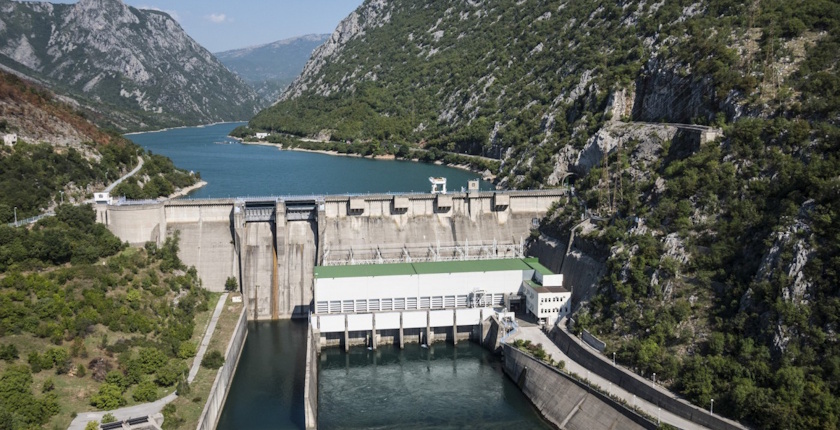
EPBiH has launched flue gas desulfurization and denitrification projects for its Tuzla and Kakanj coal-fired power plants. It would also upgrade unit 7 in Kakanj, unit 4 in Tuzla, and the Salakovac hydropower plant.

The document envisages the establishment of the distribution system operator (DSO), based on the provisions of the Law on Electricity of the Federation of BiH. It came into force in August 2023.

The law stipulates unbundling the distribution activity from EPBiH and establishing the DSO as a separate legal entity, a 100%-owned subsidiary, the company underlined.
by in News

EPBiH receives EUR 2 million from KfW for green, market-oriented transformation

Germany’s KfW Development Bank is donating EUR 2 million to Elektroprivreda Bosne i Hercegovine (EPBiH). The funding is for the acceleration of the energy transition and strengthening market mechanisms in Bosnia and Herzegovina’s state-owned power utility. The grants cover monitoring carbon dioxide emissions and related reporting as well as the development of a decarbonization roadmap and a virtual power plant project.

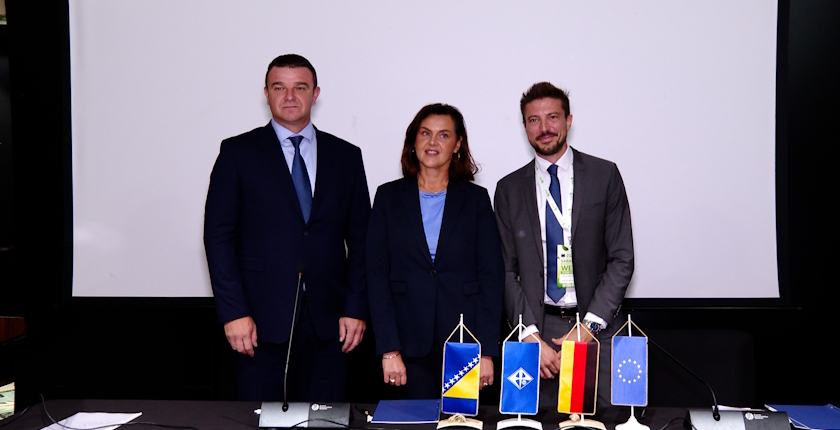
General Manager of Elektroprivreda BiH Sanel Buljubašić and the company’s Executive Director for Economic Affairs Sanela Jurišić signed an agreement with KfW’s Head of the Division of Energy and Transport in Southeast Europe and Turkey, Pablo Obrador, on EUR 2 million in grants.

Germany’s development bank approved the funds within the program Supporting Market-Oriented Green Transformation in the Eastern Neighbourhood and Western Balkans, on behalf of the European Union. It is supported by European Fund for Sustainable Development Plus.

EPBiH committed to sustainable decarbonization

The deal is aimed at supporting the institutional capacities of EPBiH for managing its green transition and corporate transformation.

The funding is part of the program Supporting Market-Oriented Green Transformation in the Eastern Neighbourhood and Western Balkans

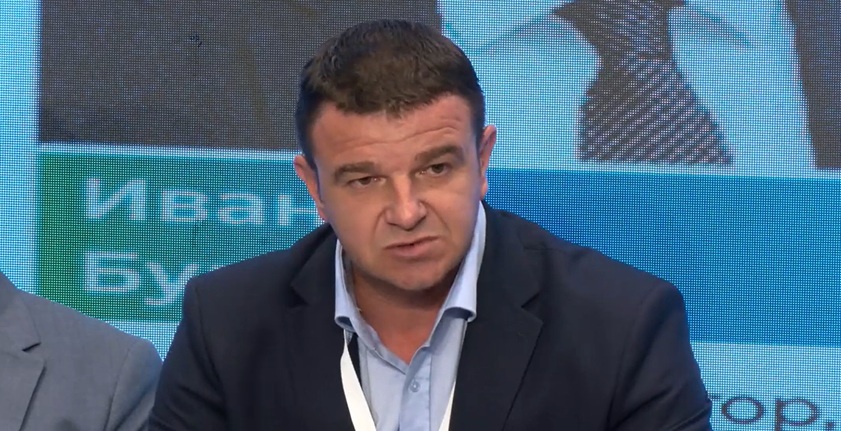
“The project that we are developing with KfW bank represents an important step toward speeding up the energy transition and strengthening sustainable market mechanisms in our company. With this milestone, Elektroprivreda BiH confirms its commitment to sustainable decarbonization as well as strengthening competitiveness through investments in green technology,” CEO Buljubašić stated.

Experts to participate in development of CO2 emissions tracking plan, establishment of virtual power plant

The grants are earmarked for technical support, which includes financing the services of expert consultants for a plan for monitoring CO2 emissions and related reporting, their support in producing a decarbonization roadmap, in corporate sustainability reporting and the establishment of a virtual power plant. Additionally, a part of the funds will be for technical support in the materialization of strategic guidelines defined in EPBiH’s energy transition and decarbonization strategy until 2050.


“We have invested in renewable energy sources before, and the signing of the contract represents a new chapter in our cooperation. I express hope that the new systems will be implemented soon and I express the bank’s preparedness to support Elektroprivreda BiH’s new green energy business models,” KfW’s representative Pablo Obrador said, as quoted by Bosnia and Herzegovina’s state-owned utility.

Alongside supporting EPBiH’s corporate reforms, the grant funding will be used for improving the company’s commercial efforts aimed at strengthening market preparedness and the improvement in strategic positioning within the rapidly developing energy sector.

by in News

Worrying results of coal, overburden production in BiH’s power utility

Coal deliveries to thermal power plants in the first half of the year reached 73% of the plan, while only 43% of the overburden excavation target was achieved, warned Sanel Buljubašić, CEO of Bosnia and Herzegovina’s state-owned power utility Elektroprivreda Bosne i Hercegovine (EPBiH).

Increasing coal production is the only way to stabilize the energy system in the Federation of Bosnia and Herzegovina (FBiH), Sanel Buljubašić told state news agency Fena. Focus.ba republished the report.

FBiH is one of the two entities making up BiH. The other one is the Republic of Srpska.

The chief executive pointed to the significance of coal, stressing that 80% of EPBiH’s production comes from coal power plants, with hydropower plants providing the remainder.

Of note, the company recorded a loss of BAM 45.47 million (EUR 23.25 million) for the first half of this year. BiH’s electricity imports were 4.5 times higher than in the same period of 2024.

Buljubašić: We will fulfill our obligations only if the mines fulfill theirs

Buljubašić recalled that the Government of FBiH raised the price of coal at the beginning of 2024 and signed a new collective agreement in the mining sector to demonstrate its commitment to improving working conditions for miners and their status.

The coal mines are operating under an entity called EPBiH Concern. They must produce the planned quantities of coal, which have been jointly agreed and contracted, the CEO underscored and added that EPBiH would meet its obligations only if the mines do the same.

Buljubašić said RMU Breza and RMU Đurđevik are facing the most pressing issues while that RU Kreka is making its best result of the past three years. Coal mine operators RU Kreka, RMU Kakanj, and RMU Abid Lolić have increased production, he added.

Of the nearly 5,000 workers, 1,226 are occupationally disabled

The company head said EPBiH Concern’s mines employ 4,967 workers, of whom 1,226 are occupationally disabled. Additionally, on average, between 1,500 and 1,700 employees are absent every day for various reasons, such as annual leave or sick leave.

In his words, restructuring would imply a program for surplus workers at RMU Zenica, closing mines that are technologically and economically unviable and continuing investments by procuring equipment for economically viable mines to increase productivity.

One of the main problems is the devastated coal deposits, a result of years of delay in overburden excavation, Buljubašić stressed.

Just transition includes mine shutdowns, installation of solar power, batteries, and the use of biomass

The just transition project in BiH’s coal regions, estimated at BAM 160 million (EUR 81.8 million), is being implemented with a World Bank loan. Most of the funds will be spent on closing mines and taking care of surplus employees of RMU Zenica, repurposing RU Kreka’s land, building the 12.2 MW Dubrave photovoltaic plant, repurposing the land of RMU Banovići and installing another solar power plant, of 15 MW, the CEO explained.

He pointed out that the authorities are preparing a law on the closure of Zenica mines — the first such legislation in BiH.

Green investments within a just transition platform for coal regions can include the construction of battery energy storage systems (BESS) and fast-growing biomass plantations, according to Buljubašić.

He announced that EPBiH would soon present its Prosumer 5000+ project and a long-term development plan for EPBiH for the period 2025-2050, within the energy sector development strategy.

by in News

BiH’s electricity imports up 4.5 times

Bosnia and Herzegovina’s electricity imports were nearly 4.5 times higher in the first half of the year than in the same period of 2024.

The step rise in power imports is another evidence of the difficult situation in the country’s utilities – Elektroprivreda BiH (EPBiH), Elektroprivreda HZHB (EPHZHB), and Elektroprivreda Republike Srpske (ERS).

The main issue is the drop in production in coal power plants and hydropower plants. For many years, BiH was the only net electricity exporter in the Western Balkans; however, it seems a change is underway. The country finished last year with 2.5 TWh in net exports – 36% less than in 2023.

Most imports occurred during the winter

According to data from the Agency for Statistics of BiH, electricity imports in the first half of last year amounted to BAM 78.8 million (EUR 40.3 million), while in the same period this year they reached BAM 344 million (EUR 175.9 million), Nezavisne novine reported. It is a 337% increase.

The data show that the majority of imports took place in the first quarter or during the winter. In the first three months of last year, import costs came in at BAM 33.7 million (EUR 17.2 million), and this year they soared to BAM 235.4 million (EUR 120.3 million) from January through March.

Exports also recorded an increase on an annual scale. In the first half of 2025, they were worth BAM 439.4 million (EUR 224.6 million), against BAM 289.3 million (EUR 147.9 million) in the equivalent period of last year. It is a 52% increase.

Coal and hydrology issues soured the foreign balance in the electricity sector

Just under half of exports were achieved in the first three months of the year.

ERS struggled with power generation in coal power plants due to longer maintenance and a lack of coal. EPBiH has also been facing coal supply problems for years. Both companies are unable to produce sufficient quantities of coal from their own mines.

An additional issue this year is the drought, which has reduced production in hydropower plants. Unfavorable hydrological conditions are affecting all three companies, but the largest pressure is on EPHZHB, which operates only hydropower plants.

Energy expert Almir Bečarević asserted that import figures reflect reality.

He explained that two thermal power plants in the Republic of Srpska were undergoing maintenance, and that EPBiH is facing issues with hydrology and its mines, which cannot supply sufficient quantities of coal.

by in News

BiH’s power utility EPBiH cancels waste co-incineration trial in Tuzla coal plant

Power utility Elektroprivreda Bosne i Hercegovine aborted a waste co-incineration test at its Tuzla coal power plant. It halted the pilot project upon a request from the city authorities.

Elektroprivreda BiH (EPBiH) announced it would comply with the resolutions that the City Council of Tuzla adopted, and halt the development project for trial co-incineration of alternative SRF and RDF fuel with coal at its Tuzla thermal power plant. RDF – refuse-derived fuel, and SRF – solid recovered fuel, are made from waste, and SRF is of higher quality.

The company claimed that, being socially responsible, it bases its operations on consistent compliance with laws, regulations, and local community views, continuous improvement of environmental standards, and a commitment to transparent dialogue and cooperation with all relevant stakeholders.

The plan was to incinerate 100 tons of waste

The trial waste co-incineration was scheduled for yesterday, but the day before, the Tuzla City Council demanded its cancellation at an emergency session.

The first reports about waste incineration at the Tuzla thermal power plant emerged in 2022. EPBiH said at the time that it planned to convert unit 3 of the Tuzla thermal power plant into a cogeneration unit, using wood biomass. However, Bankwatch and the Aarhus Center accused the company of intending to mix waste in, as well.

The idea to incinerate waste in coal power plants has been widely discussed in the region for several years. In 2021, Slovenian state-owned power utility Holding Slovenske Elektrarne (HSE) abandoned a project to burn waste in its Termoelektrarna Šoštanj (TEŠ) facility, citing opposition from local authorities and citizens.

Another BiH power utility, ERS, also plans waste incineration

In May 2023, Elektroprivreda Republike Srpske (ERS), another government-controlled power utility in BiH, revealed a plan for a trial incineration of waste.

Serbia’s Elektroprivreda Srbije (EPS) has such plans, too. The company has initiated several studies and pilot projects to analyze the use of alternative fuels in coal-fired power plants.

Its last move was to ask the Ministry of Environmental Protection to determine the scope and content of the environmental impact assessment study required for the project.

Tuzla City Council: We won’t allow experiments on Tuzla’s citizens

TPP Tuzla (photo: EPBiH)

The day before the planned waste incineration, the Tuzla city parliament adopted several conclusions. Among other things, it demanded urgent action from the Federal Ministry of Environment and Tourism and EPBiH regarding the lack of consultations with local authorities.

The assembly demanded that the management of TPP Tuzla immediately suspend all activities related to the incineration of RDF waste until an urgent public discussion is held with the participation of citizens, experts, and political representatives.

The local council stressed its opposition to all plans for co-incineration and incineration of waste, specifically RDF, until it is assured that the plan complies with legal, environmental, and health requirements.

The City of Tuzla and the City Council clearly and firmly declared that they won’t permit any experiments on Tuzla’s citizens, especially ones with potentially harmful or severe or even fatal consequences for human health, as well as environmental risks, the local parliament said.

Ministry: Everything was done to ensure testing was conducted under controlled and transparent conditions

The Federal Ministry of Environment and Tourism noted that EPBiH has requested permission for a trial co-incineration of a mix of coal and alternative SRF and RDF fuel at TPP Tuzla. However, according to the current Environmental Protection Law, there is no legal obligation to obtain either an environmental permit or an environmental impact assessment for trial co-incineration, it explained.

The ministry said that for the purpose of transparency it has issued an expert opinion to ensure the testing is implemented under controlled and transparent conditions, taking into account the interests of the local community.

EPBiH informed the entity ministry that, following the local assembly’s intervention, a federal environmental protection inspector conducted an inspection at TPP Tuzla on July 7 and confirmed that all the conditions were met for testing.

by in News

Elektroprivreda BiH seeks contractor for three solar power projects

Power utility Elektroprivreda BiH (EPBiH) called on companies to apply for designing and building three solar power plants. Two sites are on depleted coal land and the third one could become a hybrid power plant with existing wind farm Podveležje.

Within a project called EPBiH Solar Transition Programme, Bosnia and Herzegovina’s state-owned company Elektroprivreda BiH launched a tender for three photovoltaic facilities of 28 MW in total. The public call is on the EBRD Client e-Procurement Portal (ECEPP) of the European Bank for Reconstruction and Development. The lender pointed out it is the first phase of the first tranche.

EBRD is considering financing the investment valued at EUR 80.8 million with a EUR 36.5 million loan. EPBiH would provide EUR 7.7 million and secure the rest from other sources.

The tender consists of two stages while applications are received until May 26. The company selected for the first phase would be tasked with designing and building solar power plants Gornja Breza (15 MW), Višća (8 MW) and Podveležje 3 – with 5 MW in capacity.

EPBiH has 30-year concession for its PV project Podveležje 3

Phase 2 of the second tranche, for 56 MW, would comprise the proposed facilities Potočari 1, of 16 MW, Bedrock 1-3 (two times 8 MW plus 16 MW) and Banovići Selo, of 8 MW. Combined with the second tranche, the plan envisages 13 solar power plants of 195 MW overall.

Gornja Breza is on a former dump of the Breza coal mining complex north of the capital Sarajevo. Višća is at a depleted open cast coal mine on the territory of the city of Živinice near Tuzla.

The Podveležje 3 solar power project is colocated with the Podveležje wind power plant, owned by Elektroprivreda BiH. If the two systems are connected to the same infrastructure and digitally integrated, together they will become a hybrid power plant. The company won a concession last year for 30 years for 4.8 MW in the photovoltaic segment.

Abandoned coal land to host PV plants of Elektroprivreda BiH

EPBiH intends to build its other PV units in the first tranche also at abandoned parts of its mining complexes.

EBRD and UniCredit are financing the Gračanica 1 and 2 projects, located at a former tailings dump of the Gračanica mine. They are for 25 MW each and the connection capacity of the solar park would be 45 MW.

Notably, the company has been reporting losses quarter after quarter. It concluded last year with EUR 29.4 million in the red, compared to EUR 170 million in 2023. However, the company said in December that Chinese contractors have returned the advance payment of EUR 127 million that it payed them for the failed Tuzla 7 coal-fired power plant project.

Elektroprivreda BiH is planning another two wind farms: Vlašić and Bitovnja.

by in News

Court annuls environmental permits for EPBiH’s hydro projects Janjići, Vranduk

The Cantonal Court in Sarajevo overturned two decisions of the Federal Ministry of Environment and Tourism regarding the proposed Vranduk and Janjići hydropower plants.

The Janjići and Vranduk hydropower projects, with a total capacity of 36 MW, are being developed by state-owned power company Elektroprivreda BiH. The sites are on the Bosna river near the city of Zenica.

The two decisions were challenged by the Aarhus Centre in Bosnia and Herzegovina.

The Cantonal Court in Sarajevo has ruled that the 16 MW Janjići project requires a new environmental permit to move forward, news website Zenit.ba reported. Namely, the Aarhus Centre in BiH disputed the ministry’s decision in December 2021 that the existing one was valid. According to the court, the explanation was legally unsubstantiated.

The ministry didn’t take into account the ecological sensitivity of the Janjići area

The ministry also failed to acknowledge the complexity of the planned hydropower facility and that, in line with the regulations, a new permit is necessary if the deadline expires, the ruling reads.

According to the court, the ministry didn’t take into account the ecological sensitivity of the Janjići area. The location is a habitat of protected plant and animal species, among which is the otter.

Of note, in January 2022, Germany’s KfW Development Bank said it canceled the plan to finance the Janjići hydropower project with EUR 30 million. Total investment was valued at EUR 55 million.

The loan agreement between KfW and EPBiH was signed in 2014. Environmental organizations opposed the project, arguing it would flood one of the most beautiful areas around the Bosna river.

The Aarhus Convention was violated in the case of HPP Vranduk

The court also annulled the ministry’s 2023 environmental permit for the HPP Vranduk project of 20 MW.

The ministry violated several provisions of an environmental protection law of the Federation of BiH, the court stressed. By issuing the permit, it violated the right of the public to access information and participate in the decision-making process, thereby also violating the Aarhus Convention.

The environmental impact assessment (EIA) was inadequate while the environmental risks determined earlier and comments from experts weren’t taken into account, the ruling reads.

In early 2022, Austria-based Strabag won at the International Court of Arbitration in Brussels in a case against EPBiH. The panel ordered the power utility to pay EUR 16.4 million to the company.