by in News

Greek distribution operator slammed for wrongful power theft accusations

The Hellenic Distribution Network Operator (HEDNO or DEDDIE) has drawn severe criticism because of imposing fines for power theft in cases where no such wrongdoing took place.

Last year, HEDNO was asked by the government to step up its efforts to fight power theft, a major issue in the Greek market. In recent years, the phenomenon has worsened and is estimated to cost law-abiding consumers EUR 400 million per year. In 2022, 18% of the supplied energy was lost as a result of power theft or network losses in distribution. The number has remained high ever since.

However, the distribution system operator’s overzealous crews went over the top, fining consumers with thousands of euros, with little or no justification. In fact, there were cases where a drop in consumption as a result of irrelevant factors was considered power theft.

Households and businesses were obliged to pay, otherwise their supply would be cut off. Consequently, they must go to court to claim back the money, leading to a lengthy and costly process.

HEDNO fined by the regulator

The Regulatory Authority for Energy, Waste and Water (RAEWW or RAAEY) has stepped in to fix the problem. Ruling on a specific consumer’s complaint against HEDNO, it determined that the operator acted illegally and against provisions set by the Metering Code.

In fact, RAAEY accused HEDNO of enforcing power theft rules that it wanted added in the code, but which the regulator has not accepted. Based on the ruling, HEDNO was fined EUR 120,000.

It remains to be seen whether RAAEY will impose more fines, as the receiver of many such complaints. The body said it is not responsible for solving disputes between the operator and consumers. However, through the recent ruling it set a proper regulatory framework going forward.
by in News

Tens of thousands of new smart meters in Greece deemed inadequate

The rollout of smart meters in Greece has been plagued by delays and even technical mistakes in their procurement, affecting up to 250,000 measuring points.

The country is close to last in the European Union when it comes to the penetration of smart meters. In 2024, only 11% of consumers had such systems, versus 58% in Europe as a whole.

The Hellenic Distribution Network Operator (HEDNO or DEDDIE) began a gradual large-scale deployment a few years ago, with the goal of closing the gap. So far, 1.3 million smart meters have been installed in homes and businesses. The budget stands at EUR 1.4 billion up to the year 2030.

However, there appears to be a significant problem with the first meters that were procured and deployed in previous years. A few days ago, HEDNO published its proposal for the technical changes needed in the retail market codes, in order to activate dynamic pricing schemes from February 2026.

Utilizing smart metering, consumers will be able to benefit from lower prices during the day. Wholesale prices often reach zero around noon in Greece, as a result of high solar production.

Based on the document, the first batches of smart meters are not able to process real-time data and transmit them properly to HEDNO and the suppliers. It makes dynamic pricing impossible.

In total, up to 250,000 smart meters already installed and operational could be inadequate. A part of them can be adjusted through additional hardware, while for the rest no viable solution is seen except their replacement.

Complaints about wrongful power theft accusations

HEDNO also became the target of consumer complaints recently, regarding the lack of timely and proper power metering. Last year the metering period was reduced to a monthly interval. However, people complain of the operator not doing its job right, resulting in unfair charges.

Furthermore, HEDNO has been blamed of wrongly accusing consumers of power theft. Many such complaints have been filed, with claims that the operator is “trigger-happy” and that it identifies theft in cases where a simple change of consumption was located or a seal was damaged on the outside of a meter.

The Regulatory Authority for Energy, Waste and Water (RAEWW or RAAEY) has promised to take action to rectify the issues and restore balance and transparency in the market.

by in News

Serbia’s distribution system operator plans comprehensive restructuring

Serbia’s distribution system operator, Elektrodistribucija Srbije (EDS), plans a comprehensive restructuring to improve financial stability, operational efficiency, and investment planning capacity, in line with the country’s stand-by arrangement with the International Monetary Fund (IMF).

EDS has launched a tender to select a consultant to develop a restructuring plan. The deadline for submitting bids is set for November 28.

The consultant’s job will consist of two phases. The first phase involves analyzing the existing business model and designing and developing a new sustainable model. In the second phase, the consultant will support the implementation of the recommendations defined in the first phase, as well as the guidelines arising from the proposed financial restructuring plan, EDS has announced.

The consultant is to develop a restructuring plan and support its implementation

During the first phase, the consultant will analyze EDS’ current operations, including its financial position, key business processes, management structure, and IT systems. Based on the analysis, a target business model and a financial restructuring plan will be developed, including scenarios and stress tests to assess the company’s resilience to potential challenges.

The second phase will focus on implementing the recommendations and the proposed model, including coordination with internal teams, monitoring progress, evaluating the effectiveness of changes, and supporting employee training. Special attention will be given to digitalization, business process optimization, and customer service improvements.

The project should help digitalize business processes

Some elements of EDS’s operations that are expected to be improved include meter issuance and reading, as well as electricity loss management. The consultant’s job also involves mapping IT systems and projects that support the automation and digitalization of business processes, according to EDS.

The consultant will also be expected to develop a comprehensive implementation plan, including timelines, resource allocation, and project risk management strategies, and provide regular progress reports highlighting challenges and proposing steps to address them.

A final report on the restructuring efforts will also be required, including lessons learned and recommendations for future initiatives, according to EDS.

by in News

Kosovo* power distributor KEDS cuts off businesses without supplier after market liberalization

Kosovo’s distribution system operator, KEDS, has disconnected around 90% of electricity meters belonging to businesses that have not signed an agreement with a licensed supplier following the power market liberalization. KEDS, owned by Turkish companies Çalik Holding and Limak, claims the law prohibits it from keeping any consumers on the grid who do not have a licensed supplier, while the Kosovo Chamber of Commerce says it will press ahead with a legal battle.

KEDS’ spokesperson, Lulzim Krasniqi, stated that as of August 16, around 90% of some 1,400 designated business electricity meters had been disconnected from the grid, while the remaining companies would be cut off in the coming days unless they reached an agreement with a supplier, the media in Kosovo* reported.

KEDS has disconnected over 1,400 electric meters at firms without a licensed supplier

The move comes after the appeals chamber of the Commercial Court ruled against postponing electricity market liberalization for businesses with more than 50 employees and an annual turnover exceeding EUR 10 million. Previously, the Commercial Court had granted a request by some companies to delay their obligation to purchase electricity on the free market, a decision that was interpreted as overturning the entire market liberalization process.

The decision to liberalize the electricity market in Kosovo*, which stripped large companies of the right to regulated prices, officially took effect on June 1.

The Kosovo Chamber of Commerce (KCC or OEK), which opposes the adopted liberalization model, claims the entire process is riddled with legal and procedural irregularities and urges the Government of Kosovo* and the Energy Regulatory Office (ERO) to immediately suspend its implementation and launch a transparent review. The chamber also stated that, if necessary, it would take the case to the Supreme Court and the Constitutional Court.

The Kosovo Chamber of Commerce has warned of severe economic consequences

The KCC warns that the model chosen by the ERO will have severe consequences for the economy, including a significant increase in the price of electricity and other products, a potential loss of 22,000 jobs, a decline in domestic production and increased imports, as well as the closure of a large number of businesses.

The chamber had earlier demanded that businesses be allowed a fair transitional period in the electricity market liberalization process.

* This designation is without prejudice to positions onstatus and is in line with UNSCR 1244/99 and the ICJ Opinion on the Kosovo declaration of independence.
by in News

BiH laying groundwork for battery energy storage systems

Bosnia and Herzegovina is set to have its first battery energy storage systems installed in the transmission network, which will provide auxiliary services.

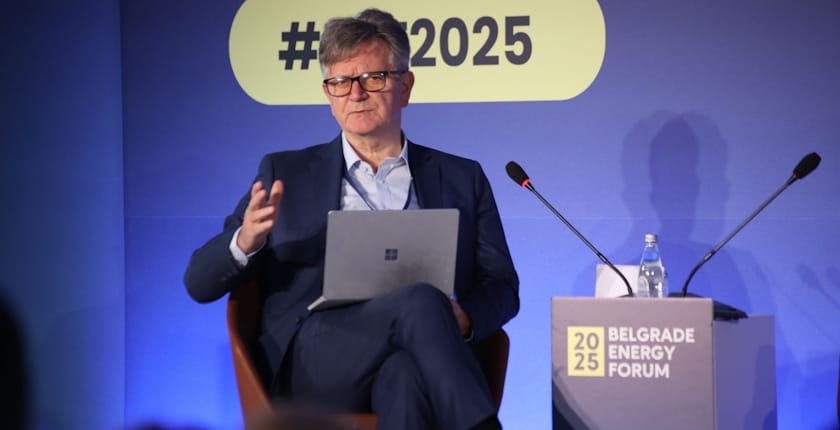
The State Electricity Regulatory Commission is drafting a decision to allow battery energy storage systems (BESS) to offer secondary frequency regulation, Mirza Kušljugić, a member of the Board of the Regional Center for Sustainable Energy Transition (RESET) from BiH, said at Belgrade Energy Forum 2025 (BEF 2025).

Since such a decision does not require a lengthy regulatory procedure, and the balancing market is already regulated, batteries could be installed very soon, he noted.

“I anticipate that private investors will take the lead in this initiative,” Kušljugić added.

He stressed the importance of experimenting with new technologies, noting that batteries represent a technology that can fundamentally transform the energy paradigm.

To be economically viable, batteries must serve multiple functions

The cost of batteries has significantly decreased in recent years. For instance, prices fell by 40% last year and have decreased by an additional 5% so far this year.

According to Kušljugić, batteries should not be limited to providing arbitrage but should also perform additional roles.

“Batteries come in various sizes – small, medium, and large – each with specific functions. They can regulate voltage or enable a black start, especially when equipped with new grid-forming inverters. This is a disruptive technology. It doesn’t matter whether it is installed on the transmission grid, the distribution grid, or behind the meter,” noted Kušljugić, who moderated the BEF panel titled Energy revolution underway – uniting efforts to deliver green, intelligent and sustainable energy solutions.

He added that batteries in the transmission system need to perform two or more functions, including frequency regulation.

Behind-the-meter batteries are also on the way

Historically, secondary regulation in BiH has been provided by any entity capable of offering flexibility, typically through tenders. So far, the service has mostly been provided by hydropower plants. However, due to lower nighttime prices, their operators were not interested in continuing to supply the service, leading to a shortage of secondary regulation. Batteries now have the potential to fill this gap.

Kušljugić believes that batteries installed behind electricity meters will soon become a reality in BiH as well. Currently, there are 300 to 350 MW of solar power capacities installed on the roofs of business premises, but their owners cannot feed excess electricity into the grid. It is only a matter of time before battery prices decrease enough to facilitate their installation, he underlined.

RESET, which advocates for citizen energy and prosumers, suggests that all solar installations should now be equipped with hybrid inverters, making them ready for future battery integration.

This approach is essential for the distribution grid to be ready to integrate excess electricity, Kušljugić concluded.