IEA on deep shifts in auto industry: Electric car sales soar, ICE models drop 30%
Global car sales growth is predominantly driven by sales of electric and hybrid cars. Sales of pure internal combustion engine cars peaked in 2017 and have since fallen by 30% while the sales of electric cars achieved a 14-fold increase, according to the latest report, called What Next for the Global Car Industry?
The International Energy Agency, which published the data, stressed that the car industry is experiencing deep changes as electric car sales continue to rise and the geography of global car sales shifts.
How the incumbent car industry responds to these shifts will be critical for its future and that of industries across the supply chain – and for the energy sector as a whole, IEA warned.
Global car sales reached 80 million in 2024, driven by electric and hybrid cars. They made up around 30% of the total.
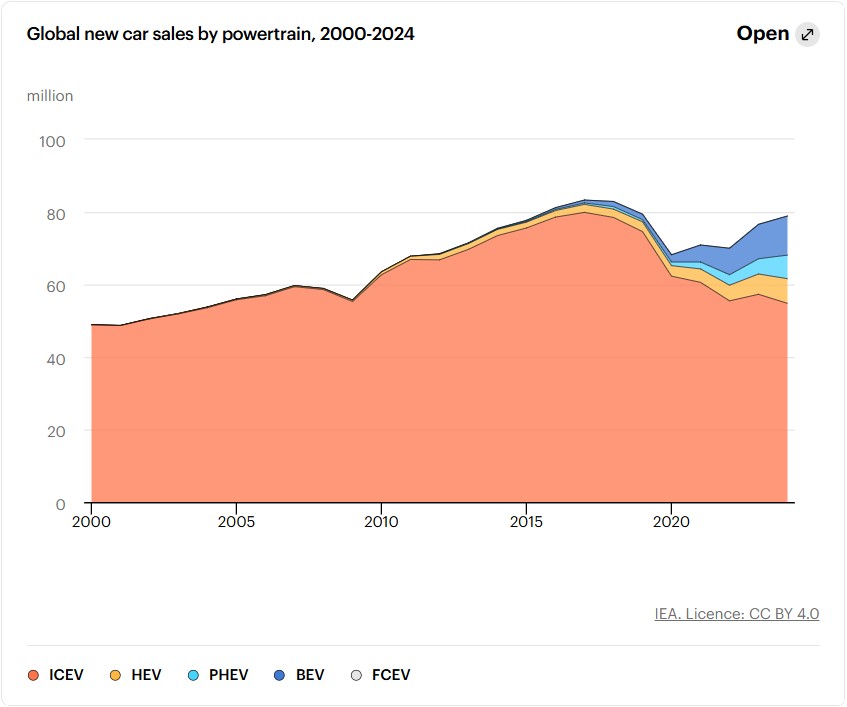
Sales of pure internal combustion engine (ICE) cars peaked in 2017 and have since fallen by 30%. Electric car sales grew more than 14-fold over the same period, reaching over one fifth of cars sold globally in 2024, according to IEA’s data.
The second major shift is the geography of car markets. China and other emerging economies now account for over half of global car sales, up from just 20% in 2000, the report What Next for the Global Car Industry? reads.
China’s car production more than doubled between 2010 and 2024, while India’s output grew 25% from the 2017 level. China overtook the European Union to become the world’s largest exporter. China now accounts for 40% of total manufacturing capacity, and Europe and North America have a 15% share each.
What will he incumbent car industry do?
The response of the incumbent car industry is crucial, IEA underlined.
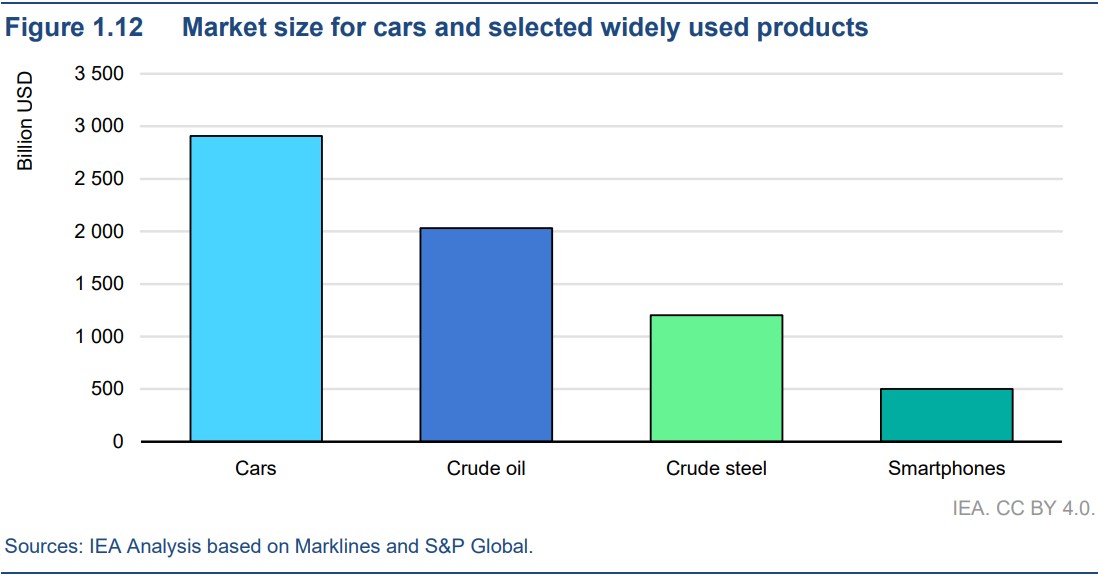
The agency added that passenger cars represent the single largest source of global oil demand today, with 25% of total consumption. The use of alternative fuels, notably biofuels, represents 5% of energy use from cars today.
The extent and pace by which cars electrify, however, is what will affect future car manufacturing as well as the energy sector the most, and it explains the focus of the report, IEA stressed.
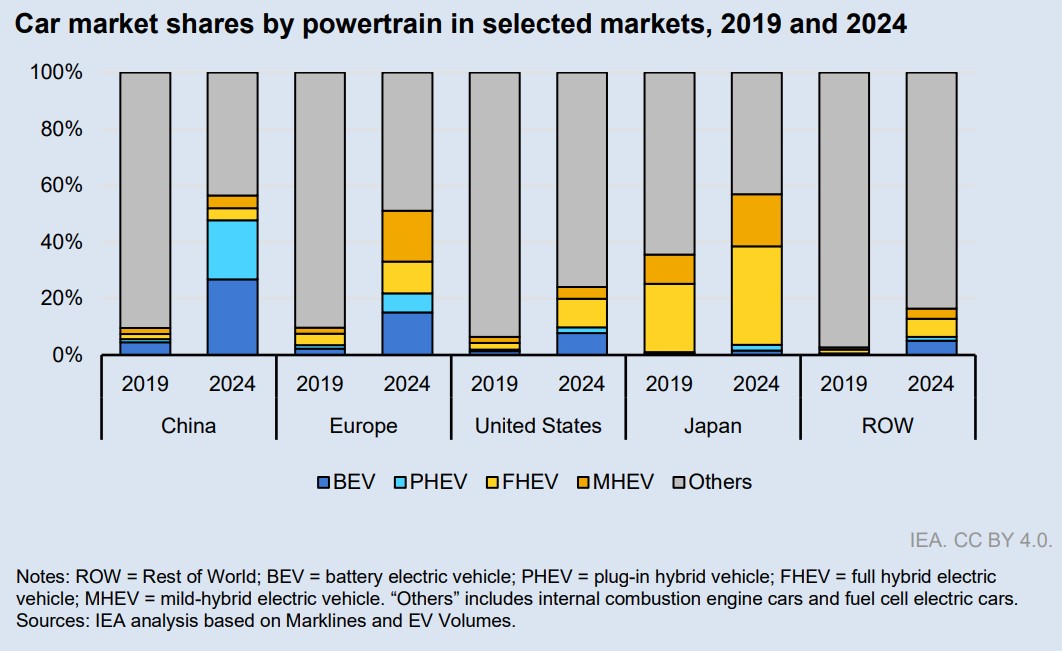
Even as ICE car sales are on a downward trend in China and advanced economies in aggregate, they are likely to rise in some regions, meaning carmakers must navigate multiple trends at once, the report reads.
For example, imports from China make up 90% of electric car sales in emerging markets today. New market entrants are capturing an increasingly large share of the electric car market.
Carmakers from China and US-based Tesla sold 45% of all electric cars in 2024, IEA underlined.
Batteries drive manufacturing costs
The report adds that battery costs remain the main factor for higher direct manufacturing costs of battery electric cars than ICE cars.
Producing cars in China is cheaper than in advanced economies, especially electric ones. Advanced economies include the EU, USA, Japan and South Korea.
Producing a small SUV in China is over 30% cheaper than in advanced economies for both ICE and battery electric powertrains.
Large-scale manufacturing operations and vertical integration are the key reasons behind China’s cost competitiveness; lower energy prices and labour costs also contribute, but to a lesser degree, the IEA concluded.