by in News

EU mission in Serbia handed 100,000 signatures against declaring Rio Tinto’s Jadar a strategic project

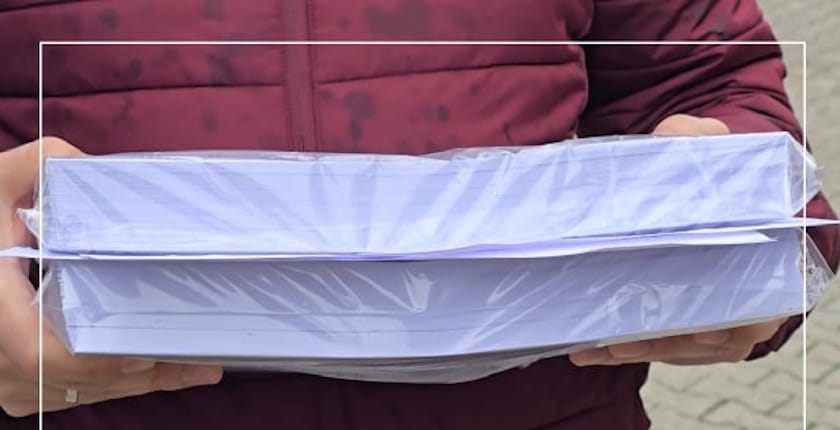
Informal environmentalist organization Eko Straža has submitted a letter to the Delegation of the European Union to Serbia urging the EU not to grant strategic status to Rio Tinto’s Jadar project in the country. The letter opposing the lithium mining and processing project is backed by the signatures of 100,000 citizens.

Bojan Simišić of Eko Straža said the signatures had been submitted because of the European Commission’s upcoming decision on strategic projects to produce critical raw materials in third countries. The decision is expected to be adopted this week, Fonet reported.

The letter, supported by 100,000 signatures, is the first concrete step by environmental associations and citizens after the announcement that the EU could grant Jadar the status of a strategic project. The site of Rio Tinto’s underground mine and processing unit is near the Western Serbian city of Loznica.

The EU has adopted the first list of strategic projects

On Tuesday, the European Commission approved the first 47 strategic projects, within EU territory, for the production of critically important raw materials. According to the announcement, the decision on the potential selection of proposals for facilities in third countries will be adopted at a later stage.

Under the EU’s Critical Raw Materials Act (CRMA), such strategic projects are eligible for administrative and financial support.

Shortly after the decision was announced, Serbian President Aleksandar Vučić said that within seven or eight days, the EU would also declare the Jadar lithium project as strategic. He made the claim the same evening in Brussels, where he met with the bloc’s top officials.

Eko Straža: If the EU designates Jadar as strategic, protests will follow

Eko straža stressed that the EU does not have jurisdiction to designate Jadar as a strategic project. The organization also pointed out that Jadar was canceled by the Serbian government’s decision in 2022.

“If the EU puts the Jadar project on its list of strategic projects, we will press ahead with protests. However, we will no longer address the Serbian government, which has resigned, but will instead turn to international institutions,” said Eko Straža.

Balkan Green Energy News has compiled a chronological overview of the most important events concerning Jadar since 2001, when Rio Tinto established a subsidiary in Serbia.
by in News

Serbian organizations, academic community urge EU against declaring lithium project Jadar strategic

The National Convention on the European Union in Serbia has sent a letter to European officials, expressing concern over the potential consequences of designating Rio Tinto’s Jadar lithium project as an EU strategic project. The body warns that such a decision could further erode the support for the country’s European integration. Members of the academic community and numerous citizens also urged the administration in Brussels to reject the company’s application.

The National Convention on the European Union is a platform for cooperation and consultations between civil society and the Government of Serbia in the EU accession negotiation process. It sent the letter to European Commission President Ursula von der Leyen, High Representative of the EU for Foreign Affairs and Security Policy Kaja Kallas, Commissioner for Enlargement Marta Kos, European Commission Vice-President for Prosperity and Industrial Strategy Stéphane Séjourné, and Commissioner for Trade and Economic Security Maroš Šefčovič. The convention expresses concern over the possible consequences of including the Jadar lithium project in the EU’s list of strategic projects under the Critical Raw Materials Act (CRMA).

“Given the immense public distrust surrounding the preparation process of the Jadar project, its designation as a project of strategic importance to the European Union, especially in the current geopolitical climate and during Serbia’s institutional and societal crisis, would further undermine citizens’ confidence in the benefits of European integration. Additionally, the long-term geopolitical orientation of Serbia could be affected, potentially jeopardizing the political stability of the Western Balkans,” the letter states.

The convention added that Serbian citizens’ trust in the European Union has been eroded, pointing to the results of a recent public opinion survey. For the first time, more citizens have expressed opposition to EU membership than support for European integration, the body stressed.

EU strategic projects and reactions

The European Commission has approved the first 47 strategic projects in EU territory for important raw materials. The decision for candidate projects in third countries, including Serbia, has been postponed. Under the EU’s Critical Raw Materials Act, such strategic projects are eligible for administrative and financial support.

Shortly after the European Commission’s decision, Serbian President Aleksandar Vučić stated in Brussels that the EU would declare the Jadar project strategic “in seven or eight days.”

Together with nongovernmental organizations and community associations from Romania, Germany, Spain, and Portugal, the Marš sa Drine group from Serbia reacted to the European Commission’s decision, and later also to Vučić’s statement. They said they would legally challenge the strategic status designation for disputed mining projects.

The convention recalled that over 60% of Serbian citizens currently oppose the Jadar project, which includes technology that has never been deployed anywhere in the world.

Citizens’ opposition to the Jadar project should be understood primarily as a reflection of distrust in Serbian institutions

“This opposition primarily reflects a deep mistrust in Serbian institutions and their ability to impartially assess the public interest in such a complex project, as well as to enforce environmental and other regulatory standards should the project proceed,” the document reads.

Transparency in decision making has been lacking, and the reactions of Rio Tinto have been inadequate, it added.

“The local community was not adequately informed about earlier phases of research or the project’s potential consequences. Furthermore, the documents forming the basis of the draft environmental impact assessment study have yet to be made public, further fueling doubts about the objectivity and thoroughness of the decision-making process,” the convention said.

It warned that including projects in Serbia in the list of EU strategic projects, before the rule of law is established and before compliance with European environmental standards is ensured, could be perceived as support for maintaining the current state of affairs.

Letters to the European Commission

Environmentalist organization Eko straža previously submitted a letter to the representatives of the European Union in Belgrade, supported by 100,000 citizens with their signatures. They urged the European Commission to leave Jadar off the list of strategic projects.

In addition to the general public, the academic community has also voiced its opposition and concern. Around 2,800 of its members of Serbia’s academic community signed an initiative to reject the Jadar project.

The academic community and a group of student protesters submitted letters to the EU Delegation in Serbia, addressed to the European Commission, opposing the designation of the Jadar project as strategic.

“The right to clean water, land, nature, and health must take precedence over corporate profit,” the Serbian student blockade organization wrote on its Instagram account.

The Kreni-promeni movement also submitted a petition, signed by more than 300,000 citizens, demanding from the EU to reject the Jadar proposal.