by in News

Albania’s Solar Surge: Capital Inflows, Grid Pressures and a Market in Transition

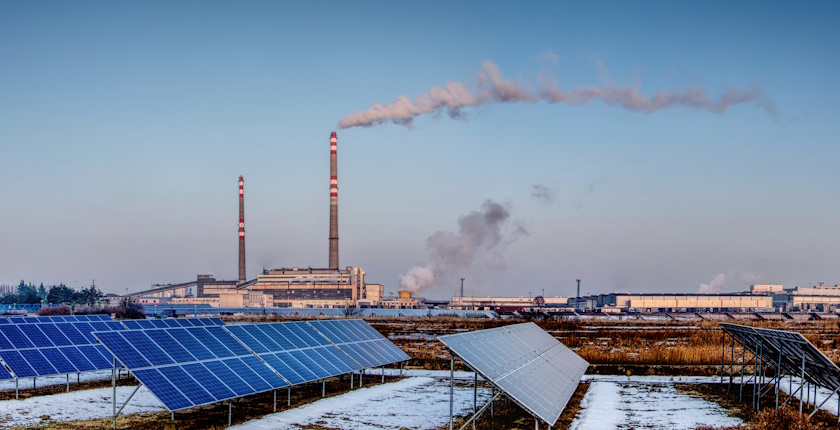
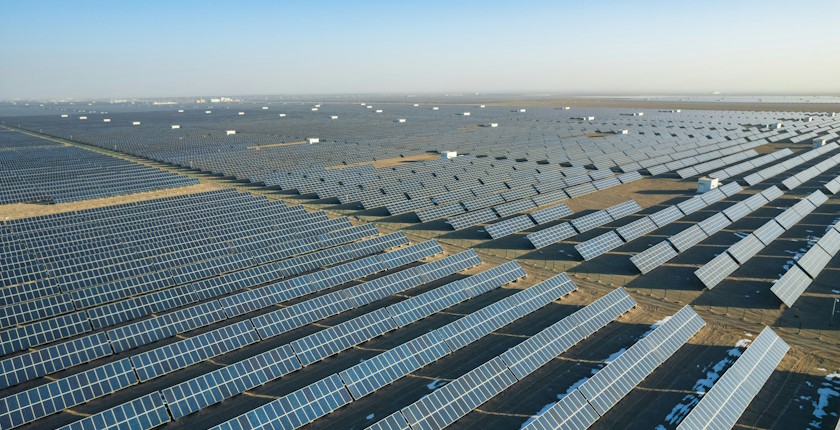
Photovoltaic energy is attracting capital at an accelerated pace in Albania, emerging as a new investment pillar for both traditional energy players and diversified business groups. With licenses granted for nearly 980 MW of solar capacity and hundreds of megawatts already operational, the market is undergoing a structural transformation—shifting from overwhelming dependence on hydropower toward a more diversified generation mix.

Private investment in the sector is estimated at around €1.5 billion, encompassing solar, wind and hydropower projects. Yet the rapid expansion is placing mounting pressure on existing infrastructure, highlighting the urgent need for parallel grid investments. Without reinforcement of transmission and distribution networks, the growth of photovoltaics risks outpacing the system’s capacity to absorb new output. Once again, the private sector appears to be moving faster than institutions.

When Albania first adopted its legal framework “On Renewable Energy Sources” in 2017, few anticipated the scale of transformation that would unfold less than a decade later.

From Slow Beginnings to Accelerated Growth

The early years of renewable development, particularly solar, were marked by bureaucratic hurdles, limited institutional experience and an energy market still in reform. The turning point came through two key developments.

First, market liberalization opened space for self-producers—an expanding segment entitled to install capacities of up to 500 MWp. Second, and more decisively, the global energy crisis that erupted in October 2021 dramatically reshaped market dynamics.

Post-pandemic raw material inflation, surging energy demand driven by economic recovery, and the war in Ukraine—triggering disruptions in Russian gas supplies—sent shockwaves through global energy markets. In 2022, prices reached record highs. Albania spent nearly €500 million on electricity imports, while on the Hungarian exchange—an important regional benchmark—prices peaked at €1,037 per MWh.

Although prices later retreated, volatility remains a defining feature of the market. This climate of uncertainty has become a major catalyst for new energy projects. Authorities report more than €2 billion invested in Albania’s energy sector in recent years. Currently, over 700 MW of private photovoltaic capacity is operational, alongside approximately 400 MW installed by self-producers.

The development pipeline could lift total photovoltaic and wind capacity to around 1,500 MW, while more than 1,600 MW of storage projects are under study or seeking financial facilitation.

Licensing and Market Structure

Despite numerous projects in various administrative stages, only a portion have secured production licenses. The Energy Regulatory Authority (ERE) has issued 71 production licenses for photovoltaic plants, totaling approximately 980 MW of installed capacity.

Most licensed projects fall within the sub-2 MW category, which benefited from a simplified regulatory framework introduced several years ago. These smaller plants were approved through accelerated procedures and supported by reference tariffs set periodically by the regulator. Electricity is purchased by OSHEE Group under a scheme similar to that applied to priority hydropower producers.

At the same time, a growing number of independent producers operate in the liberalized market. Supply liberalization has pushed thousands of businesses to secure electricity via private contracts, creating a stable demand base for new generators.

Solar projects also benefit from technical flexibility: they can be commissioned in phases, allowing electricity production before full completion of investment works.

Production Growth and Flagship Projects

Photovoltaic output rose sharply in 2025. According to preliminary data from INSTAT for January–September, the category “Other Producers”—which includes solar plants—generated 775 GWh, doubling year-on-year. Even compared to full-year 2024 output of 506 GWh, nine-month 2025 production was 53% higher.

Solar accounted for roughly 15.3% of Albania’s net electricity generation during the same period—more than double its 2024 share. This proportion is expected to rise steadily as new plants enter operation.

Among the largest projects is the 140 MW Karavasta solar park, developed by Voltalia. Additional operational projects include Blue (130 MW combined), Nova Solar System (50 MW) and multiple 20 MW facilities in Ersekë.

Projects under development include GreeNNat Solar Park Ballsh (100 MW), Faethon (78.6 MW), Sunny Side Energy (50 MW, part of the Kastrati Group), and the 100 MW Spitalla Solar park, also owned by Voltalia.

The rapid growth of solar capacity is gradually reshaping Albania’s electricity mix—historically dominated by hydropower—reducing exposure to imports and cushioning the impact of extreme price swings in international markets.

Year Energy Production (Thousand MWh)
2019 25
2020 35
2021 40
2022 52
2023 88
2024 506
2025 (9-Months) 775

European Bank for Reconstruction and Development: Strong Potential, Grid Constraints

The European Bank for Reconstruction and Development (EBRD) has been instrumental in supporting Albania’s renewable transition, advising the government on early photovoltaic auctions, including Karavasta—the country’s first large-scale solar plant.

Ekaterina Solovova, EBRD Resident Representative in Albania, has emphasized that the country’s solar potential remains considerable due to favorable geography and high solar irradiation. However, large-scale integration requires adequate transmission infrastructure.

Recent EBRD support includes sustainability-linked financing for OSHEE, restructuring short-term liabilities into longer-term financing to free up investment for grid upgrades. The bank is also cooperating with OST on EU grant-funded technical projects: closing the national transmission loop and modernizing the Fier substation—currently among the most congested solar zones—and developing a new cross-border transmission line with Kosovo to enhance regional interconnection.

Through initiatives such as the Renewable Energy Market Acceleration Program (REMA), the EBRD has supported the allocation of roughly 800 MW of new renewable capacity via Contracts for Difference (CfD) schemes.

Albania stands at a critical juncture: rich in renewable potential but constrained by infrastructure that requires substantial upgrading to ensure system stability.

European Investment Bank: Solar Could Reach 1 GW by 2030

Alessandro De Concini, EIB representative in Albania, notes that while Albania’s green credentials are strong, they remain vulnerable due to hydropower dependence and climate variability.

Solar capacity could reach 1 GW and wind 600 MW by 2030, supported by recent reforms easing licensing and auction procedures. However, climate risks—floods, fires and landslides—could cost up to 7% of GDP by mid-century.

Albania’s energy strategy prioritizes supply security, diversification, competition and environmental protection, aligned with EU legislation. The EIB’s forward plans include infrastructure modernization to ensure year-round supply security and price stabilization.

Investor Appetite and Market Diversification

Government-backed auctions—facilitating land access and streamlining procedures—sparked early investment during the pandemic. Yet a growing number of investors have entered the sector without subsidies, relying instead on private land, private power purchase agreements and market-based strategies.

Besnik Leskaj, founder of Blessed Investment Group, explains that detailed analysis of photovoltaic technology costs and regional price trends pointed to a favorable long-term risk-return profile. The group, alongside Matrix Konstruksion, has invested in fully private solar projects, emphasizing financial discipline and direct market exposure.

The Blue Parks, spanning 230 hectares with 263,000 smart panels, aim to build a 1 GW portfolio over the medium term, with 400 MW currently under development. Wind energy (two 25 MW projects) and battery storage systems are also part of the strategy.

Supporting Industries and Vertical Integration

The solar boom has stimulated domestic supply chains, from workforce training to mounting structure manufacturing. Companies such as Emante sh.p.k have expanded into producing Magnelis steel support structures for ground-mounted systems, supplying projects including Nova Solar (74 MW) in Seman and Info-Telecom (101.5 MW) in Ballsh.

Rapid sector growth is encouraging vertical integration, with firms expanding into mounting accessories and specialized structures to enhance added value.

End-of-Life Challenges

As solar installations multiply, long-term waste management is emerging as a strategic issue. Panels have a 25–30 year lifespan, meaning the first wave of mass installations will soon approach end-of-life. The International Energy Agency estimates panel waste could reach tens of millions of tons by 2050.

While recycling is technically feasible, it is often not yet economically competitive. The European Union mandates extended producer responsibility for collection and recycling, while China is scaling industrial recycling plants. The US and Japan are experimenting with high-value material recovery models.

Albania will need to address this issue proactively to ensure sustainability extends beyond generation.

Credit Growth and Corporate Performance

Energy and tourism have been the most dynamic sectors in recent years, reflected in rising bank lending. According to the Bank of Albania, outstanding credit to the energy sector grew 19% to 47 billion lek (€470 million) by December 2025, representing 9% of total business lending.

Karavasta Solar, managed by Voltalia, generated revenues of 3.5 billion lek in 2024 and profits of approximately 2 billion lek, with a 57% margin. The plant produced 258.3 GWh last year—3.2% of domestic net output and more than half of total solar generation, according to ERE. Under its 15-year contract, 70 MW is sold at a regulated tariff (€24.89/MWh) and 70 MW on the free market.

Spitalla Solar (100 MW) follows a similar structure, though progress has been slower.

Blue 1 (50 MW), commissioned in May 2024 at Sheq Marinas, Fier, operates entirely in the free market—one of the first large projects outside support schemes. Owned 51% by Blessed Investment and 49% by Matrix Konstruksion, it generated revenues of 680 million lek and profits of 380 million lek in 2024, producing around 72,000 MWh—roughly 15% of total solar output.

Other players, such as EZ5 Energy and Nova Solar System (50 MW), are reporting rapid revenue and profit growth, underscoring solar’s emergence as one of Albania’s most profitable and strategically significant industries.

Company Revenue (2023) Revenue (2024) Pre-tax Profit (2023) Pre-tax Profit (2024)
KARAVASTA SOLAR 450 17,000 408 2,000
EZ-5 ENERGY 412 1,422 83 265
SPV BLUE 1 266 679 102 379

Albania’s solar expansion reflects a decisive shift in its energy landscape—driven by private capital, catalyzed by crisis and increasingly supported by multilateral finance. The next phase will depend on grid modernization, storage deployment and responsible lifecycle management. If these elements advance in tandem, Albania could consolidate its position as a regional renewable energy hub.
by in News

Scatec Secures €121M Financing to Build 189.7 MW Solar Portfolio in Romania

The Scatec has reached financial close for a 189.7 MW photovoltaic portfolio in Romania, enabling the company to commence construction on the three-site project. Most of the planned capacity—in which Defic Globe is a minority shareholder—is covered by contracts-for-difference (CfDs).

A financing package led by the European Investment Bank (EIB), the European Bank for Reconstruction and Development (EBRD) and Banca Comercială Română (BCR) — part of the Erste Group — underpins the development of the Romanian solar portfolio. Equinor, the Norwegian energy company, is the largest shareholder in Scatec. Total capital expenditure for the portfolio is EUR 121 million, to be financed through a mix of non-recourse project debt and equity with roughly 70% leverage.

EBRD and the EIB each allocated EUR 34 million to the financing, while BCR committed EUR 17.3 million in long-term lending alongside other financing components. Scatec said it will procure key components representing about 35% of total capex and will assume responsibility for operations, maintenance and asset management. The company reported a target commercial-operation date in the second half of 2027.

“Reaching financial close and starting construction of our first projects in Romania confirms the market’s attractiveness and the strength of the CfD framework,” said Terje Pilskog. “With long-term revenue visibility and a robust financing structure, the projects are well positioned for construction and delivery. We look forward to advancing them with our partner Defic Globe and contributing to Romania’s energy transition.”

Scatec secured 15-year CfD contracts covering 70% of production for two of the three projects under the country’s first auction for such contracts; the remaining output will be sold in the wholesale market. The sites are located in southern Romania: one in the commune of Dobrun commune, Olt County, Romania and another in the commune of Sadova commune, Dolj County, Romania. CfD-backed capacity totals 127.8 MW, with a further 61.9 MW planned to operate under full merchant exposure, according to the EBRD.

Defic Globe — a joint venture owned by YEO Technology (51%) and Emsolt Investments — holds a 35% stake in the portfolio and has been appointed to deliver turnkey engineering, procurement and construction (EPC) services. The project companies are registered as Solar World, RB Solar Energy and Energie Soleil.

Listed on the Oslo Stock Exchange, Scatec now has 6.2 GW of capacity in operation and under construction across five continents.

by in News

KEK seeks contractor for 100 MW solar power project near Prishtina

Government-controlled Kosovo Energy Corp. (KEK) launched the prequalifications call for its Solar4Kosovo photovoltaic project. The area is in the municipalities of Obiliq (Obilić) and Fushë Kosovë (Kosovo Polje), northwest of Prishtina.

After more than four years of planning the project, KEK is receiving applications for the design and construction of its first solar power plant, on a former coal ash dump. The government-owned power utility operates coal plants Kosovo A and Kosovo B, which account for some 90% of domestic electricity.

The location for the first part of the Solar4Kosovo project is in the municipalities of Obiliq (Obilić) and Fushë Kosovë (Kosovo Polje). The area, northwest of Prishtina, is in the Sitnica river valley, near Kosovo A.

The facility is planned for a grid connection of at least 100 MW. It translates to 120 MW in peak capacity, according to earlier updates. It would be the biggest PV plant in Kosovo*.

KEK is receiving prequalification bids until January 22, within the process of selecting contractors for the project. Companies apply through the exficon (exfitender) platform. Three months ago, the utility said agricultural activities on the designated land weren’t allowed anymore.

KEK obtained EUR 32 million EU grant

The financing for the Solar4Kosovo facility is part of the European Union’s Economic and Investment Plan for the Western Balkans of EUR 9 billion in grants. The package is aimed at mobilizing a total of EUR 30 billion.

The European Investment Bank is providing a EUR 33 million loan. The EU has approved a EUR 32 million grant via its Western Balkans Investment Framework (WBIF), while Germany’s KfW Development Bank is lending EUR 29 million to KEK. The investment was earlier estimated at EUR 107 million overall.

Annual output estimated at 169 GWh

The proposed solar power plant is expected to produce 169 GWh per year. It would have an underground connection to the existing substation at the Kosovo A thermal power plant.

The other part of the Solar4Kosovo project is for a solar thermal facility of 30 MW for the capital city’s district heating system. The site is in the village of Shkabaj (Orlović) in Obiliq municipality. Another segment of the investment is for a further network extension of 20 MW with supply from Kosovo B.

* This designation is without prejudice to positions onstatus and is in line with UNSCR 1244/99 and the ICJ Opinion on the Kosovo declaration of independence.
by in News

EU launches EUR 17.5 billion energy efficiency initiative for SMEs

The European Union plans to double its support to small and medium-sized enterprises in the 2025-2027 period for investments in energy efficiency and decarbonization.

The European Commission and the European Investment Bank (EIB) Group have launched a EUR 17.5 billion financing initiative.

According to the commission, more than 350,000 companies across Europe are set to make energy efficiency and decarbonization gains through the scheme.

The initiative for energy efficiency for small and medium-sized enterprises (SMEs) is led by the EIB Group. It aims to help firms utilize proven energy-saving technologies to reduce their energy bills and enhance their resilience and competitiveness, the commission underscored.

The EU expects to mobilize over EUR 65 billion in overall investments

The program will use a combination of existing and new financial products, including debt and equity instruments. The EU expects to mobilize over EUR 65 billion of investments in the segment by 2027.

To streamline access and support for businesses, the initiative will introduce a “one-stop shop for energy efficiency for SMEs,” the update adds. The commission explained that a single-entry point would integrate EIB Group’s intermediated lending offering and added it would simplify engagement and accelerate implementation.

The backing by the commission will include EU budget guarantees

The commission’s backing will include EU budget guarantees offered through the InvestEU mechanism and LIFE environmental program.

EU Commissioner for Energy and Housing Dan Jørgensen pointed out that SMEs invest in energy efficiency at only half the rate of larger companies. “This EIB initiative supported by the commission will be key to closing the investment gap, simplifying access to financing, and accelerating the deployment of energy efficiency solutions,” he added.

According to EIB Group President Nadia Calviño, the initiative represents a significant step up in support to help companies cut energy costs.

“Servitisation” or energy efficiency as a service

The EIB said it is partnering with the Solar Impulse Foundation, a nonprofit organization, to promote a model known as “servitisation” or energy efficiency as a service.

For example, instead of purchasing energy-efficient heating or lighting equipment, SMEs pay for the warmth or light they use. The service provider retains ownership of the equipment and ensures its performance. EIB stressed that the model eliminates upfront investment costs for businesses, making it easier and faster to adopt energy efficiency measures.

“The Solar Impulse Foundation has already identified over 1,600 profitable solutions that prove efficiency is not a cost but a gain. With this initiative, we can now bring these innovations to hundreds of thousands of SMEs across Europe,” said Bertrand Piccard, initiator and chairman of the Solar Impulse Foundation.

by in News

Coal plant operator KEK to begin construction of Solar4Kosovo PV plant

Government-controlled Kosovo Energy Corp. (KEK) said it is preparing to start building its Solar4Kosovo 1 photovoltaic plant near Prishtina. It informed the local community that agricultural and other activities weren’t allowed anymore on the designated land.

After four years of planning. a former coal ash dump is about to be turned into the biggest solar power plant in Kosovo*. KEK is running the Solar4Kosovo 1 project at a site near its Kosovo A power plant near Prishtina.

The area is in the municipalities of Obiliq (Obilić) and Fushë Kosovë (Kosovo Polje). The government-owned power utility said it is preparing to begin construction works. The project is for 100 MW in connection capacity, translating to 120 MW in peak capacity.

The update mainly affects residents of Dardhishtë and Mërlak in Kryshevc (Kruševac) in Obiliq municipality. Agricultural and other activities aren’t allowed anymore, the company announced. It explained that so far it tolerated the use of its property there by the local community.

KEK obtained EUR 32 million EU grant

The financing for the Solar4Kosovo facility is part of the European Union’s Economic and Investment Plan for the Western Balkans of EUR 9 billion in grants. The package is aimed at mobilizing a total of EUR 30 billion.

The European Investment Bank is providing a EUR 33 million loan. The EU has approved a EUR 32 million grant via its Western Balkans Investment Framework (WBIF), while Germany’s KfW Development Bank is lending EUR 29 million to KEK. The investment was earlier estimated at EUR 107 million overall.

Annual output estimated at 169 GWh

The proposed solar power plant is expected to produce 169 GWh per year. It would have an underground connection to the existing substation at the Kosovo A thermal power plant.

Notably, Kosovo* is dependent on the obsolete Kosovo A and Kosovo B coal plants for almost all its electricity.

The other part of the Solar4Kosovo project is for a solar thermal facility for the capital city’s district heating system. The site is in the village of Shkabaj (Orlović) in Obiliq municipality. The investment includes a 20 MW network extension.

* This designation is without prejudice to positions onstatus and is in line with UNSCR 1244/99 and the ICJ Opinion on the Kosovo declaration of independence.
by in News

Croatia installs one million smart meters, Serbia reaches 650,000

Croatia has so far installed one million smart meters, while Serbia has reached 650,000. They make up 40% of all power metering devices in Croatia, compared to a 17% level in Serbia.

Digital or smart meters offer numerous advantages for consumers and distribution system operators (DSOs). The devices are a cornerstone of future distribution networks – smart grids that will allow consumers, including many prosumers, to both draw electricity from the network and inject it. Smart grids also enable consumers to provide various flexibility and demand response services.

The smart meters rollout in Croatia is being implemented across the country, with about 40,000 new devices installed per month. Croatia’s DSO HEP-Operator Distribucijskog Sustava (HEP ODS), a subsidiary of state-owned power utility Hrvatska Elektroprivreda (HEP), has previously announced that it intends to replace all 2.5 million devices by the end of 2029.

Nearly all users in the business category have received new devices

Installation of new meters is completely free of charge for customers. It takes about twenty minutes. HEP underlined that smart meters offer a range of benefits – enabling simpler and remote reading of consumption, more precise consumption management, better planning, and savings.

Danijela Žaja, chief of the metering and market support sector of HEP ODS, told RTL that more than one million smart meters have been installed so far for households and firms. In the business category, almost all meters have already been replaced, she said, Poslovni Dnevnik reported.

In her words, new devices help consumption management.

Serbia is financing new meters with loans

According to Ana Pavlović, head of the electricity markets support sector of neighboring Serbia’s DSO Elektrodistribucija Srbije (EDS), so far the company has installed almost 650,000 smart meters.

EDS plans to set up another 200,000 units in the next round, financed by a loan from the European Bank for Reconstruction and Development (EBRD), she said at a conference organized by Energija Balkana.

Out of the 200,000 meters, the cities of Čačak and Kraljevo are earmarked for 30,000 each, and 140,000 are for consumers in Niš. The next project is the installation of 400,000 smart meters, to be financed by a loan from the European Investment Bank (EIB).

Niš will be one of the first cities in Serbia to be almost entirely covered by smart meters, Pavlović stressed, as quoted by Tanjug.

by in News

Croatian Bank for Reconstruction and Development secures EUR 50 million for firms for green investments

The Croatian Bank for Reconstruction and Development has secured EUR 150 million from the European Investment Bank, of which at least one third is dedicated to green investments by businesses in the country.

A new finance contract with the European Investment Bank (EIB) provides EUR 150 million to finance projects of mid-caps, large private companies and public entities in Croatia, the Croatian Bank for Reconstruction and Development (HBOR) said.

The loan particularly promotes green investments. It is the first tranche of a new EUR 350 million financing agreement between the EIB and HBOR to expand access to financing for Croatian companies.

The package will be deployed via direct lending by HBOR and through commercial banks and other financial intermediaries.

At least 30% of the financing is for projects contributing to green transition

At least 30% of the financing is for projects contributing to green transition, including investments in energy efficiency, renewable energy sources, sustainable construction and clean transport, Croatia’s bank noted.

According to EIB Vice-President Teresa Czerwińska, the initiative will expand financial support to a broad range of Croatian companies and public entities, with a strong emphasis on climate action and sustainability.

The operation is structured as a multi-beneficiary intermediated loan (MBIL). In addition to advancing the European Union‘s goals to promote climate action and environmental sustainability, it will help foster economic activity and social cohesion across Croatia, HBOR said.

The EIB and HBOR have concluded 28 finance contracts worth EUR 3.8 billion overall

HBOR will ensure, as it has so far in cooperation with EIB, that all end-beneficiaries comply with relevant national and EU legislation, with a special focus on preserving environmental, climate and social standards.

The new financing further reinforces HBOR’s role in supporting green and climate-resilient projects, contributing to the achievement of the strategic goals of Croatia and the European Union for the ​​green transition, according to Hrvoje Čuvalo, President of the Management Board of HBOR.

EIB and HBOR have concluded 28 finance contracts so far, worth EUR 3.8 billion, for financing more than 8,000 projects across Croatia.

by in News

Works beginning on North Macedonian side of gas interconnector with Greece

The North Macedonian section of the gas interconnector with Greece is expected to be completed by early 2027. The construction contract was signed by the Ministry of Energy, Mining and Mineral Resources, domestic contractor Rapid Build and the country’s gas transmission system operator Nomagas.

The construction of the gas pipeline connecting North Macedonia with Greece is set to begin in a month, according to officials. Land expropriation is 90% complete. The initial capacity of the interconnector would be 1.5 billion cubic meters per year, with a potential to double it. The works are expected to be completed within 22 months.

„With the signing of the contract for the construction of the Macedonian section of the gas interconnector with Greece, we are marking the beginning of the largest energy investment in North Macedonia in the last ten years. The interconnector is proof that when there is political will, regional trust, and professional dedication – the results are real and tangible,” said Minister of Energy, Mining and Mineral Resources Sanja Božinovska.

The contract was signed by the ministry, contractor Rapid bild, based in Kumanovo in North Macedonia, and the country’s gas transmission system operator Nomagas. The future pipeline would be able to carry both natural gas and hydrogen.

Repeated tender slashes price by EUR 12 million

The winning bid was EUR 59.9 million or EUR 12 million less than in the initial tender, which was annulled.

The project is worth over MKD 5.1 billion (EUR 82.9 million). It is financed by the European Investment Bank (EIB) and the European Bank for Reconstruction and Development (EBRD). It includes grants of EUR 2.5 million for technical assistance and another EUR 9.9 million via the Western Balkans Investment Framework (WBIF).

The project is financed by the EIB and EBRD

„This contract ensures diversification and access to a greater number of natural gas sources, enables economic development, progress and environmental protection, and contributes to the security of energy supply,” said Executive Director of Nomagas Muhamet Elmazi.

Gasification would significantly improve air quality, especially in areas where wood and fuel oil are currently used for heating.

Greek section of interconnector under construction since February

On the North Macedonian side, the interconnector route is 68 kilometers long, out of a total of 123 kilometers. It will run from Nea Mesimvria in Greece through Evzoni (Mačukovo) and Gevgelija at the border, to Negotino. The next phase involves building gas links from Gostivar to Kičevo (34 kilometers) and from Sveti Nikole to Veles (28 kilometers).

Greek company Terna began constructing its country’s section of the pipeline in February.

Nomagas and Greece’s National Natural Gas System Operator (DESFA) made their final investment decision a year and a half ago.

The companies leaned the investment on the project for the Alexandroupolis LNG Terminal. The liquefied natural gas facility in northeastern Greece was opened on October 1. However, due to a malfunction, it has been out of operation for more than three months. According to the latest update, gradual reactivation is expected to begin by the end of May.

by in News

Serbian Minister of Mining and Energy Dubravka Đedović Handanović gets third mandate; Sara Pavkov takes over environment

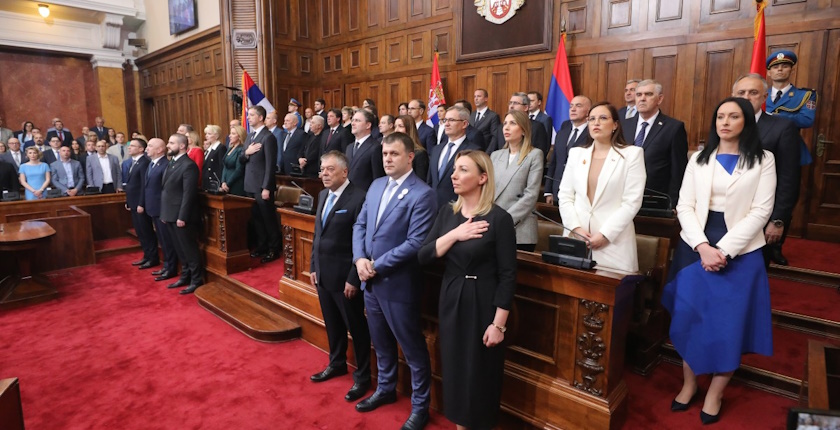
The National Assembly of Serbia reelected Minister of Mining and Energy Dubravka Đedović Handanović for her third term. The youngest member of the new cabinet, led by Prime Minister Đuro Macut, is the new Minister of Environmental Protection – Sara Pavkov.

Members of parliament voted in the new Government of Serbia today with 153 in favor and 46 against the proposal, while 51 lawmakers were absent from the session. The lineup under Prime Minister Đuro Macut, who has just entered the political arena now, includes Sara Pavkov, responsible for environmental protection. At 33, she is the youngest member of the cabinet.

Minister of Mining and Energy Dubravka Đedović Handanović was elected for her third mandate.

At 33 years old, Sara Pavkov is the youngest minister in the team of new Prime Minister Đuro Macut

Pavkov holds a graduate and master’s degree from the biology and ecology department of the University of Novi Sad Faculty of Sciences (FTN). She is a doctoral candidate and research intern at the faculty, according to her official biography.

Since 2022, she has served as a state secretary at the Ministry of Environmental Protection. Before that, she was the chief of staff since June 2021, after holding the position of special advisor for environmental protection from November 2020.

As one of the vice-presidents of the Bureau of the United Nations Framework Convention on Climate Change (UNFCCC), Sara Pavkov participated in the UN Climate Change Conference COP26 in Glasgow in 2021.

From 2013 to 2020, she coordinated more than 20 civil society projects for environmental protection. The new minister has authored or coauthored 11 scientific and professional papers in the same field.

She joined the ruling Serbian Progressive Party (SNS) since 2012. Since November 2021, Sara Pavkov has been a member of its presidency.

Third run for Dubravka Đedović Handanović as minister of mining and energy

Dubravka Đedović Handanović was first elected minister of environment and energy in October 2022 in the cabinet of Prime Minister Ana Brnabić. She was reappointed last May, when Miloš Vučević became the prime minister of Serbia.

Before becoming minister, she was a member of the Executive Board of NLB Komercijalna banka, responsible for corporate and investment banking. She has an international experience in banking of more than 16 years.

Minister Đedović Handanović, who remained in position in the new government, has worked in the EIB

Đedović Handanović has graduated in banking and finance from the Faculty of Economics in Belgrade and obtained her master’s degree in finance and management from SDA Bocconi University in Milan and the Anderson School of Management at the University of California in Los Angeles (UCLA).

She headed the Regional Office of the European Investment Bank (EIB) for the Western Balkans from 2016 to 2021, before moving to NLB Komercijalna banka.

Until the start of her tenure in Belgrade, Dubravka Đedović Handanović was the manager for Albania, North Macedonia and Serbia at the headquarters of the EIB in Luxembourg. It is the European Union’s main lending institution. She was also in charge of public-private partnership projects and project financing in countries including Ireland, France, the United Kingdom and the Benelux.

Before starting her career in banking, the reelected minister of mining and energy worked in the media and communications sector.

by in News

Kosovo* receives financing for 120 MW solar power plant on coal ash dump

The European Investment Bank is providing a EUR 33 million loan for a solar power plant of 120 MW in peak capacity. Government-controlled power utility KEK plans to install it on its former coal ash dump near Prishtina.

The European Investment Bank (EIB) signed a EUR 33 million investment loan for the construction of a photovoltaic plant in Kosovo* with a connection to the grid of up to 100 MW, translated to 120 MW in peak capacity.

The financing package for the Solar4Kosovo project is part of the European Union’s Economic and Investment Plan for the Western Balkans of EUR 9 billion in grants. It is aimed at mobilizing a total of EUR 30 billion.

Solar power project involves EUR 32 million EU grant

The proposed facility is expected to produce 169 GWh per year, EIB said. The location, owned by government-controlled Kosovo Energy Corp. (KEK), is on the former ash dump of its Kosovo A power plant. The electricity producer is also getting a EUR 32 million grant via the EU’s Western Balkans Investment Framework.

“As one of the largest renewable energy developments in the region under Team Europe, this project will help Kosovo* achieve its energy security and renewable energy goals. Together with the European Commission and other partners, we are glad to be able to jointly help Kosovo* lay the groundwork for the decarbonisation of the local economy and diversification of the energy mix, in line with the EU Green Agenda,” said EIB’s Vice-President Kyriacos Kakouris.

Investment valued at EUR 107 million in total

Germany’s KfW Development bank is providing a EUR 29 million loan. The project’s total value, including KEK’s own funds, is estimated at EUR 107 million. The solar power plant between the towns of Obiliq/Obilić and Fushë Kosova (called Kosovo Polje in Serbian), near Prishtina, would have an underground connection to the existing substation at the Kosovo A thermal power plant.

“This project, the largest of its kind in the region, not only guarantees a sustainable energy production method but also accelerates Kosovo’s shift from conventional energy sources,” according to Kosovo’s Minister of Finance, Labour and Transfers Hekuran Murati.

Kosovo* is dependent on obsolete Kosovo A and Kosovo B coal plants for almost all its electricity. Renewables projects are gradually gaining traction.

The other part of the Solar4Kosovo project is for a solar thermal facility for the nearby capital city’s district heating system. The site is in the village of Shkabaj (Orlović) in Obiliq municipality.

In other news, the government in Prishtina established Energy Storage Corp. or ESCorp. It will manage the project for batteries with total operating power of 125 MW and 250 MWh in capacity. It is funded by the Millennium Challenge Corp. (MCC) of the United States.

The remaining 45 MW (90 MWh) is expected to be owned by Transmission, System and Market Operator (KOSTT). The battery systems are envisaged to store surplus electricity and stabilize the frequency in the transmission system. They are valued at USD 180 million altogether.

* This designation is without prejudice to positions onstatus and is in line with UNSCR 1244/99 and the ICJ Opinion on the Kosovo declaration of independence.