by in News

More than 330,000 Europeans died due to air pollution in 2023

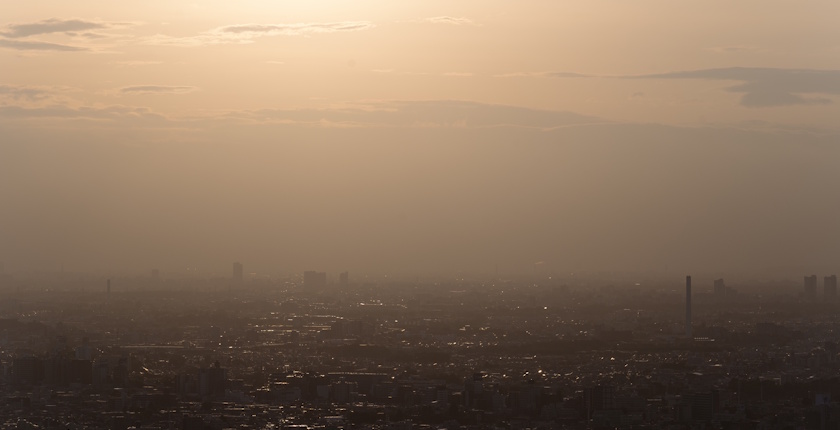
Air pollution remains one of the greatest threats to the health of Europeans. According to the latest report by the European Environment Agency (EEA), 333,000 cases of premature death in 2023 were linked to exposure to particulate matter, ozone, and nitrogen dioxide. The Western Balkans are among the most affected regions, with more than 22,000 premature deaths caused by air pollution, despite an average 50% decrease in PM2.5-related mortality between 2005 and 2023.

The European Environment Agency has published the report Harm to human health from air pollution in Europe: burden of disease status, 2025.

The report analyses three pollutants—particulate matter (PM2.5), nitrogen dioxide (NO2), and ozone (O3)—and their contribution to premature mortality and health impacts in 41 European countries.

In 2023, Europeans were exposed to concentrations of these pollutants far exceeding the levels recommended by the World Health Organization (WHO). Recommended maximum concentrations are 5 micrograms of PM2.5 per cubic metre of outdoor air, 60 micrograms for O3, and 10 micrograms per cubic metre for NO2.

The number of premature deaths in the EU linked to fine particulate matter decreased by 57% between 2005 and 2023

The number of premature deaths associated with fine particulate matter in the EU fell by 57% between 2005 and 2023, surpassing the EU Zero Pollution Action Plan target for 2030, set at 55%. The revised Ambient Air Quality Directive (AAQD), which entered into force last year, brings the EU’s limit values more in line with WHO recommendations.

Still, 95% of residents in European cities remain exposed to levels above these guidelines.

At the EU level alone, compliance with WHO guidelines in 2023 would have prevented 182,000 deaths linked to PM2.5, another 63,000 caused by ozone, and 34,000 resulting from NO2 exposure.

Across the 40 countries covered by the report, 206,000 deaths were attributed to PM2.5 concentrations above recommended levels. Turkey was excluded because the number of monitoring stations with available data was too low to create concentration maps. O3 exposure caused 71,000 deaths, and nitrogen dioxide caused 56,000.

Across the whole of Europe, a total of 333,000 people died prematurely.

People in Southeastern Europe suffer the greatest health impacts due to high pollution levels

Across all 40 countries, the highest number of PM2.5-related deaths in 2023 occurred in Italy, Poland, and Germany. However, the highest relative impact—measured in years of life lost per 100,000 inhabitants over 30 years—was recorded in Southeastern Europe. Years of life lost represent the estimated average number of additional years people would statistically live if they did not die before reaching life expectancy.

Residents of North Macedonia, Bosnia and Herzegovina, and Albania lost the most years of life. Among EU member states, Bulgaria ranked first, followed by Greece and Romania.

The highest absolute number of NO2-related deaths in 2023 was recorded in Turkey, Italy, and Germany. In terms of years of life lost, the greatest burden fell on populations in Turkey, Cyprus, Greece, Serbia, and Italy.

Germany, Italy, and France recorded the highest number of deaths linked to O3 emissions. The highest number of years of life lost per 100,000 inhabitants over 25 years occurred in Bosnia and Herzegovina, Montenegro, Albania, Croatia, and Hungary.

In the Western Balkans, particulate matter caused 22,426 premature deaths

In the Western Balkans, exposure to particulate matter caused 22,426 premature deaths. The highest number was recorded in Serbia (8,735), followed by Bosnia and Herzegovina (4,783), Albania (3,551), North Macedonia (2,667), Kosovo* (2,135), and Montenegro (555).

However, significant progress has been recorded since 2005. Mortality linked to PM2.5 fell the most in North Macedonia (57.2%), followed by Kosovo* (55.3%), Montenegro (53.6%), Albania (53.2%), and Serbia (50.2%). The smallest improvement was observed in Bosnia and Herzegovina (34.8%). On average, across all six Western Balkan countries, mortality associated with PM2.5 decreased by 50.72% during this period.

Air pollution can cause dementia

In addition to premature mortality, the report analyses diseases linked to air pollution and their impact on quality and length of life.

According to the findings, PM2.5 contributes the most to the burden of ischaemic heart disease, stroke, diabetes, lung cancer, chronic obstructive pulmonary disease (COPD), and childhood asthma. For NO2, the greatest health impacts occur in diabetes, followed by stroke, COPD, and asthma in both children and adults. Ozone exposure is linked to 7,000 deaths from COPD—the only disease included in the analysis for this pollutant.

Each additional 10 micrograms of PM2.5 per cubic metre increases the risk of dementia by 17%

For diseases caused or worsened by pollution, such as asthma, the primary impact is reduced health and well-being. For others, such as ischaemic heart disease and lung cancer, the result is premature death.

New evidence shows that air pollution may also cause dementia, whose burden is estimated to be greater than that of other relevant diseases. Research conducted this year by scientists at the University of Cambridge found that the risk of dementia increases by 17% for every additional 10 micrograms of PM2.5 per cubic metre of air.


* This designation is without prejudice to positions onstatus and is in line with UNSCR 1244/99 and the ICJ Opinion on the Kosovo declaration of independence.
by in News

More than 330,000 Europeans died due to air pollution in 2023

Air pollution remains one of the greatest threats to the health of Europeans. According to the latest report by the European Environment Agency (EEA), 333,000 cases of premature death in 2023 were linked to exposure to particulate matter, ozone, and nitrogen dioxide. The Western Balkans are among the most affected regions, with more than 22,000 premature deaths caused by air pollution, despite an average 50% decrease in PM2.5-related mortality between 2005 and 2023.

The European Environment Agency has published the report Harm to human health from air pollution in Europe: burden of disease status, 2025.

The report analyses three pollutants—particulate matter (PM2.5), nitrogen dioxide (NO2), and ozone (O3)—and their contribution to premature mortality and health impacts in 41 European countries.

In 2023, Europeans were exposed to concentrations of these pollutants far exceeding the levels recommended by the World Health Organization (WHO). Recommended maximum concentrations are 5 micrograms of PM2.5 per cubic metre of outdoor air, 60 micrograms for O3, and 10 micrograms per cubic metre for NO2.

The number of premature deaths in the EU linked to fine particulate matter decreased by 57% between 2005 and 2023

The number of premature deaths associated with fine particulate matter in the EU fell by 57% between 2005 and 2023, surpassing the EU Zero Pollution Action Plan target for 2030, set at 55%. The revised Ambient Air Quality Directive (AAQD), which entered into force last year, brings the EU’s limit values more in line with WHO recommendations.

Still, 95% of residents in European cities remain exposed to levels above these guidelines.

At the EU level alone, compliance with WHO guidelines in 2023 would have prevented 182,000 deaths linked to PM2.5, another 63,000 caused by ozone, and 34,000 resulting from NO2 exposure.

Across the 40 countries covered by the report, 206,000 deaths were attributed to PM2.5 concentrations above recommended levels. Turkey was excluded because the number of monitoring stations with available data was too low to create concentration maps. O3 exposure caused 71,000 deaths, and nitrogen dioxide caused 56,000.

Across the whole of Europe, a total of 333,000 people died prematurely.

People in Southeastern Europe suffer the greatest health impacts due to high pollution levels

Across all 40 countries, the highest number of PM2.5-related deaths in 2023 occurred in Italy, Poland, and Germany. However, the highest relative impact—measured in years of life lost per 100,000 inhabitants over 30 years—was recorded in Southeastern Europe. Years of life lost represent the estimated average number of additional years people would statistically live if they did not die before reaching life expectancy.

Residents of North Macedonia, Bosnia and Herzegovina, and Albania lost the most years of life. Among EU member states, Bulgaria ranked first, followed by Greece and Romania.

The highest absolute number of NO2-related deaths in 2023 was recorded in Turkey, Italy, and Germany. In terms of years of life lost, the greatest burden fell on populations in Turkey, Cyprus, Greece, Serbia, and Italy.

Germany, Italy, and France recorded the highest number of deaths linked to O3 emissions. The highest number of years of life lost per 100,000 inhabitants over 25 years occurred in Bosnia and Herzegovina, Montenegro, Albania, Croatia, and Hungary.

In the Western Balkans, particulate matter caused 22,426 premature deaths

In the Western Balkans, exposure to particulate matter caused 22,426 premature deaths. The highest number was recorded in Serbia (8,735), followed by Bosnia and Herzegovina (4,783), Albania (3,551), North Macedonia (2,667), Kosovo* (2,135), and Montenegro (555).

However, significant progress has been recorded since 2005. Mortality linked to PM2.5 fell the most in North Macedonia (57.2%), followed by Kosovo* (55.3%), Montenegro (53.6%), Albania (53.2%), and Serbia (50.2%). The smallest improvement was observed in Bosnia and Herzegovina (34.8%). On average, across all six Western Balkan countries, mortality associated with PM2.5 decreased by 50.72% during this period.

Air pollution can cause dementia

In addition to premature mortality, the report analyses diseases linked to air pollution and their impact on quality and length of life.

According to the findings, PM2.5 contributes the most to the burden of ischaemic heart disease, stroke, diabetes, lung cancer, chronic obstructive pulmonary disease (COPD), and childhood asthma. For NO2, the greatest health impacts occur in diabetes, followed by stroke, COPD, and asthma in both children and adults. Ozone exposure is linked to 7,000 deaths from COPD—the only disease included in the analysis for this pollutant.

Each additional 10 micrograms of PM2.5 per cubic metre increases the risk of dementia by 17%

For diseases caused or worsened by pollution, such as asthma, the primary impact is reduced health and well-being. For others, such as ischaemic heart disease and lung cancer, the result is premature death.

New evidence shows that air pollution may also cause dementia, whose burden is estimated to be greater than that of other relevant diseases. Research conducted this year by scientists at the University of Cambridge found that the risk of dementia increases by 17% for every additional 10 micrograms of PM2.5 per cubic metre of air.
* This designation is without prejudice to positions onstatus and is in line with UNSCR 1244/99 and the ICJ Opinion on the Kosovo declaration of independence.
by in News

Europe’s Environment 2025 report: Not good

Biodiversity is declining and water stress is affecting one third of Europe’s population and territory, while the frequency and magnitude of climate-related disasters are increasing. In short, this is the message from the report Europe’s Environment 2025.

​Europe’s Environment 2025 is the most comprehensive analysis on the current state and outlook for the continent’s environment, climate, and sustainability, building on data from across 38 countries, according to the European Environment Agency (EEA).

The outlook for most environmental trends is concerning and poses major risks to Europe’s economic prosperity, security, and quality of life, the authors warned. The agency said climate change and environmental degradation pose a direct threat to Europe’s competitiveness, pointing out that it depends on natural resources.

Progress on a range of factors that enable the shift towards sustainability – such as innovation, green employment, and sustainable finance – gives cause for hope, EEA added.

​More than 80% of protected habitats are in a poor or bad state

The report shows biodiversity is declining across terrestrial, freshwater, and marine ecosystems in Europe due to persistent pressures driven by unsustainable production and consumption patterns, demonstrated most notably in the food system.

More than 80% of protected habitats are in a poor or bad state, with 60% to 70% of soils degraded, the document reads.

On a positive note, the extent of protected areas increased over the past decade – by 2022, 26.1% of the European Union’s land and 12.3% of its seas were protected. However, designating protected areas alone does not guarantee that biodiversity is effectively protected, the authors wrote.

​Water stress is affecting one third of Europe’s population and territory

The report’s findings point to severe pressure on water resources: water stress is affecting one third of Europe’s population and territory.

Only 37% of surface water bodies had a good or high ecological status in 2021, with the degradation of aquatic ecosystems threatening Europe’s water resilience. Agriculture is responsible for the most significant pressure on both surface and groundwater, data revealed.

EEA recalled that Europe is the fastest-warming continent on the planet.

Weather- and climate-related extremes caused economic losses of assets estimated at EUR 738 billion in the EU’s 27 member states over the period 1980-2023, with over EUR 162 billion in costs from 2021 to 2023 alone, the report reads.

Over 70,000 people in Europe are estimated to have died from heat in 2022.

The average annual economic losses in the 2020‑2023 period were 2.5 times as high as in the preceding decade, from 2010 to 2019, according to the report.

Downpours are increasing in severity, with several regions subject to catastrophic floods in recent years, while extreme heat, once rare, is becoming more frequent, with deadly consequences: over 70,000 people in Europe are estimated to have died from heat in 2022.

The greatest challenges call for a need to rethink the links between the economy and the natural environment, land, water and natural resources, EEA underscored.

“We cannot afford to lower our climate, environment and sustainability ambitions. Our state of environment report, co-created with 38 countries, clearly sets out the science-based knowledge and demonstrates why we need to act. In the European Union, we have the policies, the tools and the knowledge, and decades of experience in working together towards our sustainability goals. What we do today will shape our future,” EEA Executive Director Leena Ylä-Mononen said.

Bright spots

The report also highlighted the good results of environmental protection policies in Europe.

The EU has cut its domestic greenhouse gas (GHG) emissions by 37% since 1990, largely driven by reducing fossil fuel use and doubling the share of renewables since 2005.

All member states have reduced their reliance on fossil fuels and shifted towards more sustainable energy sources over the last decade, while increased energy efficiency has brought down demand.

In 2023, renewable energy sources represented over 24% of the EU’s final energy use, a record high.

The bloc’s industrial system has managed to reduce emissions by more than 35% from 2005 to 2023, while emissions from buildings fell by more than 35% between 2005 and 2023.

Significant progress has been made in reducing pollution in Europe. EU policies led to improvements in air quality and reduced premature deaths attributable to fine particulate matter from 2005 to 2022 by 45%, according to the Europe’s Environment 2025 report.

by in News

Romanian town Beiuș to boost geothermal distring heating to 100%

The local authority in Beiuș, a trailblazer in geothermal district heating in Romania, should apply for European funding to cover the entire area, according to a new study. The town already has the cheapest energy in the country.

Beiuș is the only town in Romania where geothermal energy accounts for more than 70% of the district heating of homes, institutions and firms. A new technical study is opening the way to a system upgrade by using European grants, state news agency Agerpres reported.

The project was funded by Innovation Norway, a state-owned development bank based in Oslo. Mayor of Beiuș Gabriel Popa said at a presentation marking its completion that his municipality aims to achieve 100% coverage. Iceland managed the endeavor and a company from the island country conducted the study on the geology of the local geothermal water reservoir.

The research covered possibilities to prevent losses in the geothermal district heating system. Beiuș, in Bihor county in northwestern Romania, has just under 10,000 inhabitants.

According to the authors, European development programs are accessible. A new guide is under public consultation.

Dozens of local authorities including capital Bucharest are developing geothermal heating projects.

EEA funding available to get full coverage

The speakers at the conference presented prospects for development using subsidies from the European Economic Area (EEA). The region consists of European Union member states and Iceland, Liechtenstein and Norway.

Engineer Horia Ban said heat pumps could save 30% to 50% of the energy of the water returned from the geothermal district heating system. He is the head of the Oradea-based SRG association, which promotes heat pump solutions for geothermal heating, ventilation and air conditioning (HVAC), and of local renewable energy company Termoline.

The European Commission and European Geothermal Energy Council (EGEC) funded complementary research into air conditioning from geothermal wastewater.

Agriculture can tap water from geothermal district heating system in Beiuș

To lower the losses, the study’s authors recommend insulated PE-Xa pipes and directing the exit flow from the geothermal district heating system to greenhouses, wood dryers and fish farms.

Transgex, based in the county’s capital Oradea, supplies the geothermal water in Beiuș. The reservoir was discovered in 1996 at a depth of 2.6 kilometers. The temperature is 85 degrees Celsius.

The prefeasibility study was funded in 2017 in partnership with Iceland, through EEA Grants. Beiuș is now a town with the cheapest energy in Romania, the article adds.

An EU project worth EUR 33.6 million began a year ago for the construction of an aquapark. It envisages a facility with eight outdoor pools of 6,691 square meters overall in Beiuș. The grant amounts to EUR 12.5 million.

Looking at entire Southeastern Europe, Turkey sticks out as one of the main global players in geothermal energy including power plants, a more complex technology. The potential in Romania and Greece is among the highest in the EU. Bulgaria is also working with EEA funds. Serbia only has small projects for now.

Croatia hosts one geothermal power plant, though is currently offline due to an ownership dispute. Numerous municipal and private projects are underway.