by in News

Albania Proposes Strategic Shift: State to Take Over Emergency Oil Reserves from Private Sector

Enea Karakaçi, Minister of Infrastructure and Energy (Ministry of Infrastructure and Energy), stated that one of the ministry’s principal priorities remains ensuring the uninterrupted supply of fuel to the market.

Minister Karakaçi announced that a new draft law on the oil reserve, expected to be approved by the government within two to three weeks, will transfer physical custody of the reserve from private operators to a state agency for up to 90 days.

“With respect to the reserve obligation, which is calculated based on last year’s daily turnover, we have notified all operators that they are required to hold a 30-day reserve, with the remainder contracted by other means, to ensure there is no shortage of hydrocarbons.

The blockade of the Strait of Hormuz has not affected supplies to our country.

The new draft law on the oil reserve, prepared in accordance with the European Union directive, will be adopted by the government within two to three weeks. Under the draft law, oil reserves will no longer be held by companies but by a state agency that will ensure the physical availability of hydrocarbons for up to 90 days.”

Minister Karakaçi also reported that retail inspections indicate no abuse in fuel pricing, and that company profit margins ranging from 13 to 14 lekë per litre are acceptable.

“The final retail price in Albania is largely determined by import costs, which makes domestic prices volatile. A cost of 147 lekë excluding VAT reflected the real cost of the product. This indicates a gross profit of 13 to 14 lekë, which is an acceptable margin. We have not observed price abuse, and therefore did not find it justified to convene the board.”

Prime Minister Edi Rama added that Albania does not produce petroleum suitable for final retail use, because the oil we extract is heavy crude. Processing it for consumer-grade fuel would require a refinery and entail high costs for conversion to a usable product.

“As history has shown, this oil has not proven suitable for direct consumer use, except for certain industrial applications.”

by in News

Albania’s Solar Gold Rush: Who Profits, Who Pays?

As Albania races to become a net exporter of electricity, dozens of vast solar parks have sprouted almost overnight on fertile farmland and pastures, igniting fierce resistance from local communities. In Fier’s village of Boçovë, a normally quiet farming district near the Seman delta, families woke one day to find heavy machinery digging up fields they had tended for generations. “It turned out a photovoltaic park was being built here, and our lands aren’t ours anymore,” complained Nikoll Ndoi, a local schoolteacher. Ndoi and his neighbours say they gained these plots in the early 1990s under Albania’s land-reform law (Law 7501), but were never issued legal titles and now discover the state has quietly expropriated them for solar panels. More than a dozen families in Boçovë are locked in a fight to reclaim their soil from a new small company, “Brevi Construction”, where it is mentioned in the media that it is affiliated with the family of Pëllumb Salillari. Such clashes are multiplying nationwide as the government greenlights hundreds of megawatts of solar capacity, prompting farmers and herders to denounce an “energy revolution” that is trampling their rights and livelihoods.

Residents of the Levan Administrative Unit protested again in the village of Boçova, after work began on their agricultural lands to install photovoltaic panels by the company "Brevi Construction", with administrator Afërdita Salillari.

Residents of the Levan Administrative Unit protested again in the village of Boçova, after work began on their agricultural lands to install photovoltaic panels by the company “Brevi Construction”, with administrator Afërdita Salillari.

The Albanian government, led by Prime Minister Edi Rama, has made a dramatic pivot from its traditional hydropower surplus to a sun‑driven future. Since 2018, the Council of Ministers approved dozens of solar park projects and the energy regulator (ERE) licensed over 70 private solar companies. The planned PVs are a total of nearly 1,000 MW, about 30% of Albania’s installed capacity and none of it is guaranteed for local use. Instead, most is slated for export to Italy and beyond. Ex-director of Energy Policies at Ministry of Infrastructure and Energy  Gjergj Simaku warns this is a “paradox”: Albania could end up exporting clean power while continuing to import fossil‑fuel electricity during winter. Simaku notes that 1 GW projects have no obligation to sell domestically, leaving local grids and consumers sidelined. Notably, Simaku does not address his own role during his long tenure at the Ministry of Infrastructure and Energy, where he was directly involved in shaping and implementing national energy policies. The governance gaps and regulatory weaknesses he now criticizes were also evident during the wave of small hydropower plant licensing over the past decade—a period marked by widespread concessions, limited oversight, and significant social and environmental consequences for local communities. The current tensions surrounding large-scale solar development bear striking similarities to that earlier expansion, raising questions about institutional continuity and accountability in Albania’s energy policymaking.

Municipal Public Assets Leased by Purpose of Use 2015 – 2024 (in hectares)

This policy u‑turn was codified in 2023 when the government amended the renewables law to allow solar farms on any land even vital grazing areas not just barren terrain. Green activists point out that at least half of Albania’s solar license rush is on former public pastures and forests. A recent survey by the All Green Center found many lease auctions were rushed, with no real competition or community input. “Support for green energy must not come at the expense of natural capital,” says environmentalist Ola Mitre. Birding expert Taulant Bino adds that multiple solar projects have been approved piecemeal, ignoring their cumulative impact on biodiversity. In fertile districts like Fier, dozens of solar parks now ring protected river deltas and migratory corridors. Normally one of Europe’s greenest electricity producers (90% hydro), Albania’s renewable expansion is outpacing environmental safeguards.

Locals report no meaningful consultations. In Boçovë, villagers say a developer quietly re‑zoned their family farms (marked on cadastral maps as “arable” or “forest”) into “unused state land” just as construction began. When the community complained to the Cadastre and Agriculture Ministry, nothing was fixed. In Darzezë (nearby Boçovë), elders who believed promised benefits (new roads, lighting) are now “disappointed,” saying “nothing was done, and they even took our water”. The local mayor’s office in Fier readily absolved itself of responsibility: “These projects aren’t licensed by local government,” Fier’s municipal response notes, adding only that it receives property taxes and nothing else. In effect, powerless villagers have found themselves squeezed: the state offers no legal recourse when it simply rents out “public” pastures to private developers.

A protest by residents of the village of Imshte in the Bubullimë unit in Lushnje.

Across the southwest, similar scenes played out. Last month in Imshtë (Lushnjë), about 70 farmers blocked the road to their police station, demanding authorities halt a planned solar park on 100 hectares they have grazed and farmed for 30 years. They accuse a local businessman, Elton Çekrezi, of quietly buying up the plot once officially designated as non‑transferable state land and forming a shell company SunXpower to install PV panels. MP Erion Braçe, who supports the Imshtë community, blasted the episode on social media as a “robbery of public land” by a clandestine “new agha,” warning that his supporters had been threatened during clashes with men bearing weapons. (Çekrezi’s family insists the land was legally bought at auction from former private owners, and they hold cadaster documents dating back to 1945 and 1998.) In Levan (Fier), villagers of Boçovë protested similarly when the company Bervi Construction began clearing fields they had cultivated for “almost 30 years”. Fourteen families, granted plots under the 1990s land law, but their claims were ignored, and now official records abruptly list the land under Brevi’s name. Farmers like Sandër Mujo have even petitioned prosecutors and the anti‑corruption SPAK agency, warning they will resort to self-vendication if the state does not intervene.

In August 2025, around 40 sheep farmers in Çërravë (Pogradec) held a rally after the local council moved to lease their one communal pasture (35.5 ha) to a solar investor. They decried the measure as a “direct violation of our livelihood” and threatened escalating protests if it proceeded. Independent councillor Arbër Male warned that the vote was a foregone conclusion with the beneficiary company “pre‑selected” by insiders. Such frustrations highlight a growing fear: that the clean‑energy drive is being hijacked by politically connected interests at the expense of ordinary Albanians.

A protest in the village of Çërrava, in the municipality of Pogradec

Critics say the evidence of cronyism is hard to dismiss. The Boçovë solar park was nominally awarded to “Albania Solar Power” (a tiny firm with €100,000 capital) owned by businessman Engjëll Agalliu yet locals see it as Pëllumb Salillari’s project in disguise. Likewise, in Imshtë a construction firm once run by Salillari is tied to Çekrezi’s land deal. Journalist investigations have exposed how clusters of permits went to companies tied to a few elite families, often without competitive bidding. (For example, four solar firms controlled by Armand Lilo’s relatives won megawatt‑scale licenses after a brief ministerial review.) The torrent of approvals has largely skipped formal auctions: as energy expert Simaku notes, “auctions have been forgotten; now licenses are given only on the free market, sold to us as if for domestic use but it’s not true”. NGOs also complain that municipalities have merely rubber‑stamped solar leases, lacking clear strategic planning on where solar parks are appropriate. All Green Center warns that so far, zero hectares of new PV forest have a strategic environmental assessment or master plan to guide them.

A protest in the village of Çërrava, in the municipality of Pogradec

Defenders of the solar boom argue Albania urgently needs a new generation after recent blackouts. The government’s National Energy Plan targets 54.4% renewables by 2030, so big solar projects are deemed necessary for “energy sovereignty”. Prime Minister Rama’s infrastructure ministry underscores that thousands of hectares of mostly unproductive land are available for lease; the projects will create green jobs and revenues. Indeed, Albania’s solar push aligns with EU climate goals and avoids new dams (and displacements) for hydropower. Statisticians note that in the past 10 years Albanian municipalities have leased about 6,350 hectares of public land for all purposes, with over a third (2,325 ha) of that just in 2024 mostly for solar parks. In total some 3,750 ha of state land are now contracted for renewable energy projects. Energy Minister Belinda Balluku, who is under investigation by SPAK, insists each plant needed both a Council of Ministers decision and technical approvals and that “everything is lawful, with environmental studies in place,” though she has not publicly addressed the growing protests.

Photovoltaic power plant in Kolonjë, residents in protest

Nevertheless, the ethical question remains stark. Who really benefits from this boom? Many locals answer: not them. Herders point out that solar panels are theoretically compatible with grazing (the technology allows it), yet companies invariably fence off and occupy the land outright. In Kolonjë, villagers say the developer (Turkish firm Fortis Energy & Construction) even redrew cadastral boundaries to claim around 400 hectares of steep pasture and riverbed (“zall”) that herders need for winter grazing. “If they put up panels, our village will have to leave,” one farmer warned, noting the man behind the project quietly acquired neighbouring plots over decades. Such tensions raise hard choices about property rights and the state’s role in declaring some lands sacrosanct for community use or not.

Protest against PV installation by local communities

Protest against PV installation by local communities

For now, many communities are calling for moratoria. Simaku and other analysts urge a strategic pause: map out priority corridors for solar (avoiding protected zones), require genuine public auctions and participatory planning, and bind new plants to domestic needs. Environmentalists warn that Albania’s decades‑old tradition of hydropower should not be cynically traded for a different form of energy dependence. “We risk exporting renewable energy and importing coal,” Simaku says. If that happens, the country may have allowed a green transition to line the pockets of the connected few rather than serve its people’s interests.

In the heated debate over Albania’s clean‑energy path, one thing is clear: expansion of renewables cannot be at the unchecked expense of farming communities. Without transparent governance and respect for local livelihoods, each new solar panel risks deepening rural distrust. Some farmers now speak of taking their case all the way to the European courts. Whether Albania’s solar revolution will shine on as a model of sustainability or become a catalyst for social unrest may hinge on whose voices are heeded in the fields, the villagers who till the earth, or the energy “czars” behind the grid.

by in News

Albania gives green light to CWP Europe for 600 MW wind park

Prime Minister of Albania Edi Rama and Deputy Prime Minister and Minister of Infrastructure and Energy Belinda Balluku promoted CWP Europe’s wind power project Tropoja of 600 MW. After receiving the ministry’s preliminary approval at the event, the company’s CEO Dimitar Enchev highlighted the importance of local electricity production for a modern economy, including AI and data centers, and for energy independence. Albania still doesn’t host a single operational wind turbine.

CWP Europe will hopefully connect its future wind park Tropoja to the grid within 12 months, excluding the period of harsh winter, according to Albania’s Prime Minister Edi Rama. Speaking at the project’s presentation, he said the investment is a step toward the country’s ambition of becoming self-reliant in energy production.

“For a long time, we had complete dependence on water and rainfall. At the same time, we inherited a system with so many weaknesses that, when rainfall was lacking, we had to go to international markets and purchase large quantities at inflated prices. Meanwhile, when rainfall came in abundance, we often saw much of this potential value, water, go to waste and not only fail to be converted into energy, but at times also cause extraordinary damage,” Rama stated.

Namely, hydropower plants accounted for almost 100% of domestic electricity production until recently. By the end of the decade, the combined share of wind and solar power will reach 30%, Rama underscored.

Preparing final stages of Tropoja wind power project

CWP Global’s Co-founder and Chief Executive Officer for Europe Dimitar Enchev received a preliminary approval from the Ministry of Infrastructure and Energy at the event. He highlighted the importance of local electricity production for a modern economy and energy independence, especially with the expansion of artificial intelligence and data centers.

“The last time I was here was about three months ago, when we decided and signed a joint cooperation agreement with the EU. And now, after three months, we receive the permission that allows us to engage in preparing the final stages of our project,” Enchev stated, as quoted by CNA.

CWP Europe has more than 7 GW under development in Southeast Europe

CWP Europe has 900 MW in wind power projects under development in Albania, part of a portfolio of more than 6 GW across Southeast Europe plus more than 1 GW in photovoltaics.

The Tropoja area is in the country’s far north. Albania still doesn’t host a single operational wind turbine.

Support from European Commission

CWP Europe signed a joint declaration in October with the European Commission, the Albanian Investment Development Agency and the Montenegrin Investment Agency, in support of the Tropoja project and the Montechevo solar farm with battery storage in Montenegro, respectively.

In September, the company’s subsidiary Eralb Invest submitted its wind power project to the Ministry of Infrastructure and Energy, for 603.9 MW. It is not subject to concession and doesn’t benefit from state support measures.

In 2023, the firm sent a proposal to the Strategic Investment Committee (SIC or KIS) in which the project was for a wind and solar park of 826 MW in total capacity. It is an interministerial panel chaired by Prime Minister Edi Rama.

The entire designated area in Tropoja municipality reportedly spanned 385 hectares, encompassing the territories of the villages Viçidol, Berisha, Luzha and Pac, and the investment was valued at EUR 1.2 billion.

In October 2023, CWP and GE Vernova’s Onshore Wind business agreed to develop a large-scale hybrid wind and solar project in Albania. They estimated the investment at more than EUR 1 billion.

Fântânele-Cogealac-Gradina, the biggest onshore wind park in Southeastern Europe and, until recently, in entire Europe, has 600 MW in capacity. It is located in Romania. CWP developed the project and sold it in 2008.

Balluku: Diversification is strategic necessity

Albania is moving to a modern, balanced energy model, where diversification of sources is no longer a solution, but a strategic necessity, according to Deputy Prime Minister and Minister of Infrastructure and Energy Belinda Balluku.

“The Tropoja wind farm is not just an energy investment. It is a symbol of the transformation that Albania is experiencing, a transformation towards a sustainable, stronger and more innovation-friendly economy. This project proves that the Albanian energy sector is entering a new phase, where private investment and foreign direct investment are becoming engines of growth, thanks to serious partnerships and long-term visions,” she stated.

Wind and solar power projects totaling 1.5 GW are under development in Albania

In recent years, Albania added over 700 MW of photovoltaic capacity, and another 400 MW for self-supply, Balluku revealed. Wind and solar power projects totaling 1.5 GW are under development, she added. Future pumped storage hydropower capacity in the Drin (Drim) cascade and Statkraft’s project in Moglica amount to 1.6 GW, Balluku stressed.

Since 2013, losses in the power distribution network have dropped to 16.9% from more than 45%, while total electricity capacity increased by 1.5 GW, the deputy prime minister added. She said outages have been reduced to an all-time low and that they usually only last a few minutes.

The Special Court Against Corruption and Organized Crime suspended Balluku in late November amid an investigation, but the Constitutional Court soon reinstated her.

by in News

Albania gives green light to CWP Europe for 600 MW wind park

Prime Minister of Albania Edi Rama and Deputy Prime Minister and Minister of Infrastructure and Energy Belinda Balluku promoted CWP Europe’s wind power project Tropoja of 600 MW. After receiving the ministry’s preliminary approval at the event, the company’s CEO Dimitar Enchev highlighted the importance of local electricity production for a modern economy, including AI and data centers, and for energy independence. Albania still doesn’t host a single operational wind turbine.

CWP Europe will hopefully connect its future wind park Tropoja to the grid within 12 months, excluding the period of harsh winter, according to Albania’s Prime Minister Edi Rama. Speaking at the project’s presentation, he said the investment is a step toward the country’s ambition of becoming self-reliant in energy production.

“For a long time, we had complete dependence on water and rainfall. At the same time, we inherited a system with so many weaknesses that, when rainfall was lacking, we had to go to international markets and purchase large quantities at inflated prices. Meanwhile, when rainfall came in abundance, we often saw much of this potential value, water, go to waste and not only fail to be converted into energy, but at times also cause extraordinary damage,” Rama stated.

Namely, hydropower plants accounted for almost 100% of domestic electricity production until recently. By the end of the decade, the combined share of wind and solar power will reach 30%, Rama underscored.

Preparing final stages of Tropoja wind power project

CWP Global’s Co-founder and Chief Executive Officer for Europe Dimitar Enchev received a preliminary approval from the Ministry of Infrastructure and Energy at the event. He highlighted the importance of local electricity production for a modern economy and energy independence, especially with the expansion of artificial intelligence and data centers.

“The last time I was here was about three months ago, when we decided and signed a joint cooperation agreement with the EU, and now, after three months, we receive the permission that allows us to engage in preparing the final stages of our project,” he stated, as quoted by CNA.

CWP Europe has more than 7 GW under development in Southeast Europe

CWP Europe has 900 MW in wind power projects under development in Albania, part of a portfolio of more than 6 GW across Southeast Europe plus more than 1 GW in photovoltaics.

The Tropoja area is in the country’s far north. Albania still doesn’t host a single operational wind turbine.

Support from European Commission

CWP Europe signed a joint declaration in October with the European Commission, the Albanian Investment Development Agency and the Montenegrin Investment Agency, in support of the Tropoja project and the Montechevo solar farm with battery storage in Montenegro, respectively.

In September, the company’s subsidiary Eralb Invest submitted its wind power project to the Ministry of Infrastructure and Energy, for 603.9 MW. It is not subject to concession and doesn’t benefit from state support measures.

In 2023, the firm sent a proposal to the Strategic Investment Committee (SIC or KIS) in which the project was for a wind and solar park of 826 MW in total capacity. It is an interministerial panel chaired by Prime Minister Edi Rama.

The entire designated area in Tropoja municipality reportedly spanned 385 hectares, encompassing the territories of the villages Viçidol, Berisha, Luzha and Pac, and the investment was valued at EUR 1.2 billion.

In October 2023, CWP and GE Vernova’s Onshore Wind business agreed to develop a large-scale hybrid wind and solar project in Albania. They estimated the investment at more than EUR 1 billion.

Fântânele-Cogealac-Gradina, the biggest onshore wind park in Southeastern Europe and, until recently, in entire Europe, has 600 MW in capacity. It is located in Romania. CWP developed the project and sold it in 2008.

Balluku: Diversification is strategic necessity

Albania is moving to a modern, balanced energy model, where diversification of sources is no longer a solution, but a strategic necessity, according to Deputy Prime Minister and Minister of Infrastructure and Energy Belinda Balluku.

“The Tropoja wind farm is not just an energy investment. It is a symbol of the transformation that Albania is experiencing, a transformation towards a sustainable, stronger and more innovation-friendly economy. This project proves that the Albanian energy sector is entering a new phase, where private investment and foreign direct investment are becoming engines of growth, thanks to serious partnerships and long-term visions,” she stated.

Wind and solar power projects totaling 1.5 GW are under development in Albania

In recent years, Albania added over 700 MW of photovoltaic capacity, and another 400 MW for self-supply, Balluku revealed. Wind and solar power projects totaling 1.5 GW are under development, she added. Future pumped storage hydropower capacity in the Drin (Drim) cascade and Statkraft’s project in Moglica amount to 1.6 GW, Balluku stressed.

Since 2013, losses in the power distribution network have dropped to 16.9% from more than 45%, while total electricity capacity increased by 1.5 GW, the deputy prime minister added. She said outages have been reduced to an all-time low and that they usually only last a few minutes.

The Special Court Against Corruption and Organized Crime suspended Balluku in late November amid an investigation, but the Constitutional Court soon reinstated her.

by in News

CWP Europe gets European Commission’s backing for renewables projects in Albania, Montenegro

CWP Europe has signed a joint declaration with the European Commission, the Albanian Investment Development Agency, and the Montenegrin Investment Agency in support of its two landmark renewable energy projects – the Tropoja wind farm in Albania and the Montechevo solar farm with battery storage in Montenegro.

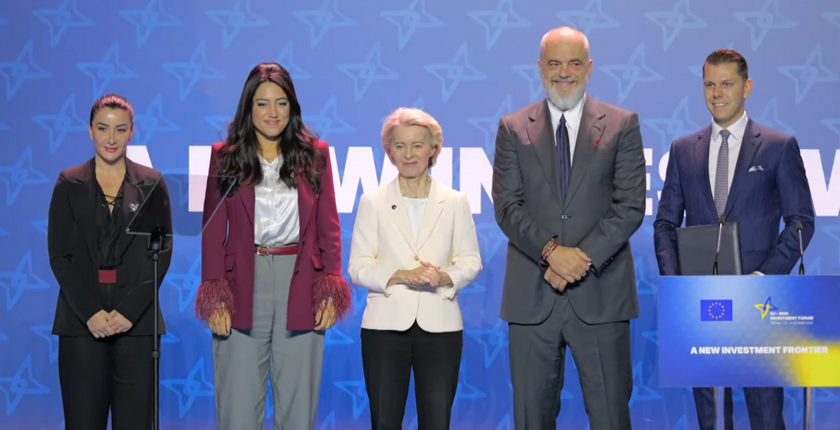
The declaration of support for CWP Europe’s projects was signed during the EU-Western Balkans Investment Forum in Albania’s capital, Tirana, in the presence of Albanian Prime Minister Edi Rama and European Commission President Ursula von der Leyen, according to a press release from CWP Europe, a leading renewable energy project developer in Southeast Europe.

The 600 MW Tropoja wind farm will advance Albania’s energy independence by providing clean, affordable electricity, supporting the country’s energy strategy, the company stressed.

The 600 MW Tropoja wind farm will boost Albania’s energy independence

In Montenegro, the 400 MW Montechevo solar farm will combine solar generation with battery storage directly connected to the country’s new 400 kV transmission grid. It will leverage Montenegro’s strategic interconnections – including the undersea power cable to Italy – to maximize the export of clean electricity and its integration into the European energy market.

A new energy backbone for the Western Balkans and Europe

Speaking at the signing ceremony, von der Leyen emphasized the Western Balkans’ increasing role in Europe’s clean energy transition.

“Today you are signing several investments that will do just that. From clean energy production in all six Western Balkan partners to energy storage in Montenegro. They will bring the cost of electricity down. And they will also contribute to our collective energy independence. You are building a new energy backbone not only for the Western Balkans. But for all of Europe,” said von der Leyen.

CWP Europe CEO Dimitar Enchev signed the declaration on behalf of the company, alongside Executive Vice Presidents Maja Turković and Viktor Garbev.

Enchev: We are unlocking the region’s immense renewable energy potential

“With Tropoja and Montechevo, we are unlocking the region’s immense renewable energy potential and strengthening cooperation across the Western Balkans. We greatly appreciate the support of the European Commission, the Albanian Investment Development Agency, and the Montenegro Investment Promotion Agency in advancing this shared vision for a clean, economically competitive and secure energy future of the region and Europe as a whole,” said Enchev.

Over the past 17 years, CWP has invested in sustainable development and the energy transition, successfully developing the largest wind farms in the region, including the largest one in Europe – the 600 MW Fântânele-Cogealac project in Romania. It is currently developing over 7 GW of renewable energy capacity, according to the statement.

by in News

EU opens energy, environment cluster in accession talks with Albania

Albania officially started negotiations with the European Union on the so-called cluster 4, encompassing the green agenda and sustainable connectivity. It is joining Montenegro and Serbia, which haven’t yet closed any of the four chapters in the group: transport policy, energy, trans-European networks, and environment and climate change.

The Council of the EU held an accession conference with Albania and declared the opening of formal talks on cluster 4.

“Enlargement is at the top of our priorities as a geopolitical necessity for the EU. I am happy that we took a next step today with Albania. This is another clear proof of the country’s path towards European integration. I look forward to holding more meetings in the coming months with Albania and with other candidate countries to move forward the EU’s enlargement,” said Minister for European affairs of Denmark Marie Bjerre, who led the European Union’s delegation. Her country is currently holding the six-month presidency of the Council of the EU.

Rama: Our challenge is to reinvent ourselves

Prime Minister Edi Rama and his team represented Albania at the event, in which European Commissioner for Enlargement Marta Kos participated as well.

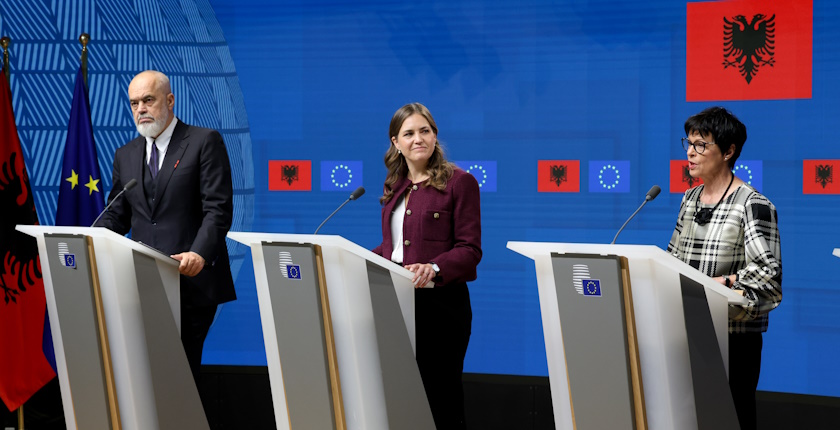
“Today we opened another cluster, it’s, as a matter of fact, five clusters in 11 months. In my understanding, it’s a record. And we are looking forward to opening the last cluster before this year ends… Environment is today a really pressing issue, and demands are challenging even for member states to keep the standards and to protect the standards. So, our challenge is to reinvent ourselves,” Rama said at a press conference with the two EU officials.

No chapters from cluster 4 closed yet in Western Balkans

The chapters in cluster 4, on the green agenda and sustainable connectivity, are transport policy (14), energy (15), trans-European networks (21) and environment and climate change (27). The trans-European networks comprise Trans-European Networks for Energy (TEN-E), Trans-European Networks for Transport (TEN-T) and Trans-European Networks for Telecommunications (eTEN).

As for the rest of the Western Balkans, Montenegro opened the first three in 2015 and the remaining one in 2018. It started its accession talks in 2012. The EU grouped 33 chapters into six clusters in 2020, while 34 and 35 are separate.

Albania is third in the region to open cluster 4

Serbia, which started negotiations in 2014, launched cluster 4 in late 2021. Notably, neither closed any chapters in the group. Montenegro closed seven in total, compared to just two on Serbia’s list.

Albania opened accession negotiations in 2022, as did North Macedonia. The former didn’t close any chapters yet and the latter didn’t even open a single one. Bosnia and Herzegovina is a candidate but it still didn’t start negotiations. Kosovo* is only a potential candidate.

EU urging tangible progress against environmental crimes

Among other points in its common position regarding the talks being launched, the EU urged Albania to accelerate renewable energy deployment by completing the necessary rules and regulations on permitting. The negotiators from the administration in Brussels said the Electricity Integration Package (EIP) needs to be fully implemented as well.

Albania has to align with EU acquis on environmental crimes and make tangible progress, especially against wildlife crimes, deterioration of habitats, illegal shipment or dumping of waste, pollution crimes and illegal trading in hazardous substances, the document reads.

* This designation is without prejudice to positions onstatus and is in line with UNSCR 1244/99 and the ICJ Opinion on the Kosovo declaration of independence.