
Albania National Mining Strategy 2026–2040: A Critical Assessment of Strategic Autonomy and Value Chain Integration
The release of the National Strategy for the Development of the Mining Sector 2026–2040 represents a definitive, albeit belated, attempt by the Albanian state to reconcile its socialist-era extractive legacy with the stringent requirements of the European Union’s green transition and digital agenda. As the global economy pivots toward carbon neutrality, the demand for critical raw materials (CRMs) has transformed mineral-rich nations into geopolitical pivots. Albania, positioned as a traditional producer of chromium, copper, and nickel, finds itself at a crossroads where its historical extraction-only model no longer suffices to sustain economic growth or satisfy the regulatory benchmarks of the EU’s Critical Raw Materials Act. The strategy under review outlines a fifteen-year roadmap designed to modernize the industry, but its success is contingent upon overcoming structural deficiencies in human capital, environmental remediation, and institutional transparency that have plagued the sector for decades.
The Geopolitical and Strategic Imperative of the 2026–2040 Framework
The foundational logic of the 2026–2040 strategy is rooted in the “Green Deal” and the necessity of achieving strategic autonomy for the European continent. For Albania, this strategy is not merely a technical document but a primary instrument of European integration. By aligning national mining policy with Regulation (EU) 2024/1252 (the CRM Act), the Albanian government seeks to position the country as a vital node in the European supply chain for minerals essential to renewable energy technologies, electromobility, and defence. The strategy explicitly aims to transform the sector from a source of raw ore exports into an integrated industrial complex that captures high-value downstream processes such as refining and smelting within the national borders.
The evidence of Albania’s importance is underscored by its persistent global ranking in chromium production, where it consistently remains the seventh-largest producer and the fourth-largest exporter of this strategic mineral. However, the economic impact of this dominance has been mitigated by the low level of domestic processing. Historically, and continuing into the present, the vast majority of extracted ore is shipped to smelters in China and Turkey, effectively exporting the employment and fiscal benefits associated with the metallurgy stage of the value chain. The new strategy identifies this as a critical failure and sets a target to ensure that at least 30% of chromium, copper, and nickel ore is processed domestically by 2030.
Albanian Extractive Economy against Regional Neighbours
To understand the realism of these targets, a comparative analysis with Western Balkan peers is essential. While Albania’s mineral sector accounts for approximately 4.2% of its GDP, its production profile differs significantly from neighbours like Serbia and Kosovo, whose extractive industries are overwhelmingly dominated by lignite for domestic power generation.
| Indicator (2023/2024 Data) | Albania | Serbia | Kosovo | North Macedonia |
| Minerals Production (Metric Tons) |
1,379,939 |
33,556,191 |
6,930,329 |
4,479,894 |
| Top Mineral Focus |
Metallic (Cr, Cu, Ni) |
Lignite, Copper |
Lignite (5th global) |
Chemicals, Ores |
| Processing Level (Domestic) |
20–35% (Cr) |
High (Integrated) |
Limited |
Moderate |
| Mining Rent (Royalties) |
6–9% |
Competitive |
Varied |
High Reform |
Serbia’s mining sector, which saw a production high of over 36 million metric tons in 2022, benefits from a much more integrated industrial base, where extraction is closely linked to large-scale smelting operations like those in the Bor district. In contrast, Albania’s metallic sector has remained fragmented. The strategy acknowledges that while Albania possesses significant geological resources, it ranks lowest in the region for its business environment and institutional quality. This institutional gap is the primary reason why North Macedonia was able to increase its concession fee revenues by 218% in 2025 through tariff reform and better municipal coordination, while Albania continues to struggle with royalty collection and distribution.
Institutional Architecture and the Reform of Resource Governance
The 2026–2040 strategy identifies a critical bottleneck in the fragmented nature of Albanian mining governance. Currently, the administrative burden is distributed across the Ministry of Infrastructure and Energy (MIE), the National Agency of Natural Resources (AKBN), and the Albanian Geological Survey (SHGJSH). This division has historically led to overlapping jurisdictions, lack of data synchronization, and delays in the permitting process. One of the strategy’s most ambitious institutional goals is the creation of a unified digital “DataHub” for mineral and geological information.
The mechanism for this reform involves the consolidation of decades of archived geological data, much of which remains in analog format, into a digital GIS platform that complies with the EU’s INSPIRE standards. The current documented situation reveals that exploration data packages are non-existent, making it difficult for international “junior” mining firms to conduct the preliminary risk assessments necessary to justify greenfield investments. The strategy’s Objective 5 aims to rectify this by providing structured access to potential investors, which is expected to reduce the current high-risk profile of the Albanian mining landscape.
Transparency and the EITI Standard
Governance is further complicated by the history of transparency in the sector. Albania’s membership in the Extractive Industries Transparency Initiative (EITI) since 2009 has provided a platform for mitigating corruption and ensuring that the public can monitor the flow of mining rents. However, the “resource curse” remains a threat; the strategy notes that while mining rents for unprocessed metallic minerals have increased to 6–9%, the actual transfer of the 5% statutory share to local municipalities is often delayed or omitted. In 2015, only 3.6% of royalties were successfully transferred to local government units, despite legal mandates.
The roadmap for 2026–2040 explicitly ties future funding to the rigorous implementation of the 2023 EITI Standard. This includes the disclosure of beneficial ownership and the publication of detailed environmental impact data—factors that are now prerequisites for any project seeking “Strategic Project” status under the EU CRM Act. Without these governance improvements, Albania remains vulnerable to the types of high-level corruption and money laundering that have led to its placement on international “grey lists” in recent years.
Geological Potential and the Realignment of Reserve Valuation
The strategic pivot toward CRMs requires a fundamental re-evaluation of Albania’s geological endowment. The country currently manages 579 active mining licenses, but the production data from 2018–2024 reveals a problematic reliance on industrial and construction minerals. In 2018, for instance, the output of limestone for inerts reached 38 million tons, whereas metallic ore production, which offers significantly higher economic complexity and value-added potential, remained modest in comparison. This statistical imbalance threatens the long-term viability of the national reserve portfolio.
Quantitative Analysis of Known Reserves
According to the official data provided by the National Agency of Natural Resources (AKBN), the following metallic and strategic reserves represent the backbone of the 2026–2040 industrial ambitions:
| Mineral Category | Total Reserves (Tons/Metric) | Grade/Content Analysis |
| Chromium Ore | 31,074,927 | 29.93% Cr₂O₃ |
| Copper Ore | 40,250,498 | 1.45% Cu |
| Iron-Nickel | 247,884,220 | 44.3% Fe₂O₃ |
| Nickel Silicate | 104,096,767 | 1.16% Ni |
| Titanomagnetite | 78,323,738 | 6.01% TiO₂ |
| Bauxite | 20,029,883 | 42.03% Al₂O₃ |
| Phosphorites | 46,587,088 | 5 – 33% P₂O₅ |
| Zinc | 3,038,211 | 1.61% Zn |
The strategy recognizes that these reserves are currently classified under outdated methodologies that do not align with international financial reporting standards. A major component of Policy 1 is the re-evaluation of at least 80% of these reserves according to the United Nations Framework Classification (UNFC) by 2030. This transition is not merely a bureaucratic requirement; it is a critical mechanism to enable international financing. European banks and institutional investors are increasingly unable to fund projects where the geological risk is not quantified via UNFC or JORC-compliant reporting.
The Potential for “Secondary Mining”
A second-order insight derived from the strategy is the government’s newfound focus on “mining waste to resources.” For decades, the byproduct of Albanian mining—billions of tons of tailings—was viewed as a purely environmental liability. However, the new strategy integrates these tailings into the circular economy framework. In regions like Rubik and Kurbnesh, historical tailings from the Cold War era contain significant concentrations of copper, zinc, and even rare earth elements (REE) that were technologically impossible or economically unfeasible to extract in the past.
The strategy sets a target to recover and valorize at least 20% of these existing sterile deposits by 2040. This is particularly relevant for chromium-rich tailings, which offer a sustainable pathway for domestic ferrochrome production without the environmental footprint of new open-pit mining. Reprocessing these legacy sites is expected to generate upwards of €500 million in revenue over the next decade while simultaneously addressing severe acid mine drainage issues.
Industrial Policy and the Diversification of the Value Chain
The current documented situation in Albania’s mineral processing is one of stagnation. While the country possesses 16 chromium enrichment factories, their capacity is underutilised due to high energy costs and a lack of modern furnace technology. Policy 2 of the 2026–2040 strategy addresses this by proposing the establishment of at least two dedicated “Mining Industrial Hubs” equipped with shared energy, logistics, and environmental infrastructure.
The Nickel-Cobalt-Copper Value Nexus
The most significant industrial project currently underway is the CVMR nickel refinery at Qafë Thanë, which signals a move toward high-purity nickel and cobalt production—essential materials for the European battery industry. The strategy aims to replicate this model in the copper sector. While 100% of copper ore is currently processed to the concentrate level within Albania, the lack of a modern domestic smelter means that the refined metal must be produced abroad.
The mechanism for achieving deeper integration involves “Strategic Projects” under the EU CRM Act. Albania intends to submit at least three projects for this designation by 2040, which would grant them “overriding public interest” status, faster permitting, and access to European investment instruments like InvestEU. This is a savvy geopolitical move, but the investigative evidence suggests that Albania faces fierce competition from Serbia’s lithium projects and Bosnia’s lead-zinc operations for these limited European funds.
| Strategic Metric | 2025 Status | 2040 Objective | Financial & Standards Context |
| Domestic Cr Processing | 20% – 35% | 50% Integration | Transition to metallurgical-grade ferrochrome. |
| Recycling Rate | < 5% | +50% Vol. Increase | Focused on CRM/SR circular economy. |
| UNFC Evaluation | < 10% | 100% | Standardization for EU investor confidence. |
| EU Strategic Projects | 0 | 3 Projects | Alignment with the Critical Raw Materials Act. |
| Total Strategy Budget | — | €181 Million | Covers technological modernization & R&D. |
Safety, Environmental Sustainability, and the ESG Burden
One of the strategy’s most sobering admissions is the state of workplace safety and environmental degradation. In 2024, the mining and quarrying sector accounted for 12% of all accidents and 9% of all fatalities in Albania, with the majority occurring in the underground chromium mines of Bulqizë. The current mechanism for safety inspection—the National Authority for Safety and Emergencies in Mines (AKSEM)—is underfunded and lacks the digital tools necessary for real-time monitoring of gas concentrations, ventilation, and geotechnical stability.
The strategy proposes a radical shift: mandating the installation of real-time digital monitoring systems in all underground mines by 2040. However, for the hundreds of small-scale license holders who currently operate on thin margins, the cost of these systems is prohibitive. This suggests that the strategy will realistically achieve its safety goals only through the consolidation of smaller units into larger, more capitalised entities—a move that carries social risks in communities that rely on artisanal and small-scale mining for survival.
The €100 Million Rehabilitation Liability
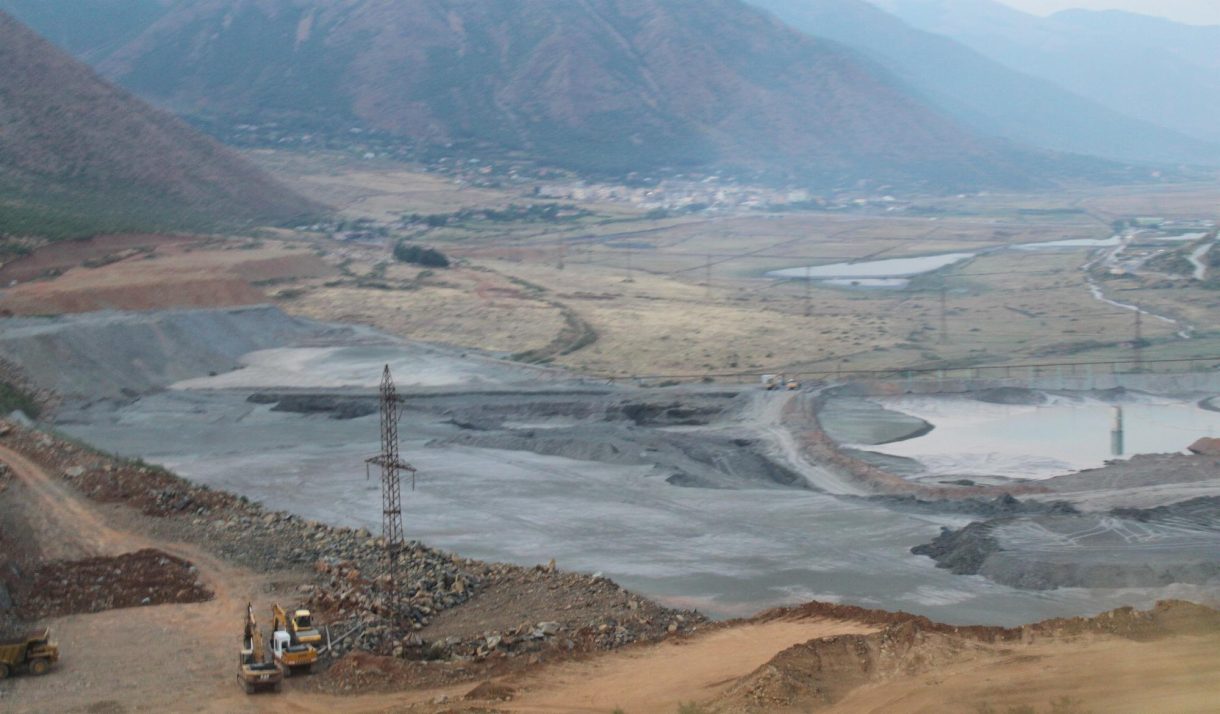
The environmental debt of the Albanian mining sector is staggering. Approximately 4.1 square kilometres of territory are documented as severely contaminated by heavy metals and acid mine drainage. The World Bank estimates that the cost of full recovery for these sites exceeds €100 million. To address this, the strategy proposes the creation of a National Fund for the Rehabilitation of Mining Areas (Fondi Kombëtar i Rehabilitimit) by 2026.
The efficacy of this fund remains questionable. Currently, rehabilitation is funded through individual bank guarantees, which are often insufficient and managed in a decentralized, opaque manner. Centralizing these funds is a necessary step, but without an immediate injection of international donor capital, the government will struggle to address legacy sites in Rubik and Përrenjas that have no current owner to hold liable. The integration of the Carbon Border Adjustment Mechanism (CBAM) by the EU adds further pressure; Albanian exports will soon face carbon taxes if they cannot prove their production processes are reaching decarbonization targets.
The Human Capital Crisis and the Technological Generation Gap
Perhaps the most significant threat to the achievability of the 2026–2040 strategy is the collapse of the domestic technical workforce. The data indicate a catastrophic decline in the number of students pursuing degrees in geology and mining engineering. Since the 1990s, enrollment at the Faculty of Geology and Mining has dropped by over 80%, with fewer than 50 students registered in the 2025-2026 academic year. This has created a vacuum where the median age of the expert workforce is rapidly rising, and there are virtually no young specialists trained in the “high-tech” mining techniques required by the strategy—such as AI-driven sorting, airborne surveys, or hydro-metallurgy.
The strategy responds with Policy 4, which outlines a “Mineral Brain Gain” program and the creation of a National Training Center for CRMs. While these are sound objectives, they are set against a demographic backdrop of extreme youth outmigration. Albania saw a net migration of -24,472 in 2024 alone. To attract diaspora specialists back to the mines of Martanesh or Bulqizë, the government must offer more than just a patriotic appeal; it must create a professional ecosystem that rivals the salaries and career stability found in the EU.
Fiscal Analysis and the Reality of Option II
The 2026–2040 strategy is costed according to two options, with the government selecting “Option II”—the more ambitious “Variant of Need”. This option carries a total indicative cost of 19,466,891,000 ALL (approximately €181 million) over the fifteen-year period.
Detailed Budgetary Allocation (Option II) (Source: Compiled from Section 9 of the Strategy Report.
| Strategic Policy | Total Cost (Million ALL) | Total Cost (Million Euro) | State Budget % | IPA/Donor % |
| Policy 1: Extraction & Assessment | 4,609.9 | 42.9 | 40% | 60% |
| Policy 2: Modernization & Recycling | 7,573.4 | 70.4 | 35% | 65% |
| Policy 3: Safety & Environment | 3,292.8 | 30.6 | 45% | 55% |
| Policy 4: Human Capital | 2,634.2 | 24.5 | 50% | 50% |
| Policy 5: Data & Transparency | 1,356.6 | 12.6 | 30% | 70% |
| Total Strategy | 19,466.9 | ~181.1 | ~40% | ~60% |
The investigative scrutiny of this budget reveals a heavy reliance on external funding. Approximately 60% of the €181 million is expected to come from EU IPA III funds, Horizon Europe, and international financial institutions like the EBRD. The state budget is only expected to cover about €11 million per year—a significant increase from the historical average of €5.1 million, but still a fraction of the total need. This “funding gap” represents a massive risk. If the global economic outlook slows, as projected by the World Bank for 2026, or if EU accession progress stalls, Albania could find its mining strategy severely underfunded.
The Energy-Price Risk Factor
A critical omission in the fiscal analysis is the cost of energy for domestic processing. Modern refineries for nickel and copper are highly energy-intensive. Albania is over-reliant on hydropower (over 90% of domestic production), which is susceptible to climate-induced droughts. High electricity prices have historically forced Albanian ferrochrome smelters to suspend production during peak winter months. Unless the strategy is integrated with a renewable energy expansion specifically for mining hubs (such as on-site solar and wind), the 30% domestic processing target will likely remain a documented ambition rather than a realistic achievement.
Market Forecasts and the Commodity Price Trap
The realistic success of Albania’s mining strategy is deeply tethered to the “Pink Sheet” commodity forecasts of the World Bank. The current outlook for the primary Albanian minerals is a mix of high demand and volatile pricing.
-
Copper: Poised to reach new nominal record highs by 2026-2027 due to its non-negotiable role in clean-energy infrastructure. This supports the strategy’s goal of expanding the Mirditë copper operations.
-
Nickel and Cobalt: While essential for EV batteries, these minerals face supply chain pressures and fluctuating demand from the Chinese property sector. The success of the Qafë Thanë refinery depends on capturing the European market, which is increasingly seeking “clean” nickel not tainted by the environmental practices common in Indonesian production.
-
Chromium: As the global steel industry attempts to decarbonize, the demand for high-grade ferrochrome (produced with low-carbon energy) will command a premium. This presents a unique opportunity for Albania to leverage its hydro-based grid as a competitive advantage.
However, the strategy must navigate a “downside” scenario. If global growth—particularly in China—slows more than expected, the prices for base metals will collapse, rendering Albania’s high-cost, small-scale underground mines uneconomical. The strategy’s lack of a fiscal stabilization fund or a sovereign wealth mechanism to buffer against these cycles is a notable weakness.
Realistic Achievability vs. Documented Ambition
The Strategjia Kombëtare për Zhvillimin e Sektorit Minerar 2026–2040 is a theoretically robust document that identifies the correct strategic pillars for a 21st-century extractive industry. Its alignment with the EU CRM Act is a masterstroke of policy integration that will likely secure substantial pre-accession funding. However, based on the current documented situation, the following conclusions emerge regarding its realistic achievability:
-
Governance and Transparency: This is the most achievable pillar. The technical capacity for a GIS DataHub exists, and the EITI framework is already well-integrated into the Albanian institutional fabric. By 2030, Albania will likely have a transparent, digital licensing regime that significantly reduces corruption risks.
-
Processing and Value Addition: The target of 30% domestic processing is achievable for chromium but highly unlikely for copper without massive state intervention in the energy market. The “Mining Industrial Hubs” are feasible only if Albania can solve its seasonal energy shortages.
-
Environmental Remediation: The strategy will likely succeed in launching three “showcase” rehabilitation projects using World Bank or IPA funds, but the total €100 million liability will remain a shadow over the sector for the duration of the fifteen-year period.
-
Human Capital: This is the strategy’s “Achilles’ heel.” There is no evidence that a “Brain Gain” program can reverse a 30-year demographic trend. Unless geology and mining engineering are treated as national priority disciplines with guaranteed elite-level salaries, the industry will face a terminal expertise shortage by 2040.
In final assessment, the strategy marks the end of the “wild west” era of Albanian mining. It transitions the sector into a structured, EU-compliant industrial framework. While it may not achieve its most ambitious processing and recycling targets due to energy and labor constraints, it will succeed in locking Albania into the European strategic supply chain, ensuring that the country’s mineral wealth remains a central component of its national security and economic identity for the next generation.