by in News

Croatia initiates project to harness solar energy along highways

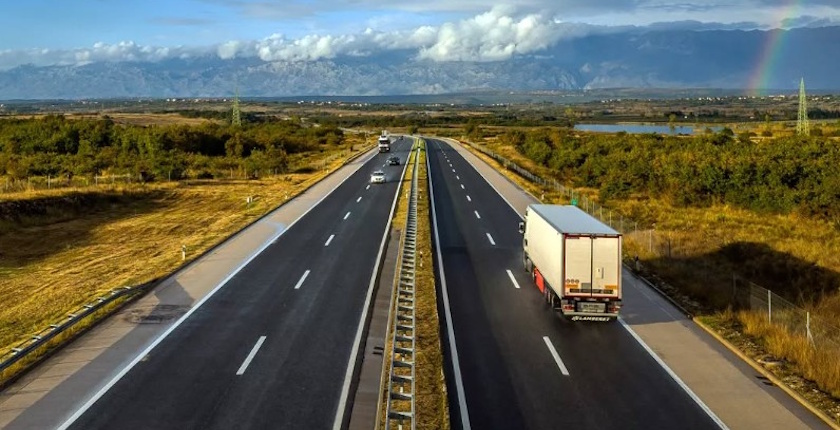
Croatia’s highway management enterprise, Hrvatske Autoceste, is implementing a project for solar power plants along its highways. The company plans to use the electricity for self-consumption and for electric vehicle chargers. It would reduce costs and increase its energy independence.

After a tender procedure, Hrvatske Autoceste (HAC) selected ETS Farago to produce project designs for photovoltaic plants at four locations on the A3 highway. It heads east from the capital Zagreb to the border with Serbia.

The job, covering 36 hectares, should be finished by March 2026. Along with the documentation, the selected company is required to submit an assessment of its advantages and disadvantages.

It would be followed by a techno-economic analysis and, if it is favorable, a tender for the installation of solar panels. It is the final step, expected not before 2027.

Slovenia and BiH have initiated similar projects

Of note, Slovenia and Bosnia and Herzegovina have initiated similar projects. Roadside locations could be a good solution for solar panels, given that such land is unused and alternatives are limited.

ETS Farago is tasked with preparing three versions for each of the four locations: Zagreb Plitvice (2.5 hectares), Rastovica (3.1 hectares), Sredanci (11 hectares), and Ivanja Reka (18 hectares). The first two are next to rest areas, while the other two are at interchanges.

HAC intends to install 259 electric vehicle chargers

The first model is for the production of electricity for self-consumption, with the surplus fed into the grid. Another option is self-consumption including battery energy storage systems (BESS). The third model is the complete sale of all electricity produced in the PV facilities.

The contract is estimated at EUR 11,400 excluding VAT.

HAC previously said that in addition to supplying its own facilities, such as toll booths, traffic maintenance and control centers, and street lighting, its project called solar highways is key to plans for expanding electric vehicle infrastructure.

The company intends to install 259 chargers on roads within five years.

by in News

Number of electric vehicles in Serbia reaches 6,000

There are about 6,000 registered electric vehicles in Serbia, according to Filip Mitrović, coordinator of the Emobility cluster of the Serbian Chamber of Commerce and Industry (PKS).

The fleet of 6,000 electric vehicles (EVs) in Serbia is small compared to Europe, Filip Mitrović stressed at the Belgrade Energy Days conference, as quoted by Tanjug. He also identified two obstacles to further growth.

First of all, regulatory inconsistencies make it impossible to accurately charge for the electricity consumed by electric vehicles at charging stations. Billing is currently based only on the duration of e-charger use, rather than the actual amount of electricity consumed, he added.

Complex documentation is required to install an electric charger

He underlined that there is no legal way to charge for the electricity consumed per kilowatt-hour. Therefore, a time-based charging method is used for electric vehicles.

“That’s not fair,” he said, and added that anyone who has used an EV knows it is standard to be charged based on the amount of electricity consumed. Mitrović noted that different models of EVs draw varying amounts of energy from the e-charger in the same period.

The second problem, in his words, is the procedure for the installation of EV chargers. Very often, complex documentation is required, which slows down and complicates the entire process, making investors give up on the project, Mitrović stressed.

In recent years, the Government of Serbia has been awarding subsidies for what it officially calls “ecological vehicles.” Last year, it decided to stop subsidizing hybrid (HEVs) and plug-in hybrid (PHEVs) electric vehicles and to provide funding only for 100% EVs or battery electric vehicles (BEVs).

Subsidies were granted for approximately 3,300 vehicles

The criteria remained the same this year. On August 8, the Ministry of Environmental Protection said it ended approving subsidies for the purchase of new EVs for 2025. All the allocated funds have been granted, it explained.

However, the government then secured more money and resumed the procedure on August 28.

In mid-September, the ministry said that the government backed the purchase of 2,834 eco-friendly vehicles since 2020. With the applications received this year, the number has reached 3,305.

by in News

Zagreb kicks off decarbonization of public transport

Zagreb’s public transport utility ZET has received EUR 21 million from the Government of Croatia to install chargers for electric buses.

Croatia has earmarked EUR 50 million for firms providing public urban and suburban transport services to install chargers for electric buses. Zagreb is also in the process of procuring 70 electric buses.

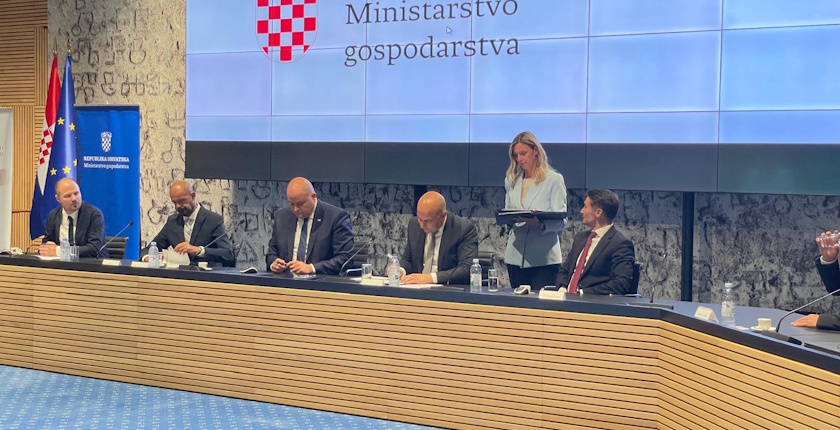
The grant agreement was signed by Minister of Economy Ante Šušnjar, public transport utility ZET’s CEO Marko Bogdanović, and Luka Balen, manager of the Environmental Protection and Energy Efficiency Fund.

The EUR 21 million agreement is from the public call on charging infrastructure for electric buses, according to the Ministry of Economy.

ZET will install 62 dual e-chargers

The funds are from the National Recovery and Resilience Plan 2021-2026.

ZET intends to build the devices at the Podsused location. As part of the project, the company will install 62 dual chargers, providing 124 charging points for low-floor electric buses.

Minister Ante Šušnjar underlined that it is an important step toward decarbonizing public city transportation.

With an investment worth over EUR 21 million, the government is backing the decarbonization and sustainable future of Zagreb, Šušnjar added.

Balen: Other cities and municipalities are also committed to decarbonization through smart city projects

Luka Balen, manager of the Environmental Protection and Energy Efficiency Fund, pointed out that other Croatian cities and municipalities are also committed to decarbonizing transportation. It is evident from the smart city projects co-financed by the fund.

Local authorities, through projects involving smart management, aim to reduce traffic jams and to offer citizens alternative transport options, such as urban bike systems, and cleaner urban transportation, Balen stressed.

ZET CEO Marko Bogdanović highlighted the agreement as a historic step and the start of the decarbonization of public transport in Zagreb.

After purchasing the first electric buses in Croatia, ZET and Zagreb are once again leading the implementation of new technologies in the region by signing the agreement for the installation of chargers for e-buses, Balen said.

ZET is one of 18 pre-selected public transport operators eligible for grants under the public call. The total value of ZET’s project is EUR 27.4 million.

by in News

PPC is installing 60 chargers for EVs in Romania, Greece

Public Power Corp. has received funds from the European Union for the installation of 60 chargers for electric vehicles.

Public Power Corp. (PPC) and PPC blue Romania have jointly secured up to EUR 2.76 million from the Connecting Europe Facility (CEF) funding mechanism for the installation and operation of the publicly accessible direct current (DC) fast chargers, the update reveals.

PPC blue is the e-mobility arm of PPC.

The funds for the e-chargers in Greece and Romania were obtained from the CEF’s Alternative Fuels Infrastructure Facility (AFIF) program.

Under the East Europe Electric Route (Blue Route 3E) joint project, 28 DC fast charging points, each with a minimum capacity of 150 kW, would be set up for light-duty vehicles (LDVs), while 32 ultra-fast charging points, of at least 350 kW apiece, are intended for heavy-duty vehicles (HDVs).

Babilis: We are strengthening the TEN-T in Greece and Romania

The installation at 29 locations along the Trans-European Transport Network (TEN-T) is well underway, the company revealed.

Out of the 60 units, 16 fast-charging points for electric LDVs, each with a minimum output power of 150 kW, will be installed across ten locations in Greece. The rest – 12 fast-charging points for LDVs and 32 ultra-fast charging points for HDVs – are planned in Romania.

According to Miltiades Babilis, Chief E-Mobility Officer at PPC, the infrastructure of the TEN-T in Greece and Romania is being strengthened through the Blue Route 3E project.

It is the second European funding package that PPC blue has secured through the CEF mechanism

“PPC blue is investing in the strategic development of its network by adding new hyperfast chargers at key points along the Greek road network, thus making EV travel more convenient,” he stated.

It is the second EU funding package that PPC blue has secured through the CEF mechanism, following the Electrifying South East Europe Road Transport (ESEERT) project. It is in an advanced stage of implementation and involves 34 fast-charging points for electric LDVs across 13 locations in Greece.

PPC blue has over 2,800 e-chargers in Greece and Romania.