by in News

OSSH Launches €4.4 Million Smart Meter Installation Project Across Albania

The Electricity Distribution System Operator (OSSH) plans to begin the installation of smart meters for end consumers.

This Thursday, the operator launched a procurement procedure through the public procurement system titled: “Installation of the Smart Metering System for End Consumers, within the Energy Balance Metering System in MV-LV Electrical Substations, and their integration into the OSSH metering platform,” with a total estimated fund of 432 million lekë, or approximately €4.4 million.

According to the tender documents, the investment will focus on areas with high electricity consumption and higher levels of network losses, with the aim of improving technical efficiency and strengthening control over electricity distribution.

As part of previous projects, OSSH has already installed thousands of smart meters in several regions across the country. In Durrës, during the 2023 investment phase, 1,752 intelligent energy balance metering systems were installed in MV-LV substations, while in 2024 an additional 848 smart meters were installed for end consumers supplied by these substations.

Meanwhile, in Tirana, on feeders F7 and F8 of the Kashar substation, 200 intelligent balance metering systems and 3,157 smart meters were installed for end subscribers.

According to OSSH, the expansion of the project is also linked to the growing number of consumers in these areas, driven by population growth and new urban developments, including construction projects carried out as part of the reconstruction efforts following the 2019 earthquake.

The company states that the investment is part of its strategy to gradually replace the analog metering system with smart technology, in accordance with the electricity law and the directives of the European Energy Community.

The operator emphasizes that maintaining the same communication technology is intended to ensure compatibility with existing investments and maximize the use of the infrastructure developed so far.

The tender foresees the installation of a total of 14,035 smart meters. The largest number will be installed at the Sallmone substation with 7,760 units, followed by Shkoza with 3,560 meters, Spitalla with 1,600, and Kashari with 1,115 smart meters.
by in News

Tender for new Porto Romano terminal fails after sole bidder withdraws

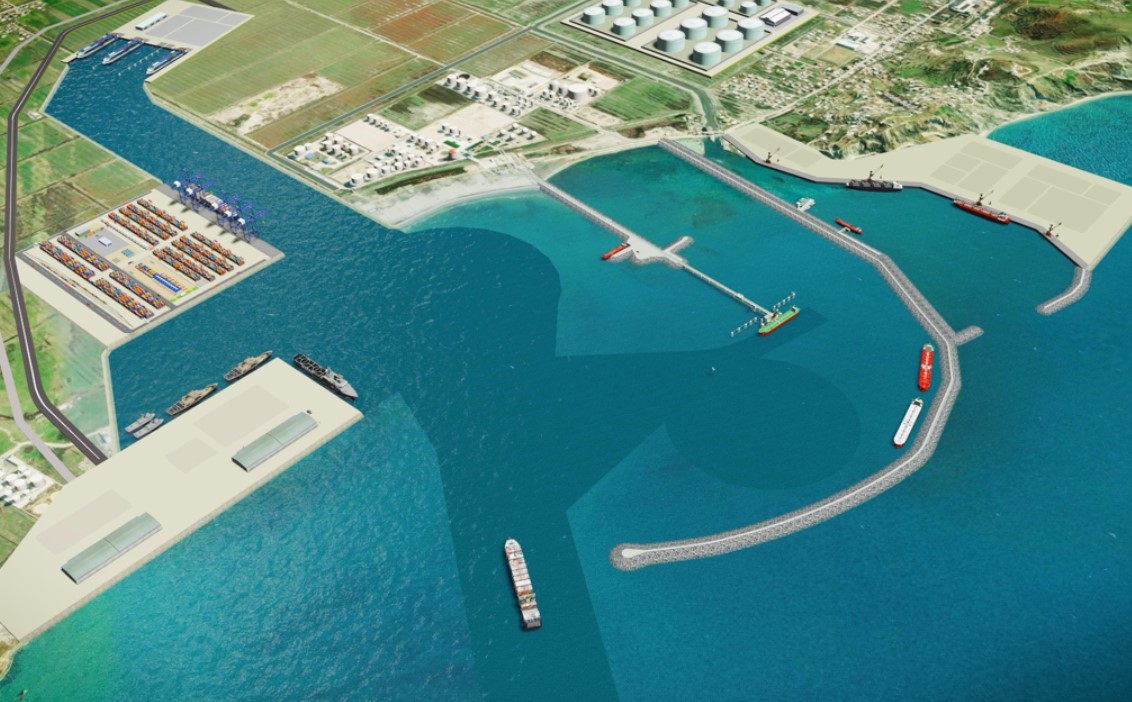
The public tender for the construction of Albania’s new commercial port in Porto Romano has collapsed after the single remaining bidder withdrew from the competition. Minister of Infrastructure and Energy Enea Karakaçi confirmed on Wednesday that the company pulled out of the project, citing escalating economic pressures.

“We are facing the withdrawal of the only bidder left in the race for purely economic reasons linked to rising costs,” Minister Karakaçi stated. “As a result of the current crisis, overall construction expenses have surged, and the bidder has used this to justify their exit. The commission will now proceed according to established protocols.”

Addressing the setback, Karakaçi echoed recent remarks by the Prime Minister, suggesting that external forces have actively sought to undermine the infrastructure initiative. “There are various actors attempting to stall and sabotage this critical national project for diverse reasons, including economic motives,” he noted. Despite the hurdle, he emphasized the government’s resolve: “We will devise an alternative strategy. No actor will be able to stop this project, as it is vital to the country’s economic development.”

The Minister also moved to assuage concerns over potential logistical disruptions, clarifying that the delay in selecting a new contractor will not affect daily operations at the existing Port of Durrës. The transition is inherently tied to the “Durrës Marina” real estate development—which will eventually occupy the current port’s territory under a state agreement—but that project is still only in its preliminary phase.

In the interim, the Albanian government is continuing its collaboration with international engineering consultancy Royal Haskoning to reassess the technical and financial criteria for prospective companies interested in taking over the new port’s development.

A Fraught Bidding Process

The ambitious project, officially titled the “New Integrated Commercial Port of Durrës in Porto Romano – Phase I,” was launched by the Durrës Port Authority in 2024 with an estimated budget limit of 39.3 billion Albanian Lek (ALL). The initial phase of construction was projected to span 1,220 days, or approximately three and a half years.

Porto Romano

However, the procurement process has been marked by strict filters and legal friction. In April 2025, the Bid Evaluation Commission announced that only two entities Archirodon Construction and Van Oord Dredging and Marine Contractors had passed the technical pre-qualification stage. Major industry players, including Webuild and a consortium led by Jan De Nul, were disqualified.

This led to a legal clash when the Jan De Nul consortium filed a formal complaint with the Public Procurement Commission (KPP). The KPP ultimately dismissed the appeal in late April 2025, allowing the contracting authority to move forward.

By September 2025, the competition had narrowed entirely. Open procurement data revealed that only one qualified economic offer remained to proceed to the contract signing a final step that has now been derailed by the company’s sudden withdrawal.