by in News

Slovenia draws up first climate vulnerability, risks assessment for energy sector

In cooperation with the Jožef Stefan Institute, the Ministry of the Environment, Climate and Energy has issued the first national assessment of climate vulnerability and risks for the energy sector. The analysis shows that the sector is moderately vulnerable under current climate conditions.

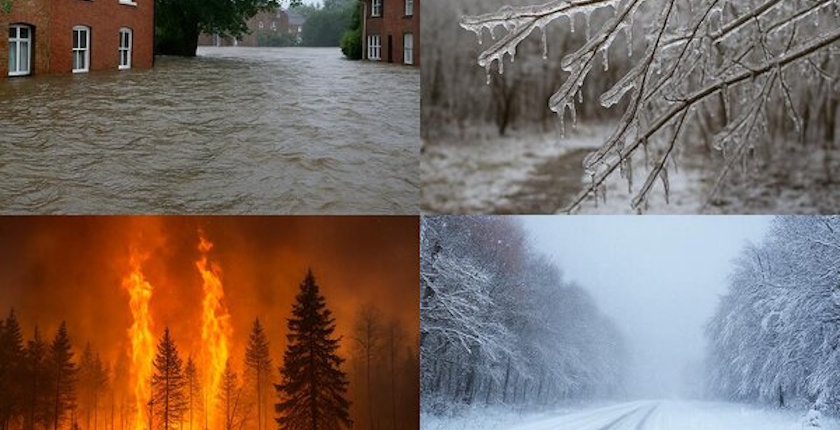
The main threats to the energy sector in Slovenia are floods, fires, storms, landslides, sleet and wet snow, heatwaves, and drought.

The assessment of climate vulnerability and risks for the energy sector was produced in line with the IPCC AR5 methodology and the national guidelines of the Faculty of Biotechnology.

The greatest threat to the energy sector are floods, which jeopardize fuel storage, substations, electricity distribution networks, and other elements of the supply chain, the ministry underscored.

The most important subsystem is liquid fuels

By using weighting and considering the current energy mix and the state of infrastructure, the most important subsystems for the functioning of the overall system are liquid fuels (34%) and electricity (33%), followed by natural gas (18%), solid fuels (10%), and heat (5%), the assessment reads.

This reflects a high dependence on imported liquid fuels and the key role of electricity in all consumption sectors, the ministry explained.
The overall weighted vulnerability score for the energy sector is 2.3 on a scale of one to five, with the electricity subsystem having the highest vulnerability, 2.6.

Electricity distribution grids, solar power plants, and fuel transport and logistic routes also show high vulnerability, according to the assessment.

Subsector ratings:

  • electricity subsector (2.6)
  • liquid fuel supply (2.2)
  • solid fuel supply (2.2)
  • natural gas supply (around 2.0)
  • heat supply (1.9)

Regarding individual elements of the sector, the most vulnerable are the electricity distribution network (3.5), electricity transmission system and imports (3), preparation of firewood, wood chips and pellets, and photovoltaic plants (3); vehicles/tanks for liquid fuels and vehicles/trucks for solid fuels, fuel stations, and other renewable energy sources (2.5).

The identified risks are expected to intensify in the future

The assessment reveals that Slovenia’s energy sector comprises critical elements whose failure could lead to significant supply disruptions.

It provides a technical basis and starting point for preparing a climate change adaptation strategy and for drafting measures such as strengthening infrastructure resilience, reviewing planning for new facilities, and incorporating climate risks into strategic documents and investment plans, according to the ministry.

Climate change scenarios indicate that the already identified risks will intensify in the future – especially floods, storms, and heatwaves.

The ministry said it would be necessary to implement adaptation measures to ensure a reliable energy supply.
by in News

Romania’s Hidroelectrica struck by worst hydrology so far

Romanian state-owned hydropower operator and electricity supplier Hidroelectrica is expecting record-low output this year amid a severe drought. However, it entered the winter season with much higher water reserves than in 2024. The company projected its annual profit at EUR 590 million.

Chronic drought and heat in Southeastern Europe may require countries in the region to invest massively in desalination. Whether a result of climate change or what skeptics consider a cyclical phenomenon, it is heavily impacting the economy and nature.

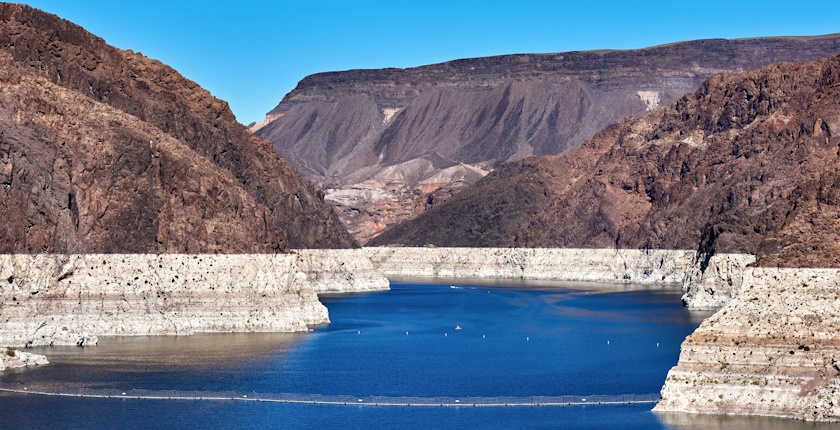
There is a trend of decreasing water levels in rivers, lakes and reservoirs. It spells uncertainty for hydropower projects, especially for ones on small watercourses, very sensitive to drought. Following extreme declines in water levels in hydropower reservoirs in Bosnia and Herzegovina, Serbia and Greece, Romania’s Hidroelectrica also sounded the alarm.

The state-owned utility and electricity supplier expects record-low production in 2025, just above 11 TWh, President of the Board of Directors Bogdan Nicolae Badea said at the Focus Energetic conference, as quoted by Agerpres.

It is the driest year so far, he stressed. Output is seemingly weaker even than in 2012, when the company fell into insolvency.

Weather effect weakening, but it’s no time to relax

Conversely, Hidroelectrica expects its profit to reach RON 3 billion (EUR 590 million) this year, Badea revealed. Furthermore, he pointed out that water reserves are at around 73%, compared to 64% from the same period of 2024.

The chief executive said he has noticed a pattern change and estimated that the pressure has been reduced in terms of the impact of weather factors on the energy sector. “But I don’t think it’s time to relax. Because, from what I have observed statistically in previous years, even if there were situations in which we had milder winters, in which episodes of extreme cold lasted less, these issues can arise at any time,” he explained.

Free market is only way for correct electricity pricing

Badea said he was “extremely happy” because of the return to the free market, arguing it is the only way for correct pricing. Hidroelectrica recently announced that it has surpassed one million household and non-household customers in the end-consumer supply market.

The company has 188 hydroelectric plants with a total capacity of 6.4 GW, and the Crucea wind farm of 108 MW.

by in News

BiH’s power utility ERS sees EUR 14.8 million loss in 2025

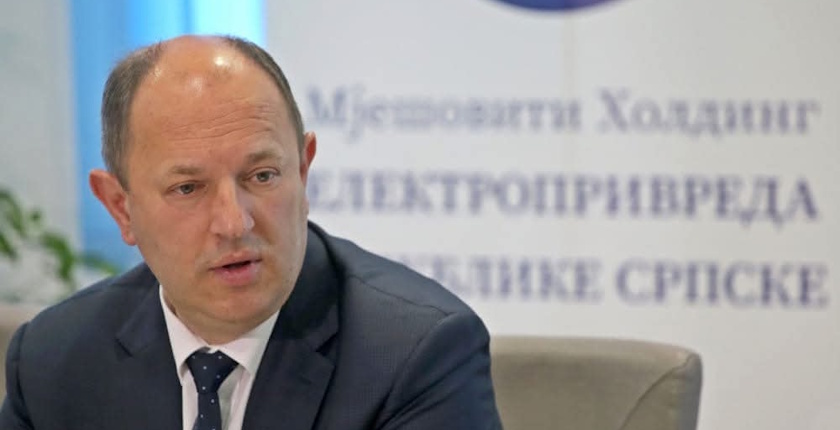
Elektroprivreda Republike Srpske expects a loss of BAM 29 million (EUR 14.8 million) this year, according to the power utility’s CEO Luka Petrović.

The reasons for the poor business results of Elektroprivreda Republike Srpske (ERS) are bad hydrological conditions and an increase in electricity imports, Luka Petrović said, as quoted by news agency Srna.

ERS is one of the three state-owned power utilities in Bosnia and Herzegovina. It is in charge of the electricity production and supply in the Republic of Srpska, one of the country’s two political entities.

Of note, a week ago, the new Prime Minister of the Republic of Srpska Savo Minić called the situation in the electricity sector extremely complex. He has also set a 15-day deadline for setting up plans to overcome the issues.

Petrović: Electricity is imported for EUR 72 per MWh and sold to citizens for EUR 34 per MWh

Following the meeting of ERS’s management in Trebinje, Luka Petrović emphasized that the company’s electricity production would be significantly reduced, to 4,500 GWh. He previously said hydropower output decreased by 50% this year on an annual basis.

He recalled that ERS already purchased about 13% of electricity for domestic supply at high prices. The difference between purchase and sales prices will produce a loss of about BAM 29 million (EUR 14.8 million), Petrović added.

He noted that in 2023, when the hydrological situation was good, ERS achieved a record profit of BAM 146 million (EUR 74.6 million).

Of note, the company recorded a BAM 3.2 million (EUR 1.6 million) profit in 2024.

Petrović stressed that the electricity deficit would have to be purchased on the power exchange, at EUR 72 per MWh, while it is sold to citizens for EUR 34 per MWh, compared to the price for businesses of EUR 75 per MWh.

Imports this year reached BAM 60 million to BAM 70 million (EUR 30.7 million to EUR 35.8 million)

Two consecutive years with drought can disrupt the cash flow because there is no export capacity, Petrović explained.

He asserted that ERS’s electricity exports over the past few years were worth BAM 100 million to BAM 200 million (EUR 51.1 million to EUR 102.2 million) per annum, while imports were between BAM 30 million and BAM 60 million. This year, electricity bought abroad amounted to between BAM 60 million and BAM 70 million (EUR 30.7 million to EUR 35.8 million).

Of note, in previous years, BiH was the largest net exporter of electricity in the region. However, imports were nearly 4.5 times higher in the first half of the year than in the same period of 2024. Another power utility, Elektroprivreda BiH (EPBiH), is increasing losses.

Government to hold a session about ERS

Petrović noted that the company has repaid a loan of BAM 78 million (EUR 39.9 million) and another of BAM 60 million (EUR 30.7 million).

A government session about ERS is planned. He will propose that it be held at the Ugljevik thermal power plant, from which a third of the electricity is delivered to Slovenia.

In addition, the management of ERS has requested further rationalization of all operating costs.

by in News

Water shortages in Southeastern Europe point to desalination as strategic approach

Former Minister of Environment and Water of Bulgaria Borislav Sandov is urging the country’s authorities to deploy alternative water supply solutions, including desalination, to counter shortages. Greece is preparing a radical change in its water management model. Turkey got its first floating seawater purification platform, running on solar and wind power.

Southeastern Europe is among the most jeopardized regions in the world in the context of global warming. The lack of water has the most drastic effect on everything from wildlife to food production, energy and public health. Bulgaria’s former Minister of Environment and Water Borislav Sandov warned that over half a million people in the country are at risk of water shortages.

Eastern and northeastern Bulgaria have a persistent issue with droughts and lack of water, necessitating a switch toward alternative forms of supply in the next five to 10 years, including seawater desalination plants, he recently told bTV.

In addition to climatic factors, there are serious shortcomings in water management, together with theft and corruption, Sandov claimed. He pointed to an example where drastically undersized pipes of poor quality were installed in one area, resulting in constant breakdowns and supply interruptions.

Sandov attributed some of the water stress to fragmented management between different local, regional and national institutions. In his words, as much as 10% of all settlements in Bulgaria, though mostly small ones, aren’t covered by waterworks and sewerage systems. Moreover, 44% of the water in the network isn’t measured in volume terms at the entry point and 50% of the water sources don’t have a valid permit from the competent authority, he added.

Notably, a quarter of the population in neighboring Serbia occasionally or permanently lacks safe drinking water from waterworks systems.

Greece to radically change its water management system

Greece decided to get ahead of the droughts and heatwaves. The government has promised radical change in water management: a more functional system with more investments and new technologies, including desalination, but also recycling.

Tourism in the summer months exacerbates the water stress. On some islands, demand surges by up to 30 times. It creates conflict with the needs for irrigation for food production. Greek islands mostly use underground aquifers with easily exhaustible capacity.

Rainfall and snowfall in the country are gradually decreasing.

Similar to Bulgaria, water management is spread across hundreds of operators and institutions, lacking coordination. Losses in drinking water supply amount to as much as 40%, in comparison with up to a staggering 60% in irrigation.

The government in Athens promised water would remain a public good

According to a study by Deloitte with data from 2022, more than EUR 10 billion is necessary for investments in the two segments, excluding Attica. It is where Athens is located. Another EUR 500 million to EUR 700 million is needed for the peninsula.

Government-controlled power utility Public Power Corp. (PPC) will reportedly enter the game, not least because municipal water and sewerage firms owe it more than EUR 400 million. The company would convert debts into minority stakes in three centralized entities: for the regions of Athens and Thessaloniki and the rest of the country, the media learned.

PPC can contribute with its knowhow and experience in the construction and operation of dams and hydropower plants.

Importantly, the government vowed to keep water a public good.

Floating desalination platform with hybrid power plant put into operation in western Turkey

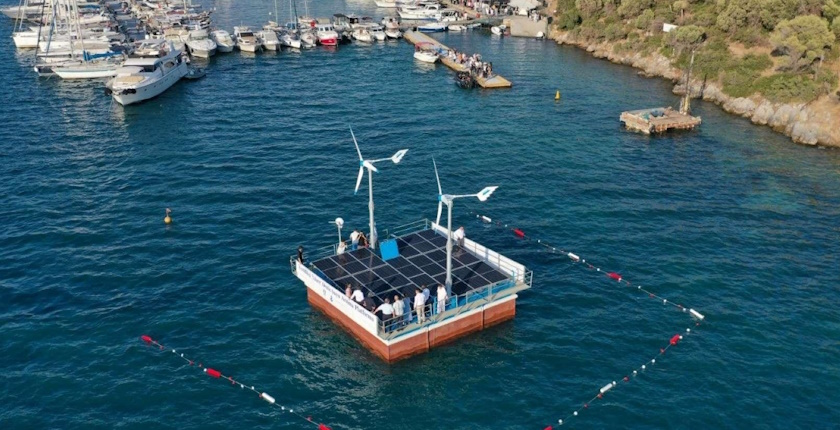
Right opposite the Greek island of Kos, offshore Bitez Marina, the Bodrum Municipality inaugurated Turkey’s first floating seawater purification platform. It runs entirely on renewable energy, producing 20 cubic metres of clean, non-potable water every day.

The project was developed in partnership with Istanbul-based company Blue Hybrid Solutions. The facility is powered by solar panels and two small wind turbines. It delivers water to an onshore tank for irrigation, emergency needs and, when required, public consumption, the local authority said.

Greece is already conducting a massive project for energy independence of numerous non-interconnected islands, including investments in desalination powered by renewables. It is also working to link other islands to the mainland grid.

[wpcc-iframe title=”BODRUM BELEDİYESİNDEN BİR İLK YÜZER DENİZ SUYU ARITMA PLATFORMU TANITILDI” width=”500″ height=”281″ src=”https://www.youtube.com/embed/KApvKHO8OS4?feature=oembed” frameborder=”0″ allow=”accelerometer; autoplay; clipboard-write; encrypted-media; gyroscope; picture-in-picture; web-share” referrerpolicy=”strict-origin-when-cross-origin” allowfullscreen=””]

by in News

Albania importing 80 percent of electricity..

Albania has to import around 80 percent of electricity to cover consumption due to the exceptionally dry period and high temperatures, according to the media.

The Albanian Power Corporation (KESH) has signed a contract to import 434,000 MWh of electricity in order to secure power for the month of August. The contract is worth EUR 30 million.

Albania has launched import procedure in late June. It purchased 285,000 MWh of electricity for the month of July.

The country is forced to import the electricity as it is highly dependent on hydropower plants (HPPs) production and the drought has caused the water level in Albanian rivers to drop. At the same time, the energy consumption has increased in the last weeks, mainly for air conditioning.

Albania produces almost 100 percent of its electricity from HHPs, most of it from three power plants along the Drin river. The Drin river, the largest river in the country, hosts  HPPs Fierza (500 MW), Komani (600 MW ) and Vau i Dejes (250 MW).

The water level at the HPP Fierza fell below the minimum level and it works with minimum capacities. The situation is similar when it comes to the other two HPPs.

KESH warned that if this severe weather condition continues the country could become fully dependent on the electricity import.