by in News

D.Trading to offtake 200 MW of solar in PPA with Econergy in Romania

D.Trading, the pan-European trading arm of DTEK Group, signed a renewable electricity offtake deal for 200 MW of installed solar power capacity in Romania with renewable energy developer and operator Econergy. The power purchase agreement (PPA) includes the country’s largest photovoltaic plant.

D.Trading announced that it would purchase electricity from solar power plants Rătești and Părău in Romania. The deal for Econergy’s assets is for 200 MW. The PPA reflects growing market demand for structured renewable offtake products and marks an important milestone in the commercialisation of the two photovoltaic facilities, the announcement adds.

“Partnering with leading companies such as Econergy supports our long-term strategy of expanding renewable energy integration across the region. This agreement strengthens our green power portfolio and represents another step more towards becoming the leading provider of solutions for renewable assets and battery storage in Eastern Europe,” said Head of D.Trading Power Desk EU Stanislav Dudka.

The company operates in Central, Eastern, and Southeastern Europe. D.Trading is the pan-European trading arm of DTEK Group, which also owns DRI.

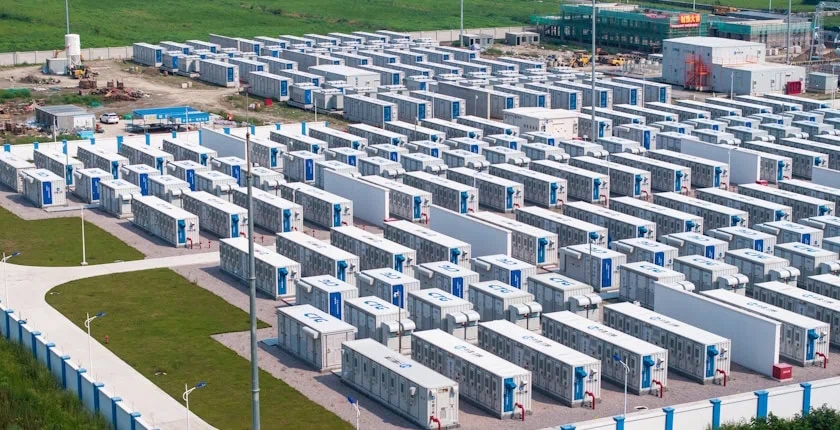
Econergy is planning to add a 120 MW battery energy storage system to its Rătești solar power plant

As Romania’s power market continues to evolve, shaped by price volatility, regulatory development, and the growing need for flexible solutions to support grid stability, Econergy has successfully executed multiple bankable commercial agreements, the update reads.

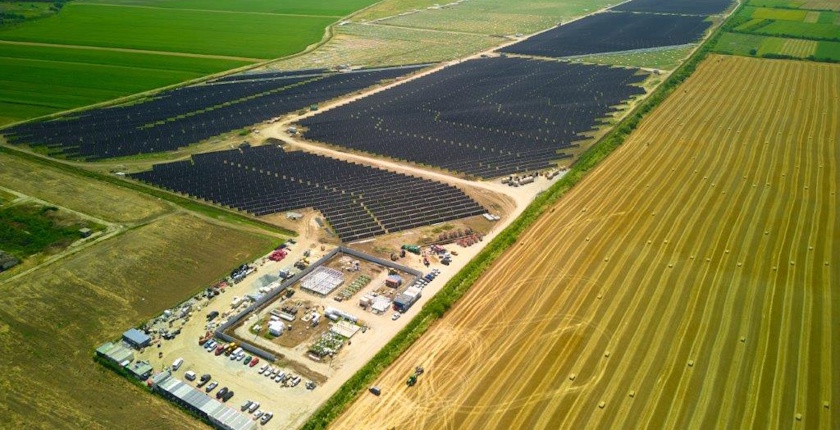
Rătești, Romania’s largest solar power plant, was completed in late 2023. The facility northwest of Bucharest, in Argeș county, has 155 MW in peak capacity. Econergy is planning to add a 120 MW battery energy storage system.

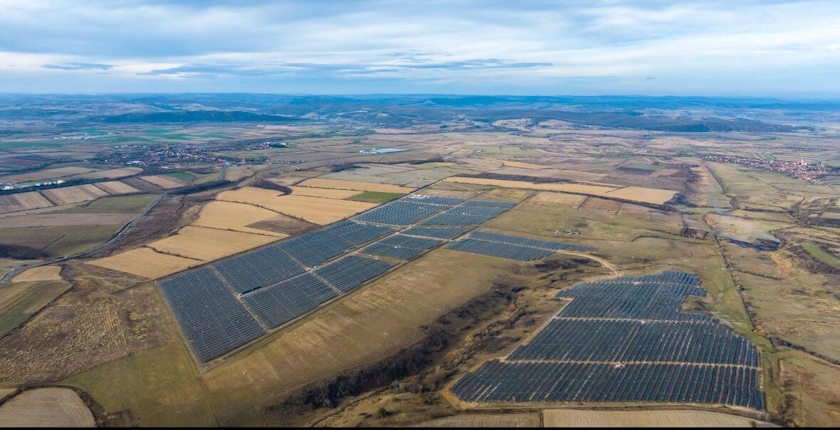
Părău was commissioned in late 2024. The PV plant of 92 MW is in Brașov county in the central part of Romania.

The Părău 2 project is for 342 MW, together with 150 MW of battery storage. It won a 15-year contract for difference (CfD) at the country’s first round of renewable energy auctions.

by in News

D.Trading to offtake 200 MW of solar in PPA with Econergy in Romania

D.Trading, the pan-European trading arm of DTEK Group, signed a renewable electricity offtake deal for 200 MW of installed solar power capacity in Romania with renewable energy developer and operator Econergy. The power purchase agreement (PPA) includes the country’s largest photovoltaic plant.

D.Trading announced that it would purchase electricity from solar power plants Rătești and Părău in Romania. The deal for Econergy’s assets is for 200 MW. The PPA reflects growing market demand for structured renewable offtake products and marks an important milestone in the commercialisation of the two photovoltaic facilities, the announcement adds.

“Partnering with leading companies such as Econergy supports our long-term strategy of expanding renewable energy integration across the region. This agreement strengthens our green power portfolio and represents another step more towards becoming the leading provider of solutions for renewable assets and battery storage in Eastern Europe,” said Head of D.Trading Power Desk EU Stanislav Dudka.

The company operates in Central, Eastern, and Southeastern Europe. D.Trading is the pan-European trading arm of DTEK Group, which also owns DRI.

Econergy is planning to add a 120 MW battery energy storage system to its Rătești solar power plant

As Romania’s power market continues to evolve, shaped by price volatility, regulatory development, and the growing need for flexible solutions to support grid stability, Econergy has successfully executed multiple bankable commercial agreements, the update reads.

Rătești, Romania’s largest solar power plant, was completed in late 2023. The facility northwest of Bucharest, in Argeș county, has 155 MW in peak capacity. Econergy is planning to add a 120 MW battery energy storage system.

Părău was commissioned in late 2024. The PV plant of 92 MW is in Brașov county in the central part of Romania.

The Părău 2 project is for 342 MW, together with 150 MW of battery storage. It won a 15-year contract for difference (CfD) at the country’s first round of renewable energy auctions.

by in News

DRI acquires 112 MW battery storage project in Poland from Greenvolt

DRI expanded its activities in Poland with the acquisition of rights to build a battery energy storage system (BESS) in Kozienice, located in the east-central part of the country. The investment will also strengthen Ukraine’s grid, according to the update.

DRI, DTEK’s renewables arm in the European Union, acquired a BESS project for 112 MW in capability from Greenvolt Group. The battery system would have a four-hour duration, translating to a capacity of 448 MWh. The project is in a ready-to-build (RTB) stage, with all necessary administrative approvals, permits, and grid connection agreements in place for immediate construction, the two companies said.

The site is in Kozienice in the east-central part of Poland. In addition to making the country’s electricity grid more stable, the project will progressively strengthen Ukraine’s grid as the country’s energy network is integrated into a single European system, DRI pointed out.

The ambition is part of DTEK’s broader drive to prioritise energy security for Ukraine and the rest of Europe, the announcement reads.

DRI lifts battery storage project portfolio in Poland to 245 MW

With the new agreement, DRI is consolidating its position in the Polish energy market, and more broadly, in Europe’s energy transition, said DRI’s new Chief Executive Officer Murat Çinar.

Battery energy storage systems will be at the heart of the power grid of the future, DRI’s CEO Murat Çinar underscored

“By adding a second battery storage project to our portfolio, the acquisition of the Kozienice BESS will increase our total storage capacity available to the Polish grid to 245 MW. This technology will play a vital role in Europe’s transition towards a renewables-based system, enhancing grid stability and reducing the risk of outages during periods of system stress. Battery energy storage systems will be at the heart of the power grid of the future,” he stated.

Alongside its two battery storage projects in Poland, Amsterdam-based DRI is advancing fifteen solar and onshore wind projects at various stages of development in Croatia, Italy and Romania. The company said its mission is to work in underserved markets in Europe to achieve their net zero goals.

Its parent DTEK Group is the biggest private investor in Ukraine’s energy sector.

Greenvolt delivers high-impact BESS project

Greenvolt is one of the largest developers of energy storage in Europe, a technology that stands as a key pillar of the energy transition, the group’s CEO João Manso Neto said.

“This agreement fully aligns with our strategic objective to deliver high-impact projects that drive the ongoing transformation of the European energy landscape and attract strong market interest,” he stressed.

Greenvolt Group is a company within KKR’s portfolio. Through Greenvolt Power, it develops utility-scale wind, solar, and energy storage projects across 18 markets in Europe, North America, and Asia.

by in News

Murat Çinar appointed as new CEO of DRI

New Chief Executive Officer of DRI Murat Çinar is taking office on September 3, replacing Ivan Geliukh.

A change at the helm of DRI is consolidating its position in the European renewables market, particularly in its core markets of Croatia, Italy, Poland, and Romania, according to the company’s new announcement. It said it has appointed of Murat Çinar as its new CEO, effective from September 3. DRI is the renewables arm of Ukraine-based DTEK in the European Union.

Çinar succeeds Ivan Geliukh, under whose leadership the company’s business strategy and organisational structure were updated, the management team was strengthened, and the business model was refined with a strong focus on sustainable growth, profitability, and operational efficiency, the company added.

“I am pleased to announce the appointment of Murat Çinar as the new Chief Executive Officer of DRI and extend my best wishes as he takes on this important role. Murat will play a key role in strengthening DRI and reinforcing its position as an active contributor to Europe’s energy transition. I would also like to express my gratitude to Ivan for his contribution in refining DRI’s strategy and creating a resilient business. I look forward to working with Ivan as he takes on new responsibilities within the wider DTEK Group,” said DRI’s Chairman of the Supervisory Board Maxim Timchenko.

Çinar to oversee next stage of development for DRI

With over 25 years of leadership experience in the telecom and technology sectors, Murat Çinar has held senior roles across more than 10 international markets, including Sweden, Turkey, Ukraine, and Qatar.

“Drawing on my experience in growth strategies, M&A, and change management, I look forward to leading DRI through the next stage of its development – executing our strategy to be an active player in Europe’s renewable energy market. I believe DRI has a key role to play in supporting European countries to achieve important decarbonisation targets and I’m excited to work with the DRI team to make these goals a reality, Çinar stated.

The new CEO served in Ericsson, Lifecell, Vega Telecom and Korek Telecom

He began his career in Ericsson (1999-2010), leading large-scale network deployments and operations in multiple countries. Çinar later served as chief technology officer of Lifecell (2011-2015) in Ukraine, where he was responsible for overseeing major infrastructure investments and network expansion strategies.

In 2015, he was appointed CEO of Vega Telecom Group, part of DTEK’s parent SCM Group. Çinar has led organisational transformation, improved profitability, and completed the company’s sale to Vodafone Ukraine, his biography shows. In 2021, he joined Korek Telecom as the chief transformation officer and in 2022 assumed the role of CEO, driving strategic growth and operational excellence for 12 million customers.

Four core markets

DRI is dedicated to accelerating the energy transition in Central, Eastern and Southern Europe. The company’s mission is to work in underserved markets in Europe to achieve their net zero goals through the creation of a portfolio of renewable energy and battery storage across Croatia, Italy, Poland and Romania.

It has established a portfolio of onshore wind, solar and battery projects, and has three operational projects in Romania: two solar parks and one wind farm, which was the first in the country in one decade. DRI is an Amsterdam-headquartered renewables developer and operator with local offices in Zagreb, Rome, Warsaw and Bucharest.

Founded in 2021, DRI is a subsidiary of the DTEK Group. The parent company is the largest private investor in Ukraine’s energy sector, with 55,000 employees and over EUR 12 billion of capital invested since 2005.

Its businesses generate electricity at wind, solar and thermal power plants; distribute and supply power to end consumers; extract natural gas and coal; trade energy resources on Ukrainian and foreign markets; and provide domestic and commercial energy services. DTEK Group is 100% owned by SCM Holdings. The ultimate beneficiary and sole shareholder is Rinat Akhmetov, a businessman and philanthropist.

by in News

DRI secures financing for Vacaresti solar park in Romania

Renewable energy firm DRI has secured financing for the construction and operations of its Vacaresti solar park in Romania.

DRI, UniCredit and Garanti BBVA have signed an agreement for non-recourse loans of up to EUR 60 million to finance the construction and operations of the Vacaresti solar park in Romania.

DRI is Ukraine-based DTEK’s renewables subsidiary in the European Union.

The loan is inclusive of a long-term, fully amortizing construction and term loan, value-added tax, a debt service reserve facility, and the letter-of-credit facilities, according to the firm.

The project is expected to come online in the autumn

The loan structure is aligned with Green Loan Principles and the European Union’s Taxonomy Alignment Criteria, DRI added. It serves as a cornerstone of the EU’s sustainable finance framework and a key tool for market transparency, by providing clear guidelines for direct investments that support the green transition in line with the objectives of the European Green Deal, the press release reads.

The solar power plant will be located in the Văcărești area in Dâmbovița county. The project is for 126 MW in peak capacity, enough to power about 50,000 households and avoid 48,600 tonnes of carbon emissions per year. Construction kicked off in January 2025 and the project is expected to be online in the autumn.

The buyer of 50% of the electricity output is oil and gas company OMV Petrom. The deliveries will start in January 2027. It is a part of Romania’s largest physical solar power purchase agreement (PPA), signed last December, DRI noted.

Geliukh: DRI is demonstrating its capability to partner with globally renowned financial institutions

“With the signing of this project financing agreement, we have reached another important milestone: this is DRI’s first internationally led syndicated financing, our first certified green loan, and our first multi-currency loan,” DRI CEO Ivan Geliukh stressed.

In his words, it is an important achievement not only for DRI but also for Romania, contributing to the development of renewable energy in the country.

With the project, DRI is demonstrating its capability to partner with globally renowned financial institutions like UniCredit, and with Garanti BBVA, one of Romania’s leading local lenders, according to Geliukh.

DRI has three operational projects in Romania

In Romania, DRI has three operational projects with a total peak capacity of 173 MW. Solar parks Glodeni I and Glodeni II have a combined installed capacity of 113 MW. They are one of the largest renewable energy sites in the country, according to the company.

The 60 MW Ruginoasa wind farm was built in just 10 months. It was the first in the country after a decade, according to the firm.

DRI now has a 1.3 GW portfolio of projects in operation, construction and other stages of development. The company is also active in Croatia.

by in News

BEF 2025: Corporates’ education, product diversification crucial to speed-up PPA uptake

Capacity building and education for corporates, together with product diversification and an upgrade of the regulatory framework, could clear the obstacles for power purchase agreements in the Western Balkans, which are lagging behind the other countries in Southeast Europe. In addition to their other benefits, such contracts could contribute to securing baseload energy from hybrid facilities, given that baseload is a key issue for the decarbonization of the region, according to the participants of a panel on power purchase agreements, held at Belgrade Energy Forum 2025 (BEF 2025).

BEF 2025 has gathered four hundred participants from more than 30 countries in the region, Europe, and beyond.

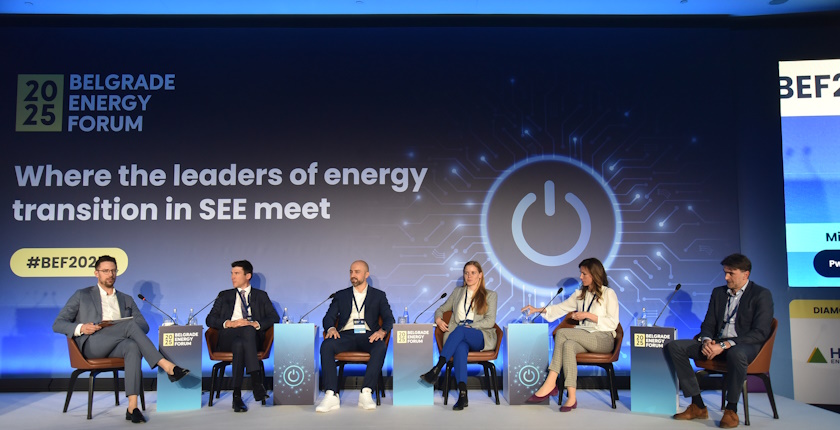
The panel PPAs as a key to renewable energy growth in SEE featured stakeholders from all segments of the PPA market: developers, corporates, utilities and consultants. The discussion comprised five segments – the global trends, main drivers, the region’s specifics, challenges and trends, and the implications of the model.

The panel’s moderator was Mislav Slade-Šilović, Energy, Utilities & Resources Consulting Leader for Southeast Europe and member of the core PPA team at the consultancy PwC.

Global trends: PPAs are hot, but the solar capture rate is becoming an issue

Mislav Slade-Šilović, Joffroy Beckers and Nikola Gazdov

According to Natalija Ljubić, Manager of PPA & BESS Transactions at Pexapark, PPAs are still hot in Europe. On a monthly basis, between 500 MW and 2,000 MW of new PPAs are signed (15 to 30 deals). She referred to long-term, fixed-price PPAs considered bankable and publicly announced. There is much more together with short-term PPAs, for two to three years.

There is an impression that everything comes down to corporate PPAs, but there are many utility PPAs that aren’t always made public, she added.

The majority are physical PPAs but Pexapark is registering more and more financial PPAs. In 2025, almost 20% of all the announced PPAs were financial, whereas a couple of years ago, they made up 5% to 10%. There are more pay-as-produced contracts than the monthly ones for baseload energy.

Mislav Slade-Šilović (PwC) added that 70% of PPAs in SEE are virtual or financial.

It’s quite challenging in the region to find a creditworthy counterparty on the consumer side

For developer Joffroy Beckers, Head of PPA at DRI, it’s quite challenging to find a creditworthy counterparty on the consumer side of the market in the region comprising Greece, Bulgaria and Romania. So when the firm wants to speed things up with selling its electricity, it goes to utilities or traders.

Negative prices are emerging in the region, with much more cannibalization for solar in the long term, he added.

According to Bulgaria’s Association for Production, Storage, and Trading of Electricity – APSTE, the situation in the region is different than five years ago. “There were zero PPAs in the region, but now they start to get common. Paradoxically, the conditions start getting much more and more complex,” chairman Nikola Gazdov said.

Mislav Slade-Šilović (PwC) pointed to the decline in the solar capture rate – the ratio of the price of solar power and wholesale price. It is spilling over to the PPA price and increasing its complexity, and solar PPAs are generally more complex than the ones for wind power, he added.

Main drivers: Different priorities ask for different PPA models

Natalija Ljubić, Ivana Đurović and Davor Pupovac

For Ivana Đurović, Category Manager Renewable Energy at Knauf Group, PPAs are a game changer in energy procurement because essentially it’s no longer just about buying energy or hedging. “Now corporate PPAs bring the long-term deal, so they even extend the tenure for those hedging, and they also allow us to achieve our sustainability targets,” she explained.

PPAs aren’t for companies with consumption below 30 GWh or 40 GWh per year, while branding and cost savings are often the reasons for companies to sign them.

Such factors determine the PPA product that the offtaker opts for, Mislav Slade-Šilović (PwC) stressed.

According to Nikola Gazdov (APSTE), in the region comprising Bulgaria, Romania, and Greece, PPAs are usually signed by corporates that have some ESG commitments or want to show their clients and customers that they are thinking green.

The key feature of a PPA is the partnership between two companies

As examples of the various kinds of deals, he mentioned a physical PPA with an electricity-intensive consumer, virtual PPA with a telecom and a PPA with a big international company producing tires, combining the two types.

As a developer, DRI is modifying its strategy toward a mixed portfolio. Instead offering a solar asset for a PPA, it adds wind power plants and combines different technologies into a single contract. “It allows us to capture a better price, and this is also usually more beneficial for the off-taker. The second thing is that we’re trying to keep this upside in our PPA by entering a floor price instead of a fixed price,” Joffroy Beckers (DRI) revealed.

For Mislav Slade-Šilović (PwC) the key characteristic of a PPA is the partnership between two companies. It needs to be balanced, to ensure that both parties can fulfill throughout the tenure. If one goes bankrupt, then it doesn’t make sense for both parties, he underlined.

The specifics in the region: Corporates need to learn, PPAs should be more diverse

Nikola Gazdov, Natalija Ljubić and Ivana Đurović

Serbia’s state-owned power utility Elektroprivreda Srbije (EPS) has been signing a lot of PPAs. However, the difference from the conventional deals is that they are based on premiums. But according to Davor Pupovac, head of the company’s market analysis and risk management, it is interested in corporate PPAs that don’t include government support. There is not much interest among consumers for corporate PPAs with EPS, he revealed.

Mislav Slade-Šilović (PwC) said the role of EPS and big power utilities is very important in developing the PPA market. A dominant supplier in a market has a critical role, either as a sleever or as someone that will provide B2B products to off-takers and developers or producers for entering the market, he said.

Joffroy Beckers (DRI) agreed with him about the role of big utilities in facilitating PPAs and expressed the belief that in the near future, they would get a larger share as intermediaries.

Asked if corporate PPAs are coming anytime soon in Serbia, Davor Pupovac (EPS) said: “Not so soon.” However, he claimed EPS wouldn’t lose consumers regardless of the fact that it has no such product.

Corporates aren’t super ready for PPAs because they are seeking stability when it comes to the energy price

In Ivana Đurović’s (Knauf) view, there are several reasons for the slow uptake of corporate PPAs in the Western Balkans. Corporate buyers aren’t super ready for PPAs because they are seeking stability when it comes to the energy price, but the pay-as-produced PPA model is dominant in the market, which doesn’t ensure price stability. Monthly baseload deals would enable more price stability.

A bigger offtake through PPAs requires corporates to build their capacity for closing such deals and for the offer to be more diverse, she stressed.

Natalija Ljubić (Pexapark) agreed with her and suggested that companies need to understand more about the risks and accounting. Also, not many corporates are willing to enter five- to ten-year agreements as they don’t know their demand or costs that far ahead, Ljubić underlined.

Challenges, risks: Management boards are delving into energy-related topics in detail

Ivana Đurović and Davor Pupovac

Creditworthiness is one of the key challenges, Joffroy Beckers (DRI) said. As he sees it, credit insurance could be key, providing a kind of a state guarantee. Nikola Gazdov (APSTE) again stressed education. He also recalled that all European countries needed time to get along with PPAs.

“But coming to credit risk, I think that now we also see the European Commission taking note of the situation,” Gazdov noted.

As for education, Mislav Slade-Šilović (PwC) said it requires one to two years. Management boards of companies from different industries on the offtake side are forced to delve into energy-related topics in detail, he noted.

There are practically no obstacles for PPAs in Serbia

Slade-Šilović asked EPS’s representative whether the utility is prepared to offer B2B products, arguing that they go hand-in-hand with PPA market development.

Davor Pupovac (EPS) responded that there are practically no obstacles to PPAs in Serbia. Namely, there is an electricity exchange, EPS is willing to sign contracts with developers for sleeving or balancing, the guarantees of origin (GO) system is in place, and EPS is active on power exchanges in the region as a producer and supplier.

“EPS could also offer a route to market to the off-taker. However, currently, it cannot offer access to the spot or forward market,” he explained.

Coming from a corporate electricity consumer, Ivana Đurović (Knauf) was curious what EPS could offer to a perfect corporate off-taker asking for a physical PPA. Pupovac answered that currently it would be a pay-as-produced deal.

What does the implementation bring us: hybrid combinations open the room for innovative deals

Joffroy Beckers, Nikola Gazdov and Natalija Ljubić

Mislav-Slade Šilović (PwC) summarized the landscape. “If you look at the broader EU situation and challenges, especially with solar capture rates, negative prices, we are now already discussing technology advanced structures including batteries and other hybrid solutions on the PPA side,” he underlined.

Natalija Ljubić (Pexapark) pointed out that last month in Germany the solar capture rate was just 40%, calling it almost unbearable for photovoltaic projects. All developers or energy producers, especially in the solar power sphere, are seriously considering adding batteries, while projects for standalone battery storage facilities are appearing, in her words.

She and Nikola Gazdov (APSTE) agreed that the outcome is a lot of interesting innovative structures, room for different solutions.

BESS with solar reduces cannibalization and increases capture rates

Ljubić said it is a challenge to maximize revenues from a battery system and make it bankable. Gazdov pointed to the dilemmas of a single company owning different assets versus a big utility combining and aggregating everything, and whether the producers or optimizers manage the revenue streams.

When it comes to standalone storage units, he sees a perspective only in arbitrage and, perhaps, system services further down the road.

Joffroy Beckers (DRI) explained the main purpose of a battery energy storage system (BESS) in Romania, from the point of view of a developer and power producer. A BESS combined with solar power reduces cannibalization and increases capture rate, whereas wind lowers the balancing cost, he stressed.

“If you co-locate a battery next to solar, you will be in a position to negotiate a higher price on the off-take side,” he pointed out.

A combination of wind, solar and batteries is equivalent to a new power plant

In the future, he anticipates more PPAs with a pay-as-nominated structure rather than pay as produced, arguing that it enables more flexibility for monetizing batteries on different markets.

“With those combinations of wind, solar, and battery, basically you have a new power plant, baseload structure,” Mislav Slade-Šilović (PwC) stated.

That way PPAs fit into the broader discussion on the energy transition and decarbonization. EPS is decarbonizing its production through its role as a renewable energy offtaker.

“Hybrid combinations are partly addressing the baseload needs. So, many different technologies, including storage, can provide a part of the answer this region heavily needs, and this is the baseload substitution problem,” Slade-Šilović concluded.