by in News

Croatia Confirms Fourth Geothermal Discovery Near Zaprešić, Marking 100% Exploration Success

Geothermal Reservoir Confirmed near Zaprešić; Croatian Hydrocarbon Agency (AZU) Reports Four-for-Four Exploration Success, geothermal, Croatia, district heating, energy independence, exploration

The Croatian Hydrocarbon Agency (AZU) has completed exploration activities at all four sites under the project Preparation and Exploration of Geothermal Potential in the Context of Centralized Heating, confirming substantial geothermal resources near Zaprešić. This site is the fourth positive discovery following successful exploration campaigns in Velika Gorica, Osijek and Vinkovci.

AZU President Marijan Krpan said the agency achieved a 100% success rate at the planned locations, delivering maximum project effectiveness and demonstrating full operational capability. He emphasized that the results validate the agency’s technical expertise and ability to execute complex subsurface exploration and resource assessment, and noted ambitions to export that expertise internationally.

Independent analysis has also pointed to strong national potential: a recent study by think tank Ember outlined significant geothermal prospects across Croatia.

Temperature and geology at Zaprešić
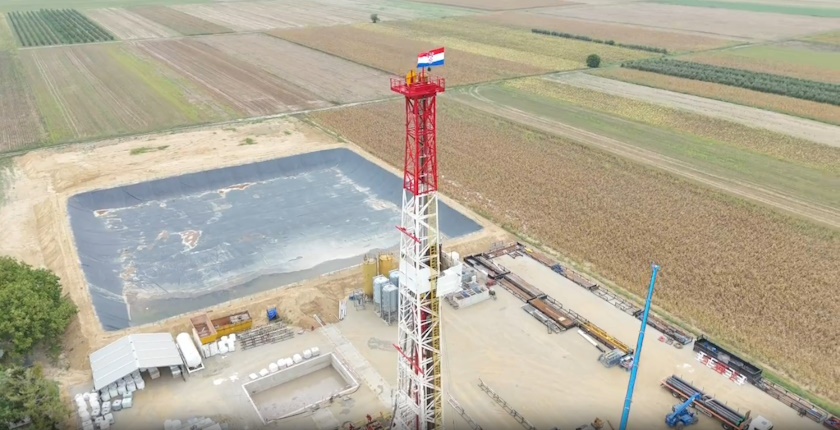
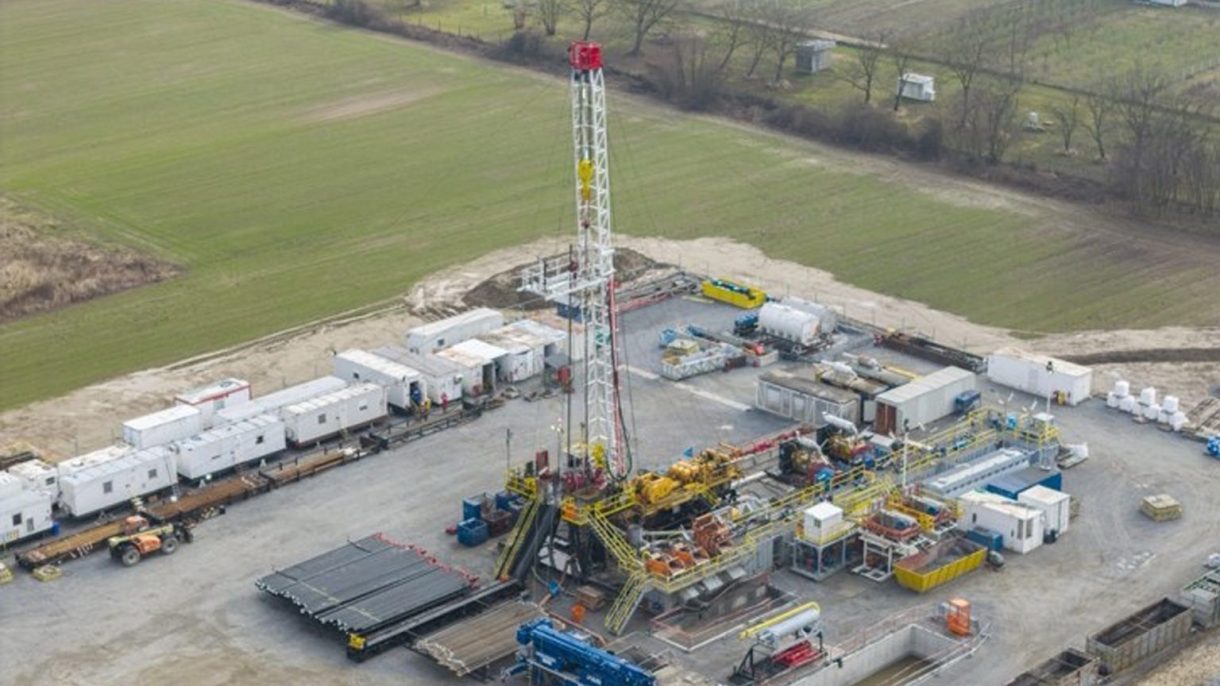
Exploration near Zaprešić — in Zagreb County — confirmed a geothermal reservoir primarily developed in dolomitic formations at depths exceeding 1,600 metres, with measured temperatures above 95 °C. The work in the area included two-dimensional seismic surveys, magnetotelluric measurements and the drilling and testing of an exploratory well; the site had been the least well-documented by prior geophysical and borehole data.

“Just two months ago we announced the start of works on a project of exceptional importance for our citizens and economy. I am pleased that today we can confirm positive results, creating the prerequisites for a step toward sustainable and long-term solutions for our community,” said Mayor Željko Turk.

Historic milestones for national heating capacity
AZU described the cumulative findings in the Pannonian region as historic for Croatia’s energy independence. In June, exploration near Velika Gorica recorded reservoir temperatures exceeding 100 °C; subsequent analyses indicated the source could supply nearly 60% of a local district-heating system’s demand. The investment in that site exceeded EUR 11 million.

In August, a site near Osijek also yielded temperatures above 100 °C with an estimated capacity close to 5 MW; that programme, valued at more than EUR 8 million, has been presented as an opportunity to support local agricultural and broader economic development.

Late last year, exploration in Vinkovci returned a record temperature of 131 °C at a depth of 2,700 metres, a result that AZU described as offering exceptional commercial potential for district heating and industrial applications.

Project funding and implementation
The exploration programme is financed under the National Recovery and Resilience Plan (NRRP), with a total allocation of EUR 50.8 million. Drilling and field operations were carried out by Crosco, a contractor within the INA Group.

Current state of geothermal power in Croatia
Despite the renewed momentum in exploration, Croatia presently has no active geothermal power plants. The Velika 1 facility in Velika 1 plant (Ciglena, near Bjelovar) has been out of operation for three years owing to an ownership dispute, underscoring a gap between resource discovery and commercial generation that authorities and investors will need to address to translate these exploration successes into operational capacity.

by in News

Novi Sad plans to build waste-to-energy cogeneration plant

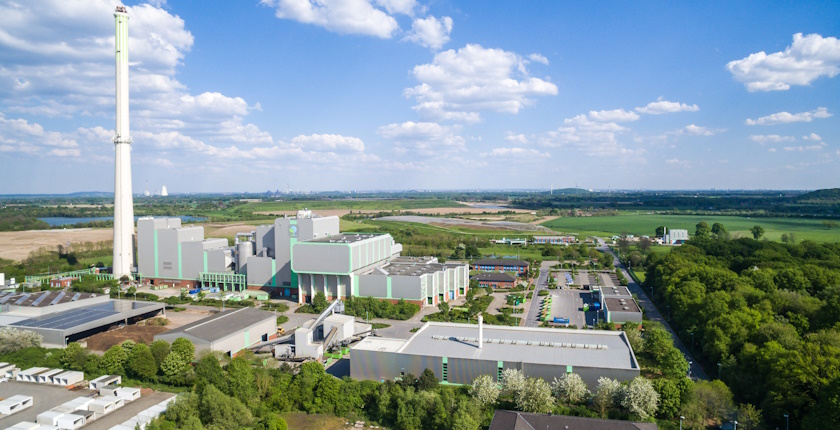
The City of Novi Sad plans to produce electricity and heat from solid municipal waste and has invited bids for a preliminary feasibility study for a cogeneration plant that would burn processed waste from a planned regional waste management center. Surplus energy could be stored within the future solar thermal system.

Serbia’s capital, Belgrade, already has a combined heat and power plant (CHP) that uses municipal waste. As such facilities exist all over Europe, Novi Sad’s district heating enterprise Novosadska toplana specified in the public call that the study must include an overview of relevant examples and best practices.

The document is to assess the feasibility of obtaining energy from waste processed into refuse-derived fuel (RDF) and solid recovered fuel (SRF). The fuel would be produced in a mechanical-biological treatment (MBT) plant for biodegradable waste within the future regional waste management center for Novi Sad and the municipalities of Bačka Palanka, Bački Petrovac, Beočin, Žabalj, Srbobran, Temerin, and Vrbas, according to the public call.

The bid submission deadline is December 15, and the study must be completed within 180 days of the contract signing. The job is valued at RSD 22 million.

The purpose of the study is to provide a preliminary assessment of the potential for and benefits of using available solid fuel from waste for high-efficiency cogeneration for the city’s needs, as well as the feasibility of building a CHP plant fueled by RDF and SRF, according to the public call.

The cogeneration plant could burn up to 40,000 tons of solid waste fuel per year

The MBT plant at the regional waste management center is expected to produce between 30,000 and 40,000 tons of solid fuel for cogeneration. The planned location of the plant, along with a fuel storage facility, is adjacent to the existing landfill in Novi Sad, according to the documentation.

The preliminary feasibility study should propose the optimal site for the cogeneration plant, taking into account the infrastructural capacity for connection to Novi Sad’s district heating system and the distance from the fuel storage facility.

The authorities suggest that the site should be in the vicinity of the TE-TO cogeneration plant in Novi Sad, Serbia’s second-largest city, due to its excellent connections to the power grid and the city’s district heating system. In addition, this site will host a planned solar thermal system, whose underground storage facility would be able to store excess energy from the waste-to-energy plant during the summer.

Surplus energy could be stored in the future solar thermal system

The project has secured an EUR 85 million loan from the European Bank for Reconstruction and Development (EBRD) and a grant of EUR 24.7 million from the Western Balkans Investment Fund (WBIF). The system will have a storage capacity of around 870,000 cubic meters, solar collectors with a total capacity of 31 MW, heat pumps with a capacity of 17 MW, and two electric boilers with a combined capacity of 60 MW, according to the EBRD website.

The bank said the launch of the public procurement is expected on November 26.

The proposed location for the cogeneration plant should also take into account Novi Sad’s newly-built heating plant, Majevica, which is expected to become operational by the end of the year.

The study should propose the optimal technology for solid fuel incineration, a preliminary design for the cogeneration plant, as well as systems for flue gas cleaning and ash management, according to the documentation.

Since the City of Novi Sad plans to apply for grants from international institutions and funds for the preparation of technical documentation and further project development, the public call states that the study should be carried out in line with the methodology of international financial institutions such as the World Bank, the German development bank KfW, and the EBRD, including a financial analysis and an assessment of CO₂ emission reductions.

by in News

Serbia plans to stop using coal, fuel oil in district heating by 2040

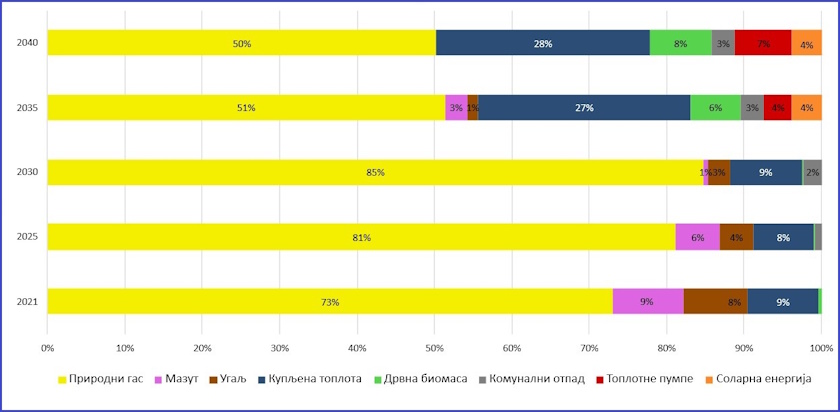
By 2040, Serbia intends to replace fuel oil and coal in district heating plants with solar, wood biomass, heat pumps, municipal waste and geothermal energy.

Maja Vukadinović, acting Assistant Minister of Mining and Energy for Energy Efficiency and Climate Change, has said that the goal for the district heating sector is to phase out fuel oil and coal by 2040.

She explained that the idea is to replace fossil fuels with solar energy, wood biomass, heat pumps, municipal waste and geothermal energy.

“The list of programs and projects until 2028 is defined in the draft Program for the Implementation of the Energy Development Strategy of the Republic of Serbia until 2040 with projections to 2050, for the period from 2026 to 2028,” Vukadinović told Balkan Green Energy News.

The share of renewables should increase from 2.4% to 5.5%

According to the draft, implementation of decarbonization projects in district heating systems by 2028 should lift the share of renewable energy sources in heat production from 2.4% to 5.5%.

The fuel mix in 2023 was 75% natural gas, 8% petroleum products, 2% coal, 2% wood biomass, and 13% purchased heat. The structure of purchased heat production is 46.8% natural gas, 48.8% coal, 3.3% wood biomass, and 1.1% fuel oil.

serbia decarbonization district heating mix 2040

Natural gas will remain the dominant source of thermal energy, as it is today, although its share is expected to decrease from 73% to 50% by 2040, according to Vukadinović.

The decarbonization of the district heating system would reduce air pollution in cities, especially where coal or fuel oil is currently used, the ministry added.

A strategic plan for the district heating decarbonization policy is being prepared

“It’s very important that the fuels conversion is carried out in parallel with energy renovation of buildings and a reduction of the energy consumption for heating. It would significantly improve living conditions,” Vukadinović underlined.

Decarbonization would also have to lead to the improvement of the overall operation of the heating plants, as well as a reduction in network losses, the modernization of substations, and the introduction of daily and seasonal thermal energy storage, in her opinion. The operation of the district heating systems should depend less on the price volatility of imported fuels, Vukadinović stressed.

Serbia is preparing a strategic plan for the district heating decarbonization policy. The document is under development in cooperation with the European Bank for Reconstruction and Development (EBRD) and the business association of Serbian heating plants, Toplane Srbije.

The document, she explained, will outline steps to improve the district heating system, including the rollout of thermal energy storage, heat pumps, and heat production from waste, as well as the development of the country’s first district cooling systems.

by in News

Croatia discovers series of geothermal sources suitable for heating

The results of exploration at the Vinkovci GT-1 well have confirmed the area’s significant geothermal potential, Croatian Hydrocarbon Agency said. Maximum temperature is 131 degrees Celsius.

Vinkovci is the third location in Croatia with positive results, as reservoir temperatures exceeding 100 degrees were earlier confirmed in Velika Gorica and Osijek, Croatian Hydrocarbon Agency revealed. The activities are part of a wider project to develop geothermal potential for district heating for six cities and towns.

“The positive findings of the geothermal exploration in Vinkovci, after Velika Gorica and Osijek, are proof that Croatia has significant geothermal potential and the knowledge to use it. Croatian Hydrocarbon Agency is bringing concrete results through its systematic approach and exploration investment, creating the foundations for further projects for renewable energy sources. Namely, geothermal energy is not only a stable and clean source, but a strategic resource that can contribute to the security of energy supply in Croatia. The results show at the same time that Croatian experts can independently and effectively conduct complex energy projects,” President of the Management Board Marijan Krpan said.

Success at 2,700 meters below ground

Crosco naftni servisi (Crosco Integrated Drilling and Well Services), a member of INA Group, ois conducting the works. At a depth of 2,700 meters in the Vinkovci GT-1 exploratory well, an expert team has measured a maximum temperature, 131 degrees, pointing to the possibility of commercial application of geothermal energy in the heating system.

The location is in Croatia’s northeast, in Slavonia area.

“The exploration in Vinkovci has been conducted in line with the highest technical standards and the project’s planned dynamic. Upon the completion of the exploration at the remaining location, in Zaprešić, Croatian Hydrocarbon Agency plans the development of additional wells at sites with confirmed potential. That way we will establish the production-injection pairs required for a secure and long-term geothermal energy use,” the geothermal energy sector’s Director Martina Tuschl stated.

Opportunity for improving local agriculture

Except for heating, access to heat opens up possibilities for companies. Geothermal potential could be used in agricultural production in the municipality of Jarmine, where the exploratory well is located.

The agency is conducting the project with funding from the National Recovery and Resilience Plan (NRRP or, in Croatian, NPOO), within which EUR 50.8 million was secured for exploration in four locations: in Velika Gorica, Osijek, Vinkovci and Zaprešić.

Works at the Zaprešić GT-1 (ZapGT-1) site are underway.

by in News

Race against time to secure EU funding for waste-to-energy plants in Greece

Hostile reactions from citizens and the opposition by municipal authorities threaten to derail Greece’s efforts to build six waste-to-energy plants. Moreover, time is running out to secure EUR 800 million in European funding.

The Ministry of Environment and Energy is expected to publish a call for waste-to-energy projects planned in Attica, Western Macedonia, Rodopi, Peloponnese, Boeotia (Viotia) and Crete. Total investment would amount to EUR 1 billion, for 1.19 million tons in capacity. However, time is running out to secure EUR 800 million in European funding set aside for them and the accompanying recycling plants.

Greece has been warned several times by the European Commission and fined for failing to fulfil its obligations in waste management. The country still relies mostly on landfills to handle municipal waste, instead of modern solutions. Ideally, useful materials should be sorted for recycling before the waste gets burned in incinerators to produce energy.

Two of the proposed units, the ones in Rodopi and Western Macedonia, are expected to provide district heating. The Ptolemaida 5 lignite-fired plant supplies district heating in the coal region of Western Macedonia in the country’s north, but it is scheduled to be decommissioned by 2028 at the latest.

Its owner, Public Power Corporation (PPC or DEI) aims to complete a waste-to-energy plant by then. Other prospective investors include GEK Terna, Metlen, Aktor and Motor Oil Hellas, all big players in the country’s energy market.

High fees and pollution worry municipalities

Many local authorities have expressed their objections to hosting these plants, fearing a rise in municipal fees and pollution. A discussion is underway in numerous municipal councils. They could lodge appeals to the Supreme Court and delay the process.

Amanatidis: Cancel all waste-to-energy plans

The regional council of Western Macedonia recently voted overwhelmingly to reject the plan for PPC’s planned unit from the ministry’s strategic environmental assessment (SEA). Governor Giorgos Amanatidis called on the government to withdraw the study and cancel the project. Municipalities in the same region and other institutions are also against an incinerator.

European funding through the National Strategic Reference Framework (NSRF) ends in 2027. The government and investors have until mid-2026 for implementation, Newmoney reported, adding that waste-to-energy projects take two to three years to complete.

Recently, another initiative, the Apollo program, for investments in renewable energy to lower energy costs for vulnerable consumers, lost EUR 100 million from the EU’s Recovery and Resilience Facility (RRF).

by in News

Croatia identifies another city with geothermal potential for district heating

The testing of an exploratory well near the Croatian city of Osijek has confirmed the area’s geothermal potential, according to the Croatian Hydrocarbon Agency.

This marks the second successful completion of exploratory activities within a broader project aimed at developing geothermal potential for district heating in Croatia. At the end of June, good news came from an exploration site in Velika Gorica.

The exploratory activities in Osijek have cost an estimated EUR 8 million, with the funding secured from the National Recovery and Resilience Plan (NRRP).

Testing and measurements of the Osijek GT-1 (OsGT-1) well revealed a reservoir temperature exceeding 100 degrees Celsius, with an estimated thermal capacity of nearly 5 MW.

Temperatures are lower than in Velika Gorica

These results confirm that Osijek possesses significant geothermal resources with potential applications in district heating, agriculture, and the area’s economic development, according to the Croatian Hydrocarbon Agency.

“Geothermal energy is one of the most stable renewable energy sources, and our research confirmed the substantial potential of reservoirs in the Pannonian Basin and a strategic opportunity for achieving long-term supply security and decarbonization of the energy system,” stressed Marijan Krpan, president of the agency’s management board.

Exploratory activities continue in other locations

Due to local geological specifics and the shallower depth of the reservoir, temperatures in Osijek are lower than those in Velika Gorica. The agency noted that although the geological conditions and reservoir depths differ between Velika Gorica and Osijek, geothermal energy is flexible enough to be adapted to local needs and used efficiently and sustainably.

According to Osijek’s mayor, Ivan Radić, geothermal energy is becoming a locally available and sustainable heating source not only for Osijek residents but also for businesses.

Following Osijek and Velika Gorica, exploratory activities will continue in Vinkovci, and later in Zaprešić. After completing all exploratory activities, additional wells are planned at sites with confirmed geothermal potential.

In addition to the state-funded activities, private companies such as ENNA Geo are also engaged in geothermal research.

by in News

Agios Efstratios becomes Greece’s first energy-autonomous island

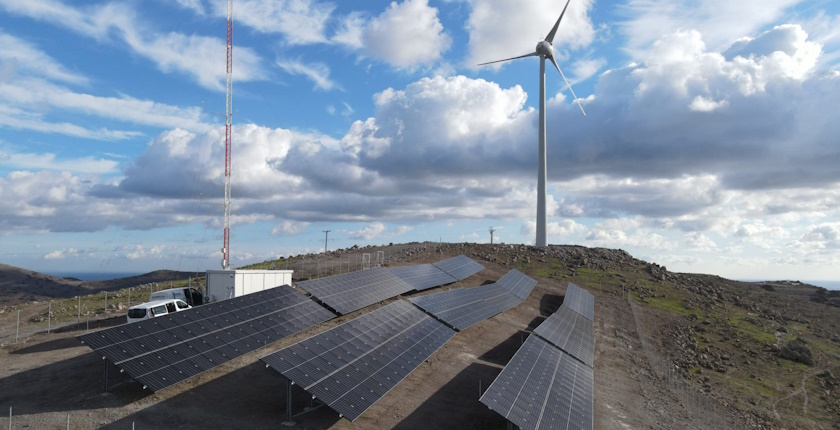
A hybrid energy project transforming Agios Efstratios into the first energy-autonomous island in Greece is in trial operation. The system consists of a wind turbine, solar power plant, batteries, electric boilers and a district heating network.

It is a benchmark for the non-interconnected islands that won’t be connected to the mainland grid with undersea power cables.

Agios Efstratios is no longer renowned only for its history and natural beauty. It is an example of energy autonomy and sustainability. The island, also known as Ai Stratis, became the first non-interconnected Greek island with a 100% electricity supply from renewables. And more.

A pioneering energy complex is in trial operation. Agios Efstratios, which has only some 250 permanent residents, is in a group of small islands undergoing transformation through projects launched at the national level and benefiting from European Union funding.

Terna Energy completed hybrid energy system in Agios Efstratios

The Centre for Renewable Energy Sources and Saving (CRES or KAPE), an independent public entity, is responsible for the endeavor, on behalf of the Municipality of Agios Efstratios. Terna Energy, owned by Masdar, is the contractor for the works in the small North Aegean island.

The new hybrid energy system includes a 900 kW Enercon E44 wind turbine and a solar power unit of 225 kW. Their combined annual output is estimated at above 3 GWh.

Excess electricity is stored. One unit is a Tesla Megapack battery energy storage system (BESS) of 1.25 MW in operating power and a two-hour duration. It means the capacity is 2.5 MWh. There is also an electric boiler facility of 1 MW with hot water storage tanks that can hold 500 cubic meters of water at 120 degrees Celsius. It corresponds to 25 MWh.

The district heating network in Agios Efstratios is four kilometers long. It will be tested in the winter.

An oil-fired generator operated by state-controlled Public Power Corp. (PPC) remains as backup. It can work alongside the hybrid power plant.

Greece is connecting many islands to mainland power grid

The solutions from Agios Efstratios can be applied in other islands or in microgrids, CRES noted and said residents are getting cheaper energy.

The government launched its Islands Decarbonization Fund last year, with financing from the European Investment Bank (EIB). Together they aim to provide at least EUR 1.6 billion, and mobilize total investments of EUR 3 billion to EUR 5 billion.

In the hot summer months, there are many non-interconnected islands that can’t meet their power demand, especially because of the tourist season. Some are also struggling with water supply, prompting the need for desalination, which requires electricity. They rely on fuel oil generators.

The country’s Independent Power Transmission Operator (IPTO or, in Greek, Admie) is investing in major interconnection projects. A link to the mainland grid has improved the living conditions in the Cyclades islands of Syros, Paros and Mykonos. Together with a project for the western part of the archipelago, the transmission system operator is planning subsea cables to the Dodecanese and the Northeast Aegean.

by in News

Kragujevac heating plant begins ash removal from disposal site in city center

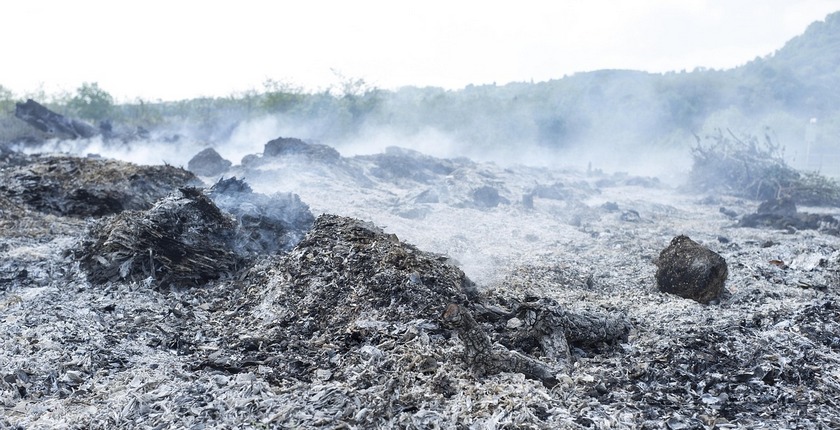
District heating plant Energetika has begun removing coal ash from an uncovered disposal site that has been polluting air and soil for years in the heart of Kragujevac, Serbia’s fourth-largest city. The effort is part of a project financed by an EUR 18 million loan from the European Bank for Reconstruction and Development (EBRD), to decarbonize the local district heating system.

The ash from Kragujevac is transported to cement plants in Kosjerić and Popovac to be used in the production of cement and construction materials, in line with circular economy principles, according to Serbian Minister of Environmental Protection Sara Pavkov.

On the first day, about 75 tons of ash was removed from the site, with plans to transport a total of 60,000 tons over 24 months.

The ash will be used in cement production in Kosjerić and Popovac

Ash removal is the second phase of the district heating decarbonization project in Kragujevac. In the first phase, old boilers were replaced with gas-fired units, significantly reducing air pollution, according to Dejan Ružić, deputy mayor of Kragujevac. This marked the end of coal use in the city’s district heating system.

The EBRD approved the loan for the project in 2021. Of the total amount, EUR 14 million was earmarked for boiler replacement, together with up to EUR 4 million for ash removal.

In the first phase, coal-fired boilers were replaced with gas-fired units

The bank said at the time that gas-fired boilers would have a capacity of 110 MW and that CO2 emissions from district heating would be cut by an estimated 66%, with sulfur dioxide and particulate matter (PM) emissions eliminated.

The Ministry of Environmental Protection has hired Novi Sad-based engineering and consultancy firm AG Institut to monitor the ash disposal services under a EUR 73.900 contract. The works are targeted for completion by July 15, 2027.

Aleksandar Lazović, general manager of the district heating plant, said the works would be carried out in line with the highest environmental standards, in a covered area, to prevent ash from dispersing into the environment.

District heating decarbonization in several Serbian cities

In June this year, Serbia and the EBRD signed a EUR 50 million loan to finance a series of air quality projects in Belgrade, Niš, Valjevo, Zaječar, Novi Pazar, and Smederevo, which had been mapped as cities with the largest excesses of harmful emissions.

The planned projects include replacing outdated boilers running on fuel oil, coal, and other air-polluting fuels with modern and sustainable heat energy sources, such as heat pumps, biomass, and industrial waste heat.

by in News

Romania preparing EUR 300 million in subsidies for geothermal heating, cooling

The Romanian Government has drafted a state aid mechanism for the production and transport of geothermal energy for district heating or cooling systems. The proposed scheme would be worth EUR 300 million, sourced from the European Union’s Modernisation Fund.

In addition to solar and wind energy, hydropower and battery energy storage systems, Romania is increasingly counting on geothermal potential for its energy transition and decarbonization efforts. The government in Bucharest is preparing EUR 300 million in subsidies for geothermal district heating or cooling systems, Profit.ro reported.

It drafted a state aid package that would be covered from the Modernisation Fund. It is a tool for supporting investments in renewables, energy efficiency, storage and networks and a just transition in 13 European Union member states with lower incomes. The funds are from the proceeds of the sales of greenhouse gas emission certificates within the EU Emissions Trading System (EU ETS).

The proposed subsidies are aimed at the production and transport of heat from geothermal energy, including modernization projects, to the points of connection with the district heating network, according to the document.

No need for auction as budget is sufficient for all mature projects

The budget would be divided into EUR 50 million per year through 2030. The funds are intended to cover the net additional costs of the projects – funding gaps. Typically, they are determined as the difference between the net present value of the factual scenario and the counterfactual scenario over the life of the project, the update reveals.

The government estimated that nine projects would split the available funds

There would be nine beneficiary projects, translating to EUR 33.3 million each, the government estimated. Eligible are thermal energy producers and municipal authorities and their units.

There won’t be a competitive bidding process for allocating the state aid, as the Ministry of Energy received too few mature proposals since 2023, within its exploratory public call, the document adds. The government has concluded the budget would cover the potential demand.

Bucharest, Timișoara among potential beneficiaries

State-owned Electrocentrale București (ELCEN), which produces thermal energy for the district heating system in the capital Bucharest, and National Company Bucharest Airports (CNAB), are among the entities interested in the subsidies.

Bucharest’s Sector 1 administrative authority and the Municipality of Timișoara are in the group as well. The latter, Romania’s fifth-largest city, established cooperation last year with OMV Petrom for district geothermal heating.

The article noted that Green Tech International, listed on the Bucharest Stock Exchange (BSE or BVB), is on the list. It operates geothermal wells in Călimănești-Căciulata in the country’s south. The company also supplies heat and sanitary hot water in Nădlac in Arad county in the northwest.

One other company interested in the state aid scheme is Transgex. The city of Oradea, where it is based, inaugurated an 18 MW geothermal district heating plant two months ago.

The government recently launched a EUR 56 million grant program for municipal authorities for geothermal energy projects.

In other relevant news from Southeastern Europe, Slovenia launched a EUR 51.2 million cofunding package for green district heating and cooling ten days ago, for companies and cooperatives.

by in News

EU’s Modernisation Fund disburses EUR 3.66 billion for clean energy projects in nine countries

Energy modernization projects in nine member states of the European Union will receive a total of EUR 3.66 billion from the Modernisation Fund, in the largest disbursement to date from the facility financed by carbon pricing revenues, according to a press release from the European Commission. The selected projects focus on renewable energy, grid upgrades, energy storage, and energy efficiency.

The largest beneficiary of the latest disbursement is Poland, which will receive EUR 1.33 billion for its projects, followed by the Czech Republic, with EUR 1.05 billion, and Romania, with EUR 712.3 million. Hungary will get EUR 181.3 million, Croatia EUR 170 million, and Greece EUR 113.6 million. The rest will go to Latvia (EUR 40 million), Lithuania (EUR 37 million), and Slovenia (EUR 19.7 million).

Croatia will finance renewable heat production and zero-emission transportation, and Slovenia will upgrade power grid to integrate renewables

In Croatia, EUR 80 million will be used for the production and use of heat from renewable energy sources and energy efficiency improvement in heating and cooling systems. The rest will go to investments in zero-emission transportation. In Slovenia, the funding will facilitate renewables integration through the modernization and development of the electricity transmission and distribution network.

Greece, which became a Modernisation Fund beneficiary in January 2024, intends to replace urban diesel buses with new electric buses, improve energy efficiency in municipal swimming pools, and switch the heating and cooling systems in its greenhouse infrastructure to renewables.

In Romania, the funding will help improve the energy efficiency of facilities covered by the European Union’s Emissions Trading System (EU ETS), support the contract-for-difference (CfD) scheme for onshore wind and solar, and finance the installation of solar and wind power plants for self-consumption in the agricultural and food sectors and public institutions. It is also intended for investments in new solar, wind, and hydropower capacities and to support the modernization and rehabilitation of the district heating network.

In the Czech Republic and Lihtuania, the funding will support energy storage projects

Other example projects include investments in storage capacity for renewable electricity in the Czech Republic, investments in large-scale energy storage capacities in Lithuania, and a clean air program in Poland that focuses on energy efficiency improvements and heat source replacements in single-family houses, according to the press release.

The investments will reduce greenhouse gas emissions in the energy, industry, and transportation sectors, improve energy efficiency, and help the beneficiary states meet climate and energy targets, the commission said.

The projects will also help improve people’s everyday lives, by reducing bills, improving public services, creating jobs, and making the energy transition real, fair, and beneficial for all, according to Teresa Ribera, the European Commission’s Executive Vice-President for Clean, Just and Competitive Transition.

With this latest round of funding, the total disbursements from the Modernisation Fund since January 2021 have climbed to EUR 19.1 billion. The fund is financed by revenues from the auctioning of emission allowances under the EU ETS.