by in News

Reverse energy flows turn Slovenian distributors into power producers

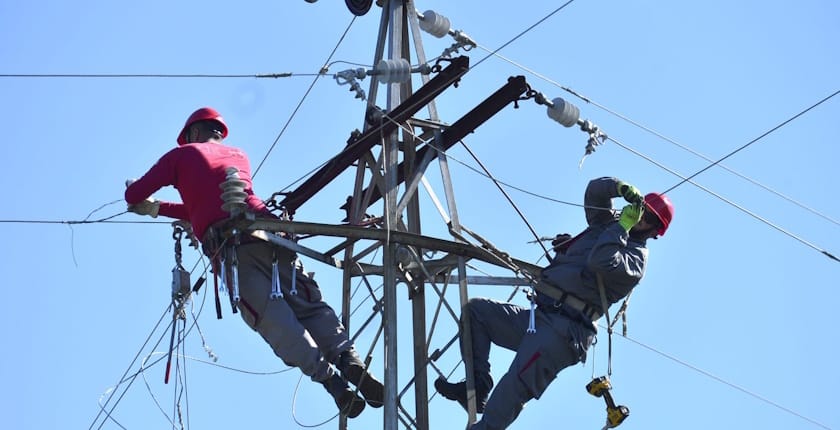
On May 1 and 2 this year, for the first time ever, five Slovenian power distribution companies fed more electricity into the transmission network than they drew from it. This shift is creating challenges for distribution grid operators while also highlighting the core reality of the energy transition.

Indeed, the circumstances were extraordinary during the first two days of May, writes Slovenia’s Naš stik. The weather was clear, but not warm enough for people to use air conditioners, while solar power plants connected to the distribution grid were generating electricity at nearly full capacity.

Industrial plants were not working due to the holiday, and many people were away from home, so electricity consumption from the transmission network fell sharply, reaching only 150 MW between 12 and 1 p.m. In winter, peak hourly consumption reaches around 2,200 MW.

Pumped storage hydropower plant Avče was operating at full capacity

Pumped storage hydropower plant Avče was operating at full capacity, receiving 157 MW from the transmission network. All Slovenian power distribution companies supplied more electricity to the transmission network than they received from it.

Elektro Ljubljana and Elektro Primorska drew energy from the transmission grid, but Elektro Maribor, Elektro Celje, and Elektro Gorenjska delivered significant amounts, resulting in a negative overall balance.

For four hours, the distribution network was a net electricity producer

The distribution network as a whole was a net producer of electricity for four hours on May 1, between 11 a.m. and 3 p.m. On the same day last year, the minimum hourly load of the transmission network was 770 MW, and power distribution companies drew 450-500 MW from the grid. The same thing happened on May 2.

It is worth noting that the total capacity of solar power plants in Slovenia is 1.4 GW, half of which was installed in 2023 and 2024, with the largest part connected to the distribution grid. The overall electricity generation capacity in Slovenia is 7.47 GW.

Managing voltage profiles on the grid poses the greatest challenge

The most pronounced change in energy flows was recorded at Elektro Celje. Boštjan Turinek, director of operations and development, said that a reverse flow of energy from the distribution network to the transmission network was first recorded in July 2022. At that time, the amount was minimal, around 4 MW.

However, in 2023, the reverse flow reached 40 MW, and this year it has already hit 100 MW. The biggest challenge, he explains, is managing voltage profiles on the grid.

The distribution network was built for one-way “traffic” – toward the end user – with the highest voltage at substations and the lowest at end consumers. The mass integration of distributed energy sources has disrupted these voltage profiles, Turinek stressed.

Distributed power plants like emergency vehicles

Ordinary consumers usually don’t notice this – perhaps only a slightly shortened lifespan of their LED bulbs, he said. However, according to him, solar power plant owners often experience automatic inverter shutdowns caused by overvoltage.

Besides holidays, changes in energy flows also occur during collective shutdowns of Slovenian industrial plants during the summer and spring breaks. If the weather is sunny at that time, the output from distributed energy sources is very high.

Turinek recalls that distributed power plants have been granted the same rights as emergency vehicles, so their output always takes priority, regardless of the state of the grid.

If the power system is to be properly managed, he adds, these plants should be placed on an equal footing with all others.

The net metering system for prosumers has had many positive effects, but it has also created numerous problems, Turinek concluded.

by in News

Over 20,000 prosumer units connected in Greece in last 18 months

Greece’s distribution system operator HEDNO added more than 20,000 prosumers in the past year and a half, although the new net billing program faces delays.

Last year the government in Athens formally ended the net metering scheme and enacted net billing, aligning with the European Union’s regulations. Any aspiring prosumer with an existing application can switch to the new mechanism for free. The connection charge is EUR 370 per unit.

In the net billing mechanism, the compensation for the prosumer for the electricity delivered to the grid is based on the hourly wholesale price of electricity, instead of a fixed tariff. Projects are limited to a maximum 10.8 kW for households and 100 kW for businesses and energy communities. Virtual billing is also allowed, meaning that production and consumption can be in different locations.

Total capacity almost at 1 GW

According to data from the Hellenic Electricity Distribution Network Operator (HEDNO or DEDDIE), more than 20,000 individual prosumer units have been connected to the grid over the last 18 months, with the majority being connected under net metering.

It brought the overall number of prosumer installations to 35,312, with a total capacity of 995 MW, according to the update.

HEDNO also said 705 applications were in the final stages of the licensing process.

Limited interest from suppliers and aggregators

Despite high interest, progress in adding units within the net billing scheme has been slow. Only two electricity suppliers currently provide such contracts to prosumers and just one of them includes businesses, Energypress reported.

There is limited interest among aggregators to represent corporate net billing installations in the market. As for household units, the Renewable Energy Sources Operator and Guarantees of Origin (DAPEEP) provides the service free of charge.

Market participants are urging improvements in the relevant ministerial decree on net billing, for things to move forward. One of them would be to simplify contracts.

by in News

Slovenia’s EUR 150 million smart grid leap

The five electricity distribution firms in Slovenia will invest more than EUR 150 million by the end of March 2026 in upgrading the network and the addition of smart grid components.

Elektro Primorska, Elektro Ljubljana, Elektro Gorenjska, Elektro Celje, and Elektro Maribor will build 1,300 kilometers of low-voltage grid and 838 transformer stations with smart grid elements, Naš Stik reported.

Of note, the five firms are essentially performing the duties of the country’s nominal distribution system operator, ELES.

Out of the total investment, EUR 71 million was allocated from the National Recovery and Resilience Plan (NRRP). In the first public call launched by the Ministry of the Environment, Climate and Energy, the distribution companies won EUR 37.5 million, and EUR 33.5 million in the second one, for projects planned to be conducted through 2026.

Elektro Primorska received EUR 11.4 million, with total investments estimated at EUR 21 million. The firm will build 204 kilometers of low-voltage network and install 132 transformer stations, according to its website.

Among the five firms, the largest investments are planned by Elektro Maribor

Elektro Ljubljana is eligible for EUR 19 million, to build 373 kilometers of low-voltage network and 240 transformer stations. Its investments are estimated at EUR 40 million in total. The construction of 169 kilometers of low-voltage network and the installation of or reconstruction of 108 transformer stations will cost Elektro Gorenjska EUR 18.9 million. Half of the funds are secured from the NRRP.

Elektro Celje got EUR 15.1 million to build 278 kilometers of low-voltage network and install 179 transformer stations. The projects are estimated at EUR 28.5 million overall.

Elektro Maribor was granted EUR 16 million for total investments of EUR 43.5 million. The company plans to build 278 kilometers of low-voltage network and 179 transformer stations.

Ćatić: Investments to provide greater grid visibility

According to Damir Ćatić, business units and investment sector manager of Elektro Maribor, the investments will make the distribution network more reliable for end users.

The company aims to improve the quality of electricity supply and to enable the connection of solar power plants, battery energy storage systems, and chargers for electric vehicles, he emphasized.

By installing smart grid components, Elektro Maribor will gain greater visibility into the network’s condition, which will enable better management and planning, as well as adapt the network to current energy flows.

Conditions are being created for the efficient use of energy storage

They are the key factors for integrating distributed renewable energy production sources such as solar power plants, as well as e-chargers, into the distribution network, Ćatić explained.

Such an approach, in his words, allows for managing the variability of these sources, meaning it creates conditions for the efficient use of energy storage.

The use of technologies such as databases, artificial intelligence, and the IoT will enable Elektro Maribor to achieve greater efficiency, reliability, and resilience of the distribution system, as well as improved data management, Ćatić stressed.

by in News

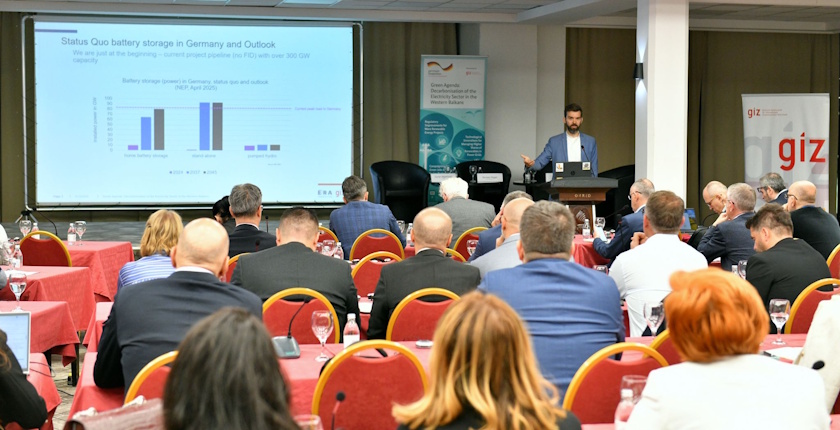
Third Regional Power Sector Exchange in Ohrid: Power grids at core of energy transition

The third Regional Power Sector Exchange of the Western Balkans in Ohrid in North Macedonia gathered over 80 energy professionals from the region to discuss the future of electricity decarbonization and the urgent need to modernize power infrastructure.

Organised under the framework of the Regional Climate Partnership between Germany and the Western Balkans, the conference brought together representatives of transmission and distribution system operators, energy regulators, and energy ministries to accelerate coordinated action toward a greener, more resilient power system.

“No grids, no glory. This slogan captures the challenge in front of us. Without investment in power grids, adaptable regulation, and skilled professionals, the renewable energy transition cannot succeed,” Project Manager at GIZ Nicolas Heger said in his welcoming remarks.

Oberhuber: The Western Balkans have the potential to become a major exporter of clean electricity

Opening addresses were delivered by David Oberhuber, GIZ Country Director in North Macedonia, Anca-Iulia Cimpeanu, European Commission (DG ENER), and Davor Bajs, Energy Community Secretariat.

In his keynote speech, Oberhuber stressed the region’s strategic importance in the Regional Climate Partnership.

The Western Balkans has the potential to become a major exporter of clean electricity to Western Europe and a hub for investment and innovation in renewable energy, he said.

North Macedonia is advancing its energy transition by expanding renewables – solar power capacity reached 506 MW in 2023 – and reducing coal dependency, although thermal power plants still accounted for 47.3% of total electricity production in early 2024.

In 2023, renewables made up 33.15% of electricity generation, with households, transport, and industry as the top energy consumers.

To accelerate the shift, tailored support projects were launched. The Energy, Water Services and Municipal Waste Management Services Regulatory Commission is tackling the surge in renewables applications. Distribution system operator (DSO) EVN is focusing on smart grids and energy quality, and transmission system operator (TSO) MEPSO is exploring options to reduce balancing costs through regional market mechanisms.

Six tailored support projects presented

The event included three sessions on tailored support projects.

Professor Nermin Suljanović presented the project Concept on Data Exchange Between System Operators in Bosnia and Herzegovina.

The data platform enables automatic data exchange among all actors in the electricity market in Bosnia and Herzegovina, ensuring data interoperability and harmonized communication interfaces, according to Suljanović.

He also outlined the project Technical Specification and Requirements for Integration of Renewables into DSO Telecommunication Network.

E-mobility is not only related to energy but also to transportation, telecommunication, data security

A project titled Procedure for Handling RES Connection Requests to the Grid – Queue Management was presented by expert Miltos Aslanoglou, and the Roadmap for Creating a Legal and Regulatory Framework for EV Charging by expert Dejan Stojadinović.

“EU legislation on this matter is a good base for the Western Balkan countries to prepare relevant legal and regulatory frameworks. E-mobility is not only related to energy but also to transportation, telecommunication, data security, and other issues,” Stojadinović said.

Goran Majstrović, Deputy Director and Head of the Energy Transmission and Distribution Department at Energy Institute Hrvoje Požar (EIHP), gave an insight into the project Feasibility Analysis and Funding Assessment for using Dynamic Line Rating (DLR) on the Kosovo* Transmission Grid.

Simplification of Procedures for Prosumer Connection to the Distribution Network in the Federation of BiH was the name of the project introduced by expert Goran Dobrić.

The need for regionally integrated networks has never been greater

Blackouts in both Southern and Southeastern Europe have highlighted vulnerabilities in grid infrastructure amidst growing shares of renewable energy. The need for modern, flexible, and regionally integrated networks has never been greater.

The event was part of a wider regional project implemented by GIZ on behalf of the German government, supporting the integration of renewables and enhancing energy security across the WB6.

In just two years, the project has supported over 30 institutions, trained more than 135 energy professionals, and facilitated the development of the Action Plan for Power Grids in the Western Balkans, in cooperation with the Energy Community Secretariat.

Network redesigns are lagging behind renewables by seven to ten years

Goran Majstrović from Energy Institute Hrvoje Požar presented the Action Plan for Power Grids in the Western Balkans.

“The path to integration of renewables is not just replacing power plants but redesigning the entire system to accommodate them. Network redesigns are lagging behind renewables by seven to ten years,” he asserted.

In the plan, the required grid investments by 2030 in the six countries of the Western Balkans (WB6) are estimated at EUR 10 billion to EUR 14 billion. Investments in primary equipment are seen at EUR 6 billion to EUR 8 billion. As for secondary equipment (digitalization), the forecasted tally is EUR 4 billion to EUR 6 billion.

Phase 2 of the project Green Agenda: Decarbonisation of the Electricity Sector in the Western Balkans is scheduled for completion in 2028. The Regional Power Sector Exchange will remain a key platform for cooperation, helping ensure the energy transition in the region is just and inclusive.

* This designation is without prejudice to positions onstatus and is in line with UNSCR 1244/99 and the ICJ Opinion on the Kosovo declaration of independence.
by in News

Workshop on power grid development in Western Balkans held by GIZ, Energy Community Secretariat

The development of grid infrastructure in the Western Balkans is a crucial step in the region’s energy transition. In support of the Green Agenda for the Western Balkans, GIZ, in cooperation with the Energy Community Secretariat, organized a Strategic Workshop on Power Grids, with a focus on a concrete action plan for the entire region.

Without the development of grid infrastructure, large-scale electrification based on clean energy sources is not possible. The process requires significant investments and new solutions for operating the grid. Existing power lines will need to be reinforced, while new infrastructure, especially on low and medium voltage levels, as well as interconnectors, must be built over the next ten years.

The recent large-scale power outage in Southern Europe, and the one in the Western Balkans in 2024, are a stark reminder of the importance of ensuring system stability amid the growing use of renewables and the need for preventive safety measures. A functional and reliable electricity supply is key to gaining broad public support for alternative energy sources and green policies.

The Strategic Workshop on Power Grids, organized by GIZ in Vienna as part of the project Green Agenda: Decarbonization of the Electricity Sector in the Western Balkans, in cooperation with the Energy Community Secretariat, brought together representatives from transmission and distribution system operators, along with experts from the Hrvoje Požar Energy Institute (EIHP), intending to develop the Action Plan for Power Grids in the Western Balkans.

The action plan provides a clear roadmap for grid development in the Western Balkans

Electricity networks in Western Balkan countries were not designed to meet the challenges of the 21st century. Although the countries in the region have adopted very ambitious decarbonization and renewable energy integration targets, around two thirds of electricity generation comes from coal-fired power plants, according to Goran Majstrović, Deputy Director and Head of the Energy Transmission and Distribution Department at EIHP.

“Regional power networks remain constrained by outdated assets, insufficiently utilized interconnection capacities, administrative bottlenecks, and inadequate digitalization. Without urgent and coordinated action, the power network in the Western Balkans will become a serious bottleneck to secure operation and progress rather than a platform for transformation and development,” Majstrović explains.

Without urgent and coordinated action, the electricity network in the Western Balkans could become a serious obstacle to secure operation and progress, instead of being a platform for transformation and development, he warned.

The Western Balkan Action Plan for Power Grids directly addresses the root causes of recent blackouts, including extreme weather events, aging infrastructure, and the growing share of variable renewable energy sources, particularly wind and solar, as their output is sensitive to any changes in weather conditions.

By focusing on grid modernization, regional coordination, and system resilience, the plan offers a concrete roadmap for preventing future outages. It also promotes investment in smart grid technologies, cross-border interconnectors, and digital system monitoring, all of which are essential for adapting to growing demand and fluctuations in electricity production.

The action plan is a strong expression of regional cooperation in the power sector

Crucially, the plan strengthens operational cooperation among system operators across the Western Balkans region, enabling a more flexible and integrated regional grid. In doing so, it lays the foundation for a stable and secure energy transition based on renewables, helping the region become a reliable supplier of clean electricity to Europe.

According to Goran Majstrović, the Action Plan for Western Balkans Grids provides a forward-looking and regionally harmonized strategy to address the challenges. It is built on the vision of the European Union’s Action Plan for Grids and aligns closely with the Sofia Declaration on the Green Agenda for the Western Balkans, the Energy Community framework, and each country’s national energy and climate plan (NECP).

The document is a strong expression of collaboration of the Western Balkans power sector in a matter of high mutual interest – mobilizing attention, human and financial resources for a rapid energy transition, enabled by sustainable, interconnected, and resilient power infrastructure.

by in News

Montenegro’s CEDIS to invest EUR 30 million in distribution grid

Montenegrin electricity distribution system operator CEDIS plans to invest EUR 30 million this year or EUR 6 million more than in 2024.

The increase in investments demonstrates greater ambitions year after year and that grid works are becoming more intensive and demanding, according to CEDIS.

The country’s distribution system operator (DSO) said it would increase capacity for the integration of new users, improve voltage conditions, strengthen reliability and security of power supply, and reduce losses.

The investments include projects planned to be started this year as well as ones already in motion, such as the modernization of six 35/10 kV substations.

CEDIS is building two substations

CEDIS pointed to several significant endeavors within the primary grid. The most significant ones are the construction of 35/10 kV substations Tivat 3 and Rijeka Crnojevića, and the modernization of the systems Buljarica-Kufin (110/35 kV) and Podgorica 7 (110/10 kV).

Seven 35/10 kV substations are up for reconstruction – Tuzi, Unač, Ptič, Andrijevica, Velika Plaža 1, Velika Plaža 2 and Čanj. The plan includes procuring new equipment for existing 35 kV transmission lines, worth about EUR 1.4 million.

The company is introducing SCADA and ADMS systems

CEDIS will use a EUR 35 million loan from the European Bank for Reconstruction and Development (EBRD) to roll out SCADA and ADMS systems, and to purchase smart meters.

The company highlighted SCADA and ADMS as a key step towards the modernization of the distribution network and the improvement of reliability, efficiency, and security of the power system.

Investments envisaged by the project Decarbonization of the Energy Sector of Montenegro, financed with a loan from the World Bank, are kicking off this year. Its subproject for increasing the operational efficiency of the power distribution grid comprises the reconstruction and modernization of substations, and improvement in the visibility of the distribution network.

EUR 5 million for energy infrastructure on Jaz-Tivat Boulevard

One of the largest investments is the installation of power infrastructure within the construction of the Jaz-Tivat Boulevard. The investment is estimated at EUR 5 million.

Projects within the secondary distribution grid are the construction of 268 substations of 10/0.4 kV, modernization of 10 kV transmission lines, and reconstruction of existing 10/0.4 kV substations. The planned works are valued at more than EUR 6 million.

CEDIS is continuing with the revitalization of the middle- and low-voltage grid. It earmarked EUR 9 million for this year for the purpose. The project is for the renewal of four 10 kV transmission lines and 52 substations of 10/0.4 kV and replacing 1,500 poles.

The installation of new meters and the relocation of measuring points will also be continued. The plan is to start phase 4 of the advanced metering management (AMM) project. The investment is estimated at EUR 12 million.

by in News

Montenegro’s EPCG, DSO, TSO to establish Consolidated Data Center

The three key companies in the electricity sector of Montenegro – Elektroprivreda Crne Gore (EPCG), distribution system operator (DSO) CEDIS, and transmission system operator (TSO) CGES – have signed a letter of intent to start strategic cooperation on the installation of the Consolidated Data Center (CDC).

The initiative for the construction of the Consolidated Data Center represents a significant step towards the digital transformation of the Montenegrin power system and the establishment of a modern information hub, according to EPCG, CEDIS, and CGES.

Within the partnership, the three companies are jointly invest resources and know-how to create a technologically advanced data management system and digital services. The Consolidated Data Center will be located in the Željezara Nikšić industrial complex.

CDC’s capacity could be used commercially for the needs of other institutions and businesses

Apart from CDC’s primary role, the modernization of the state-owned power companies, its capacity could offer services to other institutions and companies.

The signatories have already initiated the first step – the preparation of a feasibility study that will define the technical and economic parameters of the project. Based on its results, a special agreement will be adopted to specify the next steps.

EPCG CEO Ivan Bulatović said the Consolidated Data Center isn’t just an infrastructure project.

Bulatović: The goal is to create a system set for the challenges of the future

“It is the foundation of digital transformation that will enable more accurate data analysis, greater efficiency in decision making, and a safer power system. Our goal is to create a system set for future challenges. Digitalization is an inevitable step in the modernization of the sector, and CDC is a key segment of that process,” Bulatović stressed.

According to Vladimir Ivanović, CEDIS CEO, the cooperation of key Montenegrin energy companies is significant, as is providing support to other businesses.

Ivanović: CDC to enable better coordination between companies

“The development of the power system doesn’t only mean investments in the grid and capacities, but also in smart solutions enabling greater flexibility and safety in operations,” Ivanović noted.

He underlined the CDC’s role in improving coordination between companies, reduction of operating costs, and improvement of IT infrastructure.

Asanović: A strong step forward in the modernization of the sector

CGES CEO Ivan Asanović stressed the project’s importance for digitalization and the creation of a system that will enable more efficient management of power resources at the level of the entire country.

CDC represents a strong step forward in upgrading the sector and ensures a better connection between all key participants in the power system, according to Asanović.

by in News

Race against time for Greece to avoid a blackout on Easter

Greek authorities are rushing to secure the electricity system against a possible blackout during Easter.

Greece currently produces much more electricity than it needs on certain days due to a high renewables penetration and insufficient energy storage. It should be noted that in 2024 the country became a net power exporter for the first time after two decades. Usually, extra power is no problem, as it is exported and curtailments ensure nominal system operation with no danger of a blackout.

However, this year there will be days when low demand combined with high renewable electricity production creates a problem. At Easter, demand traditionally craters.

Independent Power Transmission Operator (IPTO or Admie) estimates that on Easter Sunday the country’s interconnections would operate near their maximum safety limits. If even a single line goes offline, it would lead to a domino effect and the possible loss of all the connections with neighboring countries. As a result, the frequency will rise beyond safe limits in the Greek system, triggering the desynchronization of power plants and a blackout.

To avoid such a scenario, authorities have imposed adding telemetry systems in recent months to photovoltaic units of over 400 kW connected to the distribution network. Currently, the Hellenic Electricity Distribution Network Operator (HEDNO or DEDDIE) can curtail 1.9 GW of solar power capacity, but another 6 GW is unswitchable.

Telemetry must be enabled by April in small PV units

A deadline was given until February 13 to the owners within the latter category to add telemetry equipment so that HEDNO can curtail their production when needed. However, very few complied and the rest said they are still waiting for the systems to be delivered.

HEDNO estimates that 5,700 plants with capacities of 400 kW to 1 MW must be added to curtailments, as well as 600 plants with more than 1 MW apiece.

Based on the above, owners of solar power units and the two grid operators must add the ability by April to ensure system stability.

Gradual installation of energy storage facilities is expected to help significantly and bring curtailments down.

by in News

Greek renewables sector slams curtailments bill for not including compensation

Power network operators won’t need to compensate renewable energy producers in Greece for curtailments, according to the latest bill of law. It prompted reactions in the renewable energy market.

The bill, submitted for public consultation, received damning remarks from the Hellenic Wind Energy Association (HWEA or ELETAEN) and various other bodies and corporations for the provisions regarding curtailments.

The country’s two operators wouldn’t be obligated to pay compensation. It should be noted that last year curtailments rose by 277% and reached 3.3% of all renewable production in Greece. They are projected to reach new highs in 2025.

The issue primarily plagues larger plants including wind farms, as they have the technical ability to respond to curtailment orders from the Independent Power Transmission Operator (IPTO or Admie). Conversely, smaller photovoltaic facilities connected to the grid of the Hellenic Distribution Network Operator (HEDNO or DEDDIE) have no such telemetering equipment, so they produce freely at all times.

Indeed, Greek authorities aim to make such systems mandatory in smaller renewables plants to be able to curtail them, to maintain system stability, especially during the days of Easter. If an owner fails to make necessary changes, they would be subject to a high penalty, yet to be determined.

Producers point to European law for compensation

HWEA expressed the belief operators should be exempted from compensation only if a proper framework is established that compensates larger producers for curtailments. In practice, it means any revenue collected from the penalties should be used as compensation for other producers.

HWEA: Producer compensation mechanism is necessary

The association added that compensation is obligatory under European law and therefore needs to be included in the regulatory framework.

“The only right way is for the government to conclude the long-awaited framework and introduce a specific producer compensation mechanism,” HWEA pointed out.

Cero Generation Holdings Greece said it is very concerned about proposals for IPTO and HEDNO not to be obliged to provide any compensation.

Curtailment responsibility shifted to aggregators

Another issue concerns the role of renewable energy aggregators, which represent groups of smaller producers in the market. Both HWEA and Elpedison said it is the operators that need to enforce and manage curtailments, and not aggregators, as in the proposed law.

With such measures, aggregators will face increased costs as well as the possibility of having their license recalled if they cannot carry out their new duties, the company pointed out.

by in News

Montenegro’s DSO CEDIS secures funds for grid digitalization

Montenegrin distribution system operator (DSO) CEDIS has secured funds for the installation of an advanced grid management system and procurement of smart meters.

The EUR 40 million package consists of a EUR 35 million loan provided by the European Bank for Reconstruction and Development (EBRD) and a EUR 5 million grant under the European Union’s Western Balkans Investment Framework (WBIF).

The funds are intended for a new supervisory control and data acquisition (SCADA) system and an advanced distribution management system (ADMS), as well as the procurement of new smart meters.

Smart meters help users and utility companies monitor and manage electricity usage more efficiently

The project is expected to reduce technical losses by 10%, decrease grid outages to approximately one sixth of the current level, allow new renewable energy sources to be integrated into the grid and enhance cyber security, according to CEDIS and EBRD.

The SCADA system will be used to monitor and control medium-voltage grid networks in real time. ADMS is an advanced platform that optimizes the management and operation of the electricity distribution system.

Smart meters help users and utility companies monitor and manage electricity usage more efficiently, reducing losses and improving reliability, the update reads.

The loan agreement was signed by the EBRD’s Head of Montenegro Remon Zakaria, CEDIS CEO Vladimir Ivanović, and Ivan Bulatović, CEO of EPCG.

Ivanović: The integration of smart meters will empower consumers to better understand and optimize their energy usage

According to Zakaria, the project represents a transformative step towards the digitalisation of the electricity distribution system in Montenegro.

Citizens will experience a more reliable electricity supply, and CEDIS will achieve substantial reductions in technical losses and gain the advanced capabilities required to swiftly detect and address technical faults, he added.

Vladimir Ivanović said SCADA and ADMS would revolutionize the way the company operates the distribution network. The integration of smart meters will empower consumers to better understand and optimize their energy usage, contributing to greater energy efficiency across the network, he stressed.

Last year Ivanović said CEDIS has reduced grid losses from 12.93% to 10.84% and that it planned to lower them below 10% by the end of December.

  • 1
  • 2