
by in News

EU preparing roadmap on digitalization, AI in energy

The European Commission has launched a public consultation to help shape its upcoming strategic roadmap for digitalization and artificial intelligence (AI) in the energy sector. The roadmap aims to support the rollout of digital solutions, including AI, in areas important for decarbonization.

The areas where the application of digital solutions and AI should be accelerated include electricity grid optimization, energy efficiency in buildings and industry, and demand-side flexibility, according to a press release from the commission.

The consultation should also address the increasingly heavy energy consumption of data centers and look at how they can be more sustainably integrated into the energy system.

The consultation should address the rising energy demand of data centers

Another area of interest is the need to implement safeguards to mitigate potential challenges linked to the large-scale deployment of AI solutions in the energy sector, according to the press release.

The initiative, part of the European Union’s Affordable Energy Action Plan, also aims to facilitate access to energy data via the Common Energy Data Space and unlock innovative services such as demand-side flexibility and bidirectional charging of electric vehicles, according to a LinkedIn post by former Smart Grids Team Leader at the European Commission Manuel Sánchez.

All individuals and organizations are welcome to contribute to the consultation, which is open until November 5. The adoption of the roadmap is planned for the first quarter of 2026.

The roadmap is expected to be adopted in Q1 2026

The target audience for the consultation and the accompanying call for evidence includes stakeholders from digital and energy value chains, such as grid operators, energy intensive industries, data center operators, building operators, car manufacturers, providers of e-mobility solutions, energy communities, aggregators, consumers, researchers, IT suppliers, digital solutions providers, cloud service providers, and appliance manufacturers.
by in News

Delta Green launches platform in CEE for households to provide grid balancing

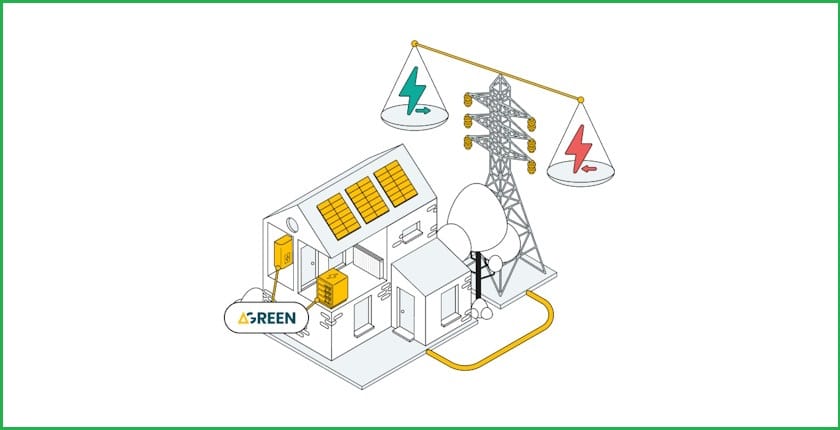
Czech energy startup Delta Green has launched a platform enabling households to provide grid balancing for transmission system operators. The company claims it is the first in Central and Eastern Europe and among the first in Europe to implement such a solution.

Delta Green said it just became the first in the CEE region to launch a platform that lets ordinary households help stabilize the energy grid, arguing it’s never been done before at this scale in the region.

The startup stressed the innovation comes at a critical time when European flexibility needs are projected to more than double, from 220 TWh in 2025 to 530 TWh by 2033, according to the latest projections by ENTSO-E.

Flexibility could bring benefits to consumers, and savings to grid operators, but also reduce electricity prices and grid investments.

The platform transforms ordinary households into active participants in the energy market

The platform transforms ordinary households into active participants in the energy market, allowing them to adjust electricity consumption or supply power in response to grid demands – a capability that directly addresses Europe’s growing flexibility challenges, the company underlined.

“A standard home solar system with battery storage can save up to EUR 40 per month. In Germany and France, where millions of homes have solar setups, 10% participation could offset the output of several power plants, reducing fossil fuel reliance and boosting grid resilience,” co-owner and Chief Product Officer of Delta Green Jan Hicl said.

Delta Green says its platform is the Airbnb of grid balancing

The company added its tech is already saving consumers money and reducing fossil fuel reliance. One can think of it as the Airbnb of grid balancing, Delta Green said.

The company is now working on expanding its services beyond the Czech Republic to both Western and Eastern Europe, for example the DACH region (Germany, Austria, and Switzerland), Italy, and Romania.

Delta Green was established in 2008 as Nano Green under the Nano Energies group. It rebranded itself last year. The company is jointly owned by David Brožík, Prokop Čech, Lukáš Beneš, and Jan Hicl.

Demand-side flexibility could deliver over EUR 300 billion in benefits for European consumers

A recent study from the Smart Energy Europe Association (smartEn) demonstrates that demand-side flexibility could deliver over EUR 300 billion in benefits for European consumers by 2030. Grid flexibility from available assets, including household systems, could contribute a projected EUR 4 billion in annual savings for European grid operators.

According to the European Agency for the Cooperation of Energy Regulators (ACER), grid expansion and flexibility measures potentially could reduce electricity prices by 11% by 2035 and by 30% in 2040 in a net zero scenario.

The European Union needs EUR 584 billion in grid upgrades by 2030. Flexibility solutions, combined with grid optimization, could lower the much needed grid investments from an anticipated EUR 67 billion to EUR 55 billion annually between 2025 and 2050.

by in News

Solar, nuclear lower Europe’s power prices by 30% in March

Electricity generation in solar and nuclear power plants, combined with higher temperatures, lowered the price of electricity in Europe in March by almost 30% on a monthly basis, according to Eurelectric’s data.

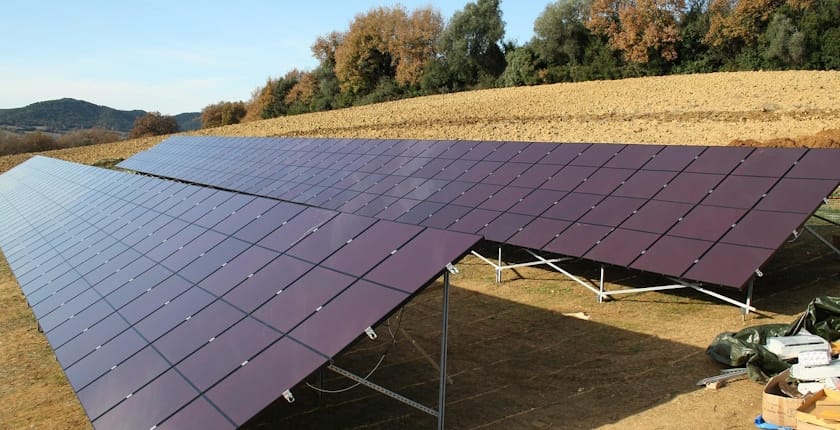
Photovoltaics broke the record in power generation in March for the third consecutive month, Eurelectric said, adding that they accounted for more than 10% of Europe’s electricity mix.

The boost in solar power, combined with improved nuclear generation and milder weather, decreased power prices to EUR 90 per MWh from EUR 126 per MWh, registered in February, and EUR 112 per MWh in January.

The organization attributed high prices in the previous two months to low wind generation, increased power demand and the highest gas prices in two years. Ongoing global geopolitical tensions and outages in Norway exerted upward pressure on the cost of gas while limited storage and flexibility sources forced a heavier reliance on gas to supply electricity.

65 GW of solar was added in 2024

Eurelectric said solar rescued Europe with sunnier days and the rise in capacity, with 65 GW added in 2024 alone. As a result, the share of renewables in the power mix was 15 percentage points higher in March compared to February, though one point lower than in March 2024.

Nuclear energy contributed to the decrease in prices with the rise of its share in power production from 24% in March 2024 to last month’s 26% after a few French nuclear reactors came back online, Eurelectric said.

Nevertheless, the average day-ahead electricity price in the first quarter of 2025 was 51% higher than in the first three months of last year. The surge was primarily driven by higher average gas prices, which grew by 33% in the same period, according to the data.

Ruby: Europe remains too vulnerable to fossil fuel price fluctuations

The organization’s Secretary General Kristian Ruby stressed that Europe remains too vulnerable to fossil fuel price fluctuations, especially during periods of high electricity demand. “To counter this, we must speed up the roll-out of demand side response and storage technologies and further incentivise the use of long-term power purchase agreements,” he noted.

Eurelectric sees solutions in capacity mechanisms and flexibility-supporting schemes. Flexibility is also crucial when it comes to balancing negative prices, which are occurring more frequently. As solar generation rose in March, negative prices made a comeback, particularly in Nordic and Western European countries, the organization of the European electricity industry pointed out.