by in News

Romania to roll out flexibility market where you get paid to consume less power

Companies and, eventually, households will be able to participate in the Romanian flexibility services market, getting compensated for cutting their electricity use at a time scheduled one day earlier. The aim is to prevent power outages during peak loads in the transmission grid.

The National Energy Regulatory Authority (ANRE) of Romania published a draft regulation that would allow payments to electricity consumers – companies or, in the future, even households – for temporarily reducing their consumption. The mechanism is called the consumption flexibility service. Its purpose is to balance the grid and prevent power outages during peak consumption.

Romania’s transmission system operator Transelectrica would be able to purchase consumption reduction services from market participants: large companies, suppliers and aggregators. They would commit to temporarily limiting energy use.

Demand response also replaces expensive emergency power imports.

Day-ahead market for demand response

Transelectrica will schedule the service through auctions organized a day earlier. Market participants would be able to bid with available consumption capacity reductions and prices.

The proposed regulation requires providers or aggregators to transfer at least half of the revenues to their end customers who contributed to the consumption cut.

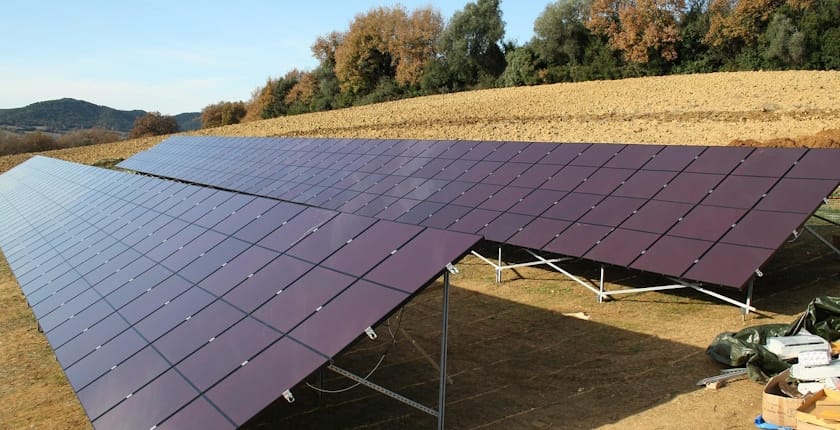
Renewable electricity production – especially solar – has increased significantly over the previous years. During the day, Romania sometimes produces more energy than it consumes, but in the evening, when people return home and consumption increases sharply, production no longer covers demand.

The trend is known as the duck curve, per the shape of the daily chart of demand and solar power production. It leads to imbalances and bolsters the risk of grid overload. Through flexibility services, Transelectrica will be able to shave the peaks.

Households to eventually join through their aggregators

In the first stage, the mechanism will involve large consumers such as factories, retail chains, logistics operators and office buildings. They would be able to bid with a minimum of 500 kW. Households could join at some point through so-called flexibility aggregators.

It is also important that demand response decreases balancing costs, which spill over to electricity bills.

The draft regulation is undergoing a public consultation process until December 3. According to the schedule, the flexibility market will be established in the spring.
by in News

Croatia installs one million smart meters, Serbia reaches 650,000

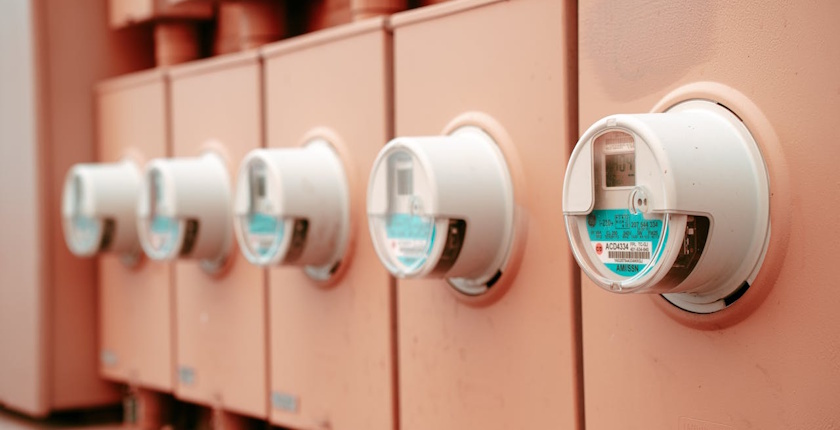
Croatia has so far installed one million smart meters, while Serbia has reached 650,000. They make up 40% of all power metering devices in Croatia, compared to a 17% level in Serbia.

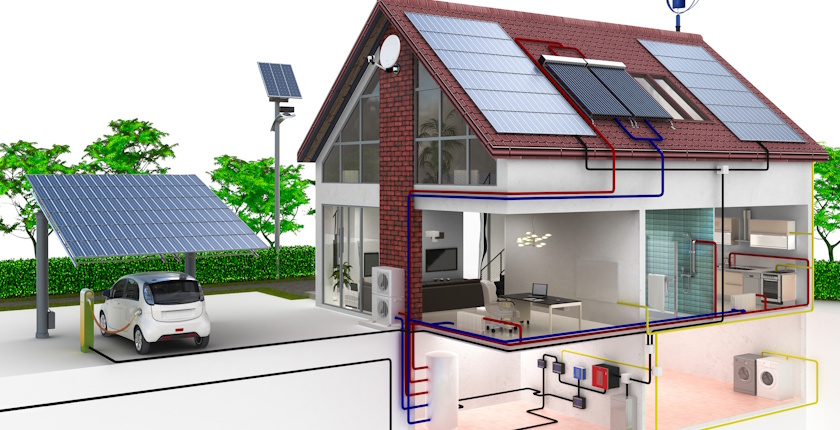
Digital or smart meters offer numerous advantages for consumers and distribution system operators (DSOs). The devices are a cornerstone of future distribution networks – smart grids that will allow consumers, including many prosumers, to both draw electricity from the network and inject it. Smart grids also enable consumers to provide various flexibility and demand response services.

The smart meters rollout in Croatia is being implemented across the country, with about 40,000 new devices installed per month. Croatia’s DSO HEP-Operator Distribucijskog Sustava (HEP ODS), a subsidiary of state-owned power utility Hrvatska Elektroprivreda (HEP), has previously announced that it intends to replace all 2.5 million devices by the end of 2029.

Nearly all users in the business category have received new devices

Installation of new meters is completely free of charge for customers. It takes about twenty minutes. HEP underlined that smart meters offer a range of benefits – enabling simpler and remote reading of consumption, more precise consumption management, better planning, and savings.

Danijela Žaja, chief of the metering and market support sector of HEP ODS, told RTL that more than one million smart meters have been installed so far for households and firms. In the business category, almost all meters have already been replaced, she said, Poslovni Dnevnik reported.

In her words, new devices help consumption management.

Serbia is financing new meters with loans

According to Ana Pavlović, head of the electricity markets support sector of neighboring Serbia’s DSO Elektrodistribucija Srbije (EDS), so far the company has installed almost 650,000 smart meters.

EDS plans to set up another 200,000 units in the next round, financed by a loan from the European Bank for Reconstruction and Development (EBRD), she said at a conference organized by Energija Balkana.

Out of the 200,000 meters, the cities of Čačak and Kraljevo are earmarked for 30,000 each, and 140,000 are for consumers in Niš. The next project is the installation of 400,000 smart meters, to be financed by a loan from the European Investment Bank (EIB).

Niš will be one of the first cities in Serbia to be almost entirely covered by smart meters, Pavlović stressed, as quoted by Tanjug.

by in News

Slovenia tops EU list for most smart power meters, Croatia among laggards

Slovenia is very close to equipping all electricity consumers with smart meters, while Croatia is within reach of achieving it in the non-home segment, but far behind in the household category, according to the latest data from the EU Agency for the Cooperation of Energy Regulators (ACER).

At the top of the list of European Union member states with the highest share of smart meters, three countries are fully equipped with modern smart meters, Naš stik reported.

All consumers in Sweden, Denmark, and Italy have such devices installed. They are followed by Finland, Estonia, Latvia, Luxembourg, Spain, and Portugal, all with 99% of households and 100% of non-household consumers equipped.

Germany is at the bottom of the table, with a rollout of just 2%

Next is Slovenia, with 97% overall. France reached 94% among households and 95% in the other category, while Malta is at 93% and 87%, respectively. Slovenia is expected to complete the process by the end of the year, the article added.

The laggards are Lithuania (51%, 95%), Belgium (46%, 79%), Poland (36%, 65%), Croatia (34%, 95%), Romania (27%, 45%), and Greece (12% altogether). Germany is at the bottom of the list, with a combined total of only 2%, according to ACER’s data.

Smart meters are one of the main components of the distribution grid upgrade

Croatia’s state-owned power utility Hrvatska Elektroprivreda (HEP) launched a tender last August worth EUR 86.5 million, for the purchase of smart meters. The company said at the time that it planned to install them at all metering points in the country by the end of 2029.

Smart meters are a crucial factor for modernizing distribution networks. It is necessary for the future power system, where consumers will play a very different role, generating electricity for self-consumption and through demand response and flexibility services.

by in News

CyberGrid is committed to energy transition in SEE with its aggregation solutions

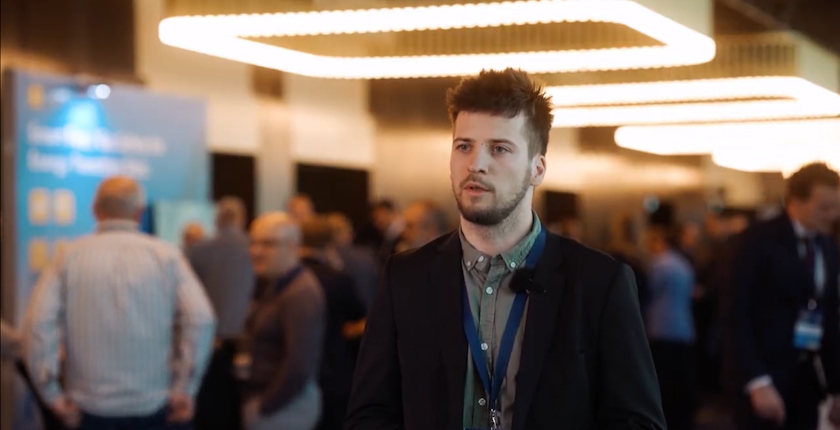
Project Manager and Market Intelligence Specialist Nikolaj Candellari from CyberGrid said at the Belgrade Energy Forum 2025 that the company believes in the energy transition in Southeastern Europe and is contributing with its VPP solutions. The Austrian software developer is open to partnerships with aggregators or future aggregators and the region’s electricity transmission and distribution system operators.

CyberGrid connects different energy resources to different markets. It uses cloud-based flexibility management technology and provides software as a service (SaaS).

“Our core belief is that every energy resource should be renewable, or at least green, and flexible. And to support this transition which we are in at the moment, we have developed our own product called CyberNoc,” Project Manager and Market Intelligence Specialist Nikolaj Candellari said at Belgrade Energy Forum (BEF 2025).

[wpcc-iframe title=”Nikolaj Candellari, Project Manager and Market Intelligence, CyberGrid at Belgrade Energy Forum 2025″ width=”500″ height=”281″ src=”https://www.youtube.com/embed/T_Oy574YR9k?feature=oembed” frameborder=”0″ allow=”accelerometer; autoplay; clipboard-write; encrypted-media; gyroscope; picture-in-picture; web-share” referrerpolicy=”strict-origin-when-cross-origin” allowfullscreen=””]

CyberNoc in real time aggregates the assets – batteries, renewables and even loads and is putting them to the markets, Candellari explained.  In this way, the company supports grid stability and resilience and generates additional revenue streams for owners.

“We are heavily present in the region because we believe in this transition in Southeastern Europe. We helped partners in Croatia, Bulgaria and North Macedonia to connect to different markets,” he stressed and added that the firm has established cooperation in Slovenia and Greece.

Candellari called on aggregators or future aggregators, transition and distribution system operators and all other entities in the electricity system to contact CyberGrid.

The company, founded in 2010 and headquartered in Vienna, is one of the friends of the Belgrade Energy Forum, organized in Serbia’s capital city by Balkan Green Energy News.

CyberNoc enables trading, balancing services

CyberNoc manages battery storage, power plants and consumption, optimizing them in line with market and grid conditions. The platform continuously communicates with the transmission system operator (TSO). It facilitates energy trading as well as the provision of balancing services including frequency control reserve (FCR), automatic frequency restoration reserve (aFRR) and manual frequency restoration reserve (mFRR).

Candellari also participated in a panel discussion at BEF 2025 called Market Flexibility: The Backbone of a Resilient Energy System. He recalled that the market went from 15-minute time intervals all the way down to just two seconds and stressed the significance of real-time data for TSOs and other participants.

“I think we can connect everything, including households,” Candellari underscored.

Notably, CyberGrid is part of the SPRINT project, launched at the beginning of the year, for the development of innovative quasi-solid-state sodium-ion batteries for stationary purposes. The endeavor received funding through the Horizon Europe program.

by in News

Solar, nuclear lower Europe’s power prices by 30% in March

Electricity generation in solar and nuclear power plants, combined with higher temperatures, lowered the price of electricity in Europe in March by almost 30% on a monthly basis, according to Eurelectric’s data.

Photovoltaics broke the record in power generation in March for the third consecutive month, Eurelectric said, adding that they accounted for more than 10% of Europe’s electricity mix.

The boost in solar power, combined with improved nuclear generation and milder weather, decreased power prices to EUR 90 per MWh from EUR 126 per MWh, registered in February, and EUR 112 per MWh in January.

The organization attributed high prices in the previous two months to low wind generation, increased power demand and the highest gas prices in two years. Ongoing global geopolitical tensions and outages in Norway exerted upward pressure on the cost of gas while limited storage and flexibility sources forced a heavier reliance on gas to supply electricity.

65 GW of solar was added in 2024

Eurelectric said solar rescued Europe with sunnier days and the rise in capacity, with 65 GW added in 2024 alone. As a result, the share of renewables in the power mix was 15 percentage points higher in March compared to February, though one point lower than in March 2024.

Nuclear energy contributed to the decrease in prices with the rise of its share in power production from 24% in March 2024 to last month’s 26% after a few French nuclear reactors came back online, Eurelectric said.

Nevertheless, the average day-ahead electricity price in the first quarter of 2025 was 51% higher than in the first three months of last year. The surge was primarily driven by higher average gas prices, which grew by 33% in the same period, according to the data.

Ruby: Europe remains too vulnerable to fossil fuel price fluctuations

The organization’s Secretary General Kristian Ruby stressed that Europe remains too vulnerable to fossil fuel price fluctuations, especially during periods of high electricity demand. “To counter this, we must speed up the roll-out of demand side response and storage technologies and further incentivise the use of long-term power purchase agreements,” he noted.

Eurelectric sees solutions in capacity mechanisms and flexibility-supporting schemes. Flexibility is also crucial when it comes to balancing negative prices, which are occurring more frequently. As solar generation rose in March, negative prices made a comeback, particularly in Nordic and Western European countries, the organization of the European electricity industry pointed out.