by in News

North Macedonia Moves Closer to European Green Electricity Certification System

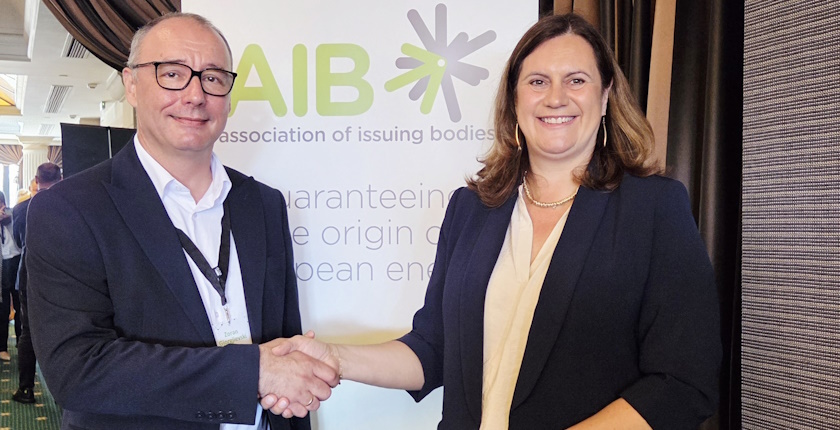
North Macedonia’s National Electricity Market Operator, MEMO, has officially joined the Association of Issuing Bodies (AIB), marking an important step toward deeper integration with the European framework for guarantees of origin and cross-border renewable electricity trade.

The decision was confirmed during the General Assembly of the Association of Issuing Bodies, where MEMO became a full member of the Brussels-based European energy certification organization. The move comes as the Ministry of Energy, Mining and Mineral Resources and the Energy Community Secretariat continue efforts to advance the mutual recognition of guarantees of origin between the European Union and Energy Community countries.

Guarantees of origin are electronic certificates proving that a specific quantity of electricity has been generated from renewable energy sources. They are increasingly important for transparent energy markets, renewable energy producers, suppliers and companies seeking to demonstrate the use of green electricity in line with ESG and decarbonisation standards.

MEMO introduced its electronic registry for guarantees of origin in April last year, in cooperation with energy certificate company Grexel and in line with European Energy Certificate System rules and AIB standards. Since then, North Macedonia has issued around 500,000 guarantees of origin, with each certificate representing 1 MWh of electricity produced from renewable sources.

According to MEMO Chief Executive Officer Zoran Gjorgjievski, AIB membership enables the Macedonian guarantees of origin system to implement the procedures required for future accession to the European Energy Certificate System. This will allow the secure, transparent and internationally recognized issuance and trading of green electricity certificates.

He emphasized that further integration of North Macedonia’s electricity market with the European energy market is essential, as it creates new opportunities for renewable energy producers, suppliers and businesses while strengthening trust, competitiveness and investment attractiveness in the country’s renewable energy sector.

Denko Rafajlovski, Head of MEMO’s Renewable Energy Support Department, noted that guarantees of origin play a key role in promoting renewable energy and giving consumers greater transparency and choice over the source of the electricity they use. Through the AIB Hub, national registries are connected, enabling the efficient cross-border transfer of green certificates between countries.

MEMO became an observer member of AIB last year as a first step toward full membership. Its accession now represents a significant milestone in the development of a modern, transparent and European-aligned electricity market in North Macedonia.

Cross-border trade in guarantees of origin will become possible once national legislation and technical requirements are fully harmonized with European Union standards.

by in News

Balkan power play: why the Western Balkans must ditch Russian fuels and fast-track EU market integration

A short, sharp truth: the Western Balkans sits at the crossroads of Europe’s energy security and its green ambitions, but patchy rules, lingering dependence on Russian fuels and slow market reforms mean the region risks being a weak link rather than a bridge. A new working paper from Bruegel lays out what’s at stake and what needs to happen next.

From leverage to liability: Russian ties still matter

Gas pipeline system in the Western Balkans

Gas pipeline system in the Western Balkans

The report finds that several Western Balkan states remain exposed to Russian energy influence notably Serbia and Bosnia and Herzegovina on oil and gas  which leaves them vulnerable to geopolitical pressure and imported price shocks. Negotiations and occasional extensions of Russian contracts in 2024–25 underline that diversification on paper does not always mean real independence. That dependence isn’t just political theatre: it alters investment choices, weakens bargaining power and complicates alignment with EU rules.

Why this matters beyond the region: the Western Balkans is a major transit corridor for electricity between the EU and Southeast Europe. The paper highlights that as much as “up to 70%” of electricity flows tied to the region actually pass between EU countries a signal that grid interdependence already exists and that isolation is neither realistic nor desirable. Faster regulatory alignment and market coupling would therefore strengthen European system resilience as well as the region’s.

 Western Balkan electricity imports and exports (TWh), 2020-2024

Western Balkan electricity imports and exports (TWh), 2020-2024

Market coupling: planned, stalled, urgent

European market coupling the technical and regulatory merging of power markets is the single policy lever that could deliver immediate gains: better price signals, more efficient dispatch across borders, and a buffer against supply shocks. The Bruegel authors point out that integration planned for the mid-2020s (originally aiming around 2027) is running behind because national rulebooks and market institutions in the Western Balkans are not yet aligned with EU standards. That delay has real costs: lost efficiency, higher system operation expenses, and a slower rollout of renewables.

 Day-ahead auction average prices (€/MWh), EU, Norway and Western Balkans, 2024

Day-ahead auction average prices (€/MWh), EU, Norway and Western Balkans, 2024

Uneven green progress  leaders and laggards

Not all Western Balkan countries are on the same page when it comes to the green transition. The paper singles out Albania as a regional leader largely because of its hydropower legacy and relatively favorable renewables policies and Montenegro as advanced across several indicators. Meanwhile, solar and wind potential across much of the region remains largely untapped and constrained by underdeveloped grids, weak permitting frameworks and scarcity of private investment. Simply put: the natural resource advantage (sun, wind, hydro) is mostly unexploited.

This mix of actors creates both a challenge and an opportunity. Countries with stronger renewables backbones could become exporters and stabilizers for neighbors but only if cross-border trade is enabled and market rules are harmonised.

Domestic electricity prices (€/MWh), EU, Norway and Western Balkans, 2024 and 2014

Domestic electricity prices (€/MWh), EU, Norway and Western Balkans, 2024 and 2014

Coal’s long shadow political economy vs. emissions

Phasing out coal is politically charged across the Western Balkans. Coal still provides baseload power and jobs in several countries, and switching it off without credible compensation or alternative industrial plans risks social backlash. The paper recommends phased, socially sensitive coal retirement plans tied to clear investment pathways for renewables and grid upgrades. In short: decarbonisation must be realistic and sequenced fast where possible, compensated where needed.

Practical steps the paper recommends (and why policymakers should care)

  1. Accelerate regulatory alignment with the EU. Aligning rules is the low-hanging fruit that unlocks market coupling and immediate efficiency gains. Market reforms are technical, but the payoff — lower costs and stronger security — is political and strategic.

  2. Reduce real dependence on Russian fuels. Diversification must go beyond headline contracts. It requires investments in LNG connections, alternative import routes, and faster roll-out of domestic renewables to reduce import vulnerability.

  3. Design a just coal phase-out. Pair plant retirement timetables with retraining, economic revitalisation, and clean-energy investment envelopes so communities are not left behind.

  4. Mobilise private capital for renewables and grids. Improve permitting, de-risk projects with public guarantees, and create transparent auction frameworks to attract the investors the region needs.

Political and financial headwinds plus a window of opportunity

The paper is candid about constraints: weak institutions, fragmented markets, and geopolitical tensions complicate reform. But it also notes a narrow window where EU enlargement dynamics, conditional funding instruments (the EU Growth Plan for the Western Balkans) and post-Ukraine energy policy realignments create momentum and conditional financing that can be leveraged if countries move quickly and coherently.

Electricity generation mix in the Western Balkans, 2014 and 2024

Electricity generation mix in the Western Balkans, 2014 and 2024

What success looks like

A successful pathway would see the Western Balkans converge with EU market rules, complete market coupling, significantly reduce Russian fuel exposure, and scale renewables deployment while phasing out coal with social protections. Practically, that means lower wholesale price volatility, better utilisation of regional transmission assets, and an energy sector that attracts investment rather than fears it.

Conclusion integration first, transition faster

The Bruegel working paper’s central message is straightforward: the Western Balkans has the geographic and resource advantages to be a strategic partner for Europe’s energy security and green goals but only if the political will to align rules, diversify supplies and invest in renewables is found. Fast-tracking market coupling and decarbonisation in parallel, not in sequence will deliver both security and economic opportunity. For policymakers in Tirana, Sarajevo, Pristina, Podgorica, Skopje and Belgrade, the choice is clear: remain a transit corridor vulnerable to outside influence, or become a resilient, integrated bridge to Europe’s clean-energy future.