by in News

European day-ahead power market rolls out 15-minute trading intervals

The Single Day-Ahead Coupling area split its hourly units into 15-minute intervals for electricity trading. The change, affecting most European markets, is aimed at enhancing the integration of renewables by making flexibility and balancing more efficient.

After delays and intensive testing, the European wholesale electricity market switched to a 15-minute market time unit (MTU) from hourly blocks within the Single Day-Ahead Coupling (SDAC) mechanism. The transition was implemented across all bidding zones and bidding zone borders, according to the All NEMOs Committee, gathering nominated electricity market operators.

Thirty transmission system operators were involved in the move, aimed at creating an integrated pan-European cross-zonal day-ahead electricity market. Only Great Britain, Switzerland, the Western Balkans, Turkey and Cyprus, the European Union’s only non-interconnected member state, are outside of the SDAC region.

The first trading sessions were held at power exchanges yesterday, for delivery today. So far there were no indications of glitches with the quarter-hourly products.

A more than a year-long testing campaign for the 15-minute MTU solution included the validation of local, regional and cross-border functionalities, verification of connectivity between parties and confirmation of overall system readiness, the Market Coupling Steering Committee, MCSC, said last month.

Also of note, Cyprus launched its electricity exchange yesterday, with day-ahead, forward and balancing markets. In spot trading, the interval is 30 minutes.

Benefits from trading blocks with shorter intervals

The European Union is pushing the electricity market to improve efficiency by matching production and consumption more accurately. With the rising shares of solar and wind power in the energy mix, the frequency and intensity of fluctuations from weather changes are growing as well.

As the energy transition and digitalization progress, market time units could get shorter and shorter

The 15-minute interval captures the changes better than the one-hour block, reducing balancing needs and costs and freeing up capacity. As the energy transition and digitalization progress, market time units could get shorter and shorter. Importantly, it implies an exponential rise in computing power.

Wind and clouds aren’t very predictable, so unmatched production forecasts cause imbalances. It can burden the intraday market, where they are corrected. Shorter intervals lower the deviations.

Opportunity for battery storage deployment

With 15-minute products, more short-term fluctuations will already be captured in the day-ahead auction, Vattenfall said in a comment.

“Generation and demand can now be mapped much more precisely. We can submit more accurate forecasts, market renewables more effectively, deploy batteries and pumped storage more efficiently, and significantly increase system flexibility,” the company’s Head of Short-Term Asset Optimization Jörg Seidel pointed out.

Consumers could also benefit, according to the Swedish energy producer and supplier. More precise price signals open new savings potential through dynamic tariffs and smart meters, enabling households to use electricity when it is cheapest, it explained. It could make heat pumps, photovoltaic systems, batteries, and electric vehicle charging more efficient and affordable.

“Flexibility is becoming the currency of the energy transition,” Seidel stressed.

Nevertheless, nothing changes for small consumers including households until they get an electricity meter that can track quarter-hourly blocks.

With higher fluctuations in shorter intervals, opportunities arise for operators of battery energy storage systems (BESS) and other storage and balancing technologies, which stabilizes the electricity system. The switch to the 15-minute MTU is mostly beneficial for aggregators as well, reducing their exposure to penalties for failing to meet forecasted levels of production.
by in News

Investors seek to install 5.5 GW of renewables in Montenegro – minister

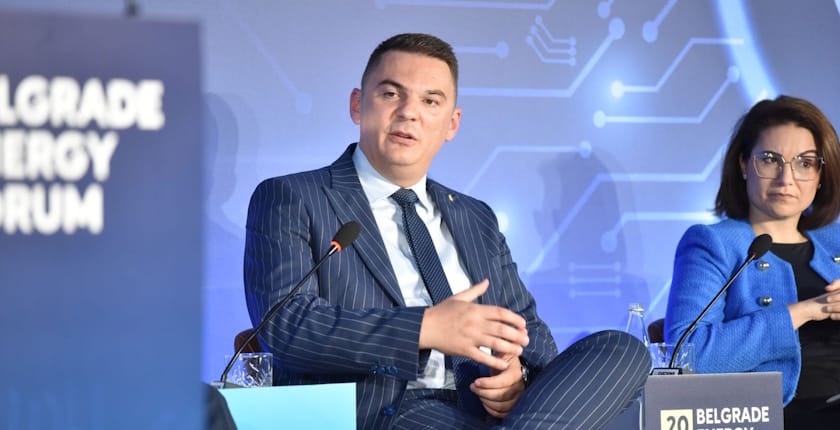
Montenegro has received applications for building solar power plants and wind farms with a total capacity of 5.5 GW, Admir Šahmanović, the Minister of Energy and Mining, said at Belgrade Energy Forum 2025.

Montenegrin Minister of Energy and Mining Admir Šahmanović said the country has made significant progress in shaping its regulatory framework.

Montenegro has passed new laws on energy and renewable energy sources, while a draft law on the exchange of electricity and natural gas has been prepared.

“We are currently drafting a national energy and climate plan, which will be finalized by the end of next month,” Šahmanović stressed.

Montenegro currently has about 1,000 MW of renewable energy capacity

He also recalled that the government is preparing renewable energy auctions in collaboration with the European Bank for Reconstruction and Development (EBRD). The minister expects these auctions will significantly boost investments in renewables.

According to Šahmanović, the country has made considerable efforts to improve the investment climate.

“As a result, we have received 45 applications for the construction of renewable power plants with a combined capacity of 5.5 GW. For comparison, the country’s current capacity is slightly over 1 GW, which demonstrates our success,” he explained.

A memorandum on market coupling with Italy would be signed very soon

He said that a memorandum on market coupling with Italy would be signed next month. “We will also discuss the installation of another subsea cable for electricity transmission between Montenegro and Italy,” Šahmanović noted.

Montenegro plans to couple its day-ahead electricity market with Italy, linking it to the single European market. It previously considered two options for its first market coupling: with Serbia and with Albania, Kosovo*, North Macedonia, and Greece.

The third Belgrade Energy Forum 2025 (BEF 2025), started today welcoming four hundred participants from more than 30 countries from the region, Europe and beyond. The two-day conference is organized by Balkan Green Energy News.

by in News

Bulgaria’s IBEX launches guarantees of origin market

Four participants registered last month at the Independent Bulgarian Energy Exchange’s guarantees of origin platform, creating a national market. Separately, IBEX is preparing to roll out a 15-minute market time unit in the Single Day-Ahead Coupling on June 11 with other European nominated electricity market operators.

The Independent Bulgarian Energy Exchange (IBEX) said it launched a market for guarantees of origin (GOs) of electricity with the Sustainable Energy Development Agency (SEDA or, in Bulgarian, AUER). It is part of the efforts to develop a liberalized energy market and promote renewable energy, it added.

IBEX is Bulgaria’s nominated electricity market operator or NEMO. The country’s legal framework envisages issuing GOs monthly, quarterly and semianually.

After the launch of registration on March 31, four companies joined last month: Aurubis Bulgaria, Armaco Energy, Energo-Pro Energy Services and KER Toki Power, the announcement reads.

No timeline for kickoff yet

IBEX, solely owned by the Bulgarian Stock Exchange (BSE), reiterated that its new platform provides for trading with clear rules, guaranteed payments and price transparency. Notably, there is no timeline for the kickoff.

The preparations for the rollout of a GO market lasted several years. The certificates are issued by renewable energy producers. Consumers buy them to prove their progress in decarbonization.

One GO covers 1 MWh of electricity production or consumption. When SEDA achieves integration with the European guarantees of origin system, the participants in the Bulgarian platform will be able to trade abroad as well. Neighboring Greece introduced GOs last June.

IBEX, founded in 2014, operates day-ahead and intraday markets and a mechanism for bilateral contracts.

Europe transitioning to 15-minute products in day-ahead electricity market

In other recent news, the Bulgarian NEMO co-signed a statement with its counterparts across Europe, affirming the commitment to transition to a 15-minute market time unit (MTU) within the Single Day-Ahead Coupling (SDAC) project on June 11.

The group includes Hellenic Energy Exchange – HEnEx (EnExGroup), Energy Exchange Austria (EXAA), Nord Pool, Croatian Power Exchange (CROPEX) and the Romanian Commodities Exchange (BRM).

by in News

Solar, nuclear lower Europe’s power prices by 30% in March

Electricity generation in solar and nuclear power plants, combined with higher temperatures, lowered the price of electricity in Europe in March by almost 30% on a monthly basis, according to Eurelectric’s data.

Photovoltaics broke the record in power generation in March for the third consecutive month, Eurelectric said, adding that they accounted for more than 10% of Europe’s electricity mix.

The boost in solar power, combined with improved nuclear generation and milder weather, decreased power prices to EUR 90 per MWh from EUR 126 per MWh, registered in February, and EUR 112 per MWh in January.

The organization attributed high prices in the previous two months to low wind generation, increased power demand and the highest gas prices in two years. Ongoing global geopolitical tensions and outages in Norway exerted upward pressure on the cost of gas while limited storage and flexibility sources forced a heavier reliance on gas to supply electricity.

65 GW of solar was added in 2024

Eurelectric said solar rescued Europe with sunnier days and the rise in capacity, with 65 GW added in 2024 alone. As a result, the share of renewables in the power mix was 15 percentage points higher in March compared to February, though one point lower than in March 2024.

Nuclear energy contributed to the decrease in prices with the rise of its share in power production from 24% in March 2024 to last month’s 26% after a few French nuclear reactors came back online, Eurelectric said.

Nevertheless, the average day-ahead electricity price in the first quarter of 2025 was 51% higher than in the first three months of last year. The surge was primarily driven by higher average gas prices, which grew by 33% in the same period, according to the data.

Ruby: Europe remains too vulnerable to fossil fuel price fluctuations

The organization’s Secretary General Kristian Ruby stressed that Europe remains too vulnerable to fossil fuel price fluctuations, especially during periods of high electricity demand. “To counter this, we must speed up the roll-out of demand side response and storage technologies and further incentivise the use of long-term power purchase agreements,” he noted.

Eurelectric sees solutions in capacity mechanisms and flexibility-supporting schemes. Flexibility is also crucial when it comes to balancing negative prices, which are occurring more frequently. As solar generation rose in March, negative prices made a comeback, particularly in Nordic and Western European countries, the organization of the European electricity industry pointed out.