by in News

Why CEE is one of most attractive regions for investment in new energy projects

Munir Hassan and Thomas Hamerl, partners in CMS’s world-leading energy practice, discussed the most significant developments in the renewable energy market for 2026 with Balkan Green Energy News.

There is great potential for early movers in the segments of battery storage and ancillary services, according to Munir Hassan, global head of the energy and climate change at CMS (London), and Thomas Hamerl, regional head of energy and climate change at CMS Vienna.

Interconnection and interoperability with the EU’s electricity market will enhance the region’s value for established producers and increase its attractiveness for new investors, they told Balkan Green Energy News.

Beyond grid availability and tariffs, potential investors in renewables and storage focus on the target country’s policy direction and the scalability of projects, Hassan and Hamerl explained.

Investors need advisors who are familiar with international contracts and can navigate local energy markets

Potential investors in renewables and storage do not just look for efficient support with time-sensitive grid availability and network tariffs. They appreciate legal advisors who are familiar with international contracts and can also navigate local energy markets. The current policy direction of the target country and the scalability of projects are more interesting than ever, Hassan and Hamerl asserted.

CMS’s regional footprint and its global network enable it to share expertise across jurisdictions, and its local teams contribute to regulatory initiatives. With over 70 offices worldwide, including 17 offices in CEE region, CMS supports renewable energy developers and investors. The global law firm follows policy developments that are shifting from saturated markets to the CEE region, with the aim of applying best practices and overcoming challenges and bottlenecks beforehand.

Speaking to Balkan Green Energy News, Hassan and Hamerl said companies should ride the investment wave and use opportunities as legal frameworks in Southeast Europe and the wider CEE region are advancing rapidly and opening new market segments.

At CMS’s traditional annual CEE Energy Conference (CEE Energy Conference 2025), held in London in October 2025, most investors were seriously considering to add energy storage to power plants and PPAs for industrial customers.

Data center projects are adding to demand growth in green electricity

Hassan pointed to digital infrastructure as the main driver of demand, even more in SEE than the rest of the CEE region, alongside the decommissioning of coal and gas-fired power plants.

Things are starting to move with data center projects in Slovenia, Croatia and Austria, for example, Hamerl stressed.

“Usually, data center developers are international and well-experienced, bringing technical and commercial know-how. These need not be only global hyperscalers such as Amazon, Google and Microsoft. Smaller data centre operators and telecom companies are strengthening their presence in CEE. They may all seek out the expertise and networks of local infrastructure developers,” he added.

CMS is involved in major projects throughout Southeast Europe

The changes are spurring the need for more resilience in the energy sphere and national sources. It is one of the factors behind the nuclear energy program in Poland, for shielding against geopolitical shocks, according to Hassan.

There are also nuclear power projects in Romania, including an advanced one for a small modular reactor (SMR) system, and Bulgaria, and CMS is involved in all of them. It has also contributed to deals for the giant Vifor wind power endeavor in Romania. Slovenia and Serbia are next.

Financing through debt could contribute to nuclear energy and interconnector projects

Hassan said there is a notable appetite for debt financing in CEE and suggested that the model could contribute to nuclear projects including the ones for SMRs.

“Another relevant development that we see is the development of electricity networks and even interconnectors. There’s a lot of private capital that’s looking to build electricity grids in Southeast Europe and Central and Eastern Europe. But the regimes there are designed for the existing system operators to develop these projects. The difficulty, like here in the UK and other parts of the world, is that they are unable to deliver the infrastructure quickly because they don’t have the resources and financial capability,” he asserted.

Western Europe is comfortable with the idea that private companies can own and run such assets, Hassan underscored and added that transmission upgrades in general could be financed the same way. But TSOs would typically take ownership of transmission system infrastructure including interconnectors.

EU funds would have better effect as loan guarantees

Among the investment appeal factors in CEE, Hassan highlighted the grants via the European Union’s Modernization Fund and Recovery and Resilience Facility (RRF).

“Those sorts of funds are very, very important. I think the governments need to find smart ways of effectively using that money to help create conditions in which you can get private international investment into the region, rather than simply as grant funding. If you give it as a way of, let’s say, underwriting debt, in case there’s a risk issue, that’s a better way, that kind of multiplier effect,” he stressed.

Knowhow for navigating legal frameworks in emerging market segments in CEE

The United Kingdom and other parts of Western Europe are experiencing growth of the markets for new system support services. Southeast Europe and Central and Eastern Europe may follow soon. For instance, Austria is about to introduce a capacity market. Serbia is rolling out an ancillary services market in January 2026, enabling a potential revenue stream for standalone battery energy storage systems (BESS).

“It’s not a mature market yet, but market entrants with the required experience and knowhow, will find a lot of possibilities in the region. If you want to be a first mover or an early mover, you must go there now,” said Hamerl. He added it is an opportunity for battery storage, to support the grid through the flexibility market or frequency restoration and new kinds of services, instead of just arbitrage.

It is much more expensive to expand the power grid than to use energy storage capacity available in the market

Regulatory frameworks are either in place or will very soon be in place, Hamerl noted.

“Batteries play an important role in supporting the grids and saving money because building new grids is always much more expensive than storage capacity in the market. I still see a long way to go for alternatives to batteries,” he said.

The fact is that it takes several years to build a pumped storage hydropower plant, while hydrogen and ammonia production and distribution infrastructure are not sufficiently developed yet.

Photovoltaics, BESS in sharply upward trajectory

Locations for photovoltaics in Southeast Europe are much better than in most parts of Europe, Hamerl underscored, adding that the coastal areas are particularly favorable for wind power.

For instance, experts predict the total operational solar and wind capacity in Montenegro to reach 400 MW by the end of this year. For Croatia, RES generation capacity is expected to increase from 4.7 GW in 2025 to almost 12 GW by 2040.

In Bulgaria, PV capacity jumped fivefold since 2019, to 5 GW, the law firm pointed out and emphasized the surge in both co-located and standalone BESS as well. Forecasts see the segment, currently at 600 MW, to hit 5 GW by the middle of 2026.

CMS Sofia has advised on more than 50% of all installed renewable energy capacities in Bulgaria. One of the clients, Renalfa IPP, has an investment program worth EUR 1.2 billion, involving 1.6 GW in electricity generation assets and 3.3 GWh of battery storage in Bulgaria, Romania, Hungary and North Macedonia.

CMS helping optimize regulations to suit governments as well as investors

There are obviously differences in every country of Central and Eastern Europe, but there are similarities drawing investors into the region, according to Hassan.

“They want to see the revenue risk is dealt with, the technical risks are dealt with, the political risk is kind of dealt with, et cetera. So our job as lawyers is to help people understand the frameworks, but also our local teams are helping to design some of these frameworks. To that extent, we can try and design them upfront in a way that achieves not only what the countries want, the governments want, but also what the international investors will be looking for,” he asserted.

The most important factors for investors are a clear direction of law making and scalability

In his view, the most important factors are a clear direction of lawmaking and regulation – strong policy backing, and scalability, in the sense that a company can do many more projects on the back of the first one.

Hamerl said that the waiting time for grid connection remains one of the most important elements, together with network charges. Investors seek stable grid fees or at least clarity about the pace and way of growth, he stressed.

“They are always asking us about the stability of the grid and the grid usage charges. However, in some markets there is a diversity of federal, provincial, and  local laws requiring different permits. Investors ask themselves in which province it is possible to obtain permits in time. Zoning and spatial planning is crucial too. For most of our clients, it’s nice to get subsidies, but those other issues are more important,” Hamerl asserted.

by in News

Why CEE is one of most attractive regions for investment in new energy projects

Munir Hassan and Thomas Hamerl, partners in CMS’s world-leading energy practice, discussed the most significant developments in the renewable energy market for 2026.

There is great potential for early movers in the segments of battery storage and ancillary services, according to Munir Hassan, global head of the energy and climate change at CMS (London), and Thomas Hamerl, regional head of energy and climate change at CMS Vienna.

Interconnection and interoperability with the EU’s electricity market will enhance the region’s value for established producers and increase its attractiveness for new investors, they told Balkan Green Energy News.

Beyond grid availability and tariffs, potential investors in renewables and storage focus on the target country’s policy direction and the scalability of projects, Hassan and Hamerl explained.

Investors need advisors who are familiar with international contracts and can navigate local energy markets

Potential investors in renewables and storage do not just look for efficient support with time-sensitive grid availability and network tariffs. They appreciate legal advisors who are familiar with international contracts and can also navigate local energy markets. The current policy direction of the target country and the scalability of projects are more interesting than ever, Hassan and Hamerl asserted.

CMS’s regional footprint and its global network enable it to share expertise across jurisdictions, and its local teams contribute to regulatory initiatives. With over 70 offices worldwide, including 17 offices in CEE region, CMS supports renewable energy developers and investors. The global law firm follows policy developments that are shifting from saturated markets to the CEE region, with the aim of applying best practices and overcoming challenges and bottlenecks beforehand.

Speaking to Balkan Green Energy News, Hassan and Hamerl said companies should ride the investment wave and use opportunities as legal frameworks in Southeast Europe and the wider CEE region are advancing rapidly and opening new market segments.

At CMS’s traditional annual CEE Energy Conference (CEE Energy Conference 2025), held in London in October 2025, most investors were seriously considering to add energy storage to power plants and PPAs for industrial customers.

Data center projects are adding to demand growth in green electricity

Hassan pointed to digital infrastructure as the main driver of demand, even more in SEE than the rest of the CEE region, alongside the decommissioning of coal and gas-fired power plants.

Things are starting to move with data center projects in Slovenia, Croatia and Austria, for example, Hamerl stressed.

“Usually, data center developers are international and well-experienced, bringing technical and commercial know-how. These need not be only global hyperscalers such as Amazon, Google and Microsoft. Smaller data centre operators and telecom companies are strengthening their presence in CEE. They may all seek out the expertise and networks of local infrastructure developers,” he added.

CMS is involved in major projects throughout Southeast Europe

The changes are spurring the need for more resilience in the energy sphere and national sources. It is one of the factors behind the nuclear energy program in Poland, for shielding against geopolitical shocks, according to Hassan.

There are also nuclear power projects in Romania, including an advanced one for a small modular reactor (SMR) system, and Bulgaria, and CMS is involved in all of them. It has also contributed to deals for the giant Vifor wind power endeavor in Romania. Slovenia and Serbia are next.

Financing through debt could contribute to nuclear energy and interconnector projects

Hassan said there is a notable appetite for debt financing in CEE and suggested that the model could contribute to nuclear projects including the ones for SMRs.

“Another relevant development that we see is the development of electricity networks and even interconnectors. There’s a lot of private capital that’s looking to build electricity grids in Southeast Europe and Central and Eastern Europe. But the regimes there are designed for the existing system operators to develop these projects. The difficulty, like here in the UK and other parts of the world, is that they are unable to deliver the infrastructure quickly because they don’t have the resources and financial capability,” he asserted.

Western Europe is comfortable with the idea that private companies can own and run such assets, Hassan underscored and added that transmission upgrades in general could be financed the same way. But TSOs would typically take ownership of transmission system infrastructure including interconnectors.

EU funds would have better effect as loan guarantees

Among the investment appeal factors in CEE, Hassan highlighted the grants via the European Union’s Modernization Fund and Recovery and Resilience Facility (RRF).

“Those sorts of funds are very, very important. I think the governments need to find smart ways of effectively using that money to help create conditions in which you can get private international investment into the region, rather than simply as grant funding. If you give it as a way of, let’s say, underwriting debt, in case there’s a risk issue, that’s a better way, that kind of multiplier effect,” he stressed.

Knowhow for navigating legal frameworks in emerging market segments in CEE

The United Kingdom and other parts of Western Europe are experiencing growth of the markets for new system support services. Southeast Europe and Central and Eastern Europe may follow soon. For instance, Austria is about to introduce a capacity market. Serbia is rolling out an ancillary services market in January 2026, enabling a potential revenue stream for standalone battery energy storage systems (BESS).

“It’s not a mature market yet, but market entrants with the required experience and knowhow, will find a lot of possibilities in the region. If you want to be a first mover or an early mover, you must go there now,” said Hamerl. He added it is an opportunity for battery storage, to support the grid through the flexibility market or frequency restoration and new kinds of services, instead of just arbitrage.

It is much more expensive to expand the power grid than to use energy storage capacity available in the market

Regulatory frameworks are either in place or will very soon be in place, Hamerl noted.

“Batteries play an important role in supporting the grids and saving money because building new grids is always much more expensive than storage capacity in the market. I still see a long way to go for alternatives to batteries,” he said.

The fact is that it takes several years to build a pumped storage hydropower plant, while hydrogen and ammonia production and distribution infrastructure are not sufficiently developed yet.

Photovoltaics, BESS in sharply upward trajectory

Locations for photovoltaics in Southeast Europe are much better than in most parts of Europe, Hamerl underscored, adding that the coastal areas are particularly favorable for wind power.

For instance, experts predict the total operational solar and wind capacity in Montenegro to reach 400 MW by the end of this year. For Croatia, RES generation capacity is expected to increase from 4.7 GW in 2025 to almost 12 GW by 2040.

In Bulgaria, PV capacity jumped fivefold since 2019, to 5 GW, the law firm pointed out and emphasized the surge in both co-located and standalone BESS as well. Forecasts see the segment, currently at 600 MW, to hit 5 GW by the middle of 2026.

CMS Sofia has advised on more than 50% of all installed renewable energy capacities in Bulgaria. One of the clients, Renalfa IPP, has an investment program worth EUR 1.2 billion, involving 1.6 GW in electricity generation assets and 3.3 GWh of battery storage in Bulgaria, Romania, Hungary and North Macedonia.

CMS helping optimize regulations to suit governments as well as investors

There are obviously differences in every country of Central and Eastern Europe, but there are similarities drawing investors into the region, according to Hassan.

“They want to see the revenue risk is dealt with, the technical risks are dealt with, the political risk is kind of dealt with, et cetera. So our job as lawyers is to help people understand the frameworks, but also our local teams are helping to design some of these frameworks. To that extent, we can try and design them upfront in a way that achieves not only what the countries want, the governments want, but also what the international investors will be looking for,” he asserted.

The most important factors for investors are a clear direction of law making and scalability

In his view, the most important factors are a clear direction of lawmaking and regulation – strong policy backing, and scalability, in the sense that a company can do many more projects on the back of the first one.

Hamerl said that the waiting time for grid connection remains one of the most important elements, together with network charges. Investors seek stable grid fees or at least clarity about the pace and way of growth, he stressed.

“They are always asking us about the stability of the grid and the grid usage charges. However, in some markets there is a diversity of federal, provincial, and  local laws requiring different permits. Investors ask themselves in which province it is possible to obtain permits in time. Zoning and spatial planning is crucial too. For most of our clients, it’s nice to get subsidies, but those other issues are more important,” Hamerl asserted.
by in News

Spajić: Montenegro wants to be country of green data centers

Montenegro plans to become a country of green data centers, according to Prime Minister Milojko Spajić.

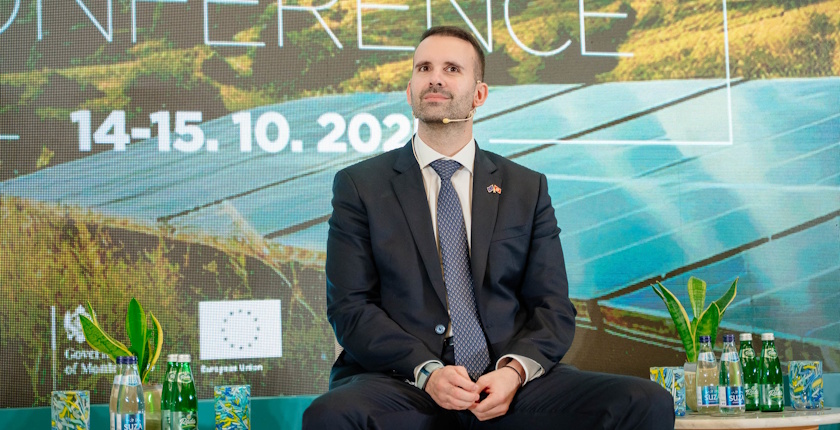
Milojko Spajić was one of the speakers at the keynote panel Accelerating the Western Balkans’ Green and Smart Growth, within the European Union – Montenegro Investment Conference in Luštica, near Tivat.

Earlier, European Commission President Ursula von der Leyen and the prime minister of Montenegro opened the two-day event, titled Smart Growth, Green Future: Accelerating Investment in Montenegro.

Spajić said energy is a cornerstone of the country’s strategy for connecting the region but also something in which Montenegro could be very competitive, helping the EU become even more competitive on the global stage.

Spajić: We can offer to Europe a possibility to get inexpensive electricity and stable supply

“We have dozens of amazing projects for hydro, wind, solar energy at very competitive rates. We can offer to Europe a possibility to get inexpensive electricity and stable supply. Baseload energy as well. For example, hydro is baseload energy,” he stated.

Photo: Bojan Gnjidić / Government of Montenegro

The prime minister recalled that his country is interconnected with Italy and that the project for the installation of the second line of the subsea cable is in the pipeline. But he also highlighted the significance of digital connections with Italy, where Milan is one of the biggest data center hubs in the EU, providing connections to Frankfurt and London.

Montenegro, in Spajić’s words, intends to be a part of the data highway. Data centers are basically the hardware for artificial intelligence, he explained and added that AI is going to be strong in big markets, not in small ones.

Partners from the US, UAE, and other countries, are interested in the development of the data centers

“But where we can actually be involved as a small country are data centers providing infrastructure for the EU’s AI to be strong and competitive,” Spajić underlined.

Therefore the country intends to focus on providing a very good environment for global data center operators, to come from all around the world. Spajić revealed that partners from the United States, United Arab Emirates, and other countries are interested in joining the opportunities for the development of the data centers.

“We want Montenegro to be the country of green data centers. We have water for hydropower. We have a lot of solar potential and a lot of wind. We are very fortunate to have such diversity,” Spajić said.

He invited investors to come to Montenegro: “Don’t waste your time, come as soon as possible.”

Participants at the panel included the Director of Enlargement Coordination, Strategy and Investments at the EU’s Directorate-General for Enlargement and Eastern Neighbourhood, Mathieu Bousquet, WizzAir CEO József Váradi, Akuo President Eric Scotto, and Charlotte Ruhe, Managing Director for Central and South-Eastern Europe in the European Bank for Reconstruction and Development (EBRD).

Of note, fourteen cooperation projects between Montenegrin and European companies have been initiated at the conference. Some of them involve investments in wind farms, solar parks, energy storage, and grids.

by in News

Policy changes in US will have marginal impact on global energy transition

Policy changes in the United States introduced by the administration of President Donald Trump will have only a marginal impact on the global energy transition, according to the latest Energy Transition Outlook, produced by DNV.

Norwegian consulting firm DNV pointed out in a report that energy use by artificial intelligence may seem alarming, but that it is projected to stay below booming sectors like electric vehicle (EV) charging and cooling of buildings.

“DNV’s annual Energy Transition Outlook has consistently forecast a shift from today’s 80/20 fossil/non-fossil primary energy mix to a 50/50 mix by 2050. That is still our prediction this year. Although some aspects of the transition are supercharged and progressing rapidly, other aspects have hit turbulence and are delayed. This leads to a marginally slower transition than our forecast last year,” CEO Remi Eriksen said.

According to the report, in the US, fossil fuel promotion and the reversal of clean energy support policies are slowing the nation’s transition.

However, China continues to set renewables buildout records with 390 GW of solar PV (56% share of new global capacity) and 86 GW of wind (60% share) expected to be installed this year. The country is also fueling the transition in the rest of the world with its cleantech exports.

In the meantime, Europe is seeking to balance climate action with competitiveness, the report reads.

The continent is having a slow success with harder-to-decarbonize sectors, but renewable energy buildout remains relatively strong.

In the rest of the world, most countries are embracing competitive Chinese technologies, with year-on-year growth in installations at around 25%, data showed.

Eriksen said cheap renewable electrons stored when necessary in ever-cheaper batteries are already an unstoppable force.

“We forecast that solar – both with and without storage – and wind will be 32% of the global power mix by 2030. We expect a resurgence in offshore wind by 2030, such that variable renewables will provide more than 50% of all electricity by 2040,” he stated.

Solar power is 10% of all power produced worldwide today, and DNV projected it will be 20% in 2029 and 40% in 2045. Renewables would reach 65% in the global electricity mix by 2040, the firm added.

AI’s energy demand would be lowered by efficiency effects

According to Eriksen, soaring power demand from AI data centers is placing additional strain on already congested grids, particularly in North America.

DNV ‘s analysis finds that AI’s energy demand growth is likely to become more linear over time, outpaced, for instance, by EV charging and cooling demand, even as the cognitive services of AI expand exponentially. The main reason is growing efficiency.

AI’s energy use is forecasted at only 3% of global electricity by 2040. Data center energy use will quintuple by 2040, equalling 5% of all global electricity. AI’s share would be 3%, with the remaining 2% for general purpose data centers.

The report highlighted large regional variations – AI is the biggest driver of electricity consumption growth in North America, compared to EV charging in Europe and EVs and cooling in China and India.

For the first time, this year’s analysis extends to 2060

The report noted that this year, the world reached the milestone of more than 50 million EVs on the road. Most of them, 60%, are in China, with Europe at 21%, and North America at 13%.

The point of inflection — EVs at 50% of global new passenger vehicle sales — will be reached in 2032, the report projected.

For the first time, this year’s analysis extends to 2060 to reflect the continued transformation of the energy system after 2050. The report recalled that it is now widely acknowledged that the world will not achieve net zero emissions by 2050, meaning warming would exceed 1.5 degrees Celsius.

A decarbonization of energy mix is unstoppable but too slow, setting up grave risks for future generations, Eriksen concluded.

by in News

US firm Aalo starts construction of its first extra-modular nuclear reactor

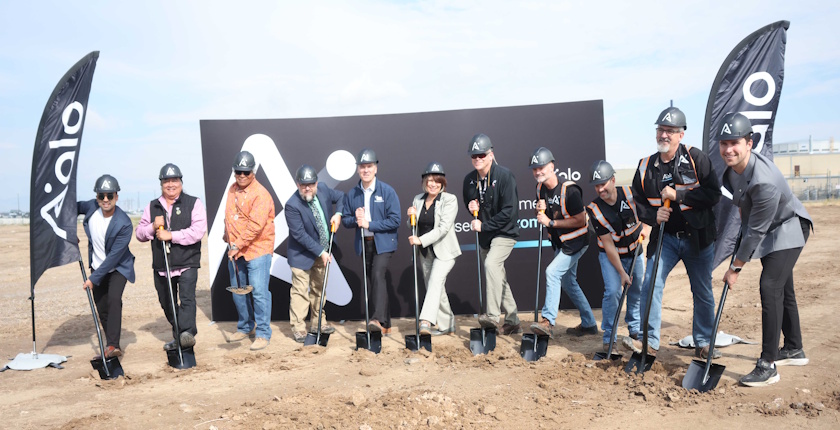
US-based nuclear power startup Aalo has begun construction on its first extra-modular reactor, a type of modular reactor, in Idaho. The company is among 11 developers of micro and small modular reactors selected by the US Department of Energy to participate in its Nuclear Reactor Pilot Program.

Aalo stated that its reactor will mark a significant milestone, becoming the first new sodium-cooled test reactor in the United States to go critical in over forty years—an achievement that builds on its selection for the Department of Energy’s pilot program.

The company noted that the lessons learned from manufacturing, shipping, installing, and licensing Aalo‑X will influence whether advanced reactors like the Aalo Pods can truly be produced at scale.

DOE’s aims to reach criticality for at least three advanced nuclear reactor concepts by July 4, 2026

“Within months, we will have assembled the first XMR at our Idaho site; by July 4, 2026, we will reach criticality, and by July 2027, we will power a collocated datacenter, with next-generation AI chips. Once operational, Aalo‑X will be a tangible proof‑of‑concept that nuclear energy can power the AI revolution rapidly and cost‑effectively,” the firm said in a press release.

Photo: Aalo

DOE’s Nuclear Reactor Pilot Program aims to reach criticality for at least three advanced nuclear reactor concepts located outside of the national laboratories by July 4, 2026.

Groundbreaking in the desert beside Idaho National Laboratory (INL) ensures that Aalo‑X will meet that mandate, the firm said.

According to Aalo, traditional categories of microreactors (<10 MWe) and small modular reactors (SMRs, up to ~300 MWe) leave a gap between tiny reactors that can be delivered to remote sites and larger units that supply cities.

Introducing the first XMR

“We created the extra‑modular reactor (XMR) to fill that gap. It’s a category of modular reactors that is a crossover between microreactors and SMRs. Our product is an Aalo Pod that contains five 10 MWe Aalo‑1 reactors arranged around a single turbine; the resulting 50 MWe plant is purpose-built for power‑hungry data centers,” according to the press release.

The concept of SMR has been gaining traction worldwide for quite a while, as part of a nuclear energy renaissance. However, overall progress in the sector has been modest.

The world’s first SMR-based facility, Russia’s floating nuclear power plant Akademik Lomonosov, commissioned in Chukotka in 2020, remains the only one in commercial operation.

by in News

Smart meters, wildfires, rising demand push Greek distribution grid investment plan to EUR 4.8 billion

In recent years, Greece has been experiencing extreme weather events, such as wildfires and floods, which have threatened its electricity distribution network.

Due to this new reality, caused by climate change, the Hellenic Electricity Distribution Operator (HEDNO or DEDDIE) has increased its five-year development plan for 2026-2030 to EUR 4.79 billion, around 60% up compared to EUR 3 billion allocated for 2024-2028.

The plan for the 2022-2026 period was EUR 2.2 billion.

The goal is for HEDNO to reinforce the grid against these threats and ensure its pylons do not cause wildfires as easily. Moreover, Greece has been lagging behind the European Union when it comes to smart meter penetration, and it must make fast progress in the coming years.

HEDNO has included a total of 204 projects in the new five-year plan

There is also an increased need for new user connections as a result of rising demand and the ever-present need for connecting new renewable energy plants.

To achieve these goals, HEDNO has included a total of 204 projects in the new five-year plan. Smart meters will cost EUR 1.4 billion, compared to EUR 784 million in the previous plan, so as to address the problem of power theft, which has increased in recent years, and to enable dynamic pricing in the retail market.

More specifically, EUR 195 million will be invested in 2026, followed by EUR 260-270 million in the following three years and EUR 357 million in 2030.

New user connections will cost EUR 800 million

The network reinforcement will cost EUR 991 million (EUR 608 million previously), while EUR 650 million will be spent on replacing existing lines (up from EUR 619 million). This includes projects such as underground power lines and underwater connections, as well as a focus on the protection of forests.

New user connections will cost EUR 800 million to cover the projected demand from industry, ports, data centers, and other consumers. HEDNO’s plan also includes EUR 223 million for the grid control and management.

The operator said that contracting and equipment costs have risen in recent years, affecting the size of the new five-year plan.

by in News

Google secures 50 MW of nuclear power for data centers

Google has secured a new source of clean energy for its data centers in the US states of Tennessee and Alabama through collaboration with nuclear technology company Kairos Power and public power utility Tennessee Valley Authority (TVA). The deal involves a 50 MW advanced nuclear reactor to feed TVA’s grid, which supplies the tech giant’s data centers.

Kairos Power’s advanced nuclear facility Hermes 2, which is set to go online in 2030, will supply electricity to the grid under a power purchase agreement (PPA) with TVA. It is the first-ever offtake agreement in the United States for a generation IV reactor.

Hermes 2, located in Oak Ridge, is the first facility under Kairos Power’s broader deal with Google to enable 500 MW of new, advanced nuclear capacity to come online by 2035, aimed at supporting Google’s growing energy needs. The long-term agreement, signed in October 2024, involves the deployment of multiple small modular reactors (SMRs), Google recalled.

Google’s long-term deal with Kairos involves deploying 500 MW of nuclear capacity by 2035

Amanda Peterson Corio, Google’s Global Head of Data Center Energy, said the collaboration would speed up the deployment of innovative nuclear technologies and help support the needs of the growing digital economy while also bringing firm carbon-free energy to the electricity system.

As part of efforts to meet its growing energy needs, Google recently signed the world’s largest corporate PPA for hydropower. The agreement, signed with global investment firm Brookfield, involves developing 3 GW of hydropower capacity in the United States.

Google has signed similar deals for hydropower, geothermal, and fusion energy

Google has also signed similar agreements for next-generation geothermal energy as well as for fusion energy. The company recently revealed plans to invest over USD 25 billion in data center and AI infrastructure in the next two years.

Rapid AI development and digitalization are making power supply crucial for tech companies. Goldman Sachs Research forecasts that global power demand from data centers will increase by 165% by 2030 from the 2023 level.

by in News

EU preparing roadmap on digitalization, AI in energy

The European Commission has launched a public consultation to help shape its upcoming strategic roadmap for digitalization and artificial intelligence (AI) in the energy sector. The roadmap aims to support the rollout of digital solutions, including AI, in areas important for decarbonization.

The areas where the application of digital solutions and AI should be accelerated include electricity grid optimization, energy efficiency in buildings and industry, and demand-side flexibility, according to a press release from the commission.

The consultation should also address the increasingly heavy energy consumption of data centers and look at how they can be more sustainably integrated into the energy system.

The consultation should address the rising energy demand of data centers

Another area of interest is the need to implement safeguards to mitigate potential challenges linked to the large-scale deployment of AI solutions in the energy sector, according to the press release.

The initiative, part of the European Union’s Affordable Energy Action Plan, also aims to facilitate access to energy data via the Common Energy Data Space and unlock innovative services such as demand-side flexibility and bidirectional charging of electric vehicles, according to a LinkedIn post by former Smart Grids Team Leader at the European Commission Manuel Sánchez.

All individuals and organizations are welcome to contribute to the consultation, which is open until November 5. The adoption of the roadmap is planned for the first quarter of 2026.

The roadmap is expected to be adopted in Q1 2026

The target audience for the consultation and the accompanying call for evidence includes stakeholders from digital and energy value chains, such as grid operators, energy intensive industries, data center operators, building operators, car manufacturers, providers of e-mobility solutions, energy communities, aggregators, consumers, researchers, IT suppliers, digital solutions providers, cloud service providers, and appliance manufacturers.

by in News

Greek coal region of Megalopolis opens new chapter after lignite

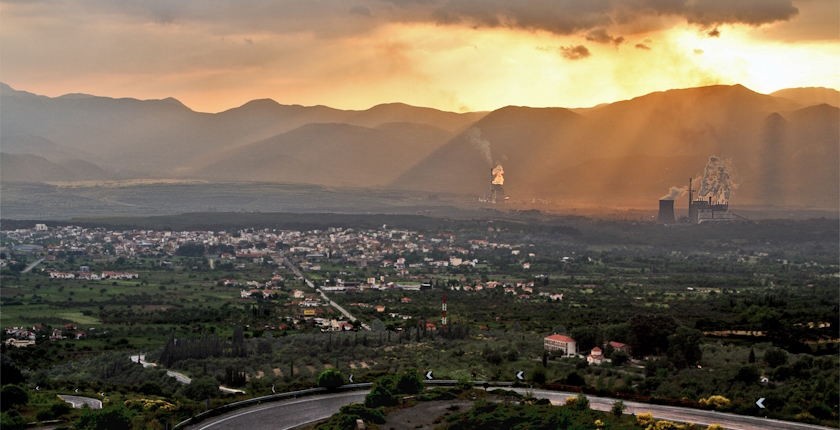
Last year, for the first time in decades, no smoke rose out of coal plants in the Peloponnese peninsula. The last two units had 500 MW together. Megalopolis is one of the two coal regions in Greece, along with Western Macedonia in the country’s north.

According to Public Power Corporation (PPC or DEI) the units Megalopolis-3 and Megalopolis-4 have now been permanently retired. Under the government-controlled utility’s plan to phase out coal completely next year, all such power plants stopped operating by now, with the exception of Ptolemaida 5, of 660 MW, which entered into operation last year. To maintain the security of supply, two units are kept in reserve, also in Western Macedonia in northern Greece.

PPC has produced a study for the reconstruction of the Megalopolis thermal power station, intending to accommodate other activities. Similar works are already underway in the local lignite mine.

New energy investments underway

The group’s investment plan involves various renewable energy and storage projects in Megalopolis to support the area’s energy transition. It is building two photovoltaic farms of 125 MW each, as part of a 490 MW cluster in the area.

The plan includes a 181 MW pumped storage hydropower station in the former lignite mine.

Based on the government’s Just Transition Development Program, Megalopolis will also host a battery factory, by Enercells, as well as two data centers, by Eunice and Kiefer, of 5 MW each. The investments have been approved by the Ministry of Economy and Finance, to seek funding from the European Union’s Just Transition Fund (JTF).

PPC expressed the belief that data centers are important for coal regions. Earlier this year, the group’s CEO George Stassis said they are ideal for such investments as the land and grid connections are already available. PPC is planning a 300 MW data center in Western Macedonia, but it hasn’t announced anything similar for Megalopolis yet.

by in News

Satellite dishes get new life, hosting solar panels for data center

A Swiss telecom service provider converted unused satellite dishes into solar dishes, powering its data center’s rising energy needs. Smart energy tech firm SolarEdge provided its DC-optimized inverter solution, overcoming the challenge of shading.

CKW, a Swiss provider of integrated energy and building technology solutions, has transformed disused satellite dishes located on the premises of telecom service provider Leuk TDC. The project was developed in collaboration with smart energy technology company SolarEdge, highlighting the potential of repurposing infrastructure for solar.

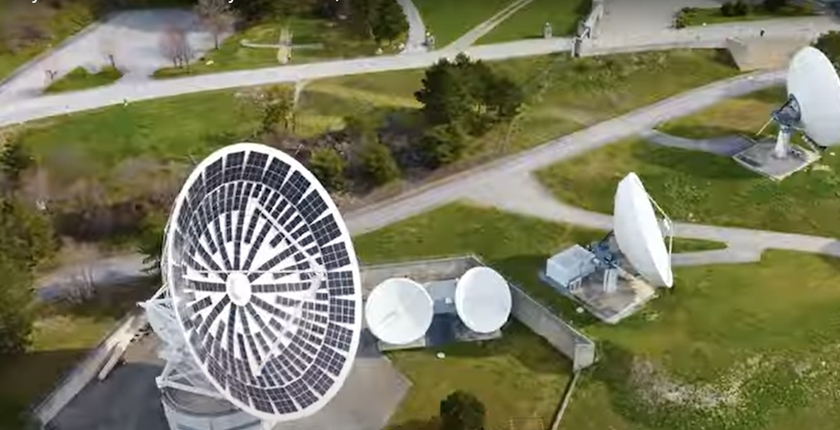
Instead of disposing of the parabolic antennas, they now host photovoltaic systems. Axpo’s subsidiary CKW fitted two satellite dishes in Leuk, Switzerland, with 307 solar panels each.

The new design for the complex, constructed in 1972, enables meeting the energy requirements of Leuk TDC’s power-hungry data centre. Each dish generates an estimated 110 MWh of clean energy per year. The telecommunications firm has also installed a rooftop solar system on the main building of the computing and data centre, for a further 555 MWh.

The data centre is powered by hydroelectric plants as well, so its electricity demand is covered with 100% renewable energy.

[wpcc-iframe title=”Case study: Satellite Dish to PV System – Leuk, Switzerland” width=”500″ height=”281″ src=”https://www.youtube.com/embed/dR2ETrx3aJ0?feature=oembed” frameborder=”0″ allow=”accelerometer; autoplay; clipboard-write; encrypted-media; gyroscope; picture-in-picture; web-share” referrerpolicy=”strict-origin-when-cross-origin” allowfullscreen=””]

SolarEdge systems maximizing output of each pair of PV panels in satellite dishes

Given the complex orientation and inclination of the solar panels on the satellite dishes, shadows threatened to reduce the efficiency of the solar system. With traditional string solar inverters, they reduce the overall performance of the solar array to match the weakest-performing panel on the string, meaning one shaded panel could reduce energy yield considerably.

In a string structure, a photovoltaic unit in a satellite dish wouldn’t be cost-effective

SolarEdge’s DC-optimized inverter solution was used with Power Optimizers, attached to the underside of every pair of solar panels. It enables the solar system to mitigate the impact of module mismatch on the satellite dishes. Inverters turn the direct current (DC) from PV panels into alternating current (AC).

“Having design flexibility with a solar installation is a huge benefit for installers. In complex cases such as these, with uneven surfaces, without the use of power optimizers we simply would not have been able to achieve anywhere close to the level of energy being produced today. I recommend that others planning similar solar installations allocate sufficient time for planning and collaborate with trusted personnel to overcome any technical challenges,” said CKW’s Deputy Head of Solar Technology for Central Switzerland Manuel Jossi.

Making use of existing ability to track sun’s movement

The combination of PV and hydropower provides Leuk TDC with more financial stability by reducing its dependency on variable grid electricity costs. “The satellite dishes were becoming obsolete, so we always knew we wanted to make use of them in some way or another,” the company’s Chief Executive Officer John Harris explained.

One other advantage is that the parabolic antennas follow the sun’s path throughout the day, maximizing the solar power output.

  • 1
  • 2