by in News

Federation of BiH launches grants program for prosumers

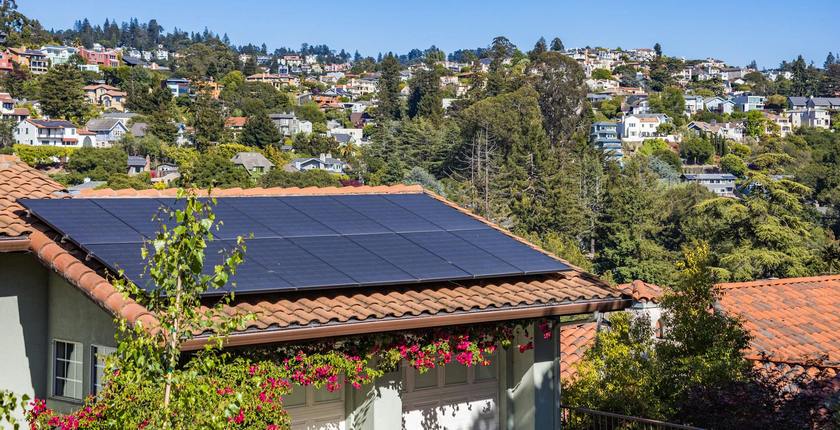
The Federation of BiH, one of the two entities constituting Bosnia and Herzegovina, has launched a grants program to co-finance the installation of rooftop solar power plants, expected to cover around 500 households a year and lead to an increase of 4.2 GWh in renewable electricity production.

Operator for Renewable Energy Sources and Efficient Cogeneration – Operator za OIEiEK estimates that the average installed capacity of the solar power plants will be 6 kW, and that the grants will help reduce greenhouse gas emissions by 3,800 tons a year.

The program will be funded from renewable energy surcharges

The program will be funded from renewable energy surcharges paid through electricity bills by all consumers in FBiH. Grants will be approved for two categories of applicants. The first one is vulnerable households whose annual consumption exceeds 3,500 kWh. The second covers those who consume more than 5,500 kWh a year and whose connection power is equal to or less than the requested installed capacity of the solar installation, according to the decision of the Operator za OIEiEK.

The maximum grant amount per applicant is BAM 7,000 (EUR 3,580), or up to 60% of the investment cost for users in the second category.

Damir Miljević: People in extreme energy poverty will get solar power plants for free

Although the budget and the anticipated scope of the program are modest, one positive aspect is that part of it is intended to fully cover the cost of PV installations for people in extreme energy poverty. They will receive a rooftop system free of charge, eliminating, partially but permanently, some of the concerns about financing their energy needs, according to Damir Miljević, a member of the Board of the Center for Sustainable Energy Transition (RESET), a BiH think tank.

Prosumers were introduced in the FBiH legislation two years ago, with the passage of a set of reform energy bills, including the Law on the Use of Renewable Energy Sources and Efficient Cogeneration.

At the national level in Bosnia and Herzegovina, prosumer regulations have not been adopted yet. According to some estimates, the country could cover half of its electricity consumption by installing solar panels on about a million roofs.
by in News

Clock is ticking for introducing carbon tax in Western Balkans, many ambiguities still remain

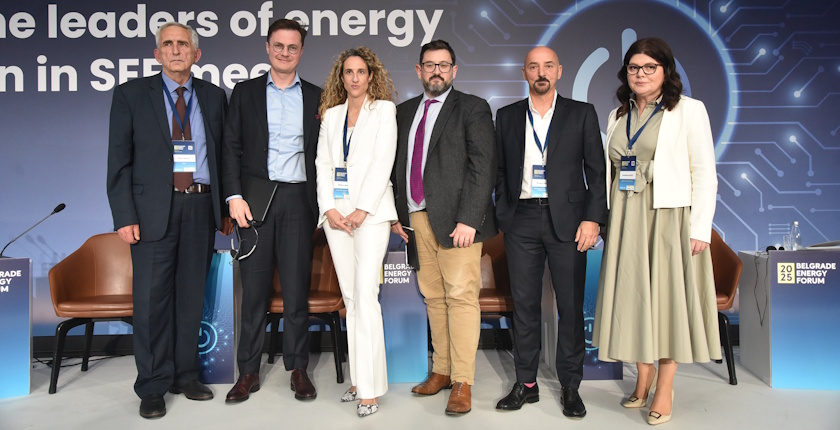
From January 1st, 2026, Carbon Border Adjustment Mechanism (CBAM) will be effective in the Western Balkans. While the countries are still deciding on the carbon pricing model, the energy intensive industry is advocating for introducing taxation to protect the domestic market from the flood of goods that will not be competitive on the EU market. Even though the Governments might not have been proactive enough in the previous years, the participants of the CBAM panel on BEF 2025 believe there is still time for the regional actors to come up with more proactive approach towards the EU.

Energy Community Contracting Parties are approaching critical choices on carbon pricing that will shape the pathway towards climate neutrality, electricity market integration and sustainable economic development. From January 1, 2026, producers of aluminum, fertilizers, cement, steel, and hydrogen, as well as electricity exporters, will be required to pay the tax on CO2 emissions released during the production of the goods they export to the EU.

At the Ministerial Council in December 2024, four carbon pricing models were presented to the Contracting parties: regional emissions trading system (ETS), national carbon taxes, fixed-price Emissions Trading System (ETS), and full integration with the EU ETS. Upon the request of the Contracting parties, the Energy Community Secretariat provided an impact assessment for all four scenarios. The scenarios differ in structure and scope, but all support a common goal: progressive alignment with the EU ETS and the implementation of the polluter-pays principle.

The Ministerial Council is expected to meet in July to reflect on these scenarios and decide on the preferred regional pathway. This decision will shape the revision of the Decarbonisation Roadmap and guide the implementation of carbon pricing reform up to 2030 and beyond.

Carbon pricing is also central to the region’s electricity market future. The Electricity Integration Package, adopted in 2022, outlines the path to full market coupling between the Energy Community and the EU. To avoid distortions and ensure a level playing field, timely carbon pricing implementation is essential. “The projections shows that if the region would join EU ETS after 2030, the carbon price should reach or even exceed 100 euros per ton of CO2. This would have serious consequences for energy prices, competitiveness and industrial exports. Also, delaying actions could prove to be costly. That’s why contracting parties are expecting to implement domestic ETS for electricity with the price equivalent to EU ETS”, Milica Brkić Vukovljak, from Energy Agency of the Republic of Serbia, explained.

Milica Brkic Vukovljak (photo: Balkan Green Energy News)

The expectations around the CBAM introduction in the region were the main topic of discussion on the BEF 2025 panel Addressing carbon pricing in the Western Balkans – Turning decarbonization challenges into opportunities through collaboration, innovation and competitiveness, moderated by Brkić Vukovljak.

The key message from the panel is that regional governments need to take a more active role, especially towards the European Union, and numerous arguments were put forward during the discussion in that direction.

As for Serbia, it is worth noting that it is the only Contracting party of the Energy Community that had transposed the Electricity Integration Package, through which transit of importance for traders takes place. Given that the market coupling is scheduled for the beginning of 2027, it would be important to try to get the European Commission to postpone the deadline from 2026 to 2027.

Introduction of CBAM should not interfere with market integration

While admitting that „it’s never a good moment politically to decide on carbon pricing“, Adam Cwetsch, Head of the European Green Deal in the Energy Community Secretariat, said he believed that the current momentum in the region, together with cumulated experiences, could allow making such a decision at this time.

Adam Cwetsch (photo: Balkan Green Energy News)

He recalled that the decision on carbon pricing was partially left open with the 2021 Decarbonization Roadmap. At the same time, the Green Agenda for Western Balkans is referring to alignment with the EU ETS, as an objective that countries should aim.

„The role of Secretariat is to facilitate making those decisions, fully informed. It entails certain risks, but it is also helping the countries in their journey to join the EU eventually. Another important consideration is setting standards for monitoring emissions, which the countries are obliged to establish and make as of 2026. This is necessary for any credible carbon pricing system, regardless of the chosen model, as they all require credible data and standards“, Cwetsch said.

He insisted that the market integration and market coupling should not be disturbed with the introduction of CBAM, making it a priority to synchronize the situation within the region.

Any model to be decided has to have, as an end point, alignment with the EU ETS

“The least desirable solution would be that there is a country that progresses faster than others and is forced to implement an internal Energy Community CBAM”, Cwetsch said, advocating for a coordinated approach towards setting up the carbon emissions price.

He also noted that any model to be decided must have, as an end point, alignment with the EU ETS. „That should be taken into account when designing the pathway with selected option“, he added.

As things now stand from January 2026 CBAM will be effective, while the market coupling, that allows for exemptions, will not be yet in place. „It is important not to end up with disintegrating the market“, Cwetsch noted.

On the other hand, he believes there is a space for more proactive policy from the Western Balkans actors. „The region should reach out to the EU with more proactive climate policies, which would make clear how the region could contribute to the 2030 or 2040 targets for climate neutrality that EU is striving“, he concluded.

Without carbon pricing mechanisms, the regional markets will be flooded with imports

Branko Zečević (photo: Balkan Green Energy News)

The representatives of energy intensive industry are concerned that past discussions about carbon pricing didn’t pay enough attention to the interests of the companies that are going to be directly affected by imposing tariffs on exports to the EU.

Branko Zečević, president of the Metalfer Group and one of the founders of the Association of Serbian Energy Intensive Industry, said that the introduction of CBAM from the beginning of next year will certainly affect Serbian exports, even though many companies have been preparing for this moment and investing in decarbonization. „Some companies are further down that road, some are at the beginning, and the effects can’t be quantified easily right now“, he argued.

Once you have saved the industry, you have somebody to tax. Otherways, there will be nothing to talk about

However, Zečević insisted that much bigger threat for industry in Serbia and the region, is the expected flood of goods that will not be able to enter EU market anymore and will try to find third markets.

„Markets in the region are pretty opened for that sort of import. An imperative is therefore to have our own carbon pricing system, however you may call it. We must protect our market from these consequences, otherways we will not have any industry to protect in the future“, he insisted.

In his opinion, the first step should be to copy-paste what the EU is doing, to protect the industry, and after that we can talk about the models of carbon pricing. „Once you have saved the industry, you have somebody to tax. Otherways, there will be nothing to talk about“, he warned.

Asked about the expectations of the industry from the Government, he said that financial assistance does not seem a realistic option in the Western Balkans, but there are regulatory measures that could help the companies.

„Industry is more complex than coupling the electricity market, as every industry is different. The companies in the EU received billions of euros in grants over the last 15 years, while the companies in the region were left on their own, each individual company, to make its own adjustments. What the governments in the region can do is to put in place regulatory rules to help and protect local industry and then as a next stage to see if it can implement that regionally“, he concluded.

CBAM ambiguities rising concerns for energy traders

Mark Copley (photo: Balkan Green Energy News)

The ambiguities that follow the introduction of the emissions trading mechanism in the region are more likely to deter than to attract energy traders. Mark Copley, CEO of Energy Traders Europe, association representing 170 energy traders, some of them being active in the region, noted that there is confusion and concern regarding the implementation of CBAM in Western Balkans.

“Lots of questions have been raised: how is that going to work, how the price of CO2 is going to be calculated, what does this means for market integration, how the traders will actually be able to transit power through this region etc”, he said.

Energy traders are pretty good with price risks and volume risks, what we fear is political risk and regulatory risk

While noting that traders generally think that carbon pricing is a good idea, he warned that a good idea in principle could have significant unintended consequences in practice. Energy traders are pretty good with price risks and volume risks, what we fear is political risk and regulatory risk. „I’d like to think that this moment is an opportunity to sit down with all the parties involved to try to sort out the rules”, Copley said.

Copley insisted that he doesn’t have a specific view on what form of pricing is right from the region, but reminded of the experience when Great Britain created its own ETS, which proved to be more volatile, risky and difficult to operate.

„The bigger, more stable, more integrated market – the better. When you have ETS as a large and liquid system, it is fairly easy to trade and manage risks. However, it gets more difficult where you don’t know what the policies are in the short term or in the long term. While I understand the desire that the model should reflect the specifics of the market, be careful in small markets with not much liquidity, because it is hard to design good systems for them”, Copley noted.

Carbon pricing models should reflect the interests of each country in the region

Damir Miljević (photo: Balkan Green Energy News)

The regional non-governmental organizations also have been raising their voice over the topic of CBAM in previous years. One of the warnings of possible negative economic and social impacts was the analysis Chaotic and fake decarbonization of power sectors in the Western Balkansin 2023.

The problem is that the introduction of CBAM in often seen as a kind of natural disaster, something inevitable that is about to happen”, said Damir Miljević, member of the Board of Center for Sustainable Energy Transition, RESET, a think-tank that published the report mentioned.

In his opinion, Western Balkan countries did not participate actively in the process with lobbying and negotiating with the EU. „The policy makers sit in Brussels, while the Energy Community Secretariat is the directorate for the implementation of the international agreement. I don’t recall that some delegation from the Western Balkans went to talk to the EU about exemptions, even though we had at least one strong argument. Stabilization and Association Agreement with the EU states that neither contracting party will introduce additional taxes, or levies on the other, which means that even if they are introduced, we would have to negotiate about it“, Miljević explained.

The advantage should be given to the model that is fastest and simplest to implement, which is direct taxation

Another argument for negotiations is even stronger – the countries that are candidates for EU accession should not have the same treatment as some very distant states on other continents, he argued. Miljević also added that the region should focus on transferring the acquis from the EU, which they are obliged to, not the policies, where the situation is completely different.

„In the present situation, the only viable solution is to introduce some form of taxation of CO2 for the industry“, he said. In his opinion, this means the advantage should be given to the model that is fastest and simplest to implement, which is direct taxation, to eliminate the influence of CBAM on the export of industrial products from the region to the EU.

„It would be difficult to consider regional schemes, due to huge differences within the region. We already lost too much time on it. Each country should do it individually considering its own interest, not the interest of the energy sector, but the interest of the citizens and the economy and the consequences for them. This way, we will get some initial, however small assets, to start solving the core issue. We should also remember that the introduction of levies on CO2 is essential for the creation of any fund for coal regions in transition”, Miljević concluded.

by in News

Significant step for citizen energy in BiH – Republic of Srpska enables establishment of first renewable energy communities in region

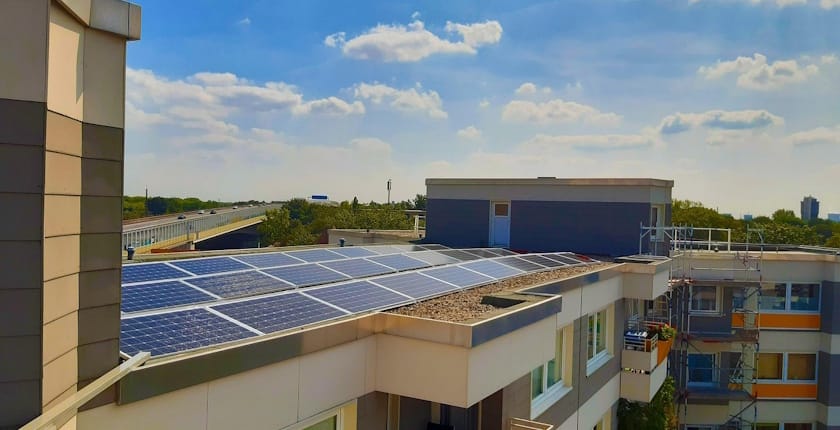
The recent adoption of the rulebook on renewable energy communities in the Republic of Srpska is a big step in enabling citizens, local authorities, and businesspeople in Bosnia and Herzegovina to join forces and produce electricity for their own needs. It was a key step in introducing citizen energy. The concept is a great opportunity for the Balkans, because it can provide many benefits like lowering bills for consumers, and a sustainable energy transition, according to Damir Miljević, a member of the Regional Center for Sustainable Energy Transition (RESET) from BiH.

The new rulebook on renewable energy communities in the Republic of Srpska, one of the two entities making up Bosnia and Herzegovina, defines the activities of renewable energy communities (REC).

Energy transition consultant Damir Miljević explained to Balkan Green Energy News that REC refers to the production of electricity from renewables, while citizen energy communities (CEC) include all types of energy. The rulebook adopted by the Republic of Srpska, in his words, is the first in the region. It is focused on enabling the production of electricity for self-consumption (prosumers) primarily from renewable energy sources such as solar, wind, and hydro energy.

Energy communities are an opportunity for citizens and businesspeople lacking suitable roofs for photovoltaics

He says the rulebook finally created the conditions at the local level – where the energy transition is supposed to be conducted in the first place – for citizens, local authorities, and businesspeople to join forces and produce electricity by installing a facility together. They can use some of the produced electricity for their own needs and inject the rest into the grid.

Citizens and small entrepreneurs who don’t have suitable roofs for solar power plants and municipal authorities with many roofs at their disposal as well as their own land can jointly finance and use such facilities. They will benefit both on the individual and collective level, Miljević pointed out. Without the communities framework, it wouldn’t be possible, in his opinion.

“In addition, conditions are created through RES communities to cede a part of the energy that the community’s facility generates, if the members of the community agree, to vulnerable categories of the population, contributing to the fight against energy poverty that way,” said Miljević, who is among the speakers at the upcoming Belgrade Energy Forum 2025 (BEF 2025).

Miljević: Elektroprivreda Republike Srpske needs to do its part

The rulebook’s entry into force enabled citizens, local firms and local communities to establish renewable energy communities, Miljević said and added that the only serious remaining obstacle is the refusal of government-owned power utility Elektroprivreda Republike Srpske (ERS) to sign new supply contracts.

Prosumers in the entity can’t fully exercise their rights, despite an order from the Regulatory Commission for Energy of the Republic of Srpska, as they haven’t yet received the new supply contracts from ERS, he pointed out.

Citizen energy is a great opportunity for Balkan states

Damir Miljević (photo: Balkan Green Energy News)

Miljević stressed that rulebooks are among the steps in introducing citizen energy. Miljević noted that the other parts of BiH haven’t established regulatory frameworks. The Brčko District has no bylaws, while the Federation of BiH has adopted the rules for renewable energy communities, but hasn’t simplified its rules for connecting prosumers and the communities to the grid.

Production onsite for consumption should become priority in energy policies and for decarbonization efforts in the Western Balkans

In Miljević’s opinion, the resistance is enormous and partly caused by the lack of recognition of the importance and role of citizen energy in countries such as the Balkans.

In contrast to developed countries – for instance, household consumption in the European Union has a 25% share in total final electricity consumption – in BiH and Serbia it is 42%, and in Montenegro it amounts to around 50%, he noted.

It means the concept of producing for consumption onsite should be a priority in energy policy and for decarbonization efforts in the Western Balkans, Miljević stressed. It implies putting solar panels on roofs on a significant scale, which is the essence of citizen energy, he added.

Citizen energy isn’t a priority in domestic and international policies implemented in the region

In addition to reducing electricity bills for customers, the concept contributes to reducing distribution and transmission losses and required investments in new grid capacities and new large power plants, and improves the security of supply and energy independence of a country, according to Miljević.

Citizen energy, in his words, is the only solution for a safe and sustainable energy transition and decarbonization of domestic power consumption, but unfortunately it isn’t a priority in domestic and international policies implemented in the region.

The lobbying effect of investors in the market shouldn’t be underestimated either, nor the fear and resistance within the politics and state-owned power utilities to the decentralization, democratization, and demonopolization of power generation that citizen energy brings, Miljević concluded.