by in News

Slovenia’s TSO ELES joins European Network for Cyber Security

Slovenia’s transmission system operator ELES has joined the European Network for Cyber Security, reinforcing collaborative efforts to protect Europe’s electricity grid from evolving cyber threats.

The partnership will give ELES access to the European Network for Cyber Security’s (ENCS) collaborative threat intelligence, specialist training and technical expertise – strengthening its ability to detect, prevent and respond to cyber incidents targeting high-voltage networks across Slovenia and beyond, ENCS said.

The move comes amid rising pressure on Europe’s grid operators. According to the European Union Agency for Cybersecurity’s ENISA Threat Landscape 2025, operational technology – the backbone of electricity networks – faces an increasing range of cyber threats, with incidents growing in frequency and sophistication.

As nation-state activity intensifies and consumer-connected devices expand the attack surface, coordinated action to protect critical infrastructure has never been more essential, the network underlined.

Nijk: Europe’s power systems are only as strong as their weakest link

Of note, Slovenia started the development in March of a robust cybersecurity framework for the electricity sector, based on an AI system.

“Europe’s power systems are only as strong as their weakest link,” ENCS Managing Director Anjos Nijk stressed.

ELES’s new membership strengthens joint defences and brings valuable regional expertise to the table, he explained. As Slovenia’s grid underpins stability across Central Europe, its participation will help drive the shared strategies and capabilities needed to counter evolving cyber threats, Nijk added.

Rolih: Grid cybersecurity is a team effort

Gorazd Rolih, SOC Manager at ELES, recalled that grid cybersecurity is a team effort.

“Joining ENCS allows us to both contribute to and benefit from Europe-wide collaboration, sharing intelligence, best practices and operational insights that make every member stronger,” he said.

The European Network for Cyber Security is a non-profit membership organisation that brings together critical infrastructure stakeholders and security experts to deploy secure European critical energy grids and infrastructure.

Founded in 2012, ENCS provides cybersecurity solutions and counsel dedicated to the needs of national distribution system operators (DSO), transmission system operators (TSOs) and regulators.
by in News

NGEN showcases solutions at BEF 2025 for decentralized electricity grid of tomorrow

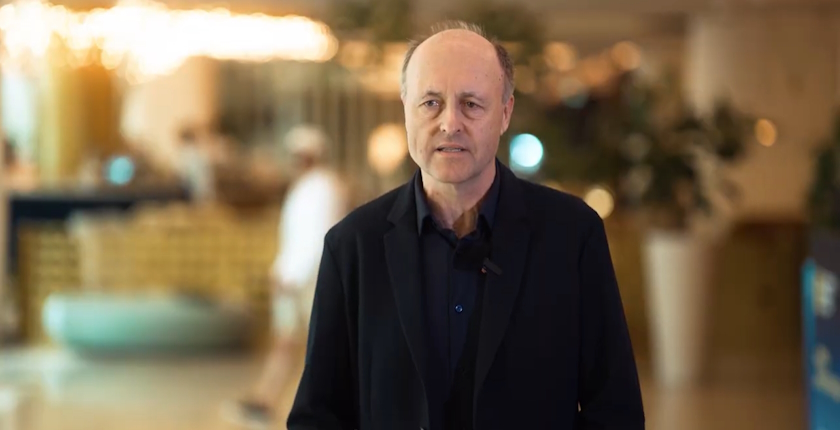
Slovenia-based NGEN, widely regarded as the most innovative energy company in the SEE region, is expanding throughout Europe with its software platforms and equipment, as well as battery energy storage systems for decentralized grids that enable scaling up the decarbonization of the electricity sector. Co-Founder and CEO Roman Bernard said at the Belgrade Energy Forum 2025 that the company is establishing a digital endpoint for every network element. It enables real-time control over production and consumption, preventing blackouts and providing cybersecurity. At the conference, NGEN presented its services for the construction and operation of BESS and access to all segments of the electricity market.

In NGEN’s vision, the electricity system becomes fully digital and decentralized, with every house and business taking an active part in it.

Grid congestion is becoming more frequent, limiting the current rapid deployment of renewables. Most of Europe has centralized networks, where energy flows in one direction, from large power plants to consumers. Grid balancing is still conducted on a 15-minute basis, which is too slow for real-time demand.

NGEN has created platforms for energy that is produced, stored and consumed locally. It is developing a more efficient and reliable environment that can keep up with the scaling up of renewable energy technologies.

Photo: NGEN

NGEN has answers for all challenges of power system

The Slovenia-based company is tackling all current challenges that the power system is facing, Co-founder and Chief Executive Officer Roman Bernard said at Belgrade Energy Forum – BEF 2025. NGEN, the technology sponsor of this year’s conference, operates in nine European countries.

[wpcc-iframe title=”Roman Bernard, Co founder & CEO, Ngen at the Belgrade Energy Forum 2025″ width=”500″ height=”281″ src=”https://www.youtube.com/embed/BchbVdSzoMo?feature=oembed” frameborder=”0″ allow=”accelerometer; autoplay; clipboard-write; encrypted-media; gyroscope; picture-in-picture; web-share” referrerpolicy=”strict-origin-when-cross-origin” allowfullscreen=””]

Pointing to the pace of increase in solar and wind power plant capacity over the past years, Bernard said a centralized system wouldn’t be able to support the overall production and consumption anymore. “We want to make a digital endpoint for every unit that is included in the network. Through it we can communicate and raise or decrease consumption or production,” he explained.

Bernard: Cybersecurity is the most important part of digitalization

It enables control over the system, as otherwise it is in risk of blackouts, while such a transformation also brings significant savings in infrastructure, according to Bernard. He also stressed cybersecurity as the most important part of digitalization.

The CEO of NGEN, which stands for next generation, added that the sector needs to be further regulated across Europe to facilitate the construction of a new kind of infrastructure, as well as to motivate the corporate sector to get involved.

The company’s representatives Marco Scholz and Patrick Simon held a presentation at BEF 2025

Instant frequency response preventing cascading blackouts

In Bernard’s view, now is the time for battery energy storage systems (BESS), after a massive renewables capacity was added to the system in the last seven or eight years. The CEO was one of the panelists at BEF 2025 in a session on flexibility services called Market Flexibility: The Backbone of a Resilient Energy System.

NGEN developed its own software as well as hardware for running decentralized systems, cybersecurity and access to all segments of the energy market. The software has never gone down so far, its representatives said during their presentation at the conference. The firm is a contractor for engineering, procurement and construction (EPC) of BESS, also providing maintenance and operation.

[wpcc-iframe title=”BEF 2025, Grid Intelligence for energy security how NGEN Synaptic prevents systmatic blackouts” width=”500″ height=”281″ src=”https://www.youtube.com/embed/kcm6UtVTcpA?feature=oembed” frameborder=”0″ allow=”accelerometer; autoplay; clipboard-write; encrypted-media; gyroscope; picture-in-picture; web-share” referrerpolicy=”strict-origin-when-cross-origin” allowfullscreen=””]

Its intelligent software ESGP, Energy Smart Grid Platform, provides instant frequency response preventing cascading blackouts. NGEN’s digital platform, called SG Connect, reacts automatically, providing backup in the event of a failure in under 20 milliseconds, enabling real-time grid balancing. At the same time, it monitors and manages in two-second intervals, through the NGEN Synaptic artificial intelligence (AI controller).

It is a plug-and-play module, installed at energy assets, connecting them to ESGP, the transmission system operator (TSO) and all relevant markets, the company said. On the customer side is the SG Connect application.

NGEN has projects of 2 GWh in Europe under development or in construction. As for notable operational facilities, it installed a BESS in Kidričevo in Slovenia, with 35 MW in operating power and 70 MWh in capacity. The facility is about to get an extension of 70 MW – 140 MWh.

by in News

Battery storage market in SEE emerging, Western Balkans lagging behind with positive prospects

The deployment of battery energy storage systems (BESS) across Southeast Europe is progressing at an uneven pace. State subsidies and financing mechanisms have enabled the rapid implementation of BESS solutions in Greece, Romania and Bulgaria, while markets in the Western Balkans are lagging behind. However, the outlook remains positive, as experiences from neighboring markets and best practices from other parts of the European Union can help overcome initial challenges and streamline the deployment process. This was highlighted by participants of the panel dedicated to BESS at the Belgrade Energy Forum.

Among the technologies required for the energy transition, battery energy storage systems (BESS) stand out as a key factor for integrating electricity from intermittent renewable sources – wind and solar power – into the grid. There are few such facilities in Southeastern Europe and the segment is yet to even be fully regulated in the narrower Western Balkans region. The panelists at a session called Energy storage system market in SEE: trends and forecasts, at Belgrade Energy Forum (BEF 2025), outlined the trends in the budding market.

There are more and more cases of low and negative hourly prices in the wholesale electricity market in the region, providing a clear business case for BESS investments. In addition, the grid is often overloaded on weekends and holidays when solar and wind power production is high, given the weak demand.

Managing Director of Go2Power Consulting Goran Vukojević, who moderated the discussion, warned that negative prices may jeopardize system stability as well, if operators of power plants disconnect them from the grid at the same time, to avoid costs.

He highlighted the preparations in Serbia’s transmission system operator Elektromreža Srbije (EMS) for auctions for ancillary services and praised the company for transparency in regulating the competitive process. The other option for battery operators is to participate in the open market.

Managing Director of Go2Power Consulting Goran Vukojević moderated the panel discussion

Region seen with 9 GW of BESS operating power in 2030

Ioanna Barouni from Aurora Energy Research said a total of 40 GW of solar and wind power is expected to be online at the end of 2025 in the SEE region, comprising 12 countries, including Hungary. In 2030, the level is expected to reach 70 GW, which is expected to be doubled to 145 GW by mid-century. As for BESS, projections stand at 9 GW in 2030 and 25 GW in 2050.

Barouni: We miss flexibility and ancillary services for transmission and distribution system operators

The countries of the region are retiring power plants that use fossil fuels, a firm capacity, in Barouni’s words, while adding renewables. “It’s not very easy to predict how the generation profile is going to be during the day, so we miss flexibility and we miss ancillary services for TSOs and DSOs,” she said.

The gap between power prices for midday and the evening is gradually increasing. Barouni explained that batteries “create some artificial demand and absorb these low prices.” At peak demand and with less renewables, a battery can replace expensive fossil fuels, lowering the price.

Ioanna Barouni from Aurora Energy Research (pictured left) and Head of Specialized Lending at UniCredit Bank Serbia Svetlana Cerović

Serbia preparing auctions for ancillary services

Division Manager of transmission system operator (TSO) EMS Nikola Tošić acknowledged that Serbia is preparing auctions for ancillary services. He revealed that there would probably be one auction for 70% of the needed reserve in the first year. The next rounds would be more frequent, shifting toward daily auctions for balancing capacity.

In the verification process, EMS’s System Operation Department will first test the battery, Tošić added. State-owned power utility Elektroprivreda Srbije (EPS) already provides ancillary services to the TSO, so it won’t require tests, he asserted.

Serbian law defines ancillary services the same as European Union does

EMS drafted the new grid code, and it will publish the draft balancing market code for public discussion soon, according to Tošić. He said the domestic law defines ancillary services in the same way as the EU defines them in its legislation. One part is balancing services: frequency containment reserve (FCR, primary), automatic frequency restoration reserve (aFRR, secondary) and manual frequency restoration reserve (mFRR, tertiary). The other part are non-frequency services – energy.

“We think that it would be good to incentivize the periods of the year or periods of day when the needed amount of reserve is more attractive or more in demand,” Tošić said.

Market Division Manager of EMS Nikola Tošić

Fortis Energy moving ahead with battery investments regardless of government support schemes

Fortis Energy’s Chief Executive Officer for Eastern Europe Nikola Oklobdžija considers the lack of regulation to be the biggest challenge for developers. An investor can currently only focus on charging the batteries when the prices are low and sell when they are high, he underscored.

The Turkey-based company develops photovoltaic, wind power and BESS projects in the region. The first bigger investments in renewable electricity plants with energy storage are the ones that will break the ice, in Oklobdžija’s opinion.

“Of course, it helps if you have a CfD contract, so the banks will look at it more favorably,” he stated. Oklobdžija added that companies need to be able to present revenue to the lenders and what the fees are for renting the capacity or providing different services.

Bankability depends on state support and PPA contracts, cash flow models and insurance

In the meantime, Fortis is examining the experiences in Bulgaria and Greece, which have already held auctions for standalone batteries. Financing a project is easier with a CfD – contract for difference, but the company is determined to push ahead anyway, Oklobdžija stressed.

In North Macedonia it commissioned a solar power plant in Oslomej and recently contracted a BESS to be added to the facility. Oklobdžija said it wasn’t a requirement but that Fortis opted for energy storage because of market pressure with prices and occasional curtailments, like during Easter last month.

The introduction of ancillary services would facilitate the development for standalone battery systems, he explained.

Fortis Energy’s CEO for Eastern Europe Nikola Oklobdžija

Cerović: First there will be more projects for colocated BESS units than for standalone facilities

Head of Specialized Lending at UniCredit Bank Serbia Svetlana Cerović highlighted the intensive activity in Germany and Italy, for instance, but also in neighboring Romania. UniCredit is present in those markets and is analyzing the development of the battery storage market, she pointed out, arguing that the best practices in the EU are the best way for building and financing battery storage.

Cerović said there would first be more projects in the region for BESS colocated with renewable energy plants than standalone units.

She suggested that the proposed investments that include storage should be better pondered at the next renewable energy auction in Serbia. It is in the country’s interest to enable providing flexibility and to support the projects, she said.

There may be a rationale for subsidizing prosumers to add storage in Serbia, Cerović said. Turning to small-scale projects, she expressed the belief that power purchase agreements (PPAs) are “convenient” for them. She is recommending dedicating a certain capacity for the category at the next auction in the country.

The first projects in Serbia, conditioned by energy storage requirements for a grid connection, are in the process of negotiating financing, according to Cerović.

Fire protection is especially significant for insurers

Renewable Energy Insurance Broker (REIB) has insured some 4 GWh of energy storage capacity in Bulgaria and just as much elsewhere in the world, Business Development Manager Dimitar Dimitrov said. Developers should contact insurance companies when the design is done, as well as for cargo insurance, he suggested and added it is particularly important for projects that get subsidies.

“We’re not only insurance brokers, but we’re also investors, which helps us understand a bit more about the clients’ needs, and what we can definitely do more in cases of coverage. Understanding clients’ needs helps us also prevent risks that could occur during certain stages,” Dimitrov stated.

Most insurers prefer at least a six-meter distance between containers or rows of three to four containers holding batteries, he said. It is the most important factor in fire protection, in Dimitrov’s opinion. When the distance is shorter than three meters, a firewall is required for insurance, he explained.

REIB’s Business Development Manager Dimitar Dimitrov

The next segment is construction insurance. For insurance companies, it is not a higher risk profile, Dimitrov asserted. Next, he recommended operational risk insurance including coverage for business disruption, and insurance against cyberattacks. In such events, the grid connection can be damaged, the company’s representative pointed out. “Insurance policies are definitely bankable,” he added.

Bulgaria has completed its tenders for state support to BESS combined with renewable energy plants, and for standalone units. But even before subsidies, batteries have been delivered and facilities are under construction, Dimitrov stressed. Many photovoltaic projects in Bulgaria have emerged in the past few months and most of them include BESS, he said.

by in News

Landmark report demonstrates safety, cybersecurity, higher yield of SolarEdge PV systems

VDE Renewables found in its new report that SolarEdge’s advanced safety capabilities minimize photovoltaic system risks and effectively prevent fire hazards, while exceeding international PV safety regulations. SolarEdge has robust cybersecurity mechanisms, essential to mitigating risks associated with cyberthreats, and its solutions bring higher energy yields for both simple and complex roofs.

A new report by VDE Renewables, a subsidiary of the VDE Group, has demonstrated that SolarEdge’s inverter and Power Optimizer-based PV systems deliver measurable advantages in advanced safety, cybersecurity and higher energy production across a wide range of installation types.

In its in-depth assessment of Module-Level Power Electronics (MLPE) topology and SolarEdge’s approach to PV systems, the report highlights how SolarEdge’s advanced safety features reduce PV system vulnerabilities and exceed international PV safety standards. Reviewed and validated by VDE Renewables, the integration of multiple protective mechanisms including Sense Connect proactively identifies and addresses faulty connections long before abnormal temperature is reached.

SafeDC™, rapid shutdown, and module-level monitoring was reported to provide a proactive approach to risk mitigation to ensure a significantly higher level of protection for system operators, maintenance personnel, and emergency responders.

Photo: SolarEdge’s inverter + Power Optimizer solution shown to produce higher energy yields for both simple and complex roofs (4% and 10.5% more power, respectively)

Unsecure PV systems becoming more vulnerable to cyberthreats

The VDE Renewables report also emphasizes cybersecurity as a top priority in PV systems, noting that as solar technology becomes increasingly digitized and interconnected, unsecure PV systems also become more vulnerable to cyberthreats.

With PV systems now integral to energy infrastructure, the consequences of cyberattacks can extend far beyond individual installations, raising wider concerns around grid security and resilience. In this context, VDE Renewables validated SolarEdge’s strong cybersecurity credentials, recognizing its comprehensive, built-in defence architecture and highlighting its robust cybersecurity mechanisms that mitigate risks associated with cyberthreats.

These mechanisms comply with leading international cybersecurity regulations, including IEC 62443, NIST Cybersecurity Framework, and ISO/IEC 27001. Additionally, SolarEdge’s solution includes encrypted communication protocols, secure remote firmware updates, multi-level access control, continuous monitoring, and penetration-tested system architecture.

SolarEdge provides residential solutions bolstering output on complex roofs by 10.5%

VDE Renewables also validated the performance of SolarEdge’s residential solution against leading traditional string inverter systems, even when using multiple MPPTs. The report confirms results that show a 4% increase in energy production on simple (single facet with no shading) rooftops and an impressive 10.5% increase on complex rooftops.

These gains are attributed to SolarEdge’s use of MLPE-based Power Optimizers and advanced Buck and Boost technology. The VDE Renewables report highlights the SolarEdge ONE energy optimization platform that helps maximize saving potentials with support for both fixed and dynamic electricity tariffs, as well as design advantages such as the ability to use longer strings, enabling lower BoS costs and larger systems within the same roof area – further contributing to overall energy yield.

Gruenewald: SolarEdge’s technology demonstrates its strategic market position in safety, cybersecurity, and performance

The report was sponsored by SolarEdge to evaluate its Power Optimizer-based PV system.

Arne Gruenewald, Project Manager Batteries and Energy Storage Systems, VDE Renewables: “Our assessment shows that SolarEdge’s technology demonstrates its strategic market position in safety, cybersecurity, and performance – criteria that are essential for the technology’s long-term viability and trust.”

VDE Group offers quality assurance services for the global renewable energy sector.

Christian Carraro, General Manager Europe, SolarEdge: “We welcome VDE Renewables’ validation of our technology, being a trusted partner for quality assurance, risk minimization and certification. As the solar industry grows and evolves, it’s essential that we continue to prioritize not just performance, but also safety and cybersecurity. This report encourages us to keep raising the bar and deliver technologies that support more powerful and secure energy solutions.“

About SolarEdge

SolarEdge is a global leader in smart energy technology. By leveraging world-class engineering capabilities and with a relentless focus on innovation, SolarEdge creates smart energy solutions that power our lives and drive future progress.

SolarEdge developed an intelligent inverter solution that changed the way power is harvested and managed in photovoltaic systems. The SolarEdge DC-optimized inverter seeks to maximize power generation while lowering the cost of energy produced by the PV system.

Continuing to advance smart energy, SolarEdge addresses a broad range of energy market segments through its PV, storage, EV charging, batteries, and grid services solutions.

by in News

Electricity system in Spain, Portugal collapses

Power was out today throughout Spain and Portugal as well as in Andorra and parts of southern France, in one of the most serious such incidents so far, on a European scale. The European Commission’s Executive Vice President Teresa Ribera and other officials from the EU and the affected countries said there are no indications of sabotage or cyberattack.

Grid operators and electricity producers are gradually restoring the power supply after a massive outage struck the Iberian peninsula today. Prime Minister of Spain Pedro Sánchez convened the National Security Council. It is one of the most serious blackouts in Europe in many years. The outage spread throughout Spain and Portugal.

Power was out in Andorra and, briefly, in parts of southern France. Transportation and telecommunications were heavily affected.

Spanish TSO Red Eléctrica de España called it a “collapse of the Iberian electricity network.” The company said it would take six to ten hours to restore it. Notably, the production system is relying almost completely on photovoltaics and wind farms at the moment, so just a few hours of solar power production remain.

The outage paralyzed major cities including Madrid, Barcelona and Lisbon and caused disturbances in the European grid. The European Commission’s Executive Vice President for Clean, Just and Competitive Transition and Commissioner for Competitiveness Teresa Ribera said there were no indications that “any kind of sabotage or cyberattack” was behind the grid collapse.

According to the Government of Portugal, the incident started from outside the country

According to the Government of Portugal, the incident started from outside the country and, apparently, in Spain.

Shares of solar, wind power production in Spain breaking records

In the spring and autumn, when there is little to no demand for heating or cooling, electricity grids in most of Europe are sometimes strained from surges in high solar and wind power production, amid a lack of energy storage and flexibility capabilities that would balance the surplus.

On April 16, the Spanish electricity system achieved total coverage for the first time with renewable energy sources. At one point during the day, wind and solar met 100.6% of demand. Then on April 21, solar power generation was equivalent to a record 78.6% of domestic demand for a moment.

Reid: The massive outage occurred while prices are negative in electricity markets across Europe

“Spanish grid operator Red Eléctrica has so far blamed a power ‘oscillation’ on the power outage. We still don’t know the cause but it looks like problems at the Spanish-French power interconnector led to the Spanish grid operator islanding their power system and I would say at this point they lost control,” said Gerard Reid, investor and strategic advisor in energy, finance and geopolitics.

It has also proven difficult to restore power with multiple black start (restart) procedures taking place, but the issue is that at the time of the blackout there were no conventional power units in operation, he pointed out. Reid added it makes the restart complicated and stressed that Europe requires enhanced grid-scale battery storage solutions, including for black start capabilities.

He also highlighted the fact that the massive outage occurred while prices are negative in electricity markets across Europe.

Of note, a grid incident last summer left much of the Western Balkans and parts of Croatia out of power for several hours.

by in News

Electricity system in Spain, Portugal collapses amid extreme temperature variations

Power was out today throughout Spain and Portugal as well as in Andorra and parts of southern France, in one of the most serious such incidents so far, on a European scale. The European Commission’s Executive Vice President Teresa Ribera and other officials from the EU and the affected countries said there are no indications of sabotage or cyberattack.

REN, the transmission system operator (TSO) of Portugal, said extreme temperature variations inside Spain led to anomalous oscillations in 400 kV lines.

Grid operators and electricity producers are gradually restoring the power supply after a massive outage struck the Iberian peninsula today. Prime Minister of Spain Pedro Sánchez convened the National Security Council. It is one of the most serious blackouts in Europe in many years. The outage spread throughout Spain and Portugal.

Power was out in Andorra and, briefly, in parts of southern France. Transportation and telecommunications were heavily affected.

Spanish TSO Red Eléctrica de España called it a “collapse of the Iberian electricity network.” The company said it would take six to ten hours to restore it. Notably, the production system is relying almost completely on photovoltaics and wind farms at the moment, so just a few hours of solar power production remain.

Outage could have originated from power line in France damaged by fire

The outage paralyzed major cities including Madrid, Barcelona and Lisbon and caused disturbances in the European grid. The European Commission’s Executive Vice President for Clean, Just and Competitive Transition and Commissioner for Competitiveness Teresa Ribera said there were no indications that “any kind of sabotage or cyberattack” was behind the grid collapse.

According to the Government of Portugal, the incident started from outside the country

According to the Government of Portugal, the incident started from outside the country and, apparently, in Spain.

Portuguese transmission system operator REN first suggested that damage to a high-voltage line in southwestern France from a fire was a possible cause. The company later blamed extreme temperature variations inside Spain for anomalous oscillations in 400 kV lines.

Shares of solar, wind power production in Spain breaking records

In the spring and autumn, when there is little to no demand for heating or cooling, electricity grids in most of Europe are sometimes strained from surges in high solar and wind power production, amid a lack of energy storage and flexibility capabilities that would balance the surplus.

On April 16, the Spanish electricity system achieved total coverage for the first time with renewable energy sources. At one point during the day, wind and solar met 100.6% of demand. Then on April 21, solar power generation was equivalent to a record 78.6% of domestic demand for a moment.

Reid: The massive outage occurred while prices are negative in electricity markets across Europe

“Spanish grid operator Red Eléctrica has so far blamed a power ‘oscillation’ on the power outage. We still don’t know the cause but it looks like problems at the Spanish-French power interconnector led to the Spanish grid operator islanding their power system and I would say at this point they lost control,” said Gerard Reid, investor and strategic advisor in energy, finance and geopolitics.

It has also proven difficult to restore power with multiple black start (restart) procedures taking place, but the issue is that at the time of the blackout there were no conventional power units in operation, he pointed out. Reid added it makes the restart complicated and stressed that Europe requires enhanced grid-scale battery storage solutions, including for black start capabilities.

He also highlighted the fact that the massive outage occurred while prices are negative in electricity markets across Europe.

Of note, a grid incident last summer left much of the Western Balkans and parts of Croatia out of power for several hours.

by in News

Turkey to manufacture green hydrogen, nuclear, CCS equipment

The 2030 Industry and Technology Strategy includes setting up industrial facilities in Turkey for nuclear energy, green hydrogen, battery storage and carbon capture and storage (CCS). The country is planning to establish a value chain for critical raw materials. The government vowed to support the development of semiconductor technology, autonomous and flying vehicles and cybersecurity solutions, alongside innovations for electric vehicles and solar and wind power.

With its recently unveiled 2030 Industry and Technology Strategy, Turkey announced the ambition to upgrade its industrial production to one of the most advanced in the world. As Russia’s Rosatom is completing the country’s first nuclear reactor in Akkuyu, the government is planning to develop its own technology in the segment.

The strategy involves setting up industrial clusters for equipment and infrastructure. Among the possible technologies are molten salt reactors. The Scientific and Technological Research Council of Türkiye (TÜBİTAK), Turkish Energy, Nuclear and Mineral Research Agency (TENMAK) and Istanbul Technical University (İTÜ) are tasked with establishing a nuclear tech park.

Green hydrogen mostly needed for decarbonizing hard-to-abate industrial production

TÜBİTAK is responsible for developing domestic electrolyzers as well. The national hydrogen program is set to bring support for integrating the production of green hydrogen, storage, transportation and consumption. The last of the four is especially focused on energy-intensive industries such as steel, petrochemicals and fertilizers.

Another segment that would get incentives is the use of hydrogen in fuel cell vehicles including heavy vehicles. The strategy envisages setting up pilot zones for green hydrogen production, with electrolyzers powered by wind and solar energy.

Turkey has high ambitions for high-tech exports

Turkey has revealed the goal of tripling its high-tech exports to USD 30 billion by the end of the decade. It is part of an ambition to lift industrial exports to USD 400 billion from last year’s USD 247 billion. At the same time, the government’s target for the overall valuation of domestic tech startups is USD 100 billion.

The 2030 Industry and Technology Strategy has other chapters, too, like carbon capture, utilization and storage (CCUS or just CCS), access to critical raw materials, semiconductor and battery manufacturing and cybersecurity. Officials vowed to continue prioritizing domestic electric vehicles, but with investments in autonomous operation systems and even flying cars.

Cybersecurity solar and wind turbine technologies. Turkey apparently remains dedicated to expanding the industrial base for solar panels and wind turbines as well.