by in News

Self-consumption photovoltaic systems in Greece must add remote control devices

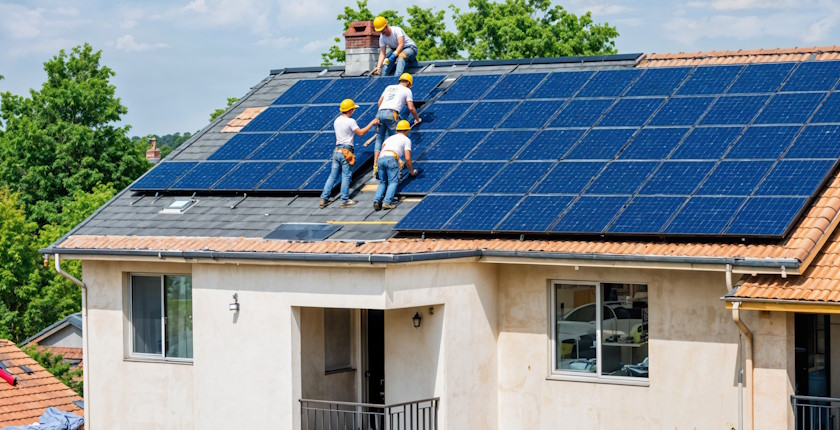
Solar power facilities for self-consumption in Greece now require set point equipment.

The Hellenic Distribution Network Operator (HEDNO or DEDDIE) announced that owners of self-consumption installations of over 400 kW have eight months, until September 15, to make necessary upgrades. Set point equipment includes specialized telemetering devices that the network operator uses for remote control and curtailment of solar power production.

Such equipment was first added in 2024 in other categories of photovoltaics, to ensure that HEDNO can dial down production at times when renewable energy production exceeds demand in the country. The effort is aimed at ensuring system stability and avoiding blackouts such as the one that happened in Spain last April.

According to Energypress, so far 4,300 MW of renewables units connected to the distribution network have added set-point equipment, out of a total of 5,500 MW deemed necessary. The authorities are aiming for the majority of the capacity to be ready by spring to avoid overcapacity. It’s a season that traditionally brings high renewable energy production and low demand in Greece. In 2024 and 2025, very low wholesale prices and high curtailments became a regular occurrence in the springtime.

As for the transmission network, all required renewable electricity plants have made the necessary upgrades.

Producers must comply or be disconnected

HEDNO said the new requirement includes units both in the net metering and virtual net metering regimes, as well as the ones with and without storage.

Once proper upgrades have taken place, producers must submit a notification form to the distribution operator, along with necessary technical documents. Owners who do not comply in time, will be subject to disconnection from the grid, HEDNO said.

Its goal is to make horizontal curtailments from now on, only reducing production levels across photovoltaics, without having to shut down some of them entirely.

by in News

Self-consumption photovoltaic systems in Greece must add remote control devices

Solar power facilities for self-consumption in Grece now require set point equipment.

The Hellenic Distribution Network Operator (HEDNO or DEDDIE) announced that owners of self-consumption installations of over 400 kW have eight months, until September 15, to make necessary upgrades. Set point equipment includes specialized telemetering devices that the network operator uses for remote control and curtailment of solar power production.

Such equipment was first added in 2024 in other categories of photovoltaics, to ensure that HEDNO can dial down production at times when renewable energy production exceeds demand in the country. The effort is aimed at ensuring system stability and avoiding blackouts such as the one that happened in Spain last April.

According to Energypress, so far 4,300 MW of renewables units connected to the distribution network have added set-point equipment, out of a total of 5,500 MW deemed necessary. The authorities are aiming for the majority of the capacity to be ready by spring to avoid overcapacity. It’s a season that traditionally brings high renewable energy production and low demand in Greece. In 2024 and 2025, very low wholesale prices and high curtailments became a regular occurrence in the springtime.

As for the transmission network, all required renewable electricity plants have made the necessary upgrades.

Producers must comply or be disconnected

HEDNO said the new requirement includes units both in the net metering and virtual net metering regimes, as well as the ones with and without storage.

Once proper upgrades have taken place, producers must submit a notification form to the distribution operator, along with necessary technical documents. Owners who do not comply in time, will be subject to disconnection from the grid, HEDNO said.

Its goal is to make horizontal curtailments from now on, only reducing production levels across photovoltaics, without having to shut down some of them entirely.
by in News

WindEurope to Greece: Accelerate licensing, reintroduce wind energy auctions

WindEurope has advice for Greece to accelerate wind power installations, given the country’s sluggish performance.

WindEurope expects Greece to add 300 MW of wind capacity in 2025, after 152 MW came online in the first six months. It is an improvement from the mere 108 MW of the entire 2024, but still far below previous years. For example, in 2023, the country added 544 MW of wind power. WindEurope’s Director of Advocacy and Messaging Viktoriya Kerelska has suggested solutions to increase the pace.

Greece needs to integrate the latest version of the European Union’s Renewable Energy Directive – RED3 – to facilitate faster and simpler licensing, she said at the Renewable and Storage Forum in Athens.

Other member states are behind schedule with the legislation as well. The European Commission opened infringement procedures in July by sending letters of formal notice to 26 of them – all except Denmark.

Kerelska: Do it like Germany

Furthermore, WindEurope believes that the concept of superior national interest must be applied in Greece, according to Kerelska.

Based on European law, it would allow easier wind farm deployment, while overriding unjustified public reactions that delay the process.

Kerelska added that Germany already applied the principle with great success.

Power purchase agreements (PPAs) are underutilized in Greece.

Therefore, the country should reintroduce wind power auctions, which it held until 2022, for support under contracts for difference (CfDs), according to the association.

One last issue is the delay in the national offshore wind program, which the government has not submitted yet to parliament for adoption, Kerelska noted.

HWEA: Time is running out

Easy times for renewable energy are over, Chairman of the Hellenic Wind Energy Association (HWEA or ELETAEN) Panagiotis Ladakakos said. The sector faces difficult decisions and potential hidden costs, while time is running out to make changes in the regulatory and legal framework, he claimed.

HWEA called on the government to introduce a curtailment allocation mechanism within which curtailed energy would be calculated. Namely, the cuts are not spread evenly, and wind farms connected to the transmission network suffer higher costs. The government has promised to introduce a mechanism by the end of 2025.

The organization said energy storage facilities should be able to have joint grid connection points with renewable energy plants. It referred to projects where the battery’s capability or operating power can be as high as the installed capacity for electricity production.

HWEA added that Greece requires to enact its national offshore wind plan and a special purpose vehicle (SPV) to carry out offshore studies. Moreover, it urged for the development of a new renewable energy spatial plan and more incentives for consumers in areas hosting renewable energy plants.

by in News

Negative prices to form so-called bathtub curve in Greece as photovoltaics keep growing

The latest modeling for the wholesale electricity market in Greece shows ever-decreasing prices at times when solar power output is the strongest within the day. The trend points to the formation of a so-called bathtub curve in the daily price charts at the power exchange, as a result of the expected continuation of the photovoltaic capacity surge.

Greece experienced its first negative prices this year. They intensified in August and September, weakening the profitability of investments in the production of renewable electricity.

This year, market participants expect at least 2 GW of photovoltaics to connect to the grid, along with the first standalone battery storage units.

Currently, prices usually fall to a negative EUR 1 per MWh at the most. However, the pace of installations indicates that prices will go even lower. According to the Hellenic Association of Photovoltaic Energy Producers (SPEF), analytical models indicate that for every 1,000 MW of new solar capacity, the so-called system marginal price (SMP) at noon is lowered by EUR 10 per MWh.

Storage acts as a shield against price drops. But even if as many batteries are added as photovoltaics, the wholesale price is seen at a negative EUR 5 per MWh on average during the hours of maximum solar production, the organization’s Chairman Stelios Loumakis said. The level would fluctuate depending on the season and conditions in the system.

With the addition of 500 MW of wind energy per year, the price is at EUR 7.5 per MWh below zero. If system demand also rises, then the level is slightly higher, at EUR 5 per MWh in negative territory.

Loumakis: The duck curve will eventually become the bathtub curve

Especially concerning is that such price formation would turn systematic, almost daily. Loumakis expects more than 1,000 MW of annual solar installations in the following years. Therefore, the actual price could be much lower.

As things stand today, the daily power price curve resembles a duck in markets with high renewable energy penetration. Medium prices in the morning are followed by a drop at noon and a great rise later in the day. A much more pronounced curve is expected in the near future, looking more like a bathtub, he explained.

Loumakis warned years ago about the repercussions from a rapid rise in solar energy, saying that the market would overheat and lower profits.

Up to 3 GW expected this year

Other market players echoed his concerns. CEO of MGD Energy Panagiotis Mourtopalas said at the Renewable and Storage Forum that business plans are under pressure because of curtailments and negative prices. This year, 2,000 jobs have been lost in the renewable energy market as a result.

The Hellenic Association of Photovoltaic Companies (HELAPCO) estimates that new capacities this year would amount to between 2.6 GW and 3 GW, with no sign of slowing down.

by in News

Greece’s energy transition at risk amid gridlock with batteries, new tech

An overreliance on photovoltaics, combined with slow growth in the deployment of new technologies and storage, threatens Greece’s renewable energy future.

The country achieved rapid growth in renewable energy in the past five years, and penetration has surpassed 50% of the electricity mix.

However, the very success of the energy policies also led to significant issues that the government must address to achieve its 2030 goals.

Curtailments slashing profits as storage lags

This year, curtailments doubled from 2024, alongside a rising number of hours of zero or negative prices in the day-ahead market (DAM). It means that producers are subject to a loss of profits. Some investors have exited the Greek market as a result of worsening conditions.

At the same time, there is a huge licensing queue, as more than 15 GW of projects have acquired connection terms from the network operators. This is more than enough to cover the country’s 2030 goal and even beyond.

Energy storage is expected to provide a solution to curtailments and zero pricing. However, the first standalone battery projects have been pushed back nine months, as the original deadline was deemed too strict. Developers are competing against time to secure European funding through the Recovery and Resilience Facility (RRF), via the National Recovery and Resilience Plan Greece 2.0.

Energy mix diversification needed

Photovoltaics dominate the energy mix and this year they are expected to surge by 2 GW. There is growth in every segment of the solar market, although small investors complain of a preferential policy towards larger players. This is especially evident in the case of energy communities and farmers‘ photovoltaics, where such issues are abundant.

Wind installations have stalled in recent years and the offshore wind program has not made any progress towards the 2030 goal. The European Commission warned that investments in carbon capture and storage (CCS) are in danger of losing RRF funding at the current pace. Pilot projects in hydrogen are advancing, but it remains uncertain when they will become operational and at what scale.

The special renewables account turned red this summer, with an ever-growing deficit. There is also uncertainty surrounding projections about the country’s future electricity demand. Sales of electric cars and heat pumps are lagging behind the European average, while large data centers are seen as a way to increase consumption and support more power production.

All these issues mean that Greece may not achieve all its 2030 goals from the final National Energy and Climate Plan (NECP). The country initially presented a highly ambitious first version, but later reduced it to keep costs low for consumers.

by in News

Bajramović: Investments of BAM 1.4 billion needed for distribution grids in BiH

Necessary investments in Bosnia and Herzegovina’s electricity distribution grids by 2030 amount to BAM 1.4 billion (EUR 716 million), according to Zijad Bajramović, chairman of the Bosnia and Herzegovina committee of the International Council on Large Electric Systems (CIGRE).

The growing installation of power plants utilizing renewable energy sources is creating congestion in transmission and distribution networks, so the limited available capacity for their connection is an issue across the entire region, Zijad Bajramović told state news agency Fena. Nezavisne Novine republished the report.

An additional burden on the distribution network is expected from the electrification of transportation and increased electricity use for heating and cooling.

Energy storage is a solution for the problems emerging in the grid

Bajramović explained that new 110 kV substations are necessary, as is the completion of the ongoing transition to the 20 kV voltage level. Attention should also be paid to integrating prosumers, especially the households that both produce electricity, with solar panels on their roofs, and consume it.

He highlighted balancing as well as maintaining voltage conditions and supply quality as the main challenges from the rise in renewable electricity capacity on the grid. Energy storage is a solution for the issues.

Batteries can prevent renewables generation curtailments

Bajramović expects battery energy storage systems to play an increasingly significant role in relieving network congestion.

BESS, in his words, are a flexibility tool for absorbing excess generation locally, and temporarily easing the pressure on the transmission grid. They can prevent curtailments of power generation from variable renewable sources, he added.

Bajramović recalled that calculations have showed batteries of 225 MW / 450 MWh in total would be necessary to connect 1,500 MW of solar power capacity and 1,000 MW of wind power to the transmission network.

An increase in distribution network tariffs would provide funds for investment in strengthening and modernizing the distribution network, in his view.

Batteries are being installed at a rapid rate around the world as well as in the region. Not only private companies, but also state-owned utilities such as Romania’s Hidroelectrica and Montenegro’s Elektroprivreda Crne Gore (EPCG) are investing in such projects.

by in News

Renewables keep top spot in Greece’s power mix despite surge in curtailments

Renewable energy sources continued to rank first in Greece’s electricity mix despite significant curtailments in the first half of 2025, which more than doubled against the same period a year earlier. At the same time, gas-fired power generation hit a 10-year high, while coal’s share in covering domestic demand fell to the lowest level in at least a decade, according to a recent analysis by the Green Tank.

In the year through June, curtailments totaled 1,327 GWh, equivalent to 9.6% of Greece’s overall renewables output, compared to 513 GWh in the same period last year and 899 GWh in the whole of 2024.

Curtailments in June 2025 reached 351.7 GWh, which means renewable energy generation could have been 12.3% higher. The level compares to only 59.5 GWh, or 2.5%, rejected in June 2024. Most curtailments in June occurred between 10 am and 3 pm, with the highest daily amount, of 32.7 GWh, recorded on June 1.

In May 2025, curtailments were 382.5 GWh, up from 127.3 GWh a year earlier, and in April they totaled 359.1 GWh, compared to 253.3 GWh in the same month of 2024. In March, the grid rejected 229 GWh of renewable electricity, up from 73.3 GWh in March 2024, while curtailments in February and January amounted to 3.4 GWh and 1.3 GWh, respectively, compared to zero in the first two months of 2024.

Renewables covered 46% of Greece’s electricity demand in H1 2025

Greece’s electricity demand in the first half of 2025 reached 27,038 GWh, with renewables covering 46%. The only equivalent period so far when the share was higher was last year. In June, electricity demand jumped 22% against May, to 5,094 GWh. The average market price remained low, at EUR 85.4 per MWh, the Green Tank noted.

Renewables ranked first in electricity generation in H1 2025, with a total of 12,435 GWh, a marginal increase from 12,354 GWh in H1 2024.

Gas-fired power generation reached 10,925 GWh in the first half of 2025 or 19.3% more than one year before, hitting a 10-year high. The rise was mostly driven by an increase in net exports and electricity demand. A drop in output in the segments of hydropower lignite and oil also contributed, together with an expansion of the gas power fleet.

Gas covered 40.4% of electricity demand in the first six months of the year, after 34.1% in the comparable period of 2024.

Coal power production fell steadily from January to June

Coal, on the other hand, covered just 5.2% of Greece’s power demand in H1 2025. It was the lowest share in at least a decade. Electricity production from lignite declined steadily in the first six months of the year, from 511 GWh in January to just 66 GWh in June.

by in News

Cyprus curtails as much renewable electricity in first half of 2025 as whole last year

According to data compiled by the CyprusGrid tracking platform, the island country curtailed more than 167 GWh of renewable electricity in the first six months of 2025. It was equivalent to last year’s entire cuts. On average, two thirds of the potential green energy production was lost per day in March.

In addition to being the only European Union member state without an interconnection with another power system, Cyprus only has oil-fired generators, a surging solar power capacity, wind parks and some biomass-fired facilities. Other countries, like Greece, also must curtail renewable electricity units, but maintaining system stability requires more drastic cuts in the isolated island nation. Notably, it still lacks energy storage, while the conventional power plants lack flexibility.

According to a statistical report from a few months ago, Cyprus hosted almost 850 MW of solar power, of which less than 400 MW was in commercial photovoltaic plants. Prosumers operated the rest. Licensed projects amounted to 2.8 GW. Wind power amounts to 155 MW.

Rapid growth of solar power capacity brings more episodes of overloads, when grid operators have to curtail photovoltaic and wind power production. At the same time, sudden weather changes can push production to a critically low level, which can also cause outages before conventional facilities step in to cover the deficit.

Curtailments to double this year

Founder of the CyprusGrid tracking platform Andreas Procopiou said on LinkedIn that more than 167 GWh of renewable energy was curtailed in the first half of the year. It’s how much was lost whole last year, he pointed out.

The conventional power plants in Cyprus aren’t able to lower or boost production fast enough to balance the changes in renewables

The cuts will almost certainly exceed 300 GWh in 2025, doubling the all-time high in just one year, Procopiou estimated. The average monthly growth rate has actually more than doubled from 2024, according to the developer of the electricity generation tracker.

Cuts boost emission costs by EUR 8 million

Curtailments erased 20.8 GWh in June alone. The daily average was 29.3% of total renewables output. It compares to May’s 33.9 GWh and 50.3%, respectively, after 37.9 GWh and 61.4% in April. March was the worst, with 38.2 GWh lost, or a whopping 67.9% of potential production, CyprusGrid data shows.

“Solar energy that could reduce costs and pollutants ends up being lost. For 2025 alone, the cuts already amount to more than 100,000 tons of additional CO₂ emissions and an additional burden of around EUR 8 million for emission allowances. A cost that we all ultimately pay,” Procopiou stressed.

Without storage, flexibility and serious planning, the energy transition remains just an empty slogan, the renewable energy expert pointed out.

Nevertheless, French giant TotalEnergies isn’t intimidated by the curtailments. It won the environmental approval a month ago for a photovoltaic park of 100 MW in peak capacity. But the company is planning to include energy storage.

by in News

Greek farmers turn their backs on government program for photovoltaics

The Greek government’s Photovoltaics in Fields support program has failed to convince farmers so far.

As part of the self-consumption program, farmers are supported for various costs, such as the purchase and installation of panels, inverters, batteries, as well as necessary technical studies.

Applications are accepted for two different project groups, when it comes to connection priority. The first is for installations of up to 10.8 kW and another for projects of 10.8 kW to 50 kW.

Selected investments are eligible for a grant equivalent to 30% or up to EUR 350 per kW. The overall budget is EUR 30 million.

Only 143 photovoltaic systems connected so far

In the year since the program’s launch, the Hellenic Electricity Distribution Network Operator (HEDNO or DEDDIE) received a total of 1,776 applications, of which 1,235 are still under evaluation. The first checks are complete in 794 cases while 377 projects are at the connection terms signing stage.

Only 209 applicants have signed them, while 143 photovoltaic systems have become operational across the country.

Operational restrictions weigh on incentives

The problem for farmers is that HEDNO has enforced operational restrictions in about one third of the accepted units. It means they don’t produce freely, but are subject to curtailments.

The government is mocking farmers

Therefore, profitability drops significantly for investors. It is notable that two out of every three farmers who originally applied didn’t continue the process.

Various agricultural collectives have reacted. Stock farmers of Elassona in Larissa spoke of “a mockery by public bodies, as they promised photovoltaics will solve high energy costs.”

The Ministry of Environment and Energy said it would extend the connection applications deadline by 160 days to include more investors. Furthermore, it would delay the required commencement date for the projects until the end of September.

by in News

Upgrade for prosumers to avoid grid curtailments costs up to EUR 1,000

To use electricity from their photovoltaic systems in periods when grid operators disconnect them to stabilize the system, citizens can install equipment that costs EUR 300 to EUR 1,000. Cyprus passed a bill enabling prosumers to switch to a zero-export mode.

Cyprus, the only non-interconnected European Union member state, is struggling to maintain the stability of its electricity system. Rapid growth of solar power capacity is increasing the episodes of overloads, when grid operators have to curtail their production. At the same time, sometimes sudden weather changes push production to a critically low level, which can also cause outages before oil-fired power plants step in to cover the deficit.

Still, the island country passed amendments last week to protect the right of prosumers to an interrupted power supply for their own needs. On the other hand, implementation isn’t cheap, and for some of them it would not be cost-effective.

Upgrading a PV system with a zero-export mode is not cost-effective if no one is usually home during work hours

Minister of Energy, Commerce and Industry George Papanastasiou said prosumers need to upgrade their photovoltaic systems to be able to keep consuming their electricity during curtailments. A switch for cutting off the solar panels from the grid, and leaving them directly connected to the home, costs some EUR 300, he added. But a prosumer will need to pay EUR 1,000 if the inverter doesn’t support the conversion, the minister explained.

Owners of PV systems need to calculate the curtailment costs and compare them to the investment that enables operating them in a so-called zero-export mode.

If no one is home on weekdays during work hours, when solar panels generate electricity, there are no substantial benefits, unless there is also a battery. And it makes the intervention much more expensive. Conversely, the new option is much more useful for most businesses.

Cyprus is rushing to introduce energy storage capacities and expand the curtailment systems throughout the power system.

  • 1
  • 2