by in News

Aktor LNG USA–Albgaz Deal Signals Structural Shift in Western Balkans Gas Market

A landmark long-term gas supply agreement between Aktor LNG USA and Albania’s state-owned Albgaz marks a significant step in the transformation of Southeast Europe’s energy architecture, reinforcing both market diversification and geopolitical realignment.

The agreement, valued at approximately $6 billion, establishes a 20-year framework for the delivery of liquefied natural gas (LNG) sourced from the United States, with contracted volumes of around 1 billion cubic meters annually starting in 2030.

From Hydro Dependence to Gas Integration

For Albania, the deal represents a structural pivot away from near-total reliance on hydropower toward a more diversified energy mix. The introduction of long-term LNG supply contracts provides a stable foundation for baseload generation, system balancing, and regional trading capacity.

The agreement is not limited to commodity supply. It is complemented by a memorandum of understanding between Aktor Energy USA and the Albanian government to develop an integrated energy hub, including a planned gas-fired power plant with an estimated capacity of 380 MW.

This integrated approach reflects a broader transition strategy: linking fuel supply, infrastructure development, and power generation into a single investment framework.

Infrastructure First: Vlora and the Missing Gas System

A central component of the strategy is the planned development of LNG infrastructure in Vlora, which is expected to evolve into a key entry point for imported gas. Until domestic infrastructure is completed, supply will be routed through Greece, leveraging the Revythoussa LNG terminal and the Trans Adriatic Pipeline (TAP) for onward delivery into Albania.

This transitional routing underscores a critical reality: Albania’s gasification remains at an early stage, and the success of the agreement depends heavily on timely infrastructure deployment.

The Vlora energy hub concept—combining LNG import, regasification, and power generation—positions Albania not merely as a consumer, but as a potential transit and redistribution node for the Western Balkans.

The Vertical Gas Corridor: Strategic Context

The deal is embedded within the broader framework of the “Vertical Gas Corridor,” a US-backed initiative aimed at expanding north–south gas flows from Greece into Southeast and Central Europe.

According to Aktor leadership, the agreement is intended to unlock the corridor’s full potential, enabling the distribution of American LNG across multiple Balkan markets and reducing dependency on traditional supply routes.

The corridor concept is particularly relevant as Europe continues to recalibrate its gas supply strategy, with long-term LNG contracts increasingly viewed as essential for supply security beyond 2030.

Geopolitical and Market Implications

The presence of US and Greek stakeholders highlights the geopolitical dimension of the agreement. The United States is actively expanding its LNG footprint in Southeast Europe, using infrastructure and long-term contracts as instruments of strategic influence and market integration.

At the same time, Greece reinforces its role as a regional energy gateway, providing the initial infrastructure backbone for LNG imports and transmission into the Western Balkans.

The agreement also signals potential regional expansion. Discussions are already underway to extend LNG supply arrangements to additional Western Balkan markets, including Serbia and North Macedonia, as interconnection projects progress.

Commercial Structure and Market Significance

From a market perspective, the deal reflects several emerging trends:

  • Shift toward long-term LNG contracting as a hedge against future supply tightness and price volatility
  • Integration of infrastructure and supply agreements to de-risk investment in emerging gas markets
  • Growing role of private-sector intermediaries (such as Aktor LNG USA) in structuring cross-border energy flows

The estimated contract value—around $6 billion over 20 years—indicates a substantial commitment for a relatively small market, underscoring Albania’s ambition to scale beyond domestic demand and participate in regional gas trade.

Execution Risks and Critical Dependencies

Despite its strategic significance, the project faces several execution risks:

  • Infrastructure delivery risk, particularly the timely development of LNG import capacity and internal gas networks
  • Demand risk, given Albania’s currently limited gas consumption base
  • Regulatory and market integration challenges, especially in aligning with EU gas market frameworks

The reliance on interim routing through Greece also introduces transitional dependencies that must be carefully managed.

Conclusion: From Peripheral Market to Emerging Energy Node

The Aktor LNG USA–Albgaz agreement is more than a supply contract—it is a foundational step in repositioning Albania within the regional energy system.

If successfully implemented, it could transform the country from a hydropower-dependent system into a flexible, gas-integrated market with regional relevance. More broadly, it reinforces the Western Balkans’ gradual integration into European energy networks, underpinned by transatlantic LNG flows and new infrastructure corridors.

The real test, however, will lie not in the signing of the agreement, but in its execution—particularly the alignment of infrastructure, regulation, and market demand over the coming decade.
by in News

Albania’s 2026 Electricity Law: Powering a Competitive, Secure, and Green Energy Future

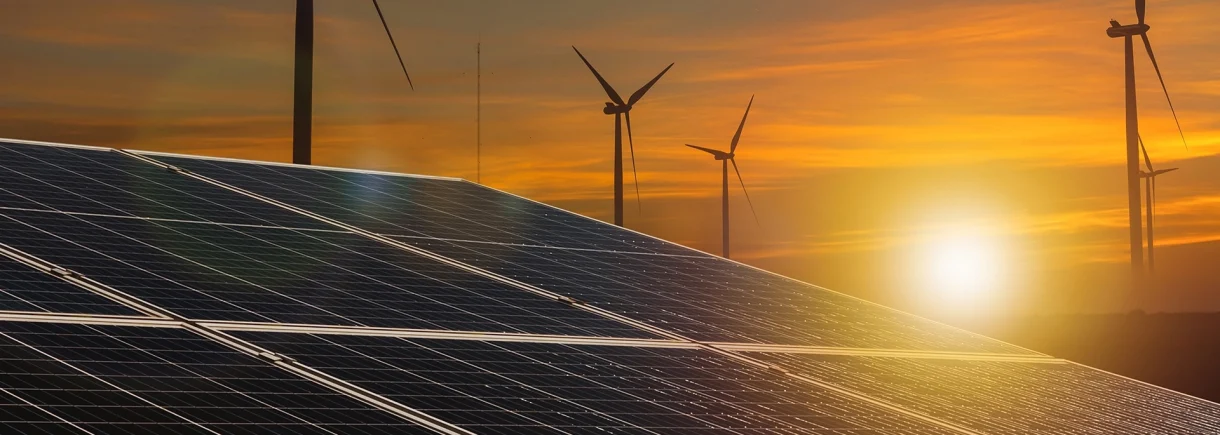
The new draft Law on the Electricity Sector (2026) aims to overhaul Albania’s power framework for a competitive, secure and green market. Its stated objectives include guaranteeing secure and sustainable supply, deepening market liberalisation and consumer choice, and supporting climate goals. Government spokespeople emphasize moving “away from a centralized model” toward “a more open, more competitive, more flexible” market aligned with EU norms. Similarly, the Energy Community stresses that Albania must shore up security of supply (through EU-aligned risk-preparedness planning) and fully integrate its electricity market regionally. As one official put it, Albania needs to “shore up security of supply through EU-aligned risk-preparedness plans and achieve full market coupling with the EU”. In line with climate targets (Albania’s 2050 neutrality goal), the law also promotes renewables, efficiency and low-carbon flexibility. For example, a separate 2023 Renewables Law explicitly targets increased renewable use, reduced greenhouse gas emissions and sustainable rural energy access. The 2026 electricity law complements this by facilitating renewables integration (e.g. grid access, storage) while also formalizing consumer-friendly concepts like smart meters and dynamic pricing for a low-carbon economy.

Institutional Framework and the Regulator

A key element is the Energy Regulatory Authority (ERE). Under the draft law, ERE remains the independent regulator for electricity (and gas) with strengthened powers. Official briefings note that the new law “expands and makes more important” ERE’s role, explicitly giving it major competencies “for developing market rules, monitoring their operation and ensuring competition”. In practice, ERE already issues tariffs, licenses, and technical codes; the law likely reaffirms its authority over grid tariffs, network access and licensing. EU rules (Electricity Directive 2019/944 Art.59) require national regulators to be fully independent and impartial, and the Energy Community has advised Albania to “strengthen the independence and capacities of all authorities” including ERE. The draft law reportedly aligns with this: it clearly vests regulatory tasks in ERE, separating them from political control. Nonetheless, implementation depends on ERE’s capacity to handle new duties (e.g. oversight of cross-border markets) and to enforce the complex EU-aligned regime. The law will also designate the energy ministry as the risk-preparedness authority (see below), but ERE is expected to coordinate in emergencies and in implementing EU network codes.

Market Design and Competition

The new law fundamentally repackages the market model. Under the current 2015 law, Albania began liberalising in 2021–2025, opening the market by threshold and establishing the ALPEX exchange. Today, large consumers can choose suppliers, and ALPEX operates a day-ahead and intraday auction. The draft law continues this trend: it formally mandates third-party access to networks and the full operation of wholesale markets (day-ahead, intraday, balancing, and even derivatives trading) to ensure transparent price formation. In April 2023 Albania launched its day-ahead market, which in January 2024 was successfully coupled with Kosovo’s market – the first electricity market coupling in the Energy Community. Regional intraday auctions (so-called CRIDAs) between Albania and Kosovo followed in late 2024. The new law codifies these developments and sets the stage for eventual coupling with EU markets, subject to completing EU-market rules. Indeed, Energy Community analysts note that full alignment with EU rules (the Electricity Integration Package) through this law is essential for Albania to join the EU’s single day-ahead and intraday coupling.

At the same time, the law removes many legacy distortions. The current public service obligations (PSOs) – such as requiring the state generator KESH to supply the universal service provider (FSHU) at a government-set price – will be phased out or restructured. Ministry statements emphasize moving away from a model where “state actors had the largest decision-making” and towards one where competition is the basis of the market. In practice, this means eliminating price-setting interventions: for example, Albania’s wholesale market until now has been burdened by non-market contracts for network losses and for supplying captive consumers, which “does not meet the requirements” of EU market rules. The new law should require all grid services (transmission and distribution losses) to be procured on organized markets under competitive principles. It also formally establishes the market operator (ALPEX) as a Nominated Electricity Market Operator (NEMO) under EU law and extends ALPEX’s remit to ancillary markets. Unbundling is enforced: Albania’s transmission operator (OST) is already ownership-unbundled and ENTSO-E member, and distribution (OSSH) is a separate DSO. Clear rules on independent operation of networks and transparent tariff-setting are included to meet EU requirements.

Renewable Energy Integration and Low-Carbon Transition

Although Albania’s generation is dominated by hydropower, renewable integration is a priority. The new law addresses intermittency and grid flexibility: it introduces concepts like energy storage, active prosumers, aggregation and energy communities. For instance, it explicitly provides a legal basis for energy storage systems (to smooth renewable output) and for “active customers” who both consume and generate power. These mirror EU Directive 2019/944 provisions (articles on prosumers, dynamic tariffs and communities) that Albania has not yet fully transposed. The law also encourages technologies such as smart meters and even electric vehicle charging (“electromobility”) as flexibility tools. A separate Law 24/2023 already incentivises renewable deployment (through auctions, PPAs and CfDs) with the goal of reducing fossil imports and emissions. The electricity law complements this by guaranteeing renewables’ grid access and balancing: for example, under the renewables law temporarily-stored solar power is treated as delivered for subsidy purposes, a useful flexibility clause. In short, the legal framework is shifting to support a low-carbon mix: renewables get priority access to networks, and the market must accommodate their variability via storage and demand-side response. Energy efficiency is implicitly supported through demand participation measures, though detailed efficiency obligations remain part of separate legislation.

Security of Supply and Reliability

Ensuring continuous supply is a core aim. The law reportedly designates the infrastructure minister as the authority for risk preparedness and obliges that ministry to adopt a national risk-preparedness plan. This reflects EU Regulation 2019/941 (on gas supply risks), which Albania had missed implementing by its 2023 deadline. The draft law includes initial steps toward compliance: it provides for a risk plan and emergency protocols. In practice, this means formalising procedures for crisis response, including strategic reserves and demand curtailment rules. The law likely retains provisions for last-resort supply and universal service to protect consumers in shortages: under the current system, for example, the state generator KESH sells power to the universal supplier FSHU and to cover network losses. These contracts (often via contract-for-difference at regulated prices) are to be reformed.

Cross-border integration also enhances security. By coupling with neighbours, Albania gains access to wider regional capacity during droughts. Energy Community officials emphasize that full market coupling with Kosovo and eventually the EU “creates larger, more resilient markets” protecting against shocks. Albania’s new law strengthens this by setting clear rules for allocating cross-border capacity and operating bidding zones. Additional stress on reliability is addressed through mandated reserve capacities and balancing mechanisms: the law provides for the TSO to procure reserves and conduct redispatch if needed.

Nonetheless, challenges remain. Albania’s heavy reliance on hydropower (with seasonal rainfall variability) requires backup sources or storage. The law does not itself build new plants, so its impact on resource adequacy depends on fostering investment. Moreover, while emergency oil-stock regulations remain outdated (outside electricity law’s scope), the focus here is on electricity reserves. Overall, the draft law marks progress toward EU-style security measures, but full implementation will require secondary rules and investments in new capacity (or demand response) to ensure true reliability.

Consumer Rights and Protection

The draft law places consumers at the centre of the market. It acknowledges that consumers can also be producers, and it explicitly incorporates EU ideas of active customers, dynamic pricing contracts and citizen energy communities. In practice, Albania has already liberalized retail supply for most customers: all households and businesses above low-voltage can choose supplier. The state supply company FSHU (formerly OSHEE retail) continues as the universal service provider for small (0.4 kV) customers, and has been designated the supplier of last resort for larger low-voltage customers. Under the new law, these protections persist but in more defined forms. For vulnerable groups, the framework is improving: Albania now defines “energy-poor” and “vulnerable” households, bans disconnection for them, and offers subsidies (for heating and electricity) to the poorest. The law is expected to enshrine such protections, in line with EU norms (Directive 2019/944 requires special safeguards for vulnerable consumers).

However, some consumer-rights provisions must still be fleshed out. The Energy Community notes that novel rights – such as aggregation services, transparent billing, and consumer-driven demand response – have not yet been fully enacted. Similarly, current pricing interventions (like keeping FSHU rates regulated) “do not comply with” EU criteria, implying the law will need transitional rules to liberalize prices over time. To ensure transparency, the law should mandate clear billing, easy switching procedures and robust complaint mechanisms (all EU requirements). In sum, the draft law advances consumer empowerment (even heralding a “democratization” of the sector through communities and active customers), but its effectiveness will hinge on accompanying regulations detailing consumer rights, metering standards, and social safeguards as per EU directives.

Harmonization with EU Energy Acquis

A principal motive is alignment with the EU’s Clean Energy Package. The draft law explicitly aims to fulfill Albania’s energy chapter (15) accession commitments. It transposes key elements of the Electricity Directive and Regulation (2019/944 and 2019/943) – together known as the Electricity Integration Package – which govern market design, unbundling, and cross-border trade. For example, secondary legislation under these acts is already underway: in 2025 ERE approved a capacity allocation regulation (adopting CACM Regulation 2015/1222) to manage congestion. The law also enshrines EU-style unbundling (Albania’s OST was certified under ownership unbundling in 2017) and prepares for implementing remaining EU network codes (intra-day auctions 2017/1719 and balancing code 2017/2195 are in process).

Multiple EU directives come into play. Besides the electricity-specific rules, the law must be consistent with the Renewable Energy Directive (now RED II, 2018/2001, as partially reflected in Law 24/2023) and the Energy Efficiency Directive (2018/2002). It must meet EU requirements on state aid neutrality and competition as well. The Energy Community’s recent report underscores that Albania “should complete transposition of the EIP and… strengthen the independence and capacities of all authorities”. In sum, the 2026 law appears designed to maximize convergence: officials claim it will “ensure a high degree of alignment” with EU law. Yet gaps remain (EU country reports note missing adoption of e.g. Regulation 2019/941 on security of supply). The new law closes many gaps, but full compliance will require follow-up secondary legislation (grid codes, consumer rules, capacity markets) to operationalize EU norms.

Implementation Challenges and Outlook

Achieving the law’s vision will be challenging. Legacy market distortions must be unraveled carefully: KESH’s dominance and the public-service contracts for losses and captive load are deeply entrenched, and removing them could face resistance or temporary supply risks. The Energy Community warned that Albania’s PSOs, originally “temporary measures” during crises, still “threaten to impede efficient competition”. Regulatory capacity is another concern: the new regime is complex, and ERE and the ministry must issue numerous secondary rules (e.g. network codes, imbalance settlement procedures, risk plans) quickly. Reports note that even now, some network code implementations (like 15-minute settlement) have been postponed by ERE.

Integration efforts require investment. Building transmission links (to Greece, Macedonia, Italy) and reinforcing grids for bidirectional flow will determine how well cross-border trade can alleviate domestic shortages. Financing remains an issue: regulators and government must coordinate to fund smart metering and storage projects (as envisaged in the law). Socially, the phase-out of price controls must be balanced with protection for the poor; gaps between this law and existing subsidy programs could cause confusion if not harmonized. Finally, political commitment will be tested: the law’s success depends on steady implementation amid changing governments.

In summary, the draft law sets a forward-looking framework: it promises a liberalized, EU-harmonized market with empowered consumers and high renewable integration. If fully enacted and backed by robust secondary measures, it should significantly advance Albania’s goals of a competitive, secure and sustainable electricity sector. However, the road from law to reality involves filling regulatory gaps and overcoming institutional inertia; without that follow-through, key objectives (market liquidity, EU coupling, consumer protections) may fall short. Overall, the 2026 Electricity Law represents a critical step toward a modern Albanian power market – one that, if implemented effectively, aligns closely with best practices in the EU