by in News

Bosnia and Croatia Advance Southern Gas Interconnection to Strengthen Regional Energy Security

Bosnia and Herzegovina and Croatia have formalized an intergovernmental agreement to advance the construction of the Southern Gas Interconnection, a strategic infrastructure project aimed at strengthening energy security and ensuring a more stable gas supply for Bosnia and Herzegovina.

The planned interconnection will provide Bosnia and Herzegovina with an alternative supply route via Croatia, reducing its current dependence on Russian natural gas delivered through Turkey, Bulgaria, and Serbia. By enabling access to new sources, the project is expected to significantly enhance supply resilience.

The agreement was signed in Dubrovnik during the Three Seas Initiative summit by Borjana Krišto, Chairwoman of the Council of Ministers of Bosnia and Herzegovina, and Croatian Prime Minister Andrej Plenković.

The pipeline network will span multiple routes, including Split–Zagvozd in Croatia, extending into Bosnia and Herzegovina through Posušje, and continuing across key locations such as Tomislavgrad, Kupres, Bugojno, and Travnik. Additional शाखing routes will connect areas including Mostar, Livno, Jajce, Tuzla, and Čapljina, creating a comprehensive distribution network.

According to the Council of Ministers of Bosnia and Herzegovina, the project will diversify both supply routes and energy sources, contributing to greater energy independence. The pipeline is expected to be supplied with gas from the liquefied natural gas (LNG) terminal on the Croatian island of Krk.

The signing ceremony was attended by US Energy Secretary Chris Wright and Vedran Lakić, Minister of Energy, Mining and Industry of the Federation of Bosnia and Herzegovina. US-based AAFS Infrastructure and Energy has been designated to manage the pipeline within Bosnia and Herzegovina.

Although the project has been under consideration for years, tangible progress accelerated recently. In January, authorities in Bosnia and Herzegovina indicated that AAFS Infrastructure and Energy would receive a 30-year concession. Subsequently, in late February, twelve countries from Central and Eastern Europe and the Balkans, including Bosnia and Herzegovina, reached an agreement with the United States to strengthen cooperation on LNG supply.

The Federation of Bosnia and Herzegovina, the entity through which the pipeline will pass, recently adopted a special legal framework (lex specialis) designating the US firm as the project investor. This decision has drawn criticism from the European Union, which warned of potential consequences.

Borjana Krišto emphasized that Bosnia and Herzegovina occupies a strategic position at the crossroads of energy flows in Southeast Europe. She noted that, beyond being a consumer, the country has the potential to play an active role in developing a more secure and resilient regional energy system. She also highlighted the importance of transatlantic cooperation in accelerating investment and improving market integration.

Prime Minister Andrej Plenković underscored that the agreement reinforces Croatia’s role as a regional energy hub, particularly by enabling the transport of gas from the Krk LNG terminal to Bosnia and Herzegovina. He also pointed to the broader significance of the Three Seas Initiative, which brings together 13 EU member states from Central and Eastern Europe to enhance connectivity between the Baltic, Black, and Adriatic seas, with a focus on infrastructure, transport, and energy integration.

by in News

North Macedonia Launches First-Ever Tender for 150 Electric Buses Worth EUR 51 Million

The Ministry of Transport of North Macedonia has launched a public tender for the procurement of electric buses for urban transport, marking the country’s first such purchase. The authorities expect the move to curb air pollution, enhance the quality of public transport services, and reduce long-term operating costs.

North Macedonia is joining regional peers Croatia and Bosnia and Herzegovina, which are also advancing electric bus procurement processes. Macedonian officials first announced the initiative in December 2024.

150 Electric Buses and 75 Charging Stations Planned

The ministry has issued a public call for the acquisition of 150 eco-friendly electric buses and 75 charging stations. Under the plan, 100 buses will be allocated to the Skopje, while the remaining 50 will serve other municipalities across the country.

Delivery is structured in three phases. The selected supplier will be required to deliver the first 30 buses and 15 charging stations within six months. An additional 60 buses and 30 stations must be supplied within one year, followed by the final 60 buses and 30 stations within 18 months.

The total value of the procurement is estimated at MKD 3.1 billion (EUR 51 million).

Technical Requirements and Warranty Conditions

According to the tender documentation, each bus must offer a minimum driving range of 325 kilometers on a single charge, in line with the SORT II standard. The required minimum battery capacity is 360 kWh.

The supplier must provide a four-year warranty covering both the buses and their batteries, as well as ensure the availability of spare parts for ten years. Each of the 75 charging stations is required to have a capacity of at least 120 kW per charger.

The deadline for bid submissions is March 30, 2026. The main selection criterion will be price, determined through an electronic auction process.

Strategic Investment in Cleaner and More Efficient Transport

The ministry described the procurement as a clear political commitment to environmental protection and to improving the efficiency of public transport in Skopje and other municipalities.

According to the authorities, the investment sends a strong signal in the fight against air pollution while raising the quality of public transport services. In addition to environmental gains, the ministry emphasized the long-term economic viability of the project, citing lower maintenance and energy costs associated with electric vehicles.

The procurement forms part of a broader strategic plan aimed at transforming the urban transport system and enhancing the overall efficiency of the national transport network.

Regionally, Croatia is in the process of purchasing 206 electric buses for its cities, while Bosnia and Herzegovina is acquiring electric vehicles for Sarajevo.

At the EU level, the shift toward cleaner public transport is accelerating. According to Transport & Environment, 60% of all new city buses registered in the European Union last year were powered by electricity or hydrogen, underlining the pace of decarbonization in the sector.

by in News

Croatia Launches Espoo Convention Procedure Over Gornji Horizonti Hydropower Project in Bosnia and Herzegovina

The Ministry of Environmental Protection and Green Transition has formally initiated proceedings under the Espoo Convention concerning the Gornji Horizonti hydropower subsystem in Republika Srpska, Bosnia and Herzegovina. The large-scale energy project предусматриes the construction of three hydropower plants.

Environment Minister Marija Vučković confirmed that the official procedure was launched in November through the Secretariat of the Espoo Convention, formally known as the UNECE Convention on Environmental Impact Assessment in a Transboundary Context. Both Croatia and Bosnia and Herzegovina are signatories to the convention.

According to Vučković, the ministry issued a written opinion arguing that the project’s development has not complied with provisions related to the participation of potentially affected states in projects with possible cross-border environmental impacts. While Croatia does not have the authority to block such infrastructure investments, it is entitled to be adequately consulted and to receive comprehensive responses to its inquiries.

Longstanding Environmental Concerns

Vučković emphasized that energy infrastructure development in the Trebišnjica river basin has, for decades, produced visible adverse effects in the Neretva river valley. She noted that numerous expert questions raised by Croatian authorities over the past 15 years — ranging from the HPP Dabar project to subsequent initiatives — remain unresolved.

“In the spirit of good-neighborly relations, Croatia will continue to insist on clear and substantiated answers,” the minister stated.

The Prefect of Dubrovnik-Neretva County, Blaž Pezo, warned that the Gornji Horizonti project poses a risk to the natural freshwater flow of the Neretva River. He underscored that Croatia is actively pursuing all available mechanisms to challenge aspects of the project that could negatively affect its territory.

Ministry of Environmental Protection and Green Transition

Parallel Investment to Combat Salinity in Lower Neretva

The issue was discussed in Opuzen during a visit by Vučković and Pezo to the site of a EUR 85.5 million environmental protection project in the Donja Neretva region. The initiative aims to safeguard land and water resources from salinization in the lower Neretva area.

The first phase foresees the construction of a barrier on the Neretva River to prevent seawater intrusion, with works valued at approximately EUR 30 million and an implementation timeline of four years. The second phase includes the development of a freshwater reservoir upstream of the barrier, intended to flush salt from agricultural soils and secure reliable irrigation supplies.

Structure of the Gornji Horizonti Subsystem

The Gornji Horizonti hydropower subsystem involves diverting water from the Gatačko (Gacko) and Nevesinjsko (Nevesinje) plains through the Dabarsko (Dabar) and Fatničko (Fatnica) plains into Bilećko (Bileća) Lake.

The project encompasses three hydropower plants — Dabar, Bileća and Nevesinje — and is being developed by Elektroprivreda Republike Srpske. Construction of the Dabar hydropower plant is currently underway.

by in News

Croatia Confirms Fourth Geothermal Discovery Near Zaprešić, Marking 100% Exploration Success

Geothermal Reservoir Confirmed near Zaprešić; Croatian Hydrocarbon Agency (AZU) Reports Four-for-Four Exploration Success, geothermal, Croatia, district heating, energy independence, exploration

The Croatian Hydrocarbon Agency (AZU) has completed exploration activities at all four sites under the project Preparation and Exploration of Geothermal Potential in the Context of Centralized Heating, confirming substantial geothermal resources near Zaprešić. This site is the fourth positive discovery following successful exploration campaigns in Velika Gorica, Osijek and Vinkovci.

AZU President Marijan Krpan said the agency achieved a 100% success rate at the planned locations, delivering maximum project effectiveness and demonstrating full operational capability. He emphasized that the results validate the agency’s technical expertise and ability to execute complex subsurface exploration and resource assessment, and noted ambitions to export that expertise internationally.

Independent analysis has also pointed to strong national potential: a recent study by think tank Ember outlined significant geothermal prospects across Croatia.

Temperature and geology at Zaprešić
Exploration near Zaprešić — in Zagreb County — confirmed a geothermal reservoir primarily developed in dolomitic formations at depths exceeding 1,600 metres, with measured temperatures above 95 °C. The work in the area included two-dimensional seismic surveys, magnetotelluric measurements and the drilling and testing of an exploratory well; the site had been the least well-documented by prior geophysical and borehole data.

“Just two months ago we announced the start of works on a project of exceptional importance for our citizens and economy. I am pleased that today we can confirm positive results, creating the prerequisites for a step toward sustainable and long-term solutions for our community,” said Mayor Željko Turk.

Historic milestones for national heating capacity
AZU described the cumulative findings in the Pannonian region as historic for Croatia’s energy independence. In June, exploration near Velika Gorica recorded reservoir temperatures exceeding 100 °C; subsequent analyses indicated the source could supply nearly 60% of a local district-heating system’s demand. The investment in that site exceeded EUR 11 million.

In August, a site near Osijek also yielded temperatures above 100 °C with an estimated capacity close to 5 MW; that programme, valued at more than EUR 8 million, has been presented as an opportunity to support local agricultural and broader economic development.

Late last year, exploration in Vinkovci returned a record temperature of 131 °C at a depth of 2,700 metres, a result that AZU described as offering exceptional commercial potential for district heating and industrial applications.

Project funding and implementation
The exploration programme is financed under the National Recovery and Resilience Plan (NRRP), with a total allocation of EUR 50.8 million. Drilling and field operations were carried out by Crosco, a contractor within the INA Group.

Current state of geothermal power in Croatia
Despite the renewed momentum in exploration, Croatia presently has no active geothermal power plants. The Velika 1 facility in Velika 1 plant (Ciglena, near Bjelovar) has been out of operation for three years owing to an ownership dispute, underscoring a gap between resource discovery and commercial generation that authorities and investors will need to address to translate these exploration successes into operational capacity.

by in News

Croatia prepares first bioeconomy strategy

The Government of Croatia has adopted the Draft Bioeconomy Strategy until 2035, which foresees investments of EUR 200 million.

The draft bioeconomy strategy until 2035 will provide a strategic planning framework for intensive sector development and contribute to the economic and social development of the country, according to the Government of Croatia.

The strategy defines the bioeconomy as all sectors and systems that rely on biological resources – animals, plants, microorganisms, and biomass from these sources, including organic waste.

The sectors of agriculture, forestry, fisheries, aquaculture, and the production of food, beverages, and tobacco are fully included in the bioeconomy, the document reads.

Of note, back in 2018 the European Commission has put forward an action plan to develop a sustainable and circular bioeconomy.

The strategy has two goals

Deputy Prime Minister and Minister of Agriculture, Forestry, and Fisheries David Vlajčić pointed out that the strategy defines the vision for the development of the bioeconomy. It will be achieved by 2035 through interventions, strategic projects, and activities, he explained.

The strategy has two strategic goals – the development of sustainable production and raw material markets and the increase of added value in the bioeconomy, the government said.

The achievement of the strategic goals will be financed by funds from European financial programs, co-financed by the state budget, Vlajčić added.

According to the minister, EUR 199 million is envisaged for the implementation of the strategy for the period from 2025 to 2027. For the period from 2028 to 2035, the financial framework would be defined later.

The draft envisages the construction of biomass distribution centers

To achieve the strategic goals, various mechanisms would be used, Vlajčić stressed.

These include the construction of biomass distribution centers, regulating the use of waste sludge, encouraging the construction and modernization of capacities in bioeconomy sectors, promoting the production of packaging from recycled materials, bio-based and biodegradable plastics, and conducting research and innovation related to the bioeconomy.

The strategy should also increase the utilization of by-products, residues, and waste from production and processing in the agriculture, forestry, and fisheries sectors and stimulate the biomass market.

The government adopted a decision on October 13 to initiate the development of the bioeconomy strategy by 2035. The Ministry of Agriculture, the Ministry of Economy and Sustainable Development, the Ministry of Science and Education, and the Ministry of Regional Development and European Union Funds have cooperated in the production of the draft.

by in News

Croatia’s HEP to invest EUR 157 million in HPP Varaždin

Croatian power utility Hrvatska Elektroprivreda (HEP) has contracted the reconstruction of its Varaždin hydropower plant. The project will increase the capacity of the 51-year-old facility by almost 20% and boost operational efficiency and annual production.

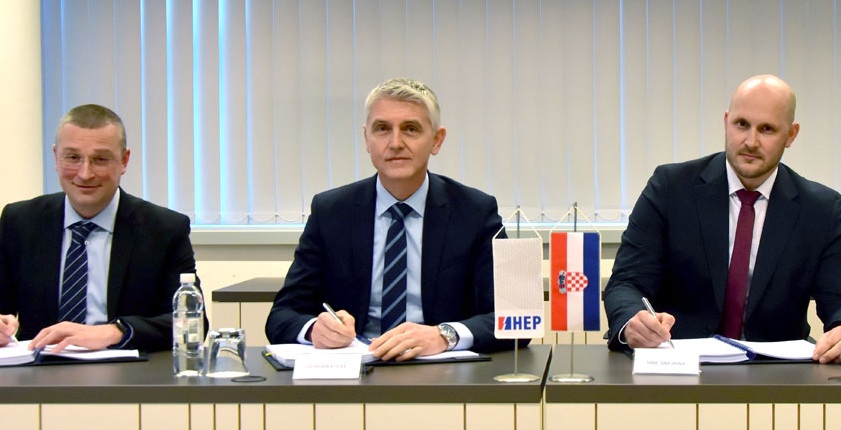
HEP’s power production arm HEP Proizvodnja selected Končar for the reconstruction of the generating units at the Varaždin hydropower plant. The contract was signed by the President of the Management Board of HEP Proizvodnja Šime Šimurina and Gordan Kolak, president of the Management Board of Končar.

The agreement is for the development of technical documentation, manufacturing the primary equipment and associated systems for two new generators, and delivering them. The agreed timeline for the works is 53 months, with completion expected in 2030, according to Končar.

In addition to replacing the generating units, covered by the new contract, the project entails the replacement or refurbishment of all other equipment in the machine room and dam, as well as the structures and infrastructure of HPP Varaždin, depending on their condition and in accordance with the current legal and technical requirements.

croatia hep koncar hpp varazdin contract paic kolak sipurina
Ivan Paić, member of Končar’s management board, Gordan Kolak and Šime Šimurina (photo: HEP)

The reconstruction of the HPP is estimated at EUR 157 million, while the contract with Končar is worth EUR 95.2 million. The combined capacity of each unit would increase from 47 MW to 55 MW. The new turbines are expected to bolster operational efficiency from 86% to 93%.

The endeavor is also aimed at enhancing water flow from 250 cubic meters per second to 275 cubic meters. Together with a rise in total capacity from 94 MW to 110 MW, it is supposed to lift average annual production, currently at 450 GWh, by 6%.

HPP Varaždin’s lifespan to be extended by 50 years

HPP Varaždin is near the city of Varaždin. Its current capacity of 94 MW is the sixth-highest among HEP’s 27 HPPs. Put into operation in 1975, it was the first hydropower plant on the Drava river in Croatia. The other two in cascade are Čakovec and Dubrava.

According to Končar, the reconstruction will extend the facility’s lifespan by at least 50 years.

by in News

Croatia’s HEP to invest EUR 157 million in HPP Varaždin

Croatia-based power utility Hrvatska Elektroprivreda (HEP) has contracted the reconstruction of its Varaždin hydropower plant. The project will increase the capacity of the 51-year-old facility by almost 20% and boost operational efficiency and annual production.

HEP’s power production arm HEP Proizvodnja selected Končar for the reconstruction of the generating units at the Varaždin hydropower plant. The contract was signed by the President of the Management Board of HEP Proizvodnja Šime Šimurina and Gordan Kolak, president of the Management Board of Končar.

The agreement is for the development of technical documentation, manufacturing the primary equipment and associated systems for two new generators, and delivering them. The agreed timeline for the works is 53 months, with completion expected in 2030, according to Končar.

In addition to replacing the generating units, covered by the new contract, the project entails the replacement or refurbishment of all other equipment in the machine room and dam, as well as the structures and infrastructure of HPP Varaždin, depending on their condition and in accordance with the current legal and technical requirements.

croatia hep koncar hpp varazdin contract paic kolak sipurina
Ivan Paić, member of Končar’s management board, Gordan Kolak and Šime Šimurina (photo: HEP)

The reconstruction of the HPP is estimated at EUR 157 million, while the contract with Končar is worth EUR 95.2 million. The combined capacity of each unit would increase from 47 MW to 55 MW. The new turbines are expected to bolster operational efficiency from 86% to 93%.

The endeavor is also aimed at enhancing water flow from 250 cubic meters per second to 275 cubic meters. Together with a rise in total capacity from 94 MW to 110 MW, it is supposed to lift average annual production, currently at 450 GWh, by 6%.

HPP Varaždin’s lifespan to be extended by 50 years

HPP Varaždin is near the city of Varaždin. Its current capacity of 94 MW is the sixth-highest among HEP’s 27 HPPs. Put into operation in 1975, it was the first hydropower plant on the Drava river in Croatia. The other two in cascade are Čakovec and Dubrava.

According to Končar, the reconstruction will extend the facility’s lifespan by at least 50 years.

by in News

Slovenia again uses shortcut to meet national renewables target

Slovenia will purchase renewable energy from Croatia through a statistical transfer to meet its 2024 renewable energy target.

A statistical transfer is allowed at the European Union to help member states meet their national renewable energy targets. This will be the fourth time Slovenia has used this option in the 2020-2024 period.

Since 2020, the 25% goal for renewable energy’s share in gross final consumption has only been reached in 2023. The shortfall for 2024, when the share was 24.6%, will be covered by purchasing 207 GWh from Croatia for EUR 1.78 million, or EUR 8.60 per MWh, Žurnal24 reported.

The Czechs and Croats have benefited from Slovenia’s failure to reach the set goal

In 2020, Slovenia paid the Czech Republic EUR 5 million for a missing 465 MWh. The same country assisted it in 2021 as well, and the price for the service was EUR 2 million, for 208 MWh. According to the Ministry of Infrastructure, which was in charge of energy at the time, it did it to retain access to the EU’s Cohesion Fund for 2021-2027.

Slovenia paid the most in 2022, EUR 10.8 million for 1,193 MWh, to Croatia. In total, since 2020, nearly EUR 20 million has been spent on statistical transfers from the Czech Republic and Croatia.

EUR 20 million in total went to Czechia and Croatia

The government in Ljubljana covered the cost from renewable energy support funds, managed by electricity market operator Borzen.

The problem could become even bigger as the national target will increase to 33%

The Ministry of Environment, Climate and Energy attributed the failure to reach the 2024 goal to an increase in the consumption of fossil fuels.

It was 1 TWh higher than in 2023. However, the issue could get even worse. Slovenia faces new targets from 2030 on.

The minimum share set in the National Energy and Climate Plan (NECP) is 33%. It means that the share should increase by at least 1.6 percentage points per year on average over the next five years to avoid new payments.

by in News

Slovenia again uses shortcut to meet national renewables target

Slovenia will purchase renewable energy from Croatia through a statistical transfer to meet its 2024 renewable energy target.

A statistical transfer is allowed at the European Union to help member states meet their national renewable energy targets. This will be the fourth time Slovenia has used this option in the 2020-2024 period.

Since 2020, the 25% goal for renewable energy’s share in gross final consumption has only been reached in 2023. The shortfall for 2024, when the share was 24.6%, will be covered by purchasing 207 GWh from Croatia for EUR 1.78 million, or EUR 8.60 per MWh, Žurnal24 reported.

The Czechs and Croats have benefited from Slovenia’s failure to reach the set goal

In 2020, Slovenia paid the Czech Republic EUR 5 million for a missing 465 MWh. The same country assisted it in 2021 as well, and the price for the service was EUR 2 million, for 208 MWh. According to the Ministry of Infrastructure, which was in charge of energy at the time, it did it to retain access to the EU’s Cohesion Fund for 2021-2027.

Slovenia paid the most in 2022, EUR 10.8 million for 1,193 MWh, to Croatia. In total, since 2020, nearly EUR 20 million has been spent on statistical transfers from the Czech Republic and Croatia.

EUR 20 million in total went to Czechia and Croatia

The government in Ljubljana covered the cost from renewable energy support funds, managed by electricity market operator Borzen.

The problem could become even bigger as the national target will increase to 33%

The Ministry of Environment, Climate and Energy attributed the failure to reach the 2024 goal to an increase in the consumption of fossil fuels.

It was 1 TWh higher than in 2023. However, the issue could get even worse. Slovenia faces new targets from 2030 on.

The minimum share set in the National Energy and Climate Plan (NECP) is 33%. It means that the share should increase by at least 1.6 percentage points per year on average over the next five years to avoid new payments.

by in News

Croatia launches subsidy call for electric taxi, delivery, car-sharing vehicles

The Government of Croatia has launched a public call to grant subsidies for the purchase of electric vehicles intended for use in taxi, delivery, and car-sharing services.

This is the first public call in Croatia for co-funding for the purchase of electric vehicles for taxi, delivery, and car-sharing services.

The program for the allocation of non-refundable aid was published by the Croatian Ministry of Environment and Green Transition. The call is part of a mechanism for investments in road transport with zero emissions.

The grants were secured via the European Union’s Modernisation Fund.

There is EUR 22 million earmarked for taxi drivers,

From the entire EUR 45 million package, taxi drivers are entitled to EUR 22 million, versus EUR 20 million for delivery vehicles, while EUR 3 million is set for car sharing providers, according to the public call.

The ministry aims to support the purchase of zero-emission vehicles – EVs of categories M1 or N1, to achieve a reduction in greenhouse gas emissions in the transport sector by 20.99% by 2030 from the 2005 level.

In category M1 are passenger vehicles with a maximum of nine seats, and N1 are light commercial vehicles with a maximum permissible weight of 3.5 tons. The maximum subsidy per vehicle is EUR 9,000, meaning the call should co-finance the purchase of at least 5,000 EVs.

North Macedonia is supporting the purchase of EVs for taxi drivers

The submission of applications kicks off on January 15, 2026. It lasts until the funds are exhausted, or at the latest until September 30, 2026.

Three months ago a subsidiy program for taxi services was launched in North Macedonia.

The Ministry of Environment and Spatial Planning and an association of cab drivers are implementing a project to subsidize 200 EVs.

It is a part of efforts for cleaner, quieter, and more efficient urban transportation for the citizens of Skopje and the entire country. It is one of the cities with the most polluted air in the world.