by in News

Brazil’s COP of Truth leaves out fossil fuels, deforestation from final deal

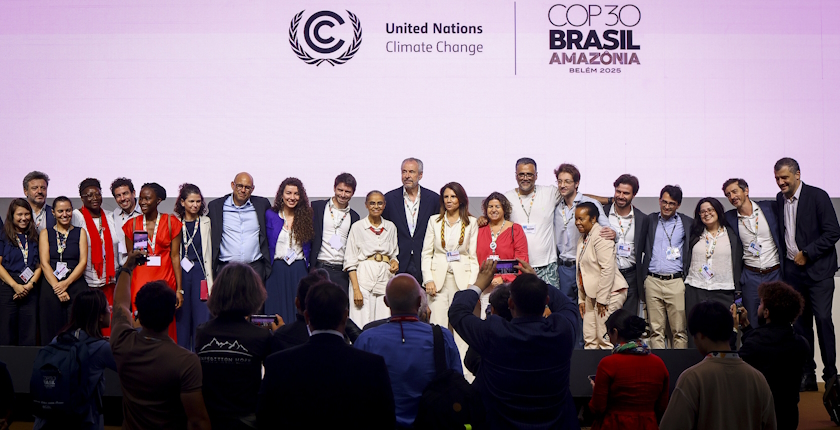
The United Nations Climate Change Conference COP30 was concluded with a deal to keep the world’s ambitions similar, after modest progress on some issues. In a last-minute compromise between the delegates of the wealthy, the poor and the countries most in jeopardy, the declaration from the so-called COP of Truth contains no explicit reference to fossil fuels and deforestation.

Participants at the Conference of the Parties of the UN Framework Convention on Climate Change (UNFCCC) in Belém, Brazil, acknowledged that the world is heading for a temporary overshoot above 1.5 degrees Celsius in warming, according to UN Secretary-General António Guterres.

“I cannot pretend that COP30 has delivered everything that is needed. The gap between where we are and what science demands remains dangerously wide. I understand many may feel disappointed – especially young people, indigenous peoples and those living through climate chaos. The reality of overshoot is a stark warning: we are approaching dangerous and irreversible tipping points,” he stated.

It’s difficult to reach a consensus in a period of deep geopolitical divide, Guterres pointed out. Nevertheless, he praised the final agreement for “delivering progress and showing that multilateralism works.”

Global Mutirão

The hosts nicknamed COP30, this year’s UN Climate Change Conference, the COP of Truth. Ironically, due to a last-minute compromise, or maybe consensus, the declaration contains no explicit reference to a fossil fuel phaseout and halting and reversing deforestation. They were left for separate roadmaps.

In the document, the signatories only refer to the COP28 decision, also known as the UAE Consensus, which called for transitioning away from fossil fuels.

The headline of the overarching deal adopted in Belém is Global Mutirão: Uniting humanity in a global mobilization against climate change. The Portuguese word mutirão originates from the indigenous Tupi-Guarani language and roughly means collective effort.

UN’s Stiell vows to keep up climate fight

All in all, delegates from all over the world, except the United States, left the desired decarbonization trajectory little changed. The countries most at risk of the climate disaster are generally poor. They depend on mitigation aid and investments from the wealthy part of the world.

“We knew this COP would take place in stormy political waters. Denial, division and geopolitics has dealt international cooperation some heavy blows this year,” UN Climate Change Executive Secretary Simon Stiell said at the closing.

Denial, division and geopolitics has dealt international cooperation some heavy blows this year, UN Climate Change Executive Secretary Simon Stiell said

In his view, nations chose solidarity, science, and economic common sense.

“COP30 showed that climate cooperation is alive and kicking, keeping humanity in the fight for a livable planet, with a firm resolve to keep 1.5 Celsius within reach. I’m not saying we’re winning the climate fight. But we are undeniably still in it, and we are fighting back,” Stiell stated.

The world’s top climate official noted that, for the first time, 194 countries agreed that the global transition to low greenhouse gas emissions and climate resilience is irreversible and the trend of the future, referring to a line from the deal.

COP30 pledges to triple adaptation funds by 2035

In the decision, the signatories kept the target USD 1.3 trillion per year that needs to be mobilized for climate action by 2035. USD 300 billion would be mostly grants and subsidized loans, while private financing and climate taxation dominate the rest.

The parties voted for a goal to provide three times more per year for climate adaptation from the smaller pot by 2035, instead of the initially proposed 2030 deadline. They failed to determine a figure, but it is mostly estimated at USD 120 billion per year.

One of the novelties is a pledge to promote information integrity regarding climate, which would also imply countering disinformation.
by in News

COP30 in Brazil: one decade after Paris Agreement, world is still far from its climate goals

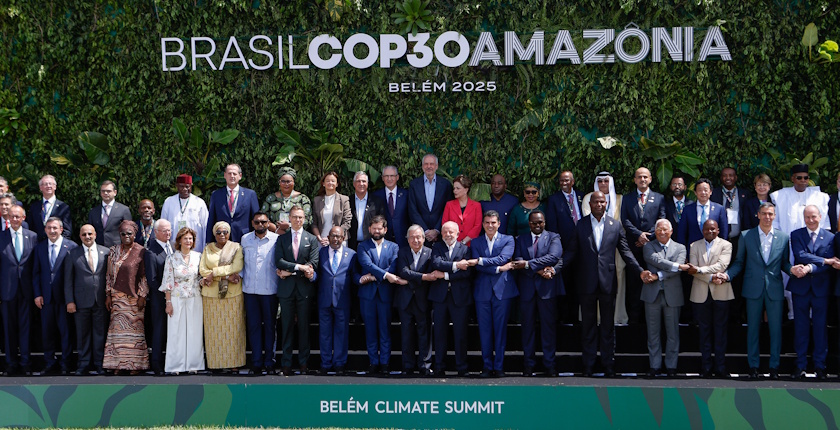
The two-week United Nations Climate Change Conference COP30 is taking place in Brazil. It brought together delegations from more than 190 countries to discuss the challenges of climate change and measures for mitigation and adaptation. The current COP marks ten years since the Paris Agreement, at a time of significant hurdles on the path to achieving global climate goals.

According to preliminary data from the World Meteorological Organization, this year will be the second or third warmest ever recorded on the planet. The 30th Conference of the Parties (COP30) to the United Nations Framework Convention on Climate Change (UNFCCC) is being held in Belém, Brazil — a city situated in the heart of our planet’s lungs, the Amazon rainforest.

Brazil carries symbolic weight, as the UNFCCC was signed there in 1992.

Lula da Silva: Climate change is no longer a threat of the future, it is a tragedy of the present

In the decade following the adoption of the Paris Agreement at COP21, some progress has been made in the fight against climate change — but it remains insufficient. In his opening speech, Brazilian President Luiz Inácio Lula da Silva stressed that climate change is no longer a threat of the future but a tragedy of the present. He called this year’s summit a “moment of truth.”

When the Paris Agreement was signed, scientific projections were showing that without decisive climate action, global temperatures could rise by more than four degrees Celsius before the end of the 21st century. “We are moving in the right direction, but at the wrong speed,” Lula said, also pointing to climate misinformation as a major obstacle to planning and implementing effective measures.

Guterres: We have failed to stop global warming

United Nations Secretary-General António Guterres said in his address that the harsh truth is that the world has failed to keep global warming within 1.5 degrees Celsius.

Just days before the summit, the UN Environment Programme (UNEP) released its annual report showing that, under current policies, the 1.5-degree limit will be reached within the next decade – and the planet will warm by 2.8 degrees by the end of the century.

Guterres: This is moral failure – and deadly negligence

“Even a temporary overshoot will have dramatic consequences. It could push ecosystems past irreversible tipping points, expose billions to unlivable conditions, and amplify threats to peace and security. Every fraction of a degree means more hunger, displacement, and loss – especially for those least responsible. This is moral failure – and deadly negligence,” Guterres warned.

Still, he emphasized that the UN has not given up on the 1.5-degree goal. “We have never been better equipped to fight back,” he said, adding that the clean energy revolution is gaining unstoppable momentum.

In the first half of 2025, renewables overtook coal as the top source of global electricity. Renewable energy is now cheaper than fossil fuels, and the cost of electricity storage continues to decline.

The US will not participate in negotiations

One of the world’s largest greenhouse gas emitters – the United States – has sent representatives to the summit, but President Donald Trump’s administration announced it would not take part in negotiations. In January, he announced that his country would withdraw from the Paris Agreement, and later called climate change “the greatest con job ever perpetrated on the world” during a speech at the UN in September.

Focus on implementing existing commitments

The main focus of COP30 in Belém is the implementation of previously agreed commitments and the enforcement of the Paris Agreement. The reduction of greenhouse gas emissions remains a key topic, alongside the first Global Stocktake – a comprehensive assessment of progress toward the Paris goals, aimed at encouraging countries to submit more ambitious national climate plans.

Despite some progress, the latest nationally determined contributions (NDCs) remain far from sufficient to prevent the most severe effects of climate change.

Another central issue will be the establishment of a New Collective Quantified Goal on Climate Finance – determining the scale, timelines, and mechanisms for funding, as well as the share of resources that must go toward adaptation and support for the most vulnerable communities.

According to UNEP’s Adaptation Gap Report 2025, developing countries will need more than USD 310 billion annually by 2035 to adapt to climate impacts, yet they currently have access to only a fraction of that amount.

Toward a just transition and nature protection

Delegates will also discuss operationalizing the Global Goal on Adaptation, which aims to measure progress in building climate resilience.

Another key topic will be the concept of a just transition, with a proposal to establish the Belém Action Mechanism for Just Transition – a new framework to ensure that climate and economic transitions put people at the center. It would include job creation, retraining programs, and support for communities dependent on fossil fuel industries.

Given that COP30 is taking place in the heart of the Amazon, particular attention is dedicated to nature and forest conservation. Brazil plans to present the Tropical Forests Forever Facility, an initiative designed to secure long-term funding for the protection of tropical forests.

by in News

EU waters down its 2040 climate target in runup to COP30 in Brazil

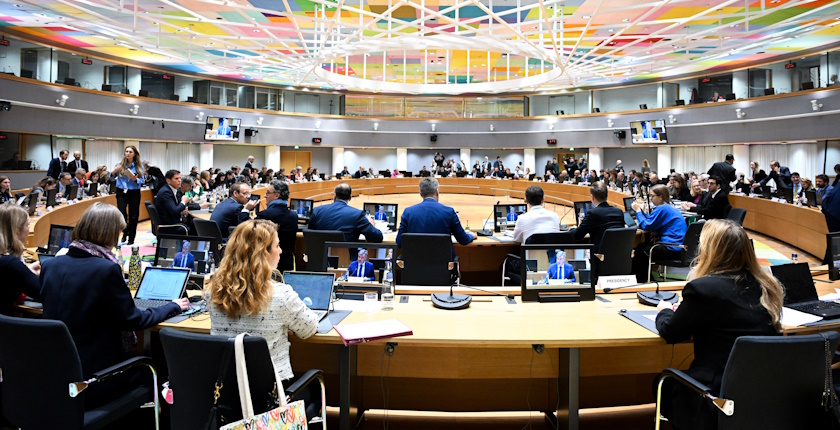
The Council of the European Union upheld the proposed 90% emissions cut target for 2040 ahead of the United Nations Climate Change Conference COP30 in Brazil, but with substantial workaround possibilities. In addition, the environment ministers failed to define the 2035 ambition, leaving the desired reduction in the amount of released greenhouse gases in a range of 66.25% to 72.5%.

Faced with declining competitiveness due to high energy prices and its strict climate and environmental standards, the EU is loosening its decarbonization goal. Following a marathon session in Brussels, the so-called Environment Council kept the desired greenhouse gas emissions reduction by 2040 at 90%, against the 1990 level, to take it to the COP30 event in Belém, Brazil. However, the competent ministers making up the body allowed several important flexibilities to avoid a last-minute stalemate.

Namely, the Council of the EU approved an updated nationally determined contribution (NDC) of the 27-member bloc and individual states to submit it at the Conference of the Parties of the UN Framework Convention on Climate Change (UNFCCC). Political leaders are gathering tomorrow, while COP30 formally lasts from November 10 to 21.

Following the 2020 NDC and its 2023 update, the new one covers the period up to 2035.

Outsourcing climate improvements instead of domestic decarbonization

On the path to eliminating net emissions by 2050, the EU is sticking with its nominal 2040 goal. On the other hand, in the latest version, the environment ministers allow “an adequate contribution of high-quality international credits in a manner that is both ambitious and cost-efficient.”

In particular, five percentage points of the 90% can be met via emission cuts promised outside the EU, and governments would be allowed to outsource a further five points, Greenpeace warned. It means they would buy carbon credits abroad as offsets.

EU is counting on purchases of other countries’ carbon credits for offsets

“The European Scientific Advisory Board on Climate Change [ESABCC] had called for emissions cuts of 90%-95% by 2040, and had stressed that this target must be for domestic reductions to climate pollution, not cuts outsourced to other countries. Environment ministers also agreed that the European Commission should reopen and water down the climate target in the case of high energy prices, a perceived negative economic impact or in light of technological advances. To reach a deal with reluctant countries, ministers also agreed to delay the start of the EU’s carbon market for pollution from cars and heating systems, extend pollution permits for heavy industry and exempt some ‘low-carbon’ fuels under the internal combustion engine phaseout,” the organization added.

The carbon market in question is the planned Emissions Trading System 2 (EU ETS 2). The Environment Council proposed to delay its establishment by a year, until 2028, and work on measures for a smooth launch.

“According to the ESABCC, only 16% of offsets have delivered genuine emissions reductions. But if they were high-quality offsets, they would be costly, and relying on them would divert investment from transforming the EU’s own industries, economy, and workers,” World Wide Fund For Nature (WWF) pointed out.

Indicative range for 2035 goal entirely below required efforts

The protracted discussions between the EU’s national governments also delayed the announcement of the EU’s indicative climate target for 2035, under the Paris Agreement. It is supposed to be submitted at the UN Climate Change Conference COP30.

“Ministers failed to agree a firm 2035 target, instead keeping a previously agreed range of 66.25% to 72.5% emission cuts, even the upper end of which is inconsistent with a credible pathway to the proposed 90% cut for five years later, undermining the EU’s position as a climate leader at COP30,” Greenpeace stressed.

Climate-competitiveness-independence tradeoff

The European Parliament’s Committee on Environment, Public Health and Food Safety (ENVI) is expected to discuss the matter soon. After a plenary vote, the institution would negotiate with the Council of the EU and European Commission.

“We need climate, competitiveness and independence. All three are crucial and going forward we need to ensure that one doesn’t come at the expense of the other. This morning, the environment and climate ministers of all member states reached a pragmatic, ambitious deal which ensures that,” said European Commissioner for Climate, Net-Zero and Clean Growth Wopke Hoekstra.