by in News

EDP Renewables sells wind farms in Greece to Enel-Macquarie joint venture

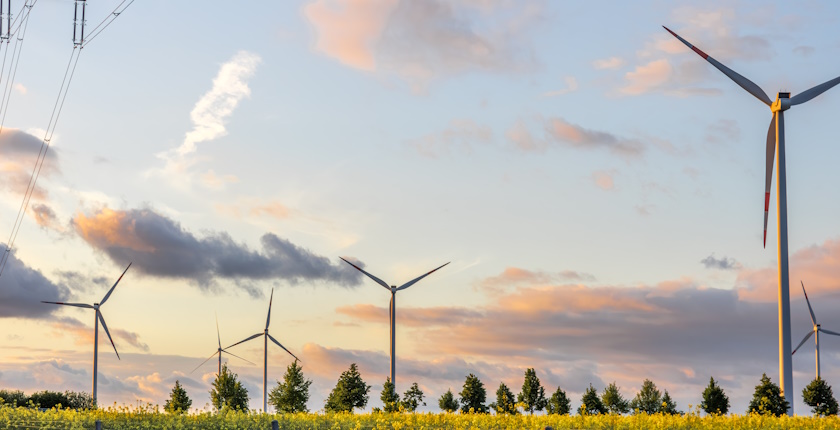
Principia agreed to acquire all four EDPR’s wind power plants in Greece. The joint venture of Enel and Macquarie Asset Management’s funds is nearing 800 MW in renewable energy and battery storage capacity in the country.

Principia, owned equally by Italy-based Enel and funds managed by Macquarie Asset Management, headquartered in Australia, is strengthening its presence in Greece with a purchase of four wind farms. EDP Renewables is selling the facilities to the firm after reportedly deciding to exit the country.

The joint venture, which expects to close the transaction later this year, revealed that the estimated enterprise value exceeds EUR 200 million. The measure can include debt and some other items. The takeover is adding 149.6 MW to its operational capacity, which would reach 727 MW, from 70 power plants. Wind power accounts for 517.8 MW.

With the purchase, Principia will operate a total of 517.8 MW in wind power capacity.

“The acquisition of this portfolio strategically strengthens Principia’s presence in the Greek renewable energy market, in a constantly evolving environment, and reaffirms a role of leadership in the country’s energy transition. With this investment, we further reinforce our position in the Greek clean energy market and take another step toward delivering on our ambitious plan for growth, diversification, and reliable clean energy generation across Greece,” Principia’s Chief Executive Officer Aristotelis Chantavas said.

All four wind farms operate within CfD scheme

All four wind farms are operating under 20-year contracts for difference (CfDs). Livadi (45 MW) and Erimia (35 MW) are in Malesina, Phthiotis. Wind power plants Xironomi (36 MW) and Chalcodonio (33.6 MW) were commissioned this year. They are located in Boeotia, Central Greece, and Magnesia, Thessaly, respectively.

Newmoney learned, without revealing its source, that Terna Energy, ENI Plenitude, HELLENiQ Energy and some investment funds also participated in the process, interested in the portfolio. The acquisition will lift Principia by one notch to become third among the largest wind farm operators in the country, the article adds.

Principia aims to complete construction of 49 MW battery system by year-end

Principia has another 230 MW under construction or in the ready-to-build stage, and 5.6 GW more in various stages of development.

It is building a battery energy storage system (BESS) of 49 MW in Polygyros, in the Halkidiki peninsula. It won government support at Greece’s second energy storage auction.

The Paleolivada facility is due to come online before the end of the year. Construction began in March. It will have 98 MWh in guaranteed capacity, versus 127 MWh installed.

The firm has a mature project for a hybrid power plant of 111 MW and 70 MW of solar power capacity. The site is in Atherinolakos, in Sitia in the south of Crete.

Principia inaugurated a photovoltaic cluster of 95 MW in May. The Perasma facility, near the villages of Mavrodendri and Sidera, is set to generate 126.8 MW per year. It comprises seven units and 170,000 bifacial panels.

Macquarie Asset Management agreed to buy 50% of Enel Green Power Hellas in 2023.

Of note, EDP Renewables (EDPR) is headquartered in Spain, but traded on the Euronext Lisbon stock exchange. It is a subsidiary of EDP.
by in News

Production starts at new 38.4 MW wind farm northeast of Bucharest

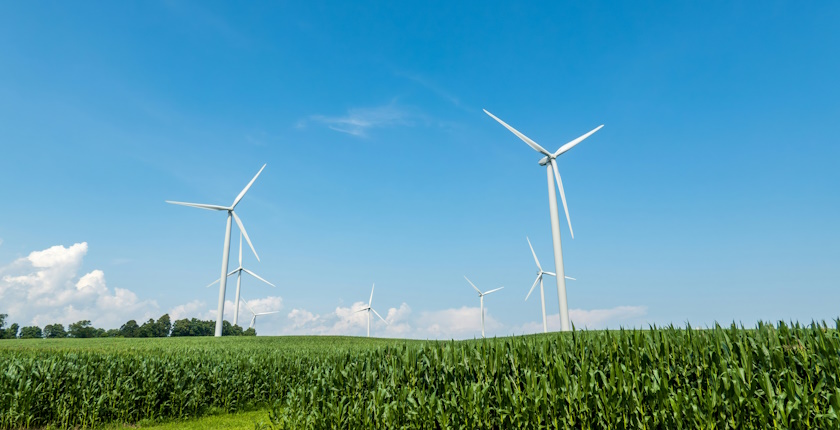
Eximprod, which installed the first wind turbine in Romania more than two decades ago, delivered the first megawatt-hours to the grid from its new wind farm in the country’s east. In addition, it is about to receive a commercial operating license for a 49.5 MW solar park in Prahova county.

Several other wind parks are also under construction amid a revival in investments in Romania. Rezolv recently secured financing for phase 2 of its Vifor wind power plant, set to become one of the largest in Europe.

Romania has been enjoying a solar power boom for the past three years, and the pace of the construction of battery energy storage facilities (BESS) is accelerating. On the wind energy front, the country’s capacity has barely held above 3 GW for a long time after the 3.24 GW peak in 2014, due to the failure of an incentives mechanism. But the investment momentum is strengthening – notably, Eximprod said it launched the operation of its 38.4 MW wind power plant in the Galați area.

The company actually installed the first wind turbine in Romania. In 2003, it put online the Vestas V 47 machine of 660 kW in Topolog in Tulcea County in the country’s east.

Eximprod Group (EPG) also provides equipment and services in the energy sector. The company’s contractor Lemacons poured concrete less than half a year ago for the foundation of the first wind turbine in the new Cudalbi 2 facility. It is located in Galați county in eastern Romania, in the Western Moldavia region.

Eximprod received support through National Recovery and Resilience Plan

Cudalbi 2 is the first wind park in the country with Enercon turbines in 12 years. The model is E-160 EP5 E2, of 5.5 MW. Eximprod has won state support for the project northeast of Bucharest via the National Recovery and Resilience Plan (NRRP or, in Romanian, PNRR). The funds are approved under the European Union’s Recovery and Resilience Facility (RRF).

The company has also built the nearby Cudalbi 1 wind farm of 54 MW, consisting of nine turbines.

In addition, Eximprod is about to receive the commercial operating license from National Energy Regulatory Authority (ANRE) for its Solar System Project photovoltaic plant. It completed the facility with 49.5 MW in connection capacity in April. According to its documentation, the facility has 65 MW in peak capacity. It consists of five units with grid connections of 9.9 MW each.

The solar park is in Ciorani, Prahova county, north of the capital city. The endeavor was reportedly worth EUR 56.2 million including a grant of EUR 13.4 million from the NRRP. The company plans to add a BESS unit of 21 MW in operating power. The said final permit will allow the project firm to sell electricity.

Lenders indicate confidence in Romania’s wind power market with financing package for Vifor

In other recent news, Rezolv secured a EUR 331 million financing package for the 269 MW second phase of its Vifor wind farm in Buzău county. It includes EUR 44 million from the European Bank for Reconstruction and Development (EBRD).

Erste Group, UniCredit Group, International Finance Corp. (IFC), Intesa Sanpaolo Group, OTP Bank and Raiffeisenlandesbank Niederösterreich-Wien all participate in the arrangement.

The Vifor wind park would consist of 72 turbines of 6.4 MW each

The first part of Vifor is under construction and scheduled for commissioning in the spring. Rezolv plans to complete phase two in late 2027.  The wind park would be one of the biggest in Europe, at 461 MW. The company is installing 72 Vestas V162 turbines of 6.4 MW.

Rezolv won a contract-for-difference (CfD) at the country’s first renewable energy auctions for phase 2, for 240 MW. The government approved 1.1 GW for wind power. The qualifications phase is ongoing for the second round of auctions, for 2 GW for wind park projects and 1.47 GW for photovoltaics.

Several wind farms under construction

According to the International Renewable Energy Agency (IRENA), Romania had just under 3.1 GW in wind power capacity in operation at the end of 2024.

Eurowind Energy built the turbines earlier this year at its Pecineaga wind park. Greece-based Public Power Corp. (PPC) is supposed to connect its Deleni facility to the grid before the end of the year.

OX2 is building the Green Breeze wind farm as the turnkey contractor for the investor, Nala Renewables.

by in News

Montenegro sets November 10 deadline for first solar power auction

Legal entities and entrepreneurs in Montenegro are preparing to compete for market premiums with their solar power projects. The quota for the first such auction in the country is 250 MW, and applications close on November 10.

Following the completion of the legal framework with laws and decrees, the Montenegrin Ministry of Energy and Mining issued a public call for investors to participate in an auction for market premiums with their solar power projects. The government would provide support for 12 years.

Legal entities and entrepreneurs have until November 10 to send the envelopes with bank guarantees, documents proving that they are qualified, and their financial bids. The address is: Ministarstvo energetike i rudarstva, Rimski trg 46, 81000 Podgorica. The first such auction in Montenegro will be held for “unspecified locations,” which means that the planned photovoltaic systems can be located in any area in the country.

The available capacity is 250 MW, and eligible projects are for at least 400 kW each. There is no nominal upper limit for project capacity for which a potential participant bids, except the total quota itself.

However, the quota can be extended, by a maximum of 20%. The government said there is an extra 50 MW available for the inclusion of an entire eligible project that entered the quota only partially, or more such projects, in case the bids for them were equal. But if the part of the capacity that surpassed the quota is larger than the possible extension, the commission would award a market premium only for the part that did fit the quota.

Price to be adjusted for inflation every year

The accepted price, from the financial offer of a participant that obtained the status of a temporarily privileged producer through the auction, will be adjusted for the Eurozone inflation rate once per year.

Some of the qualification conditions are that the project didn’t or doesn’t benefit from government incentives, that construction works haven’t begun and that the developer hasn’t secured financing for their completion.

The lowest bids win, and the maximum allowed price is EUR 65 per MWh. The market premium is awarded via a contract for difference (CfD).

Namely, the operator of a renewable electricity plant has a guaranteed price, approved through the auction. When the firm sells electricity in the market at a higher price, it must return the difference. And vice versa: when the beneficiary gets less per megawatt-hour than the contract price, they are reimbursed.

Bank guarantees are EUR 20 per kW or EUR 40 per kW

As for the bank guarantees, they are determined at EUR 20 per kW (EUR 20,000 per MW) of the offered capacity for participants that have signed a contract for the construction of the infrastructure for a grid connection and for connecting the facility, or EUR 40 per kW for ones that have at least obtained an analysis of the possibility for a grid connection, from the transmission or distribution system operator, according to the documentation.

Upon the expiration of the deadline, the commission conducts the process of determining the eligibility of the bidders and projects, after which it opens and ranks the financial bids.

Minister of Energy and Mining Admir Šahmanović said the competitive bidding process is in the public interest: for the security of supply, opening the way for investments in other sectors and for investor confidence. He told the Mina-business news agency that the auction would bring more stable prices in the long run.

Conducting renewable electricity auctions is one of the commitments toward the European Union that were defined by the Reform Agenda of Montenegro 2024-2027. It contains the conditions for the approval of up to EUR 383 million from the Growth Plan for the Western Balkans and the Reform and Growth Facility (RGF).

by in News

Montenegro determines quota, maximum price for solar power auction

At the forthcoming auction for market premiums for electricity from solar power plants in Montenegro, the participants will bid for state support for 250 MW in total capacity. The maximum price to compete for is EUR 65 per MWh and the contracts will last 12 years.

The Government of Montenegro adopted the decisions and directives necessary for issuing a public call to auction for solar power projects of at least 400 kW. The lowest bids will win, and the maximum price is EUR 65 per MWh. Market premiums will be awarded, via 12-year contracts for difference (CfDs).

Conducting renewable electricity auctions is one of the commitments toward the European Union that were defined by the Reform Agenda of Montenegro 2024-2027. It contains the conditions for the approval of up to EUR 383 million from the Growth Plan for the Western Balkans and the Reform and Growth Facility (RGF).

The sum consists of EUR 110 million in grants via the Western Balkans Investment Framework and highly concessional loans, as the EU calls them. WBIF would provide EUR 95 million and the remainder is for the state treasury.

The commission responsible for the auction will extend the quota by up to 50 MW if it fits in one or more eligible projects in their entirety

The country plans solar and wind power auctions for 400 MW in total capacity. The quota for the first auction for the rights to market premiums, only for photovoltaic projects, is 250 MW.

However, the quota can be extended, by a maximum of 20%. The government said the extra 50 MW is available for the inclusion of an entire eligible project that entered the quota only partially, or more such projects, in case the bids for them were equal. But if the part of the capacity outside of the quota is larger than the possible extension, the commission would award a market premium only for the part that did fit the quota.

Conversely, in case a share of the quota isn’t awarded, it can be switched to the next auction.

Under a CfD, the operator of a renewable electricity plant has a guaranteed price, approved through the auction. When the firm sells electricity in the market at a higher price, it must return the difference. And vice versa: when the beneficiary gets less per megawatt-hour than the contract price, they are reimbursed.

by in News

EU’s Modernisation Fund disburses EUR 3.66 billion for clean energy projects in nine countries

Energy modernization projects in nine member states of the European Union will receive a total of EUR 3.66 billion from the Modernisation Fund, in the largest disbursement to date from the facility financed by carbon pricing revenues, according to a press release from the European Commission. The selected projects focus on renewable energy, grid upgrades, energy storage, and energy efficiency.

The largest beneficiary of the latest disbursement is Poland, which will receive EUR 1.33 billion for its projects, followed by the Czech Republic, with EUR 1.05 billion, and Romania, with EUR 712.3 million. Hungary will get EUR 181.3 million, Croatia EUR 170 million, and Greece EUR 113.6 million. The rest will go to Latvia (EUR 40 million), Lithuania (EUR 37 million), and Slovenia (EUR 19.7 million).

Croatia will finance renewable heat production and zero-emission transportation, and Slovenia will upgrade power grid to integrate renewables

In Croatia, EUR 80 million will be used for the production and use of heat from renewable energy sources and energy efficiency improvement in heating and cooling systems. The rest will go to investments in zero-emission transportation. In Slovenia, the funding will facilitate renewables integration through the modernization and development of the electricity transmission and distribution network.

Greece, which became a Modernisation Fund beneficiary in January 2024, intends to replace urban diesel buses with new electric buses, improve energy efficiency in municipal swimming pools, and switch the heating and cooling systems in its greenhouse infrastructure to renewables.

In Romania, the funding will help improve the energy efficiency of facilities covered by the European Union’s Emissions Trading System (EU ETS), support the contract-for-difference (CfD) scheme for onshore wind and solar, and finance the installation of solar and wind power plants for self-consumption in the agricultural and food sectors and public institutions. It is also intended for investments in new solar, wind, and hydropower capacities and to support the modernization and rehabilitation of the district heating network.

In the Czech Republic and Lihtuania, the funding will support energy storage projects

Other example projects include investments in storage capacity for renewable electricity in the Czech Republic, investments in large-scale energy storage capacities in Lithuania, and a clean air program in Poland that focuses on energy efficiency improvements and heat source replacements in single-family houses, according to the press release.

The investments will reduce greenhouse gas emissions in the energy, industry, and transportation sectors, improve energy efficiency, and help the beneficiary states meet climate and energy targets, the commission said.

The projects will also help improve people’s everyday lives, by reducing bills, improving public services, creating jobs, and making the energy transition real, fair, and beneficial for all, according to Teresa Ribera, the European Commission’s Executive Vice-President for Clean, Just and Competitive Transition.

With this latest round of funding, the total disbursements from the Modernisation Fund since January 2021 have climbed to EUR 19.1 billion. The fund is financed by revenues from the auctioning of emission allowances under the EU ETS.

by in News

Turkey selects first hydropower reservoir for YEKA floating solar power auction

The reservoir of state-owned Electricity Generation Corp.’s Demirköprü hydropower plant is the first proposed area for Turkey’s planned floating solar power auction. The YEKA support mechanism provides grid permits for several decades and a period with guaranteed prices.

Within its ambition to grow the solar and wind power capacity to 120 GW in total by 2035, the Turkish government is counting on floating photovoltaics as well. The Ministry of Energy and Natural Resources proposed the reservoir of the Demirköprü hydropower plant for the first dedicated auction for the technology.

Detailed studies of the area are underway under the framework for the Renewable Energy Zones (REZ) state support mechanism, the announcement revealed. The scheme is better known by its Turkish acronym YEKA.

Demirköprü is on the Gediz river, east of Izmir, in Manisa province. Its owner is state-owned Electricity Generation Corp. (Elektrik Üretim A.Ş. – EÜAŞ). The 69 MW hydropower plant’s dam holds a reservoir with a regular surface of just under 48 square kilometers.

The Demirköprü hydropower plant’s reservoir spans almost 48 square kilometers under regular conditions

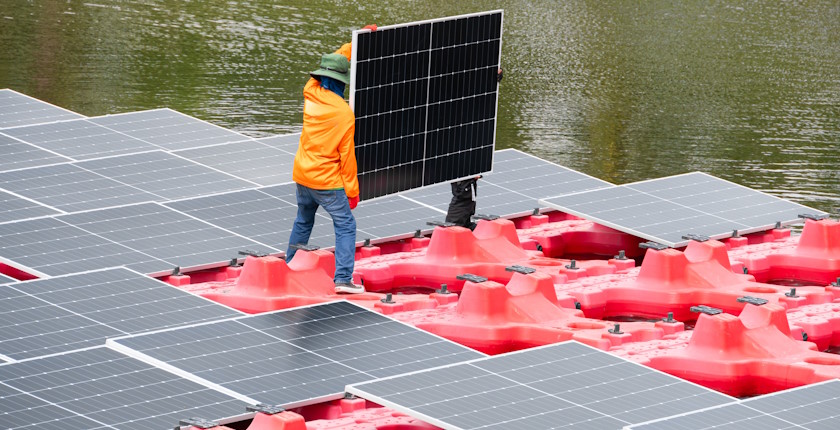
The country’s second floating solar power plant came online early this year. The only other such facilities in the region that Balkan Green Energy News covers are in Romania and Albania.

Turkey held auctions for 7.85 GW in total for wind and solar power, of which 3.8 GW for PV projects. Winners get grid permits for several decades and a period with guaranteed prices.

The country’s total electricity production capacity reached 119.3 GW by the end of May, of which 72.5 GW ran on renewable sources. Solar power accounted for 22.6 GW, compared to 20.4 GW in mid-February.

The ministry selected the first offshore wind power zones in August 2023.

by in News

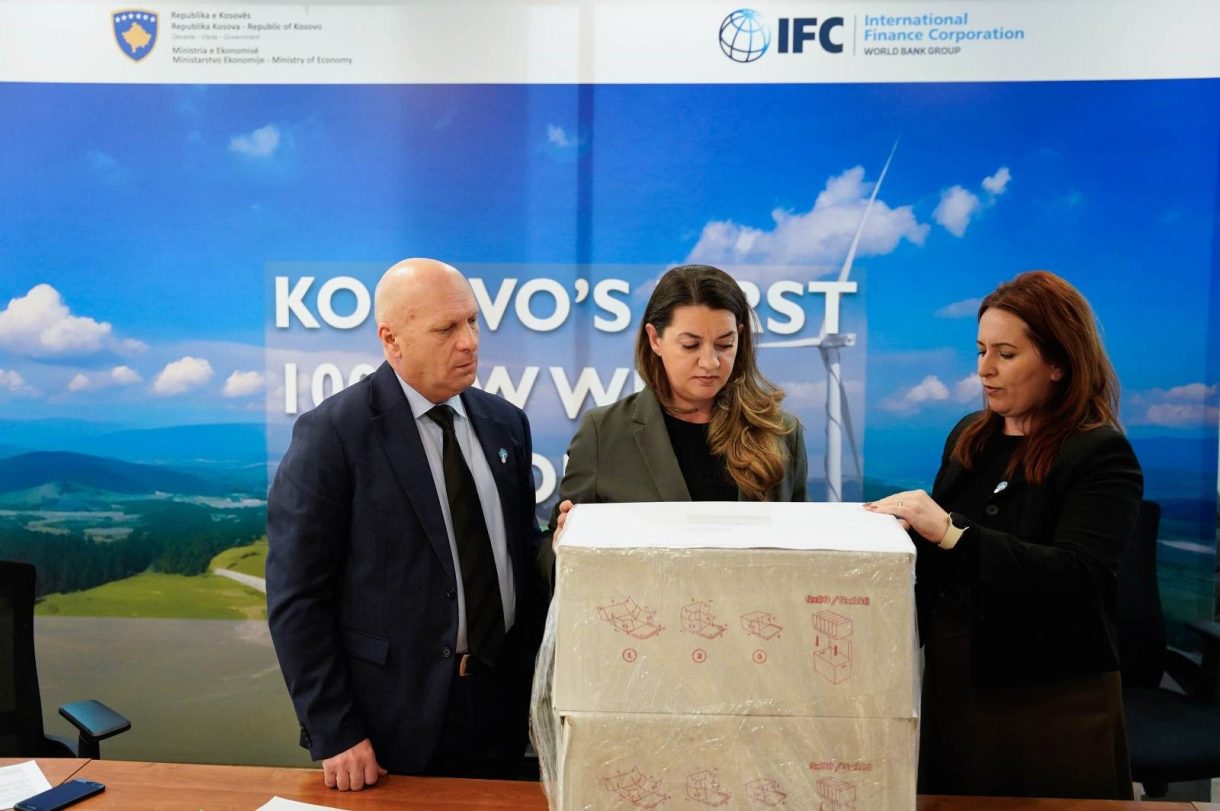
Kosovo* receives four applications for wind power auction

German, Kosovar, French and Turkish companies submitted documentation to qualify for the first wind power auction in Kosovo*. The plan is for the government to have a share of up to 49% in selected projects.

The Ministry of Economy of Kosovo* has publicly opened the applications within the qualifications call for the first wind power auction. The quota is 50 MW to 100 MW and the plan is to support 150 MW in total in two rounds. Participants will bid for 15-year power purchase agreements (PPAs) and contracts for difference (CfDs).

One applicant is a consortium of Notus Energy, based in Germany, and Stublla Energy from Kosovo*. The ministry also received documentation from Akuo Energy from France and a consortium led by Güri̇ş, headquartered in Turkey. Both companies participated in the first solar power auction as well, held last year.

The fourth one is the Kosovar consortium One Era. However, its application came half an hour after the deadline passed.

“The experience from the first 100 MW solar auction has taught us that only when we offer an opportunity for fair and transparent competition for the private sector, we not only evoke interest from serious and prestigious global companies, but also ensure favorable prices for citizens,” Minister of Economy Artane Rizvanolli said. She expressed commitment to high transparency and competition procedures.

Ministry planning to open final bids in August

The members of the auction commission are from the Ministry of Economy, Ministry of Environment, Spatial Planning and Infrastructure, Energy Regulatory Office (ERO) and Transmission, System and Market Operator (KOSTT). They are responsible for evaluating the applications concerning the financial, legal and technical requirements.

Next in the schedule is a request for proposals, due in March, after the completion of the qualifications phase. The participants can send their technical and financial proposals. The final bids would be opened in August. The maximum price is EUR 80.2 per MWh excluding value-added tax.

Curtailment is subject to financial compensation

The ministry plans to launch the second round by the end of the year. The winners will be obligated to design, build, operate, maintain and decommission wind parks. According to one brochure, the accepted price will be adjusted every 12 months, It will depend on the inflation rate for the sector.

Balancing responsibility is limited to imbalance volumes greater than 10%. Curtailment is subject to financial compensation.

Wind projects would be run by special purpose vehicles (SPVs), firms where the government would have a share of up to 49%. The Ministry of Economy intends to use the funds from the International Monetary Fund’s Resilience and Sustainability Facility (RSF) in the development of the 150 MW. The purpose of the public-private partnership scheme is to reduce risk for private investors.

* This designation is without prejudice to positions onstatus and is in line with UNSCR 1244/99 and the ICJ Opinion on the Kosovo declaration of independence.
by in News

Battery storage market in SEE emerging, Western Balkans lagging behind with positive prospects

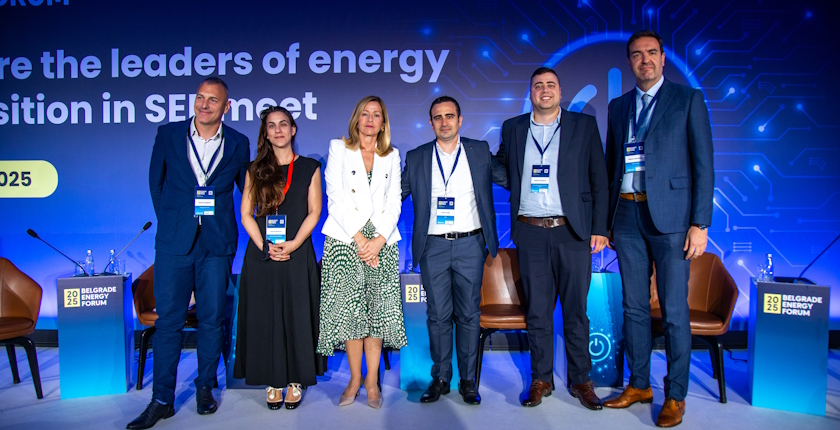
The deployment of battery energy storage systems (BESS) across Southeast Europe is progressing at an uneven pace. State subsidies and financing mechanisms have enabled the rapid implementation of BESS solutions in Greece, Romania and Bulgaria, while markets in the Western Balkans are lagging behind. However, the outlook remains positive, as experiences from neighboring markets and best practices from other parts of the European Union can help overcome initial challenges and streamline the deployment process. This was highlighted by participants of the panel dedicated to BESS at the Belgrade Energy Forum.

Among the technologies required for the energy transition, battery energy storage systems (BESS) stand out as a key factor for integrating electricity from intermittent renewable sources – wind and solar power – into the grid. There are few such facilities in Southeastern Europe and the segment is yet to even be fully regulated in the narrower Western Balkans region. The panelists at a session called Energy storage system market in SEE: trends and forecasts, at Belgrade Energy Forum (BEF 2025), outlined the trends in the budding market.

There are more and more cases of low and negative hourly prices in the wholesale electricity market in the region, providing a clear business case for BESS investments. In addition, the grid is often overloaded on weekends and holidays when solar and wind power production is high, given the weak demand.

Managing Director of Go2Power Consulting Goran Vukojević, who moderated the discussion, warned that negative prices may jeopardize system stability as well, if operators of power plants disconnect them from the grid at the same time, to avoid costs.

He highlighted the preparations in Serbia’s transmission system operator Elektromreža Srbije (EMS) for auctions for ancillary services and praised the company for transparency in regulating the competitive process. The other option for battery operators is to participate in the open market.

Managing Director of Go2Power Consulting Goran Vukojević moderated the panel discussion

Region seen with 9 GW of BESS operating power in 2030

Ioanna Barouni from Aurora Energy Research said a total of 40 GW of solar and wind power is expected to be online at the end of 2025 in the SEE region, comprising 12 countries, including Hungary. In 2030, the level is expected to reach 70 GW, which is expected to be doubled to 145 GW by mid-century. As for BESS, projections stand at 9 GW in 2030 and 25 GW in 2050.

Barouni: We miss flexibility and ancillary services for transmission and distribution system operators

The countries of the region are retiring power plants that use fossil fuels, a firm capacity, in Barouni’s words, while adding renewables. “It’s not very easy to predict how the generation profile is going to be during the day, so we miss flexibility and we miss ancillary services for TSOs and DSOs,” she said.

The gap between power prices for midday and the evening is gradually increasing. Barouni explained that batteries “create some artificial demand and absorb these low prices.” At peak demand and with less renewables, a battery can replace expensive fossil fuels, lowering the price.

Ioanna Barouni from Aurora Energy Research (pictured left) and Head of Specialized Lending at UniCredit Bank Serbia Svetlana Cerović

Serbia preparing auctions for ancillary services

Division Manager of transmission system operator (TSO) EMS Nikola Tošić acknowledged that Serbia is preparing auctions for ancillary services. He revealed that there would probably be one auction for 70% of the needed reserve in the first year. The next rounds would be more frequent, shifting toward daily auctions for balancing capacity.

In the verification process, EMS’s System Operation Department will first test the battery, Tošić added. State-owned power utility Elektroprivreda Srbije (EPS) already provides ancillary services to the TSO, so it won’t require tests, he asserted.

Serbian law defines ancillary services the same as European Union does

EMS drafted the new grid code, and it will publish the draft balancing market code for public discussion soon, according to Tošić. He said the domestic law defines ancillary services in the same way as the EU defines them in its legislation. One part is balancing services: frequency containment reserve (FCR, primary), automatic frequency restoration reserve (aFRR, secondary) and manual frequency restoration reserve (mFRR, tertiary). The other part are non-frequency services – energy.

“We think that it would be good to incentivize the periods of the year or periods of day when the needed amount of reserve is more attractive or more in demand,” Tošić said.

Market Division Manager of EMS Nikola Tošić

Fortis Energy moving ahead with battery investments regardless of government support schemes

Fortis Energy’s Chief Executive Officer for Eastern Europe Nikola Oklobdžija considers the lack of regulation to be the biggest challenge for developers. An investor can currently only focus on charging the batteries when the prices are low and sell when they are high, he underscored.

The Turkey-based company develops photovoltaic, wind power and BESS projects in the region. The first bigger investments in renewable electricity plants with energy storage are the ones that will break the ice, in Oklobdžija’s opinion.

“Of course, it helps if you have a CfD contract, so the banks will look at it more favorably,” he stated. Oklobdžija added that companies need to be able to present revenue to the lenders and what the fees are for renting the capacity or providing different services.

Bankability depends on state support and PPA contracts, cash flow models and insurance

In the meantime, Fortis is examining the experiences in Bulgaria and Greece, which have already held auctions for standalone batteries. Financing a project is easier with a CfD – contract for difference, but the company is determined to push ahead anyway, Oklobdžija stressed.

In North Macedonia it commissioned a solar power plant in Oslomej and recently contracted a BESS to be added to the facility. Oklobdžija said it wasn’t a requirement but that Fortis opted for energy storage because of market pressure with prices and occasional curtailments, like during Easter last month.

The introduction of ancillary services would facilitate the development for standalone battery systems, he explained.

Fortis Energy’s CEO for Eastern Europe Nikola Oklobdžija

Cerović: First there will be more projects for colocated BESS units than for standalone facilities

Head of Specialized Lending at UniCredit Bank Serbia Svetlana Cerović highlighted the intensive activity in Germany and Italy, for instance, but also in neighboring Romania. UniCredit is present in those markets and is analyzing the development of the battery storage market, she pointed out, arguing that the best practices in the EU are the best way for building and financing battery storage.

Cerović said there would first be more projects in the region for BESS colocated with renewable energy plants than standalone units.

She suggested that the proposed investments that include storage should be better pondered at the next renewable energy auction in Serbia. It is in the country’s interest to enable providing flexibility and to support the projects, she said.

There may be a rationale for subsidizing prosumers to add storage in Serbia, Cerović said. Turning to small-scale projects, she expressed the belief that power purchase agreements (PPAs) are “convenient” for them. She is recommending dedicating a certain capacity for the category at the next auction in the country.

The first projects in Serbia, conditioned by energy storage requirements for a grid connection, are in the process of negotiating financing, according to Cerović.

Fire protection is especially significant for insurers

Renewable Energy Insurance Broker (REIB) has insured some 4 GWh of energy storage capacity in Bulgaria and just as much elsewhere in the world, Business Development Manager Dimitar Dimitrov said. Developers should contact insurance companies when the design is done, as well as for cargo insurance, he suggested and added it is particularly important for projects that get subsidies.

“We’re not only insurance brokers, but we’re also investors, which helps us understand a bit more about the clients’ needs, and what we can definitely do more in cases of coverage. Understanding clients’ needs helps us also prevent risks that could occur during certain stages,” Dimitrov stated.

Most insurers prefer at least a six-meter distance between containers or rows of three to four containers holding batteries, he said. It is the most important factor in fire protection, in Dimitrov’s opinion. When the distance is shorter than three meters, a firewall is required for insurance, he explained.

REIB’s Business Development Manager Dimitar Dimitrov

The next segment is construction insurance. For insurance companies, it is not a higher risk profile, Dimitrov asserted. Next, he recommended operational risk insurance including coverage for business disruption, and insurance against cyberattacks. In such events, the grid connection can be damaged, the company’s representative pointed out. “Insurance policies are definitely bankable,” he added.

Bulgaria has completed its tenders for state support to BESS combined with renewable energy plants, and for standalone units. But even before subsidies, batteries have been delivered and facilities are under construction, Dimitrov stressed. Many photovoltaic projects in Bulgaria have emerged in the past few months and most of them include BESS, he said.

by in News

Akuo Energy signs PPA with EPS for Bela Anta 2 wind project in Serbia

French renewable energy company Akuo Energy has signed a power purchase agreement (PPA) with Serbia’s state-owned power utility Elektroprivreda Srbije (EPS) for the Bela Anta 2 wind power project, for the full capacity and including the balancing responsibility.

The project is being developed through Matrix Power, a special purpose vehicle (SPV) fully owned by Akuo Energy. With a total installed capacity of 80 MW, Bela Anta 2 was among the awarded projects in Serbia’s second round of renewable energy auctions, held in early 2025. Akuo secured a contract for difference (CfD), positioning it with the largest wind projects contracted with EPS to date, under the new market-based support scheme.

Milestone for Serbia’s energy transition

The agreement marks a major step in Serbia’s ongoing shift toward renewable energy, Akuo Energy said. All electricity produced by Bela Anta 2 will be supplied to the domestic market, supporting energy security and sustainability, it added.

“Akuo Energy is honored to support Serbia’s renewable energy goals in partnership with EPS. This PPA reflects strong institutional support and our shared commitment to accelerating the country’s green transition,” said a company spokesperson. The CfD ensures price stability and investment certainty, creating long-term benefits for both investors and the Serbian power system, Akuo Energy pointed out.

Akuo Energy: Global expertise with regional depth

Akuo Energy is an independent global renewable (wind, solar and storage) energy producer and developer. The group is present across the entire value: development, financing, construction and operation.

All electricity produced by Bela Anta 2 will be supplied to the domestic market

As of the end of 2024, the company had a total capacity of 1.9 GW in operation or under construction and a total project portfolio of over 12 GW. With more than 450 employees, the group, headquartered in Paris, France, develops projects in more than twenty countries around the world.

With nearly two decades of experience, Akuo has delivered projects in onshore wind, photovoltaics, hydropower, biomass, and battery energy storage systems (BESS). In Central and Eastern Europe, it operates more than 324 MW, with a strong and established presence in the Western Balkans.

More projects to come in Serbia

Akuo Energy plans to further expand its presence in Serbia’s renewable energy sector. One of its most advanced upcoming projects is the Bašaid Wind Farm (85 MW) near Kikinda, which is fully permitted and ready for construction. The company is also exploring new solar power and hybrid opportunities across the country.

With the PPA for Bela Anta 2, Akuo strengthened its long-term commitment to Serbia’s energy transition and to supporting the growth of a reliable, sustainable power system in the region, the update reads.

Akuo was a silver sponsor of Belgrade Energy Forum (BEF 2025), held last week in Serbia’s capital city.

by in News

CWP Europe signs PPA, CfD for its Solarina PV project with Serbia’s EPS

CWP Europe signed a power purchase agreement (PPA), including balancing responsibility, and a contract for difference (CfD) for its Solarina photovoltaic project, with Serbia’s state-owned power utility Elektroprivreda Srbije (EPS).

Solarina is a special purpose vehicle or SPV for a photovoltaic park of 150 MW in connection capacity. Its site is near the city of Zaječar in eastern Serbia. The developer, CWP Europe, won a CfD in February for 105 MW at the country’s second solar power auction. All other projects were for 10 MW at most.

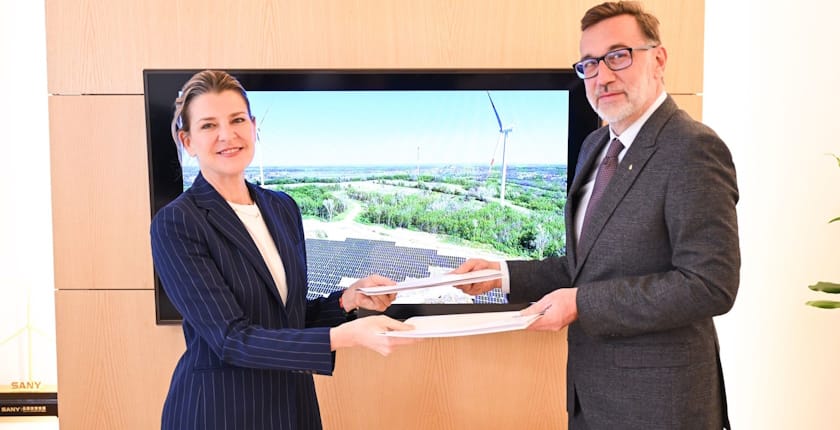
Executive Vice President of CWP Europe Maja Turković signed a PPA and the contracts for difference and balancing responsibility for Solarina with Assistant to CEO of EPS for Power Portfolio Management David Žarković.

Largest single PPA ever signed for solar power with EPS

The agreement marks a major milestone in Serbia’s energy transition – it is the largest single PPA ever signed for a solar project with EPS, Turković pointed out. “We thank the Ministry of Mining and Energy and EPS for their trust and another opportunity to jointly contribute to a more stable and greener energy future for Serbia,” she added.

CWP Europe has a project pipeline of more than 10 GW in Southeastern Europe, Moldova and Ukraine

All green electricity generated by the Solarina solar park will be supplied to the domestic market at a competitive price, enhancing the stability and sustainability of the country’s energy supply, CWP Europe added. Of note, the CfD is for EUR 52.89 per MWh.

“The continuation of the cooperation confirms once more that EPS is a reliable partner and associate to everyone whose business activity involves green energy. In addition, this way we also confirm the joint dedication to Serbia’s energy transition and the development of renewable energy sources, as EPS will offtake all produced energy and it will remain in our country,” Žarković stated.

PPAs for projects Solarina, Vetrozelena are both for entire output

Serbia’s state-owned power utility has the same arrangement since 2023 for the Vetrozelena wind power project, which was developed by CWP Europe and also won market premiums, at the first round of renewable energy auctions. Both PPAs are for the entire output.

The company has a project portfolio of more than 10 GW in total for wind and solar power and battery energy storage systems in Serbia, Bulgaria, Romania, Montenegro, Albania, North Macedonia, Croatia, Moldova and Ukraine.

CWP is a silver sponsor of the two-day Belgrade Energy Forum – BEF 2025, which is starting tomorrow. Maja Turković will participate in the panel discussion ‘Energy revolution underway – uniting efforts to deliver green, intelligent and sustainable energy solutions’.