by in News

ContourGlobal enters Greece with battery projects, small PV plants purchase

KKR-owned ContourGlobal bought a group of small solar power plants in Greece, alongside a portfolio of battery storage projects totaling 500 MW in operating power and 2 GWh in capacity. It is the company’s debut in the country’s energy sector.

Right after the inauguration of its standalone battery energy storage system in Bulgaria of 202 MW and 500 MWh, ContourGlobal revealed that it entered neighboring Greece through three acquisitions. The London-based company said it acquired photovoltaic systems of 37 MW in overall peak capacity and a group of mature projects for battery energy storage systems (BESS).

There are 26 solar power plants, commissioned between 2011 and 2022. They were owned by Quest Energy, a subsidiary of Quest Holdings, listd on the Athens Stock Exchange. The assets are contracted under feed-in tariff (FiT) and feed-in premium (FiP) supporting schemes, providing both predictable and premium revenues, ContourGlobal pointed out.

Expected yearly output is 51 GWh, enough to power as many as 15,000 Greek households per year.

ContourGlobal has acquired in recent months the full ownership of six battery storage projects through two different transactions with FRV (Fotowatio Renewable Ventures) from Spain and Greek developer Zephiros, the announcement adds. They total 500 MW in capability and 2 GWh of storage capacity.

ContourGlobal is breaking ground for its first BESS plant in Greece this quarter

The ready-to-build (RtB) Taxiarches project is for 100 MW and 400 MWh, respectively. The site is in Farkadona in the Trikala regional unit in Thessaly. Construction is scheduled to begin before the end of March and commercial operation is expected by early 2027.

“Building on our experience operating large-scale BESS projects from Chile to Bulgaria and on the developments already underway in the United States, we see Greece as a key market to scale our battery storage portfolio in Europe and support the country’s energy transition,” Chief Executive Officer Antonio Cammisecra said.

All BESS projects have permits

All projects have secured environmental approvals and key permits, and have applied for grid connection, ContourGlobal stressed.

Although Greece is a relatively small power market in Europe with 24 GW of installed capacity, it is the second-largest in the Balkan region and is experiencing rapid growth in renewables, the company added.

“While historically dominated by lignite and gas, the country is accelerating renewable development, with solar and wind capacity projected to reach around 60 GW by 2060. At the end of the current decade, nearly 70% of installed capacity and electricity generation are expected to come from renewable sources, increasing the need for flexible, grid-scale storage. Moreover, the country is projected to become a net exporter of electricity from 2026,” the update reads.

Expansion ambitions for Greece, Europe

The company said it is assessing further development opportunities in Greece as part of its long-term growth strategy in renewables and battery storage.

ContourGlobal underscored that the new transactions are strengthening its European platform for further growth in renewables and battery storage, building on its established presence in Italy, Spain and Austria.

As for Southeastern Europe, Bulgaria is booming with BESS throughout, Romania is gaining momentum, while Greece is taking a long jump approach, with some administrative hurdles continuing. Turkey is commissioning its first hybrid power plants.

Of note, ContourGlobal was involved in a coal power project in Kosovo* but eventually decided to quit, citing political issues.

* This designation is without prejudice to positions onstatus and is in line with UNSCR 1244/99 and the ICJ Opinion on the Kosovo declaration of independence.
by in News

ContourGlobal installs 500 MWh standalone BESS facility in Bulgaria

A standalone battery energy storage system of 202 MW and 500 MWh is fully operational and actively participating in Bulgaria’s day-ahead and intraday electricity markets. ContourGlobal built it at its Maritsa East 3 coal plant, using the grid connection of one of its former units. Acting Minister of Energy Zhecho Stankov, who attended the inauguration, said the country added 5 GWh last year and estimated that the overall BESS capacity would hit 15 GWh by mid-2026.

Bulgaria is, with the Czech Republic, Poland and Germany, in the group of only European Union member states in which more than a fifth of electricity is still generated from coal. But the situation is rapidly changing. One of the biggest standalone battery storage installations in Eastern Europe and among the first in Bulgaria recently came online. Located within the ContourGlobal Maritsa East 3 (Maritsa iztok 3) coal power plant, the facility uses the grid connection of a former unit.

Two remained in operation, supplying electricity during periods of peak demand.

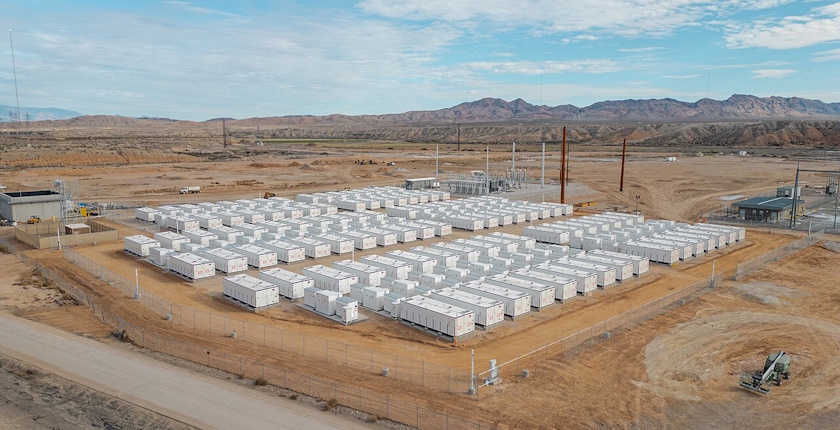
The BESS has 202 MW in operating power and a duration of 2.5 hours, translating to 500 MWh, the company said. It inaugurated the battery system in the presence of Acting Minister of Energy Zhecho Stankov.

Stankov: New BESS creates sustainable pathway for evolution of Maritsa East coal complex

The new facility is actively participating in both the day-ahead and intraday national electricity markets, supporting optimized power dispatch and improved balancing of electricity supply and demand, the update adds.

Such projects signify how innovation and existing industrial infrastructure can work together to strengthen grid stability, improve flexibility, and accelerate the integration of renewable energy sources, Stankov stressed. The investment enhances energy security, supports market-based operation, and creates a sustainable pathway for the evolution of traditional energy hubs such as Maritsa East, in his words.

According to the acting minister, Bulgaria added 5 GWh of BESS capacity last year, nearly matching the Chaira pumped storage hydropower plant. He recalled that the overall level is set to reach 15 GWh by mid-2026.

Project materialized in under nine months

The project in Maritsa East 3 received just under EUR 30 million in support through the European Union’s Recovery and Resilience Facility (RRF) and the Bulgarian National Recovery and Resilience Plan (NRRP). The company participated with EUR 44.7 million.

Spanning 2.5 hectares, the installation is part of ContourGlobal’s 3 GWh operational BESS portfolio. The company is owned by KKR.

BYD supplied the 110 battery skids for the battery system, which also includes 28 power conversion system (PCS) and transformer units. ContourGlobal progressed from the final investment decision (FID) to commercial operation date (COD) in less than nine months.

The company is developing a second BESS on the same site, with a matching capability. It has a project for a battery in combination with a solar power plant as well.

Battery energy systems allow for the storage of electricity generated from various sources, including photovoltaic and wind power plants, during periods of low demand and its release back to the grid during peak demand, which helps balance production and consumption and the stable operation of the electricity transmission system.

Coal plants switching to energy storage

AES Corp. is interested in replacing one of the boilers in its AES Maritsa East 1 (AES Maritsa iztok 1) coal plant with a molten salt reactor.

Greece’s government-controlled Public Power Corp. (PPC Group) is already building BESS facilities at its coal plants.

German utility Uniper is planning to build a battery energy storage system at its Heyden coal power plant site in western Germany with Slovenia-based energy solutions provider NGEN.

Thre months ago, International Power Supply (IPS) opened its Factory X1, with a capacity of 3 GWh per year. It is the first gigafactory in Bulgaria for battery energy storage systems. The same company is building another manufacturing facility.

by in News

ContourGlobal installs 500 MWh standalone BESS facility in Bulgaria

A standalone battery energy storage system of 202 MW and 500 MWh is fully operational and actively participating in Bulgaria’s day-ahead and intraday electricity markets. ContourGlobal built it at its Maritsa East 3 coal plant, using the grid connection of one of its former units. Acting Minister of Energy Zhecho Stankov, who attended the inauguration, said the country added 5 GWh last year and estimated that the overall BESS capacity would hit 15 GWh by mid-2026.

One of the biggest standalone battery storage installations in Eastern Europe and among the first in Bulgaria recently came online. Located within the ContourGlobal Maritsa East 3 (Maritsa iztok 3) coal power plant, the facility uses the grid connection of a former unit. Two remained in operation, supplying electricity during periods of peak demand.

The BESS has 202 MW in operating power and a duration of 2.5 hours, translating to 500 MWh, the company said. It inaugurated the battery system in the presence of Minister of Energy Zhecho Stankov.

Stankov: New BESS creates sustainable pathway for evolution of Maritsa East

The new facility is actively participating in both the day-ahead and intraday national electricity markets, supporting optimized power dispatch, improved balancing of electricity supply and demand, and the integration of renewable energy sources, while enhancing overall system stability and flexibility, the update adds.

Such projects signify how innovation and existing industrial infrastructure can work together to strengthen grid stability, improve flexibility, and accelerate the integration of renewable energy sources, Stankov stressed. The investment enhances energy security, supports market-based operation, and creates a sustainable pathway for the evolution of traditional energy hubs such as Maritsa East, in his words.

According to the acting minister, Bulgaria added 5 GWh of BESS capacity last year, nearly matching the Chaira pumped storage hydropower plant. He recalled that the overall level is set to reach 15 GWh by mid-2026.

Project materialized in under nine months

The project in Maritsa East 3 received support through the European Union’s Recovery and Resilience Facility (RRF) and the Bulgarian National Recovery and Resilience Plan (NRRP). Spanning 2.5 hectares, the installation is part of the company’s 3 GWh operational BESS portfolio. ContourGlobal is owned by KKR.

BYD supplied the 110 battery skids for the battery system, which also includes 28 power conversion system (PCS) and transformer units. ContourGlobal progressed from the final investment decision (FID) to commercial operation date (COD) in less than nine months.

The company is developing a second BESS on the same site, with a matching capability. It has a battery project in combination with a solar power plant as well.

Battery energy systems allow for the storage of electricity generated from various sources, including photovoltaic and wind power plants, during periods of low demand and its release back to the grid during peak demand, which helps balance production and consumption and the stable operation of the electricity transmission system.

Three months ago, International Power Supply (IPS) opened its Factory X1, with a capacity of 3 GWh per year. It is the first gigafactory in Bulgaria for battery energy storage systems. The same company is building another manufacturing facility.

by in News

Coal power plant Maritsa East 3 plans to build solar plant, 200 MW battery system

Coal-fired power plant ContourGlobal Maritsa East 3, which operates only sporadically to ensure the stability of supply for Bulgaria’s power system, plans to repurpose the grid infrastructure of its units 1 and 2 for solar and battery storage capacities. Units 3 and 4 will remain on standby to generate electricity during peak demand periods in the summer and winter months, but the plant will need state support to cover maintenance and workforce costs.

Maritsa East 3 (Maritsa iztok 3), majority owned by the US-based ContourGlobal, plans to use the existing grid infrastructure, including transformers and switchgear, to speed up the green energy project within the complex, according to Vassil Shtonov, Executive Director of ContourGlobal Bulgaria.

The central element is a 200 MW standalone battery energy storage system (BESS), the largest of its kind in Bulgaria, which would improve the flexibility and stability of the national power system, Shtonov explained in an interview with Capital.bg.

The project involves a 200 MW standalone battery system and a solar power plant

The planned battery system at Maritsa East 3 was among 82 projects selected to receive a total of EUR 587 million in subsidies from Bulgaria’s Ministry of Energy in April this year.

“In parallel, we are considering the development of an additional hybrid solar park with a battery at the same site,” he said. This will allow for faster deployment of new clean energy capacity, while preserving all options for future use of the coal-fired plant and its original infrastructure, Shtonov added.

ContourGlobal plans to build 400MW to 500 MW of renewable energy capacity combined with batteries

ContourGlobal plans to invest hundreds of millions of euros to develop 400 MW to 500 MW of renewable energy capacity combined with storage systems, he said, adding that nearly half of this target is under construction or final approval. The company’s goal is to phase out coal by 2027 and achieve carbon neutrality by 2040, he stressed, recalling that Bulgaria’s targeted coal phaseout date is 2038.

Keeping coal plants on standby requires state support

Bulgaria’s state-owned National Electricity Co. (NEK) holds a minority stake in Maritsa East 3. After the plant’s 15-year power purchase contract with NEK expired in February 2024, it has only been able to operate on the free market for a few months a year. This year, units 3 and 4 were online from January to the end of March to maintain energy security.

Shtonov: Key coal-fired power plants should get a fixed amount from the state

However, to be on standby for system security, the plant needs to keep workers on the payroll even when it is not operating. For this reason, strategically important coal-fired power plants should receive a fixed amount from the state to cover ongoing personnel and maintenance costs, and then be switched on when necessary to protect consumers from sharp increases in electricity prices, as happened last year in July and November, according to Shtonov.

by in News

Bulgaria grants EUR 587 million to 82 battery storage projects

Developers of 82 standalone battery storage projects in Bulgaria, for an overall 9.71 GWh in capacity, got approval for EUR 587 million in subsidies from the Ministry of Energy. Another 30 landed below the line, but the government intends to boost the program by EUR 120 million.

More than four months after the deadline for applications, the Ministry of Energy of Bulgaria ranked 112 projects for standalone battery energy storage systems (BESS). Through the RESTORE call for grants, it approved EUR 587 million for 82 of them, exhausting the budget.

The scheme is part of the National Recovery and Resilience Plan (NRRP), under the Recovery and Resilience Facility (RRF), which the European Commission controls.

The selected investments envisage an overall 9.71 GWh of storage capacity, compared to the target of at least 3 GWh. The aim is to provide balancing to enable a significant increase in the share of wind and solar power in the energy mix, as well as to ensure the security and stability of the country’s electricity system. The facilities will be connected to the grid at both the transmission and distribution levels.

Notably, Bulgaria is struggling to meet the conditions and deadlines for NRRP funding, including for battery projects. Moreover, the ministry apparently decided not to move forward with a second call for subsidies for households for solar panels with or without batteries, and for solar collectors. It risks losing the European Union’s funding.

Project underway for 125 MW battery system in Burgas

The largest selected investment is BESS Burgas. The project is worth EUR 90 million, of which the grant would cover 26.5%. The proposed facility would have 125 MW in operating power and a four-hour duration, translating to 500 MWh.

The list lacks data on planned capacities for many of the projects. Among them is the one from ContourGlobal Maritsa East 3 (Maritsa iztok 3), the operator of a coal power plant that recently ceased operations. The company intends to invest EUR 74.5 million, the fifth-highest amount. The ministry said it would provide 40% of the total.

The owner of the recently closed Maritsa East 3 coal power plant won a 40% subsidy for its EUR 74.5 million BESS proposal

Weapons and ammunition producer Arsenal 2000 won a 44% subsidy for its EUR 48.9 million project. It intends to install a BESS of 80 MW and 350 MWh. One of the selected proposals is called Verila Solar Park 2. The share of the approved grant in the EUR 65.7 million investment is 32%.

Toki Storage stands out among the beneficiaries with 11 approved projects of the same size and valuation: 10 MW, 40 MWh and EUR 6 million each. The grants would cover 30% to 39.3%.

NEK fails to qualify with its project for battery system at Topolnitsa hydropower plant

Out of 151 applications, 118 initially passed to the ranking stage. The ministry said they were worth a combined EUR 838 million. The 30 projects in reserve are worth EUR 212 million, it added.

They include proposals from coal plant operators Toplofikatsiya Pernik and Bobov Dol. The ministry rejected four projects, of which one from state-owned National Electricity Co. (NEK), for a 20 MWh battery unit at its Topolnitsa hydropower plant.

According to consulting firm New I, involved in more than 40% of the winners in the call, they are worth EUR 1.59 billion altogether, Bulgarian language EU Funds website reported. Requested support ranges between just below EUR 40,000 per MWh and EUR 80,000 per MWh, and the weighted average came in at EUR 60,000 per MWh, it revealed.

Many of the 151 projects were duplicated, the article adds.

Importantly, the government has proposed increasing the RESTORE program by EUR 120.6 million, which would be sufficient for at least 20 projects in the reserve group.

The ministry was supposed to select the beneficiaries by January. The deadline for drawing the EU funds is June next year, so the developers must rush to install their battery systems – but first they need to sign contracts with the government.

by in News

Renewables equipment factory to contribute to just transition of coal region in Romania

Monsson Group is preparing to build a manufacturing facility in Petrila for renewable energy equipment, including robots that clean solar panels. The project received funding to contribute to the just transition of Romania’s coal region Jiu valley – Hunedoara.

An investment of nearly EUR 10 million in the first phase is underway in Transylvania, in the town of Petrila, economically devastated after the closure of a coal mine. The project is aimed at reviving the area with a factory for renewable energy equipment such as enclosures for battery energy storage systems, wiring and robots that clean photovoltaic panels.

Monsson Group revealed its facility would also manufacture gear for monitoring environmental parameters and tracking fauna in the area. The Sweden-based company has said 70% of the investment would be covered from Romania’s Just Transition Program which is in turn part of the European Union’s Just Transition Facility.

Romania is planning to prolong the operation of its coal power plants and mines for a smoother switch to renewable sources, in terms of electricity supply. However, such facilities are becoming less financially viable by the day all across the EU. Coal regions are facing economic blows from early shutdowns of power plants and mines.

First major private investment in Petrila

According to Monsson, the new factory would employ more than fifty people in the first phase. It expects to begin construction mid-year.

It is the first major private investment in Petrila, Mayor Vasile Jurca said. He said the project enables reskilling and sustainable development. The local authority provided the land for the factory. Romania has earmarked substantial funding for the construction of renewable energy equipment plants.

The second part of the plan is to install a 20 MWh battery energy storage system to provide system services to the national grid, followed by a 50 MWh unit.

Reskilling program underway

The group, which includes Wind Power Energy and its RenewAcad network of renewable energy training centers, established cooperation with the University of Petroșani in getting skilled workers. Monsson is one of the biggest renewable energy investors in the country.

Petrila is part of the Jiu Valley in Hunedoara county, Romania’s main coal region. It is located near Oltenia, the other coal complex, in the counties of Gorj and Dolj.

Notably, the Maritsa East 3 coal power plant in neighboring Bulgaria ceased operations yesterday again after it was briefly brought back online to maintain energy security.