by in News

Safety at construction sites: IKMT intervenes in Golem and Qerret, only two out of 55 entities are legally compliant.

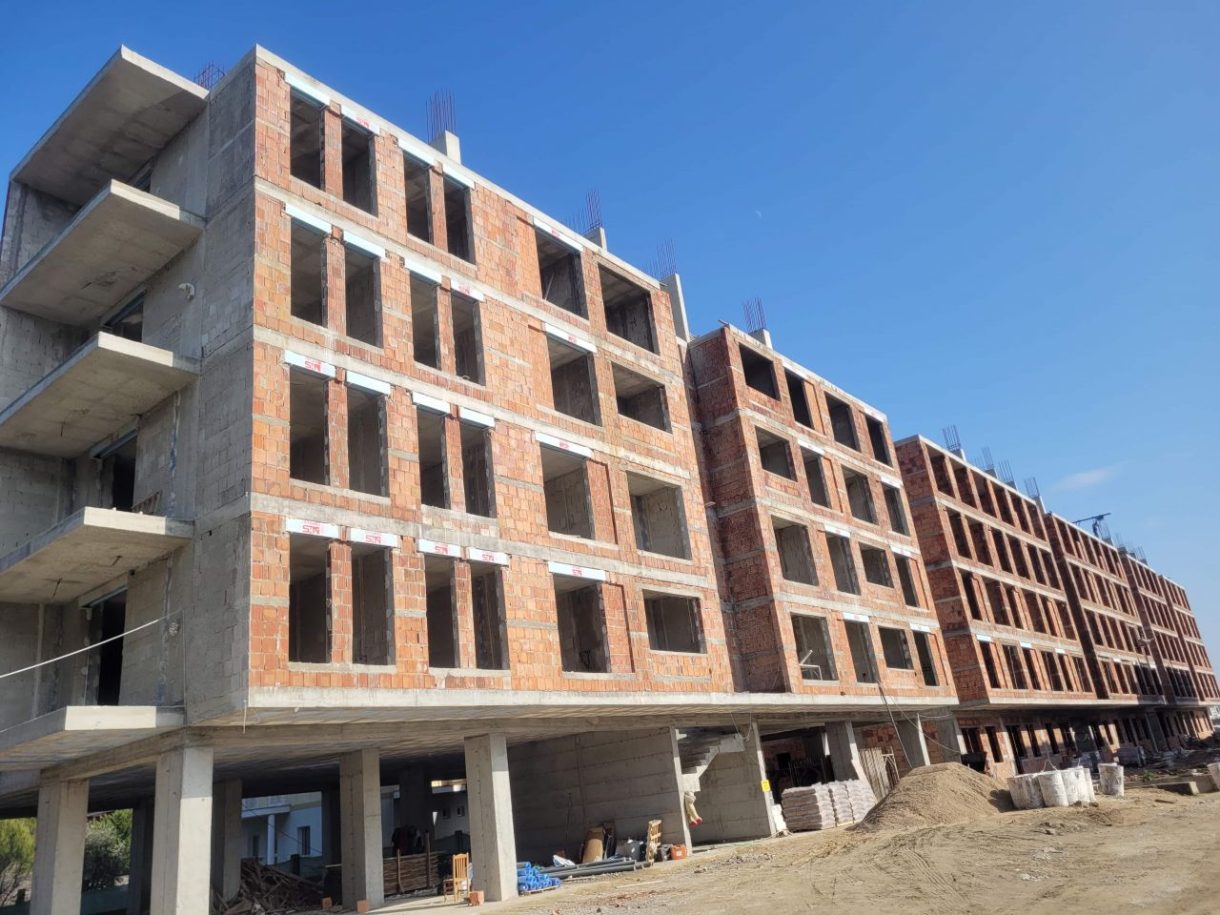
The Golem and Qerret areas have emerged as some of the most problematic regions regarding compliance with legal obligations for technical safety at construction sites. The Chief Inspector of the National Inspectorate of Territory Protection (IKMT), Afrim Qendro, accompanied by the Mayor of Kavajë, Fisnik Qosja, held a meeting today with entrepreneurs operating within this territory.

“Currently, there are 55 active development permits here. Initial inspections conducted by the National Inspectorate of Territory Protection revealed that only two projects comply with legal criteria, while the remainder are classified as ‘poor’ or ‘very poor.’ I urge you to take immediate measures, as this is your obligation. It is unacceptable for tourism in this area to be compromised by these 55 construction sites. The fact that two businesses are in full compliance proves that meeting these standards is possible for everyone,” stated Chief Inspector Afrim Qendro.

According to Qendro, Golem, Qerret, and Kavajë host hundreds of thousands of permanent residents in addition to the influx of tourists. “If we do not operate in harmony with them—if we do not guarantee their safety—then you are failing not only yourselves but the entire community that surrounds you,” Qendro noted.

Furthermore, he criticized the performance of the local Territory Protection Inspectorate (IMT) of the Municipality of Kavajë.

“I want to address the Director of IMT Kavajë directly: If you had performed your duties properly, we would not be here today. You must rise to the level of responsibility required to execute this task,” Qendro emphasized.

The Chief Inspector announced that a follow-up inspection of all construction sites in the area will commence next week.

“If the entities have not fulfilled their technical safety obligations, severe measures will be taken as provided by law. We are providing a sufficient grace period. If you fail to react, there will be zero tolerance for anyone,” Qendro declared.

The Mayor of Kavajë, Fisnik Qosja, thanked the IKMT for its commitment ahead of the peak tourist season and called upon businesses to take immediate action.

“Given the tourism we anticipate in this region, it is inexcusable not to take the necessary precautions and properly secure construction perimeters to guarantee technical safety,” Qosja concluded.
by in News

Workplace Safety Under Scrutiny After Years of Fatal Accidents in Albania’s Energy Sector

A spate of workplace accidents over the past decade has claimed dozens of lives in Albania’s energy and natural resources industries, highlighting persistent safety shortcomings. From high-voltage electrical lines to deep chrome mines, workers have faced deadly hazards with distressing regularity. Recent incidents – including a landslide that killed two hydropower construction workers in May 2025 and a string of mining accidents in Bulqizë – underscore the ongoing risks and have prompted calls for stronger safety enforcement.

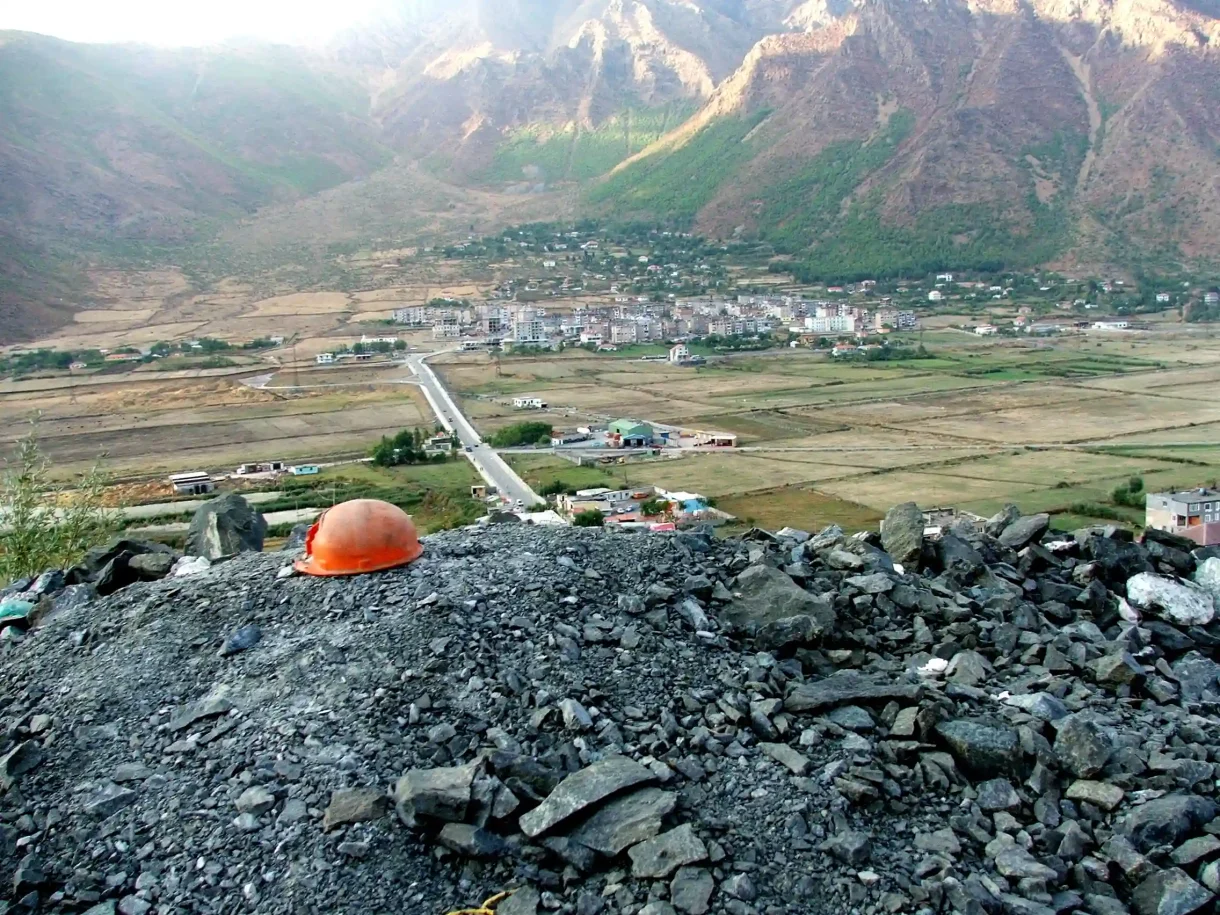
In the chrome mining hub of Bulqizë, northeastern Albania, fatal accidents have become tragically routine. Miners working in unstable underground galleries have been victims of rock falls and gas explosions. In one concession alone, six miners died within a seven-month period (2017–2018) due to collapsing rock or asphyxiating blast. More recently, in September 2025, a 38-year-old miner was killed in Bulqizë’s Zone D galleries while working for a private chrome company. Such incidents illustrate what union leaders call chronic neglect of safety standards in the mining sector. Although police often arrest lower-level supervisors after deadly incidents, higher-level accountability is rare – no mine owners were prosecuted in the last three years despite numerous deaths.

The energy sector has seen its own share of tragedy. HV line workers with Albania’s public power company (OSHEE) regularly perform perilous maintenance on the country’s aging electrical grid. In one case, a 23-year-old electrician fell to his death from a power pole in 2016. During 2024 another foreign Egyptian worker, working for DOKO shpk died during construction of 400kV transmission line Fier-Elbasan-Qafe Thane.  During half of 2021 six electrical workers died during their work where two OST workers died in Roskovec HV tower demolition, and in April–May 2025, two OSHEE technicians were fatally electrocuted in separate incidents (in Mirditë and Divjakë) while attempting to restore electricity. Two other crew members were injured in the Mirditë accident, which occurred as they worked on a high-voltage line to supply a voting center. Investigations blamed lapses in safety protocols and protective equipment, pointing to the need for better training and oversight for electrical workers. OSHEE currently tops the list for workplace accidents among Albanian companies, according to official data.

Industrial projects backed by foreign investors have not been immune either. In 2014, three workers (two Albanians and an Italian) died when a rockslide struck the Moglicë hydropower project site in southern Albania. The project’s Norwegian developer, Statkraft, halted work to review safety after the incidents. Likewise, at the Ballsh oil refinery  a major energy installation a massive explosion in November 2016 killed one operator and badly burned five others.  Authorities suspect that inadequate maintenance and a failure to observe safety rules led to the blast in a fuel processing unit. These disasters highlight that even large-scale energy operations, which are expected to follow international standards, can falter on safety measures in Albania.

Despite each tragedy, systemic improvements have lagged. Over the five years alone (2016–2021), 133 people lost their lives to workplace accidents in Albania,  roughly half of them in construction, mining, or energy jobs. Government inspectors have handed out fines to companies for more than 600 penalties in that period and in some cases police have detained site managers after fatal accidents. Yet enforcement is widely seen as ineffective. Observers point to political connections and economic pressures that lead to corners being cut. For example, a 2019 accident in which an 18-year-old off-the-books worker was electrocuted at a small hydropower plant in Tamara was initially covered up as a “natural death”, allegedly to protect the concession owner. Such cases fuel public skepticism about regulators’ commitment to worker safety.

An electrical lineman in Albania working on power lines. OSHEE and OST field workers face high risks from falls and electrocution if safety protocols are not strictly followed.

Officials acknowledge the problem: The State Labour Inspectorate cites poor safety culture and lack of training as major issues, and only specific high-risk professions (miners, oil drillers) are required by law to carry life insurance. In response to recent accidents, the Ministry of Energy and infrastructure companies have promised new measures ranging from better protective gear for workers at height, to stricter monitoring of mining operations. There are some signs of progress: major foreign-led projects like the Trans-Adriatic Gas Pipeline were completed in 2020 without publicized fatalities, and Albania’s onshore oilfields have ramped up safety drills after the 2016 refinery blast.

However, critics say these efforts remain piecemeal.

Worker advocates and unions are urging a comprehensive overhaul of workplace safety enforcement. They want more surprise inspections, tougher fines and legal consequences for negligent executives, and greater empowerment of workers to refuse unsafe work. “Every Albanian who leaves for work in the morning deserves to come home safely,” one miners’ representative said at a recent vigil in Bulqizë. As Albania continues to develop its energy and mining resources  building roads, dams, power lines, and extracting minerals  the stakes are high. The country’s ambitious economic plans depend on these sectors, but each incident erodes public trust and devastates families.

For now, the rash of accidents has cast a spotlight on an uncomfortable reality: economic growth in Albania has been built on risky, sometimes deadly labor. The challenge ahead is translating the lessons of each tragedy into preventive action. Observers note that 2025, marked by multiple high-profile accidents, could be a turning point. The government has pledged to bolster the Work Inspectorate and update safety regulations in line with EU standards. Albania’s workforce, meanwhile, is watching closely to see if those promises result in safer conditions on the ground  in the mines, on the power lines, and at all hazardous job sites  so that such workplace tragedies become a thing of the past.