by in News

Uncertain future of Greece-Cyprus Great Sea Interconnector project

Greece and Cyprus find themselves at odds when it comes to Great Sea Interconnector (GSI), their big project for a subsea electricity cable. A new investigation by the European Public Prosecutor’s Office (EPPO) further complicates things.

Great Sea Interconnector is an envisaged 1,208-kilometer power line that would connect Crete, Cyprus and Israel. Planned for 1,000 MW in capacity and doubled later, the link would provide energy security and lower energy costs for Cypriot consumers, who currently pay the highest wholesale prices in Europe. Cyprus has also been plagued by very high curtailments and rolling blackouts, meaning that a solution is needed urgently.

The EUR 1.9 billion project benefits from a EUR 657 million funding from the Connecting Europe Facility (CEF), for the Greece-Cyprus section. It is also included in the Projects of Common Interest (PCI) list.

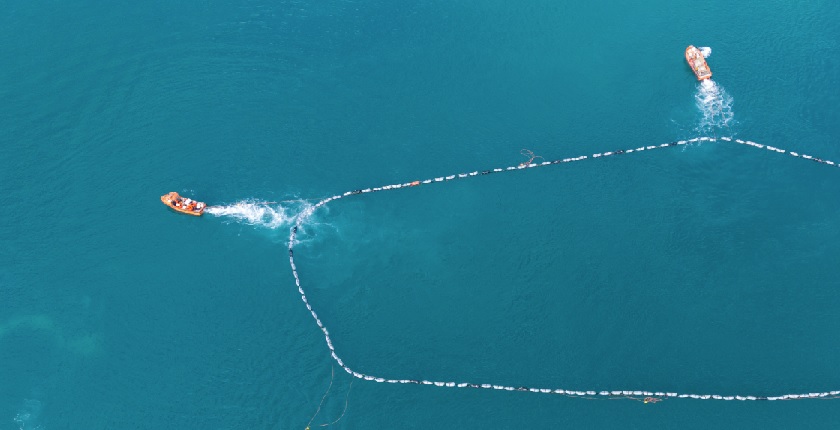
Currently, GSI is at the stage of bathymetric surveys in the offshore region between Greece and Cyprus. Italian ships were hired, but they were stopped last year by Turkish naval forces near the island of Kasos, east of Crete. This year, the Greek government appeared ready to reinitiate the surveys, this time with military escort, but in recent days, the government in Nicosia raised new concerns.

Cyprus raises cost issues

Statements by the two governments revealed diverging views about GSI. Cyprus has raised the issue of economic viability, with Minister of Finance Makis Keravnos maintaining a hard line and saying that it is not evident whether the interconnection would benefit his country.

“No one knows how much it will cost consumers and when the project will be completed,” said Keravnos.

Greece responded by reminding the decision makers in Nicosia that an agreement was signed last year, specifying that Cyprus needs to pay EUR 25 million annually to the project promoter, the Greek Independent Power Transmission Operator (IPTO or ADMIE). The first payment is expected this year, if the project is to continue.

IPTO has said that without the remaining decrees from Cyprus Energy Regulatory Authority (CERA or RAEK), it would stop paying Nexans, the French company in charge of building the cable. At that point, the interconnector project freezes.

Essentially, Greece wants Cyprus to pay before it moves ahead with new surveys around Kasos, which could trigger a military showdown with Turkey. On the other hand, the government in Nicosia wants Greece to complete the surveys before providing the money, thus removing any geopolitical risk.

Mitsotakis: Cyprus must show it wants the project

“Cyprus is the primary beneficiary of this project, therefore it must show its commitment,” said Greek Prime Minister Kyriakos Mitsotakis.

Things have been further complicated by EPPO’s new investigation. According to leaks in the Cypriot press, the administration in Brussels is looking into potential mismanagement when EuroAsia Interconnector was the project promoter, before IPTO took over.

Geopolitics at the epicenter

However, the elephant in the room is the geopolitical issue. Greece and Cyprus have delimited their exclusive economic zones (EEZs) in the waters between them, in line with international law. However, they haven’t signed a bilateral demarcation agreement.

Turkey, on the other hand, laid a claim over the marine region. It is one of the few countries that have not signed the United Nations Convention on the Law of the Sea (UNCLOS). In 2022 it signed an EEZ agreement with Libya to solidify its claims, which Greece, Cyprus and the European Union have called illegal.

by in News

PPC is installing 60 chargers for EVs in Romania, Greece

Public Power Corp. has received funds from the European Union for the installation of 60 chargers for electric vehicles.

Public Power Corp. (PPC) and PPC blue Romania have jointly secured up to EUR 2.76 million from the Connecting Europe Facility (CEF) funding mechanism for the installation and operation of the publicly accessible direct current (DC) fast chargers, the update reveals.

PPC blue is the e-mobility arm of PPC.

The funds for the e-chargers in Greece and Romania were obtained from the CEF’s Alternative Fuels Infrastructure Facility (AFIF) program.

Under the East Europe Electric Route (Blue Route 3E) joint project, 28 DC fast charging points, each with a minimum capacity of 150 kW, would be set up for light-duty vehicles (LDVs), while 32 ultra-fast charging points, of at least 350 kW apiece, are intended for heavy-duty vehicles (HDVs).

Babilis: We are strengthening the TEN-T in Greece and Romania

The installation at 29 locations along the Trans-European Transport Network (TEN-T) is well underway, the company revealed.

Out of the 60 units, 16 fast-charging points for electric LDVs, each with a minimum output power of 150 kW, will be installed across ten locations in Greece. The rest – 12 fast-charging points for LDVs and 32 ultra-fast charging points for HDVs – are planned in Romania.

According to Miltiades Babilis, Chief E-Mobility Officer at PPC, the infrastructure of the TEN-T in Greece and Romania is being strengthened through the Blue Route 3E project.

It is the second European funding package that PPC blue has secured through the CEF mechanism

“PPC blue is investing in the strategic development of its network by adding new hyperfast chargers at key points along the Greek road network, thus making EV travel more convenient,” he stated.

It is the second EU funding package that PPC blue has secured through the CEF mechanism, following the Electrifying South East Europe Road Transport (ESEERT) project. It is in an advanced stage of implementation and involves 34 fast-charging points for electric LDVs across 13 locations in Greece.

PPC blue has over 2,800 e-chargers in Greece and Romania.

by in News

Clean transition, decarbonization among priorities in EU’s draft budget

Within the European Union’s proposed budget for the period from 2028 to 2034, the EUR 409 billion European Competitiveness Fund is for investments in strategic technologies, including for the clean transition and decarbonization. The new Connecting Europe Facility (CEF), worth EUR 81.4 billion, would finance the completion of Trans-European Networks and foster the EU’s green and clean transition in energy and transportation.

The European Commission proposed the next long-term budget of almost EUR 2 trillion, of which 35% would be earmarked for climate and environment. Energy infrastructure spending in the so-called Multiannual Financial Framework (MFF) for 2028-2034 will be EUR 29.5 billion, five times higher than in the previous seven-year period, it said, arguing it would reinforce energy independence and accelerate the clean transition.

The entire proposed sum amounts to 1.26% of the expected gross national income, on average. The framework is aimed at an independent, prosperous, secure, and thriving society and economy, the update adds.

“Europe faces an increasing number of challenges in numerous areas such as security, defence, competitiveness, migration, energy and climate resilience. These are not temporary but reflect systemic geopolitical and economic shifts that require a strong and forward-looking response,” the EU’s top executive body said.

Adapting to local needs

The European Commission pointed out that the budget would be tailored to local needs. National and regional partnership plans based on investments and reforms would be introduced, for targeted impact where it matters most and ensuring a faster and more flexible support for more economic, social and territorial cohesion across the union, according to the outlined measures.

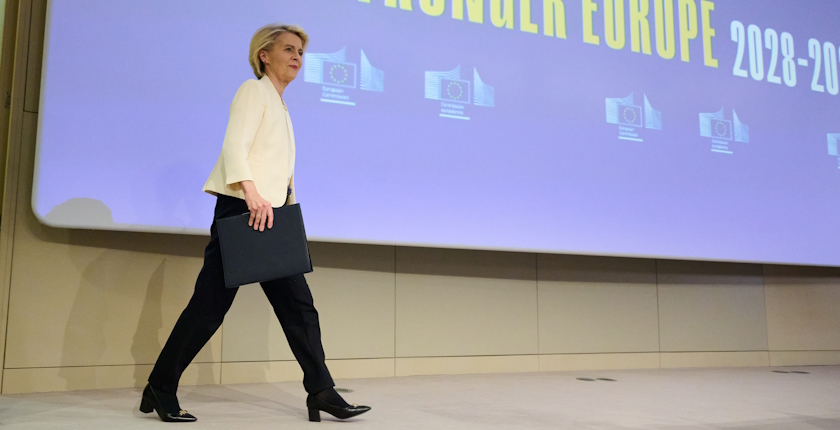
“Our new long-term budget will help protect European citizens, strengthen Europe’s social model and make our European industry thrive,” European Commission President Ursula von der Leyen stated.

For the first time, the spending plan would enable member states to invest more in the EU objectives, with loans of up to 150 billion EUR altogether. “We will call it Catalyst Europe. The loans are backed by the EU budget. It targets common European priorities. You can invest it – for example in defence industry or energy infrastructure or strategic technologies,” Von der Leyen said.

The budget plan includes a European Competitiveness Fund, worth EUR 409 billion, for investment in strategic technologies. Operating under one rulebook, and offering a single gateway to funding applicants, it aims to simplify and accelerate EU funding and catalyse private and public investment. The focus is on four areas:

  • clean transition and decarbonization,
  • digital transition,
  • health, biotech, agriculture and bioeconomy,
  • defense and space.

In close connection with the European Competitiveness Fund, the EU research framework, with its flagship Horizon Europe worth EUR 175 billion, will continue to finance world-class innovation, the commissioners revealed.

Commissioners line up EUR 81.4 billion in budget for next Connecting Europe Facility

The next Connecting Europe Facility (CEF), worth EUR 81.4 billion, would finance the completion of Trans-European Networks and foster the EU’s green and clean transition in energy and transportation. It covers cross-border projects for energy, transportation and military mobility that are essential for competitiveness and security and reducing strategic dependencies.

To simplify external action financing, the EU’s top executive body envisaged an item called Global Europe, of EUR 200 billion, to maximise impact on the ground and improve visibility of EU external action in partner countries. It would allow the EU budget to step up support to candidate countries and prepare for their accession.

Among other segments, the European Commission said it plans to direct 75% of revenues from the Carbon Border Adjustment Mechanism (CBAM) to the EU budget. It expects the resource to generate EUR 1.4 billion per year.