by in News

Concession agreement signed for 50 MW Vlašić wind farm in BiH

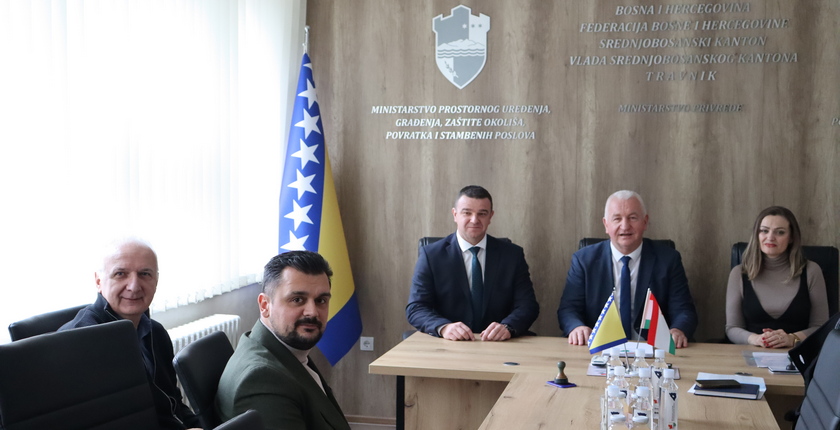
State-owned power utility Elektroprivreda Bosne i Hercegovine (EPBiH) and the Central Bosnia Canton have signed a concession agreement for the Vlašić wind farm near Travnik, along with annexes to the concession agreements for solar power plants Gračanica 1 and Gračanica 2 in the municipality of Bugojno.

The Vlašić wind farm will have up to nine wind turbines with a total capacity of 50 MW, installed at an elevation of 1,850 meters. The projected annual electricity output is between 112 GWh and 116 GWh, and the investment is estimated at EUR 90 million, according to a statement by EPBiH.

Wind farm Vlašić is expected to generate up to 116 GWh of electricity annually

Germany’s KfW Development Bank is providing a loan and grants for the project totaling EUR 38.43 million, and the Council of Ministers of Bosnia and Herzegovina, the country’s central government, adopted draft agreements for the arrangement in late December 2025.

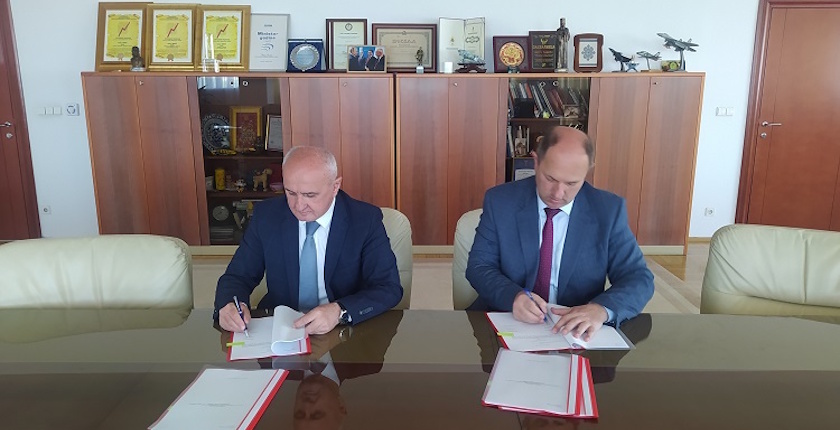
The concession agreement, signed by EPBiH General Manager Sanel Buljubašić and Minister of Economy of the Central Bosnia Canton Sedžad Milanović, covers the construction, operation, and maintenance of the Vlašić wind power plant, reads the statement.

The first wind farm in Bosnia and Herzegovina, Mesihovina, was inaugurated in 2018, followed by Jelovača in 2019 and Podveležje in 2021.

Last year, wind farms Ivovik and Ivan Sedlo were put into operation. In addition, EPBiH plans to build a 90 MW wind park called Bitovnja, while Elektroprivreda Republike Srpske (ERS), the state-owned power utility of the Republic of Srpska, has reactivated the 60 MW Hrgud wind farm project.

Bosnia and Herzegovina consists of two entities: the Republic of Srpska and the Federation of BiH, which controls EPBiH.

Solar plants Gračanica 1 and Gračanica 2 will have a total capacity of 45 MW

The statement recalls that the Gračanica 1 and Gračanica 2 solar power plants would have a combined capacity of 45 MW and notes that a building rights agreement was concluded in December 2025. It also states that activities related to grid connection are currently underway, alongside procedures concerning land expropriation and repurposing.

EPBiH has secured loans for the project from the European Bank for Reconstruction and Development (EBRD) and UniCredit Bank’s subsidiary in BiH. The sites are at a rehabilitated tailings dump of the Gračanica coal mine.

As part of the EPBiH Solar Transition Programme, implemented in cooperation with the EBRD, the state-owned power utility plans to build 13 solar power plants with a total capacity of around 195 MW.
by in News

Romania plans to lease unproductive land for renewable energy projects

Romania is drafting legislation that would enable granting concessions for the construction of renewable energy plants on unproductive and degraded state-owned agricultural land. The initiative aims to establish fast-track areas for renewable energy projects, with all necessary permitting procedures limited to 12 months.

The legislation would allow the State Domains Agency (ADS), which manages state-owned agricultural land, to grant concessions on areas of land that are not suitable for agriculture, but can be used for green energy production, according to a report by Profit.ro. The initiative is part of the RePowerEU component of Romania’s National Recovery and Resilience Plan (NRRP).

These areas should be officially designated following a mapping process to identify available land, subsurface, marine, or inland water areas needed for developing renewable energy power plants, as well as related grids and energy storage facilities, including thermal storage, to support achieving the 2030 renewable energy target.

The areas for renewable energy projects will be designated after a mapping process

The deadline to designate these areas is February 21, but it is unlikely to be met, given that a contract to procure the necessary geospatial data management software has been partially cancelled. The ADS has now launched a new tender for the geospatial data system, valuing the job at RON 7.7 million (around EUR 1.51 million), according to Profit.ro.

In the so-called “areas suitable for accelerating renewable energy projects,” the procedures for granting all necessary legal authorizations would not take more than 12 months in total, according to the report.

The Romanian Government has long planned to amend the law on the ADS to give it the authority to award concessions to public and private entities for the purpose of producing energy from renewable sources such as hydro, solar, wind, biomass, and geothermal, the news portal recalled.

State-owned power utility Hidroelectrica, the largest electricity producer in Romania, intended to build a photovoltaic park of 1.5 GW on thousands of hectares of land managed by the ADS. It would be the largest in Europe.

by in News

Romania plans to lease unproductive land for renewable energy projects

Romania is drafting legislation that would enable granting concessions for the construction of renewable energy plants on unproductive and degraded state-owned agricultural land. The initiative aims to establish fast-track areas for renewable energy projects, with all necessary permitting procedures limited to 12 months.

The legislation would allow the State Domains Agency (ADS), which manages state-owned agricultural land, to grant concessions on areas of land that are not suitable for agriculture, but can be used for green energy production, according to a report by Profit.ro. The initiative is part of the RePowerEU component of Romania’s National Recovery and Resilience Plan (NRRP).

These areas should be officially designated following a mapping process to identify available land, subsurface, marine, or inland water areas needed for developing renewable energy power plants, as well as related grids and energy storage facilities, including thermal storage, to support achieving the 2030 renewable energy target.

The areas for renewable energy projects will be designated after a mapping process

The deadline to designate these areas is February 21, but it is unlikely to be met, given that a contract to procure the necessary geospatial data management software has been partially cancelled. The ADS has now launched a new tender for the geospatial data system, valuing the job at RON 7.7 million (around EUR 1.51 million), according to Profit.ro.

In the so-called “areas suitable for accelerating renewable energy projects,” the procedures for granting all necessary legal authorizations would not take more than 12 months in total, according to the report.

The Romanian Government has long planned to amend the law on the ADS to give it the authority to award concessions to public and private entities for the purpose of producing energy from renewable sources such as hydro, solar, wind, biomass, and geothermal, the news portal recalled.

State-owned power utility Hidroelectrica, the largest electricity producer in Romania, intended to build a photovoltaic park of 1.5 GW on thousands of hectares of land managed by the ADS. It would be the largest in Europe.

by in News

Croatia’s Kermas on track to secure new concession for Trusina wind farm

The Government of the Republic of Srpska has drafted a cooperation agreement with Croatian firm Kermas Energija, which is expected to enable the awarding of a concession to build and operate the Trusina wind farm. In late November, the government adopted a decision to annul the public call for awarding the concession, launched in October, due to a lack of bids.

A concession agreement for the 50 MW Trusina wind farm in the municipality of Nevesinje was signed in 2012. However, it was terminated in 2019 after Kermas failed to provide a bank guarantee or make significant progress in implementing the project. The agreement was signed with Eol prvi, a firm owned by Serbia-based Omega plus, but Kermas later acquired a majority stake in the project.

In a statement to Nezavisne, the Ministry of Energy and Mining of the Republic of Srpska explained that the decision to conclude an agreement with Kermas was made in order to avoid arbitration proceedings that the Croatian company had planned to initiate, as well as due to the government’s interest in having a wind farm built at the site.

According to earlier reports, Kermas had planned to seek damages in the amount of BAM 200 million (around EUR 102.3 million).

The concession is expected to be awarded through a negotiated procedure

The agreement is intended to enable the concession to be awarded through a negotiated procedure, in accordance with the Law on Concessions, the newspaper reported.

Besides withdrawing from arbitration, Kermas would also have to implement the project under new technical specifications, as technology has advanced in the meantime, and wind turbines are now produced with significantly higher installed capacities, according to the Government of the Republic of Srpska, one of the two entities constituting Bosnia and Herzegovina.

According to the annulled public call, the estimated investment in the Trusina wind farm was BAM 130 million (EUR 66.5 million), with a projected annual electricity output of around 160 GWh.

The concession was to be awarded for a period of up to 50 years, and the electricity produced would have been sold on the market.

by in News

Croatia’s Kermas on track to secure new concession for Trusina wind farm

The Government of the Republic of Srpska has drafted a cooperation agreement with Croatian firm Kermas Energija, which is expected to enable the awarding of a concession to build and operate the Trusina wind farm. In late November, the government adopted a decision to annul the public call for awarding the concession, launched in October, due to a lack of bids.

A concession agreement for the 50 MW Trusina wind farm in the municipality of Nevesinje was signed in 2012. However, it was terminated in 2019 after Kermas failed to provide a bank guarantee or make significant progress in implementing the project. The agreement was signed with Eol prvi, a firm owned by Serbia-based Omega plus, but Kermas later acquired a majority stake in the project.

In a statement to Nezavisne, the Ministry of Energy and Mining of the Republic of Srpska explained that the decision to conclude an agreement with Kermas was made in order to avoid arbitration proceedings that the Croatian company had planned to initiate, as well as due to the government’s interest in having a wind farm built at the site.

According to earlier reports, Kermas had planned to seek damages in the amount of BAM 200 million (around EUR 102.3 million).

The concession is expected to be awarded through a negotiated procedure

The agreement is intended to enable the concession to be awarded through a negotiated procedure, in accordance with the Law on Concessions, the newspaper reported.

Besides withdrawing from arbitration, Kermas would also have to implement the project under new technical specifications, as technology has advanced in the meantime, and wind turbines are now produced with significantly higher installed capacities, according to the Government of the Republic of Srpska, one of the two entities constituting Bosnia and Herzegovina.

According to the annulled public call, the estimated investment in the Trusina wind farm was BAM 130 million (EUR 66.5 million), with a projected annual electricity output of around 160 GWh.

The concession was to be awarded for a period of up to 50 years, and the electricity produced would have been sold on the market.

by in News

50 MW Trusina wind project in BiH gets fresh start

The Ministry of Energy and Mining of the Republic of Srpska has issued a public call for a concession to build and operate the Trusina wind farm in the municipality of Nevesinje, with an installed capacity of up to 50 MW. The move paves the way for reviving one of the largest wind projects in the Republic of Srpska, which has been stalled for years.

The investment is valued at BAM 130 million (EUR 66.5 million), with a projected annual electricity output of about 160 GWh. The new concession procedure was initiated by Sarajevo-based SDL Energy Company.

Wind farm Trusina would generate 160 GWh of electricity per year

The concession can be granted for a period of up to 50 years, and the produced electricity would be sold on the market, according to the public call. If awarded, the contract will include a one-time concession fee of BAM 650,000 (EUR 332,000), as well as BAM 0.0055 (EUR 0.0028) per kWh of electricity produced.

The deadline to submit bids is 30 days from the publication of the call.

The Republic of Srpska is one of the two entities comprising Bosnia and Herzegovina. The other one is called the Federation of BiH.

Challenges from the very beginning

The first concession agreement for the construction of the Trusina wind farm was signed back in 2012. The firm that was granted the concession, called Eol prvi, was founded by Serbia-based Omega plus, but Croatian firm Kermas energija joined the project and subsequently acquired a majority stake in Eol prvi.

However, the concession agreement was terminated in 2019 due to Kermas’ failure to provide a bank guarantee or make any significant progress in implementing the project.

The first concession was scrapped in 2019

Kermas reportedly threatened arbitration against Bosnia and Herzegovina, claiming BAM 200 million (EUR 102.3 million) in damages. However, in May this year, it expressed willingness to resolve the matter amicably, eKapija reported, citing information from the Office of the Attorney General of BiH.

Another dispute involved a EUR 38.2 million lawsuit filed by Omega plus against Kermas. The lawsuit concerned lost profits from the unrealized project, as well as issues related to the transfer of ownership in Eol prvi.

Initially, Omega was awarded BAM 21.1 million (EUR 10.8 million), but the ruling was later overturned.

by in News

Slovenia awards first concession for geothermal exploration

The Government of Slovenia has awarded a concession for geothermal exploration in the municipality of Lendava to Verde Energy. Slovenia doesn’t yet use geothermal energy for electricity production.

It is the first concession awarded for geothermal energy, marking an important step toward decarbonizing the Pomurje region, according to the Government of Slovenia.

Lendava is also the site of an innovative project for the use of geothermal energy in Slovenia. It is being implemented by Slovenian companies Dravske Elektrarne Maribor (DEM), Petrol, and Nafta Lendava.

The government said the Ministry of the Environment, Climate and Energy has received an initiative from Verde Energy to start the process of approving a concession for geothermal exploration. The procedure is based on the Law on the Introduction of Devices for the Production of Electricity from Renewable Energy Sources, adopted in 2023.

The concession includes three phases

The initiative relates to an area in the municipality of Lendava, the government said. It determined, after a thorough review, that it met all legal requirements.

The concession for geothermal exploration involves a comprehensive exploration of geothermal potential and the development of technology for producing electricity from renewable sources.

The project consists of several phases. The first is the exploration of geothermal energy potential, which includes geophysical surveys and the drilling and testing of geothermal wells.

The concession was awarded without a tender

Next is the preparatory phase, involving the creation of a spatial implementation plan, obtaining necessary permits, drilling wells, and constructing a geothermal power plant. The third phase is for an electricity production study.

According to local media, the concession was granted without a tender, which is allowed by law.

Verde Energy, registered in Ljubljana, is owned by Turkish company Soyak Yenilenebilir Enerji, part of the Soyak Holding group, Lendava Info reported.

In neighboring Croatia, Soyak is planning to build an 80 MW geothermal power plant. It would be the largest in the country. Soyak has established seven project firms in the country.

by in News

Elektrohertz gets concession for solar project in Republic of Srpska

Republic of Srpska, one of the two entities constituting Bosnia and Herzegovina, is set to host another solar power plant. It would be one of the largest ones, with a capacity of 150 MW.

In late May, construction began on Bosnia and Herzegovina’s largest solar power plant so far, with a capacity of 125 MW. The most recently inaugurated large photovoltaic facility was Stolac, with a capacity of 64 MW.

Now the Ministry of Energy and Mining of the Republic of Srpska signed a concession agreement for the construction and operation of the Javor photovoltaic plant in the municipality of Rogatica.

In May, the entity government granted the concession to Elektrohertz, based in the same town in the country’s east, for the construction and operation of the facility, of 150 MW.

The concession has been granted for 30 years

The estimated annual production of the solar park is 197 GWh, and the concession was granted for a period of 30 years. The total investment value is BAM 194.4 million (EUR 99.4 million). It is scheduled to go online within the next four years, the ministry said.

Before finalizing the concession contract, the concessionaire, private developer Elektrohertz, delivered a one-off payment to the budget of the Republic of Srpska, of BAM 971,932 (EUR 497,000).

The Rogatica municipal budget is entitled to 95% of the concession fee

When the facility becomes operational, the concessionaire will be obligated to pay a fee of BAM 0.0055 (EUR 0.0028) per kWh of generated electricity to the budget of the Republic of Srpska. A 95% share is allocated for the Rogatica municipal budget.

The most recent concession granted by the entity Ministry of Energy and Mining went to state-owned power utility Elektroprivreda Republike Srpske (ERS) for the proposed Trebinje 3 solar power plant. It was in late April.

It is ERS’s third concession for photovoltaic plants.

by in News

Zhongbo Group to install wind farm near Trebinje

In addition to the plans for several solar power plants in Trebinje, the city in the far south of the Republic of Srpska is paving the way for a wind farm. Chinese company Zhongbo Group is interested in investing in the project.

The Assembly of the City of Trebinje has approved the proposition to develop a zoning plan, the first step in the Trebinje 1 wind farm project, according to local news website Trebinje danas.

The owner of Zhongbo Group, registered in Banja Luka, is Everest Power Pte. Ltd., headquartered in Singapore.

The company has conducted research and preparatory works on the site and obtained approval from electricity transmission company Elektroprenos BiH.

The city authorities will monitor the development of the plan to protect the local population

According to Siniša Vučurević, head of the capital investments department of the City of Trebinje, the zoning plan covers three locations. The first is for the areas of Domaševo, Ždrijelovići, Ugarci, Čvarići, and Vrpolje. The second part are the villages Bodiroge, Vladušići, Turani, and Grkavci, and the third one entails Staro Slano, Tulje, and Dobromani.

He stressed that the department would oversee the preparation of the planning document to ensure the protection of the local population living in the area.

Vučurević added it is in the city’s interest to obtain revenue from concession fees. According to the regulations in the Republic of Srpska, one of the two entities making up Bosnia and Herzegovina, 95% of the fee belongs to the local authority.

Power utility Elektroprivreda Republike Srpske holds three concessions

As for solar power plants, state-owned power utility Elektroprivreda Republike Srpske (ERS) has been awarded the three concessions for photovoltaic plants – Trebinje 1, Trebinje 2 and Trebinje 3. The company Modul Energy holds the concession for the Čičevo PV plant on city territory.

In September last year, the Government of the Republic of Srpska signed an agreement on strategic cooperation in the field of renewable energy sources with two China-based companies. One of them was Zhongbo Group.

The first project envisaged by the agreement is a wind farm. A few months earlier, Zhongbo Group was mentioned as a potential investor in the Hrgud wind farm project.

by in News

Republic of Srpska awards concession for Trebinje 3 solar project

The Ministry of Energy and Mining of the Republic of Srpska, one of the two entities constituting Bosnia and Herzegovina, has awarded a concession to power utility Elektroprivreda Republike Srpske for the proposed Trebinje 3 solar power plant.

The Trebinje 3 photovoltaic plant would have an installed capacity of 53.63 MW and an estimated annual production of 85.5 GWh.

According to the ministry, construction is expected to be completed within the next four years. The concession has been granted for 50 years and the total investment value is BAM 84.2 million (EUR 43.1 million), the ministry said.

Before finalizing the concession contract, the concessionaire, state-owned Elektroprivreda Republike Srpske (ERS), delivered a one-off payment to the budget of the Republic of Srpska of BAM 842,049 (EUR 430,992).

Almost the entire amount of the concession fee will be allocated to the budget of the City of Trebinje

After the facility becomes operational, the concessionaire will be obligated to pay a fee of BAM 0.0055 (EUR 0.0028) per kWh of generated electricity to the budget of the Republic of Srpska. A 95% share is allocated for the budget of the city.

The concession agreement for the construction and operation of the Trebinje 3 solar power plant was signed by the Minister of Energy and Mining of the Republic of Srpska Petar Đokić, who will be among the speakers at Belgrade Energy Forum 2025 (BEF 2025), and ERS CEO Luka Petrović.

ERS already has two concessions for solar power projects

It is the third concession that the company received for solar power plants from the government. The first, for Trebinje 1, with a capacity of 73 MW, was awarded in 2020..It was followed by Trebinje 2, for 53 MW, awarded in 2022. Neither of the two PV plants has been constructed yet.

In March 2022, ERS announced Lugos Renewables was acquiring 70% ownership of the Trebinje 1 project, with ERS retaining control of the remaining 30%.

In February of this year, the Government of the Republic of Srpska approved concessions for two solar power projects. Their total capacity would be 110 MW.

  • 1
  • 2