by in News

Slovenia begins preparations for closure of Velenje coal mine

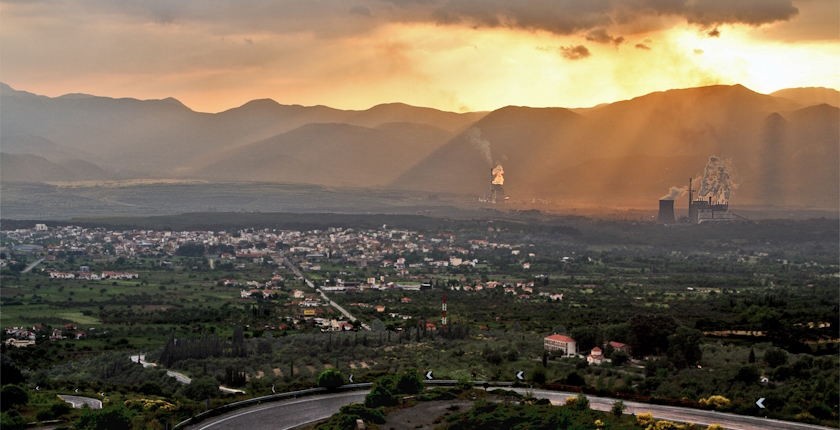
Slovenian Prime Minister Robert Golob visited the Savinja and Šalek region and the Velenje coal mine to present a draft law on the gradual closure of the mine. The event marked the beginning of a public debate on the document. Its implementation is estimated at EUR 1.1 billion. The trade union has raised concerns about the plan.

The Government of Slovenia has initiated a coal phaseout by assuming direct ownership of the Šoštanj coal power plant and coal mine Velenje from state-owned power utility Holding Slovenske Elektrarne (HSE). The first steps towards the closure of Termoelektrarna Šoštanj (TEŠ) have begun, and the decision makers have turned to Premogovnik Velenje.

Slovenia earlier closed the Trbovlje-Hrastnik mine in Zasavje. Zasavje and Savinja and Šalek (in Slovenian language: Savinjsko-šaleška regija – SAŠA) are two of 31 coal regions in the European Union.

Prime Minister Robert Golob held several meetings with representatives of local authorities in the towns of Šoštanj and Velenje, as well as with the management of the mine, union representatives, and businesspeople.

Golob: We have to take care of you because you took care of us

During the discussions, he emphasized that after the first reading of the draft law in the government, the document would be analyzed by the Economic and Social Council.

“We have to take care of you because you took care of us for so many years,” Golob said, as quoted by his government.

The government will, in his words, strive to protect the social security and jobs of miners and their families. Its goal is to reduce the uncertainty linked with the closure of the coal mine and the restructuring of the region, the prime minister added.

Golob: We have become aware of the workers’ concerns

Golob told workers’ representatives and mine management that the law on the coal mine closure would ensure they have a safe future and security, according to the update. He informed them that the law should enter parliamentary procedure by the end of the year.

“I understand the employees’ concerns, which is why I also attended the meeting with them. We became aware of their concerns before the government adopted the law,” he stated.

Golob claimed that solutions were found for 80% of workers’ demands, and that they would be included in the bill. He expressed confidence that the remaining 20% would be resolved at the Economic and Social Council in the coming weeks.

Trade union: The law must define what happens with employees and associated companies

Minister of Natural Resources and Spatial Planning Jože Novak explained that the government agrees with the management of the coal mine on all key elements, while negotiations with the unions are still ongoing, Naš Stik reported.

The management will prepare a twenty-year program for closure and remediation, Novak noted, and added that EUR 1.1 billion is necessary to implement the law.

According to the General Manager of Premogovnik Velenje Marko Mavec, the technical part of the draft law is appropriate, while the social aspect requires additional coordination.

The SPESS trade union President Simon Lamot pointed to controversial issues including the possibility of selling the HTZ Velenje subsidiary and uncertainties regarding early retirement.

The law must clearly define what happens to employees and associated companies – without that, there can be no talk of a just transition, Lamot stressed.
by in News

Race against time to secure EU funding for waste-to-energy plants in Greece

Hostile reactions from citizens and the opposition by municipal authorities threaten to derail Greece’s efforts to build six waste-to-energy plants. Moreover, time is running out to secure EUR 800 million in European funding.

The Ministry of Environment and Energy is expected to publish a call for waste-to-energy projects planned in Attica, Western Macedonia, Rodopi, Peloponnese, Boeotia (Viotia) and Crete. Total investment would amount to EUR 1 billion, for 1.19 million tons in capacity. However, time is running out to secure EUR 800 million in European funding set aside for them and the accompanying recycling plants.

Greece has been warned several times by the European Commission and fined for failing to fulfil its obligations in waste management. The country still relies mostly on landfills to handle municipal waste, instead of modern solutions. Ideally, useful materials should be sorted for recycling before the waste gets burned in incinerators to produce energy.

Two of the proposed units, the ones in Rodopi and Western Macedonia, are expected to provide district heating. The Ptolemaida 5 lignite-fired plant supplies district heating in the coal region of Western Macedonia in the country’s north, but it is scheduled to be decommissioned by 2028 at the latest.

Its owner, Public Power Corporation (PPC or DEI) aims to complete a waste-to-energy plant by then. Other prospective investors include GEK Terna, Metlen, Aktor and Motor Oil Hellas, all big players in the country’s energy market.

High fees and pollution worry municipalities

Many local authorities have expressed their objections to hosting these plants, fearing a rise in municipal fees and pollution. A discussion is underway in numerous municipal councils. They could lodge appeals to the Supreme Court and delay the process.

Amanatidis: Cancel all waste-to-energy plans

The regional council of Western Macedonia recently voted overwhelmingly to reject the plan for PPC’s planned unit from the ministry’s strategic environmental assessment (SEA). Governor Giorgos Amanatidis called on the government to withdraw the study and cancel the project. Municipalities in the same region and other institutions are also against an incinerator.

European funding through the National Strategic Reference Framework (NSRF) ends in 2027. The government and investors have until mid-2026 for implementation, Newmoney reported, adding that waste-to-energy projects take two to three years to complete.

Recently, another initiative, the Apollo program, for investments in renewable energy to lower energy costs for vulnerable consumers, lost EUR 100 million from the EU’s Recovery and Resilience Facility (RRF).

by in News

PPC launches first tender for pumped storage hydropower plant in former lignite mine

Greek Public Power Corporation (PPC or DEI) is moving forward with a pumped storage hydroelectric project at the site of its former open pit lignite mine Kardia, in a coal region in Western Macedonia.

The government-controlled power utility is seeking a design, supply, construction and commissioning contractor.

PPC announced that another tender would take place as part of the EUR 430 million project, for the ground works and civil engineering.

The criteria are strict. The company said eligible firms have completed at least one pumped storage hydropower station in the European Union within the last ten years, with a capacity of at least 70 MW and a water head of 90-450 meters. Alternatively, the requirement is at least three facilities of the same size in the last 20 years.

Interested parties can submit their proposals until October 20.

PPC’s project in Kardia received an environmental license in May from the Ministry of Environment and Energy. According to the document, there would be one upper and one lower reservoir with tunnels and a 400 kV substation. The ministry approved an “average” 130 MW capacity with an eight-hour duration, and a “maximum” of 148 MW, without defining the two features.

However, the tender sets the capacity at 320 MW, consisting of four 80 MW reversible turbines.

Apart from Kardia, PPC is planning a pumped storage hydropower system in the South Field lignite mine of Kozani, also in the country’s north, with a capacity of 227 MW and a budget of EUR 310 million. The project has also received an environmental license.

The company unveiled a EUR 5.8 billion investment program in April for both coal regions in Greece. It includes 300 MW of battery storage, 2.1 GW in photovoltaics and a 300 MW data center.

by in News

Greek coal region of Megalopolis opens new chapter after lignite

Last year, for the first time in decades, no smoke rose out of coal plants in the Peloponnese peninsula. The last two units had 500 MW together. Megalopolis is one of the two coal regions in Greece, along with Western Macedonia in the country’s north.

According to Public Power Corporation (PPC or DEI) the units Megalopolis-3 and Megalopolis-4 have now been permanently retired. Under the government-controlled utility’s plan to phase out coal completely next year, all such power plants stopped operating by now, with the exception of Ptolemaida 5, of 660 MW, which entered into operation last year. To maintain the security of supply, two units are kept in reserve, also in Western Macedonia in northern Greece.

PPC has produced a study for the reconstruction of the Megalopolis thermal power station, intending to accommodate other activities. Similar works are already underway in the local lignite mine.

New energy investments underway

The group’s investment plan involves various renewable energy and storage projects in Megalopolis to support the area’s energy transition. It is building two photovoltaic farms of 125 MW each, as part of a 490 MW cluster in the area.

The plan includes a 181 MW pumped storage hydropower station in the former lignite mine.

Based on the government’s Just Transition Development Program, Megalopolis will also host a battery factory, by Enercells, as well as two data centers, by Eunice and Kiefer, of 5 MW each. The investments have been approved by the Ministry of Economy and Finance, to seek funding from the European Union’s Just Transition Fund (JTF).

PPC expressed the belief that data centers are important for coal regions. Earlier this year, the group’s CEO George Stassis said they are ideal for such investments as the land and grid connections are already available. PPC is planning a 300 MW data center in Western Macedonia, but it hasn’t announced anything similar for Megalopolis yet.

by in News

Project underway for 81 MW solar park on coal mine in Montenegro

The Government of Montenegro adopted urban planning and technical conditions for a solar power plant of 81.1 MW in peak capacity in Pljevlja. The site for the facility is part of a coal mining complex.

Greece is the most successful by far in the Balkans in transforming coal land into clean energy and advanced technology hubs. The projects in the region are mostly for solar power plants. Neighboring North Macedonia is next when it comes to implementation, while Romania and Bulgaria as well as Serbia and Slovenia have made their first steps. Bosnia and Herzegovina and Kosovo* are still in the planning phase, and now Montenegro is joining them with a photovoltaic project.

The government in Podgorica adopted the urban planning and technical conditions for a solar power plant of 81.1 MW in peak capacity in Pljevlja. The facility in the country’s north called Rudnik uglja would be in the Ilino Brdo I cadastral unit, on the site of the Potrlica open cast coal mine.

According to a study submitted with the application, the connection capacity would be 62.5 MW. The coal mine’s operator and PV project developer, Rudnik uglja Pljevlja, said the location spans 62.6 hectares.

The government plans to close the Pljevlja coal plant in 2041

The firm is a subsidiary of state-owned power utility Elektroprivreda Crne Gore (EPCG), which runs the Pljevlja power plant in the same complex. It is the only coal-fired facility in Montenegro. The government plans to close the thermal power plant, currently under reconstruction, in 2041.

Rudnik uglja Pljevlja presented a just transition plan in March. It aims to establish 12 businesses to transform the region and spin them off. They include construction, transportation and the installation of a small hydropower plant called Durutovići and a photovoltaic facility.

The previous government initiated the development of a plan two years ago for an industrial complex in Pljevlja. There are several separate renewable energy projects in the area as well.

* This designation is without prejudice to positions onstatus and is in line with UNSCR 1244/99 and the ICJ Opinion on the Kosovo declaration of independence.
by in News

Western Balkans urged to step up just transition measures

In its new guidelines for the just transition, the Energy Community Secretariat highlighted the lack of policies and measures in its contracting parties in the Western Balkans. The concept implies incorporating a people-centred and regionally tailored approach, in national energy and climate planning, to phasing out fossil fuels while providing targeted support to those most affected. Just transition plans can help attract investments.

The Energy Community Secretariat published the Policy Guidelines on Just Transition as part of integrated energy and climate planning. It aims to assist the contracting parties in aligning with their legal obligations. The international organization called on them to adopt dedicated just transition plans (JTPs) or roadmaps, matching their national energy and climate plans (NECPs). The criticism of the Western Balkans mostly concerns the lack of policies and measures in the NECPs.

Of note, Serbia issued its draft Just Transition Action Plan last month. The World Bank approved a EUR 79.9 million loan and a EUR 2.89 million grant for the purpose, to the Federation of Bosnia and Herzegovina, one of the two entities constituting BiH.

Signing the Sofia Declaration in 2020, the Western Balkans committed to decarbonizing their economies to net zero by 2050

The secretariat recommended that the contracting parties improve their reporting on the matter as well. The just transition is a people-centred and regionally tailored approach to phasing out fossil fuels while providing targeted support to those most affected by the process, it pointed out.

In the Sofia Declaration on the Green Agenda for the Western Balkans, adopted in 2020, six contracting parties in the region committed to decarbonizing their economies and the 2050 climate neutrality objective.

A just transition implies support to affected workers and communities, addressing energy poverty, promoting inclusive governance, and ensuring fair access to the benefits of the transition, according to the guidelines. The economies would need to switch to clean, secure and affordable energy for all, the document notes.

Average coal power plant is almost five decades old

In most contracting parties, coal-based electricity generation is still dominant, characterised by low efficiency and high levels of emissions of carbon dioxide and pollutants.

Coal plants in the Western Balkans are between 34 and 67 years old, with an average age of 46 years in 2023. It entails risks to the security of electricity supply, the Energy Community Secretariat warned.

For comparison, it provided an overview of the situation in the European Union. The authors noted that Romania has no national JTP, but that it developed six territorial just transition plans or TJTPs. They cover the coal regions of Hunedoara, Gorj, Dolj, Galați, Prahova and Mureș.

Due to the insufficient level of integration of just transition in NECPs and the decision by many Energy Community contracting parties to create separate policies and measures in the form of just transition plans, the secretariat recommends that they develop them replicating the structure and content of TJTPs and base them on lessons learnt from European Union member states.

Authorities should support firms, job creation, equal opportunities

JTPs should be based on a granular identification of territories most impacted by decarbonisation, supported by thorough socio-economic and environmental impact assessments.

According to the guidelines, decision makers should support economic stakeholders such as micro, small and medium-sized enterprises and startups. It applies to the creation of firms, too, including through business incubators and consulting services. Workers and jobseekers need upskilling, reskilling and training, the update reads.

Women’s labour market participation and entrepreneurship, as well as equal pay, play an important role in ensuring equal opportunities

Women’s labour market participation and entrepreneurship, as well as equal pay, play an important role in ensuring equal opportunities, the document adds.

“Although no dedicated financing is currently available solely for just transition in the Energy Community, the preparation of comprehensive and credible just transition plans can significantly increase the chances of mobilising both public and private funding in the future. Just transition plans can serve as strategic investment roadmaps,” the authors of the guidelines underscored.

by in News

Federation of BiH secures EUR 83 million for just transition of coal regions

Bosnia and Herzegovina has secured EUR 83 million for a just transition project, which includes installing renewable power plants, social protection measures, and skills development in coal regions.

The funds are for the Federation of BiH, one of the two entities constituting Bosnia and Herzegovina.

The Board of Executive Directors of the World Bank has approved a EUR 79.90 million loan and a EUR 2.89 million grant to support Bosnia and Herzegovina’s National Energy and Climate Plan, enhance energy independence, foster job opportunities, and strengthen local economies in former coal regions.

It explained that the Just Transition in Select Coal Regions of Bosnia and Herzegovina Project would help repurpose post-mining lands in Banovići, Zenica, and Kreka, and facilitate the closure of underground works in Zenica. The project entails support for the installation of renewable energy systems at Banovići and Kreka mines.

The project has four components

The measures also involve social protection and skills development for workers and communities seeking opportunities outside the coal sector, the international financing institution noted.

The project will be implemented by the Federal Ministry of Energy, Mining and Industry and the state-owned RMU Banovići coal mine operator and power utility Elektroprivreda Bosne i Hercegovine (EPBiH). It has four components.

The first focuses on enhancing the capacity of coal regions, their entities, and the state-level government to manage a just transition. It will support the Committee on Just Transition at the State Level, a state-level knowledge platform, and capacity building of the Interministerial Committee on Just Transition in the Federation of BiH.

The project includes the land repurposing master plans in Banovići, Zenica, and Kreka

Technical assistance to relevant FBiH ministries to enhance the existing regulatory laws on labor transitions will be provided.

Component 2 supports the repurposing of select post-mining lands in Banovići, Zenica, and Kreka, and closure of specific underground works in the Zenica mine. The segment includes implementing the land repurposing master plans in all three areas

The third part envisages the construction of new power plants. A photovoltaic system of 27 MW in peak capacity will be installed at two identified sites at the Banovići and Kreka mines. Annual power production is projected at over 30 GWh.

Sheldon: To make sure no one is left behind

Component 4 aims to mitigate the social and labor impacts of coal transition on workers and communities by covering the financial obligations toward the miners in Zenica, reskilling and retraining eligible workers in Banovići and Zenica, and supporting affected communities through community investment, the project reads.

According to the World Bank, BiH is developing a National Energy and Climate Plan (NECP). The lender intends to ensure that mine closure is environmentally and socially responsible, supporting new job opportunities and strengthening local economies in former coal regions.

“This new project is an opportunity to boost BiH’s energy security while supporting communities, making sure no one is left behind,” said Christopher Sheldon, World Bank Country Manager for BiH and Montenegro.

by in News

Greece awards 188.9 MW for subsidized battery storage in final auction

Greece’s third energy storage auction has been completed with nine projects selected.

It was the final auction where the state provides subsidies to build battery energy storage systems (BESS). A total of almost 800 MW in capability has been awarded through all three storage auctions.

In the latest bidding, nine projects with a four-hour storage duration have been selected for a total capacity of 188.9 MW.

HELLENiQ Energy and PPC are biggest winners

HELLENiQ Renewables and government-controlled Public Power Corp. (PPC) were the biggest winners, with two plants of 25 MW and one 50 MW plant, respectively. The rest of the list comprises Amber Energy (18 MW), Plain Solar (7.9 MW), Enercoplan (25 MW), Arkadia Storage (10 MW), Heliothema (10 MW) and Ardassa Energy (18 MW).

The facilities will be installed in the Western Macedonia region in northern Greece and in the municipalities of Megalopolis, Tripoli, Gortynia and Oichalia in the Peloponnese region. They are the country’s lignite regions, covered by the Just Transition Development Plan.

The investments will benefit from a public grant of EUR 200,000 per MW and they must now submit a letter of guarantee for EUR 35,000 per MW within the next three months.

Average price rises

As for the average price, it landed at EUR 52,589.16 per MW per year in the auction. The lowest offer was EUR 43,927 per MW, by HELLENiQ Renewables, while the highest was EUR 58,773 per MW, by Plain Solar.

The average prices in the first and second auctions were EUR 49,748 per MW and EUR 47,680 per MW.

It should be pointed out that from now on, new facilities in the sector will operate commercially and get income strictly from the market. The Ministry of Environment and Energy has already published a decree setting the rules for the installation of 4.7 GW of new battery systems until 2030.

Investors are getting ready for future auctions. They will submit their applications to the Regulatory Authority for Energy, Waste and Water (RAEWW or RAAEY). Only last month, applications in the segment reached almost 1.5 GW, showing an enormous interest.

by in News

Renewables equipment factory to contribute to just transition of coal region in Romania

Monsson Group is preparing to build a manufacturing facility in Petrila for renewable energy equipment, including robots that clean solar panels. The project received funding to contribute to the just transition of Romania’s coal region Jiu valley – Hunedoara.

An investment of nearly EUR 10 million in the first phase is underway in Transylvania, in the town of Petrila, economically devastated after the closure of a coal mine. The project is aimed at reviving the area with a factory for renewable energy equipment such as enclosures for battery energy storage systems, wiring and robots that clean photovoltaic panels.

Monsson Group revealed its facility would also manufacture gear for monitoring environmental parameters and tracking fauna in the area. The Sweden-based company has said 70% of the investment would be covered from Romania’s Just Transition Program which is in turn part of the European Union’s Just Transition Facility.

Romania is planning to prolong the operation of its coal power plants and mines for a smoother switch to renewable sources, in terms of electricity supply. However, such facilities are becoming less financially viable by the day all across the EU. Coal regions are facing economic blows from early shutdowns of power plants and mines.

First major private investment in Petrila

According to Monsson, the new factory would employ more than fifty people in the first phase. It expects to begin construction mid-year.

It is the first major private investment in Petrila, Mayor Vasile Jurca said. He said the project enables reskilling and sustainable development. The local authority provided the land for the factory. Romania has earmarked substantial funding for the construction of renewable energy equipment plants.

The second part of the plan is to install a 20 MWh battery energy storage system to provide system services to the national grid, followed by a 50 MWh unit.

Reskilling program underway

The group, which includes Wind Power Energy and its RenewAcad network of renewable energy training centers, established cooperation with the University of Petroșani in getting skilled workers. Monsson is one of the biggest renewable energy investors in the country.

Petrila is part of the Jiu Valley in Hunedoara county, Romania’s main coal region. It is located near Oltenia, the other coal complex, in the counties of Gorj and Dolj.

Notably, the Maritsa East 3 coal power plant in neighboring Bulgaria ceased operations yesterday again after it was briefly brought back online to maintain energy security.

  • 1
  • 2