by in News

ContourGlobal installs 500 MWh standalone BESS facility in Bulgaria

A standalone battery energy storage system of 202 MW and 500 MWh is fully operational and actively participating in Bulgaria’s day-ahead and intraday electricity markets. ContourGlobal built it at its Maritsa East 3 coal plant, using the grid connection of one of its former units. Acting Minister of Energy Zhecho Stankov, who attended the inauguration, said the country added 5 GWh last year and estimated that the overall BESS capacity would hit 15 GWh by mid-2026.

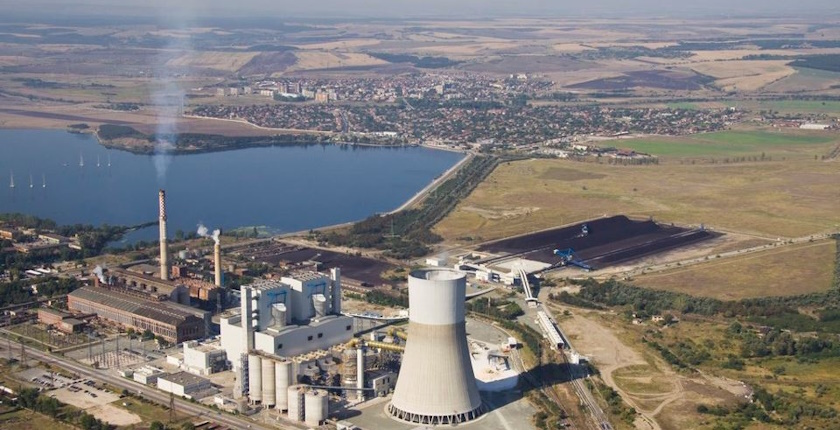
Bulgaria is, with the Czech Republic, Poland and Germany, in the group of only European Union member states in which more than a fifth of electricity is still generated from coal. But the situation is rapidly changing. One of the biggest standalone battery storage installations in Eastern Europe and among the first in Bulgaria recently came online. Located within the ContourGlobal Maritsa East 3 (Maritsa iztok 3) coal power plant, the facility uses the grid connection of a former unit.

Two remained in operation, supplying electricity during periods of peak demand.

The BESS has 202 MW in operating power and a duration of 2.5 hours, translating to 500 MWh, the company said. It inaugurated the battery system in the presence of Acting Minister of Energy Zhecho Stankov.

Stankov: New BESS creates sustainable pathway for evolution of Maritsa East coal complex

The new facility is actively participating in both the day-ahead and intraday national electricity markets, supporting optimized power dispatch and improved balancing of electricity supply and demand, the update adds.

Such projects signify how innovation and existing industrial infrastructure can work together to strengthen grid stability, improve flexibility, and accelerate the integration of renewable energy sources, Stankov stressed. The investment enhances energy security, supports market-based operation, and creates a sustainable pathway for the evolution of traditional energy hubs such as Maritsa East, in his words.

According to the acting minister, Bulgaria added 5 GWh of BESS capacity last year, nearly matching the Chaira pumped storage hydropower plant. He recalled that the overall level is set to reach 15 GWh by mid-2026.

Project materialized in under nine months

The project in Maritsa East 3 received just under EUR 30 million in support through the European Union’s Recovery and Resilience Facility (RRF) and the Bulgarian National Recovery and Resilience Plan (NRRP). The company participated with EUR 44.7 million.

Spanning 2.5 hectares, the installation is part of ContourGlobal’s 3 GWh operational BESS portfolio. The company is owned by KKR.

BYD supplied the 110 battery skids for the battery system, which also includes 28 power conversion system (PCS) and transformer units. ContourGlobal progressed from the final investment decision (FID) to commercial operation date (COD) in less than nine months.

The company is developing a second BESS on the same site, with a matching capability. It has a project for a battery in combination with a solar power plant as well.

Battery energy systems allow for the storage of electricity generated from various sources, including photovoltaic and wind power plants, during periods of low demand and its release back to the grid during peak demand, which helps balance production and consumption and the stable operation of the electricity transmission system.

Coal plants switching to energy storage

AES Corp. is interested in replacing one of the boilers in its AES Maritsa East 1 (AES Maritsa iztok 1) coal plant with a molten salt reactor.

Greece’s government-controlled Public Power Corp. (PPC Group) is already building BESS facilities at its coal plants.

German utility Uniper is planning to build a battery energy storage system at its Heyden coal power plant site in western Germany with Slovenia-based energy solutions provider NGEN.

Thre months ago, International Power Supply (IPS) opened its Factory X1, with a capacity of 3 GWh per year. It is the first gigafactory in Bulgaria for battery energy storage systems. The same company is building another manufacturing facility.

by in News

ContourGlobal installs 500 MWh standalone BESS facility in Bulgaria

A standalone battery energy storage system of 202 MW and 500 MWh is fully operational and actively participating in Bulgaria’s day-ahead and intraday electricity markets. ContourGlobal built it at its Maritsa East 3 coal plant, using the grid connection of one of its former units. Acting Minister of Energy Zhecho Stankov, who attended the inauguration, said the country added 5 GWh last year and estimated that the overall BESS capacity would hit 15 GWh by mid-2026.

One of the biggest standalone battery storage installations in Eastern Europe and among the first in Bulgaria recently came online. Located within the ContourGlobal Maritsa East 3 (Maritsa iztok 3) coal power plant, the facility uses the grid connection of a former unit. Two remained in operation, supplying electricity during periods of peak demand.

The BESS has 202 MW in operating power and a duration of 2.5 hours, translating to 500 MWh, the company said. It inaugurated the battery system in the presence of Minister of Energy Zhecho Stankov.

Stankov: New BESS creates sustainable pathway for evolution of Maritsa East

The new facility is actively participating in both the day-ahead and intraday national electricity markets, supporting optimized power dispatch, improved balancing of electricity supply and demand, and the integration of renewable energy sources, while enhancing overall system stability and flexibility, the update adds.

Such projects signify how innovation and existing industrial infrastructure can work together to strengthen grid stability, improve flexibility, and accelerate the integration of renewable energy sources, Stankov stressed. The investment enhances energy security, supports market-based operation, and creates a sustainable pathway for the evolution of traditional energy hubs such as Maritsa East, in his words.

According to the acting minister, Bulgaria added 5 GWh of BESS capacity last year, nearly matching the Chaira pumped storage hydropower plant. He recalled that the overall level is set to reach 15 GWh by mid-2026.

Project materialized in under nine months

The project in Maritsa East 3 received support through the European Union’s Recovery and Resilience Facility (RRF) and the Bulgarian National Recovery and Resilience Plan (NRRP). Spanning 2.5 hectares, the installation is part of the company’s 3 GWh operational BESS portfolio. ContourGlobal is owned by KKR.

BYD supplied the 110 battery skids for the battery system, which also includes 28 power conversion system (PCS) and transformer units. ContourGlobal progressed from the final investment decision (FID) to commercial operation date (COD) in less than nine months.

The company is developing a second BESS on the same site, with a matching capability. It has a battery project in combination with a solar power plant as well.

Battery energy systems allow for the storage of electricity generated from various sources, including photovoltaic and wind power plants, during periods of low demand and its release back to the grid during peak demand, which helps balance production and consumption and the stable operation of the electricity transmission system.

Three months ago, International Power Supply (IPS) opened its Factory X1, with a capacity of 3 GWh per year. It is the first gigafactory in Bulgaria for battery energy storage systems. The same company is building another manufacturing facility.

by in News

China completes grid connection of world’s largest open sea PV plant

CHN Energy declared a 1 GW solar power system that it built off the coast of China’s Shandong province, on the open sea, fully connected to the grid. The facility consists of steel truss platforms on bottom-fixed piles. Just in the past month, the state-owned company commissioned solar power plants of 600 MW and 425 MW, a coal power station of 4 GW and China’s largest gas power unit.

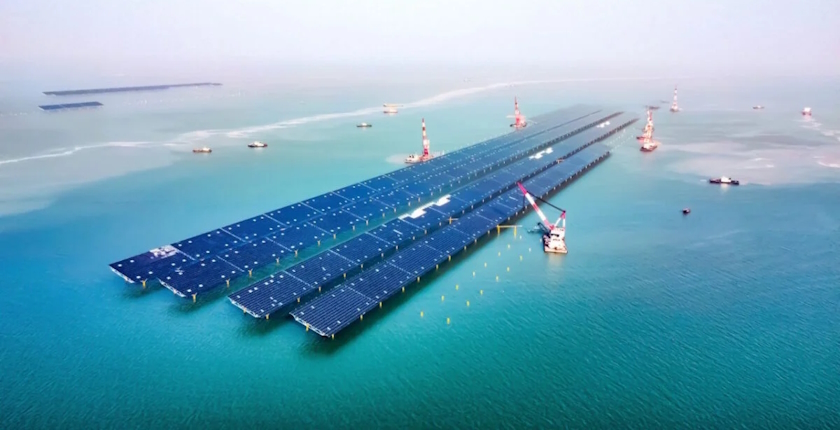
China continues to dominate the energy realm with the world’s largest projects and innovative design. The latest example, on the open sea, is eight kilometers from Kenli district in the city of Dongying in the country’s east. It is a giant solar power plant, but not a floating one.

The Shandong Dongying Kenli (Guohua HG14) facility is on steel truss platforms on bottom-fixed piles. China Energy Investment Corp., also known as CHN Energy, declared the photovoltaic system fully connected to the grid. The initial project of the state-owned enterprise was for 1 GW.

China State Construction Engineering Corp. (CSCEC) so far installed 930 platforms out of 2,934 planned. Each is on four piles, at water depth of one to four meters.

The project on the open sea off Shandong province spans 1,223 hectares. Its developer is CHN Energy’s subsidiary Guohua Energy Investment Co.

Project involves 100 MW in battery storage

According to the latest reports, Guohua HG14 consists of bifacial double-glass modules of 710 W and the annual output, when the facility is completed, is estimated at 1.78 TWh. In earlier updates, 2.37 million monocrystalline solar panels of 550 W each were planned, translating to 1.3 GW in peak capacity. Total investment was valued at CNY 8.1 billion (USD 1.16 billion).

The company reportedly switched to stronger, bifacial solar modules for the project offshore Dongying

The offshore solar power plant on the open sea is connected to the mainland grid with a 66 kV cable. Its first segment came online in November 2024. The project involves a battery energy storage system of 100 MW in capability and 200 MWh in capacity.

Giant solar plant comes online at altitude of 3,000 meters

Just in the past month, CHN Energy commissioned several landmark facilities. A new 600 MW solar power plant is in the Xinjiang province in the west, in Qitai county, near the border with Mongolia.

The company completed another PV system, of 425 MW, via Qinghai Gonghe Co. Part of a 1 GW project with storage, called Guoneng Canadian Solar Hainan, it is located in Gonghe county in Qinghai Province. It is at an altitude of 3,000 meters and above.

Just last week, CHN Energy put into operation the fourth and last 1 GW unit of its coal-fired Guangxi Beihai Power Plant. The complex in Guangxi province in southern China includes a 27.3 MW solar power plant for electric car chargers.

The utility has also launched regular production of the first of two units in its gas power plant Anji in Zhejiang province. It is the largest and most efficient in the country, CHN Energy pointed out. When the second unit comes online in early 2026, the power plant will have 1.69 GW in capacity.

by in News

China completes grid connection of world’s largest open sea PV plant

CHN Energy declared a 1 GW solar power system that it built off the coast of China’s Shandong province, on the open sea, fully connected to the grid. The facility consists of steel truss platforms on bottom-fixed piles. Just in the past month, the state-owned company commissioned solar power plants of 600 MW and 425 MW, a coal power station of 4 GW and China’s largest gas power unit.

China continues to dominate the energy realm with the world’s largest projects and innovative design. The latest example, on the open sea, is eight kilometers from Kenli district in the city of Dongying in the country’s east. It is a giant solar power plant, but not a floating one.

The Shandong Dongying Kenli (Guohua HG14) facility is on steel truss platforms on bottom-fixed piles. China Energy Investment Corp., also known as CHN Energy, declared the photovoltaic system fully connected to the grid. The initial project of the state-owned enterprise was for 1 GW.

China State Construction Engineering Corp. (CSCEC) so far installed 930 platforms out of 2,934 planned. Each is on four piles, at water depth of one to four meters.

The project on the open sea off Shandong province spans 1,223 hectares. Its developer is CHN Energy’s subsidiary Guohua Energy Investment Co.

Project involves 100 MW in battery storage

According to the latest reports, Guohua HG14 consists of bifacial double-glass modules of 710 W and the annual output, when the facility is completed, is estimated at 1.78 TWh. In earlier updates, 2.37 million monocrystalline solar panels of 550 W each were planned, translating to 1.3 GW in peak capacity. Total investment was valued at CNY 8.1 billion (USD 1.16 billion).

The company reportedly switched to stronger, bifacial solar modules for the project offshore Dongying

The offshore solar power plant on the open sea is connected to the mainland grid with a 66 kV cable. Its first segment came online in November 2024. The project involves a battery energy storage system of 100 MW in capability and 200 MWh in capacity.

Giant solar plant comes online at altitude of 3,000 meters

Just in the past month, CHN Energy commissioned several landmark facilities. A new 600 MW solar power plant is in the Xinjiang province in the west, in Qitai county, near the border with Mongolia.

The company completed another PV system, of 425 MW, via Qinghai Gonghe Co. Part of a 1 GW project with storage, called Guoneng Canadian Solar Hainan, it is located in Gonghe county in Qinghai Province. It is at an altitude of 3,000 meters and above.

Just last week, CHN Energy put into operation the fourth and last 1 GW unit of its coal-fired Guangxi Beihai Power Plant. The complex in Guangxi province in southern China includes a 27.3 MW solar power plant for electric car chargers.

The utility has also launched regular production of the first of two units in its gas power plant Anji in Zhejiang province. It is the largest and most efficient in the country, CHN Energy pointed out. When the second unit comes online in early 2026, the power plant will have 1.69 GW in capacity.

by in News

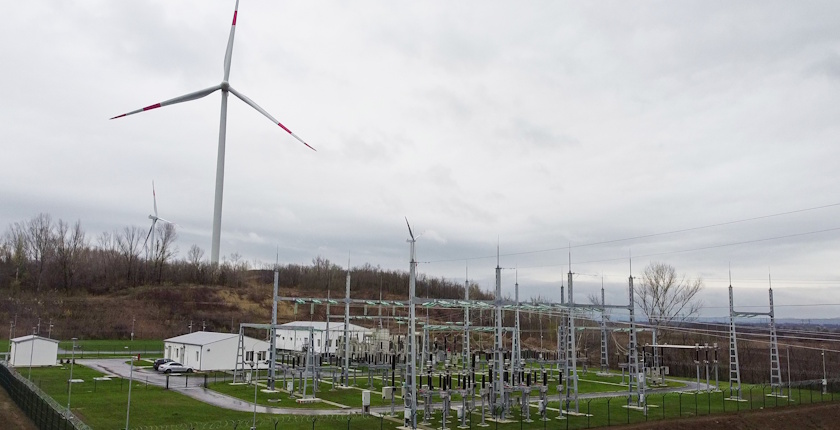
Serbia’s EPS starts trial operation of its first wind park Kostolac

Serbia’s state-owned power utility Elektroprivreda Srbije put the 66 MW Kostolac wind farm into trial operation.

The construction of Kostolac is complete, and Elektroprivreda Srbije’s (EPS) first wind farm has generated its first megawatt-hours, EPS announced.

Upon receiving approval for connecting to the transmission system, the substation was energized and the blades of wind turbine 1 began to spin. It marked the start of the trial operation of the new generation capacity, the company said, and added that the kickoff of the remaining wind turbines is underway.

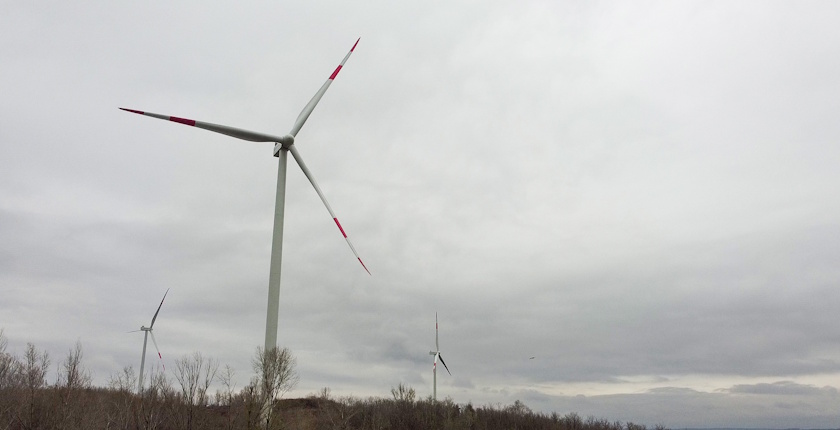
EPS’s first wind power plant, with 20 generators, is located at sites called Drmno, Petka, Ćirikovac and Klenovnik, at an area of closed open-pit mines of its subsidiary Termoelektrane i kopovi Kostolac (TE-KO Kostolac). It operates coal-fired power plants and open-pit coal mines.

Živković: It is a historic moment for EPS

Closed coal mines are ideal locations for installing wind farms and solar power plants, due to existing infrastructure. The concept has become widespread in Balkan countries.

“This is a historic moment for EPS. In addition to energy from water, coal, and the sun, now the first wind farm is online. This is a big step toward increasing the share of renewable energy and achieving sustainable energy development for EPS and the entire Serbian energy sector,” CEO Dušan Živković underlined.

He pointed out that the wind farm is just the beginning of future intensive development of new green capacities. It is very significant that it was built on the site of an old mining landfill and that the space has been given a completely new, sustainable purpose, he added.

The wind farm is expected to produce 187 million kWh annually

serbia eps wind farm Kostolac trial operation coal mine
Photo: EPS/Zoran Gavrilović

Živković recalled that the construction of the wind farm was a major challenge, but also a real opportunity for experienced engineers and young, new professionals at EPS to gain new knowledge and experience for future projects.

The planned annual production of the wind farm is 187 million kWh, which is enough to supply about 30,000 households with green electricity, according to EPS.

The project is financed by a EUR 110 million loan from Germany’s KfW Development Bank and a EUR 30 million grant from the European Union via the Western Balkans Investment Framework (WBIF), while the company provided a part of the needed funds, EPS said.

Serbia’s Minister of Mining and Energy, Dubravka Đedović Handanović said in January 2024, at the signing of an agreement with the EU for the EUR 30 million grant, that it has completed the financing of the project.

According to WBIF’s update from December 2024, the project was valued at EUR 145.1 million. It comprised EUR 81.8 million from a KfW loan and EUR 31 from WBIF in the form of a grant, while EPS provided EUR 32.3 million.

by in News

EU allows Romania to delay shutdown of coal plants until end-2029

Amid severe delays in projects for gas power plants, the European Commission approved Romania’s request to push back the closure of several coal-fired systems. The country is increasingly risking electricity shortages due to the lack of baseload capacity.

Romania will be able to keep three coal plants in operation until the end of 2029, following the renegotiation with the European Commission of the decarbonization calendar for electricity production, Minister of Energy Bogdan Ivan said. In a social media post, he announced that 900 MW would remain online.

Two other coal plants can operate at least until the end of August next year, Ivan revealed earlier at a press conference, where he first said the closure of 990 MW would be postponed until the end of 2029.

Turceni, Ișalnița gas power plants must be completed by 2029

State-owned Complexul Energetic Oltenia (CE Oltenia) remains fully active until the end of the summer, he added. “We will continue to have active coal-fired units in the city of Craiova, in order to continue to supply heat to the population, electricity, and steam to the Ford company. And those in Govora, which will produce heat for the inhabitants this winter, until the summer, when the municipality’s [Râmnicu Vâlcea] new energy system comes into operation,” the minister stated, as quoted by Profit.ro.

Romania was supposed to take 1.76 GW of coal power capacity offline at the end of this year. Ivan earlier warned of the risk of energy poverty and even blackouts. He explained that the European Commission accepted the 2029 deadline for the commissioning of CCGT (combined-cycle gas turbine) power plants in Turceni and Ișalnița.

Ivan: Romania will have 1.5 GW of coal power available in the winter season

The two new facilities of 1.33 GW would replace the coal plants in the same two towns. Their projects have suffered massive delays. Tender procedures are still ongoing for contracting the works.

Romania will have 1.5 GW of coal power available this winter, the minister claimed. In the amended National Recovery and Resilience Plan (NRRP or PNRR), the Rovinari and Turceni coal plants in Gorj county and one in the Jiu Valley in Hunedoara remain, together with the units in Craiova and Râmnicu Vâlcea.

Deal with EU to halve estimated nominal gap in winter

In a document from the beginning of October, National Energy Dispatcher (DEN), a unit of transmission system operator Transelectrica, said it counted on 850 MW from lignite for the upcoming winter. The season lasts from November through March. It would be one unit in Turceni, of 250 MW, with another one in technical reserve, and two units of 600 MW in total in Rovinari, having a third one as backup.

The electricity production deficit in the peak evening hours would range from 1.12 GW in the moderate scenario, to a stunning 3.8 GW.

The minimum required reserve is 1,000 MW, but only 520 MW would be available, so the expected gap was actually 1.6 MW – or 4.3 GW in the pessimistic version! The report puts transmission capacity at 4.5 GW for exports and 4.2 GW for imports.

Notably, Turceni, a small town in southwestern Romania dependent on the local coal power plant, is kickstarting a EUR 380 million project. The municipal authority is turning to agrivoltaics, energy storage and green hydrogen to replace it.

by in News

Romania risks blackouts if it shuts coal plants as scheduled

Minister of Energy Bogdan Ivan claims that energy poverty or even blackouts could hit Romania if it proceeds with the closure of coal plants. Namely, the gas power projects for replacing them are suffering severe delays.

The European Commission has become flexible for the first time in the last four years, said Romania’s Minister of Energy Bogdan-Gruia Ivan. He has asked for a postponement of the deadline for shutting down a group of coal power plants.

They need to be closed by the end of the year. If the coal plants, run by state-owned Complexul Energetic Oltenia (CE Oltenia) go before gas power plants Iernut and Mintia are commissioned, Romania is jeopardized, according to the minister.

Ivan told Digi24.ro he was negotiating with the European Commission on delaying the closure by “a few months.” Romgaz decided last week to cancel the contract with Duro Felguera, the contractor for the Iernut facility.

Energy poverty risk increasing

A study conducted with Romania’s transmission system operator Transelectrica has shown that Romania can otherwise end up in energy poverty and even risk a blackout, he underscored. “Especially in the winter, when we have no solar, when we have no wind power,” Minister Ivan explained.

Furthermore, Romania would like to keep three large coal units and another two in technical reserve for replacement them in case of damage, Ivan revealed. It would ensure a 1 GW minimum coal power supply, he asserted.

Romania requires at least 1 GW in baseload energy from coal for two more years, according to Minister Bogdan Ivan

Simulations showed that the group would need to operate for two years more, at least, until Iernut and Mintia are completed.

“We are pressed for time. We need to conclude contracts for next year. We need to conclude contracts for energy supply, contracts with suppliers, coal stocks. It is a complex of factors that must be organized very well from now on. It is already late, for Romania and for our energy companies,” Ivan stated.

Gas power projects in constant delay

Additionally, gas power plants Turceni (475 MW) and Ișalnița (850 MW) are supposed to replace some of the capacity in the Oltenia complex. The two projects suffered constant delays. The deadlines in the tenders for construction have been pushed back to September 30 and November 14, respectively.

Romania has received billions of euros from the European Union for gas power plants to substitute coal, the minister noted separately. He acknowledged that the projects are still on paper. That’s why today Romanians have almost the highest electricity price in Europe, Ivan claimed.

by in News

Bulgarian coal plant mulls replacing boiler with molten salt battery

The operator of the AES Maritsa iztok 1 coal plant in Bulgaria is interested in replacing one of its boilers with a molten salt reactor. It would accumulate excess renewable energy from the power grid as heat and produce steam to drive the existing turbine.

With the surge in solar and wind power capacity throughout the world, the grid needs to match it with balancing and flexibility to handle the intermittency of the two sources. Their output varies with weather conditions, so the amount of electricity is often much higher or lower than demand.

Batteries are all the rage now, with investors racing to bridge the gaps between intraday peak production and peak consumption. Southeastern Europe is catching up with the trend, especially in Bulgaria, Romania and Turkey.

A molten salt battery could turn out to be a lifeline for AES Maritsa East 1

It opens up space for some other solutions in the emerging energy storage market which are nearing maturity. United States-based AES Corp.’s subsidiary in Bulgaria is examining one such overlooked opportunity. The molten salt reactor technology could revive the prospects of its coal power plant in Galabovo in Stara Zagora province.

The operator of the AES Maritsa iztok 1 (AES Maritsa East 1) facility is planning to transform one of the units into a so-called Carnot battery, Capital.bg reported. Such systems turn electricity into thermal energy and store it, to convert it back to electricity.

AES plans to maintain generator’s capacity

The company’s solution of choice is a molten salt reactor, which would replace the boiler. AES plans to power it with surplus renewable energy and produce steam for the existing 345 MW turbine. Importantly, among its other assets is the Saint Nikola wind power plant of 156 MW, the largest in Bulgaria.

The battery would hold enough heat to drive the unit at maximum power for five hours, translating to 1.73 GWh.

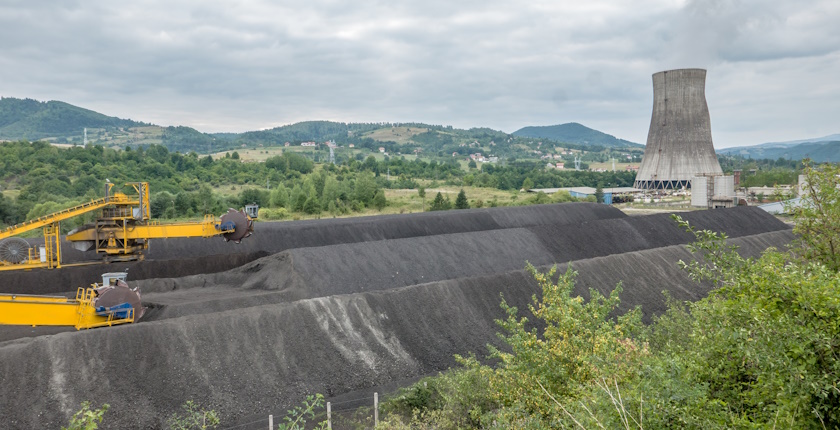
Coal plants can technically work nonstop, but the market has all but overrun most such facilities in Europe. Now they increasingly operate only when prices are high, covering peaks. It could make the business case for molten salt reactors and preserve jobs.

Molten salt is used in concentrated solar power (CSP) plants. They mostly use electrolytes such as alkali metal chlorides – sodium chloride, potassium chloride or lithium chloride – or nitrates: for instance, sodium nitrate or potassium nitrate.

Need for energy storage strengthening with rise in intraday price spreads

Market prices were negative on 2.8% of the days of last year, while they were lower than EUR 5 per MWh for 8.8% of the time. It compares to 1.9% and 5.5% in 2025, respectively, the article adds. The spread between the maximum and minimum prices is increasing. On 53% of days in the first half of this year, the difference was between EUR 100 per MWh and EUR 200 per MWh. The share of spreads above EUR 200 per MWh was 30%.

Such high amplitudes indicate both oversupply and shortages within the same day, amid the strong growth in variable renewables capacity.

by in News

Environmentalists warn EU that Bulgaria ignores coal plants breaching pollution rules

Greenpeace Bulgaria and Za Zemiata (For the Earth) said they would file a complaint today with the European Commission over repeated failures by Bulgarian authorities to enforce the European Union’s environmental law at four coal plants. They expressed the view that institutions are prioritizing financial interests over public health and the environment.

Environmental organizations Greenpeace Bulgaria and Za Zemiata wrote a complaint, to submit to the European Commission, regarding what they described as long-standing violations by four coal power plants linked to Bulgarian businessman Hristo Kovachki. “Bulgarian institutions refuse to apply EU environmental law as intended, favoring coal owners over people and nature. This complaint provides evidence for the European Commission to initiate infringement procedures,” said environmental lawyer Regina Stoilova.

Alleged breaches from 2018 to 2023 concern thermal power plants Bobov Dol in Golemo Selo, Brikel in Galabovo, Republika in Pernik, and Maritsa 3 in Dimitrovgrad. The two groups said they exhausted all national-level mechanisms for holding the polluters accountable and protecting affected citizens and the environment.

The two groups have exhausted all legal mechanisms on the national level

Instead of enforcing environmental standards, Bulgarian institutions – including the Ministry of Environment and Water, the Executive Environmental Agency and regional environmental and water inspectorates – have repeatedly issued permits to offenders, imposed weak or ineffective fines, and ignored serious pollution events that threaten public health, the environmentalists added.

“These coal plants are shielded by an institutional network protecting Kovachki’s opaque coal business. Thousands of Bulgarians living under these chimneys continue to face rampant pollution with no accountability,” said Director of Greenpeace Bulgaria Meglena Antonova.

Penalties could have been millions of euros higher

Bulgarian courts have also failed to act, according to the statement. During the legal proceedings after Brikel and Maritsa 3 were temporarily closed in 2022, the plants continued operating for three years. In the said six-year period, Kovachki-linked plants avoided nearly EUR 2.5 million in penalties, , the organizations calculated and stressed that Brikel payed only EUR 3,300 in fines.

In official documents, the businessman holds no ownership in most of the firms that media outlets regularly link him to. Kovachki has only identified himself as a consultant in some of them. Investigative journalists have obtained documents indicating that he controls a group of companies through a holding called Orion, which he denied.

Violations include illegal wastewater discharge

The violations of the permits consisted of illegal emissions into the air, illegal discharge of wastewater into rivers, and use of prohibited fuels.

“In an attempt to reduce production costs, the coal power plants associated with Kovachki have systematically co-fired waste and biomass with coal without possessing the necessary permits. Even after obtaining the required permits, the operators have significantly exceeded the biomass limits specified in them,” reads a report accompanying the announcement.

Meanwhile, the power plants have gained millions from saved carbon emission allowances, the document adds. An analysis by Za Zemiata estimates the damages for the period 2017-2021 at EUR 75 million for five plants associated with Kovachki, four of which are the subject of the new complaint.

Attack on activist living near Bobov Dol

“Not only has there been no accountability, but activists are also facing aggression for speaking out. Over the weekend, Daniela Toneva, an activist opposing the Bobov Dol TPP coal plant, was attacked after speaking out about the plant’s severe pollution and the links between Hristo Kovachki and the chairman of the Bobov Dol Municipal Council Krasimir Chavraganski,” said Beyond Fossil Fuels, a partner organization.

Namely, someone spilled paint on Toneva’s car and broke her window with a stone they threw into the house. She told Svobodna Evropa (RFE/RL) that local authorities are hostile to her because of her activism. The firm operating the nearby Bobov Dol facility condemned the attack.

by in News

Turkey launches solar, wind power auctions with November deadlines

The Ministry of Energy and Natural Resources of Turkey issued a public call for solar and wind power auctions for 2 GW in total. It will receive the applications on November 4 and November 18, respectively. One competitive bidding process is for a floating solar power project of 35 MW.

Following the successful auctions for renewable energy projects that were completed early this year, Turkey kicked off another round. It is also for 2 GW of overall connection capacity, in light of the country’s ambition to grow its combined solar and wind power capacity to 120 GW by 2035. The two technologies reached 37.1 GW together a month ago, out of 120.2 GW in total.

Auctions are held under the Renewable Energy Zones (REZ) state support mechanism. The scheme is better known by its Turkish acronym YEKA.

Ten solar power areas in eight provinces

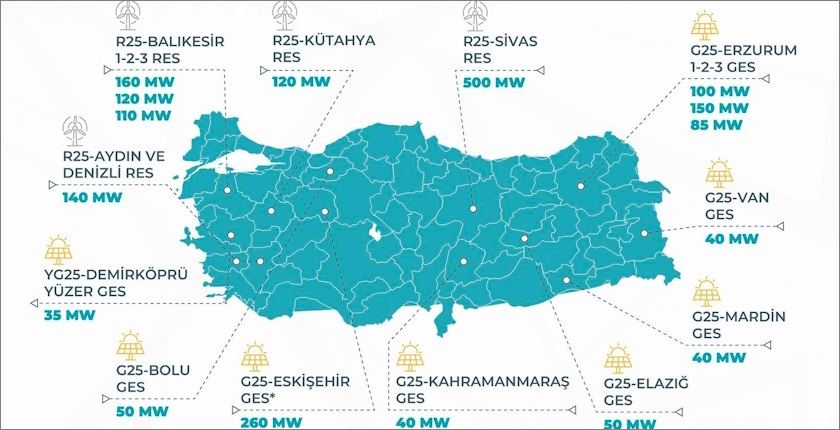
The upcoming solar energy auctions, REZ SPP 2025 (YEKA GES 2025), are for 850 MW altogether. There are ten areas in eight provinces designated for bidding: Kahramanmaraş, Mardin and Van, with 40 MW each, Bolu and Elazığ (50 MW each), Erzurum 1-3 (100 MW, 150 MW and 85 MW), Eskişehir (260 MW) and Demirköprü in Manisa province, with 35 MW.

The upcoming solar power auctions will include Turkey’s first bidding for a floating photovoltaic plant

Notably, the last one is for a planned floating solar power plant on the reservoir of the Demirköprü hydropower plant. The facility on the Gediz river, east of Izmir, is owned by state-owned Electricity Generation Corp. (EÜAŞ). Turkey now hosts only two small floating photovoltaic units, and the auction will be the first of its kind.

Applications will be received on November 4, the ministry said and added it would subsequently publish a schedule for bidding.

Wind power capacity quota is 1.15 GW

Participants can apply on November 18 for the wind energy round of auctions, REZ WPP 2025 (YEKA RES 2025). It is for an overall 1.15 GW in six areas.

Investors will compete for 500 MW in Sivas province, a 140 MW project in Aydın and Denizli, 120 MW in Kütahya and three areas in Balıkesir – 160 MW, 120 MW and 110 MW.

Winners to submit guarantees of EUR 75,000 per MW for PV projects, EUR 100,000 per MW for wind

Potential bidders will pay a fee of EUR 1,550 for each auction they apply for. They must submit letters of guarantee lasting one year and worth EUR 15,000 per MW for photovoltaics and EUR 20,000 per MW for wind power. Winners will submit 10-year guarantees before signing their contracts: EUR 75,000 per MW and EUR 100,000 per MW, respectively.

The ceiling or starting price is EUR 55 per MWh and the floor prices are EUR 32.5 per MWh for solar power and EUR 35 per MWh for wind. If bids hit the floor, another auction will be held between the competitors, like in the previous round. It is for a so-called contribution share that they are ready to pay. The minimum is EUR 10,000 per MW of planned capacity and the highest bid wins.

Successful participants can sell electricity on the free market for five years in the case of solar power plants, while the period lasts six years for wind. After that, both categories enter a 20-year scheme with a guaranteed price.

Turkey tops 120 GW in total electricity capacity

At the end of July, electricity capacity in Turkey totaled 120.2 GW, the ministry revealed. Hydropower accounted for 26.9% or 32.3 GW, compared to 23.4 GW in photovoltaics (19.5%) and 13.7 GW of wind power, translating to 11.4%.

The share of biofuel and waste was 1.9%, with 2.34 GW, and geothermal power plants had 1.73 GW altogether, which is 1.4%. Gas power plants in Turkey had 24.7 GW in combined capacity (20.6%). The remainder is coal: 21.9 GW or 18.3%.