by in News

Serbia’s EPS starts trial operation of its first wind park Kostolac

Serbia’s state-owned power utility Elektroprivreda Srbije put the 66 MW Kostolac wind farm into trial operation.

The construction of Kostolac is complete, and Elektroprivreda Srbije’s (EPS) first wind farm has generated its first megawatt-hours, EPS announced.

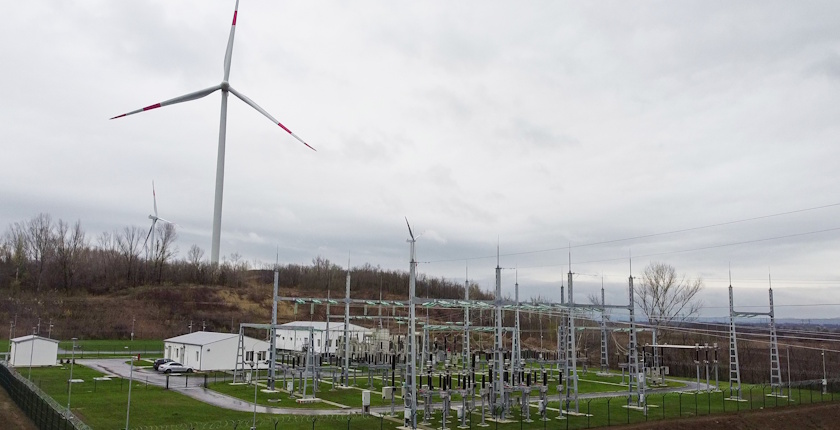
Upon receiving approval for connecting to the transmission system, the substation was energized and the blades of wind turbine 1 began to spin. It marked the start of the trial operation of the new generation capacity, the company said, and added that the kickoff of the remaining wind turbines is underway.

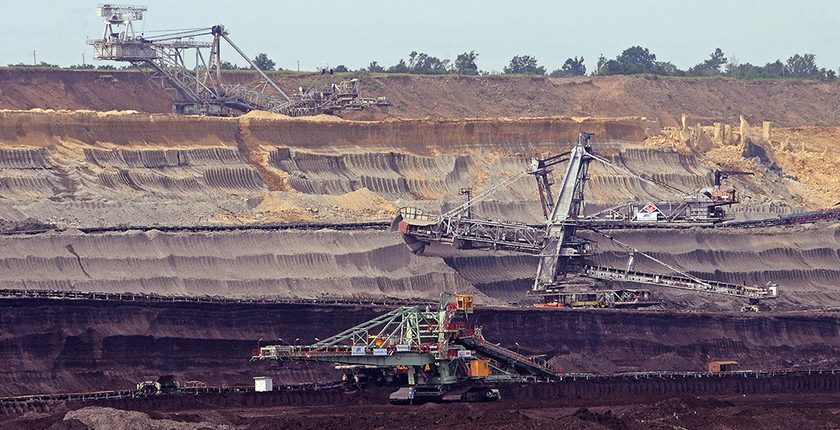
EPS’s first wind power plant, with 20 generators, is located at sites called Drmno, Petka, Ćirikovac and Klenovnik, at an area of closed open-pit mines of its subsidiary Termoelektrane i kopovi Kostolac (TE-KO Kostolac). It operates coal-fired power plants and open-pit coal mines.

Živković: It is a historic moment for EPS

Closed coal mines are ideal locations for installing wind farms and solar power plants, due to existing infrastructure. The concept has become widespread in Balkan countries.

“This is a historic moment for EPS. In addition to energy from water, coal, and the sun, now the first wind farm is online. This is a big step toward increasing the share of renewable energy and achieving sustainable energy development for EPS and the entire Serbian energy sector,” CEO Dušan Živković underlined.

He pointed out that the wind farm is just the beginning of future intensive development of new green capacities. It is very significant that it was built on the site of an old mining landfill and that the space has been given a completely new, sustainable purpose, he added.

The wind farm is expected to produce 187 million kWh annually
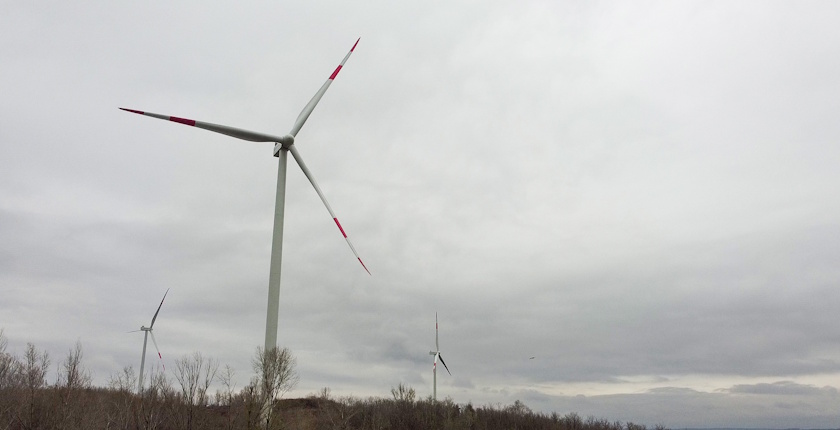
serbia eps wind farm Kostolac trial operation coal mine
Photo: EPS/Zoran Gavrilović

Živković recalled that the construction of the wind farm was a major challenge, but also a real opportunity for experienced engineers and young, new professionals at EPS to gain new knowledge and experience for future projects.

The planned annual production of the wind farm is 187 million kWh, which is enough to supply about 30,000 households with green electricity, according to EPS.

The project is financed by a EUR 110 million loan from Germany’s KfW Development Bank and a EUR 30 million grant from the European Union via the Western Balkans Investment Framework (WBIF), while the company provided a part of the needed funds, EPS said.

Serbia’s Minister of Mining and Energy, Dubravka Đedović Handanović said in January 2024, at the signing of an agreement with the EU for the EUR 30 million grant, that it has completed the financing of the project.

According to WBIF’s update from December 2024, the project was valued at EUR 145.1 million. It comprised EUR 81.8 million from a KfW loan and EUR 31 from WBIF in the form of a grant, while EPS provided EUR 32.3 million.

by in News

Slovenia begins preparations for closure of Velenje coal mine

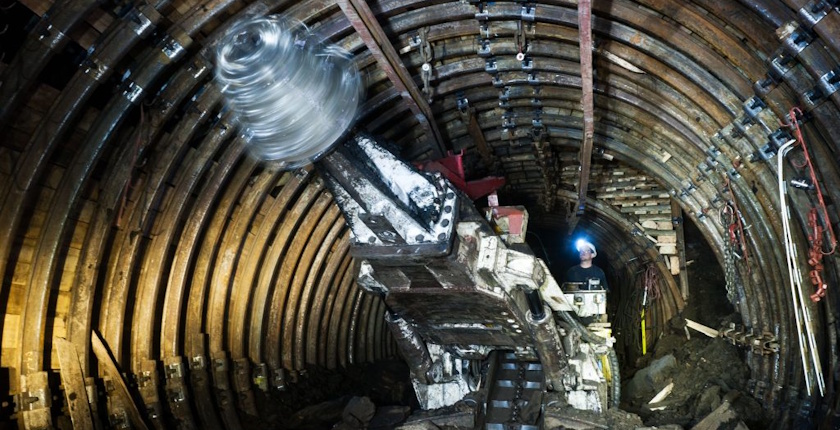
Slovenian Prime Minister Robert Golob visited the Savinja and Šalek region and the Velenje coal mine to present a draft law on the gradual closure of the mine. The event marked the beginning of a public debate on the document. Its implementation is estimated at EUR 1.1 billion. The trade union has raised concerns about the plan.

The Government of Slovenia has initiated a coal phaseout by assuming direct ownership of the Šoštanj coal power plant and coal mine Velenje from state-owned power utility Holding Slovenske Elektrarne (HSE). The first steps towards the closure of Termoelektrarna Šoštanj (TEŠ) have begun, and the decision makers have turned to Premogovnik Velenje.

Slovenia earlier closed the Trbovlje-Hrastnik mine in Zasavje. Zasavje and Savinja and Šalek (in Slovenian language: Savinjsko-šaleška regija – SAŠA) are two of 31 coal regions in the European Union.

Prime Minister Robert Golob held several meetings with representatives of local authorities in the towns of Šoštanj and Velenje, as well as with the management of the mine, union representatives, and businesspeople.

Golob: We have to take care of you because you took care of us

During the discussions, he emphasized that after the first reading of the draft law in the government, the document would be analyzed by the Economic and Social Council.

“We have to take care of you because you took care of us for so many years,” Golob said, as quoted by his government.

The government will, in his words, strive to protect the social security and jobs of miners and their families. Its goal is to reduce the uncertainty linked with the closure of the coal mine and the restructuring of the region, the prime minister added.

Golob: We have become aware of the workers’ concerns

Golob told workers’ representatives and mine management that the law on the coal mine closure would ensure they have a safe future and security, according to the update. He informed them that the law should enter parliamentary procedure by the end of the year.

“I understand the employees’ concerns, which is why I also attended the meeting with them. We became aware of their concerns before the government adopted the law,” he stated.

Golob claimed that solutions were found for 80% of workers’ demands, and that they would be included in the bill. He expressed confidence that the remaining 20% would be resolved at the Economic and Social Council in the coming weeks.

Trade union: The law must define what happens with employees and associated companies

Minister of Natural Resources and Spatial Planning Jože Novak explained that the government agrees with the management of the coal mine on all key elements, while negotiations with the unions are still ongoing, Naš Stik reported.

The management will prepare a twenty-year program for closure and remediation, Novak noted, and added that EUR 1.1 billion is necessary to implement the law.

According to the General Manager of Premogovnik Velenje Marko Mavec, the technical part of the draft law is appropriate, while the social aspect requires additional coordination.

The SPESS trade union President Simon Lamot pointed to controversial issues including the possibility of selling the HTZ Velenje subsidiary and uncertainties regarding early retirement.

The law must clearly define what happens to employees and associated companies – without that, there can be no talk of a just transition, Lamot stressed.

by in News

Montenegro to produce coal until 2050

The Pljevlja coal mine has been granted a concession for coal production for 24.5 years, extending the extraction of the solid fossil fuel until 2050.

Admir Šahmanović, Minister of Energy and Mining, and Nemanja Laković, CEO of coal mine operator Rudnik uglja Pljevlja (RUP), exchanged concession agreements for the period up to 2050.

They spoke at a ceremony in Pljevlja marking Miner’s Day, September 24, and the 73rd anniversary of the mine’s operation.

The signing of the concession agreement enables the long-term use of significant coal reserves in the Pljevlja municipality, which is one of the key steps in further valorizing the mining potential of northern Montenegro, according to the Ministry of Mining and Energy.

The coal extraction concession is granted for 24.5 years

“Our joint mission is for mining in Montenegro to continue developing responsibly, and in line with the highest standards. Our special focus will be on the development and future of this sector, having in mind the changes introduced by a just transition,” Šahmanović stated.

In late June, the Government of Montenegro decided to grant the concession to the mine for the excavation of lignite deposits at the sites Potrlica, Kalušići, Grevo, and Rabitlje in the Pljevlja coal basin.

The duration of the contract is 24.5 years, the government said. The mine is obliged to produce at least 1.65 million tons of lignite annually.

The Pljevlja coal power plant is planned for closing in 2041

The concession fee amounts to 4% of the market value of the excavation reserves.

Of note, almost the entire production of the mine is for the Pljevlja thermal power plant – the country’s only coal plant and the largest electricity producer.

The draft National Energy and Climate Plan (NECP) of Montenegro proposes 2041 as the provisional date for closing the Pljevlja coal plant.

The timeline primarily depends on the success of the just transition process and maintaining the security of the electricity supply, the document reads.

by in News

Serbia’s power utility to take no loans in 2025, fund coal projects on its own

For the first time, Elektroprivreda Srbije (EPS) will not take out loans this year, but will finance all investments from its own resources, according to General Manager Dušan Živković. However, it has affected the financial performance of Serbia’s state-owned power utility, with profit in the first half of 2025 coming in lower than in the same period last year.

One of the major investments underway is in coal mining, including the construction of several systems needed to enable the opening of the Radljevo open pit mine in the Kolubara mining basin. However, since financial institutions are unwilling to finance fossil fuels, EPS must rely entirely on its own funds, Živković told national broadcaster RTS.

EPS is financing the coal mine on its own, as financial institutions are unwilling to invest in fossil fuels

To ensure sufficient coal supplies, EPS has contracted imports from Indonesia, which Živković explained as a strategy to diversify sources. He described it as the best way to ensure the security of supply.

He said that the installation of machinery at Radljevo is underway and that EPS expects the mine to start producing overburden and coal early next year.

EPS posted a RSD 27.4 billion (EUR 233.8 million) profit in the first half of 2025, compared to RSD 32.8 billion (EUR 280.3 million) in the same period last year.

Kostolac wind farm set to begin operation

Speaking about other key projects, Živković revealed that the commissioning of the 66 MW Kostolac wind power plant is in the final phase and expressed hope that electricity production would begin within a month. He also recalled that the 10 MW Petka solar power plant, built at the tailings dump in the Kostolac coal complex, was put into trial operation about a month ago.

He also said pumped storage hydropower plant Bistrica and the planned 1 GW of solar facilities could come online in the medium term.

Commenting on the announced 7% electricity price increase in October, Živković stressed the process has been initiated and that he expects it to be completed within one to one-and-a-half months.

Electricity consumption during the summer is lower than last year

On the surge in electricity consumption during the summer months, he said the situation this year has been “calmer” than in 2024, with consumption at around 90 GWh, compared to 114 GWh in 2024. It means total demand can be covered from EPS’s own capacities, according to him.