by in News

Earth would become 2.8 degrees warmer by 2100 without additional measures

The United Nations Environment Programme (UNEP) has released its annual Emissions Gap Report 2025: Off Target, assessing the state of global greenhouse gas emissions. The document outlines the gap between where global emissions are headed – based on announced national policies and pledges – and what is needed to meet international temperature targets.

Ten years after the adoption of the Paris Agreement, UNEP claims the accord has played a key role in lowering global temperature projections and spurring the development of renewable energy, policies, and targets. Due to countries’ slow progress in reducing emissions, the world is likely to exceed the Paris Agreement’s target of limiting warming to 1.5 degrees Celsius above pre-industrial levels, possibly within this decade.

Under the Paris Agreement, countries are required to submit their nationally determined contributions (NDCs) every five years — their plans for reducing emissions and adapting to climate change.

Implementation of current policies alone would lead to a warming of 2.8 degrees

The report states that by September 30, 2025, only 64 signatory countries, responsible for 63% of global emissions,  had submitted or announced NDC plans with mitigation targets for 2035. However, just 13 countries, accounting for less than 1% of global emissions, have updated their reduction targets.

In addition to the lack of progress in commitments, the report highlights a massive implementation gap. “In addition to the lack of progress in pledges, a huge implementation gap remains, with countries not on track to meet their 2030 NDCs, let alone new 2035 targets,” the report warns.

According to the report, full implementation of all NDCs would lead to a temperature rise of between 2.3 and 2.5 degrees Celsius by the end of the century, compared to last year’s projected range of 2.6 to 2.8 degrees. Implementation of current policies alone would result in a warming of 2.8 degrees, slightly lower than the 3.1 degrees that were projected in last year’s assessment.

Implementing all NDCs by 2035 would cut emissions by 12%-15% from the 2019 levels. However, if the United States withdraws from the Paris Agreement, the reduction would drop to between 9% and 11%.

It is far below the 35% reduction needed to limit warming to two degrees and the 55% required to stay within 1.5 degrees Celsius.

Greenhouse gas emissions continue to rise

Global emissions of greenhouse gases: carbon dioxide (CO2), methane (CH4), nitrous oxide (N2O), and fluorinated gases (F-gases), reached a record 57.7 billion tons of CO2 equivalent last year or 2.3% more than in 2023.

The largest share of emissions comes from the combustion of coal, oil, and gas, about 69% of the total. Combined emissions of CH4, N2O, and F-gases make up about 24%. In addition to fossil fuels, deforestation and land use change were key drivers of the sharp rise in emissions in 2024, according to the report.

Developed countries account for 77% of global emissions

The world’s most developed countries, the G20 group (Argentina, Australia, Brazil, Canada, China, France, Germany, India, Indonesia, Italy, Japan, Mexico, Russia, Saudi Arabia, South Africa, South Korea, Turkey, the United Kingdom, the United States, and the European Union), are responsible for 77% of global emissions, while the least developed countries contribute just 3%.

The largest emitters are China, the US, India, the EU, Russia, and Indonesia. The biggest absolute increase was recorded in India, followed by China and Indonesia, which is also among the world’s most populous nations. Meanwhile, emissions in the EU fell by 2.1%.

Paris Agreement goals are still achievable – but barely

“Urgent and stringent emission reductions” are essential to achieve the goals of the Paris Agreement, yet new NDCs and the current geopolitical context offer little reassurance that such reductions will be realized, the authors stressed.

UNEP Executive Director Inger Andersen emphasized that the pace of change is insufficient, pointing out that emission reductions are “still possible – just.”

“Proven solutions already exist. From the rapid growth in cheap renewable energy to tackling methane emissions, we know what needs to be done. Now is the time for countries to go all in and invest in their future with ambitious climate action – action that delivers faster economic growth, better human health, more jobs, energy security, and resilience,” she said.

To reverse every 0.1 degrees Celsius of warming, about 220 billion tons of CO2 must be removed

To offset every 0.1 degrees Celsius of global temperature rise, approximately 220 billion tons of CO2, equivalent to five years of global emissions, would need to be removed from the atmosphere. While many impacts cannot be fully reversed, UNEP underscores that the 1.5-degree target remains a legal, moral, and political obligation for all governments.

“Scientists tell us that a temporary overshoot above 1.5 degrees is now inevitable – starting, at the latest, in the early 2030s. And the path to a livable future gets steeper by the day. But this is no reason to surrender. It’s a reason to step up and speed up. 1.5 degrees by the end of the century remains our North Star. And the science is clear: this goal is still within reach. But only if we meaningfully increase our ambition,” UN Secretary-General António Guterres said in his message on the report.
by in News

Cement maker Holcim gets EU grant for carbon capture project in Romania

A carbon capture and storage (CCS) project developed by cement maker Holcim Romania has been awarded financing under the European Union’s Innovation Fund. The European Commission has selected 61 cutting-edge net-zero technology projects across the EU to receive a total of EUR 2.9 billion in funding, covering sectors such as oil refining, hydrogen, transportation, chemicals, iron and steel, and the manufacture of components for renewable energy plants and batteries.

Holcim’s project at its plant in Câmpulung, Argeș county, involves capturing CO2 from cement and lime production and storing it underground. The first large-scale onshore CCS project of its kind in Eastern Europe is expected to produce an estimated two million tons of near-zero cement annually from 2032, according to a press release from Holcim.

The project will enable Holcim Romania to produce two million tons of near-zero cement annually

Carbon Hub CPT 01 will use proven carbon capture technology to separate CO2 from flue gases, which will then be compressed and transported for permanent, safe storage underground, the company said.

The Switzerland-based cement producer now has eight large-scale EU-supported carbon capture projects – in Germany, Poland, Belgium, France, Croatia, Greece, and Romania, according to the press release.

Decarbonizing energy-intensive industries across the EU

The European Commission said that the EUR 2.9 billion in grants follow its first call for net-zero technologies (IF24 Call), launched in December 2024, aiming to strengthen the EU’s technological leadership and accelerate the deployment of innovative decarbonization solutions.

The selected projects span 19 industrial sectors in 18 countries, focusing on energy-intensive industries, renewable energy and energy storage, net-zero mobility and buildings, cleantech manufacturing, and industrial carbon management.

The largest number of selected projects is in the cement and oil refining sectors

The largest number of awarded projects is in the refineries sector, with 11, followed by 10 in the cement and lime sector, 6 in the manufacturing of components for renewable energy, and 4 in the manufacturing of components for energy storage.

Other sectors on the list include chemicals, solar, maritime, road transportation, aviation, non-ferrous metals, hydrogen, buildings, construction materials, geothermal energy, and the manufacturing of components for energy-intensive industries.

The 61 selected projects have the potential to cut some 221 million tons of CO2 equivalent over their first decade of operation, supporting the EU’s objective of achieving climate neutrality by 2050, according to a press release from the European Commission.

by in News

Serbia’s power utility EPS adopts Decarbonization Action Plan

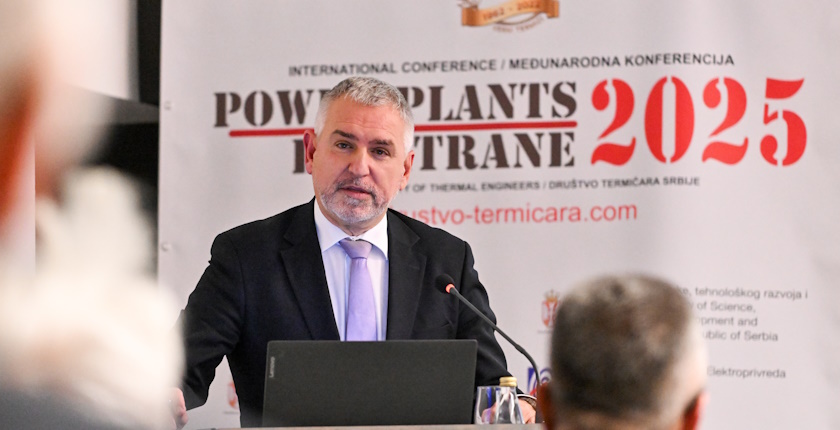
Power utility Elektroprivreda Srbije has developed its Decarbonization Action Plan, said Executive Director for Investments and Development Aleksandar Jakovljević.

The Decarbonization Action Plan of Elektroprivreda Srbije (EPS) involves the gradual reduction of electricity production from coal, the construction of pumped storage hydropower plants, and over 20 GW of new capacity from renewable energy sources, Aleksandar Jakovljević explained.

For EPS, the energy transition is not only a challenge but also a great opportunity to improve the company in the process of Serbia’s industrial and technological transformation, in Jakovljević’s view.

The energy transition isn’t just a matter of adaptation and transformation of one company, but the entire energy sector, the economy, as well as society, he said at the Power Plants 2025 conference, organized by the Society of Thermal Engineers of Serbia.

Jakovljević: It is important to analyze the experiences of other countries that started the energy transition before us

Jakovljević noted that it is important to analyze the experiences of countries that started the energy transition before Serbia, to apply proven solutions and avoid mistakes. However, in his words, it is also necessary to consider the characteristics of Serbia’s power sector.

Photo: EPS/Danilo Mijatović

​The decarbonization of EPS is already underway with various projects, he asserted and added that by the end of the year, the company’s green portfolio would increase by 76 MW.

The 10 MW Petka solar power plant has been completed, and soon the trial operation of EPS’s first wind farm – Kostolac, with a capacity of 66 MW, will kick off.

Jakovljević recalled that the company is preparing to build pumped storage hydropower plant Bistrica, with a capacity of 650 MW, saying it is a key facility for the integration of renewable sources and for energy stability. He added it is also developing photovoltaic projects, including one for 1 GW and a 200 MW battery energy storage system (BESS).

From 2026, every ton of CO2 produced in EPS’s plants will be priced

EPS is developing renewable energy projects at locations near mines and coal power plants, where existing infrastructure can be utilized, and connections to transmission and distribution networks are available, Jakovljević explained.

He noted that Europe has set the climate neutrality goal for 2050, and that Serbia has committed to reducing carbon dioxide emissions by at least 33% and to produce 45% of its electricity from renewable sources by 2030.

From 2026, every ton of CO2 produced in EPS plants will be priced, exposing coal production to additional challenges, Jakovljević stressed.

However, in his words, EPS’s goal remains clear – reliable and sustainable energy for Serbia and a profitable EPS as a secure support for consumers, and energy independence in the future.

by in News

Energy Community’s CBAM Readiness Tracker: Western Balkans still far from exemption as full implementation nears

With less than three months remaining until the European Union’s Carbon Border Adjustment Mechanism (CBAM) is fully implemented, none of the Energy Community’s contracting parties has yet qualified for an exemption in the electricity segment, according to the 2025 CBAM Readiness Tracker. However, the Energy Community’s report suggests that efforts to meet the are gaining momentum, with Serbia, Moldova, North Macedonia, and Montenegro leading the way to market coupling with the EU, and almost all contracting parties planning to introduce carbon pricing.

These efforts signal a growing readiness across the Energy Community to turn CBAM into a catalyst for deeper regional energy market integration and decarbonization, according to the annual report.

“The progress reflected in this year’s tracker underlines that CBAM can drive – not deter – regional cooperation on the energy transition,” Energy Community Secretariat Director Artur Lorkowski stressed and added that the scheme should “serve as a bridge into the EU, not a barrier.”

Lorkowski: CBAM should serve as a bridge into the EU

Starting on January 1, 2026, the EU will charge fees on the CO2 emissions of goods imported from countries that don’t apply matching carbon pricing schemes. In addition to electricity, the carbon border tax will cover cement, iron and steel, aluminum, fertilizers, and hydrogen.

Serbia faces the highest exposure to CBAM costs

Estimates based on 2024 data show the CBAM exposure of EU electricity importers could reach around EUR 1.17 billion a year. Serbia accounts for the largest share, with an estimated EUR 612.5 million in annual CBAM costs, followed by North Macedonia, with about EUR 200 million, Montenegro, EUR 190 million, and Bosnia and Herzegovina, EUR 158 million. Moldova’s exposure is about EUR 6 million, while Albania, which has an electricity mix almost entirely dominated by renewables, faces no CBAM-related costs, according to the report.

The estimated average CBAM cost per megawatt-hour is EUR 33.14 for Moldova, EUR 59.71 for North Macedonia, EUR 62.45 for Montenegro, EUR 66.71 for Serbia, and EUR 73.37 for Bosnia and Herzegovina.

The criteria for a CBAM exemption for electricity include integrating the power market with the EU and introducing a carbon pricing system. A contracting party must also adopt EU regulations on energy, electricity, environment, and competition, increase the share of renewables in its energy mix to align with the EU’s 2030 targets, commit to climate neutrality by 2050 and submit a related roadmap to the EU, and implement measures to prevent indirect electricity imports from non-compliant countries.

Advances evident in emissions, renewables, and market coupling

The 2025 CBAM Readiness Tracker shows that last year alone, carbon intensity across the contracting parties’ power sectors fell by an average of 11%. At the same time, capacity from renewables, excluding large hydro, surged to 5.1 GW from 2 GW between 2020 and 2024. The expansion was driven almost entirely by solar and wind, helped by renewable energy auctions.

When it comes to electricity market integration, no contracting party has completed market coupling with the EU. However, Serbia, Moldova, North Macedonia, and Montenegro are approaching a “point of no return,” which represents a full transposition of EU regulations relevant for market coupling, according to the tracker.

The energy transition unfolding across the Energy Community contracting parties is both tangible and measurable, Adam Cwetsch, Head of the Green Deal Unit at the Energy Community Secretariat, told Balkan Green Energy News. “Carbon intensity in electricity production and economic output continues to fall, while renewable energy deployment accelerates through competitive auctions. This progress reflects a clear commitment to European decarbonisation goals and lays the foundation for deeper energy market integration and long-term climate neutrality,” he stressed.

The secretariat remains committed to ensuring the process continues smoothly – without obstacles from possible unintended impacts of CBAM, Cwetsch said.

Even though no contracting party has introduced a carbon pricing instrument for electricity, almost all of them have outlined plans to establish domestic systems that reflect their specific circumstances.

“This is a crucial step toward alignment with the EU’s carbon pricing framework under CBAM. The rollout of monitoring, reporting, and verification systems across the region is laying the groundwork for implementation and demonstrates growing readiness and credibility, even as timelines remain tight and challenges persist,” Cwetsch stated.

Available carbon pricing models are carbon taxes, ETS and a combination of the two

The available models are a carbon tax, an emissions trading system (ETS), and a hybrid version. The only contracting party that has no plans to introduce carbon pricing is Kosovo*, according to the report.

All contracting parties have concluded agreements to apply EU law in the fields of energy, electricity (including renewable energy), the environment, and competition. In each of them, the implementation of renewable energy legislation is either underway or showing visible progress, the report shows.

No Western Balkan country has included the EU’s 2050 climate goals into national legislation

On the other hand, Ukraine and Moldova are the only ones that have included the 2050 climate neutrality objective in national legislation, while no contracting party has submitted a corresponding roadmap to the EU.

Another requirement that no one has yet fulfilled is the establishment of an effective system to prevent indirect import of electricity into the EU from other third countries or territories that do not meet the CBAM exemption criteria for electricity.

* This designation is without prejudice to positions onstatus and is in line with UNSCR 1244/99 and the ICJ Opinion on the Kosovo declaration of independence.
by in News

Northern Lights launches world’s first commercial carbon storage services

Northern Lights has injected the first CO2 volumes below the seabed of the Norwegian North Sea. The firm claims it is the first to offer commercial carbon storage services.

Northern Lights is owned by oil and gas giants Equinor, TotalEnergies, and Shell.

The first CO2 volumes have now been transported through the 100-kilometer pipeline and injected into the Aurora reservoir 2,600 meters below the seabed of the Norwegian North Sea, according to the company.

Northern Lights JV Managing Director Tim Heijn said the company has reached an exciting milestone – the very first CO2 volumes have now been injected and stored safely in the reservoir. “Our ships, facilities, and wells are now in operation,” he said.

From the capture sites to the injection well (photo: Northern Lights)

Northern Lights will transport and store CO₂ from Norway for the remainder of 2025, with CO2 volumes from Denmark and the Netherlands expected to be added in 2026, according to the firm.

The company will transport and store CO2 from two Norwegian industrial sites: Heidelberg Materials’ cement factory in Brevik and Hafslund Celsio’s waste-to-energy plant in Oslo. In addition, commercial agreements have been signed with Yara in the Netherlands, Ørsted in Denmark, and Stockholm Exergi in Sweden.

The operation is part of Longship, the government’s full-scale CCS project

The first phase of Northern Lights is part of Longship, the Norwegian government’s full-scale carbon capture and storage project (CCS).

According to the government’s website, Longship is Europe’s first complete value chain for the capture, transport, and storage of industrial CO2 emissions and the largest climate initiative in Norwegian industrial history.

Longship involves government support for developing the Northern Lights transport and storage infrastructure, according to the website.

CO2 is transported by specially designed ships from the capture sites to an onshore reception terminal in Øygarden. From there, it is transported by a pipeline to the injection well, where it will be pumped into the subsea reservoir.

Heidelberg Materials and Celsio are expected to deliver approximately 400,000 tons of CO2 each annually, according to the website.

The project is expanding

Storage tanks for phase 2 at the reception terminal in Øygarden (photo: Northern Lights)

In March this year, Northern Lights made the final investment decision for the expansion project, which will increase the transport and storage capacity from 1.5 million tons of CO₂ per year to a minimum of five million tons, following the signing of a commercial agreement with Stockholm Exergi.

The expansion was enabled by a EUR 131 million grant from the Connecting Europe Facility for Energy (CEF Energy) funding scheme, the company said.

The expansion leverages existing infrastructure and includes additional onshore storage tanks, pumps, a new jetty, injection wells, and more CO₂ transport ships to enable an increased injection rate and volume.

Photo: Northern Lights
by in News

CBAM could cost BiH up to EUR 1.6 billion; PM Nikšić signals potential delay

The implementation of the European Union’s cross-border carbon tax and an emissions trading system could cause losses for businesses in Bosnia and Herzegovina ranging from BAM 722 million to BAM 3.17 billion (EUR 369 million to EUR 1.62 billion), according to the latest analysis. At the same time, a statement from the Government of the Federation of BiH, one of the two political entities of BiH, indicates that the rollout of the tax could be postponed.

The EU’s Carbon Border Adjustment Mechanism (CBAM) is expected to come into effect on January 1, 2026. CBAM will impose taxes on imports of cement, iron, steel, aluminum, fertilizers, hydrogen, and electricity into the EU from countries that do not have a CO2 tax.

If CBAM and an emissions trading system (ETS) are both implemented starting next year, BiH’s economy could face financial losses ranging from BAM 722 million (EUR 369 million) to BAM 3.17 billion (EUR 1.62 billion) between 2026 and 2030, Akta reported.

The analysis was prepared at the request of the Ministry of Foreign Trade and Economic Relations of BiH, with support from the Delegation of the European Union to BiH and technical assistance through the EU4Energy project. The authors analyzed four scenarios based on CO2 prices ranging from EUR 118.53 to EUR 147.22 per ton.

Four models for implementing CBAM and ETS were analyzed

The electricity sector, one of the most important industries in BiH, could bear the highest costs under all four models analyzed.

According to the authors, the costs could be passed on to electricity prices, harming households and businesses. It could pose a serious challenge to the country’s economic stability in the coming years.

The first scenario assumes that BiH is paying CBAM, but an ETS is not introduced. Losses in this case would amount to BAM 1.2 billion (EUR 614 million), with electricity producers suffering the most  – BAM 737 million (EUR 377 million). Steel and iron producers would lose BAM 454 million (EUR 232 million), and the cement industry BAM 58 million (EUR 30 million).

The least favorable scenario is a simultaneous implementation of both CBAM and ETS

The second scenario is based on a phased introduction of CBAM with free allocation, but still without ETS. The cost is estimated at BAM 722 million (EUR 369 million), with the electricity sector losing BAM 580 million (297 million), and the steel and iron industry BAM 100 million (EUR 51 million).

The third scenario is the worst for BiH. If ETS and CBAM are rolled out simultaneously, total cost reach BAM 3.17 billion (EUR 1.62 billion). The electricity sector would lose BAM 2.1 billion (EUR 1.07 billion), and the iron and steel industry BAM 504 million (EUR 258 million).

The fourth option involves free allocation within the ETS and CBAM applied only to fertilizers, which are not under the scope of the ETS. In this case, BiH’s industry would lose BAM 2.3 billion (EUR 1.2 billion). Electricity producers account for BAM 2 billion (EUR 1 billion) and the iron and steel industry is down BAM 117 million (EUR 59.8 million).

Nikšić: We must be prepared

Earlier this year, there were reports that the European Commission intends to propose a delay in the implementation of CBAM. However, it turned out that only the reporting and payments would be delayed.

Prime Minister of the Federation of BiH Nermin Nikšić said in Neum that there are indications the deadline for introducing CBAM might be extended.

However, FBiH cannot rely on it, and must create conditions to generate sufficient energy from renewable sources, he underlined. It will ensure that the industry does not have to pay taxes when exporting its products to the EU, Nikšić added.

He didn’t go into the details about the indications.

by in News

Clock is ticking for introducing carbon tax in Western Balkans, many ambiguities still remain

From January 1st, 2026, Carbon Border Adjustment Mechanism (CBAM) will be effective in the Western Balkans. While the countries are still deciding on the carbon pricing model, the energy intensive industry is advocating for introducing taxation to protect the domestic market from the flood of goods that will not be competitive on the EU market. Even though the Governments might not have been proactive enough in the previous years, the participants of the CBAM panel on BEF 2025 believe there is still time for the regional actors to come up with more proactive approach towards the EU.

Energy Community Contracting Parties are approaching critical choices on carbon pricing that will shape the pathway towards climate neutrality, electricity market integration and sustainable economic development. From January 1, 2026, producers of aluminum, fertilizers, cement, steel, and hydrogen, as well as electricity exporters, will be required to pay the tax on CO2 emissions released during the production of the goods they export to the EU.

At the Ministerial Council in December 2024, four carbon pricing models were presented to the Contracting parties: regional emissions trading system (ETS), national carbon taxes, fixed-price Emissions Trading System (ETS), and full integration with the EU ETS. Upon the request of the Contracting parties, the Energy Community Secretariat provided an impact assessment for all four scenarios. The scenarios differ in structure and scope, but all support a common goal: progressive alignment with the EU ETS and the implementation of the polluter-pays principle.

The Ministerial Council is expected to meet in July to reflect on these scenarios and decide on the preferred regional pathway. This decision will shape the revision of the Decarbonisation Roadmap and guide the implementation of carbon pricing reform up to 2030 and beyond.

Carbon pricing is also central to the region’s electricity market future. The Electricity Integration Package, adopted in 2022, outlines the path to full market coupling between the Energy Community and the EU. To avoid distortions and ensure a level playing field, timely carbon pricing implementation is essential. “The projections shows that if the region would join EU ETS after 2030, the carbon price should reach or even exceed 100 euros per ton of CO2. This would have serious consequences for energy prices, competitiveness and industrial exports. Also, delaying actions could prove to be costly. That’s why contracting parties are expecting to implement domestic ETS for electricity with the price equivalent to EU ETS”, Milica Brkić Vukovljak, from Energy Agency of the Republic of Serbia, explained.

Milica Brkic Vukovljak (photo: Balkan Green Energy News)

The expectations around the CBAM introduction in the region were the main topic of discussion on the BEF 2025 panel Addressing carbon pricing in the Western Balkans – Turning decarbonization challenges into opportunities through collaboration, innovation and competitiveness, moderated by Brkić Vukovljak.

The key message from the panel is that regional governments need to take a more active role, especially towards the European Union, and numerous arguments were put forward during the discussion in that direction.

As for Serbia, it is worth noting that it is the only Contracting party of the Energy Community that had transposed the Electricity Integration Package, through which transit of importance for traders takes place. Given that the market coupling is scheduled for the beginning of 2027, it would be important to try to get the European Commission to postpone the deadline from 2026 to 2027.

Introduction of CBAM should not interfere with market integration

While admitting that „it’s never a good moment politically to decide on carbon pricing“, Adam Cwetsch, Head of the European Green Deal in the Energy Community Secretariat, said he believed that the current momentum in the region, together with cumulated experiences, could allow making such a decision at this time.

Adam Cwetsch (photo: Balkan Green Energy News)

He recalled that the decision on carbon pricing was partially left open with the 2021 Decarbonization Roadmap. At the same time, the Green Agenda for Western Balkans is referring to alignment with the EU ETS, as an objective that countries should aim.

„The role of Secretariat is to facilitate making those decisions, fully informed. It entails certain risks, but it is also helping the countries in their journey to join the EU eventually. Another important consideration is setting standards for monitoring emissions, which the countries are obliged to establish and make as of 2026. This is necessary for any credible carbon pricing system, regardless of the chosen model, as they all require credible data and standards“, Cwetsch said.

He insisted that the market integration and market coupling should not be disturbed with the introduction of CBAM, making it a priority to synchronize the situation within the region.

Any model to be decided has to have, as an end point, alignment with the EU ETS

“The least desirable solution would be that there is a country that progresses faster than others and is forced to implement an internal Energy Community CBAM”, Cwetsch said, advocating for a coordinated approach towards setting up the carbon emissions price.

He also noted that any model to be decided must have, as an end point, alignment with the EU ETS. „That should be taken into account when designing the pathway with selected option“, he added.

As things now stand from January 2026 CBAM will be effective, while the market coupling, that allows for exemptions, will not be yet in place. „It is important not to end up with disintegrating the market“, Cwetsch noted.

On the other hand, he believes there is a space for more proactive policy from the Western Balkans actors. „The region should reach out to the EU with more proactive climate policies, which would make clear how the region could contribute to the 2030 or 2040 targets for climate neutrality that EU is striving“, he concluded.

Without carbon pricing mechanisms, the regional markets will be flooded with imports

Branko Zečević (photo: Balkan Green Energy News)

The representatives of energy intensive industry are concerned that past discussions about carbon pricing didn’t pay enough attention to the interests of the companies that are going to be directly affected by imposing tariffs on exports to the EU.

Branko Zečević, president of the Metalfer Group and one of the founders of the Association of Serbian Energy Intensive Industry, said that the introduction of CBAM from the beginning of next year will certainly affect Serbian exports, even though many companies have been preparing for this moment and investing in decarbonization. „Some companies are further down that road, some are at the beginning, and the effects can’t be quantified easily right now“, he argued.

Once you have saved the industry, you have somebody to tax. Otherways, there will be nothing to talk about

However, Zečević insisted that much bigger threat for industry in Serbia and the region, is the expected flood of goods that will not be able to enter EU market anymore and will try to find third markets.

„Markets in the region are pretty opened for that sort of import. An imperative is therefore to have our own carbon pricing system, however you may call it. We must protect our market from these consequences, otherways we will not have any industry to protect in the future“, he insisted.

In his opinion, the first step should be to copy-paste what the EU is doing, to protect the industry, and after that we can talk about the models of carbon pricing. „Once you have saved the industry, you have somebody to tax. Otherways, there will be nothing to talk about“, he warned.

Asked about the expectations of the industry from the Government, he said that financial assistance does not seem a realistic option in the Western Balkans, but there are regulatory measures that could help the companies.

„Industry is more complex than coupling the electricity market, as every industry is different. The companies in the EU received billions of euros in grants over the last 15 years, while the companies in the region were left on their own, each individual company, to make its own adjustments. What the governments in the region can do is to put in place regulatory rules to help and protect local industry and then as a next stage to see if it can implement that regionally“, he concluded.

CBAM ambiguities rising concerns for energy traders

Mark Copley (photo: Balkan Green Energy News)

The ambiguities that follow the introduction of the emissions trading mechanism in the region are more likely to deter than to attract energy traders. Mark Copley, CEO of Energy Traders Europe, association representing 170 energy traders, some of them being active in the region, noted that there is confusion and concern regarding the implementation of CBAM in Western Balkans.

“Lots of questions have been raised: how is that going to work, how the price of CO2 is going to be calculated, what does this means for market integration, how the traders will actually be able to transit power through this region etc”, he said.

Energy traders are pretty good with price risks and volume risks, what we fear is political risk and regulatory risk

While noting that traders generally think that carbon pricing is a good idea, he warned that a good idea in principle could have significant unintended consequences in practice. Energy traders are pretty good with price risks and volume risks, what we fear is political risk and regulatory risk. „I’d like to think that this moment is an opportunity to sit down with all the parties involved to try to sort out the rules”, Copley said.

Copley insisted that he doesn’t have a specific view on what form of pricing is right from the region, but reminded of the experience when Great Britain created its own ETS, which proved to be more volatile, risky and difficult to operate.

„The bigger, more stable, more integrated market – the better. When you have ETS as a large and liquid system, it is fairly easy to trade and manage risks. However, it gets more difficult where you don’t know what the policies are in the short term or in the long term. While I understand the desire that the model should reflect the specifics of the market, be careful in small markets with not much liquidity, because it is hard to design good systems for them”, Copley noted.

Carbon pricing models should reflect the interests of each country in the region

Damir Miljević (photo: Balkan Green Energy News)

The regional non-governmental organizations also have been raising their voice over the topic of CBAM in previous years. One of the warnings of possible negative economic and social impacts was the analysis Chaotic and fake decarbonization of power sectors in the Western Balkansin 2023.

The problem is that the introduction of CBAM in often seen as a kind of natural disaster, something inevitable that is about to happen”, said Damir Miljević, member of the Board of Center for Sustainable Energy Transition, RESET, a think-tank that published the report mentioned.

In his opinion, Western Balkan countries did not participate actively in the process with lobbying and negotiating with the EU. „The policy makers sit in Brussels, while the Energy Community Secretariat is the directorate for the implementation of the international agreement. I don’t recall that some delegation from the Western Balkans went to talk to the EU about exemptions, even though we had at least one strong argument. Stabilization and Association Agreement with the EU states that neither contracting party will introduce additional taxes, or levies on the other, which means that even if they are introduced, we would have to negotiate about it“, Miljević explained.

The advantage should be given to the model that is fastest and simplest to implement, which is direct taxation

Another argument for negotiations is even stronger – the countries that are candidates for EU accession should not have the same treatment as some very distant states on other continents, he argued. Miljević also added that the region should focus on transferring the acquis from the EU, which they are obliged to, not the policies, where the situation is completely different.

„In the present situation, the only viable solution is to introduce some form of taxation of CO2 for the industry“, he said. In his opinion, this means the advantage should be given to the model that is fastest and simplest to implement, which is direct taxation, to eliminate the influence of CBAM on the export of industrial products from the region to the EU.

„It would be difficult to consider regional schemes, due to huge differences within the region. We already lost too much time on it. Each country should do it individually considering its own interest, not the interest of the energy sector, but the interest of the citizens and the economy and the consequences for them. This way, we will get some initial, however small assets, to start solving the core issue. We should also remember that the introduction of levies on CO2 is essential for the creation of any fund for coal regions in transition”, Miljević concluded.

by in News

EU gives European carmakers more time to comply with CO2 standards

The European Commission has decided to give more time to the automotive industry to meet CO2 standards for new cars and vans. Transport & Environment says the delay must be the final concession.

The European Commission has proposed an amendment to the regulation that sets CO2 emission performance standards for new cars and vans. It would add a flexibility measure within the targets for 2025-2027, the commission said.

According to the EU’s executive arm, manufacturers’ compliance with the CO2 targets for the three calendar years would be assessed over the entire period, averaging the performances, instead of annually.

The solution allows the companies to balance any excessive annual emissions by outperforming the target in the remaining years, the commission added.

European Commission says it would help the industry to invest in the clean transition while maintaining the 2025 target

It sees the additional flexibility as help to the industry to invest in the clean transition while maintaining the 2025 target and keeping the industry on track for the next round of emissions reductions.

The proposal was announced as part of the European Commission’s Industrial Action Plan for the European automotive sector, adopted on March 5.

According to President of the European Commission Ursula von der Leyen, the EU’s highly innovative automotive industry is decarbonizing to contribute to the fight against climate change but also to maintain its competitive edge in the world markets.

“We grant more flexibility to this key sector, and at the same time we stay the course of our climate goals,” she stated.

T&E: European carmakers used unrepresentative 2024 sales data to argue for flexibilities

Transport & Environment pointed out that the commission has formally proposed legislation to give carmakers until 2027 to comply with their 2025 emissions reduction targets. The delay to EU car climate rules must be the final concession to European carmakers which used unrepresentative 2024 sales data to argue for flexibilities, the organization added.

It expressed the belief that the concession was a mistake, arguing that battery electric car sales in Europe increased by 28% over the first two months of the year as the industry prepared to comply with the existing 2025 target.

According to Julia Poliscanova, senior director for vehicles and e-mobility supply chains at T&E, the EV sales rebound shows that the existing EU target is working.

“Require carmakers to sell more electric cars and the buyers will come. This must be the last flexibility carmakers are given. Let’s allow the 2030 and 2035 targets to do their work and bring affordable EVs and cleantech investment into Europe,” she stressed.

by in News

Balkan leaders have to realise new coal plants are a liability, not a gold mine?

Author:  Pippa Gallop, Research Co-ordinator, CEE Bankwatch Network

In April this year, the EU proved that whatever difficulties it might be going through, it can still make momentous decisions. It approved new pollution control standards for power stations, entitled the LCP BREF (1) The name might sound obscure, but the results should be concrete: The new standards are projected to save up to 20 000 lives annually across the EU.

On the EU’s doorstep in the Western Balkans, however, you would hardly know the LCP BREF existed. Almost all the countries in the region are planning to build new coal power plants, and there has been virtually no mention of the need for them to comply with the new standards.

This is strange, because not only is compliance with the new LCP BREF necessary for EU accession, but most Western Balkans already stipulate it as part of their domestic pollution control legislation (2). This means that as soon as the standards enter force in the EU this year, they also enter into force in most of the region.

CO2 remains an unsolvable problem with coal

Let’s be clear here: the LCP BREF is not a panacea. It limits emissions of SO2, NOx, PM10, HCl, HF and mercury, so it makes a great contribution to reducing coal’s health impacts. But it can’t do anything about the biggest problem with coal: CO2 and its contribution to climate change. There is no filter that can stop CO2 emissions, and if we are to limit climate change to 1.5-2 degrees, no new coal plants can be built. Unlike climate science, BREF is legally binding, and attempts to ignore it will likely backfire even sooner than attempts to ignore climate science.

Legislative changes need to be anticipated

Whether you have to comply with the LCP BREF right now or in a few years, it’s not something you want to ignore. With power stations lasting 40 years and more, they need to be designed in line with the very latest technical and environmental standards, and their promoters need to anticipate the rules coming up within the next few years. Failure to do so means additional and potentially expensive retrofits just a couple of years after a plant has opened.

With the chances of new coal plants being viable already at rock bottom, such additional costs could easily increase the risk of stranded assets. Only very few EU countries are planning new coal plants, because of low electricity prices, the growth of renewable energy, CO2 costs, and pollution control legislation that is gradually making polluters, instead of the public, pay the health costs of coal.

Yet governments and utilities in the Western Balkans are not doing their homework about recent trends and new legislation that awaits them in the next few years, with the result that their planned projects are dangerously out of date.

Earlier this year we revealed that none of the planned coal power plants seem to have properly taken the costs of CO2 into account in their financial planning. Now we’ve crunched the numbers for the LCP BREF and found that none of the plants has proven compliance with the new standards either.

Planned Balkan coal plants not in compliance with new BREF

There are eight units currently being actively planned in the region. Out of these, five would violate the new standards while for three there is insufficient information available. Kostolac B3 in Serbia, Pljevlja II in Montenegro, and the Oslomej reconstruction in Macedonia have been designed in line with the older Industrial Emissions Directive (IED) Annex V standards, but not the new BREF. Tuzla 7 and Banovići in Bosnia-Herzegovina don’t even go this far: Tuzla 7 is bound only by the even more outdated local legislation while the environmental permit for Banovići is unclear about what standards are relevant. For the remaining three units, Ugljevik III units 1 and 2, and Kosova e Re, the information about likely emissions is still unclear.

Kostolac B3 in Serbia is the only plant for which the new BREF has even been mentioned in its official documentation. It is currently undergoing an environmental impact assessment process, in which local groups have commented on the need for the plant to comply with the BREF. The only reaction so far is an amendment in the study stating that the plant would be an existing plant under the BREF and thus allowed to pollute more than new plants. Even if some retrofits are necessary, the study argues, this is a normal procedure after running a plant for a few years, and thus nothing to worry about.

Neither of these claims is true: Any plant receiving its integrated environmental permit after the LCP BREF enters force in the EU is a new one, according to the BREF definitions, and has to stick to the highest standards. As for undertaking retrofits, the study authors should really check the plant’s feasibility assessment, which shows that the plant will be unviable even with a low CO2 price.

The story is not dissimilar with Pljevlja II in Montenegro. Despite being hailed – like all the plants – as being in line with EU standards, it turns out that it is in line only with outdated ones. Local NGOs pointed out during the environmental assessment process that the plant must comply with the new LCP BREF, but they have received no reaction from the authorities as yet.

Montenegro and Serbia may seem like the most alarming cases due to being ahead of others in EU accession, but Bosnia-Herzegovina is if anything a more worrying case, due to the number of projects planned. The Stanari lignite power plant which started commercial operation last September is already out of date compared to the Industrial Emissions Directive and will now be out of line with the BREF as well. If Ugljevik III, Tuzla  7, and Banovići are all completed and all out of line with the BREF, the country will end up with a significant burden on its hands.

If the Balkans electricity utilities really ran on commercial lines, as they are bound by the Energy Community Treaty to do, they would never risk these projects. The new LCP BREF is but one more indicator that coal is an increasing liability, and the Balkan countries should be looking much more carefully at what’s going on around them. After all, the region has ample potential for wind, solar and energy savings combined with a relatively small population, so if this region can’t make a transition to sustainable energy, who can?

NOTES:

  1. Large Combustion Plants Best Available Techniques Reference Document
  2. Albania, the Federation entity of Bosnia-Herzegovina, Kosovo Macedonia and Montenegro. Serbia and Republika Srpska both require the application of best available techniques but do not specify that the EU reference document should be used.