by in News

BiH’s power utility EPBiH cancels waste co-incineration trial in Tuzla coal plant

Power utility Elektroprivreda Bosne i Hercegovine aborted a waste co-incineration test at its Tuzla coal power plant. It halted the pilot project upon a request from the city authorities.

Elektroprivreda BiH (EPBiH) announced it would comply with the resolutions that the City Council of Tuzla adopted, and halt the development project for trial co-incineration of alternative SRF and RDF fuel with coal at its Tuzla thermal power plant. RDF – refuse-derived fuel, and SRF – solid recovered fuel, are made from waste, and SRF is of higher quality.

The company claimed that, being socially responsible, it bases its operations on consistent compliance with laws, regulations, and local community views, continuous improvement of environmental standards, and a commitment to transparent dialogue and cooperation with all relevant stakeholders.

The plan was to incinerate 100 tons of waste

The trial waste co-incineration was scheduled for yesterday, but the day before, the Tuzla City Council demanded its cancellation at an emergency session.

The first reports about waste incineration at the Tuzla thermal power plant emerged in 2022. EPBiH said at the time that it planned to convert unit 3 of the Tuzla thermal power plant into a cogeneration unit, using wood biomass. However, Bankwatch and the Aarhus Center accused the company of intending to mix waste in, as well.

The idea to incinerate waste in coal power plants has been widely discussed in the region for several years. In 2021, Slovenian state-owned power utility Holding Slovenske Elektrarne (HSE) abandoned a project to burn waste in its Termoelektrarna Šoštanj (TEŠ) facility, citing opposition from local authorities and citizens.

Another BiH power utility, ERS, also plans waste incineration

In May 2023, Elektroprivreda Republike Srpske (ERS), another government-controlled power utility in BiH, revealed a plan for a trial incineration of waste.

Serbia’s Elektroprivreda Srbije (EPS) has such plans, too. The company has initiated several studies and pilot projects to analyze the use of alternative fuels in coal-fired power plants.

Its last move was to ask the Ministry of Environmental Protection to determine the scope and content of the environmental impact assessment study required for the project.

Tuzla City Council: We won’t allow experiments on Tuzla’s citizens

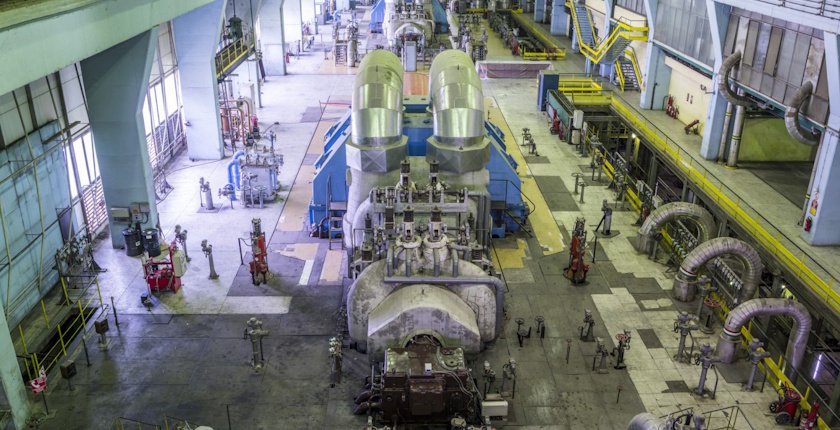
TPP Tuzla (photo: EPBiH)

The day before the planned waste incineration, the Tuzla city parliament adopted several conclusions. Among other things, it demanded urgent action from the Federal Ministry of Environment and Tourism and EPBiH regarding the lack of consultations with local authorities.

The assembly demanded that the management of TPP Tuzla immediately suspend all activities related to the incineration of RDF waste until an urgent public discussion is held with the participation of citizens, experts, and political representatives.

The local council stressed its opposition to all plans for co-incineration and incineration of waste, specifically RDF, until it is assured that the plan complies with legal, environmental, and health requirements.

The City of Tuzla and the City Council clearly and firmly declared that they won’t permit any experiments on Tuzla’s citizens, especially ones with potentially harmful or severe or even fatal consequences for human health, as well as environmental risks, the local parliament said.

Ministry: Everything was done to ensure testing was conducted under controlled and transparent conditions

The Federal Ministry of Environment and Tourism noted that EPBiH has requested permission for a trial co-incineration of a mix of coal and alternative SRF and RDF fuel at TPP Tuzla. However, according to the current Environmental Protection Law, there is no legal obligation to obtain either an environmental permit or an environmental impact assessment for trial co-incineration, it explained.

The ministry said that for the purpose of transparency it has issued an expert opinion to ensure the testing is implemented under controlled and transparent conditions, taking into account the interests of the local community.

EPBiH informed the entity ministry that, following the local assembly’s intervention, a federal environmental protection inspector conducted an inspection at TPP Tuzla on July 7 and confirmed that all the conditions were met for testing.
by in News

Share of coal power in Finland nearly zero as cogeneration plant shuts down

Helsinki’s municipal energy company Helen closed its last coal facility. Together with the country’s remaining plants that use the solid fossil fuel, Salmisaari accounted for just 0.8% of the electricity mix in 2024. The Government of Finland earlier set May 1, 2029, as the coal exit date.

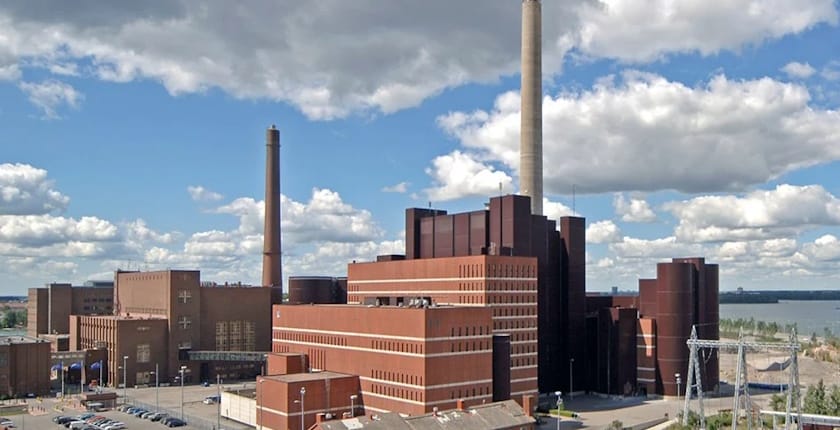
Two years ago, the Olkiluoto 3 nuclear reactor of 1.6 GW, the strongest in Europe, entered commercial operation. Apparently it helped the energy system of Finland to almost eliminate coal from the board. Helen, controlled by the local authority of the capital Helsinki, closed its Hanasaari B plant in 2023, leaving the Salmisaari combined heat and power (CHP) facility as the only one using coal. This week the company shut it down.

Finland is now using neglectable quantities of coal. Salmisaari has 177 MW in power capacity and 300 MW for heat. Together with the country’s remaining three coal power plants, it accounted for a mere 0.8% of the electricity mix last year, Coal-Free Finland and Beyond Fossil Fuels said.

Moreover, coal amounts to just 30% of fuel in Vaskiluoto 2. The facility mostly uses biomass. The operator of the Martinlaakso coal unit is eliminating fossil fuels from regular operations next year. The third one, Meri-Pori, is in strategic reserve.

Share of coal in Finland is marginal

Finland will retain reserve coal capacity for security of supply purposes, which can be deployed if necessary, Helen said. In addition, some energy companies use small amounts of coal in their energy production for peak, reserve and security of supply reasons, it added. The law forbids using coal in energy production after May 1, 2029.

Wind power output more than doubled in Finland since 2020, reaching a quarter of the total. At the same time, coal-fired generation plummeted 73% while fossil gas is down 82%, according to the report. “Finland has shown what’s possible when clear political signals are matched with rapid investments in renewable power,” said Deputy Campaign Director at Beyond Fossil Fuels Cyrille Cormier. The group called on the authorities to double down on renewables and clean flexibility.

Finnish energy experts can pull off impossible tasks

Helen delayed the closure of Salmisaari by a year. Coal still accounted for 64% of the company’s district heating supply in 2022!

The utility managed to slash its greenhouse gas emissions by more than 80% since 1990. It aims to reach 95% by the end of the decade.

“Helen giving up coal and, at the same time, foreign imported energy with regard to it, will remain a significant part of our country’s industrial history and shows that Finnish energy expertise enables actions that initially seemed impossible,” Chief Executive Officer Olli Sirkka said.

Helen transitioning to clean solutions

Helen is shifting to clean solutions. It enables operating more profitably with lower prices, the CEO pointed out. A range of facilities are under construction.

Heat production is mainly moving to heat pumps – utilizing waste and environmental heat – electric boilers, energy storage and sustainable biofuels. Helen will lean on wind, nuclear energy, hydropower and photovoltaics for electricity.

The new units in Salmisaari will be two electric boilers of a combined 100 MW, in combination with a heat pump of 33 MW in external capacity, as well as a 153 MW plant burning wood pellets. Helen is planning a 200 MW electric boiler facility of four units in Hanasaari, able to store 1 GWh of heat. It would currently be the biggest in Europe.

Helsinki has the ambition to reach climate neutrality by 2030, though including external offsets. It would eliminate them within the following ten years, which means only the city’s carbon sinks are included in the equation. The next step is turning carbon negative.

Market forces are decimating the remaining coal power capacity in Europe as it is expensive because of emissions rights and strict environmental regulations, as well as inflexible. Germany, Poland, Slovenia, the Czech Republic, Serbia, Montenegro, Bosnia and Herzegovina, Kosovo* and Turkey have the largest shares of coal in power production in the European Union and Southeastern Europe. Their phaseout deadlines are all after 2030, but the situation is changing fast.

* This designation is without prejudice to positions onstatus and is in line with UNSCR 1244/99 and the ICJ Opinion on the Kosovo declaration of independence.