by in News

Electricity Production and Exports Rise Sharply in Albania in Q1 2026

Electricity production and exports increased significantly in the first quarter of 2026, while imports fell by more than half, according to data published by INSTAT on the country’s electricity balance.

Net domestic electricity production reached 3,647 GWh in the first three months of the year, compared with 2,234 GWh in the same period a year earlier, marking an increase of 63.2%. The growth was driven mainly by public hydropower plants, as well as private and concessionary hydropower producers, which together accounted for more than 93% of domestic production. Other producers, mainly photovoltaic plants, represented around 7% of total generation.

Gross electricity exports, including exchanges, rose to 1,503 GWh, up from 732 GWh in the first quarter of 2025, representing a year-on-year increase of 105.4%. At the same time, gross imports fell to 327 GWh, from 767 GWh, reflecting a decline of 57.4%.

As a result, the electricity exchange balance was positive at 1,177 GWh, while domestic production covered most of the country’s demand.

Public hydropower plants generated 1,667 GWh during the period, up 63% compared with the same quarter of the previous year. Production from private and concessionary hydropower plants reached 1,726 GWh, an annual increase of 66.8%. Meanwhile, other electricity producers, including photovoltaic plants, generated 254 GWh in the first quarter, compared with 176 GWh a year earlier, recording growth of 44%.

Electricity available for consumption increased by 8.9% compared with the first quarter of 2025, while final consumption reached 1,954 GWh, up 9.1% year-on-year.

Household electricity consumption increased by 8.8%, while consumption by businesses and other non-household consumers expanded by 9.5%. INSTAT also reported that network losses reached 516 GWh, or 8% higher than a year earlier. However, the share of losses in relation to electricity available for consumption declined slightly to 20.9%, from 21.1% in the first quarter of 2025.

Transmission losses increased by 31.9%, while distribution losses rose by 5.1%, according to official data.

TAB. 1 Electricity Energy Balance
MWh
Indicators Q1 2025 Q1 2026
A Available energy (A=1+2-3) 2.269.259 2.470.192
1 Domestic net production (1=1.1+1.2+1.3) 2.233.905 3.646.805
1.1 Thermal power plants 0 0
1.2 Hydropower plants (1.2=a+b) 2.057.523 3.392.739
a Public (a=a.1-a.2) 1.022.784 1.666.663
a.1 Gross production of public hydropower plants 1.032.261 1.679.355
a.2 Losses and own consumption 9.477 12.693
b Independent private and concessionary producers 1.034.740 1.726.076
1.3 Other producers — other renewable energy sources 176.381 254.066
2 Gross imports — energy received 767.187 326.815
3 Gross exports — energy delivered 731.833 1.503.429
B Electricity consumption (B=1+2) 2.269.259 2.470.192
1 Network losses (1.1+1.2) 477.816 515.817
1.1 Losses and own consumption in transmission 51.088 67.361
1.2 Distribution losses (1.2=a+b)1 426.728 448.456
a Technical losses in distribution 312.071 336.635
b Non-technical losses in distribution2 114.657 111.821
2 Use by consumers (2=2.1+2.2) 1.791.443 1.954.375
2.1 Household consumers 1.064.956 1.158.522
2.2 Non-household consumers 726.487 795.853
1 The breakdown of technical and non-technical losses consists of estimates carried out by operators active in the electricity sector.
2 Non-technical losses also include statistical differences arising from non-declarations of production and changes resulting from the timing of production measurement, which is shifted in relation to sales or consumption data.
⚡ Albania Electricity Balance · Q1 2026

Electricity Production and Exports Surge in Q1 2026

Official INSTAT data show that Albania’s electricity available for consumption increased by 8.9% year-on-year, supported by a strong rise in domestic generation and a sharp increase in exports.

Energy available 2,470 GWh ▲ +8.9% vs Q1 2025
🏭
Net domestic production 3,647 GWh ▲ +63.2% vs Q1 2025
🔌
Gross exports 1,503 GWh ▲ +105.4% vs Q1 2025
⬇️
Gross imports 327 GWh ▼ -57.4% vs Q1 2025

Q1 2025 vs Q1 2026: Electricity Balance

Indicator Q1 2025 Q1 2026 Change
by in News

North Macedonia Moves Closer to European Green Electricity Certification System

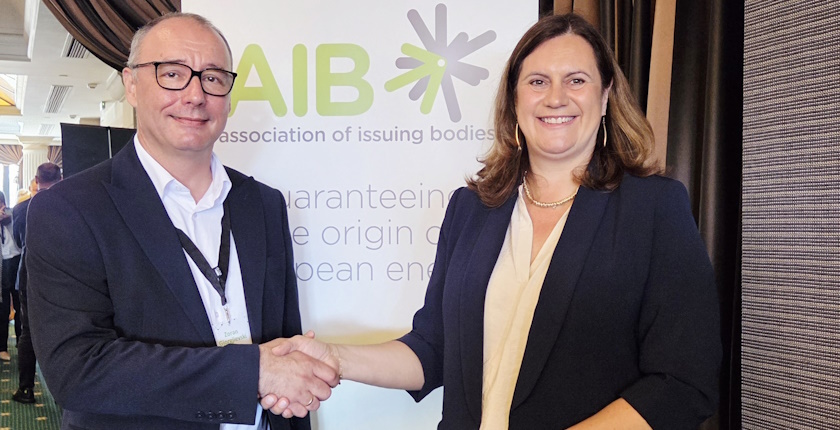
North Macedonia’s National Electricity Market Operator, MEMO, has officially joined the Association of Issuing Bodies (AIB), marking an important step toward deeper integration with the European framework for guarantees of origin and cross-border renewable electricity trade.

The decision was confirmed during the General Assembly of the Association of Issuing Bodies, where MEMO became a full member of the Brussels-based European energy certification organization. The move comes as the Ministry of Energy, Mining and Mineral Resources and the Energy Community Secretariat continue efforts to advance the mutual recognition of guarantees of origin between the European Union and Energy Community countries.

Guarantees of origin are electronic certificates proving that a specific quantity of electricity has been generated from renewable energy sources. They are increasingly important for transparent energy markets, renewable energy producers, suppliers and companies seeking to demonstrate the use of green electricity in line with ESG and decarbonisation standards.

MEMO introduced its electronic registry for guarantees of origin in April last year, in cooperation with energy certificate company Grexel and in line with European Energy Certificate System rules and AIB standards. Since then, North Macedonia has issued around 500,000 guarantees of origin, with each certificate representing 1 MWh of electricity produced from renewable sources.

According to MEMO Chief Executive Officer Zoran Gjorgjievski, AIB membership enables the Macedonian guarantees of origin system to implement the procedures required for future accession to the European Energy Certificate System. This will allow the secure, transparent and internationally recognized issuance and trading of green electricity certificates.

He emphasized that further integration of North Macedonia’s electricity market with the European energy market is essential, as it creates new opportunities for renewable energy producers, suppliers and businesses while strengthening trust, competitiveness and investment attractiveness in the country’s renewable energy sector.

Denko Rafajlovski, Head of MEMO’s Renewable Energy Support Department, noted that guarantees of origin play a key role in promoting renewable energy and giving consumers greater transparency and choice over the source of the electricity they use. Through the AIB Hub, national registries are connected, enabling the efficient cross-border transfer of green certificates between countries.

MEMO became an observer member of AIB last year as a first step toward full membership. Its accession now represents a significant milestone in the development of a modern, transparent and European-aligned electricity market in North Macedonia.

Cross-border trade in guarantees of origin will become possible once national legislation and technical requirements are fully harmonized with European Union standards.

by in News

Zatriq Wind Farm Nears Completion as Kosovo Expands Renewable Capacity

Turkey-based Çalık Renewables, in partnership with Kosovo’s domestic firm Eurokos, is advancing the construction of a 72 MW wind power plant in Kosovo, with commissioning targeted for July.

During a recent site visit to the Zatriq wind park, Acting Prime Minister Albin Kurti and Minister of Economy Artane Rizvanolli reviewed progress on the project. The development is led by Çalık Enerji, part of Çalık Holding, which secured €112 million in financing last year. The project marks the group’s first renewable energy investment outside Turkey and represents the first wind initiative backed by Swiss Export Risk Insurance.

Construction is progressing steadily, with four of the planned twelve turbines already installed. According to Prime Minister Kurti, the Zatriq project underscores Kosovo*’s growing attractiveness for foreign direct investment, supported by an improving legal and regulatory framework. The construction workforce totals 175 personnel, including 130 local workers, highlighting its domestic economic contribution.

The total investment is estimated at €124.4 million, as confirmed by Eurokos. Minister Rizvanolli noted that two additional turbines are expected to be completed within weeks, keeping the project on track for full completion by July. Once operational, the wind farm is expected to enhance energy security, reduce reliance on imports, and generate annual savings exceeding €27 million.

With an anticipated annual output of 185 GWh, the Zatriq wind park will be capable of supplying electricity to approximately 45,000 households. The facility will be connected to the transmission network via a 110 kV overhead line.

Located near the village of Zatriq, the site benefits from one of the strongest wind resources in Kosovo*. The country’s existing wind capacity remains limited, comprising projects such as Selac Wind Farm (104.1 MW), Kitka Wind Farm (32.4 MW), and Golesh Wind Farm (1.35 MW).

For the Zatriq project, Çalık Enerji has partnered with GE Vernova to supply wind turbines featuring 79-meter blades. Beyond Kosovo*, the company operates two wind farms in Turkey with a combined capacity of 72 MW and is developing additional projects in Poland totaling 170 MW.

In the broader energy sector, Çalık Holding, together with Limak, jointly controls Kosovo’s electricity distribution operator KEDS and supplier KESCO.

by in News

From bystanders to partners: How to ensure the new Citizens Energy Package effectively engages EU citizens in a clean energy future?

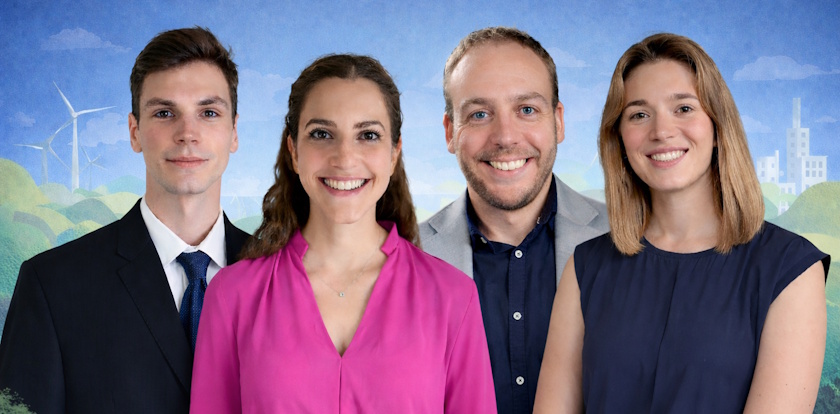
Authors:  Niklavs Tamanis, Veronica Saletti, Marco Costa, Marina Fernández-Campoamor – EUSEW  Young Energy Ambassadors

Citizens still struggle to join Europe’s clean energy transition. This article tests two practical approaches that turn hosts into partners: energy communities, where citizens co-own and share power, and community-benefit clauses, which distribute value locally. We, Young Energy Ambassadors, show how targeted One-Stop Shops (OSS), Renewable Energy Sources (RES)-ID, and interoperability among other solutions could make these mechanisms work more effectively, fairly, and at scale.

Across the EU, households still struggle to engage in energy markets. Awareness of tangible gains is low, and trust in safeguards from extractive corporations is limited. Although credible mechanisms exist, their implementation remains complex, uneven, and inaccessible.

From left to right, Niklavs Tamanis, Veronica Saletti, Marco Costa, Marina Fernández-Campoamor, EUSEW Young Energy Ambassadors
Photo: From left to right: Niklavs Tamanis, Veronica Saletti, Marco Costa, Marina Fernández-Campoamor, EUSEW Young Energy Ambassadors. Illustration created using AI tools, based on original photographs.

EU momentum, Citizens Energy Package, & Our YEA inputs

The Citizens Energy Package, building on the Clean Energy Package and the 2025 Action Plan for Affordable Energy, aims to empower consumers and enable energy sharing. Our contribution to the public consultation as Young Energy Ambassadors (YEA) focused on practical delivery, through such solutions as development of targeted OSS, recognition of youth/renters as a vulnerable group, creation of audience-specific outreach, and improvements to two key levers for citizen participation in energy markets: energy communities and community-benefit clauses. In this article, we focus on the latter two.

Two practical levers

Energy Communities (EComms)

Despite clear EU direction for energy community initiatives, barriers persist: REC definition and implementation differs widely across Member States; low awareness; perceived high effort from practitioners involved in the REC creation process; complex bureaucratic set-up and operations; limited benefits for students, young workers, and low-income renters; costly, non-interoperable metering/platforms; and risks of capture by large market actors.

Our EComms Solutions

To make Energy Communities (EComms) easier to start, join, and manage, we propose a set of complementary solutions that address both organisational and technical barriers.

Primarily, energy community-focused One-Stop Shops (OSS) would act as single-entry hubs where citizens, small and medium-sized enterprises (SMEs), and local authorities can access ready-to-use documentation (statutes, by-laws, and communication templates), energy-sharing evaluations, and clear guidance on data management and regulatory steps, as well as information on how to make their homes more energy efficient.

Young people should receive formal recognition as a vulnerable group within national social frameworks

Moreover, young people, especially those renting apartments as students or early-career professionals, should receive formal recognition as a vulnerable group within national social frameworks. This would enable them to access dedicated benefits and support schemes, like other vulnerable groups, helping to remove structural barriers to their participation and ensuring that energy communities become an inclusive, rather than niche, option.

Then, a dedicated civil-service track for energy communities would also enable young professionals to gain first-hand experience while supporting communities with day-to-day management and citizen engagement activities that are otherwise costly if fully outsourced to external experts. Building on emerging examples from France and Italy, these hubs would also connect communities to grants, soft loans, and local financial partners, making investment more accessible and de-risking early-stage initiatives.

Finally, to simplify participation from a technical and bureaucratic point of view, we propose a Renewable Energy System Identifier (RES-ID): a standardised and recognized technical and administrative data set that citizens and SMEs can fill in once and then reuse across different national portals procedures, such as permit applications, grid-connection requests, EComms affiliation, and incentive schemes requests. Such a tool would store all the renewable energy systems technical data required by different national authorities and retrieve it, when necessary, at each access point, similarly to the Italian SPID or dutch DigID, personal digital identity systems.

EComms Case Studies

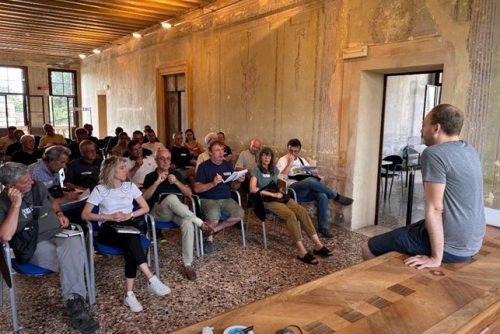
1) In Alto Vicentino (Italy), 16 municipalities set up an energy community, added 650 kW of photovoltaics on public buildings, made accessible national grants (up to 40% of the initial investment) for residents and small firms, and a youth team is taking it forward, organizing a buying club for building energy retrofit.

Policy takeaway: back clusters of neighbouring municipalities building from existing energy info points, keep supporting public-building solar installation as “lead by example” lever, and encourage young professionals to actively engage with local communities via dedicated support grants, civil service specific paths, and learning opportunities.

Alto Vicentino REC example, Marco Costa, Young Energy Ambassador
Photo: Marco Costa, Young Energy Ambassador, co-author of this article

2) The Hyperion Energy Community in Athens (Greece), founded in 2020 and mainly composed of families and NGOs, aims to evolve into an ESCO to support the renovation of apartments in multi-unit residential buildings. The project operates in several neighbourhoods of the capital, aiming to ensure gender balance and representation of diverse social groups among its 123 members.

Policy takeaway: Use the Citizen Energy Community (CEC) regulatory framework to create new, citizen-led business structures (ESCOs) to accelerate urban energy renovation in multi-unit buildings, ensuring broad social representation.

3) Energie Samen Rivierenland (The Netherlands): The neighbourhood association in Rivierenland, founded in 1936 and citizen-led, is revitalizing its dated housing stock (60% built before 1950) through a co-design process for interventions. The project covers 133 dwellings, with a specific focus on energy poverty and elderly residents.

Policy takeaway: Leverage existing neighbourhood associations with a long history of community trust to promote the co-design of renovation interventions, focusing specifically on the most vulnerable groups.

4) Renoss (Italy): it is the network of One Stop Shops dedicated to Renewable Energy Communities, run by public local energy agencies backed by the Environmental Ministry. It covers the whole national territory with at least one OSS per region, aligned with the Energy Performance in Building Directive. Each agency supports energy communities via dedicated services which spans from information to grant applications, feasibility studies, and member engagement campaigns.

Policy takeaway: support cluster organizations of public-led OSS to offer a structured and homogeneous technical assistance approach across Europe

Community-benefit clauses

While energy communities are a promising and innovative concept with clear environmental benefits, they don’t always address the social equity concerns from renewable energy projects, such as externalised siting costs. This is why the introduction of benefit-sharing mechanisms, such as community funds and shared equity ownership, is also building momentum among Member States.

Still, progress is uneven: many schemes are complex, opaque, and engage residents too late; youth, renters, and other underrepresented groups are barely reached; participation stays low, and legitimacy suffers. As Young Energy Ambassadors, we thus argue that just transition must go beyond compensation to create shared community value, especially where skills and alternative jobs are scarce.

Our community-benefit Solutions

To make renewable energy projects fairer and more inclusive, national governments can set out simple rules to ensure that local communities share in the benefits.

For example, benefit criteria can be built directly into auction schemes, with clear guidance on eligible uses such as local energy relief or community facilities. A “one-stop shop” (OSS) can then help communities check who qualifies, access funds or compensation, and connect to training or re-skilling opportunities.

Furthermore, governments could develop risk-sharing models that make it easier for low-income households to take part in projects without bearing financial losses.

Finally, targeted communication through youth groups, schools, community centres, and local media can raise awareness, using an EU-adapted model that considers both income and housing conditions.

Community-benefit case studies

We once again explored two national models in detail to see what fair community value-sharing can look like.

1) In Ireland’s RESS auctions, every supported project pays EUR 2/MWh into a local Community Benefit Fund and appears on a national SEAI register with guidance on eligible uses – from energy-poverty relief to community facilities. There’s also a community-led auction lane for locally developed projects.

Policy takeaway: set a fixed €/MWh payment into a local fund, keep a public register and simple annual reporting, and retain a community-led track so locals can lead and access the value.

2) Denmark’s VE-loven goes further by pairing money with ownership and protection. Developers of new onshore wind must offer 20% local shares (within 4.5 km) on equal terms, compensate any loss of property value, and pay into a Green Scheme for local amenities.

Policy takeaway: make it a package – local shares, property compensation, and a community fund – to align incentives and build durable acceptance.

Why does all of this matters

Coupling Ecomms and Community-Benefit mechanisms with functional OSS, RES-ID, interoperability, and guardrails, among other improvements, builds trust, accelerates their deployment, improves affordability, and broadens participation – especially for youth, renters, and other vulnerable groups.

As the EU’s modern citizen energy participation transitions from a consultation phase, equitable codification of mechanisms must follow: targeted OSS must be scaled, trusted tools must be standardised across the MS, mainstream risk-sharing principles must be integrated, and community-benefits must provide tangible value beyond mere compensation.

The European Commission already provides a foundation for this through tools such as the Energy Communities Facility and the Citizen-led Renovation Initiative, which help local actors access guidance, finance, and capacity-building. In parallel, EU-wide networks like REScoop.eu support renewable energy cooperatives and peer learning across Member States.

Building on and scaling these efforts will be essential to ensure our future citizens become genuine partners in Europe’s renewable energy build-out.

This opinion editorial is produced in co-operation with the European Sustainable Energy Week 2026. See ec.europa.eu/eusew for open calls.

Disclaimer: This article is a contribution from a partner. All rights reserved.

Neither the European Commission nor any person acting on behalf of the Commission is responsible for the use that might be made of the information in the article. The opinions expressed are those of the author(s) only and should not be considered as representative of the European Commission’s official position.

by in News

From bystanders to partners: How to ensure the new Citizens Energy Package effectively engages EU citizens in a clean energy future?

Authors:  Niklavs Tamanis, Veronica Saletti, Marco Costa, Marina Fernández-Campoamor – EUSEW  Young Energy Ambassadors

Citizens still struggle to join Europe’s clean energy transition. This article tests two practical approaches that turn hosts into partners: energy communities, where citizens co-own and share power, and community-benefit clauses, which distribute value locally. We, Young Energy Ambassadors, show how targeted One-Stop Shops (OSS), Renewable Energy Sources (RES)-ID, and interoperability among other solutions could make these mechanisms work more effectively, fairly, and at scale.

Across the EU, households still struggle to engage in energy markets. Awareness of tangible gains is low, and trust in safeguards from extractive corporations is limited. Although credible mechanisms exist, their implementation remains complex, uneven, and inaccessible.

From left to right, Niklavs Tamanis, Veronica Saletti, Marco Costa, Marina Fernández-Campoamor, EUSEW Young Energy Ambassadors
Photo: From left to right: Niklavs Tamanis, Veronica Saletti, Marco Costa, Marina Fernández-Campoamor, EUSEW Young Energy Ambassadors. Illustration created using AI tools, based on original photographs.

EU momentum, Citizens Energy Package, & Our YEA inputs

The Citizens Energy Package, building on the Clean Energy Package and the 2025 Action Plan for Affordable Energy, aims to empower consumers and enable energy sharing. Our contribution to the public consultation as Young Energy Ambassadors (YEA) focused on practical delivery, through such solutions as development of targeted OSS, recognition of youth/renters as a vulnerable group, creation of audience-specific outreach, and improvements to two key levers for citizen participation in energy markets: energy communities and community-benefit clauses. In this article, we focus on the latter two.

Two practical levers

Energy Communities (EComms)

Despite clear EU direction for energy community initiatives, barriers persist: REC definition and implementation differs widely across Member States; low awareness; perceived high effort from practitioners involved in the REC creation process; complex bureaucratic set-up and operations; limited benefits for students, young workers, and low-income renters; costly, non-interoperable metering/platforms; and risks of capture by large market actors.

Our EComms Solutions

To make Energy Communities (EComms) easier to start, join, and manage, we propose a set of complementary solutions that address both organisational and technical barriers.

Primarily, energy community-focused One-Stop Shops (OSS) would act as single-entry hubs where citizens, small and medium-sized enterprises (SMEs), and local authorities can access ready-to-use documentation (statutes, by-laws, and communication templates), energy-sharing evaluations, and clear guidance on data management and regulatory steps, as well as information on how to make their homes more energy efficient.

Young people should receive formal recognition as a vulnerable group within national social frameworks

Moreover, young people, especially those renting apartments as students or early-career professionals, should receive formal recognition as a vulnerable group within national social frameworks. This would enable them to access dedicated benefits and support schemes, like other vulnerable groups, helping to remove structural barriers to their participation and ensuring that energy communities become an inclusive, rather than niche, option.

Then, a dedicated civil-service track for energy communities would also enable young professionals to gain first-hand experience while supporting communities with day-to-day management and citizen engagement activities that are otherwise costly if fully outsourced to external experts. Building on emerging examples from France and Italy, these hubs would also connect communities to grants, soft loans, and local financial partners, making investment more accessible and de-risking early-stage initiatives.

Finally, to simplify participation from a technical and bureaucratic point of view, we propose a Renewable Energy System Identifier (RES-ID): a standardised and recognized technical and administrative data set that citizens and SMEs can fill in once and then reuse across different national portals procedures, such as permit applications, grid-connection requests, EComms affiliation, and incentive schemes requests. Such a tool would store all the renewable energy systems technical data required by different national authorities and retrieve it, when necessary, at each access point, similarly to the Italian SPID or dutch DigID, personal digital identity systems.

EComms Case Studies

1) In Alto Vicentino (Italy), 16 municipalities set up an energy community, added 650 kW of photovoltaics on public buildings, made accessible national grants (up to 40% of the initial investment) for residents and small firms, and a youth team is taking it forward, organizing a buying club for building energy retrofit.

Policy takeaway: back clusters of neighbouring municipalities building from existing energy info points, keep supporting public-building solar installation as “lead by example” lever, and encourage young professionals to actively engage with local communities via dedicated support grants, civil service specific paths, and learning opportunities.

Alto Vicentino REC example, Marco Costa, Young Energy Ambassador
Photo: Marco Costa, Young Energy Ambassador, co-author of this article

2) The Hyperion Energy Community in Athens (Greece), founded in 2020 and mainly composed of families and NGOs, aims to evolve into an ESCO to support the renovation of apartments in multi-unit residential buildings. The project operates in several neighbourhoods of the capital, aiming to ensure gender balance and representation of diverse social groups among its 123 members.

Policy takeaway: Use the Citizen Energy Community (CEC) regulatory framework to create new, citizen-led business structures (ESCOs) to accelerate urban energy renovation in multi-unit buildings, ensuring broad social representation.

3) Energie Samen Rivierenland (The Netherlands): The neighbourhood association in Rivierenland, founded in 1936 and citizen-led, is revitalizing its dated housing stock (60% built before 1950) through a co-design process for interventions. The project covers 133 dwellings, with a specific focus on energy poverty and elderly residents.

Policy takeaway: Leverage existing neighbourhood associations with a long history of community trust to promote the co-design of renovation interventions, focusing specifically on the most vulnerable groups.

4) Renoss (Italy): it is the network of One Stop Shops dedicated to Renewable Energy Communities, run by public local energy agencies backed by the Environmental Ministry. It covers the whole national territory with at least one OSS per region, aligned with the Energy Performance in Building Directive. Each agency supports energy communities via dedicated services which spans from information to grant applications, feasibility studies, and member engagement campaigns.

Policy takeaway: support cluster organizations of public-led OSS to offer a structured and homogeneous technical assistance approach across Europe

Community-benefit clauses

While energy communities are a promising and innovative concept with clear environmental benefits, they don’t always address the social equity concerns from renewable energy projects, such as externalised siting costs. This is why the introduction of benefit-sharing mechanisms, such as community funds and shared equity ownership, is also building momentum among Member States.

Still, progress is uneven: many schemes are complex, opaque, and engage residents too late; youth, renters, and other underrepresented groups are barely reached; participation stays low, and legitimacy suffers. As Young Energy Ambassadors, we thus argue that just transition must go beyond compensation to create shared community value, especially where skills and alternative jobs are scarce.

Our community-benefit Solutions

To make renewable energy projects fairer and more inclusive, national governments can set out simple rules to ensure that local communities share in the benefits.

For example, benefit criteria can be built directly into auction schemes, with clear guidance on eligible uses such as local energy relief or community facilities. A “one-stop shop” (OSS) can then help communities check who qualifies, access funds or compensation, and connect to training or re-skilling opportunities.

Furthermore, governments could develop risk-sharing models that make it easier for low-income households to take part in projects without bearing financial losses.

Finally, targeted communication through youth groups, schools, community centres, and local media can raise awareness, using an EU-adapted model that considers both income and housing conditions.

Community-benefit case studies

We once again explored two national models in detail to see what fair community value-sharing can look like.

1) In Ireland’s RESS auctions, every supported project pays EUR 2/MWh into a local Community Benefit Fund and appears on a national SEAI register with guidance on eligible uses – from energy-poverty relief to community facilities. There’s also a community-led auction lane for locally developed projects.

Policy takeaway: set a fixed €/MWh payment into a local fund, keep a public register and simple annual reporting, and retain a community-led track so locals can lead and access the value.

2) Denmark’s VE-loven goes further by pairing money with ownership and protection. Developers of new onshore wind must offer 20% local shares (within 4.5 km) on equal terms, compensate any loss of property value, and pay into a Green Scheme for local amenities.

Policy takeaway: make it a package – local shares, property compensation, and a community fund – to align incentives and build durable acceptance.

Why does all of this matters

Coupling Ecomms and Community-Benefit mechanisms with functional OSS, RES-ID, interoperability, and guardrails, among other improvements, builds trust, accelerates their deployment, improves affordability, and broadens participation – especially for youth, renters, and other vulnerable groups.

As the EU’s modern citizen energy participation transitions from a consultation phase, equitable codification of mechanisms must follow: targeted OSS must be scaled, trusted tools must be standardised across the MS, mainstream risk-sharing principles must be integrated, and community-benefits must provide tangible value beyond mere compensation.

The European Commission already provides a foundation for this through tools such as the Energy Communities Facility and the Citizen-led Renovation Initiative, which help local actors access guidance, finance, and capacity-building. In parallel, EU-wide networks like REScoop.eu support renewable energy cooperatives and peer learning across Member States.

Building on and scaling these efforts will be essential to ensure our future citizens become genuine partners in Europe’s renewable energy build-out.

This opinion editorial is produced in co-operation with the European Sustainable Energy Week 2026. See ec.europa.eu/eusew for open calls.

Disclaimer: This article is a contribution from a partner. All rights reserved.

Neither the European Commission nor any person acting on behalf of the Commission is responsible for the use that might be made of the information in the article. The opinions expressed are those of the author(s) only and should not be considered as representative of the European Commission’s official position.

by in News

Apple signs PPAs in Greece, Romania as part of drive to green its devices’ consumption

As part of efforts to ensure that all electricity consumed by Apple devices is matched with green energy, the United States–based tech giant is facilitating 650 MW of renewables projects across Europe, including through power purchase agreements (PPA). By 2030, wind and solar power plants in Spain, Greece, Italy, Latvia, Poland, and Romania are expected to generate over 1 TWh of clean electricity on behalf of Apple users, the company said.

“By 2030, we want our users to know that all the energy it takes to charge their iPhone or power their Mac is matched with clean electricity,” said Lisa Jackson, Apple’s vice president of environment, policy, and social initiatives.

In Greece, Apple has signed a long-term PPA to procure power from a 110 MW solar project owned by HELLENiQ Energy. The plant, which is already fully operational, is located in Kozani in northern Greece.

Apple has signed a long-term power purchase agreement for a 110 MW solar plant in Greece

In Romania, the company plans to procure power from the 99 MW Green Breeze wind farm, located in Galați County, through a long-term virtual power purchase agreement (vPPA). The facility, which is scheduled to start operations in the first half of 2026, was initiated by Sweden-based OX2 and later sold to Nala Renewables.

In Italy, Apple is supporting the development of a 129 MW portfolio of solar and wind projects. The first of the facilities, a photovoltaic plant in Sicily, is expected to come online this month.

The project backed by Apple in Poland is for Econergy’s 40 MW solar array, which is expected to be operational later this year. In Latvia, the tech giant has signed one of the country’s first corporate PPAs. It will procure electricity from European Energy’s 110 MW solar power plant, set to be one of the largest in Latvia once completed.

The 131 MW Castaño solar farm in Spain came online earlier this year

The 131 MW Castaño solar farm in Segovia in Spain, operated by ib vogt, became operational earlier this year.

by in News

WEF: Global energy transition picks up pace

The global energy transition is picking up pace, with the World Economic Forum’s (WEF) latest report showing the fastest progress since before the COVID-19 pandemic. Overall improvement on the WEF’s Energy Transition Index (ETI) was recorded in 65% of the countries observed, with the Emerging Europe region posting the strongest growth.

The report, titled Fostering Effective Energy Transition 2025, tracks the performance of energy systems of 118 countries across three dimensions – security, sustainability, and equity.

The equity segment showed the strongest gains, thanks to stable energy prices and subsidy cuts, while sustainability improved thanks to increased renewable energy adoption and improvements in energy efficiency. However, energy security stagnated due to inflexible power systems, reliance on imports, and limited diversification, highlighting the need for resilient grids, digitalization, and investment.

Energy security stagnated due to a lack of flexibility and diversification

The WEF also noted that despite USD 2 trillion in clean energy investment in 2024, global emissions hit a record 37.8 billion tons in the hottest year on record, as energy demand rose 2.2%, driven by artificial intelligence (AI), data centers, cooling, and electrification.

Global carbon emissions hit a record 37.8 billion tons in 2024 despite investment in clean energy

In 2025, 77 out of 118 countries recorded an increase in their overall ETI scores, with an average gain of 1.1%, as 28% achieved gains across all three dimensions, according to the report.

Advanced European economies top ETI rankings

Advanced economies continued to lead the rankings, accounting for 16 of the top 20 performers. The top five positions are occupied by Sweden, Finland, Denmark, Norway, and Switzerland, thanks to their strong performance in energy diversification, clean energy adoption, robust policy frameworks, and reliable infrastructure.

Also among the top 10 are Austria, Latvia, the Netherlands, Germany, and Portugal. China rose to a record 12th place, while the United Kingdom ranked 16th, and the US ended in the 17th spot.

Bosnia and Herzegovina posts strongest growth

The Emerging Europe region, which includes former Soviet republics and Southeast European countries, recorded the highest score increase in 2025, of 2.8% year on year. Latvia scored the highest on the ETI index, while Bosnia and Herzegovina posted the strongest growth.

The highest-ranking countries in the region tracked by Balkan Green Energy News are Bulgaria and Romania, with an overall score of 63.7 each, occupying the 29th and 30th spots, respectively.

Albania took 37th place with a score of 61.5. North Macedonia was 66th, with an overall score of 54.2, and Bosnia and Herzegovina came in 72nd, with 53.1. They are followed by Serbia, in 81st place, and Montenegro, which is 83rd.