by in News

Waste Management: New Monitoring and Tracking System in Albania for Exports and Transit

Albania is set to implement a new system for monitoring and tracking waste exports and transit movements, aiming to strengthen oversight, transparency, and compliance with environmental standards.

The initiative is designed to improve control over the cross-border movement of waste, ensuring that all shipments are properly documented, traceable, and in line with both national legislation and international obligations.

Digital Monitoring and Traceability

The new system introduces a digital platform that will enable real-time monitoring of waste shipments. Authorities will be able to track the movement of waste from its origin to its final destination, reducing the risk of illegal trafficking or mismanagement.

The system is expected to include detailed reporting requirements for operators, including information on the type, quantity, origin, and destination of waste. This will allow for more accurate data collection and better policy planning in the waste management sector.

Strengthening Control Over Exports and Transit

A key objective of the reform is to tighten controls over waste exports and transit passing through Albania. The system will ensure that only authorized operators can engage in such activities and that all procedures are carried out in compliance with environmental and safety standards.

Authorities aim to prevent the misuse of Albania as a transit route for unauthorized or hazardous waste shipments, an issue that has raised concerns in the past.

Alignment with European Standards

The new monitoring framework is aligned with European Union requirements for waste management and cross-border movement. It reflects Albania’s broader efforts to harmonize its environmental legislation with EU directives and improve institutional capacity.

By adopting stricter monitoring mechanisms, Albania seeks to meet international standards and enhance its credibility in environmental governance.

Institutional and Operational Impact

The implementation of the system will involve coordination between several institutions responsible for environmental protection, customs, and transport oversight. It is expected to improve inter-agency cooperation and streamline administrative procedures.

For businesses operating in the waste sector, the system will introduce additional compliance obligations but is also expected to create a more predictable and transparent regulatory environment.

Towards Greater Environmental Accountability

The introduction of this monitoring and tracking system marks a step forward in Albania’s efforts to strengthen environmental accountability and combat illegal waste activities.

By ensuring full traceability of waste flows, the authorities aim to protect public health, reduce environmental risks, and promote more sustainable waste management practices across the country.
by in News

City of Osijek has highest waste separation rate in Croatia

Osijek has reached a 57.92% waste separation rate in 2024, the highest score among the four largest cities in the country.

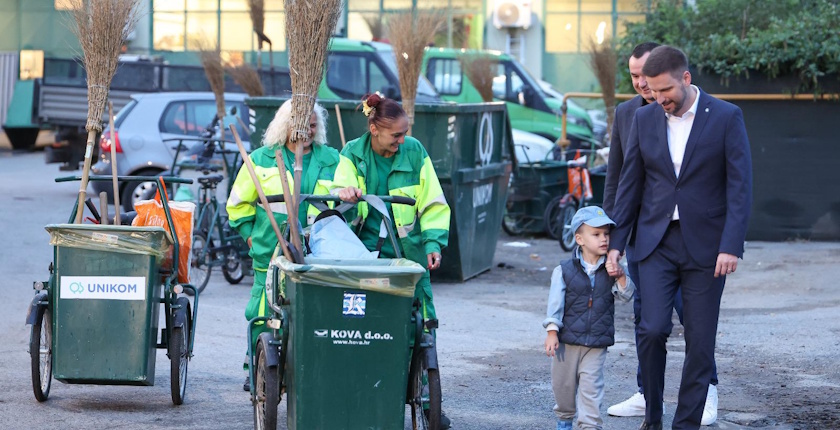
Osijek, with a share of 57.92% of separately collected waste, is again the best among large cities in Croatia, according to Mayor Ivan Radić. Because of the achievement, he visited the employees of the city’s waste utility Unikom in the early morning hours.

He stressed that the success is the result of responsible citizens who separate waste, the dedicated work of Unikom employees, and ongoing investments in infrastructure.

Osijek has four recycling yards, including a mobile one. They are able to separate 52 types of waste. There is also a composting facility. As the mayor pointed out, the local authority invests in consumer education, from kindergartens to its Eco City Waste Fest, because it aims to maintain and improve the achieved results.

Osijek is the only major Croatian city that doesn’t pay penalties for not achieving waste separation targets

Radić underlined that Osijek is the only large Croatian city that, thanks to waste separation above 50%, doesn’t pay penalties.

Municipal authorities in Croatia pay fines per ton of landfilled waste that was supposed to be separated and properly processed in line with waste management rules. The fine for 2025 was set at EUR 30 per ton. The obligatory separation rate for 2025 is 50%.

Unikom CEO Igor Pandžić highlighted that in 2024, a total of 36,000 tons of municipal waste were collected, of which nearly 21,000 tons were recyclable waste. The largest portion was biodegradable waste, thanks to the composting unit, into which the city continues to invest.

Osijek has maintained a waste separation rate above 57% for two consecutive years

Paper, plastic, glass, and metal accounted for over 9,000 tons, Pandžić said, and recalled that Osijek achieved a waste separation rate above 57% for two consecutive years.

He said more projects are underway, including the expansion of the composting facility and the establishment of a center for recycling bulky waste, which would further reduce the quantities ending up at the Lončarica Velika landfill.

In Pandžić’s words, they are important steps in terms of the circular economy. “What our fellow citizens separate, we process into a new product like compost, which then goes back into gardens and yards,” he explained.

At the meeting with the workers, the mayor and the CEO announced a 10% salary bonus as a reward for their work.

by in News

Croatia to get EUR 44 million in green transition grants

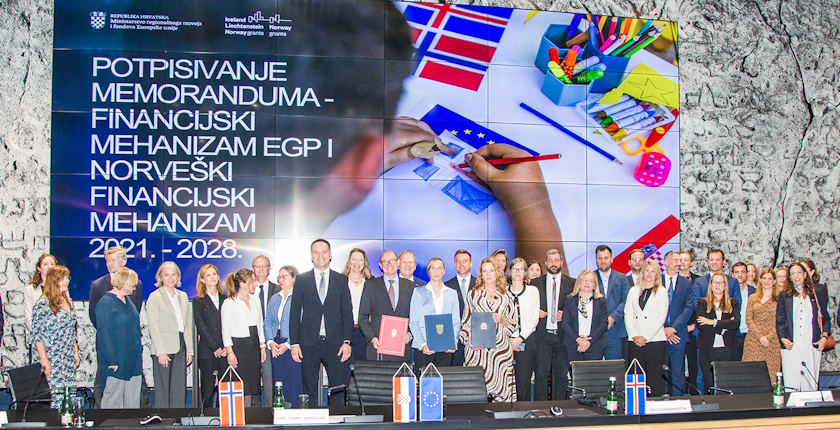
Under the European Economic Area and Norway Grants, Croatia is entitled to EUR 21.6 million from the Green Transition Programme and EUR 22 million from the Green and Blue Business Innovation Programme in the period until 2028. The funding is part of a EUR 111 million mechanism, which includes support for local development and the judiciary.

Minister of Regional Development and European Union Funds Nataša Mikuš Žigman, Ambassador of Iceland Helga Hauksdóttir and Ambassador of Norway Arne Sannes Bjørnstad signed memoranda of understanding on the implementation of the European Economic Area (EEA) and Norway Grants for the period until 2028.

Croatia is entitled to EUR 111 million for investments in the green transition, local development, innovation in green and blue business, and the judiciary.

EEA Financial Mechanism to bolster transition to more sustainable society

It confirms the country’s continuous and successful cooperation with Norway, Iceland, and Liechtenstein, Mikuš Žigman asserted.

“Through projects funded by the EEA and Norway Grants, we are strengthening institutional capacities, supporting sustainable development, inclusiveness, and innovation, and contributing long-term to improving the quality of life of our citizens. These mechanisms also enable us to jointly develop solutions for key social and economic challenges and to build the foundations for further cooperation with partner countries,” she stated.

Projects worth more than EUR 103 million were implemented in Croatia in the previous funding period

In the new programming period, the EEA Financial Mechanism is set to fund projects worth EUR 21.6 million under the Green Transition Programme, aimed at accelerating the transition towards a more sustainable society. A further EUR 33 million would be invested through the Local Development Programme, including projects to improve access to STEM education in less developed regions. STEM is an acronym for integrated science, technology, engineering and mathematics.

Hauksdóttir said the cooperation reflects solidarity and helps support equal opportunities and living standards across the EEA. She added that such projects strengthen public institutions, support vulnerable communities, encourage innovation, and establish lasting ties between researchers, local communities, civil society and artists across borders.

Norway Grants helping foster low-carbon circular economy

From the Norway Grants segment, EUR 22 million is earmarked for the Green and Blue Business Innovation Programme, fostering sustainable and competitive development of Croatia’s economy through green and blue innovation, including low-carbon circular economy models.

Through the Justice Programme, there is EUR 21.55 million for improving access to an independent, accountable and efficient judicial system, as well as to enhance correctional institutions in line with international and European standards.

“For many years, Croatia and Norway have been working side by side to build a stronger Europe – one that is more competitive, but also more inclusive and greener, and thus more technologically and economically efficient. In a world marked by uncertainties such as the war in Ukraine, climate change, and global instability, it is clear that European countries are stronger when we act together, in solidarity, defending shared interests and values,” Ambassador Bjørnstad stressed.

In the previous funding period, projects worth more than EUR 103 million were implemented in Croatia, including the establishment of four regional science centres and the construction of a major geothermal well in Bjelovar. The Energy and Climate Change Programme was for a cleaner environment, strengthening energy security and resilience, reducing costs in public institutions and buildings, and raising awareness of energy efficiency.

Norway Grants and EEA Grants are segments of the EEA Financial Mechanism. Its beneficiaries are in EU member states with a gross national income (GNI) per capita below 90% of the average. The current seven-year funding period began in May 2021 and it lasts until April 2028.

by in News

Kragujevac heating plant begins ash removal from disposal site in city center

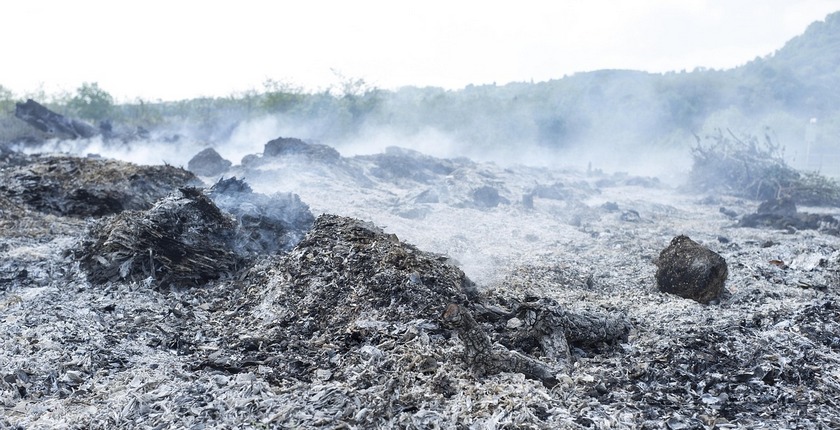
District heating plant Energetika has begun removing coal ash from an uncovered disposal site that has been polluting air and soil for years in the heart of Kragujevac, Serbia’s fourth-largest city. The effort is part of a project financed by an EUR 18 million loan from the European Bank for Reconstruction and Development (EBRD), to decarbonize the local district heating system.

The ash from Kragujevac is transported to cement plants in Kosjerić and Popovac to be used in the production of cement and construction materials, in line with circular economy principles, according to Serbian Minister of Environmental Protection Sara Pavkov.

On the first day, about 75 tons of ash was removed from the site, with plans to transport a total of 60,000 tons over 24 months.

The ash will be used in cement production in Kosjerić and Popovac

Ash removal is the second phase of the district heating decarbonization project in Kragujevac. In the first phase, old boilers were replaced with gas-fired units, significantly reducing air pollution, according to Dejan Ružić, deputy mayor of Kragujevac. This marked the end of coal use in the city’s district heating system.

The EBRD approved the loan for the project in 2021. Of the total amount, EUR 14 million was earmarked for boiler replacement, together with up to EUR 4 million for ash removal.

In the first phase, coal-fired boilers were replaced with gas-fired units

The bank said at the time that gas-fired boilers would have a capacity of 110 MW and that CO2 emissions from district heating would be cut by an estimated 66%, with sulfur dioxide and particulate matter (PM) emissions eliminated.

The Ministry of Environmental Protection has hired Novi Sad-based engineering and consultancy firm AG Institut to monitor the ash disposal services under a EUR 73.900 contract. The works are targeted for completion by July 15, 2027.

Aleksandar Lazović, general manager of the district heating plant, said the works would be carried out in line with the highest environmental standards, in a covered area, to prevent ash from dispersing into the environment.

District heating decarbonization in several Serbian cities

In June this year, Serbia and the EBRD signed a EUR 50 million loan to finance a series of air quality projects in Belgrade, Niš, Valjevo, Zaječar, Novi Pazar, and Smederevo, which had been mapped as cities with the largest excesses of harmful emissions.

The planned projects include replacing outdated boilers running on fuel oil, coal, and other air-polluting fuels with modern and sustainable heat energy sources, such as heat pumps, biomass, and industrial waste heat.

by in News

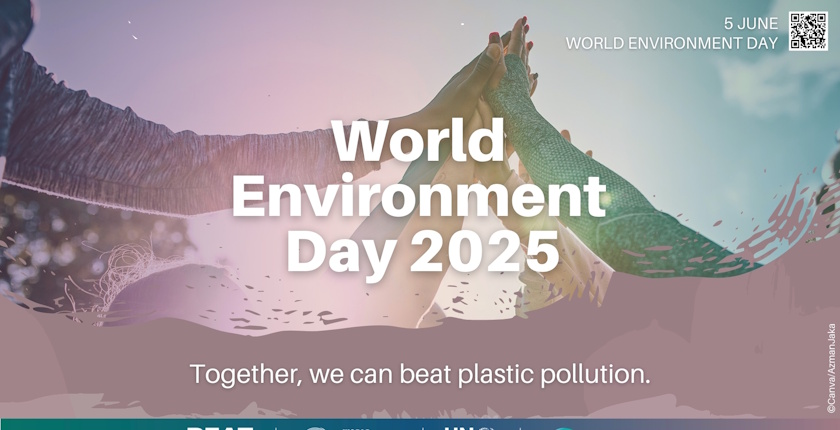
World Environment Day 2025: Beat Plastic Pollution

World Environment Day, celebrated on June 5, was established by the United Nations in 1973. This year’s host country is South Korea and the main messages are focused on fighting plastic pollution.

The theme of this year’s World Environment Day calls for action to address plastic pollution. The hashtag #BeatPlasticPollution is part of the global campaign, led by the United Nations Environment Programme (UNEP), aiming to mobilize communities worldwide to implement solutions. It builds on growing scientific evidence of the impact of plastic pollution and calls for reducing plastic use, reusing it, recycling it, and rethinking our consumption habits.

Plastics are part of everyday life, used in everything from kitchenware to medical devices. It’s estimated that humanity has produced about 9.2 billion tonnes of plastic since the mid-20th century, of which seven billion tonnes have become waste. In addition, plastic production is a major contributor to the climate crisis. It is among the most energy-intensive industrial processes, accounting for approximately 6% of global oil consumption.

Each year, some 11 million tonnes of plastic waste end up in rivers, lakes, seas, and finally, oceans. Plastic breaks down into microplastics—tiny fragments measuring between one nanometer and five millimeters. Such particles have been found in the deepest part of the ocean, the Mariana Trench, as well as on the highest point on Earth – Mount Everest.

An individual consumes over 50,000 plastic particles per year on average

Plastic enters the bodies of humans and animals through breathing and ingestion. It is estimated that each person on the planet consumes more than 50,000 plastic particles annually, and much more when inhalation is taken into account. Some studies suggest that nanoplastics smaller than one micrometer can even pass through the skin.

Microplastics also accumulate in soil through sewage, landfills, and the use of plastic in agriculture. One study found that microplastics disrupt photosynthesis, which may threaten food production.

The annual social and environmental cost of plastic pollution is estimated to be between USD 300 billion and USD 600 billion.

[wpcc-iframe title=”Together, we can #beatplasticpollution” width=”500″ height=”281″ src=”https://www.youtube.com/embed/eqapZ8obCGs?feature=oembed” frameborder=”0″ allow=”accelerometer; autoplay; clipboard-write; encrypted-media; gyroscope; picture-in-picture; web-share” referrerpolicy=”strict-origin-when-cross-origin” allowfullscreen=””]

Circular economy as a solution

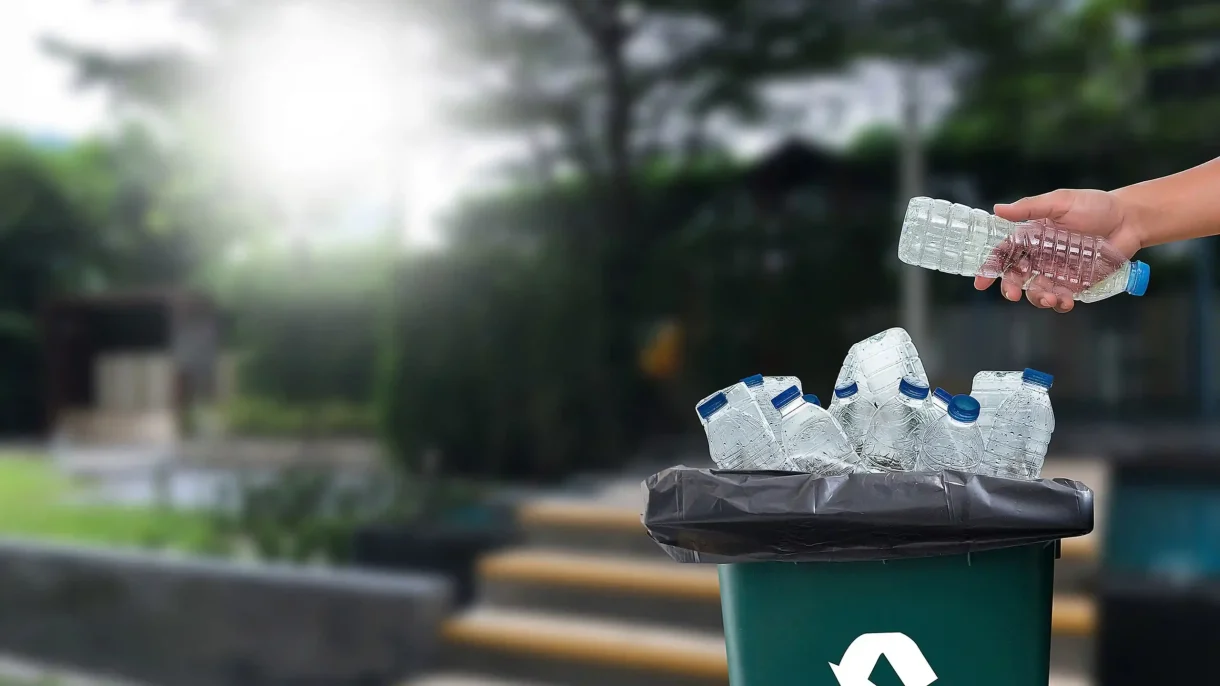
The key to reducing plastic waste lies in shifting to the principles of a circular economy. It involves rethinking how plastic products are designed, produced, and used. Current estimates show that only 21% of plastic is economically recyclable, meaning the value of the recycled material is high enough to cover the cost of collection, sorting, and processing. In reality, only around 9% of the plastic produced is recycled.

Plastic products should be designed to be reusable, and recyclable at the end of their life cycle. Additionally, companies should stop adding unnecessary microplastics to their products.

Strengthening waste collection and recycling systems would help prevent plastic products from entering the environment, where they break down into microplastics.

South Korea is among the trailblazers in tackling plastic waste

This year’s host of World Environment Day is the Jeju province in South Korea, which is among the countries leading the efforts to tackle plastic waste. It relies on decades of its experience engaging businesses through extended producer responsibility.

South Korea’s plastics strategy addresses the entire life cycle – from production and design to use, reuse, and recycling. Through collaboration between the government, industry, and citizens, the country is building a circular economy and reducing waste at the source.

In 2022, Jeju, an island and archipelago, set the goal to become free of plastic pollution by 2040. It is the only province in South Korea where residents are required to dispose of waste at specialized recycling centers, encouraging better waste separation and higher recycling rates. Jeju was also the first to introduce a deposit-refund system for single-use cups.