by in News

First section of Čibuk 2 wind park in Serbia begins trial operation

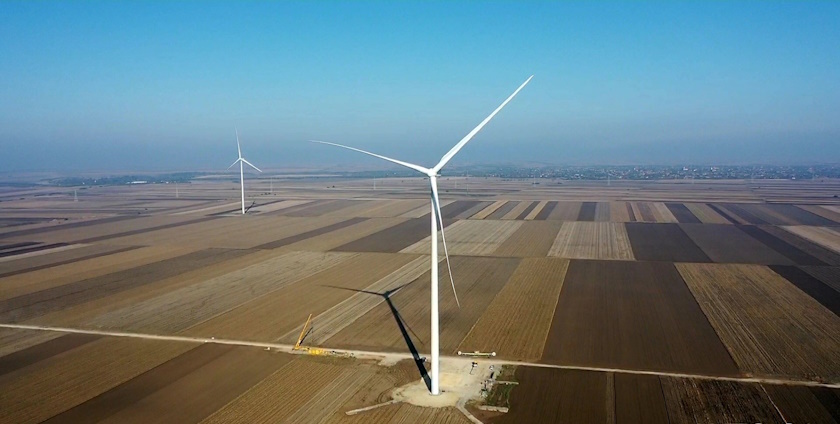
Masdar and Taaleri Energia generated the first megawatt-hours in their Čibuk 2 wind farm in Serbia. The first 35 MW out of the planned 154 MW is now in trial operation.

The installation of all 22 turbines in the Čibuk 2 wind power plant northeast of Belgrade is set to be completed by mid-November, Renewable Energy Sources of Serbia (RES Serbia) revealed. Trial operation of the first part began on October 21 and 35 MW has been connected to the grid so far, according to the update.

The entire wind farm will come online in early December, the association said. The project in the municipality of Kovin in the south Banat area is for 154 MW. The wind farm is between the villages of Bavanište and Mramorak.

Abu Dhabi Future Energy Co. – Masdar and Finland-based Taaleri Energia’s Taaleri SolarWind III Fund reached the financial close just 13 months ago. At the same time, special purpose vehicle (SPV) Čibuk 2 Wind Energy, a subsidiary of their joint venture Masdar Taaleri Generation, signed a power purchase agreement (PPA), as well as contracts on balancing and a market premium, with state-owned power utility Elektroprivreda Srbije (EPS).

UniCredit and Erste provided project financing, while Nordex is the equipment supplier.

The Čibuk 2 project secured a market premium at Serbia’s first wind power auction.

The facility is located next to the existing Čibuk 1 wind farm of 158 MW, the largest in Serbia. Masdar and Taaleri Energia commissioned it in 2019.
by in News

Serbia launches construction of two transmission lines as part of BeoGrid 2025 project

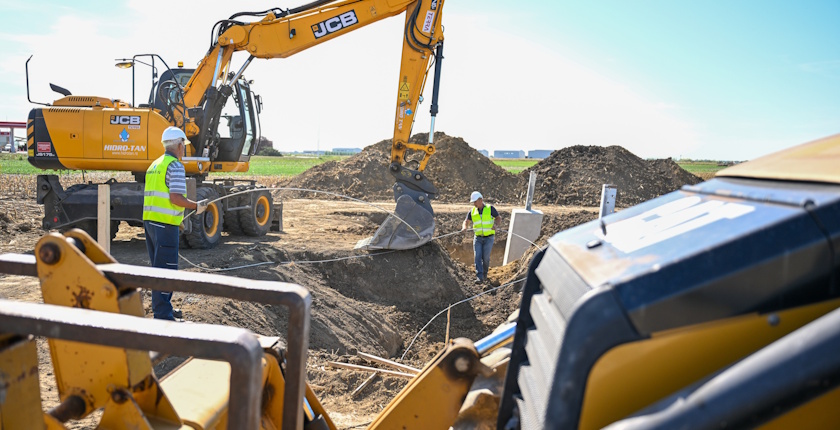
Serbia has launched works as part of the BeoGrid 2025 project, aimed at improving the power transmission infrastructure in Serbia, the region, and Europe, as well as facilitating electricity offtake from renewable energy power plants in the South Banat region of Vojvodina.

The BeoGrid 2025 project, worth EUR 205 million, comprises six distinct components, according to Radoš Popadić, Assistant Minister of Mining and Energy in charge of the power engineering sector. He attended the start of works in Belgrade’s Surčin suburb together with Jelena Matejić, the general manager of Serbia’s transmission system operator, Elektromreža Srbije (EMS).

“Construction is being launched today on two new high-voltage transmission lines that will connect Belgrade and Novi Sad, with a total value of around EUR 22 million,” he said, adding that work on a substation in Belgrade is also expected to begin soon.

The project is valued at EUR 205 million

The substation will be connected to the Čibuk 1 substation [wind farm Čibuk 1] by a new 83-kilometer transmission line, ensuring a stable transmission of electricity produced from renewable energy sources in South Banat, as well as reducing strain on the existing network, Popadić explained.

Radoš Popadić and Jelena Matejić (photo: Ministry of Mining and Energy/Danilo Mijatović)

Two single-circuit 400 kV transmission lines, intended for connecting transmission line 450 (switching station Mladost – substation Novi Sad 3) to the future 400/110 kV substation Beograd 50, will have a total length of 25.5 kilometers.

EMS General Manager Jelena Matejić said that BeoGrid 2025 is of particular importance for Serbia, but also part of the broader North Continental South East (CSE) Corridor project, which includes doubling the existing 400 kV interconnection between hydropower plant Đerdap 1 and Portile de Fier in Romania.

Matejić: The North CSE Corridor is part of the European ten-year network development plan, TYNDP 2020

The North CSE Corridor project is part of the European ten-year network development plan (TYNDP 2020) and the regional investment plan (RgIP 2020). It is supported by the Romanian transmission system operator, Transelectrica, as well as the German development bank KfW, with a feasibility study.

The North CSE Corridor is of regional importance as it increases the transmission capacity between Serbia and Romania, helping create an integrated European electricity market, Matejić pointed out, adding that BeoGrid 2025 is also important for additional backup power supply for the EXPO 2027 project.

The project aims to enable the transmission of electricity generated from renewable sources in the South Banat region and to ease the load on the 220/110/35 kV Beograd 5 substation, which supplies a large part of Belgrade, particularly parts of New Belgrade and Zemun, EMS stated.

Popadić: The total value of all planned projects is EUR 1 billion

Photo: Ministry of Mining and Energy/Danilo Mijatović

Radoš Popadić recalled that large investments in the transmission network are underway.

“Serbia has recognized the importance of investing in the power transmission system to enable the integration of more renewable energy capacity, increase the exchange of electricity with neighbors, and ensure a secure, stable, and efficient supply to consumers. That is why we launched investments in interconnection with the transmission systems of eight neighboring countries, with EUR 500 million to be invested in priority projects by the end of the decade. The total value of all planned projects will amount to around one billion euros,” said Popadić.

BeoGrid 2025 is financed partly from the Serbian budget, as well as from EMS’ own funds. The project consists of six distinct components, or investments:

  • 400/110 kV substation Beograd 50;
  • Two-circuit 400 kV transmission line between substation Beograd 50 and Čibuk 1, including the installation of a 400 kV bay at switching station Čibuk 1;
  • Single-circuit 400 kV transmission lines for the integration of transmission line 450 (switching station Mladost – substation Novi Sad 3) into substation Beograd 50;
  • Two double-circuit 110 kV transmission lines for the integration of transmission line 104/8 (substation Stara Pazova – substation Inđija 2) into substation Beograd 50;
  • two double-circuit 110 kV transmission lines for the integration of transmission line 1178 AB (substation Beograd 5 – substation Beograd 9) into substation Beograd 50;
  • Double-circuit 110 kV cable between substation Beograd 50 and substation Beograd 49 (Airport).

Photo: Ministry of Mining and Energy/Danilo Mijatović

by in News

Billot: Balkans is key region for Nordex

This year Nordex Group is celebrating its 40th anniversary as one of the largest wind turbine manufacturers in the world. “We’re number one in Europe and the Balkans is actually a key region for us,” Christopher Billot, Sales Director for the Mediterranean region of Nordex Group, said at Belgrade Energy Forum 2025.

Nordex installed its first N27 turbine with a capacity of 250 kW in 1986, just one year after the company was founded. In 1995, it became the first in the world to start serial production of a megawatt-class turbine. Today, the capacity of its units ranges from 4 MW to 7 MW.

Christopher Billot noted that the company has been manufacturing wind turbines for the last 40 years.

Nordex entered the Balkans 10 years ago

“We’re number one in Europe and the Balkans is actually a key region for us where we focus intensively. We’ve been there for the last 10 years, and so far we have achieved up to 1 GW of wind turbine installation but also construction across Croatia, Montenegro, and Serbia,” Billot stated.

Nordex is spreading within the region and that’s key, in his words, for the company and its future in the region and overall.

[wpcc-iframe title=”Christopher Billot, Director Sales Region Mediterranean, Nordex Group at Belgrade Energy Forum 2025″ width=”500″ height=”281″ src=”https://www.youtube.com/embed/rUDrekSnYGI?feature=oembed” frameborder=”0″ allow=”accelerometer; autoplay; clipboard-write; encrypted-media; gyroscope; picture-in-picture; web-share” referrerpolicy=”strict-origin-when-cross-origin” allowfullscreen=””]

“We’re happy to be a silver sponsor of the Belgrade Energy Forum. This is for us a great opportunity to network and to basically partner with all the institutions, clients, and continue to grow and build the network for growth in the Balkans,” Billot stressed.

The global company has marked its 40th anniversary at the recently held Belgrade Energy Forum 2025 (BEF 2025), affirming its commitment to the region.

Helping the pioneering steps in renewables development

Nordex installed and contracted an overall 1 GW in Croatia, Montenegro, and Serbia, encompassing 222 wind turbines across 16 wind farms. Looking at the company’s portfolio, it can be said that it plays a pioneering role in the development of renewable energy sources in the region.

Here are a few examples.

In November last year, it signed an agreement with Montenegro’s state-owned power utility Elektroprivreda Crne Gore (EPCG) for its first wind farm, Gvozd, with a capacity of 54.6 MW. The contract is worth EUR 46.4 million.

A few months earlier, it was announced that Nordex would participate in the expansion of the largest wind farm in Serbia. It received an order for 22 turbines with a total capacity of 154 MW for the Čibuk 2 project. The investors are Masdar and Taaleri SolarWind III Fund.

Nordex was also a partner to Croatian state-owned Hrvatska Elektroprivreda (HEP) in building its first wind power plant. The contract for the delivery of 18 wind turbines with a total capacity of 58 MW for the Korlat wind farm was signed in July 2019.

by in News

GGF’s Kostadinov: Western Balkans responded to energy crisis with innovation, ambition (video)

The past three to four years have been nothing short of transformational when it comes to the energy transition in the Western Balkans, said Borislav Kostadinov, Finance in Motion’s Fund Director for the Green for Growth Fund, in a keynote address at Belgrade Energy Forum. The region has responded to the energy crisis with innovation, ambition and resilience, he pointed out. The challenge in the energy transition is understood and so is the solution, Kostadinov stressed.

Borislav Kostadinov, a Fund Director at Finance in Motion, gave a keynote speech at Belgrade Energy Forum (BEF 2025). He leads the Green for Growth Fund, or GGF, the company’s flagship green finance fund.

Finance in Motion is an impact asset manager based in Frankfurt with over 20 years of experience and more than EUR 4 billion in assets under management (AUM). It specializes in blended finance vehicles that deliver positive social and environmental impact. GGF has delivered over EUR 500 million in green finance to almost 50,000 beneficiaries in the Balkans. As of the end of last year, it was above EUR 1 billion in size.

Renewables have become mainstream investments

The breadth and flexibility of the fund’s model allow it to support a wide spectrum of the energy transition, which has enabled it to expand to over 19 markets along the European Union’s borders, Kostadinov explained.

The past three to four years have been nothing short of transformational when it comes to the energy transition in the Western Balkans, he underscored.

“I would not be the first to say that we are at a key juncture in the energy transition. At this stage, the challenge is understood and so is the solution. Renewables have become mainstream investments, championed by the public and private sectors, and are the foundation of a future that is not only sustainable but cost-efficient, competitive, and secure. The question now becomes how quickly and how completely we can deliver on this vision over the next five, fifteen and 25 years,” Kostadinov stated. In terms of energy systems and climate change, it is not much time, he pointed out.

[wpcc-iframe title=”Belgrade Energy Forum 2025 Borislav Kostadinov, Fund Director Green for Growth Fund, Finance in Moti” width=”500″ height=”281″ src=”https://www.youtube.com/embed/TJFTOD-1keQ?feature=oembed” frameborder=”0″ allow=”accelerometer; autoplay; clipboard-write; encrypted-media; gyroscope; picture-in-picture; web-share” referrerpolicy=”strict-origin-when-cross-origin” allowfullscreen=””]

Western Balkans are broad-based renewables growth story

For several years now, there has been a broad-based renewables growth story across the region: from utility-scale project finance transactions, to large installations for captive use by industry and manufacturing, to photovoltaics on the roofs of households, Kostadinov recalled.

“What is driving this shift? Certainly, the energy crisis jolted all of Europe, and the Western Balkans have responded with innovation, ambition, and resilience. In a short time, we have improved policy, strengthened regulatory frameworks and prioritized the sector with clearer strategies and market mechanisms,” he said.

GGF’s director praised the countries in the region for embracing transparent, competitive auctions as a foundation for market-based deployment of renewables.

Kostadinov particularly highlighted Serbia for leading the way. “Its recent auctions for wind and solar have been consistent, well-communicated, credible and investor friendly, drawing broad investor participation. Most importantly, they’ve been successful, and we are proud to have contributed to this achievement alongside our longstanding partner UniCredit Bank, through its investment in the landmark Čibuk 2 wind farm,” he told the audience at BEF 2025.

Corporate PPAs, guarantees of origin deepen markets while also expanding them

The public sector must continue strengthening markets and frameworks and develop and roll out mechanisms such as corporate power purchase agreements (PPAs) and guarantees of origin, which deepen and expand markets, Kostadinov said.

“We need more purely private projects, such as the GGF-backed 50 MW Project Blue solar plant in Albania. As the largest non-subsidized solar project in the Western Balkans, and developed without a long-term PPA from the utility, it is the type of investment that we hope to increasingly catalyse in the region,” he asserted.

The three principles for the next five years are speed, integration, and resilience, Kostadinov says

In Kostadinov’s view, the three principles for the next five years are speed, integration, and resilience.

“We must continue to improve the speed, transparency and bureaucratic process when it comes to permitting, approving and bringing projects online. This is true in the EU, and it is true in the Western Balkans, in particular for construction permitting and grid connections,” he said.

The necessary investments in the integration of energy markets in the EU and the region will create scale, meaning larger markets, deeper spot markets, and more varied offtake, Kostadinov added. His message to energy producers in the Balkans is that they would be able to diversify and address a larger market by supplying Europe’s industrial base.

The recent blackout in Spain is a cautionary tale, but the story is not a failure of renewables but rather a failure of grid resilience, Kostadinov said.