by in News

BYD’s electric vehicles more popular than Tesla in Croatia

Croatian companies have applied for subsidies to buy three times more electric vehicles of Chinese manufacturer BYD than of US-based Tesla.

The situation in Croatia reflects the global market. Last year, Chinese BYD surpassed Tesla, run by Elon Musk, for the first time. It has maintained the top position in electric vehicle production so far this year as well.

The data from Croatia are based on the results of a public call for subsidies for the purchase of new alternative-fuel vehicles. The program is for legal entities and is conducted by the Environmental Protection and Energy Efficiency Fund (FZOEU).

By the end of the application deadline, co-financing was requested for 2,860 vehicles, of which 78% for passenger vehicles. The data was announced at a meeting of the Motor Vehicle Trade Association, part of the Croatian Chamber of Economy (HGK).

Applications for the purchase of 2,860 units have been submitted

Aleksandar Halavanja, head of the Department for Systematic Energy Management at FZOEU, said most applications (78%) were for passenger vehicles with up to eight seats. Applications for cargo vehicles with a maximum permissible mass of 3.5 tons are second, with 12%, while mopeds have an 8% share.

BYD ranks first among brands, with 31.9%, while Tesla accounts for 10%. They are trailed by Hyundai (5.4%), Škoda (5%), Renault (4.8%), BMW (3.6%), Opel and Volkswagen (3%), Toyota (2.8%), and Peugeot (2.4%), according to Halavanja.

The fund provides subsidies of up to EUR 9,000 apiece for passenger and light commercial vehicles, but no more than 40% of the vehicle’s price. An additional condition is that the price of the EV must not exceed EUR 50,000 excluding VAT.

Miletić: Subsidies per vehicle should be reduced

Up to EUR 90,000 is for vehicles with maximum permissible mass of 3.5 tons, but no more than 40% of the vehicle’s value. Moped buyers can receive up to EUR 2,500 each.

FZOEU plans to evaluate all applications by the end of the year. If all funds are not allocated, the remainder from the EUR 21.2 million would be switched to another round until it is exhausted.

Tomislav Miletić, President of HGK’s Motor Vehicle Trade Association, underlined that its members demanded a higher amount for the co-financing of energy-efficient vehicles.

If that is not possible, the subsidy per vehicle should be reduced so that as many interested citizens and companies as possible can get funding, he stressed.
by in News

Hydropower plant Dabar to be completed by end-2027

The Dabar hydropower plant is expected to be completed by the end of 2027, according to Petar Đokić, Minister of Energy and Mining of the Republic of Srpska.

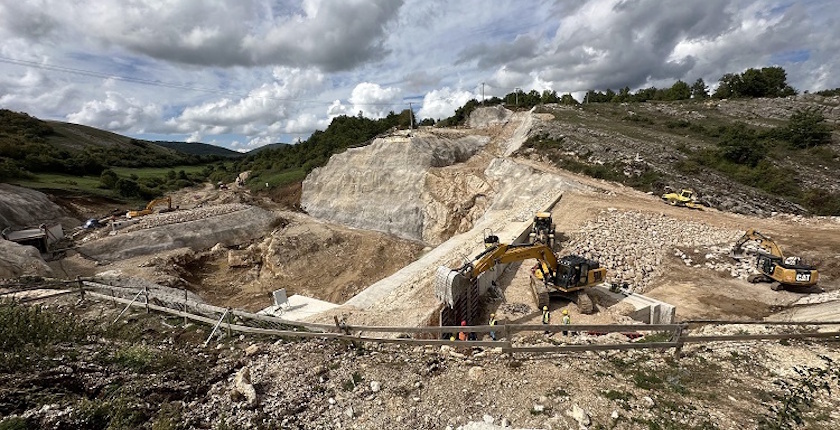
The operation of the Dabar hydropower plant, the most complex hydropower facility, in which EUR 339.5 million has been invested, will bring benefits for the entire eastern Herzegovina area, Petar Đokić said during a visit to the construction site, Srna reported.

The works on the 160 MW hydropower plant, with an expected annual production of 500 GWh, began in June 2023.

Đokić noted that the project is located in four municipalities – Nevesinje, Bileća, Berkovići, and Ljubinje – spanning 40 kilometers. As a key part of the project, Đokić highlighted a 12-kilometer tunnel, which is nearly finished.

Đokić: It is an exceptional construction undertaking, the first of its kind in the world in the 21st century

It is an exceptional construction undertaking, the first of its kind in the world in the 21st century, the minister said and added that he is proud to be part of the project from the beginning of its implementation.

Photo: Ministry of Energy and Mining

He spoke with the representatives of China-based Gezhouba Group Co., the main contractor, and Integral and Elnos, its domestic subcontractors.

Đokić stressed that some issues regarding the construction were discussed. HPP Dabar is a financially demanding project, he noted.

Photo: Ministry of Energy and Mining

Wind farm Grebak will be completed by 2027

Minister Đokić recalled that projects for solar power plants and wind farms with a capacity of 680 MW are under development in the territory of Nevesinje municipality, with investments estimated at an overall EUR 409 million.

He underlined that one of the projects, the Grebak wind farm, has experienced delays. Numerous companies, including the investor in the Grebak project, are hostages to the European policies mistrustful of Bosnia and Herzegovina, Đokić claimed.

Of note, the Republic of Srpska is one of the two political entities of BiH. The concession for the Grebak wind farm was granted in April 2019.

The minister expressed hope that the investor would overcome the challenges, conclude a financing agreement, secure equipment, and start construction work, expected to be finished by late 2026 or early 2027.

Investors in solar projects in Nevesinje are currently preparing documentation and purchasing equipment, Đokić said.

by in News

Three quarters of global solar, wind capacity under construction is in China

China continues to dominate the renewable energy landscape, representing 29% of all planned wind and solar capacity and a staggering three quarters of the segment under construction, according to the Global Energy Monitor.

All prospective projects in the world would have 4,484 GW in total capacity, of which 1,302 GW is in China. Next are Brazil, Australia and the United States.

The group consists of announced projects and the ones in the pre-construction phase and under construction. The list comprises solar projects of 20 MW or more and wind projects of at least 10 MW, both in terms of connection capacity.

There is 689 GW of new wind farms and photovoltaic plants in the world under construction. China accounts for 74% or 510 GW, the data reads.

According to Global Energy Monitor’s Global Solar Power Tracker, China has over 709 GW of prospective solar capacity, representing over one third of the global pipeline in 2025.

The country’s wind capacity has a similar rate of growth as solar, per Global Energy Monitor’s Global Wind Power Tracker. There is over 590 GW in prospective phases — nearly 530 GW onshore and 63 GW offshore. China’s prospective capacity accounts for about one third of the worldwide total.

The rapid buildout underscores China’s drive to accelerate its renewable energy development, with at least 205 GW slated to come online by the end of the year, though the total capacity is expected to be even higher, the update shows.

“China is fast-tracking a 1.3 TW pipeline of utility-scale solar and wind projects. Of this, 510 GW is already under construction, primed to be added to China’s 1.4 TW solar and wind capacity already in operation,” Global Energy Monitor said.

As of March 2025, China is the world’s offshore wind powerhouse, growing from under 5 GW in 2018 to 42.7 GW in 2025 (50% of global capacity).

China’s 1.4 TW in operating solar and wind parks outstrips thermal power

In Q1 2025, China’s combined wind and solar capacity surpassed its total coal and gas segment for the first time, supplying nearly 23% of the country’s total electricity consumed, compared to roughly 18% in Q1 2024, the National Energy Administration (NEA) revealed.

Moreover, the increase in output from solar, wind, and other non-fossil energy met China’s additional electricity demand in Q1 2025. Its operating solar and wind capacity soared to 1.4 TW altogether, now accounting for 44% of the global total. It is also more than the combined total of the European Union, United States, and India, the Global Energy Monitor underscored.

by in News

AEA concluded, 2017 Seminar on Small Hydropower Development and Management for CEE

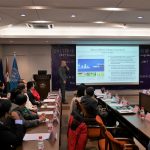
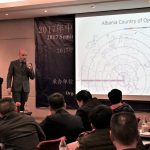
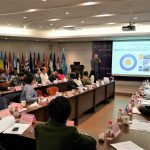
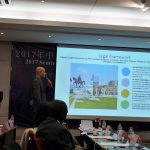
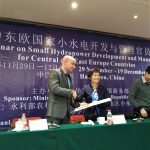
Albania Energy Association chairman Mr.Erlet Shaqe, took part 2017 Seminar on Small Hydropower Development and Management for Central and East Europe Countries supported by the government of the People’s Republic of China / the Ministry of Commerce, ICSHP and HRC initiate, planned and organizing this very comprehensive training workshop for 21 days with participants of over 9 different countries from Asia, Africa, Europe to learn about China’s practice and achievements in small hydro power development and in utilizing SHP to play a positive role in electrification. We were introduced to water resources, green hydropower, the technology, planning, construction and management of small hydropower.

Presentation : Albania Investments and Hydropower Development 2017

[pdfjs-viewer url=”https%3A%2F%2Finfo.aea-al.org%2Fwp-content%2Fuploads%2F2017%2F12%2FAlbania-Investments-and-Hydropower-Development-2017.pdf” viewer_width=100% viewer_height=1360px fullscreen=true download=true print=true]

This training promoted further cooperation and exchange hydropower development experiences between China and participants countries, to support and achieve a bright future for the sustainable development of hydropower in our communities developing countries.

The seminar also integrates classroom presentations with field survey/study tours which include the sites of different hydropower plants, the analogous experimental platform, the equipment manufacturers as well as the Three Gorges Project.

We were  introduced the experience on SHP development and management mode and technology, including Small
Hydropower Development in China, SHP Developing Modes, Method for SHP Feasibility Study, SHP Equipment in China, SHP Norms in China, Operation and Maintenance of Hydropower Plant, SCADA System, Refurbishment of SHP Stations, and some other special topics, such as China in brief, China’s foreign aid, etc.

The organizers:

International Center on Small Hydro Power (ICSHP) is a public and non-profit institution directly under auspices of United Nations Industrial and Development Organization (UNIDO), China’s Ministry of Water Resources and Ministry of Commerce, as well as, ICSHP is headquarters of International Network on Small Hydro Power (INSHP), which is an international organization with more than about 400 members from 80 countries.

ICSHP aims at the promotion of global SHP development through triangle technical and economic cooperation among developing countries, developed countries and international organizations, hence to supply the rural areas in developing countries with environmentally sound, affordable and adequate energy, which will lead to the increase of
employment opportunities, improvement of ecological environment, poverty alleviation, improvement of local living and cultural standards and economic development in rural areas.

HRC, also called NRIRE, was founded with the joint sponsorship’s of Chinese  government and UN organizations such as UNDP/UNIDO in 1981 in Hangzhou, China, specializing in R+D and training etc, in the fields of renewable energy development including SHP and rural electrification. Entrusted by Chinese Ministry of Water Resources, the Ministry of Commerce, the Ministry of Science & Technology, the Ministry of Foreign Affairs, UNDP, UNIDO, ILO, FAO and ASEAN Secretariat etc., HRC has until now, successfully hosted 87 seminars/training courses for more
than 1700 participants of 112 countries regarding the subjects of rural electrification, water resources and renewable energy, inclusive of small hydropower, solar energy and wind power, etc.

by in News

China to host China-CEE leaders’ meeting for first time

China and Central and Eastern European (CEE)The fourth leaders’ meeting of China and Central and Eastern European (CEE) countries will be held in east China’s Suzhou city from Nov.24 to 25, the first time for China to host the meeting.

LEADERS’ MEETING

Chinese Premier Li Keqiang and the leaders from the 16 CEE countries will attend the meeting in Suzhou, Chinese President Xi Jinping will meet the 16 countries’ leaders in Beijing, Chinese Vice Foreign Minister Wang Chao said.

Leaders’ meeting is the most important schedule under the framework of China-CEE cooperation this year, Wang said, noting it will lay a stronger foundation for future development.

The meeting in China this year will be meaningful to the sustained, balanced and in-depth relationship between China and Europe, Wang said.

Li will also attend a “16+1” round table meeting and an economic and trade forum.

The 16+1 meeting mechanism, launched in 2012, has helped to deepen traditional friendship, strengthen mutually beneficial cooperation and promote China-Europe relations, Wang said.

CEE countries that attended the meeting included Albania, Bosnia and Herzegovina, Bulgaria, Croatia, the Czech Republic, Estonia, Hungary, Latvia, Lithuania, Macedonia, Montenegro, Poland, Romania, Serbia, Slovakia and Slovenia.

NEW MILESTONE

China is willing to be a good host and make the meeting a new milestone to the development of China-CEE cooperation, Wang said.

The theme of the meeting this year is “New beginning, New fields, New vision” , Wang said.

It is the first time for China to host the China-CEE leaders’ meeting, Wang said, so the new beginning means it’s an important period to inherit the past and usher in the future.

The meeting will propose new measures and expand new fields for China-CEE cooperation, covering inter-connectivity, investment and trade, finance, agriculture, people-to-people exchanges and so forth, Wang said.

The leaders will also plan the new vision of development in the next five years, aiming to strengthen top-level design for the cooperation, Wang said, adding that some outcome documents will be released after the meeting.

Wang said China-CEE cooperation has expanded into new areas and produced greater results, thanks to the increasingly mature mechanism and emerging platforms.

TRADE AND INVESTMENT

Li will deliver a speech at the opening ceremony of a trade and investment forum in Suzhou, Vice Commerce Minister Gao Yan said, adding that about 1,000 China and CEE business leaders will participate in the forum.

In 2010, the trade volume between China and CEE countries was 43.9 billion U.S. dollars. The figure increased to 60.2 billion U.S. dollars in 2014.

China-CEE economic and trade cooperation faces new chances, Gao said, calling on the two sides to deepen cooperation in industrial capacity and equipment manufacturing.

According to Gao, at present, Chinese companies have invested more than 5 billion U.S. dollars in CEE countries and the 16 CEE countries have invested more than 1.2 billion U.S. dollars in China.

Gao said both sides are expanding investment areas and diversifying investment forms.

China and CEE countries are closely linked by the China-proposed Belt and Road initiative, Gao said, adding the two sides have huge potentials in energy and infrastructure cooperation.