by in News

Coal plant Kakanj in BiH halts electricity production amid record air pollution

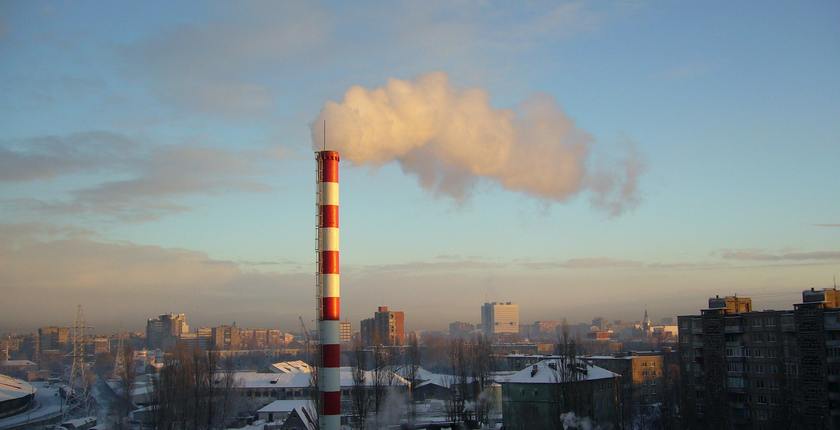
Due to record air pollution levels in recent days, the Municipality of Kakanj requested that the local coal-fired power plant’s activity be reduced to supplying thermal energy for district heating only. The thermal power plant says it has already done so.

After “unprecedented” amounts of pollutants were measured in Kakanj, Mayor Mirnes Bajtarević asked the management of the Kakanj thermal power plant and state power utility Elektroprivreda Bosne i Hercegovine (EPBiH), as well as Federation of BiH Minister of Environment and Tourism Nasiha Pozder, to ensure that the operation of the power plant is urgently reduced to a minimum, only for the needs of the district heating system in Kakanj.

The power plant said that since Sunday, the only block in operation has been Unit 6, which supplies thermal energy for district heating in Kakanj, news portal Akta reported.

Kakanj, the second-largest electricity producer in the EPBiH portfolio, has three operational units with a total capacity of 450 MW. Unit 6 has a capacity of 110 MW.

The municipal authorities said in the statement that, if necessary, it would invite residents to protest in front of the thermal power plant, which is seen as the main culprit for the alarming air pollution levels in recent months.

The local cement plant is urged to stop using alternative fuels

According to BiH media reports, recent sulfur dioxide (SO₂) levels in Kakanj have exceeded all permitted limits, posing an immediate threat to public health.

The municipality also issued a fresh request to the FBiH inspection body to inspect the operation of the thermal power plant, as well as Heidelberg Materials Cement, which has been asked to stop using alternative fuels.

The municipality will also demand a report on the desulfurization project at Kakanj

The municipality said it would demand that the thermal power plant provide a report on the progress and timeline of works on the ongoing desulfurization project, including the expected completion date.

EPBiH is implementing the desulfurization project at units 6 and 7 at Kakanj, hoping to reduce SO2 emissions by about 98.5%. SO2 emissions will be reduced to below 150 mg/Nm3, or nearly 60 times lower than current levels, EPBiH said in October.

Last year, the company was the largest power producer in BiH. Kakanj generated 1,431 GWh or 27% of EPBiH’s output.

One of the largest SO2 emitters in the region

Three years ago, the Energy Community Secretariat opened a case against Bosnia and Herzegovina for failing to shut down two units at the Kakanj and Tuzla thermal power plants despite the expiry of the 20,000 operating hours permitted after January 1, 2018, under the opt-out mechanism.

Kakanj was also mentioned in Bankwatch’s annual Comply or Close report, published in June this year.

According to the report, six power generation units in the Western Balkans exceeded their individual ceilings for SO2 emissions by more than ten times – Ugljevik, Gacko, Tuzla 6 and Kakanj 7 in Bosnia and Herzegovina; Kostolac A2 in Serbia; and Bitola B1 and B2 in North Macedonia.
by in News

Project pipeline in Greece for CO2 capture, storage nearing EUR 4 billion

Carbon capture and storage projects worth as much as EUR 3.6 billion are under development in Greece. Energean’s subsidiary EnEarth has launched a tender for drilling two wells for the Prinos site under the Aegean Sea, while DESFA won a EUR 169 million EU grant for a carbon dioxide liquefaction unit.

Investors in Greece are counting on demand from the domestic industry for carbon capture and storage (CCS), so that it can remain competitive with regard to carbon dioxide emission costs. Euro2day calculated that the project pipeline is worth up to EUR 3.6 billion as the endeavors are clearing major milestones.

The time for drilling in Prinos is approaching. EnEarth, a subsidiary of Energean, is working on the establishment of the storage facility offshore Kavala. Earlier this month it launched a tender for drilling two wells.

The Prinos project is valued at EUR 1.2 billion

Works are scheduled to begin in the first half of next year. The project is worth EUR 1.2 billion, of which the firm secured EUR 270 million in funding from the European Union. It is waiting for environmental terms (AEPO) from the Ministry of Environment and Energy, as well as for the storage permit.

Notably, a draft law covering the sector is reportedly complete.

DESFA seeks contractor to drill two wells in Prinos

Another step ahead was achieved with a project for a pipeline that would transport CO2 from energy-intensive industrial facilities to a liquefaction system in Revithoussa. The endeavor is called ApolloCO2. Greece’s National Natural Gas System Operator (DESFA) won EUR 169.3 million through the European Union’s Innovation Fund for the terminal.

The system would include temporary storage and transport by ships to permanent storage. The budget amounts to EUR 700 million in the first phase, with another EUR 60 million envisaged for an expansion.

ApolloCO2 is in a group of 61 projects in the Innovation Fund’s latest round for net zero technology, worth EUR 2.9 billion in total.

DESFA is working on the investment with Ecolog, a subsidiary of GasLog.

EU funding three major carbon capture projects that would be connected with Prinos storage site

AppoloCO2 would bring CO2 from three capture facilities also funded by the EU. There is a possibility to involve overseas customers as well.

Cement maker Heracles, part of Holcim Group, is developing the Olympus project worth EUR 400 million in Milaki, Aliveri. Its competitor Titan has a EUR 584 million endeavor underway in Kamari, Boeotia (Viotia). It is called Ifestos.

DESFA has applied for EUR 30 million from Connecting Europe Facility for the CO2 pipeline

Motor Oil Hellas aims to install a unit in its Agioi Theodoroi oil refinery costing EUR 300 million to EUR 400 million. The project is called IRIS – Innovative low caRbon hydrogen and methanol productIon by large Scale carbon capture. It is for the construction and operation of a CCUS and e-methanol production system that would cut the refinery’s CO2 emissions by a quarter. CCUS stands for carbon capture, utilization and storage.

DESFA is seeking EUR 30 million from the EU’s Connecting Europe Facility (CEF) for a 35-kilometer CO2 pipeline. The first part would go from Ifestos and branch out to HELLENiQ Energy’s oil refinery in Elefsina (Eleusis). In subsequent phases, pipelines would reach Heracles’ Olympus, Metlen’s aluminum complex in Aspra Spitia, Thisvi in Boeotia (for GEK Terna’s Heron and HELLENiQ’s subsidiary Elpedison), and eventually Motor Oil’s IRIS.

As capacities grow, larger ships would be required to lower transportation costs. According to the article, three such vessels would cost EUR 240 million overall.

by in News

Cement maker Holcim gets EU grant for carbon capture project in Romania

A carbon capture and storage (CCS) project developed by cement maker Holcim Romania has been awarded financing under the European Union’s Innovation Fund. The European Commission has selected 61 cutting-edge net-zero technology projects across the EU to receive a total of EUR 2.9 billion in funding, covering sectors such as oil refining, hydrogen, transportation, chemicals, iron and steel, and the manufacture of components for renewable energy plants and batteries.

Holcim’s project at its plant in Câmpulung, Argeș county, involves capturing CO2 from cement and lime production and storing it underground. The first large-scale onshore CCS project of its kind in Eastern Europe is expected to produce an estimated two million tons of near-zero cement annually from 2032, according to a press release from Holcim.

The project will enable Holcim Romania to produce two million tons of near-zero cement annually

Carbon Hub CPT 01 will use proven carbon capture technology to separate CO2 from flue gases, which will then be compressed and transported for permanent, safe storage underground, the company said.

The Switzerland-based cement producer now has eight large-scale EU-supported carbon capture projects – in Germany, Poland, Belgium, France, Croatia, Greece, and Romania, according to the press release.

Decarbonizing energy-intensive industries across the EU

The European Commission said that the EUR 2.9 billion in grants follow its first call for net-zero technologies (IF24 Call), launched in December 2024, aiming to strengthen the EU’s technological leadership and accelerate the deployment of innovative decarbonization solutions.

The selected projects span 19 industrial sectors in 18 countries, focusing on energy-intensive industries, renewable energy and energy storage, net-zero mobility and buildings, cleantech manufacturing, and industrial carbon management.

The largest number of selected projects is in the cement and oil refining sectors

The largest number of awarded projects is in the refineries sector, with 11, followed by 10 in the cement and lime sector, 6 in the manufacturing of components for renewable energy, and 4 in the manufacturing of components for energy storage.

Other sectors on the list include chemicals, solar, maritime, road transportation, aviation, non-ferrous metals, hydrogen, buildings, construction materials, geothermal energy, and the manufacturing of components for energy-intensive industries.

The 61 selected projects have the potential to cut some 221 million tons of CO2 equivalent over their first decade of operation, supporting the EU’s objective of achieving climate neutrality by 2050, according to a press release from the European Commission.

by in News

EU institutions reach deal on CBAM simplification

The Council of the European Union struck a provisional agreement with negotiators from the European Parliament regarding the European Commission’s proposal to simplify the CBAM carbon border tax. The initial levy, which would be gradually increased year by year until it matches the EU ETS price, is coming into force on January 1. The administration in Brussels doesn’t seem willing to consider delaying the date, even though neighboring third countries and their exporters to the EU are struggling to adjust to the new system, especially in the electricity sector.

The Polish presidency of the Council of the EU and European Parliament’s negotiators reached a provisional agreement on one of the proposals of the so-called Omnibus 1 legislative package: a regulation that would simplify and strengthen the Carbon Border Adjustment Mechanism (CBAM).

The proposal seeks to ease compliance without compromising the scheme’s climate goals. The colegislators said it would reduce the regulatory and administrative burden, as well as costs for EU companies, especially small and medium-sized enterprises (SMEs).

CBAM is a tool to equalize the price of carbon paid for EU products operating under the EU Emissions Trading System (EU ETS) with that of imported goods, and to encourage greater climate ambition in non-EU countries.

No relief in scope so far for EU’s neighboring countries

Notably, third countries including the Western Balkans and Turkey and the companies there that export cement, iron and steel, aluminum, fertilizers, electricity and hydrogen to the EU are running out of time before charges are introduced on January 1 next year. Primarily, the governments need to introduce carbon pricing systems to be exempted.

ENTSO-E asked for a one-year delay of the initial CBAM charges for electricity

Earlier this month, the European Network of Transmission System Operators for Electricity (ENTSO-E) highlighted several contradictions in CBAM in its sector. It suggested to the European Commission to prolong the transitional period by one year. The latest update doesn’t indicate any willingness to suspend the levy.

Moreover, the European Commission needs to assess in early 2026 whether to extend the scope to other ETS sectors and how to help exporters of CBAM products at risk of carbon leakage. The EU is set to increase the tariffs every year until they match the EU ETS at the start of 2034.

Boosting EU competitiveness

The European Commission said in February that the measures it proposed would save EUR 6.3 billion.

“Simplification is a top priority for the Polish presidency. Today’s provisional agreement with the parliament is yet another step towards reducing administrative burden for our companies and further boosting EU competitiveness,” Minister for the European Union of Poland Adam Szłapka said about the deal with lawmakers.

The colegislators retained the key components of the commission’s proposal to simplify CBAM rules, according to the Council of the EU. There would be a broader de minimis exemption from obligations applicable to importers that do not exceed a single mass-based threshold set at a level of 50 tons per year. The revised regulation would also permit them to avoid any initial disruptions as they will be able to continue importing while awaiting CBAM registration.

Both institutions must formally adopt the measures before they enter into force, which is expected by September, the Council of the EU said.

According to the European Parliament, 90% of importers would be exempted and 99% of CO2 emissions from iron, steel, aluminium and cement imports are still covered.

by in News

Greece plans six waste-to-energy plants, set to meet EU landfilling limits

Large Greek companies, interested in the construction and operation of waste incinerators producing electricity and heat, are waiting for the government to complete the legal framework and launch tenders. Without the six planned facilities and accompanying infrastructure, the country would substantially lag behind the European Union’s targets for lowering the share of landfilled material.

Greece is transforming its waste management sector – dozens of units mechanically treating the material to feed six incinerators, covering all the regions. The Ministry of Environment and Energy is about to complete a strategic environmental assessment (SEA), after which its plan is to adopt a legal framework, before the end of the year.

Following a public consultation process, the general parameters would be determined including the details of a tender for the waste-to-energy plants. They are valued at EUR 1 billion in total. State-controlled Public Power Corp. (PPC or, in Greek, DEI) has expressed interest in entering the sector, alongside the conglomerates GEK Terna and Metlen, construction company Aktor, oil refinery operator Motor Oil and water, wastewater and waste processing operator Mesogeos.

The ministry intends to complete the competitive process in 2026, followed by a three-year construction period. The Greek media learned that public-private partnership is a favorable model for the investments.

At least two of six plants would provide district heating

In the central scenario, an incinerator in the Rhodope area would serve the wider region of East Macedonia and Thrace. One would be in Kozani, a coal region, for Central and Western Macedonia, Epirus, Thessaly and Corfu.

The government envisaged a unit in the Peloponnese to cover Western Greece, the Peloponnese peninsula itself and the Ionian Sea, excluding Corfu. One waste-to-energy plant is planned in Boeotia (Viotia), covering parts of Central Greece and the western part of Attica.

The waste incinerator in Kozani is likely to be built in the vicinity of Ptolemaida 5, Greece’s last coal power plant

In the same peninsula, where Athens is situated, a unit would also get shipments of waste from the north Aegean islands, one section of the Cyclades archipelago and the Dodecanese. An incineration plant in Heraklion (Iraklio) would be for Crete, Santorini, Karpathos and Rhodes.

The combined annual capacity of the six units is projected at 1.19 million tons. The largest ones are the Attica project (356,000 tons) and the Kozani plant (288,000 tons). The latter, which would probably be located near PPC’s Ptolemaida 5 coal power plant, is also seen providing up to 40% of the district heating needs in the area. The investment is valued at EUR 300 million.

Ptolemaida 5 is scheduled to be closed at the end of next year, marking the completion of Greece’s coal phaseout. The waste incinerator in Boeotia would provide district heating as well, the plan reads.

System for energy recovery clings on construction of mechanical treatment units, waste separation

On the logistics side, there are 13 waste treatment units in operation in Greece and 25 are under construction. The ministry expects all units to be complete by 2029, to feed the incinerators.

The capacity amounts to 1.45 million tons per year altogether, of which 651,000 tons of waste would be processed into solid recovered fuel (SRF), which is of higher quality. The energy-intensive industry would absorb 150,000 tons. The development of the treatment system requires substantial infrastructure including the selection of municipal waste selection at the source.

Up to 651,000 tons of SRF is expected to be produced per year in the waste treatment facilities

The estimated electricity production from 1.19 million tons of waste is 1.03 TWh, equivalent to 2% of the country’s total consumption. Notably, 57.5% of the projected output is considered renewable energy, in line with the portion of biodegradable waste.

In the study, the options to deploy pyrolysis or gasification technologies were rejected. The authors argued they are not viable in Europe. It left incineration as the only option to recover energy from waste.

If the incinerators aren’t built, but the energy-intensive industry receives the same amount of SRF, 22.7% of waste would be landfilled in 2030, projections showed. The European Union’s target is 10%. The share of landfilled waste rises to 29.2% in the same scenario.

by in News

Association of Serbian Energy Intensive Industry is actively participating in decarbonization dialogue

The Association of Serbian Energy Intensive Industry (ASEII), founded in September 2024, advocates for a coordinated national and regional approach to decarbonization that ensures the process strengthens rather than erodes competitiveness. “We believe it is very important that energy-intensive industries have their place in the dialogue around decarbonization, not only as passive observers but as active participants,” Director Svetlana Simić said at Belgrade Energy Forum 2025.

The Association of Serbian Energy Intensive Industry was established at a time when the domestic industry is facing complex challenges associated with the energy transition. Its five founding members represent the core of Serbia’s real economy, operating in the steel, fertilizer, and cement sectors.

“These are five leading companies in their respective fields: Metalfer, Elixir, Lafarge, Titan, and Moravacem. Our mission is clear: to be the voice of industry in the era of the energy transition. We believe it is very important that energy-intensive industries have their place in the dialogue around decarbonization, not only as passive observers but as active participants,” Director of ASEII Svetlana Simić said at Belgrade Energy Forum 2025 (BEF 2025).

The companies can offer solutions through their capacities, know-how, and experience, she underscored.

[wpcc-iframe title=”Stanislava Simic, Director, Association of Serbian Energy Intensive Industry” width=”500″ height=”281″ src=”https://www.youtube.com/embed/LM69KRWjkm4?feature=oembed” frameborder=”0″ allow=”accelerometer; autoplay; clipboard-write; encrypted-media; gyroscope; picture-in-picture; web-share” referrerpolicy=”strict-origin-when-cross-origin” allowfullscreen=””]

State and industry need to be partners in decarbonization

The Association of Serbian Energy Intensive Industry was founded in September. It advocates for a coordinated national and regional approach: one that protects strategic sectors, fosters low-carbon investment, and ensures that decarbonization strengthens rather than erodes competitiveness.

ASEII was a silver sponsor of this year’s conference, organized by Balkan Green Energy News. “We are at Belgrade Energy Forum today to highlight the importance of partnership between the state, the industry, and other stakeholders. We are also facing a serious challenge: the introduction of CBAM,” Simić stated.

Simić: We need legislative mechanisms that recognize how much companies are investing in their processes and innovation to reduce emissions

CBAM – the European Union’s Carbon Border Adjustment Mechanism, is a levy on carbon dioxide emissions for foreign cement, iron and steel, aluminum, fertilizers, hydrogen and electricity. The administration in Brussels launched it to protect its economy from imports from third countries with less stringent or no carbon pricing. CBAM charges are due to be introduced gradually, starting in January.

Serbia, like the entire region, must act wisely, strategically, and swiftly, Simić pointed out. “We need legislative mechanisms that recognize how much companies are investing in their processes and innovation to reduce emissions and secure an equal footing in the market,” she said.

Zečević: Many companies have been preparing for CBAM

Branko Zečević, president of Metalfer Group and one of the founders of the Association of Serbian Energy Intensive Industry, was one of the panelists at BEF 2025, in a session titled Addressing carbon pricing in the Western Balkans – Turning decarbonisation challenges into opportunities through collaboration, innovation and competitiveness.

He said CBAM’s effects on Serbian exports can’t be quantified easily yet, but that many companies have been preparing for it and investing in decarbonization. In Zečević’s view, a much bigger threat for the industry in Serbia and the region is an expected flood of goods that will not be able to enter the EU market anymore. He stressed that a domestic carbon pricing system is necessary.

by in News

Olympus carbon capture project breaks ground in Greece

Carbon capture, utilization and storage (CCUS) is a must for the future of the cement industry, Greek Prime Minister Kyriakos Mitsotakis said at the launch ceremony for Heracles Group’s Olympus project.

It is one of the very first CCUS plants in Greece, valued at EUR 380 million. The unit in the group’s Milaki cement production complex in the island of Evia (Euboea) is expected to capture up to one million tons of CO2 annually. Emissions from the facility are expected to decrease to net zero by 2029.

Other industrial players also have plans to introduce CCUS.

Cement producer Titan Group is moving forward with a EUR 583 million investment in Boeotia (also Beotia and Viotia) called Ifestos. The carbon capture installation is scheduled for launch in December 2029. In its first year, it is expected to reduce CO2 emissions to the atmosphere by 1.9 million tons.

Motor Oil Hellas aims to install a unit in its Agioi Theodoroi oil refinery for a cost of EUR 300 million to EUR 400 million. The project is called IRIS – Innovative low caRbon hydrogen and methanol productIon by large Scale carbon capture. It is for the construction and operation of a CCUS and e-methanol production system that would cut the refinery’s CO2 emissions by a quarter.

Motor Oil and Titan have won grants from the European Union’s Innovation Fund.

“Support is needed to make these investments viable. Greece is at the forefront of convincing European institutions to provide it,” said Mitsotakis.

The companies’ executives discussed CCUS market developments this week in Athens with European Commissioner for Climate, Net Zero and Clean Growth Wopke Hoekstra.

Prinos CO2 project to store industrial carbon

Captured carbon from these industries would be transferred to the former underground oil deposit in Prinos, offshore Kavala, for storage. Energean is developing the site, aiming for an annual capacity of three million tons, which would be doubled in the second phase.

The first drilling in Prinos is expected in 2026. Energean’s subsidiary EnEarth has signed 15 memoranda of understanding with various Greek and foreign companies.

The facility would be able to store up to six million tons after the second phase is complete. The National Natural Gas System Operator (DESFA) is tasked with delivering the gas there, under a project called Apollo CO2.