by in News

Montenegro’s EPCG, NTE Energy sign memorandum of understanding

Power utility Elektroprivreda Crne Gore and Norwegian company NTE Energi AS have signed a memorandum of understanding confirming their mutual commitment to intensifying cooperation in the renewable energy sector in Montenegro.

The memorandum of understanding envisages the exchange of information, coordination of activities, and consideration of specific projects through joint venture Zeta Energy, established by state-owned Elektroprivreda Crne Gore (EPCG) and NTE Energi.

Zeta Energy operates small hydropower plants Glava Zete and Slap Zete, operational since 2021.

Bulatović: The MoU is an important step in EPCG’s ongoing transformation

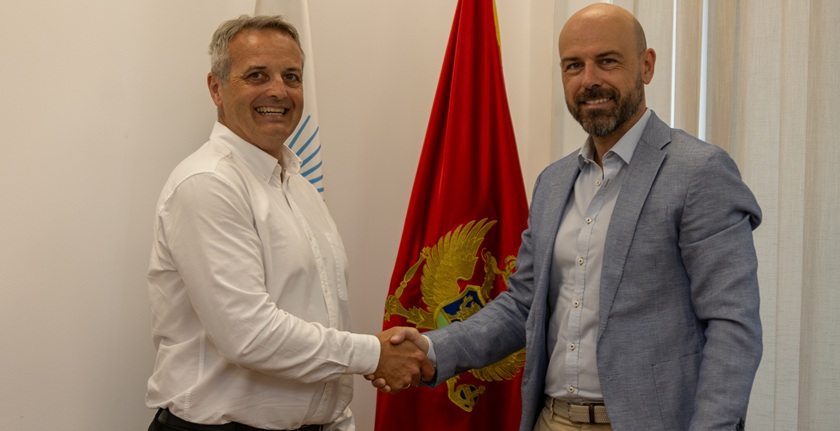
The memorandum was signed by EPCG’s CEO Ivan Bulatović and NTE Energi’s CEO Inge Forseth.

According to Bulatović, the focus of the cooperation between the two companies will be the development of the hydropower potential of the rivers Ćehotina, Ibar, and Morača, with the possibility of expanding it to other renewable energy sources.

In the search for stable partnerships and the development of domestic renewable capacities, the memorandum represents a significant step forward in EPCG’s transformation, Bulatović asserted.

In his words, collaboration with a renowned company like NTE Energi aligns with EPCG’s goals.

Forseth: Zeta Energy provides a platform for implementing concrete projects

Inge Forseth, NTE Energi CEO, underlined that his company has an extensive track record in energy and decarbonization. He described Montenegro as an attractive market for sustainable energy development.

By signing the MoU, the two firms are opening a new chapter in their cooperation, he stressed.

Montenegro has enormous natural potential, and Zeta Energy serves as a platform to implement concrete projects for the benefit of the local community and partners, according to Forseth.

EPCG has four HPPs in the pipeline

EPCG recently said it planned to include an international partner in the development of the Komarnica hydropower project. The company cited the experiences of Norway, Austria, and France.

The company has four hydropower projects in the pipeline: Komarnica, Kruševo, Ćehotina, and Sutorina. The first two are the most advanced. Kruševo and Ćehotina could be implemented with EDF.
by in News

INA, E.ON sign power purchase agreement in Croatia

Croatian oil and gas company INA and German energy giant E.ON’s subsidiary in the Southeastern European country have signed a power purchase agreement for electricity from renewable sources.

The power purchase agreement (PPA) will enable INA, majority-owned by Hungarian MOL, to use energy from its own power plants, even from remote locations where the produced electricity or surplus is fed into the grid, the companies said.

The electricity purchase covers three cogeneration plants and 18 photovoltaic plants with a total annual production of 20 GWh. INA’s largest solar power units, Virje and Sisak, have a combined capacity of about 13 MW.

The companies said it is a 2-in-1 solution – supply and purchase of electricity, creating a long-term sustainable energy system and allowing energy produced at one location to be used at another.

E.ON Croatia said it is connecting production and consumption into one efficient, closed energy system

With the partnership, the two firms are connecting production and consumption into one efficient, closed energy system, said E.ON Croatia.

It marks a new phase of cooperation, focused on developing a smarter, more flexible energy system, sustainable in the long term, according to the German energy giant’s subsidiary.

Ivica Kuliš, manager of the energy retail division of E.ON Croatia, said the utility is proud to become INA’s key partner in its electrification efforts, not only through supply but also by purchasing electricity. It directly enables flexible, locally produced energy to be available where it is needed most, he added.

Sokolović: INA is laying the foundation for long-term energy independence and decarbonization

By investing in its own production and using the PPA model, INA is laying the foundation for long-term energy independence and the decarbonization of its operations, said Dalibor Sokolović, head of the company’s department for new and sustainable businesses.

Such solutions enable more flexible and responsible resource management, Sokolović added.

Of note, according to an earlier analysis by Pexapark, the European PPA market entered an adjustment chapter last year, characterized by record deal-making for smaller volumes. Namely, the firm’s tracker registered a decrease of around 11% in total disclosed contracted volumes vis-à-vis 2023, to 15.2 GW.

by in News

Montenegro to bring in international partner for HPP Komarnica project

Montenegro’s state-owned power utility Elektroprivreda Crne Gore plans to include an international partner in the development of the Komarnica hydropower project. The company cited the experiences of Norway, Austria, and France. The plant, with a proposed capacity of 172 MW, is expected to have an annual production of around 213 GWh.

Elektroprivreda Crne Gore (EPCG) has four hydropower plants in the pipeline: Komarnica, Kruševo, Ćehotina, and Sutorina. The Komarnica and Kruševo projects have made the most progress, but challenges remain. Environmental organizations oppose the Komarnica project, while in September last year, President of EPCG’s Board of Directors Milutin Đukanović noted that the project has been on hold for two years.

Importantly, Kruševo and Ćehotina have been mentioned as investments that could be implemented within a partnership with French state-owned power utility EDF.

EPCG now told Vijesti that it has temporarily withdrawn the environmental impact assessment (EIA) for the Komarnica project because the Environmental Protection Agency of Montenegro set a short deadline to revise it.

EPCG  intends to prepare a study on the project’s impact on Durmitor National Park, a UNESCO site

The plan is to include a renowned international partner, in cooperation with the Government of Montenegro, to ensure transparent and professional project implementation, particularly considering the experiences and best practices of countries like Austria, France, and Norway, according to EPCG, which claimed the three countries have successfully aligned environmental standards with energy development.

In addition to supplementing the EIA report, the company plans to conduct a study on HPP Komarnica’s impact on Durmitor National Park, a UNESCO site, in line with the international organization’s methodology. EPCG also intends to prepare the required environmental studies in a way that would match the rules of one of international financial institutions.

EPCG expressed the belief that, due to the differing views on hydropower plant construction, not only in Montenegro but worldwide, the best solution is to implement the projects together with a reputable international partner, and in cooperation with the government. The utility said it would prove its commitment to transparency and adherence to all European Union standards.

If Austria, France, and Norway could achieve compromise, so can Montenegro

EPCG expects to make a decision on the project and continue the process later this year.

The company pointed out that countries such as Austria, France, and Norway succeeded in finding a compromise between environmental protection, development, and necessary investments. Since they did it, EPCG sees no reason why Montenegro could not do the same in cooperation with companies from these countries.

Turning to the benefits of HPPs, EPCG recalled that they ensure the technical reliability and stability of the power system and integration of a significant number of planned solar power plants and wind farms.