by in News

Ninth Energy Community Summer School gathers 40 participants in Montenegro from 28 countries

The ninth Energy Community Summer School has kicked off in Montenegro, gathering 40 participants from 28 countries.

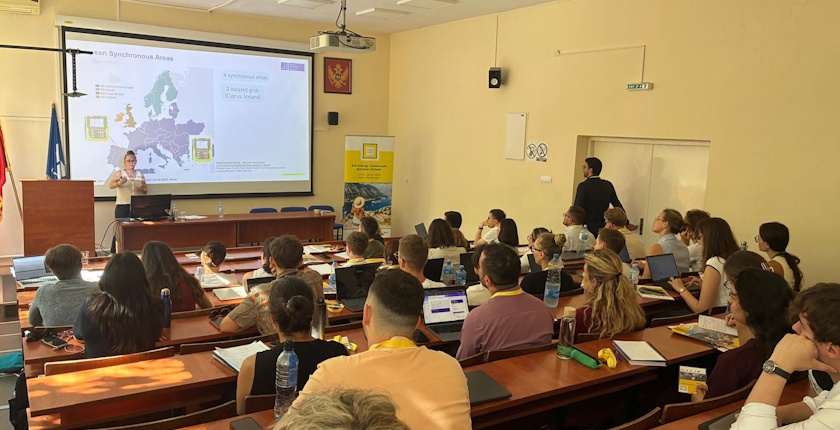
On July 19, forty young professionals and researchers from 28 countries convened at the Faculty of Maritime Studies in Kotor, Montenegro, to dive deep into the pressing technical, political, and economic issues driving the energy transition, according to the Energy Community Secretariat.

“The energy transition is no longer a distant goal—it’s happening now, shaped by technology, driven by policy, and tested by crises,” Artur Lorkowski, Director of the Energy Community Secretariat, said in his welcoming address.

Lorkowski: A successful and just transition depends on bringing together diverse people and perspectives

A successful and just transition depends on bringing together diverse people and perspectives to learn and exchange ideas—just as the secretariat does each year at this summer school, and as it has done for two decades across the Energy Community: building connections, aligning energy rules, and driving the shift to cleaner, more secure energy systems in our region, according to Lorkowski.

The 2025 edition attracted 242 applications from 58 countries. At the end of the selection procedure, 40 participants representing 28 countries were selected: 18 from Energy Community contracting parties, one from an observer country, 18 from EU member states (including seven from the Visegrád Group), and the remainder from Switzerland, South Africa, and the United States.

Among them, 27 hold a master’s degree and 13 have a PhD.

The seven-day program is organized by the Energy Community Secretariat, in collaboration with the International Visegrad Fund, Friedrich-Ebert-Stiftung – Dialogue Southeast Europe (FES-SOE), and Montenegro’s state-owned companies – power utility Elektroprivreda Crne Gore (EPCG), and distribution system operator Crnogorski Elektrodistributivni Sistem (CEDIS).

The Energy Community’s long-standing commitment to building the next generation of leaders

Since its launch in 2016, the initiative has also been supported by Polis University (Tirana), Comenius University (Bratislava), Jagiellonian University (Krakow), Masaryk University (Brno), and REKK (Budapest).

The Summer School reflects the Energy Community’s long-standing commitment to building the   next generation of leaders—those who will drive long-term integration, cooperation, and sustainable energy transformation across the region, the secretariat pointed out.

Throughout the week, participants will work closely with leading experts from academia, industry, and policymaking circles to examine real-world approaches to transforming energy systems.

Through lectures, case studies, and collaborative discussions, they will explore how innovation, cross-border cooperation, and policy reform can drive decarbonization while supporting economic development and regional stability, according to the secreatariat.
by in News

Montenegro’s CEDIS to invest EUR 30 million in distribution grid

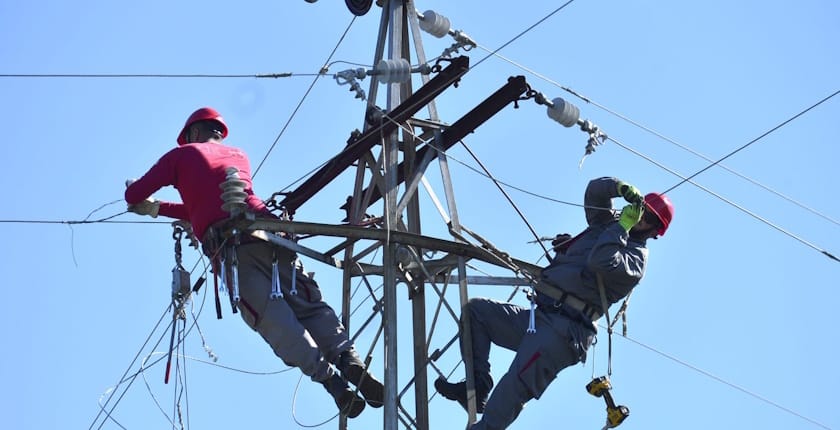
Montenegrin electricity distribution system operator CEDIS plans to invest EUR 30 million this year or EUR 6 million more than in 2024.

The increase in investments demonstrates greater ambitions year after year and that grid works are becoming more intensive and demanding, according to CEDIS.

The country’s distribution system operator (DSO) said it would increase capacity for the integration of new users, improve voltage conditions, strengthen reliability and security of power supply, and reduce losses.

The investments include projects planned to be started this year as well as ones already in motion, such as the modernization of six 35/10 kV substations.

CEDIS is building two substations

CEDIS pointed to several significant endeavors within the primary grid. The most significant ones are the construction of 35/10 kV substations Tivat 3 and Rijeka Crnojevića, and the modernization of the systems Buljarica-Kufin (110/35 kV) and Podgorica 7 (110/10 kV).

Seven 35/10 kV substations are up for reconstruction – Tuzi, Unač, Ptič, Andrijevica, Velika Plaža 1, Velika Plaža 2 and Čanj. The plan includes procuring new equipment for existing 35 kV transmission lines, worth about EUR 1.4 million.

The company is introducing SCADA and ADMS systems

CEDIS will use a EUR 35 million loan from the European Bank for Reconstruction and Development (EBRD) to roll out SCADA and ADMS systems, and to purchase smart meters.

The company highlighted SCADA and ADMS as a key step towards the modernization of the distribution network and the improvement of reliability, efficiency, and security of the power system.

Investments envisaged by the project Decarbonization of the Energy Sector of Montenegro, financed with a loan from the World Bank, are kicking off this year. Its subproject for increasing the operational efficiency of the power distribution grid comprises the reconstruction and modernization of substations, and improvement in the visibility of the distribution network.

EUR 5 million for energy infrastructure on Jaz-Tivat Boulevard

One of the largest investments is the installation of power infrastructure within the construction of the Jaz-Tivat Boulevard. The investment is estimated at EUR 5 million.

Projects within the secondary distribution grid are the construction of 268 substations of 10/0.4 kV, modernization of 10 kV transmission lines, and reconstruction of existing 10/0.4 kV substations. The planned works are valued at more than EUR 6 million.

CEDIS is continuing with the revitalization of the middle- and low-voltage grid. It earmarked EUR 9 million for this year for the purpose. The project is for the renewal of four 10 kV transmission lines and 52 substations of 10/0.4 kV and replacing 1,500 poles.

The installation of new meters and the relocation of measuring points will also be continued. The plan is to start phase 4 of the advanced metering management (AMM) project. The investment is estimated at EUR 12 million.

by in News

Montenegro’s EPCG, DSO, TSO to establish Consolidated Data Center

The three key companies in the electricity sector of Montenegro – Elektroprivreda Crne Gore (EPCG), distribution system operator (DSO) CEDIS, and transmission system operator (TSO) CGES – have signed a letter of intent to start strategic cooperation on the installation of the Consolidated Data Center (CDC).

The initiative for the construction of the Consolidated Data Center represents a significant step towards the digital transformation of the Montenegrin power system and the establishment of a modern information hub, according to EPCG, CEDIS, and CGES.

Within the partnership, the three companies are jointly invest resources and know-how to create a technologically advanced data management system and digital services. The Consolidated Data Center will be located in the Željezara Nikšić industrial complex.

CDC’s capacity could be used commercially for the needs of other institutions and businesses

Apart from CDC’s primary role, the modernization of the state-owned power companies, its capacity could offer services to other institutions and companies.

The signatories have already initiated the first step – the preparation of a feasibility study that will define the technical and economic parameters of the project. Based on its results, a special agreement will be adopted to specify the next steps.

EPCG CEO Ivan Bulatović said the Consolidated Data Center isn’t just an infrastructure project.

Bulatović: The goal is to create a system set for the challenges of the future

“It is the foundation of digital transformation that will enable more accurate data analysis, greater efficiency in decision making, and a safer power system. Our goal is to create a system set for future challenges. Digitalization is an inevitable step in the modernization of the sector, and CDC is a key segment of that process,” Bulatović stressed.

According to Vladimir Ivanović, CEDIS CEO, the cooperation of key Montenegrin energy companies is significant, as is providing support to other businesses.

Ivanović: CDC to enable better coordination between companies

“The development of the power system doesn’t only mean investments in the grid and capacities, but also in smart solutions enabling greater flexibility and safety in operations,” Ivanović noted.

He underlined the CDC’s role in improving coordination between companies, reduction of operating costs, and improvement of IT infrastructure.

Asanović: A strong step forward in the modernization of the sector

CGES CEO Ivan Asanović stressed the project’s importance for digitalization and the creation of a system that will enable more efficient management of power resources at the level of the entire country.

CDC represents a strong step forward in upgrading the sector and ensures a better connection between all key participants in the power system, according to Asanović.

by in News

Montenegro’s DSO CEDIS secures funds for grid digitalization

Montenegrin distribution system operator (DSO) CEDIS has secured funds for the installation of an advanced grid management system and procurement of smart meters.

The EUR 40 million package consists of a EUR 35 million loan provided by the European Bank for Reconstruction and Development (EBRD) and a EUR 5 million grant under the European Union’s Western Balkans Investment Framework (WBIF).

The funds are intended for a new supervisory control and data acquisition (SCADA) system and an advanced distribution management system (ADMS), as well as the procurement of new smart meters.

Smart meters help users and utility companies monitor and manage electricity usage more efficiently

The project is expected to reduce technical losses by 10%, decrease grid outages to approximately one sixth of the current level, allow new renewable energy sources to be integrated into the grid and enhance cyber security, according to CEDIS and EBRD.

The SCADA system will be used to monitor and control medium-voltage grid networks in real time. ADMS is an advanced platform that optimizes the management and operation of the electricity distribution system.

Smart meters help users and utility companies monitor and manage electricity usage more efficiently, reducing losses and improving reliability, the update reads.

The loan agreement was signed by the EBRD’s Head of Montenegro Remon Zakaria, CEDIS CEO Vladimir Ivanović, and Ivan Bulatović, CEO of EPCG.

Ivanović: The integration of smart meters will empower consumers to better understand and optimize their energy usage

According to Zakaria, the project represents a transformative step towards the digitalisation of the electricity distribution system in Montenegro.

Citizens will experience a more reliable electricity supply, and CEDIS will achieve substantial reductions in technical losses and gain the advanced capabilities required to swiftly detect and address technical faults, he added.

Vladimir Ivanović said SCADA and ADMS would revolutionize the way the company operates the distribution network. The integration of smart meters will empower consumers to better understand and optimize their energy usage, contributing to greater energy efficiency across the network, he stressed.

Last year Ivanović said CEDIS has reduced grid losses from 12.93% to 10.84% and that it planned to lower them below 10% by the end of December.