by in News

Holcim Croatia obtains strategic status for its carbon capture project

The Croatian government has granted strategic status to a carbon capture and storage project developed by cement producer Holcim Croatia. The project would create the first system of its kind in the country, paving the way for Croatia’s first decarbonized cement plant.

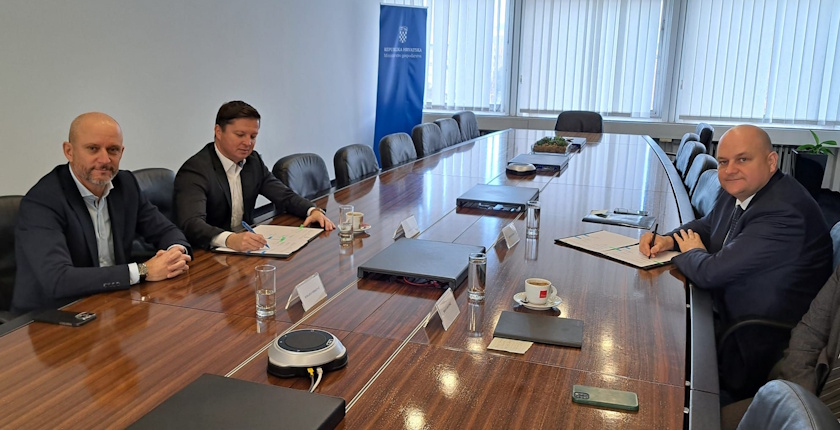
An agreement on preparing and implementing the strategic project was signed at the Ministry of Economy by Minister Ante Šušnjar and representatives of Holcim Croatia. The investor submitted the KOdeCO net zero project in line with Croatia’s law on strategic investment projects, according to the ministry.

Holcim Croatia was among 41 companies in the European Union selected to receive a total of EUR 3.6 billion in grants from the EU Innovation Fund in 2023 for green technology projects. The fund had received 239 applications.

Apart from Holcim’s subsidiary in Croatia, two other companies from the Balkans also received grants – Motor Oil Hellas and Titan Cement. The project in Croatia was estimated at EUR 237 million, and it received a EUR 117 million grant from the Innovation Fund.

Šušnjar: KOdeCO net zero confirms that the industry in Croatia can introduce advanced technologies that reduce emissions

Minister Šušnjar stressed that the project represents an important step forward for the domestic industry and the wider community.

“KOdeCO net zero confirms that the industry in Croatia can introduce advanced technologies that reduce emissions and make production processes more up-to-date and efficient. With this investment, we are strengthening competitiveness, contributing to environmental protection, and creating long-term economic benefits for the Istria County and Croatia,” he said.

According to Holcim Croatia CEO Dario Vrabec, KOdeCO net zero is acknowledged as the first and only major Croatian project co-financed by the Innovation Fund.

Vrabec: The goal is to implement the project in a short time

“I am proud that [the project’s] quality and importance for Croatia’s green transition have been recognized. Our goal is to implement it in a short period of time and pave the way for the first carbon-neutral cement plant in Croatia and the region, but also one of the first in the EU,” Vrabec underlined.

He believes that the strategic status will allow for a faster and more efficient implementation of all necessary steps.

The ministry recalled that the project aims to modernize industrial cement production by introducing technologies that enable the complete elimination of CO2 emissions. The plan envisages the construction of a facility for capturing, liquefying, temporarily storing, and transporting CO2, which represents one of the most advanced technological undertakings in the Croatian cement industry, the Ministry added.

The CO2 captured in Holcim’s plant in Koromačno is planned to be shipped to the first permanent offshore geological storage in the Mediterranean Sea. KOdeCO stands for Koromačno-decarbonization-ecology.

This year, Holcim Romania has also been awarded financing under the EU’s Innovation Fund.
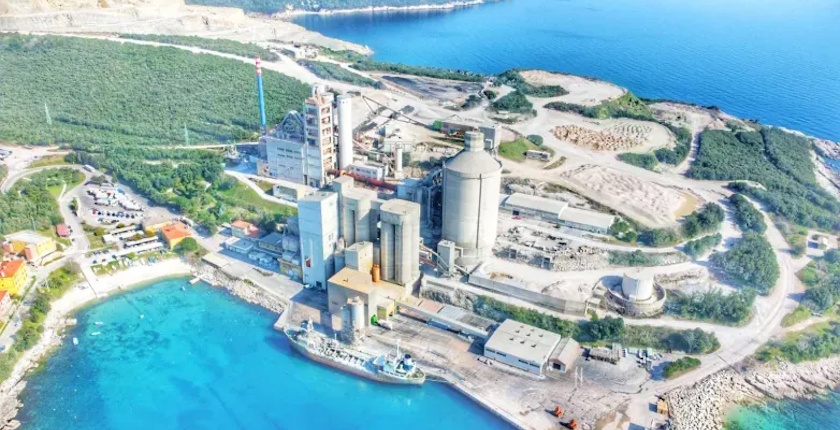
croatia holcim koromacno ccs KOdeCO net zero
Photo: Holcim Croatia
by in News

Holcim Croatia obtains strategic status for its carbon capture project

The Croatian government has granted strategic status to a carbon capture and storage project developed by cement producer Holcim Croatia. The project would create the first system of its kind in the country, paving the way for Croatia’s first decarbonized cement plant.

An agreement on preparing and implementing the strategic project was signed at the Ministry of Economy by Minister Ante Šušnjar and representatives of Holcim Croatia. The investor submitted the KOdeCO net zero project in line with Croatia’s law on strategic investment projects, according to the ministry.

Holcim Croatia was among 41 companies in the European Union selected to receive a total of EUR 3.6 billion in grants from the EU Innovation Fund in 2023 for green technology projects. The fund had received 239 applications.

Apart from Holcim’s subsidiary in Croatia, two other companies from the Balkans also received grants – Motor Oil Hellas and Titan Cement. The project in Croatia was estimated at EUR 237 million, and it received a EUR 117 million grant from the Innovation Fund.

Šušnjar: KOdeCO net zero confirms that the industry in Croatia can introduce advanced technologies that reduce emissions

Minister Šušnjar stressed that the project represents an important step forward for the domestic industry and the wider community.

“KOdeCO net zero confirms that the industry in Croatia can introduce advanced technologies that reduce emissions and make production processes more up-to-date and efficient. With this investment, we are strengthening competitiveness, contributing to environmental protection, and creating long-term economic benefits for the Istria County and Croatia,” he said.

According to Holcim Croatia CEO Dario Vrabec, KOdeCO net zero is acknowledged as the first and only major Croatian project co-financed by the Innovation Fund.

Vrabec: The goal is to implement the project in a short time

“I am proud that [the project’s] quality and importance for Croatia’s green transition have been recognized. Our goal is to implement it in a short period of time and pave the way for the first carbon-neutral cement plant in Croatia and the region, but also one of the first in the EU,” Vrabec underlined.

He believes that the strategic status will allow for a faster and more efficient implementation of all necessary steps.

The ministry recalled that the project aims to modernize industrial cement production by introducing technologies that enable the complete elimination of CO2 emissions. The plan envisages the construction of a facility for capturing, liquefying, temporarily storing, and transporting CO2, which represents one of the most advanced technological undertakings in the Croatian cement industry, the Ministry added.

The CO2 captured in Holcim’s plant in Koromačno is planned to be shipped to the first permanent offshore geological storage in the Mediterranean Sea. KOdeCO stands for Koromačno-decarbonization-ecology.

This year, Holcim Romania has also been awarded financing under the EU’s Innovation Fund.
croatia holcim koromacno ccs KOdeCO net zero
Photo: Holcim Croatia
by in News

Turkey to launch carbon market, sign deals for large renewables projects in 2026

Turkey will launch a national carbon trade market, sign intergovernmental agreements on large-scale renewable energy projects and connect 2,000 MW of energy storage to the grid in 2026. These moves will be accompanied by the historic start of electricity production at the country’s first nuclear power plant Akkuyu, and a doubling of domestic natural gas production from the Sakarya field.

These developments represent the core of the 2026 vision for energy and mining in Turkey, revealed by Minister of Energy and Natural Resources Alparslan Bayraktar.

Large-scale projects will be launched next year through intergovernmental agreements, he stressed.

The deals include solar and other renewable energy technologies and storage, Bayraktar explained.

According to the minister, Turkey remains committed to its emission reduction targets. The government plans to launch a carbon trade center and market in 2026 within the Energy Exchange Istanbul (EXIST or EPİAŞ), he said.

Of note, Turkey’s imports of a group of goods and electricity to the European Union will be subject to the CBAM carbon border tax from January 1, 2026.

Energy storage facilities totaling 2,000 MW will be commissioned in 2026

Bayraktar recalled that the country issued permits for the installation of an overall 33,500 MW of energy storage. A very small portion has been implemented so far, but 2,000 MW will be commissioned in 2026, he underlined.

The minister said Turkey is considering the introduction of Storage Resources Zones or Depolama Alanları (DEKA) in 2026.

It would be similar to Renewable Energy Zones mechanism – REZ or YEKA – for support for solar and wind projects.

Bayraktar mentioned that a 5,000 MW solar power arrangement with Saudi Arabia-based ACWA is being discussed. Of note, it is equivalent to between 30% and 40% of Turkey’s current photovoltaic capacity.

Locations for the 2,000 MW solar project are in Sivas and Taşeli

He expressed belief that the agreement for the first phase, which envisages 2,000 MW, would be finalized in the first quarter of 2026. The plan is for 1,000 MW in Sivas and 1,000 MW in Taşeli.

A solar-plus-storage project with another company from a different country in the Persian Gulf is also under consideration, Bayraktar revealed. The investment is estimated at EUR 1.5 billion to EUR 2 billion.

A floating solar power plant of about 3,000 MW will be built as soon as possible, according to Bayraktar

In Bayraktar’s view, there is great potential in floating solar power plants. The country intends to implement a floating solar power plant of about 3,000 MW as soon as possible, the minister underlined.

The partners in this endeavour could be private companies or Turkish government-controlled Electricity Generation Corp. (EÜAŞ), the minister said. He claimed significant plans have been developed for offshore wind projects for 2026.

“We are considering a model similar to YEKA for offshore wind,” he added.

Russia to provide USD 9 billion for Akkuyu

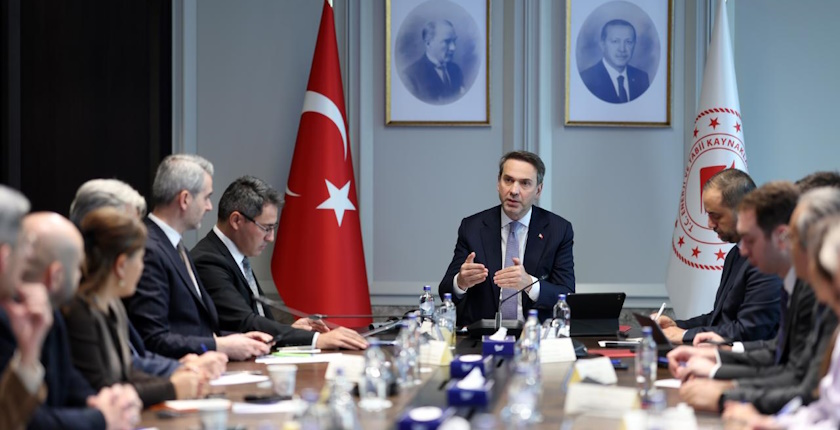
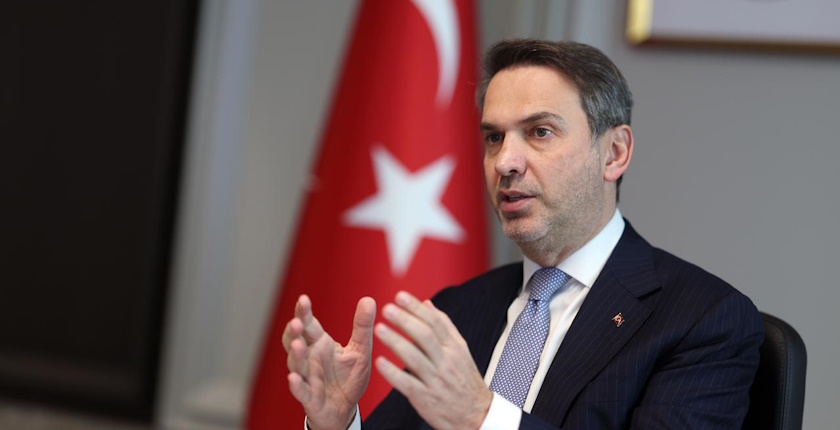
turkey 2026 vision energy Alparslan Bayraktar brifing
Photo: Ministry of Energy and Natural Resources

The Akkuyu project is entering its final stages, according to the minister.

The country secured a USD 9 billion financing package from Russia for the investment, of which USD 4 billion to USD 5 billion is intended to be drawn in 2026.

Simultaneously, the ministry is in talks with South Korea, the US, China, and Russia for nuclear projects in Sinop and Thrace.

The Sakarya gas field is expected to double its current output in 2026, to 7.5 billion cubic meters, Bayraktar underscored.

This surge will prevent approximately USD 3.2 billion in energy imports, he explained.

by in News

Turkey to launch carbon market, sign deals for large renewables projects in 2026

Turkey will launch a national carbon trade market, sign intergovernmental agreements on large-scale renewable energy projects and connect 2,000 MW of energy storage to the grid in 2026. These moves will be accompanied by the historic start of electricity production at the country’s first nuclear power plant Akkuyu, and a doubling of domestic natural gas production from the Sakarya field.

These developments represent the core of the 2026 vision for energy and mining in Turkey, revealed by Minister of Energy and Natural Resources Alparslan Bayraktar.

Large-scale projects will be launched next year through intergovernmental agreements, he stressed.

The deals include solar and other renewable energy technologies and storage, Bayraktar explained.

According to the minister, Turkey remains committed to its emission reduction targets. The government plans to launch a carbon trade center and market in 2026 within the Energy Exchange Istanbul (EXIST or EPİAŞ), he said.

Of note, Turkey’s imports of a group of goods and electricity to the European Union will be subject to the CBAM carbon border tax from January 1, 2026.

Energy storage facilities totaling 2,000 MW will be commissioned in 2026

Bayraktar recalled that the country issued permits for the installation of an overall 33,500 MW of energy storage. A very small portion has been implemented so far, but 2,000 MW will be commissioned in 2026, he underlined.

The minister said Turkey is considering the introduction of Storage Resources Zones or Depolama Alanları (DEKA) in 2026.

It would be similar to Renewable Energy Zones mechanism – REZ or YEKA – for support for solar and wind projects.

Bayraktar mentioned that a 5,000 MW solar power arrangement with Saudi Arabia-based ACWA is being discussed. Of note, it is equivalent to between 30% and 40% of Turkey’s current photovoltaic capacity.

Locations for the 2,000 MW solar project are in Sivas and Taşeli

He expressed belief that the agreement for the first phase, which envisages 2,000 MW, would be finalized in the first quarter of 2026. The plan is for 1,000 MW in Sivas and 1,000 MW in Taşeli.

A solar-plus-storage project with another company from a different country in the Persian Gulf is also under consideration, Bayraktar revealed. The investment is estimated at EUR 1.5 billion to EUR 2 billion.

A floating solar power plant of about 3,000 MW will be built as soon as possible, according to Bayraktar

In Bayraktar’s view, there is great potential in floating solar power plants. The country intends to implement a floating solar power plant of about 3,000 MW as soon as possible, the minister underlined.

The partners in this endeavour could be private companies or Turkish government-controlled Electricity Generation Corp. (EÜAŞ), the minister said. He claimed significant plans have been developed for offshore wind projects for 2026.

“We are considering a model similar to YEKA for offshore wind,” he added.

Russia to provide USD 9 billion for Akkuyu

turkey 2026 vision energy Alparslan Bayraktar brifing
Photo: Ministry of Energy and Natural Resources

The Akkuyu project is entering its final stages, according to the minister.

The country secured a USD 9 billion financing package from Russia for the investment, of which USD 4 billion to USD 5 billion is intended to be drawn in 2026.

Simultaneously, the ministry is in talks with South Korea, the US, China, and Russia for nuclear projects in Sinop and Thrace.

The Sakarya gas field is expected to double its current output in 2026, to 7.5 billion cubic meters, Bayraktar underscored.

This surge will prevent approximately USD 3.2 billion in energy imports, he explained.

by in News

North Macedonia launches decarbonization guide for small businesses

The Economic Chamber of North Macedonia has developed the country’s first decarbonization guide for small businesses. The digital tool is intended to help North Macedonia’s economy adapt to international climate rules, including the European Union’s carbon border tax (CBAM).

The decarbonization guide provides detailed instructions on the most effective ways for local companies to reduce their carbon footprint as part of the global fight against climate change, according to the Economic Chamber of North Macedonia.

The key feature is a carbon footprint calculator that covers nearly 60 different energy sources and refrigerants. Information is also available on EU and domestic climate regulations, as well as funding opportunities, such as subsidies.

The platform offers practical case studies and success stories of leading companies to highlight the benefits of clean energy, according to the chamber.

Božinovska: The decarbonization guide marks a turning point in the country’s green transition

The guide was developed in cooperation with the advisory team of the European Investment Bank (EIB) and the Delegation of the EU to North Macedonia.

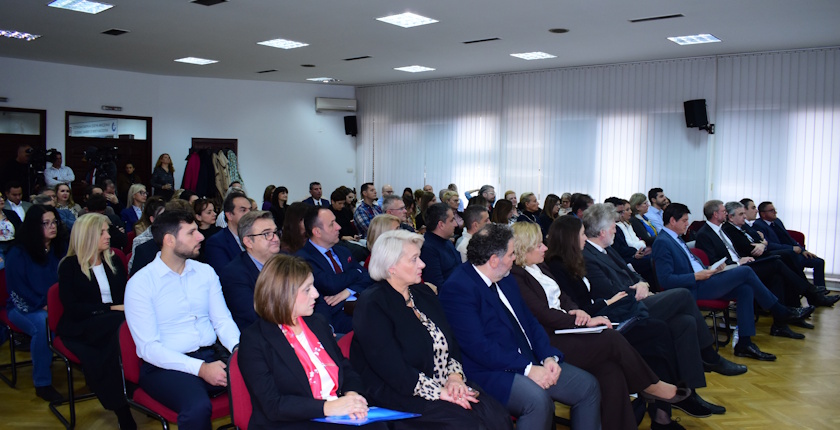
The guide was presented in the country’s capital, Skopje, at a gathering attended by more than a hundred entrepreneurs from all sectors of the North Macedonian economy.

Sanja Božinovska (photo: Economic Chamber of North Macedonia)

“The decarbonization guide is a turning point in our country’s green transition, equipping businesses with the tools they need to act now,” said Sanja Božinovska, North Macedonia’s Minister of Energy, Mining and Mineral Resources.

The guide is designed to help companies reduce greenhouse gas emissions and adapt to international climate rules, while, as the chamber says, preserving competitiveness.

One of these rules is the EU’s tax on the import of carbon-intensive goods, the Carbon Border Adjustment Mechanism (CBAM), which is set to take effect on January 1, 2026.

The guide is available on the website of the Economic Chamber of North Macedonia

This digital tool will help North Macedonia move towards a low-carbon economy, the chamber added.

The guide is available on the chamber’s website in the form of an interactive platform. Its development was financed by EIB Global.

Björn Gabriel, Head of EIB Representation in North Macedonia, has said that the guide comes at a crucial time as North Macedonia advances its green transition and prepares for upcoming carbon regulations.

According to Head of the Delegation of the EU to North Macedonia Michalis Rokas, decarbonization, energy efficiency, and renewable energy sources are powerful tools for building a more innovative, resilient, and competitive economy.

If every small and medium-sized enterprise (SME) takes at least a few significant steps toward greener business practices, the combined impact on more than 68,000 firms will be truly transformative, claims Rokas.

Michalis Rokas (photo: Economic Chamber of North Macedonia)