by in News

The Border Wall of Carbon: How CBAM Rewrote Balkan Power Trade in Q1 2026

Q1 2026 marked an abrupt break in Southeast Europe’s electricity market structure. Exceptional hydro output pushed WB6 prices down, but CBAM prevented the old price convergence mechanism from doing its job. The result was a wider-than-usual spread of more than €30/MWh between WB6 and EU benchmarks, a 25% drop in scheduled cross-border commercial exchanges, and a visible re-routing of trade toward CBAM-free corridors. The data suggest that CBAM did not merely tax imports; it changed the geography of trade.

Origin of imported electricity Default value (tCO2eq/MWh) CBAM cost per imported MWh (€)
Albania 0 0
Bosnia and Herzegovina 1.148 86.513
Kosovo* 0.984 74.154
Moldova 0.530 39.941
Montenegro 0.979 73.777
North Macedonia 0.887 66.844
Serbia 1.041 78.450
Ukraine 0.907 68.352

Table 1. CBAM default factors and implied import costs in Q1 2026

The Hydro Paradox

The irony of Q1 2026 is that the region’s own luck partly disguised CBAM’s first-quarter damage. Hydro generation surged across the WB6 and neighbouring markets, rising regionally by 33% year on year, with Albania alone up 70%. That flood of carbon-free output softened domestic prices and kept some markets liquid, which made the underlying CBAM shock look less severe than it would have in a normal hydrological quarter. The report itself warns that these results are preliminary and heavily shaped by exceptional water conditions, not just the new carbon border regime.

Figure 1. Hydro vs coal generation in Q1 2026 versus Q1 2025

Figure 1. Hydro vs coal generation in Q1 2026 versus Q1 2025

But the same hydro boom also exposed a second vulnerability: it showed how quickly the region can swing from shortage to surplus, which matters for solar and wind investment signals. The Energy Community Secretariat notes that growing solar capacity may generate renewed surplus conditions in spring and summer, even as hydro declines. That means renewable developers are now financing into a market where merchant upside can be sharply altered by a carbon border charge on exports, especially in systems that are not as clean as Albania.

Technical Deep-Dive: Trade Diverges from Physics

The most unsettling finding in the report is the widening gap between commercial schedules and physical reality. Commercially, WB6-EU trade contracted and transit-based trading weakened. Physically, however, electricity still moved according to network physics, not trader preferences. The report gives concrete examples: Albanian export schedules to Greece rose strongly, yet physical flows did not align proportionally; power continued to move through Albania toward Montenegro and Bosnia and Herzegovina and onward to EU border countries.

That divergence is not just a bookkeeping issue. It creates operational risk. The report links the pattern to unscheduled and loop flows, less efficient transmission capacity use, and a growing burden on balancing and security management. It also explicitly recalls the June 21, 2024 blackout, when near-simultaneous outages on 400 kV lines in Montenegro and Albania exposed the fragility of the South-North corridor and the costs of weak cross-border coordination. In the current setting, the same corridor could again become heavily loaded, but with less predictable commercial schedules to guide system operation.

Market Fragmentation: The Rise of CBAM-Free Routing

The report reads like a map of avoidance behaviour. Intra-WB6 exchanges intensified, while trade moved toward routes that do not trigger CBAM exposure. Albania’s zero default emission factor made it a natural winner, with export routes to Greece gaining importance. Greece then became a bridge to Bulgaria and Italy, effectively allowing some power to bypass the more exposed WB6 transit geography.

Figure 2. Average day-ahead prices across the region

Figure 2. Average day-ahead prices across the region

This is why the Secretariat’s “CBAM-free route” language matters. It suggests that the market is not simply shrinking; it is reorganising itself around carbon liability. Transit-based trading through the WB6 is becoming less attractive, and that is a structural problem for regional integration because the WB6 has historically functioned not only as a set of markets, but also as a corridor between larger EU systems.

Financial Outlook

For project finance, the message is straightforward: ETS-linked carbon costs are now a core merchant-risk variable in the Western Balkans. The report states that the relevant Q1 2026 CBAM certificate price was based on an EU ETS quarterly weighted average of €75.36/tCO2eq, and that this price fell sharply after an initial increase as political debate over ETS reform intensified. That level of volatility matters because it directly changes export economics quarter by quarter.

Figure 3. Scheduled commercial exchanges between the WB6 and the EU

For EBRD-style underwriting, this means more conservative assumptions are unavoidable. Revenue cases for new renewable projects in the WB6 should be stress-tested not only against power-price volatility and hydrology, but also against CBAM-induced basis risk on export routes. Projects that depend on merchant access to EU markets will need stronger carbon-risk sensitivity, more robust route diversification, and a clearer view of whether they are selling into a CBAM-exposed corridor or a CBAM-free one. The report’s core warning is that low-carbon systems may send stronger investment signals, while more carbon-intensive systems face a worsening structural handicap.

Strategic Recommendations

The Secretariat’s own policy direction is the right one: better clarity in CBAM electricity rules, stronger coordination between market participants and TSOs, and continued alignment of carbon pricing and market design across the region. Building on that, the practical priorities are clear. WB6 TSOs need tighter coordinated capacity calculation, stronger congestion management, and more transparent handling of transit flows. Policymakers should also close the information gap around proof of transit and improve rules that currently reward route avoidance over efficient system use.

The deeper objective is to stop the region from sliding into transit-based trading collapse. That means preserving market integration even as carbon policy changes the economics of exchange. If WB6 markets are left to fragment into isolated hydro winners and carbon-heavy losers, the region will not simply lose trade; it will lose the very interoperability that made its system valuable in the first place.


by in News

3rd Conference on Advancing Renewable Investments – guarantees of origin could drive Europe’s green energy integration

As CBAM nears implementation, the Ljubljana conference highlighted market tools and partnerships to accelerate clean energy integration with the European Union, the Energy Community Secretariat said. It pointed out that as more renewables capacity is connected to the grid, storage and flexibility solutions would become increasingly vital to enable the sector’s continued growth and integration.

The rollout of national electronic registries for guarantees of origin was recognized as essential to verifying the low-carbon value of regional electricity exports and advancing market-based integration with the EU.

Ministers, regulators, investors, and private sector representatives from across South East and Eastern Europe gathered in Ljubljana for the 3rd Conference on Advancing Renewable Investments, hosted by the Energy Community Secretariat and the Government of Slovenia, to boost renewable investment and advance the region’s shift toward clean, interconnected energy systems.

“Energy Community contracting parties are advancing accelerated integration with the EU’s electricity market – a process that, thanks to the Energy Community framework, with market coupling nearing completion, can be achieved even ahead of full EU membership. Expanding renewables is central to this effort, enabling countries to align with EU policy targets and speed up decarbonisation,” the update reads.

Integration with the EU’s electricity market can be achieved ahead of full membership

The results are tangible, according to the Energy Community Secretariat’s 2025 CBAM Readiness Tracker. Renewable energy excluding large hydropower has increased by more than 50% since 2020 – reaching 5.1 GW, fuelled largely by governmental support schemes.

While it is a notable success, continued progress will depend on the contracting parties’ ability to build on this momentum and mobilize efforts beyond government support to fully meet the ambitious 2030 targets set out in their national energy and climate plans (NECPs) and achieve carbon neutrality by 2050. As more renewables capacity is connected to the grid, storage and flexibility solutions will become increasingly vital to enable the sector’s continued growth and integration, the organizers said.

Uncertanties emerging ahead of CBAM charge introduction

At the same time, as the definitive phase of the EU’s Carbon Border Adjustment Mechanism (CBAM) begins on January 1, uncertainties are emerging for renewable energy investors, the secretariat stressed.

Discussions at the conference highlighted stakeholders’ expectations for the European Commission to clarify CBAM implementation rules, while continuing to rely on the secretariat to raise concerns about potential risks to renewable energy investments arising from unintended CBAM impacts.

As a no-regret pathway, participants discussed measures to accelerate the shift toward market-driven renewable investments, strengthening the sector’s credibility and long-term financial stability. A matchmaking dialogue brought together renewables producers and corporate buyers, reflecting growing private-sector interest in long-term power purchase agreements (PPAs) to boost investment and market confidence.

Lorkowski: GOs turn transparency into trust, trust into investment

Finally, the rollout of national electronic registries for guarantees of origin (GOs) was recognized as essential to verifying the low-carbon value of regional electricity exports and advancing market-based integration with the EU.

“Guarantees of origin are the compass guiding Energy Community markets toward the EU’s clean energy future. They turn transparency into trust, and trust into investment, enabling regional producers to access new markets, attract financing, and build confidence in the energy transition,” said Energy Community Secretariat Director Artur Lorkowski.

Ongoing efforts to establish a mutual recognition framework with the EU are underway, in close coordination with the European Commission and the Association of Issuing Bodies (AIB), to enable cross-border trade in renewable electricity.

by in News

Maćić: Exempting Serbia from CBAM for electricity would mean disastrously fast decarbonization; carbon tax will also block market coupling with EU

Obtaining an exemption from the European Union’s Carbon Border Adjustment Mechanism (CBAM) for electricity would mean a rapid and unfeasible decarbonization of Serbia’s energy sector, which would be unacceptable for households and businesses alike, according to Ljubo Maćić, special advisor at Serbia’s Economics Institute. This is why Serbia never sought an exemption. He added that the implementation of the carbon border tax will prevent the coupling of electricity markets between Serbia, other Energy Community contracting parties, and the European Union, and discourage investment in renewable energy in the region.

CBAM will apply from January 1, 2026. Although the tax was announced at least five years ago and is set to take effect in less than two months, there are still many unknowns about its implementation and impact, particularly in the electricity sector.

In preparation for its implementation, Serbia has drafted bills to tax greenhouse gas emissions and imports of carbon-intensive products, Ljubo Maćić noted at the Power Plants 2025 conference, organized by the Serbian Society of Thermal Engineers.

The law would allow electricity producers – primarily state-owned power utility Elektroprivreda Srbije (EPS), which will account for about 90% total GHG tax revenues and has the largest decarbonization needs – to receive a tax credit equal to 20% of investment in renewables.

The tax is set at EUR 4 per ton of CO2, which translates to about EUR 100 million annually in EPS’ case, not including the tax credit. The proposed rate is low compared to those in the EU, but many countries outside the bloc began with similar rates to protect the competitiveness of their industries, he said. Serbia’s tax would certainly increase in the coming years, Maćić warned.

The implementation of CBAM should not significantly affect EPS

The bill on the GHG emissions tax has two key shortcomings. First, the tax rate is set only for 2026, rather than for several years ahead. The second is that the tax revenues would not be allocated to a decarbonization fund but to the state budget. Maćić noted that tax revenues would go into the budget, but that the bill envisages the funds to be used for decarbonization. The solution is consistent with the revenue allocation model under the EU Emissions Trading System (EU ETS).

The bill is prudently designed, tailored to the circumstances and context, he said, adding that it would encourage changes in the right direction without jeopardizing energy security and energy prices.

“The implementation of CBAM should not significantly affect EPS, as the company doesn’t have the capacity for larger electricity exports and will likely seek to trade within this region, where the CBAM cost doesn’t apply. However, Serbia’s steel production will be particularly affected by CBAM, and this will be the hardest to address in terms of technology,” said Maćić.

Exemption for electricity

CBAM would reach its full effect over a transitional period from 2026 to 2034, aligned with the gradual rise in the CO2 price under the EU ETS. However, this will apply to all CBAM-covered goods except electricity, which will be subject to a full CBAM rate immediately.

This is why the Energy Community contracting parties were given the option to obtain an exemption for electricity until 2030, but only if they meet six conditions. A critical condition is that a country agrees to charge an emissions price equivalent to that under the EU ETS from 2030, according to Maćić. There is no indication that this doesn’t mean ‘the same price,’ he added.

Maćić explained how that would affect Serbia: The current CO2 price in the EU is EUR 80, but is expected to rise to above EUR 100, or even reach EUR 150, by 2030.

“Assuming that carbon emissions from power plants in Serbia decrease to about 22 million tons in 2030, the annual additional cost for EPS would be EUR 2.2 billion at a carbon price of EUR 100 per ton of CO2 and EUR 3.3 billion at EUR 150 per ton. If these costs were passed on to EPS’ consumers, the price would increase by about EUR 75 per MWh and EUR 110, respectively,” the expert stressed.

Of note, the market power price is currently around EUR 105.

However, not all of these costs can be passed on to end consumers, Maćić added. Households will likely be affected first if, by 2030, their electricity prices do not reach market levels. EPS cannot raise its electricity prices due to emissions costs above the market prices, because customers would switch to other, more competitive suppliers with lower emissions.

The European Commission is not willing to provide financial support for the region’s decarbonization

That is good for consumers, but it has its limits, because the production capacities of these suppliers are still far from sufficient, Maćić explained.

If other power companies in the region with a high coal share were to begin reducing their power generation, energy prices on the power exchanges would rise compared to the rest of the EU. This would result in faster price growth and volatility, in Maćić’s view.

These higher prices would affect power prices for businesses, further eroding their competitiveness, similar to what is already happening in the EU, he added.

Since the country must ensure enough electricity for all consumers, EPS would quickly incur huge financial losses, threatening the company’s operations and, more importantly, the security of the supply in Serbia.

“Such a rapid and costly decarbonization, even if it had begun earlier, would not be possible in Serbia without the ability to replace coal with other stable sources of supply. This is far from realistic, and the very idea of anyone undertaking such a fast and uncertain process is highly questionable,” Maćić stressed.

He underlined that the communication between the Ministry of Mining and Energy and European Commission institutions, the conclusions of the Energy Community Ministerial Council, and the documents within the Berlin Process for the Western Balkans six do not inidcate that the commission is ready to provide financial support for the region’s decarbonization above the level it has promised under the IPA and the Growth Plan, which is insufficient.

Three problems created by CBAM: market coupling will be blocked

According to Maćić, the European Commission has acknowledged that problems with applying CBAM to electricity exist, but has not yet offered solutions. There are three main problems, he added.

First, the existing solutions do not allow for the parallel functioning of CBAM and the coupled electricity markets of the Energy Community’s contracting parties and the EU, the expert claims.

“We have been talking about, preparing, and working on this integration for almost two decades. This, among other things, is one of the most important reasons why the Energy Community was established. CBAM will practically suspend the coupling,” Maćić insisted.

A second issue is that the costs of CBAM on electricity imports into the EU are based on the emissions factor of fossil fuel power plants, regardless of their share in the country’s power generation mix.

Maćić recalled that Serbia and other contracting parties have proposed that the emissions factor be equal to the national emissions factor, which corresponds to the electricity production mix. For Serbia, this factor is currently 1.04, but if the national power mix were taken into account, it would go down to 0.7, making the cost of CBAM about 40% lower, he explained.

All this will certainly affect trade and renewable energy investments in the region

Also, electricity producers in countries that export electricity to the EU cannot use either guarantees of origin or power purchase agreements (PPAs) to reduce the CBAM cost.

The third problem is that it is still unclear how electricity transit costs would be calculated, for example, from Bulgaria to Hungary via Serbia, and who would be required to cover them.

All this will certainly affect trade and renewable energy investments in the region, according to Maćić. This is already happening, and regardless of any potential solutions, the damage will remain, he warned.

Maćić also recalled that in June, similar issues were highlighted by the European Network of Transmission System Operators for Electricity (ENTSO-E), the European Federation of European Traders (EFET), and EUROPEX – Association of European Energy Exchanges.

They also proposed that the application of CBAM to electricity be postponed for at least a year, until solutions are found, he added.

Are there solutions?

A solution exists, according to Maćić, and it could be described as trivial: abolish CBAM for electricity.

He believes it is a legitimate question whether it was justified to introduce CBAM for electricity. The main reason for introducing CBAM is carbon leakage, which is not at all relevant in the case of electricity.

Second, total electricity imports from all Energy Community contracting parties are less than 1% of the EU’s production, and are declining. Ukraine was the only significant exporter, while imports from other countries are negligible.

“Applying CBAM to electricity would bring the EU modest climate and financial effects, while generating unsolvable problems, thwarting good intentions in market integration, and producing financial damage to the contracting parties and even larger damage to EU member states,” the expert asserted.

A less radical solution would be to postpone the implementation of CBAM, not by one but by ten years, to provide the power sector with additional long-term regulatory certainty and a stable business environment, in Maćić’s view.

Not everyone from the region can claim they have done everything they could

However, these issues do not concern the implementation acts, whose final versions are still pending, but for the CBAM regulation itself, whose amendments, as he understands, have already been implemented.

Maćić acknowledges that not everyone in the region can claim to have done everything in their power, but emphasizes that decarbonization ambitions and timelines must be realistic and supported by all necessary resources.

Maćić said he hopes the EU will show more understanding, a sense of reality, and a willingness to support the changes through solidarity. Such support could change the conditions and capacity for implementation, as well as the pace of decarbonization and changes to the energy mix, the expert underlined.

“The Energy Community Secretariat should also, when it comes to climate change, be more enthusiastic than it has been. It should be an advocate for the interests of the contracting parties in Brussels and more independent in its approach to the European Commission’s initiatives toward the contracting parties,” Maćić concluded.

by in News

Renewable electricity should not be subject to EU’s CO2 import tax

The European Commission is collecting evidence to come up with solutions for unintended effects of the Carbon Border Adjustment Mechanism (CBAM) on renewable electricity in the Western Balkans, Director of the Energy Community Secretariat Artur Lorkowski pointed out in an interview with Balkan Green Energy News, as one of the most important developments in the sector. Boosting renewable energy development and trade with third countries such as the Western Balkans was supposed to be accelerated by the European Union’s CO2 import tax.

To reduce the payment obligations of EU importers under CBAM, the contracting parties in the region are planning carbon pricing systems, but under different models. The ultimate goal is eventually joining the EU Emissions Trading System, implying the need for coordination and cooperation between the governments in the process, Lorkowski stressed.

Looking back twenty years since the Energy Community Treaty was signed, it proved to be a successful format of cooperation, the Energy Community Secretariat Director Artur Lorkowski said. On the occasion of the anniversary, Balkan Green Energy News sat down with the head of the international organization to speak about the achievements and benefits for the contracting parties, and the remaining milestones that the Western Balkans need to reach in order to integrate with the EU’s energy union.

“Economic growth depends on energy security and fair pricing. There is visible progress in transformation, clearly seen from the 2024 figures. And the final element is the accelerated energy market integration with the EU, and this is what we can be really proud of,” Lorkowski asserted.

Among the segments with tangible improvements, he also highlighted the convergence on the wholesale gas and electricity markets. It is facilitating competitiveness in the Energy Community, the secretariat’s chief added.

Renewables capacity doubled in four years

Fossil fuels used to account for 60% of electricity production in the contracting parties five years ago, compared to 50% now, Lorkowski noted. The significant results in renewables except for large hydro are illustrated by the fact that the overall capacity in the segment has more than doubled between 2020 and 2024, he stressed. More importantly, the carbon footprint – the CO2 emissions per unit of the nominal gross domestic product, fell 11% last year alone.

CO2 emissions per unit of the nominal GDP fell 11% last year in the Energy Community

As for EU integration, electricity market coupling is progressing very well, as a good example, in Lorkowski’s view. The legislation is mostly aligned, so most countries are just waiting for the process to be concluded, the director of the Energy Community Secretariat explained.

“There are operating wholesale markets everywhere in the Western Balkans except in Bosnia and Herzegovina, which is about to adopt the required law. Serbia is at the forefront of that process. North Macedonia and Montenegro are very close, with small elements yet to be achieved. It is a non-reversible point, point of no return on a path towards EU integration,” Lorkowski said. He recalled that when capacity calculations regions (CCRs), operationalization and verification are cleared from the to-do list, it would take 18 months to join the EU’s market coupling project.

Electricity can be exempted from CBAM at later stage

Energy Community contracting parties may become eligible for exemption until 2030 from CBAM in electricity, if they meet the CBAM requirements. However, the EU is starting to charge the CO2 import tax already on January 1.

“I wish the contracting parties followed my messages from the Belgrade Energy Forum in 2023, because you might remember me saying that CBAM is coming and we have to prepare for that. But unfortunately, we have observed a lot of delays and hiccups in the preparatory process. Fair enough, this is the reality we have to face now – no country of the Energy Community will be exempted on 1 January 2026. But we can still work to be exempted at a later stage,” Lorkowski underscored.

Artur Lorkowski was a keynote speaker at Belgrade Energy Forum 2025, organized by Balkan Green Energy News

European Commission expected to clarify rules by end of year

The second part of the story is that CBAM, in addition to its intended impacts, especially on coal power, also has unintended impacts, Lorkowski explained. For example, electricity transit between EU member states through the contracting parties, in practice, may also be subject to the tax, even if it was not intended by the European legislators.

CBAM was intended to provide equal treatment for products produced inside and outside the EU when it comes to carbon payments. “Renewable energy, not being subject to the EU ETS, would – logically – not need to be subject to CBAM, but with the current rules, even EU off-takers with cross-border power purchase agreements (PPAs) may still be subject to payment obligations, as the implementing rules remain overly complex, effectively treating them in the same way as fossil fuel importers. These are real problems that stakeholders have been raising with us in our targeted outreach to power companies, traders, and other stakeholders both from the EU and Energy Community,” Lorkowski added.

Legislative efforts to further improve trade in renewables with the EU continue under the Energy Community

The Energy Community Ministerial Council reported it in Athens to the European Commission and asked it to find a solution.

Lorkowski said he expects the EU’s top executive body to soon issue implementing and delegated acts, by the end of 2025, clarifying the CBAM implementation rules, and to follow it up in 2026 with a targeted amendment proposal on electricity.

Legislative efforts to further improve trade in renewables with the EU continue under the Energy Community. “The European Commission has presented to the contracting parties a draft decision on the mutual recognition of guarantees of origin and is now awaiting their feedback. I hope that in 2026 we can have a decision. But it does not mean that the guarantees of origin can be used as the currency for paying the CBAM fee. That would require amending the CBAM legislation,” he stated.

Carbon pricing systems need to evolve toward matching EU ETS

For a potential reduction of CBAM payments in other areas as well – iron and steel, aluminum, fertilizers, cement and hydrogen – third countries need to introduce carbon pricing systems. Serbia recently drafted legislation for a CO2 tax and for a tax on imports of carbon-intensive products. It is a good step forward, according to Lorkowski.

“We expect each and every country to make a decision on the carbon pricing. All of the countries of the Energy Community, with the exception of Kosovo*, have communicated to the secretariat which model they will implement. And the models vary: from Serbia’s carbon tax to a domestic emissions trading system of Montenegro, which is already in place,” he revealed.

There is no uniform carbon pricing model for the Energy Community

Namely, the Energy Community Ministerial Council decided not to implement a uniform regional carbon pricing mechanism but opted for individual models. They should all be built with the perspective of aligning eventually with the EU Emissions Trading System (EU ETS), Lorkowski said.

“The key challenge now for the Energy Community is how to maintain the integrity of the electricity market between the contracting parties and the European Union after CBAM enters its definitive phase from next January. We need to figure out how to coordinate among the systems. It implies not only the existence of the domestic carbon markets, but also the cooperation within the region,” he pointed out.

Ministerial Council to announce way forward on carbon pricing coordination

The Ministerial Council is due to conclude on carbon pricing at its regular annual meeting in December, Lorkowski said.

“The three critical elements are how much the CO2 will cost, who will pay – which businesses and sectors are in scope – and when those carbon pricing systems will be introduced. They need to maintain the integrity of the market, the level playing field of the market, and avoid market distortions,” the top Energy Community official added.

Practical policies more important than coal phaseout dates alone

Turning to the coal phaseout, essential for the decarbonization of the economy, Lorkowski acknowledged the significance of political declarations such as the Sofia Declaration and commitments from the national energy and climate plans (NECPs).

“That said, it is critically important to anchor the actions for the future with practical policies. The decisions on the establishment of carbon pricing mechanisms are even more important. In addition, we should focus on monitoring, reporting and verification – MRV systems. The contracting parties need to identify emitters and measure quantities,” the director of the Energy Community Secretariat underscored.

* This designation is without prejudice to positions onstatus and is in line with UNSCR 1244/99 and the ICJ Opinion on the Kosovo declaration of independence.
by in News

Germany supports Serbia in clean energy supply, environmental protection

The Republic of Serbia and Germany’s KfW Development Bank signed a loan agreement on July 18 for EUR 135 million for the second phase of the credit program Green Transition Development Policy Operation (DPO II).

The signatures underscore the joint activities by Germany and Serbia aimed at a climate-compliant and socially just energy transition, said Chargés d’Affaires ad interim Carsten Meyer-Wiefhausen from the Embassy of the Federal Republic of Germany in Serbia. “We will continue to be with Serbia on this path and support its reform efforts,” he stressed.

Within the financing for the reforms, the World Bank, French Development Agency (AFD) and the German KfW Development Bank are supporting the Republic of Serbia in conducting its ambitious reform agenda. The goal is to accelerate the transition to energy from clean sources and align with EU standards in environmental protection and climate.

Series of reforms through DPO II

Several successful reforms have been materialized within DPO II, among which:

  1. Promoting investments that are acceptable in environmental and climate terms: Public investments are graded under environmental criteria and with regard to the risk of natural disasters, and with models developed solely for the purpose. The citizens of Serbia benefit from the government’s more sustainable investment decisions.
  2. Enhanced transparency in the public budget: The Government of the Republic of Serbia has committed to publishing information on the execution of the public budget, not only at the end of the fiscal year, but also during the year. It improves the transparency of public expenditures, primarily concerning investments in environmental and climate protection.
  3. Affordable energy prices: The Government of the Republic of Serbia has rolled out temporary targeted subsidies for households with low income, like citizens with low pensions. The share of households receiving such aid has grown from 2.7%, registered in 2021, to last year’s 8%.
  4. Improvement in waste disposal: Aligning with EU standards brings a better approach to sanitary landfills, namely from 42% (2021) to last year’s 50%. The citizens of Serbia benefit from improved waste disposal and a cleaner environment.
  5. Prepared for CBAM: Since this year, large industrial facilities and power plants report their CO2 emissions in line with EU standards. That way Serbia is more prepared for the upcoming full implementation of the European Carbon Border Adjustment Mechanism (CBAM) for carbon prices. For instance, the country would be able to price CO2 emissions and charge them.

Financing reforms within climate partnership

Germany’s contribution to financing reforms is an integral part of Germany’s climate partnership with Serbia and the entire Western Balkans. The purpose of the partnership is to support Serbia’s work on achieving its national climate goals and adapting to climate change. The key goal of the partnerships is for the transformation that is necessary to meet climate goals, in the interest of Serbian citizens, to be socially just, a just transition.

This year, Serbia and Germany are celebrating the 25th anniversary of their development cooperation. In the meantime, KfW financed projects worth EUR 2.5 billion in Serbia.

by in News

Energy Community marks 20th anniversary as integration pillar for Southeastern Europe

The Energy Community Ministerial Council held its annual informal meeting in Athens, where the organization was founded twenty years ago. No contracting party is expected to meet the criteria for exemption from the Carbon Border Adjustment Mechanism (CBAM) in the electricity sector – the European Union is due to start charging the CO2 tax on January 1 – but the European Commission could propose amendments.

The Energy Community promotes integration, reforms and investments across the region, top officials stressed.

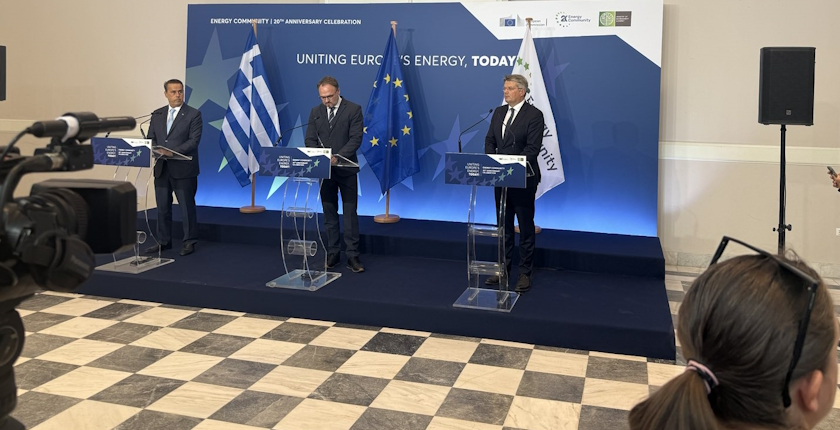
Ministers from the Energy Community contracting parties convened today at the Informal Ministerial Council in Athens to mark the organization’s 20th anniversary. The Energy Community Treaty, establishing the Energy Community, was also signed in the Greek capital. The purpose of the organization is to create a more integrated market, help attract investment and speed up decarbonization by aligning with the European Union’s rules on energy, environment and competitiveness.

In recent years, close cooperation has enabled the contracting parties to strengthen the security of supply, particularly against the backdrop of the ongoing Russian war in Ukraine, the Energy Community Secretariat said. During the annual gathering, hosted by the Greek Ministry of the Environment and Energy, the ministers underlined the need for an accelerated integration with the EU, grounded in delivering a secure, resilient energy transition.

Ministers agreed to revise capacity calculation regions

Many contracting parties are close to completing the reforms needed to launch the 18-month countdown to electricity market coupling – including full legal alignment under the Energy Community’s Electricity Integration Package and the appointment of nominated electricity market operators (NEMOs). If transposition is verified as compliant by the European Commission and the Energy Community Secretariat, integration will be initiated with the EU’s Single Day-Ahead Coupling (SDAC) and Single Intraday Market Coupling (SIDC).

Ministers made a breakthrough in regional coordination, backing a proposal by EU transmission system operators to revise capacity calculation regions (CCRs), now under review by the EU energy regulator ACER – Agency for the Cooperation of Energy Regulators. Recognizing the proposal’s importance for an effective operation of the interconnected grid, they called for swift follow-up, including the operationalization of regional coordination centers (RCCs) and system operation regions (SORs).

The aim is to boost electricity flows and grid security, especially along the north-south corridor of the Balkans, while laying the groundwork for full EU market coupling.

Decarbonization must accelerate ahead of CBAM implementation in 2026

To avoid disruptions to regional electricity trade, clarifying CBAM rules for electricity is a priority for the ministers, the secretariat pointed out. The EU is set to begin charging the carbon border tax on January 1.

Lorkowski: Electricity market integration and decarbonisation are two sides of the same coin

As no contracting party is expected to meet the exemption criteria by then, a proportionate and context-sensitive application of the mechanism is essential, as supported by active engagement in the European Commission’s ongoing call for evidence that precedes the future amendments of the CBAM regulation to be possibly proposed by the European Commission, in the secretariat’s view.

“Electricity market integration and decarbonisation are two sides of the same coin. The green energy transition unlocks meaningful integration with the EU market – and vice versa. Only by aligning policy, infrastructure, and pricing can contracting parties fully realise the benefits of clean, secure, and affordable energy,” said Energy Community Secretariat Director Artur Lorkowski.

The ministers called for carbon revenues to support vulnerable communities and mobilize investment in clean energy, stressing that just transition financing must go hand in hand with policy reforms.

Energy Community Treaty is now cornerstone of Europe’s energy architecture

Born out of crisis and shaped by cooperation, the Energy Community Treaty has become a cornerstone of Europe’s energy architecture, Lorkowski stressed. What began as an unlikely experiment in regional integration has grown into a dynamic framework – extending the EU’s internal energy market, strengthening energy security, and advancing the clean energy transition across South-Eastern and Eastern Europe, he asserted.

Energy Community contracting parties can fully integrate their electricity markets with the EU before joining it

“Our contracting parties are now on the cusp of a major breakthrough: full electricity market integration with the EU – even ahead of accession. This is the product of two decades of reform, dialogue, and trust-building. With the right political will, we can move from transposition to transformation,” Lorkowski stated.

In his view, Greece is the window for the Energy Community contracting parties to the liquefied natural gas (LNG) market and the access point to the European electricity system. Close cooperation with the Western Balkans has economic benefits for Greece – but beyond the economy, it is also about security and stability, Lorkowski said at the event.

Energy Community pioneered extension of EU energy market

Over the past two decades, the Energy Community has brought the EU closer to its neighbours, pioneering the extension of the trade bloc’s energy market across its borders, promoting integration, reforms and investments across the region, according to European Commissioner for Energy and Housing Dan Jørgensen.

“Now it is time to look ahead at our shared future based on a greener, sustainable and resilient system which will bring cheaper energy and more security to all,” he said.

Separately, in an interview with Kathimerini, Jørgensen noted that Southeastern Europe experienced electricity price spikes last summer, mainly in the evening hours, due to a lack of cross-border capacity and sufficient flexibility. The only solution is further infrastructure and market integration, as costs are separated and benefits are multiplied, he opined.

For every EUR 2 billion invested annually in cross-border infrastructure, the potential benefits reach up to EUR 5 billion, the commissioner added.

Papastavrou: Southeastern Europe’s is at disadvantage as its electricity market is not fully integrated with EU

Southeastern Europe is still not fully integrated with the EU, which is a structural disadvantage for citizens, said Minister of Environment and Energy of Greece Stavros Papastavrou.

“I am very optimistic after the first session of the meeting, because all the contracting parties expressed commitment, a strong commitment, to market coupling,” he stated. Papastavrou said a lot of work is required in the electricity sphere to bridge the gap for the prosperity of citizens and the entire region.

Energy integration is one of the pillars of EU accession

Energy integration is not just a technical issue – it is one of the fundamental pillars of the EU accession process, the minister told his counterparts from the Energy Community.

“Greece, too, has faced the same challenges that many of you are experiencing today. Back in 2005, our energy system was almost entirely dependent on lignite, by more than 60%. Today, we have reduced lignite use by an impressive 91% – a clear demonstration of our strong commitment to a clean, sustainable, and resilient energy future,” he stated.

Serbia’s Đedović Handanović sees possibility for market coupling with Hungary already next year

Serbia was the first in the region to fulfill the conditions for market coupling with the EU, the country’s Minister of Mining and Energy Dubravka Đedović Handanović said. She urged for the verification process to be accelerated, so that Serbia can connect with the Hungarian market in 2026 and, through it, with the other EU member states.

The minister acknowledged the challenge of the upcoming full implementation of CBAM.

Photo: Minister Dubravka Đedović Handanović (Nenad Kostić / Ministry of Mining and Energy)

Serbian institutions analyzed the available options from the study that the European Commission published. “We think that carbon pricing should be introduced gradually, in phases and fairly, with support from funds from the European Union,” she said.

The minister stressed that revenues from carbon taxes would be directed, like in the EU, to decarbonization, renewables, energy efficiency, just transition and support to companies.

“Without an adequate period of time for the transition from coal to renewable energy sources, without modernizing the network, increasing RES capacities and adjusting the industry, higher carbon costs can only increase the financial pressure on our industry and consumers, which is already happening in the EU, instead of resulting in a significant emissions reduction in the short term. Solving these issues requires careful planning, a phasein and the EU’s targeted financial support, so that climate goals would be aligned with the economic reality,” Đedović Handanović said.

She recalled that EU member states had more than two decades to gradually adjust to carbon emission levies. Đedović Handanović affirmed that Serbia is willing to continue its alignment with the EU’s energy and climate policy.

“All the reform measures that we are conducting are primarily for the benefit of our citizens and companies, and we won’t make decisions overnight that would jeopardize our energy stability,” she said.

by in News

EU’s Modernisation Fund disburses EUR 3.66 billion for clean energy projects in nine countries

Energy modernization projects in nine member states of the European Union will receive a total of EUR 3.66 billion from the Modernisation Fund, in the largest disbursement to date from the facility financed by carbon pricing revenues, according to a press release from the European Commission. The selected projects focus on renewable energy, grid upgrades, energy storage, and energy efficiency.

The largest beneficiary of the latest disbursement is Poland, which will receive EUR 1.33 billion for its projects, followed by the Czech Republic, with EUR 1.05 billion, and Romania, with EUR 712.3 million. Hungary will get EUR 181.3 million, Croatia EUR 170 million, and Greece EUR 113.6 million. The rest will go to Latvia (EUR 40 million), Lithuania (EUR 37 million), and Slovenia (EUR 19.7 million).

Croatia will finance renewable heat production and zero-emission transportation, and Slovenia will upgrade power grid to integrate renewables

In Croatia, EUR 80 million will be used for the production and use of heat from renewable energy sources and energy efficiency improvement in heating and cooling systems. The rest will go to investments in zero-emission transportation. In Slovenia, the funding will facilitate renewables integration through the modernization and development of the electricity transmission and distribution network.

Greece, which became a Modernisation Fund beneficiary in January 2024, intends to replace urban diesel buses with new electric buses, improve energy efficiency in municipal swimming pools, and switch the heating and cooling systems in its greenhouse infrastructure to renewables.

In Romania, the funding will help improve the energy efficiency of facilities covered by the European Union’s Emissions Trading System (EU ETS), support the contract-for-difference (CfD) scheme for onshore wind and solar, and finance the installation of solar and wind power plants for self-consumption in the agricultural and food sectors and public institutions. It is also intended for investments in new solar, wind, and hydropower capacities and to support the modernization and rehabilitation of the district heating network.

In the Czech Republic and Lihtuania, the funding will support energy storage projects

Other example projects include investments in storage capacity for renewable electricity in the Czech Republic, investments in large-scale energy storage capacities in Lithuania, and a clean air program in Poland that focuses on energy efficiency improvements and heat source replacements in single-family houses, according to the press release.

The investments will reduce greenhouse gas emissions in the energy, industry, and transportation sectors, improve energy efficiency, and help the beneficiary states meet climate and energy targets, the commission said.

The projects will also help improve people’s everyday lives, by reducing bills, improving public services, creating jobs, and making the energy transition real, fair, and beneficial for all, according to Teresa Ribera, the European Commission’s Executive Vice-President for Clean, Just and Competitive Transition.

With this latest round of funding, the total disbursements from the Modernisation Fund since January 2021 have climbed to EUR 19.1 billion. The fund is financed by revenues from the auctioning of emission allowances under the EU ETS.

by in News

Joksimović: Serbia preparing to introduce carbon pricing

Serbia is preparing to introduce carbon pricing, Jovana Joksimović, Assistant Minister of Mining and Energy for International Cooperation and European Integration, has announced.

The authorities are preparing a comprehensive analysis of carbon pricing for all products that will be affected by the European Union’s (EU) Carbon Border Adjustment Mechanism (CBAM), Jovana Joksimović said at a conference on the introduction of the EU’s carbon border tax.

The Ministry of Mining and Energy has carried out an assessment of the impact of the EU regulation on Serbia’s electricity sector, she said, without providing further details.

A few days ago, the National Alliance for Local Economic Development (NALED) called on state institutions to protect Serbia’s energy-intensive industries from the impacts of CBAM, warning the EU’s carbon border tax would threaten jobs and businesses in that sector.

Serbia is the only Energy Community contracting party prepared to implement emissions monitoring, reporting, and verification

“When it comes to reporting, Serbia is the only contracting party of the Energy Community that is prepared to implement the monitoring, reporting, and verification (MRV) system by transposing the relevant EU legislation. MRV is a prerequisite for introducing a carbon pricing mechanism and can facilitate the implementation of CBAM,” said Joksimović.

She recalled that the European Commission has accepted alternative options for carbon pricing for the Energy Community contracting parties, including carbon taxes and a fixed-price emissions trading system until EU accession.

CO2 emission factors are the biggest concern

According to her, Serbia’s main concern is the discrepancy between the two CO2 emission factors set by the European Commission – one for electricity and another for electricity used in the production of other CBAM products, which is used for calculating indirect emissions.

She recalled that the European Network of Electricity Transmission System Operators (ENTSO-E) recently proposed to the European Commission to consider revising the CBAM methodology during the transition period to ensure a fair and consistent approach.

A unified methodology would encourage investments in renewable energy, support common climate goals, and promote a fair transition to a decarbonized economy.

The EU’s carbon border tax could disrupt electricity market coupling

“The economic implications of CBAM implementation require careful consideration, particularly with regard to its potentially disproportionate impact on the Western Balkans. We expect the European Commission to accept the national electricity mix emission factor in the application of CBAM for electricity, meaning that the cost of the levy decreases as the share of renewable energy increases,” she said.

Jovanović stressed that CBAM could disrupt ongoing efforts in electricity market coupling.

“The European Commission is expected to propose a constructive solution, given that market coupling and the implementation of CBAM are supposed to be compatible,” she pointed out.

by in News

NALED urges action to protect jobs at energy-intensive industries threatened by CBAM

The National Alliance for Local Economic Development (NALED) has called on the authorities to establish a regulatory framework that would shield Serbia’s energy-intensive industries from the impact of the European Union’s (EU) Carbon Border Adjustment Mechanism (CBAM), which threatens jobs and businesses employing about 7% of the country’s workforce and accounting for 11% of its GDP.

Once the EU starts taxing the import of high-emission products on January 1, 2026, exporters from Serbia will face an increase in the prices of their products on the EU market. Simultaneously, they will face unfair competition on the domestic market from third countries that have not introduced a national carbon pricing system, according to the National Alliance for Local Economic Development (NALED).

The entry into force of the Carbon Border Adjustment Mechanism (CBAM) means that a levy will be charged on imports of cement, iron, steel, aluminum, fertilizers, hydrogen, and electricity into the EU from countries that do not tax CO2 emissions. Although there is more and more talk about delaying the implementation of the tax, it would not make the problem of CO2 taxation disappear – it would only give the affected countries more time to prepare for the change.

NALED has completed an analysis of CBAM’s potential impacts

NALED warns that the introduction of CBAM could have a severely adverse and destabilizing impact on the competitiveness of Serbia’s energy-intensive industries, which requires an urgent and appropriate response from state institutions. NALED’s recently completed analysis of potential impacts of CBAM suggests a high risk of financial pressures and loss of competitiveness of Serbia’s energy-intensive industries, which employ about 7% of the country’s workforce and account for 11% of its GDP.

“To maintain the competitiveness of domestic industry in the initial stage of its green transition, it is necessary to provide mechanisms for reducing CO2 emissions as soon as possible through a set of national regulatory measures. After that, a national mechanism should be established that would include levying a carbon tax on domestic industry, along with a national CBAM mechanism, modeled after the EU’s, to tax goods from third countries where climate policies are less ambitious than Serbia’s,” says Slobodan Krstović, director of NALED’s Sustainable Development Department.

Revenues from CO2 taxation would be used to decarbonize Serbia’s energy-intensive industries

This would ensure a level playing field, in terms of costs related to CO2 emissions, for the sale of energy-intensive products on the Serbian market, as is the case in the EU.

Additional budget revenues that would be secured in this way would primarily be used for supporting the decarbonization of energy-intensive industries, Krstović added.

The analysis further shows that introducing a national CO2 tax at the carbon price projected for 2034 in the National Energy and Climate Plan (NECP) –about EUR 40 per ton – would cost the economy up to EUR 539 million a year, not including the electricity sector.

A domestic CBAM would bring an additional EUR 13 million in state budget revenues in 2027 and as much as EUR 128.6 million in 2034.

Serbia needs mechanisms to decarbonize energy-intensive industries

NALED believes that such a measure, which would channel revenues into Serbia’s budget instead of the EU coffers, would be sustainably justified if the state first introduced regulatory mechanisms to help industry reduce its CO2 emissions.

Given that CBAM and the Green Agenda are new regulatory factors, which have not been taken into account before when defining state aid rules, it is necessary to thoroughly review the existing regulations for granting state aid to companies, according to NALED.

Adapting the national regulatory framework to ensure mechanisms for the decarbonization of energy-intensive industries primarily involves liberalizing the import of alternative fuels and raw materials, banning the export of waste that can be processed in Serbia, and incentivizing the construction of new renewable energy capacities.

If the state fails to react, the domestic industry will face a serious threat

In the absence of state action, NALED warns, the projected decline in the cost efficiency of domestic industry would irreversibly jeopardize Serbia’s exports to the EU market, as well as its competitiveness on the domestic market due to a sharp increase in imports of CBAM goods from non-EU countries.

This would inevitably lead to the loss of a large number of jobs and the financial sustainability of the entire energy-intensive industry operating in Serbia, NALED concludes.

The authorities in Bosnia and Herzegovina recently estimated the economy’s potential loss due to CBAM at between BAM 722 million and BAM 3.17 billion (EUR 369 million to EUR 1.62 billion).

by in News

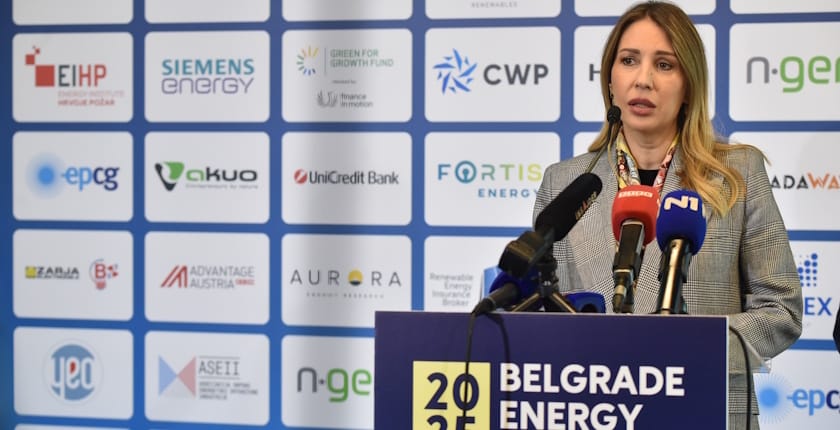
Belgrade Energy Forum 2025 – energy market reforms accelerate integration into EU

Electricity market coupling with neighbors in the European Union is a major factor in the EU integration of Energy Community contracting parties and the Western Balkans, alongside deeper coordination within the region, the establishment of energy interconnections, investments in renewables and progress in carbon pricing, top officials pointed out at the opening of Belgrade Energy Forum – BEF 2025.

Founder and Editor of Balkan Green Energy News Branislava Jovičić said the current changes in the energy sector can already be called an energy revolution.

The third Belgrade Energy Forum, BEF 2025, started today in Serbia’s capital city, welcoming four hundred participants from more than 30 countries from the region, Europe and beyond. The two-day conference, organized by Balkan Green Energy News, features eight panels with over 50 officials, executives and prominent energy experts.

Serbia was the first in the region to meet the preconditions for electricity market coupling with neighboring countries in the European Union and Energy Community, said Minister of Mining and Energy Dubravka Đedović Handanović. She added that the technical process would be completed within 18 months after the EU Agency for the Cooperation of Energy Regulators (ACER) and European Network of Transmission System Operators for Electricity (ENTSO-E) conduct the necessary steps.

Electricity market coupling will be completed within 18 months when the technical process starts

“It will be a historic event for our country for its benefits for citizens and companies, as it will ensure a more stable electricity supply and access to more affordable energy prices. It will turn us into an equal member within the region but also the EU as concerns the energy sector,” Đedović Handanović stated.

The SEEPEX power exchange has already prepared implementation projects with its counterparts in Hungary and Bulgaria for market coupling on their borders, the minister stressed.

Up to EUR 15 billion needs to be invested in energy

Đedović Handanović also pointed out that domestic and European regulators certified Serbia’s gas transmission system operator Transportgas for the first time. The start of construction of the Serbia-Hungary oil pipeline is expected to begin early next year at the latest, the minister said.

The baseline for the development plan for energy infrastructure and energy efficiency should be completed by the end of May, she revealed. It identifies the need for EUR 14 billion to EUR 15 billion in investments in the next ten years, according to Đedović Handanović. Renewables and new hydropower potential account for EUR 7 billion, she said.

Serbia will double the electricity transmission capacity with Hungary and increase it with Bulgaria, the minister asserted.

Serbia is frontrunner in region with its progress toward market coupling

As the Western Balkan region confronts the trailing trilemma of decarbonization, affordability, and energy security, the need for an accelerated integration with the European Union has never been more urgent, Energy Community Secretariat Director Artur Lorkowski said.

The organization provides a platform for the process, a strategic window of opportunity to inspire market confidence now, not in years or months to come, he explained. Lorkowski said it implies deeper coordination among Energy Community contracting parties in removing cross-border bottlenecks and harmonizing market operations.

Above all, there is an urgent need to move forward on electricity market integration with the EU, so the region can fully benefit from it in 2027, he noted, underscoring that Serbia is the frontrunner.

Exporters of electricity to the EU can attend a technical consultative meeting in Brussels on July 1

The Carbon Border Adjustment Mechanism (CBAM) is another urgent priority, Lorkowski said. He announced that the Energy Community Secretariat and European Commission would organize a technical consultative meeting in Brussels on July 1 for electricity exporters to the EU.

The establishment of domestic carbon pricing mechanisms is inevitable, Lorkowski warned. The question is how to introduce domestic carbon pricing and keep energy prices affordable for households and competitive for businesses, he told the audience at BEF 2025.

“The way forward is clearly defined, and the conditions linked to energy market reform and decarbonization are well known. And I’m, frankly speaking, very optimistic that progress on these issues can be substantive in months and years to come,” the secretariat’s head stressed.

Jovičić: Energy revolution underway

Energy and climate issues are among the most important ones in the world today, as well as in Southeastern Europe, Founder and Editor of Balkan Green Energy News Branislava Jovičić said. All stakeholders, aware of the necessity of rapid changes and prudent solutions, are working toward a secure energy supply and decarbonization, she added.

“Last year we spoke about the energy transition. This year we can freely call the changes in the energy sector an energy revolution,” Jovičić stated. The five pillars of the energy revolution are solar and wind power, battery storage, digitalization, nuclear energy and decentralized generation and consumption, she stressed.

Balkan Green Energy News is a leading energy media website in the region and one of the top 50 in the world, Branislava Jovičič said.

  • 1
  • 2