by in News

European Commission proposes easing 2035 car emissions rules

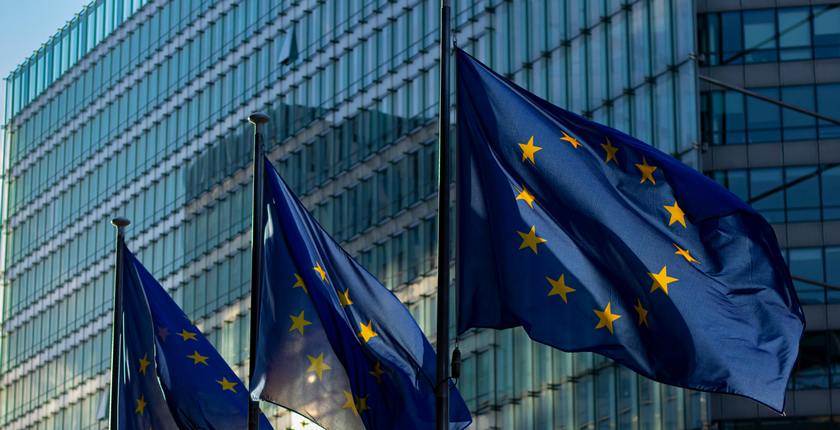
The European Commission has proposed a new Automotive Package that aims to give carmakers greater flexibility in meeting emissions reduction requirements. The new rules would lower the emissions cut target from 100% to 90%, allowing the sale of hybrid and internal combustion vehicles after 2035.

From 2035 onwards, carmakers will need to comply with a 90% emissions reduction target, while the remaining 10% emissions will need to be compensated through the use of low-carbon steel produced in the European Union, or from e-fuels and biofuels, according to a press release from the commission.

“This will allow for plug-in hybrids (PHEV), range extenders, mild hybrids, and internal combustion engine vehicles to still play a role beyond 2035, in addition to full electric (EVs) and hydrogen vehicles,” reads the announcement.

Carmakers will be incentivized to produce affordable EVs

The commission is also proposing “super credits” to incentivize carmakers to produce small, affordable electric cars made in the European Union. This measure would be in place until 2035.

Hoekstra: The EU is staying the course towards zero-emissions mobility

European Climate Action Commissioner Wopke Hoekstra has said the EU is staying the course towards zero-emissions mobility, but introducing some flexibilities for manufacturers to meet their CO2 targets in the most cost-efficient way.

The move comes amid pressure from car manufacturers, who claim their business is threatened by competition from China and the United States, according to reports.

The move comes amid pressure from European carmakers

Several EU member states – Germany, Italy, Bulgaria, the Czech Republic, Hungary, Poland, and Slovakia – say their automakers are struggling with high energy prices, a shortage of components, including batteries, and weak demand for electric vehicles.

The proposal includes a EUR 1.8 billion package to help develop a fully EU-made battery value chain and tackle competition from outside the bloc. As part of the accompanying Battery Booster package, EUR 1.5 billion will be disbursed in interest-free loans to European battery manufacturers, according to the press release.
by in News

Cement maker Holcim gets EU grant for carbon capture project in Romania

A carbon capture and storage (CCS) project developed by cement maker Holcim Romania has been awarded financing under the European Union’s Innovation Fund. The European Commission has selected 61 cutting-edge net-zero technology projects across the EU to receive a total of EUR 2.9 billion in funding, covering sectors such as oil refining, hydrogen, transportation, chemicals, iron and steel, and the manufacture of components for renewable energy plants and batteries.

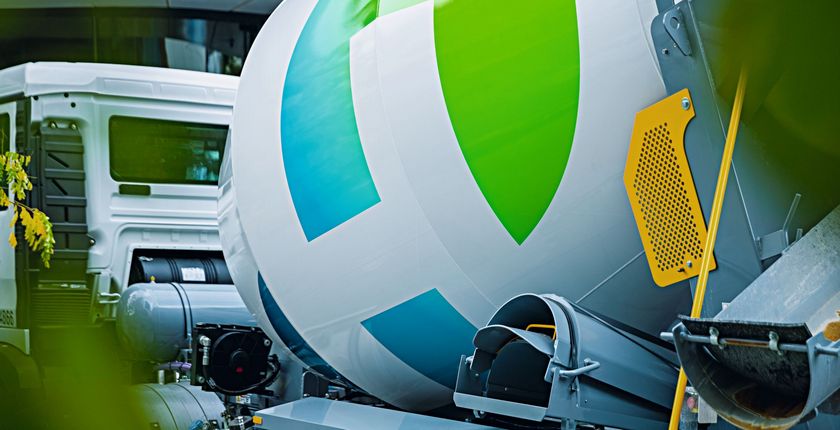
Holcim’s project at its plant in Câmpulung, Argeș county, involves capturing CO2 from cement and lime production and storing it underground. The first large-scale onshore CCS project of its kind in Eastern Europe is expected to produce an estimated two million tons of near-zero cement annually from 2032, according to a press release from Holcim.

The project will enable Holcim Romania to produce two million tons of near-zero cement annually

Carbon Hub CPT 01 will use proven carbon capture technology to separate CO2 from flue gases, which will then be compressed and transported for permanent, safe storage underground, the company said.

The Switzerland-based cement producer now has eight large-scale EU-supported carbon capture projects – in Germany, Poland, Belgium, France, Croatia, Greece, and Romania, according to the press release.

Decarbonizing energy-intensive industries across the EU

The European Commission said that the EUR 2.9 billion in grants follow its first call for net-zero technologies (IF24 Call), launched in December 2024, aiming to strengthen the EU’s technological leadership and accelerate the deployment of innovative decarbonization solutions.

The selected projects span 19 industrial sectors in 18 countries, focusing on energy-intensive industries, renewable energy and energy storage, net-zero mobility and buildings, cleantech manufacturing, and industrial carbon management.

The largest number of selected projects is in the cement and oil refining sectors

The largest number of awarded projects is in the refineries sector, with 11, followed by 10 in the cement and lime sector, 6 in the manufacturing of components for renewable energy, and 4 in the manufacturing of components for energy storage.

Other sectors on the list include chemicals, solar, maritime, road transportation, aviation, non-ferrous metals, hydrogen, buildings, construction materials, geothermal energy, and the manufacturing of components for energy-intensive industries.

The 61 selected projects have the potential to cut some 221 million tons of CO2 equivalent over their first decade of operation, supporting the EU’s objective of achieving climate neutrality by 2050, according to a press release from the European Commission.

by in News

Energy Community’s CBAM Readiness Tracker: Western Balkans still far from exemption as full implementation nears

With less than three months remaining until the European Union’s Carbon Border Adjustment Mechanism (CBAM) is fully implemented, none of the Energy Community’s contracting parties has yet qualified for an exemption in the electricity segment, according to the 2025 CBAM Readiness Tracker. However, the Energy Community’s report suggests that efforts to meet the are gaining momentum, with Serbia, Moldova, North Macedonia, and Montenegro leading the way to market coupling with the EU, and almost all contracting parties planning to introduce carbon pricing.

These efforts signal a growing readiness across the Energy Community to turn CBAM into a catalyst for deeper regional energy market integration and decarbonization, according to the annual report.

“The progress reflected in this year’s tracker underlines that CBAM can drive – not deter – regional cooperation on the energy transition,” Energy Community Secretariat Director Artur Lorkowski stressed and added that the scheme should “serve as a bridge into the EU, not a barrier.”

Lorkowski: CBAM should serve as a bridge into the EU

Starting on January 1, 2026, the EU will charge fees on the CO2 emissions of goods imported from countries that don’t apply matching carbon pricing schemes. In addition to electricity, the carbon border tax will cover cement, iron and steel, aluminum, fertilizers, and hydrogen.

Serbia faces the highest exposure to CBAM costs

Estimates based on 2024 data show the CBAM exposure of EU electricity importers could reach around EUR 1.17 billion a year. Serbia accounts for the largest share, with an estimated EUR 612.5 million in annual CBAM costs, followed by North Macedonia, with about EUR 200 million, Montenegro, EUR 190 million, and Bosnia and Herzegovina, EUR 158 million. Moldova’s exposure is about EUR 6 million, while Albania, which has an electricity mix almost entirely dominated by renewables, faces no CBAM-related costs, according to the report.

The estimated average CBAM cost per megawatt-hour is EUR 33.14 for Moldova, EUR 59.71 for North Macedonia, EUR 62.45 for Montenegro, EUR 66.71 for Serbia, and EUR 73.37 for Bosnia and Herzegovina.

The criteria for a CBAM exemption for electricity include integrating the power market with the EU and introducing a carbon pricing system. A contracting party must also adopt EU regulations on energy, electricity, environment, and competition, increase the share of renewables in its energy mix to align with the EU’s 2030 targets, commit to climate neutrality by 2050 and submit a related roadmap to the EU, and implement measures to prevent indirect electricity imports from non-compliant countries.

Advances evident in emissions, renewables, and market coupling

The 2025 CBAM Readiness Tracker shows that last year alone, carbon intensity across the contracting parties’ power sectors fell by an average of 11%. At the same time, capacity from renewables, excluding large hydro, surged to 5.1 GW from 2 GW between 2020 and 2024. The expansion was driven almost entirely by solar and wind, helped by renewable energy auctions.

When it comes to electricity market integration, no contracting party has completed market coupling with the EU. However, Serbia, Moldova, North Macedonia, and Montenegro are approaching a “point of no return,” which represents a full transposition of EU regulations relevant for market coupling, according to the tracker.

The energy transition unfolding across the Energy Community contracting parties is both tangible and measurable, Adam Cwetsch, Head of the Green Deal Unit at the Energy Community Secretariat, told Balkan Green Energy News. “Carbon intensity in electricity production and economic output continues to fall, while renewable energy deployment accelerates through competitive auctions. This progress reflects a clear commitment to European decarbonisation goals and lays the foundation for deeper energy market integration and long-term climate neutrality,” he stressed.

The secretariat remains committed to ensuring the process continues smoothly – without obstacles from possible unintended impacts of CBAM, Cwetsch said.

Even though no contracting party has introduced a carbon pricing instrument for electricity, almost all of them have outlined plans to establish domestic systems that reflect their specific circumstances.

“This is a crucial step toward alignment with the EU’s carbon pricing framework under CBAM. The rollout of monitoring, reporting, and verification systems across the region is laying the groundwork for implementation and demonstrates growing readiness and credibility, even as timelines remain tight and challenges persist,” Cwetsch stated.

Available carbon pricing models are carbon taxes, ETS and a combination of the two

The available models are a carbon tax, an emissions trading system (ETS), and a hybrid version. The only contracting party that has no plans to introduce carbon pricing is Kosovo*, according to the report.

All contracting parties have concluded agreements to apply EU law in the fields of energy, electricity (including renewable energy), the environment, and competition. In each of them, the implementation of renewable energy legislation is either underway or showing visible progress, the report shows.

No Western Balkan country has included the EU’s 2050 climate goals into national legislation

On the other hand, Ukraine and Moldova are the only ones that have included the 2050 climate neutrality objective in national legislation, while no contracting party has submitted a corresponding roadmap to the EU.

Another requirement that no one has yet fulfilled is the establishment of an effective system to prevent indirect import of electricity into the EU from other third countries or territories that do not meet the CBAM exemption criteria for electricity.

* This designation is without prejudice to positions onstatus and is in line with UNSCR 1244/99 and the ICJ Opinion on the Kosovo declaration of independence.
by in News

EU mulls steps to prevent bypassing of CBAM

The European Commission plans to propose measures by the end of the year to prevent exporters to the European Union from avoiding the bloc’s carbon border tax.

Brussels fears exporters from third countries could ship low-emission goods to the EU, while selling high-carbon products in other markets, without reducing their overall emissions, Reuters reported.

The Carbon Border Adjustment Mechanism (CBAM), set to come into force on January 1, 2026, will impose fees on the CO2 emissions of goods imported to the EU from countries without a carbon pricing scheme. The tax will cover cement, iron and steel, aluminum, fertilizers, electricity, and hydrogen.

The carbon border tax is expected to severely affect the EU’s neighbors, including the Western Balkan countries.

CBAM could be extended to other products

The European Commission is concerned that CBAM could be bypassed if foreign firms redirect their low-carbon products to Europe while still producing high-carbon goods for export to other markets. This way, they would avoid the EU’s carbon border tax without actually reducing their overall emissions.

To address the problem, the EU executive intends to propose extending CBAM to other products, a European Commission spokesperson has said, according to Reuters.

Imported goods could be given a fixed emissions value per country or per company

The Commission is also considering a system under which goods are given a fixed CO2 emissions value per country or per company rather than calculating specific emissions per shipment, Reuters reported, quoting an unnamed senior EU official.

According to the news agency, the official also hinted that Chinese exporters could potentially attempt to circumvent CBAM in this way.

Exporters from these countries are struggling to adjust to the new system, especially in the electricity sector, and have requested a postponement of CBAM.

However, the administration in Brussels is not willing to consider delaying its implementation date.

by in News

WEF: Global energy transition picks up pace

The global energy transition is picking up pace, with the World Economic Forum’s (WEF) latest report showing the fastest progress since before the COVID-19 pandemic. Overall improvement on the WEF’s Energy Transition Index (ETI) was recorded in 65% of the countries observed, with the Emerging Europe region posting the strongest growth.

The report, titled Fostering Effective Energy Transition 2025, tracks the performance of energy systems of 118 countries across three dimensions – security, sustainability, and equity.

The equity segment showed the strongest gains, thanks to stable energy prices and subsidy cuts, while sustainability improved thanks to increased renewable energy adoption and improvements in energy efficiency. However, energy security stagnated due to inflexible power systems, reliance on imports, and limited diversification, highlighting the need for resilient grids, digitalization, and investment.

Energy security stagnated due to a lack of flexibility and diversification

The WEF also noted that despite USD 2 trillion in clean energy investment in 2024, global emissions hit a record 37.8 billion tons in the hottest year on record, as energy demand rose 2.2%, driven by artificial intelligence (AI), data centers, cooling, and electrification.

Global carbon emissions hit a record 37.8 billion tons in 2024 despite investment in clean energy

In 2025, 77 out of 118 countries recorded an increase in their overall ETI scores, with an average gain of 1.1%, as 28% achieved gains across all three dimensions, according to the report.

Advanced European economies top ETI rankings

Advanced economies continued to lead the rankings, accounting for 16 of the top 20 performers. The top five positions are occupied by Sweden, Finland, Denmark, Norway, and Switzerland, thanks to their strong performance in energy diversification, clean energy adoption, robust policy frameworks, and reliable infrastructure.

Also among the top 10 are Austria, Latvia, the Netherlands, Germany, and Portugal. China rose to a record 12th place, while the United Kingdom ranked 16th, and the US ended in the 17th spot.

Bosnia and Herzegovina posts strongest growth

The Emerging Europe region, which includes former Soviet republics and Southeast European countries, recorded the highest score increase in 2025, of 2.8% year on year. Latvia scored the highest on the ETI index, while Bosnia and Herzegovina posted the strongest growth.

The highest-ranking countries in the region tracked by Balkan Green Energy News are Bulgaria and Romania, with an overall score of 63.7 each, occupying the 29th and 30th spots, respectively.

Albania took 37th place with a score of 61.5. North Macedonia was 66th, with an overall score of 54.2, and Bosnia and Herzegovina came in 72nd, with 53.1. They are followed by Serbia, in 81st place, and Montenegro, which is 83rd.

by in News

Clock is ticking for introducing carbon tax in Western Balkans, many ambiguities still remain

From January 1st, 2026, Carbon Border Adjustment Mechanism (CBAM) will be effective in the Western Balkans. While the countries are still deciding on the carbon pricing model, the energy intensive industry is advocating for introducing taxation to protect the domestic market from the flood of goods that will not be competitive on the EU market. Even though the Governments might not have been proactive enough in the previous years, the participants of the CBAM panel on BEF 2025 believe there is still time for the regional actors to come up with more proactive approach towards the EU.

Energy Community Contracting Parties are approaching critical choices on carbon pricing that will shape the pathway towards climate neutrality, electricity market integration and sustainable economic development. From January 1, 2026, producers of aluminum, fertilizers, cement, steel, and hydrogen, as well as electricity exporters, will be required to pay the tax on CO2 emissions released during the production of the goods they export to the EU.

At the Ministerial Council in December 2024, four carbon pricing models were presented to the Contracting parties: regional emissions trading system (ETS), national carbon taxes, fixed-price Emissions Trading System (ETS), and full integration with the EU ETS. Upon the request of the Contracting parties, the Energy Community Secretariat provided an impact assessment for all four scenarios. The scenarios differ in structure and scope, but all support a common goal: progressive alignment with the EU ETS and the implementation of the polluter-pays principle.

The Ministerial Council is expected to meet in July to reflect on these scenarios and decide on the preferred regional pathway. This decision will shape the revision of the Decarbonisation Roadmap and guide the implementation of carbon pricing reform up to 2030 and beyond.

Carbon pricing is also central to the region’s electricity market future. The Electricity Integration Package, adopted in 2022, outlines the path to full market coupling between the Energy Community and the EU. To avoid distortions and ensure a level playing field, timely carbon pricing implementation is essential. “The projections shows that if the region would join EU ETS after 2030, the carbon price should reach or even exceed 100 euros per ton of CO2. This would have serious consequences for energy prices, competitiveness and industrial exports. Also, delaying actions could prove to be costly. That’s why contracting parties are expecting to implement domestic ETS for electricity with the price equivalent to EU ETS”, Milica Brkić Vukovljak, from Energy Agency of the Republic of Serbia, explained.

Milica Brkic Vukovljak (photo: Balkan Green Energy News)

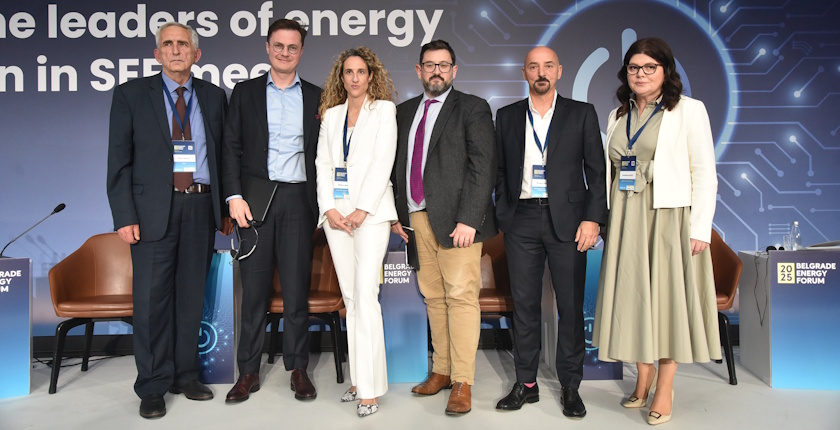
The expectations around the CBAM introduction in the region were the main topic of discussion on the BEF 2025 panel Addressing carbon pricing in the Western Balkans – Turning decarbonization challenges into opportunities through collaboration, innovation and competitiveness, moderated by Brkić Vukovljak.

The key message from the panel is that regional governments need to take a more active role, especially towards the European Union, and numerous arguments were put forward during the discussion in that direction.

As for Serbia, it is worth noting that it is the only Contracting party of the Energy Community that had transposed the Electricity Integration Package, through which transit of importance for traders takes place. Given that the market coupling is scheduled for the beginning of 2027, it would be important to try to get the European Commission to postpone the deadline from 2026 to 2027.

Introduction of CBAM should not interfere with market integration

While admitting that „it’s never a good moment politically to decide on carbon pricing“, Adam Cwetsch, Head of the European Green Deal in the Energy Community Secretariat, said he believed that the current momentum in the region, together with cumulated experiences, could allow making such a decision at this time.

Adam Cwetsch (photo: Balkan Green Energy News)

He recalled that the decision on carbon pricing was partially left open with the 2021 Decarbonization Roadmap. At the same time, the Green Agenda for Western Balkans is referring to alignment with the EU ETS, as an objective that countries should aim.

„The role of Secretariat is to facilitate making those decisions, fully informed. It entails certain risks, but it is also helping the countries in their journey to join the EU eventually. Another important consideration is setting standards for monitoring emissions, which the countries are obliged to establish and make as of 2026. This is necessary for any credible carbon pricing system, regardless of the chosen model, as they all require credible data and standards“, Cwetsch said.

He insisted that the market integration and market coupling should not be disturbed with the introduction of CBAM, making it a priority to synchronize the situation within the region.

Any model to be decided has to have, as an end point, alignment with the EU ETS

“The least desirable solution would be that there is a country that progresses faster than others and is forced to implement an internal Energy Community CBAM”, Cwetsch said, advocating for a coordinated approach towards setting up the carbon emissions price.

He also noted that any model to be decided must have, as an end point, alignment with the EU ETS. „That should be taken into account when designing the pathway with selected option“, he added.

As things now stand from January 2026 CBAM will be effective, while the market coupling, that allows for exemptions, will not be yet in place. „It is important not to end up with disintegrating the market“, Cwetsch noted.

On the other hand, he believes there is a space for more proactive policy from the Western Balkans actors. „The region should reach out to the EU with more proactive climate policies, which would make clear how the region could contribute to the 2030 or 2040 targets for climate neutrality that EU is striving“, he concluded.

Without carbon pricing mechanisms, the regional markets will be flooded with imports

Branko Zečević (photo: Balkan Green Energy News)

The representatives of energy intensive industry are concerned that past discussions about carbon pricing didn’t pay enough attention to the interests of the companies that are going to be directly affected by imposing tariffs on exports to the EU.

Branko Zečević, president of the Metalfer Group and one of the founders of the Association of Serbian Energy Intensive Industry, said that the introduction of CBAM from the beginning of next year will certainly affect Serbian exports, even though many companies have been preparing for this moment and investing in decarbonization. „Some companies are further down that road, some are at the beginning, and the effects can’t be quantified easily right now“, he argued.

Once you have saved the industry, you have somebody to tax. Otherways, there will be nothing to talk about

However, Zečević insisted that much bigger threat for industry in Serbia and the region, is the expected flood of goods that will not be able to enter EU market anymore and will try to find third markets.

„Markets in the region are pretty opened for that sort of import. An imperative is therefore to have our own carbon pricing system, however you may call it. We must protect our market from these consequences, otherways we will not have any industry to protect in the future“, he insisted.

In his opinion, the first step should be to copy-paste what the EU is doing, to protect the industry, and after that we can talk about the models of carbon pricing. „Once you have saved the industry, you have somebody to tax. Otherways, there will be nothing to talk about“, he warned.

Asked about the expectations of the industry from the Government, he said that financial assistance does not seem a realistic option in the Western Balkans, but there are regulatory measures that could help the companies.

„Industry is more complex than coupling the electricity market, as every industry is different. The companies in the EU received billions of euros in grants over the last 15 years, while the companies in the region were left on their own, each individual company, to make its own adjustments. What the governments in the region can do is to put in place regulatory rules to help and protect local industry and then as a next stage to see if it can implement that regionally“, he concluded.

CBAM ambiguities rising concerns for energy traders

Mark Copley (photo: Balkan Green Energy News)

The ambiguities that follow the introduction of the emissions trading mechanism in the region are more likely to deter than to attract energy traders. Mark Copley, CEO of Energy Traders Europe, association representing 170 energy traders, some of them being active in the region, noted that there is confusion and concern regarding the implementation of CBAM in Western Balkans.

“Lots of questions have been raised: how is that going to work, how the price of CO2 is going to be calculated, what does this means for market integration, how the traders will actually be able to transit power through this region etc”, he said.

Energy traders are pretty good with price risks and volume risks, what we fear is political risk and regulatory risk

While noting that traders generally think that carbon pricing is a good idea, he warned that a good idea in principle could have significant unintended consequences in practice. Energy traders are pretty good with price risks and volume risks, what we fear is political risk and regulatory risk. „I’d like to think that this moment is an opportunity to sit down with all the parties involved to try to sort out the rules”, Copley said.

Copley insisted that he doesn’t have a specific view on what form of pricing is right from the region, but reminded of the experience when Great Britain created its own ETS, which proved to be more volatile, risky and difficult to operate.

„The bigger, more stable, more integrated market – the better. When you have ETS as a large and liquid system, it is fairly easy to trade and manage risks. However, it gets more difficult where you don’t know what the policies are in the short term or in the long term. While I understand the desire that the model should reflect the specifics of the market, be careful in small markets with not much liquidity, because it is hard to design good systems for them”, Copley noted.

Carbon pricing models should reflect the interests of each country in the region

Damir Miljević (photo: Balkan Green Energy News)

The regional non-governmental organizations also have been raising their voice over the topic of CBAM in previous years. One of the warnings of possible negative economic and social impacts was the analysis Chaotic and fake decarbonization of power sectors in the Western Balkansin 2023.

The problem is that the introduction of CBAM in often seen as a kind of natural disaster, something inevitable that is about to happen”, said Damir Miljević, member of the Board of Center for Sustainable Energy Transition, RESET, a think-tank that published the report mentioned.

In his opinion, Western Balkan countries did not participate actively in the process with lobbying and negotiating with the EU. „The policy makers sit in Brussels, while the Energy Community Secretariat is the directorate for the implementation of the international agreement. I don’t recall that some delegation from the Western Balkans went to talk to the EU about exemptions, even though we had at least one strong argument. Stabilization and Association Agreement with the EU states that neither contracting party will introduce additional taxes, or levies on the other, which means that even if they are introduced, we would have to negotiate about it“, Miljević explained.

The advantage should be given to the model that is fastest and simplest to implement, which is direct taxation

Another argument for negotiations is even stronger – the countries that are candidates for EU accession should not have the same treatment as some very distant states on other continents, he argued. Miljević also added that the region should focus on transferring the acquis from the EU, which they are obliged to, not the policies, where the situation is completely different.

„In the present situation, the only viable solution is to introduce some form of taxation of CO2 for the industry“, he said. In his opinion, this means the advantage should be given to the model that is fastest and simplest to implement, which is direct taxation, to eliminate the influence of CBAM on the export of industrial products from the region to the EU.

„It would be difficult to consider regional schemes, due to huge differences within the region. We already lost too much time on it. Each country should do it individually considering its own interest, not the interest of the energy sector, but the interest of the citizens and the economy and the consequences for them. This way, we will get some initial, however small assets, to start solving the core issue. We should also remember that the introduction of levies on CO2 is essential for the creation of any fund for coal regions in transition”, Miljević concluded.

by in News

Cities are driving the transition to climate neutral and fair housing

Author: Anna Iafisco, policy adviser for housing at Eurocities, EUSEW’s partner organisation

City governments are ready to lead the transition to climate-neutral buildings by 2050, but they cannot do it alone. To ensure a fair transition, they need EU and national support to help low- and middle-income households access renovation support. With better funding, aligned policies, and tools like one-stop shops, cities can deliver warmer homes, lower bills, and a liveable future for everyone.

The road to climate neutrality runs through our homes – and cities are taking the lead. Buildings account for 40% of Europe’s energy use and 36% of emissions, making the decarbonisation of our built environment both a major challenge and a vital opportunity.

By improving energy efficiency, particularly in the residential housing stock, cities are not only cutting emissions and boosting energy security, but they are also improving people’s quality of life. Crucially, this transformation offers a chance to tackle energy poverty, which still leaves too many households without adequate heating, cooling or lighting, while also addressing the question of equitable access to green and healthy living spaces.

For the transition to succeed, it must be fair. At Eurocities, we believe no one should be left behind, especially vulnerable and low- to middle-income households, often exposed to high energy bills and inadequate living conditions.

Reaching a climate-neutral building stock by 2050 will depend on inclusive, well-funded renovation policies that reflect the realities of Europe’s diverse housing systems, and on empowering cities to lead the way.

A diversity of housing systems, a common challenge

Europe’s housing systems are highly diverse, from strong social and cooperative housing sectors in some countries to more privatised or market-driven systems in others. Any EU-wide building policy must allow for flexibility, enabling local, regional and national governments to tailor solutions to their specific situations.

A one-size-fits-all approach to financing renovation risks excluding those who fall outside strict income thresholds or tenancy rules, particularly in private rental markets, where incentives often do not reach either landlords or tenants. Elsewhere, outdated ownership structures or limited municipal control over social housing create further obstacles.

This diversity must be explicitly acknowledged in EU policy frameworks. We need adaptable rules that empower local authorities to reach those most in need, protect tenants from the risk of displacement, and ensure that EU funding tools match the real conditions on the ground.

One-stop shops: making renovation simple and inclusive

One of the most effective ways cities can support households through the transition to energy-efficient and sustainable homes is by setting up one-stop shops. These local services provide clear, accessible information about renovation options, available grants and loans, technical support, and trusted contractors – all in one place.

In Milan, the ‘Sportello Energia’ (Energy Desk) helps residents navigate energy efficiency improvements, with a special focus on reaching low-income and energy-poor households. The city combines this advisory service with targeted financial support, enabling families to carry out renovations they otherwise could not afford.

Similarly, in Rotterdam, the ‘WoonWijzerWinkel’ offers a physical and digital one-stop-shop, where residents can get free independent advice tailored to their homes. The shop has become a trusted go-to point for citizens who may otherwise be excluded from renovation schemes.

These examples show how local services, when designed with people’s needs in mind, can build trust and boost the renovation rate, especially among the most vulnerable.

Targeting support where it matters most

We know that comprehensive renovations are costly, and many households cannot afford them. That is why targeted public investment is vital. Renovation efforts must focus first on the worst-performing buildings, which are often home to people at risk of energy poverty. This is where we can achieve the greatest impact, both for the climate and for residents’ wellbeing.

In Vienna, a long-standing commitment to affordable housing has positioned the city as a leader in socially inclusive climate action. The city is implementing a large-scale renovation programme for its social housing stock, combining energy efficiency improvements with tenant protection measures and cost control.

Meanwhile, in Ghent, Belgium, the city has partnered with social organisations to reach vulnerable households and co-develop tailored renovation plans. This collaborative model ensures that support reaches those who need it most, while building long-term capacity within communities.

These experiences offer valuable lessons for the implementation of the EU’s revised Energy Performance of Buildings Directive. Cities are ready to roll out building upgrades, but they need clear standards, funding and flexibility to adapt to their local realities.

Decarbonising heating, improving lives

Renovating buildings is only part of the solution. Most homes in Europe are still heated with fossil fuels, particularly natural gas. To meet the EU’s 2050 climate targets, we must rapidly phase out fossil fuel boilers and invest in renewable, efficient heating and cooling systems. This is a crucial step to reduce emissions and protect residents from rising fuel costs and energy insecurity.

Cities are already taking action. In Paris, the city is expanding its district heating network based on renewable energy sources, prioritising connections for social housing and public buildings. This approach not only cuts emissions but also shields residents from volatile energy prices, demonstrating the power of public infrastructure to deliver a just transition.

A vision for truly affordable climate-neutral homes

To fully realise the transformation of the built environment, Europe must also advance a shared agenda for affordable, inclusive, and healthy housing. The upcoming European Affordable Housing Plan presents an opportunity to address the affordability crisis by supporting investment in affordable housing, improving existing stock through deep renovation, and aligning climate, environment and social objectives.

Cities are implementing change, but they need greater support to deliver renovation programmes for social and affordable housing, to develop new housing construction that meets climate neutrality and environmental objectives, affordability and accessibility standards. At the same time, EU funding instruments must be better coordinated and easier to access, so they reflect local priorities and realities.

By embedding the principle of housing as a human right into the green transition, the EU can drive a shift towards housing systems that are not only sustainable, but also fair, resilient and inclusive.

A call to action

If we want to reach climate neutrality by 2050, there is no time to lose. A swift, ambitious implementation of the Energy Performance of Buildings Directive, in alignment with the EU Nature Restoration Law, is essential to meet the 2030 targets and to lay the foundation for a fair, sustainable future.

Despite political pressure, the EU should remain focused on putting the recently adopted directive and regulation into practice, rather than adding further uncertainty to an already complex political landscape.

Cities stand ready to lead this transformation. But they cannot do it alone. We call on the EU and Member States to work closely with city governments, empower them through direct access to funding, and ensure that climate, environment and housing policies support the same goal: better homes, healthier lives, and a liveable planet for all.

The building transition must be about more than cutting emissions. It must ensure that everyone, regardless of income or housing tenure, can live in a decent, energy-efficient and quality home.

If we get this right, we will not just reduce carbon and help restore nature, we will ensure a better future for the people of Europe.

This opinion editorial is produced in co-operation with the European Sustainable Energy Week (EUSEW) 2025. See ec.europa.eu/eusew for more details.