EU waters down its 2040 climate target in runup to COP30 in Brazil
The Council of the European Union upheld the proposed 90% emissions cut target for 2040 ahead of the United Nations Climate Change Conference COP30 in Brazil, but with substantial workaround possibilities. In addition, the environment ministers failed to define the 2035 ambition, leaving the desired reduction in the amount of released greenhouse gases in a range of 66.25% to 72.5%.
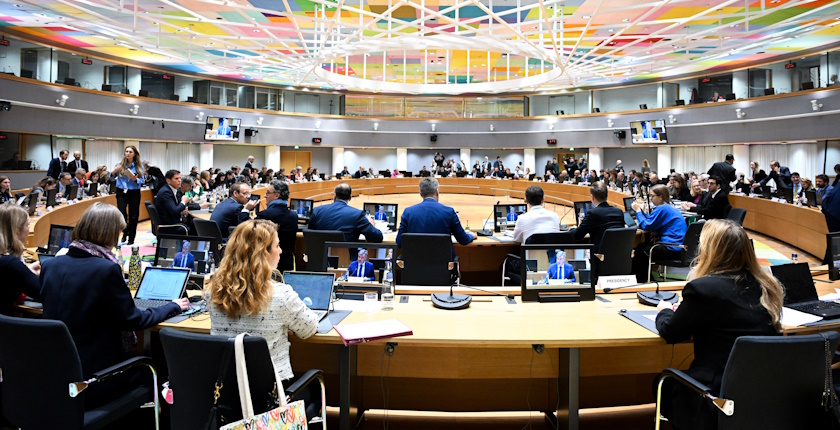
Faced with declining competitiveness due to high energy prices and its strict climate and environmental standards, the EU is loosening its decarbonization goal. Following a marathon session in Brussels, the so-called Environment Council kept the desired greenhouse gas emissions reduction by 2040 at 90%, against the 1990 level, to take it to the COP30 event in Belém, Brazil. However, the competent ministers making up the body allowed several important flexibilities to avoid a last-minute stalemate.
Namely, the Council of the EU approved an updated nationally determined contribution (NDC) of the 27-member bloc and individual states to submit it at the Conference of the Parties of the UN Framework Convention on Climate Change (UNFCCC). Political leaders are gathering tomorrow, while COP30 formally lasts from November 10 to 21.
Following the 2020 NDC and its 2023 update, the new one covers the period up to 2035.
Outsourcing climate improvements instead of domestic decarbonization
On the path to eliminating net emissions by 2050, the EU is sticking with its nominal 2040 goal. On the other hand, in the latest version, the environment ministers allow “an adequate contribution of high-quality international credits in a manner that is both ambitious and cost-efficient.”
In particular, five percentage points of the 90% can be met via emission cuts promised outside the EU, and governments would be allowed to outsource a further five points, Greenpeace warned. It means they would buy carbon credits abroad as offsets.
EU is counting on purchases of other countries’ carbon credits for offsets
“The European Scientific Advisory Board on Climate Change [ESABCC] had called for emissions cuts of 90%-95% by 2040, and had stressed that this target must be for domestic reductions to climate pollution, not cuts outsourced to other countries. Environment ministers also agreed that the European Commission should reopen and water down the climate target in the case of high energy prices, a perceived negative economic impact or in light of technological advances. To reach a deal with reluctant countries, ministers also agreed to delay the start of the EU’s carbon market for pollution from cars and heating systems, extend pollution permits for heavy industry and exempt some ‘low-carbon’ fuels under the internal combustion engine phaseout,” the organization added.
The carbon market in question is the planned Emissions Trading System 2 (EU ETS 2). The Environment Council proposed to delay its establishment by a year, until 2028, and work on measures for a smooth launch.
“According to the ESABCC, only 16% of offsets have delivered genuine emissions reductions. But if they were high-quality offsets, they would be costly, and relying on them would divert investment from transforming the EU’s own industries, economy, and workers,” World Wide Fund For Nature (WWF) pointed out.
Indicative range for 2035 goal entirely below required efforts
The protracted discussions between the EU’s national governments also delayed the announcement of the EU’s indicative climate target for 2035, under the Paris Agreement. It is supposed to be submitted at the UN Climate Change Conference COP30.
“Ministers failed to agree a firm 2035 target, instead keeping a previously agreed range of 66.25% to 72.5% emission cuts, even the upper end of which is inconsistent with a credible pathway to the proposed 90% cut for five years later, undermining the EU’s position as a climate leader at COP30,” Greenpeace stressed.
Climate-competitiveness-independence tradeoff
The European Parliament’s Committee on Environment, Public Health and Food Safety (ENVI) is expected to discuss the matter soon. After a plenary vote, the institution would negotiate with the Council of the EU and European Commission.
“We need climate, competitiveness and independence. All three are crucial and going forward we need to ensure that one doesn’t come at the expense of the other. This morning, the environment and climate ministers of all member states reached a pragmatic, ambitious deal which ensures that,” said European Commissioner for Climate, Net-Zero and Clean Growth Wopke Hoekstra.